As a kid, I dreamed of standing on a big stage, dressed in a snazzy costume, and bathed in a spotlight. I chased that dream—and for a time, I caught it. But it wasn’t until the 80s, when I first saw André De Shields in Ain’t Misbehavin’, that I understood what true theatrical greatness looked like. His command of the stage, his style, his radiance—more than performing, he was redefining what I thought it meant to be a star. Nevermind the spotlight, the costumes, or even the stage; it was simply his presence, an elegant confidence that said, “I am here, where I belong.” That’s what captured me—and I’ve been captivated by him ever since.
Born and raised in Baltimore, André De Shields moved to New York City in 1964 after graduating from Baltimore City College. He would go on to land roles on some of the most iconic shows on Broadway: from the title role of The Wiz, to featured characters in The Full Monty, Warp!, and Cats: The Jellicle Ball. His performance in the 1982 NBC airing of Ain’t Misbehavin’ earned him a Primetime Emmy Award for Outstanding Individual Achievement. He’d go on to win the 2019 Tony Award for Best Actor in a Featured Role in a Musical and the 2020 Grammy Award for Best Musical Theater Album for his performance as Hermes in the Broadway musical Hadestown. Today, his legacy as an actor, singer, dancer, director, and choreographer has been recognized and lauded for decades.
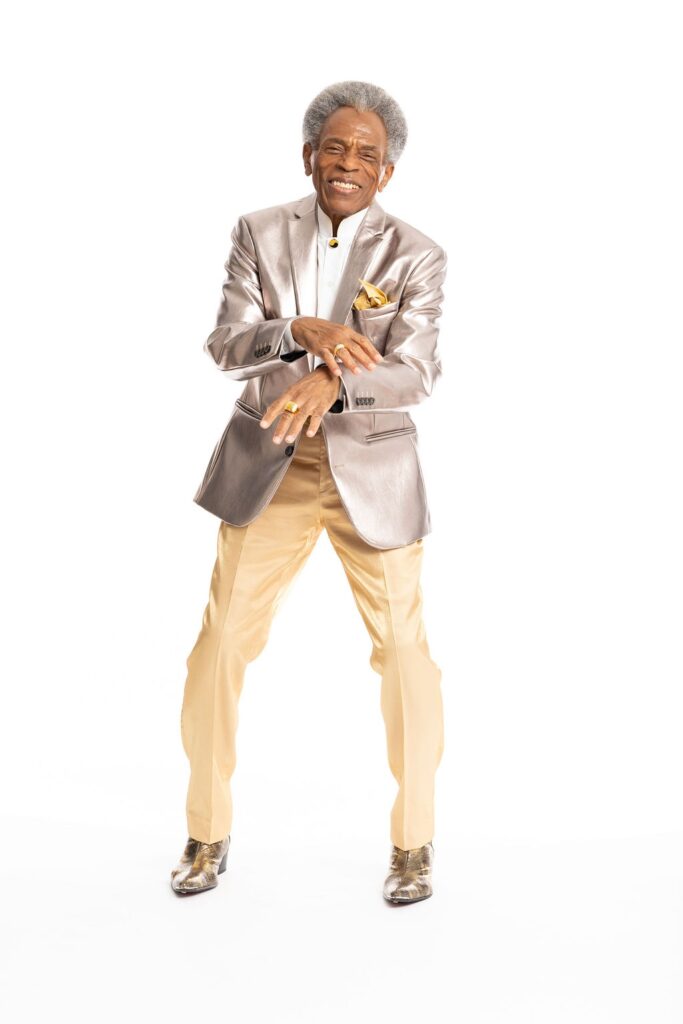
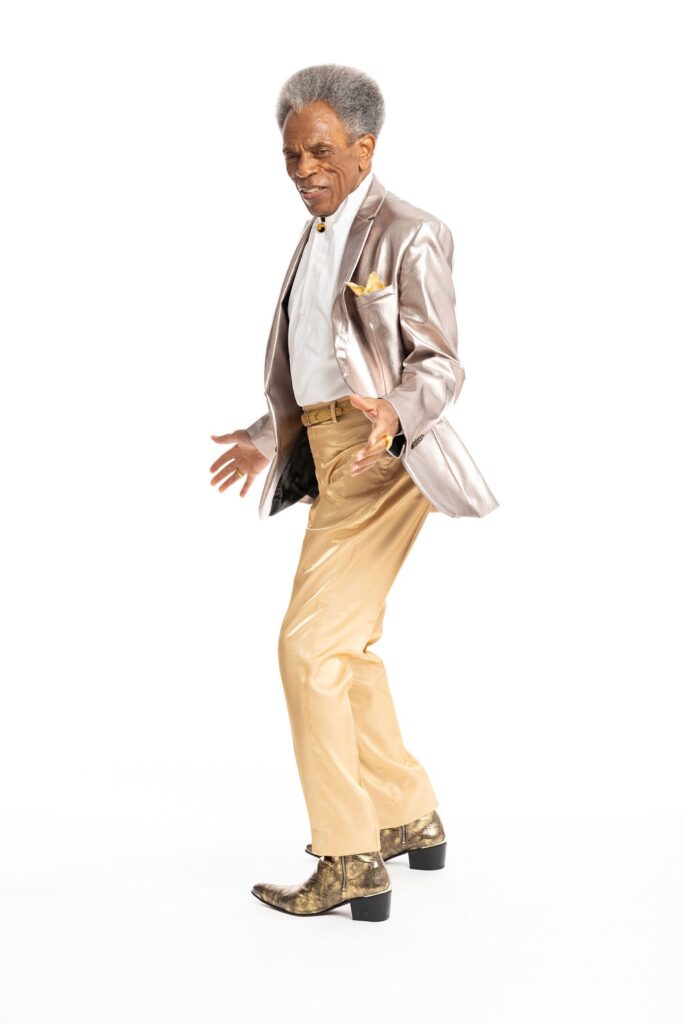
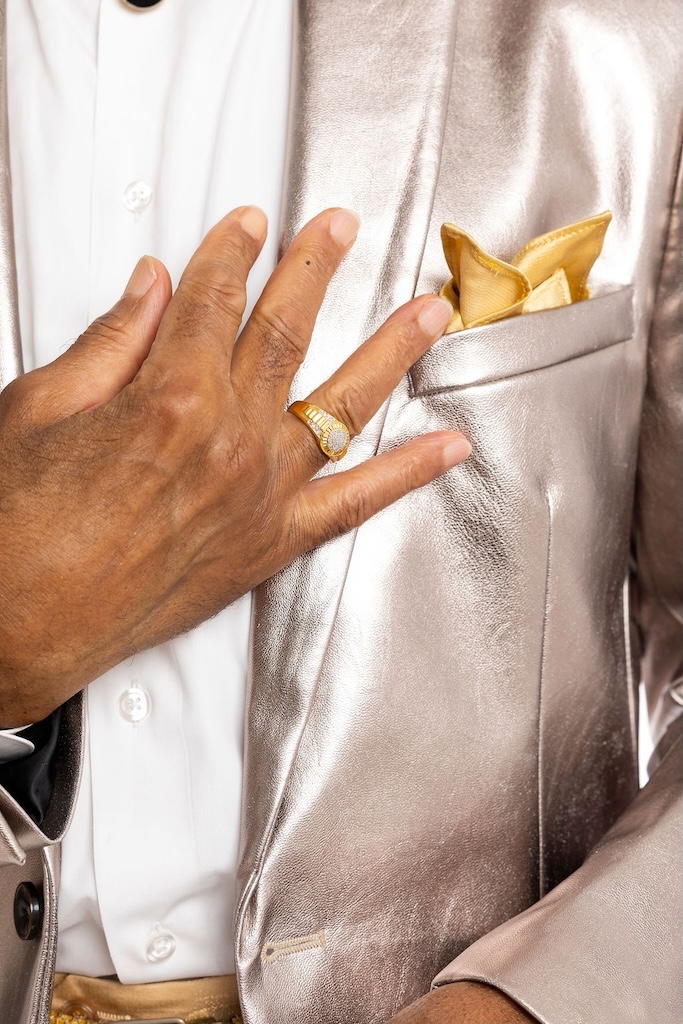
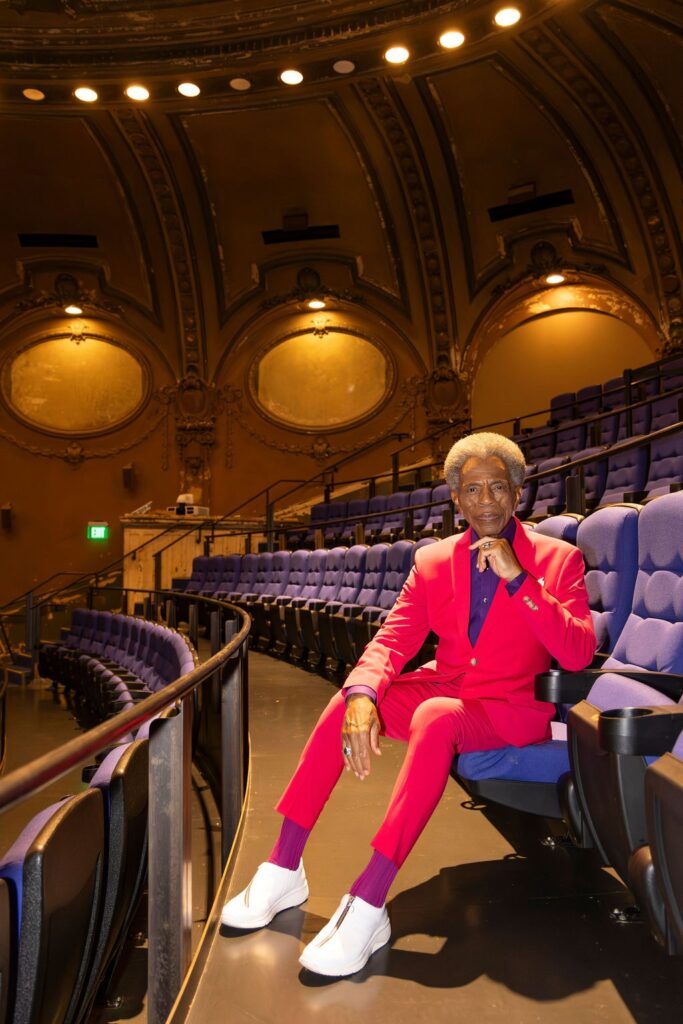
When I was invited to interview De Shields in Baltimore, I only hoped I could tamp down my fanboy response to being so close to my idol. Our day began with a photoshoot by E. Brady Robinson. Arriving with three wardrobe changes complete with jewelry and shoes, De Shields moved with the fluidity of a dancer, knowing exactly how to pose his rangy body with a refined ease that belied his 79 years. His gaze is riveting. Even when standing perfectly still, he commands attention.
After the shoot, we settled into the headquarters of BmoreArt for a sit-down interview session. There, he recalled with fondness—and a tinge of loss—the places that shaped him. “In the sixties, when urban renewal was the craze, many of those places disappeared,” he says.
Foremost in his memory is the Royal Theater, once on Pennsylvania Avenue at Dolphin Street, a jewel of the chitlin’ circuit—a network of venues across the United States where Black performers could appear safely and be celebrated during segregation. As a young man in Baltimore, he lived within walking distance and would slip into its vaulted, cathedral-like darkness, dreaming as he watched the greats perform. It was here, in the late 50s or early 60s, that he saw his first Motown Revue: Marvin Gaye, The Temptations, The Supremes, Martha and the Vandellas, Little Stevie Wonder, and The Marvelettes—all before their solo careers. “It was life-changing,” he says. “To have all that Black culture, all those larger-than-life individuals, come into your neighborhood.”
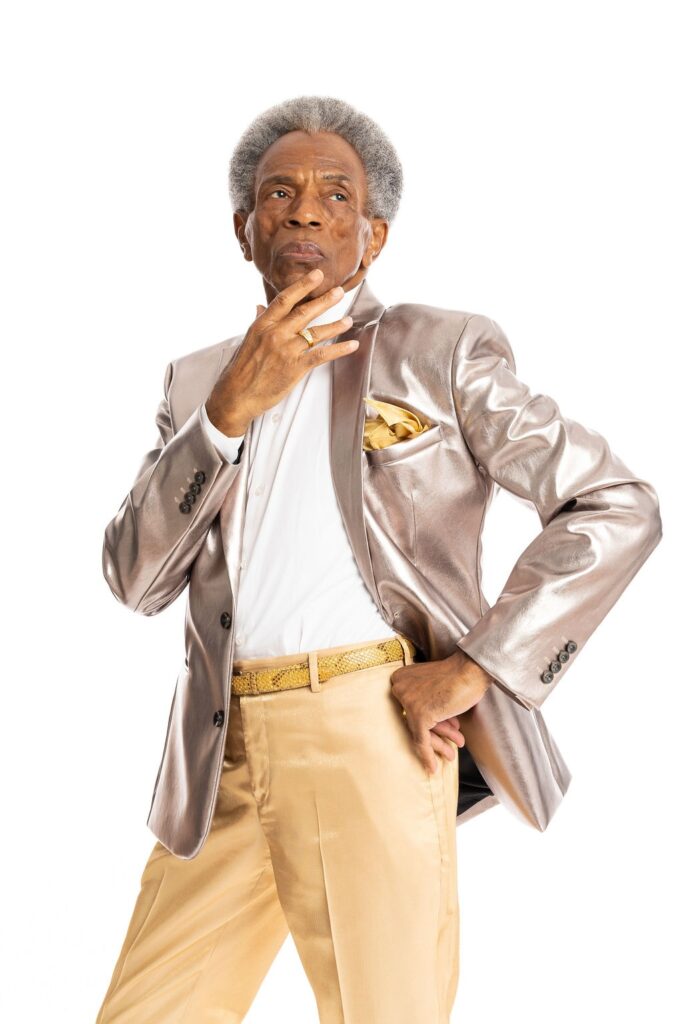
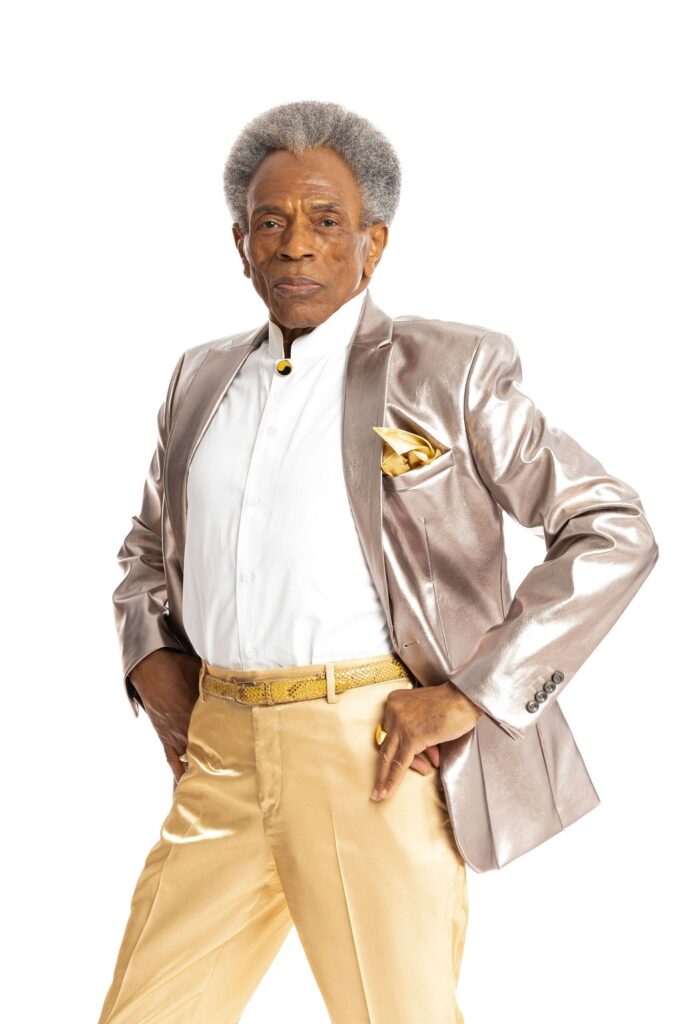
André De ShieldsI wanted to be the kind of instigator who set the bar high enough to inspire, but not so high as to discourage.
At the time, Broadway wasn’t yet his obsession. “I wanted to go wherever Sammy Davis Jr. was going,” he admits. That path crystallized in 1954 when he saw Cabin in the Sky, where Lena Horne, Ethel Waters, Eddie ‘Rochester’ Anderson, and an all Black cast lit up the screen. “They inspired and empowered me,” he says. “They showed me it was possible to change the expectation of what a Black actor could do.”
For De Shields, trailblazing was never an afterthought—it was always part of his mission. “I wanted to be the kind of instigator who set the bar high enough to inspire, but not so high as to discourage,” he explains. When he opens doors, he leaves them open: “I put breadcrumbs down. This is how I did it. Come after me.”
He resists the idea of having “arrived” at a single moment in time. “Life is a continuum,” De Shields says. “Every performance—eight shows a week—brings that satisfaction.” Keeping the work fresh, he insists, is easy: the audience changes every night, demanding different nuances. That interplay is what keeps the magic alive.
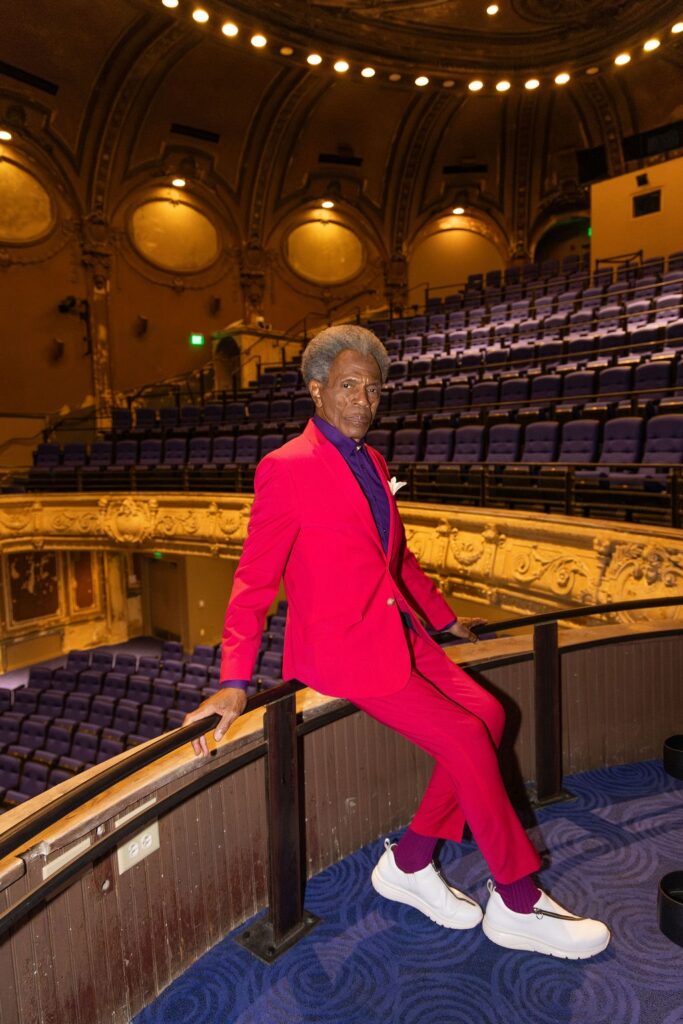
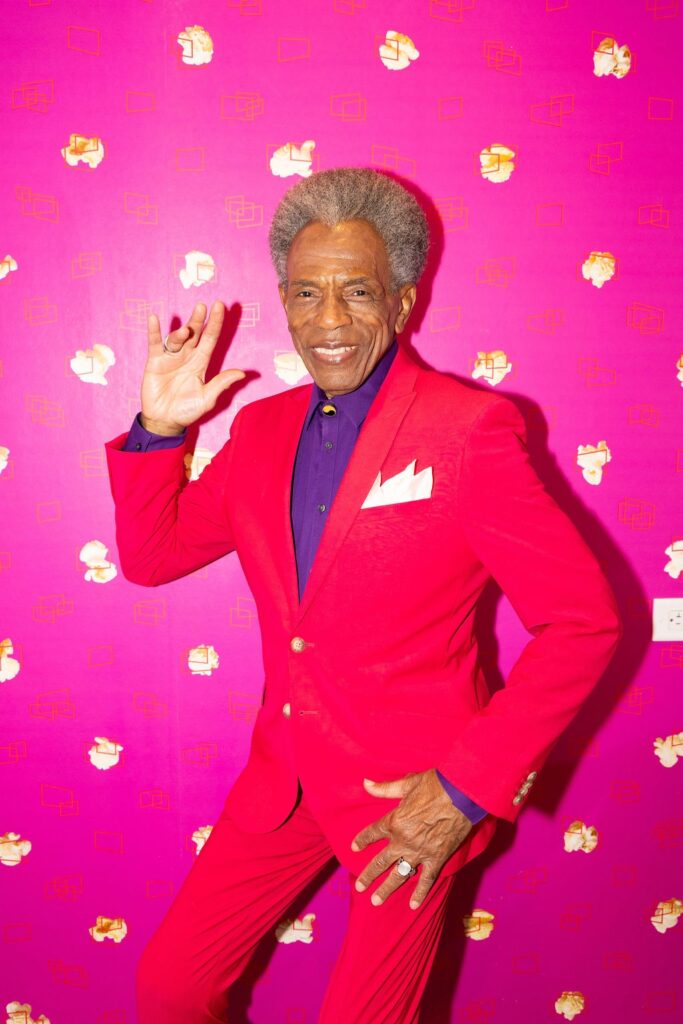
Offstage, his philosophy is just as deliberate. “The more silent I am, the more intrigued people are,” he notes. “They think I know something.” For him, life itself is performance—not in a hollow sense, but as a conscious engagement with the world. “All the world’s a stage,” he says. “Every day you choose the mask you’re going to wear.”
Preparation for a role is rooted in curiosity. He researches, reads, asks questions, and engages friends in conversation. Five questions—who, what, where, when, why—guide his process in art and in life. He no longer dwells on roles that slipped away. “What’s meant for me is on its way to me,” he says.
Broadway, he believes, mirrors society. “Even feel-good musicals now have weight,” he observes, pointing to Hamilton and Hadestown. Audiences, he says, are hungry for more than tunes and sentiment. They want theater to help them make sense of a topsy-turvy world.
Though still based in New York, De Shields sees Baltimore as fertile ground for artists, especially given New York’s prohibitive costs. “Baltimore needs a reverse migration,” he says. “It’s the artists who change the environment.” His legacy, he insists, is unfinished. Art, for him, must have an activist component. It should leave the world better for those coming after.
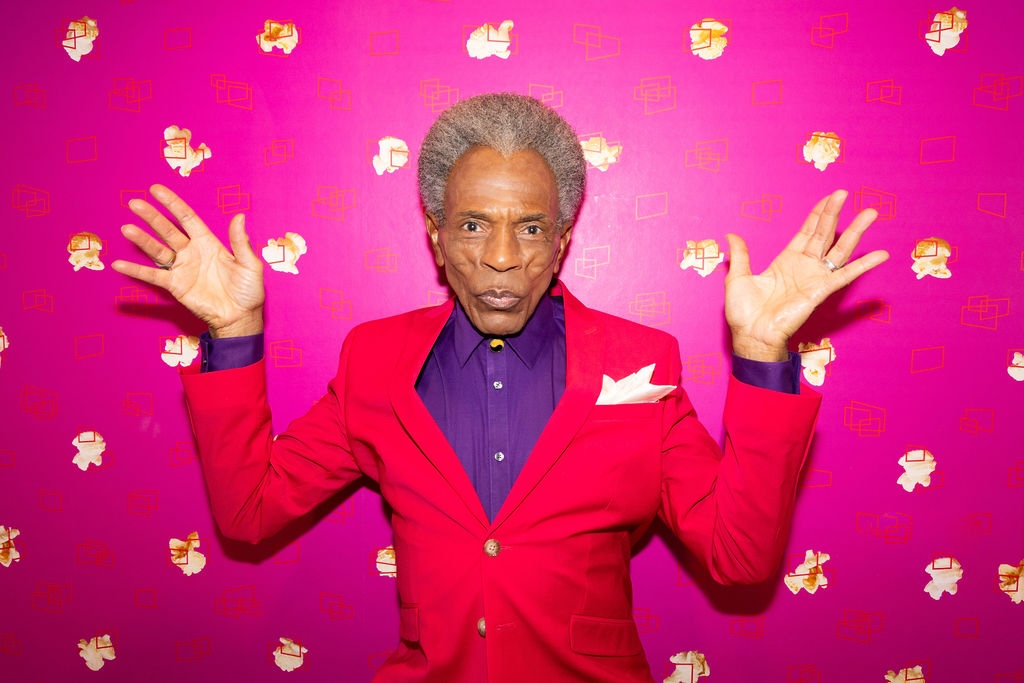
Timoth David CopneyArt, for him, must have an activist component. It should leave the world better for those coming after.
Asked what he might say to his younger self, he smiles: “You did the right thing. Keep going. No regrets.” He’s not one for advice, but he will share knowledge freely. “Old people are still kicking,” he laughs. “Maybe not as high, but still kicking.”
At one point I asked what he would like to teach Baltimore. “What I would like to do is find what I’m now describing as a multi-use space in which I would live and into which I would invite the general public,” he says. “Because on display would be my accomplishments. Not because I want you to compliment me, not even because I want you to make a $5 donation, but I want you to see the tools that I use are available to everybody to do the work that we are set here to do, to get over this fantasy that we are lost and must find ourselves.”
As for what’s next, he teases only: “Yes, there’s something coming. But you’ll have to wait for the release date.”
Spending the afternoon with De Shields was a once in a lifetime opportunity for me. He was as gracious with his story as a royal exhibiting the concept of noblesse oblige; and this noblesse of Broadway and Baltimore did indeed oblige. I can’t wait to see what constellation this star shines in next.
This story was originally published in print issue 20: The Icons
Release date: November, 2025