There are artists who spend years perfecting their craft before they receive public acclaim. Others carefully cultivate online audiences, treating social media as both gallery and marketplace.
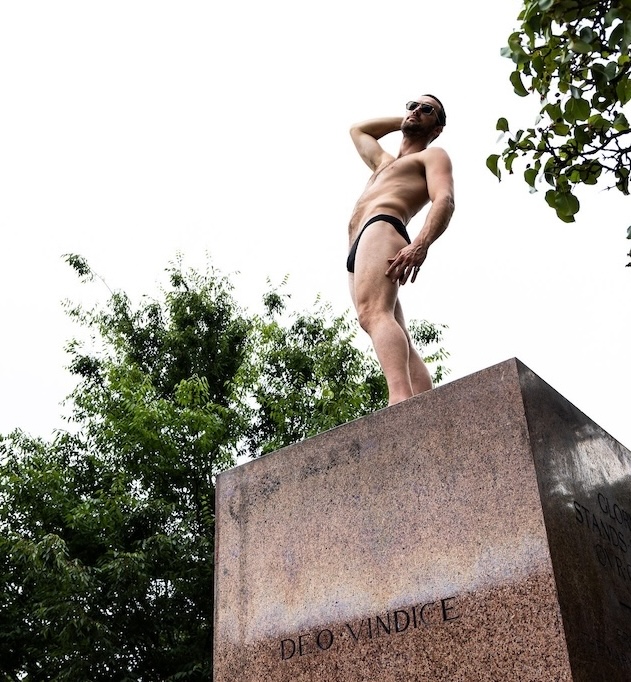
A young, Baltimore-based artist who is known publicly as Ham has rejected both approaches. Instead, he stands. Sometimes for twelve hours.
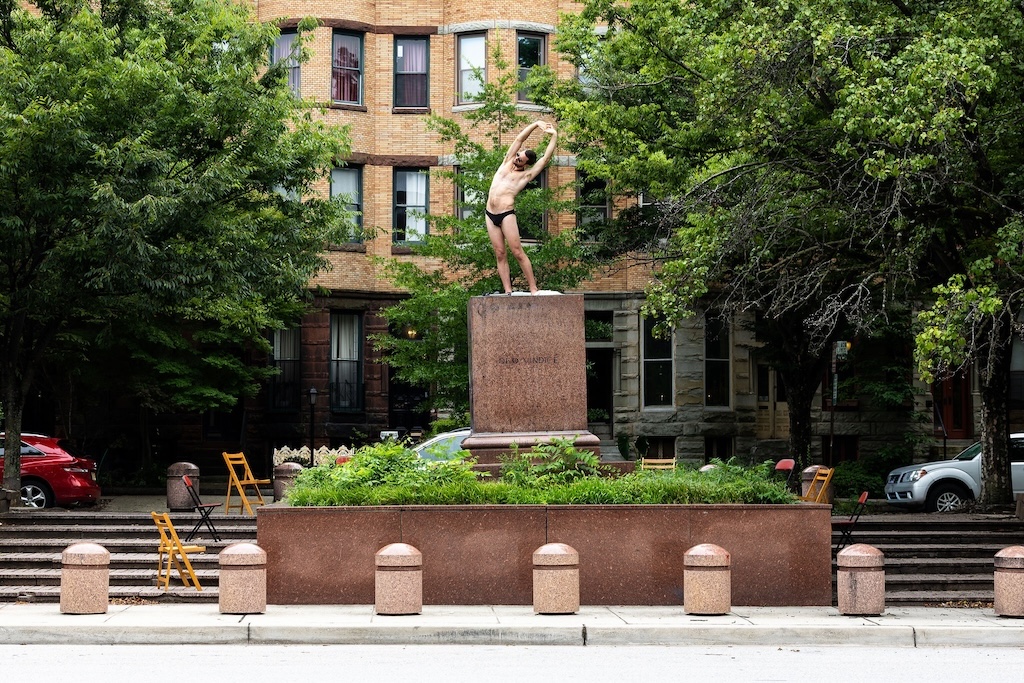
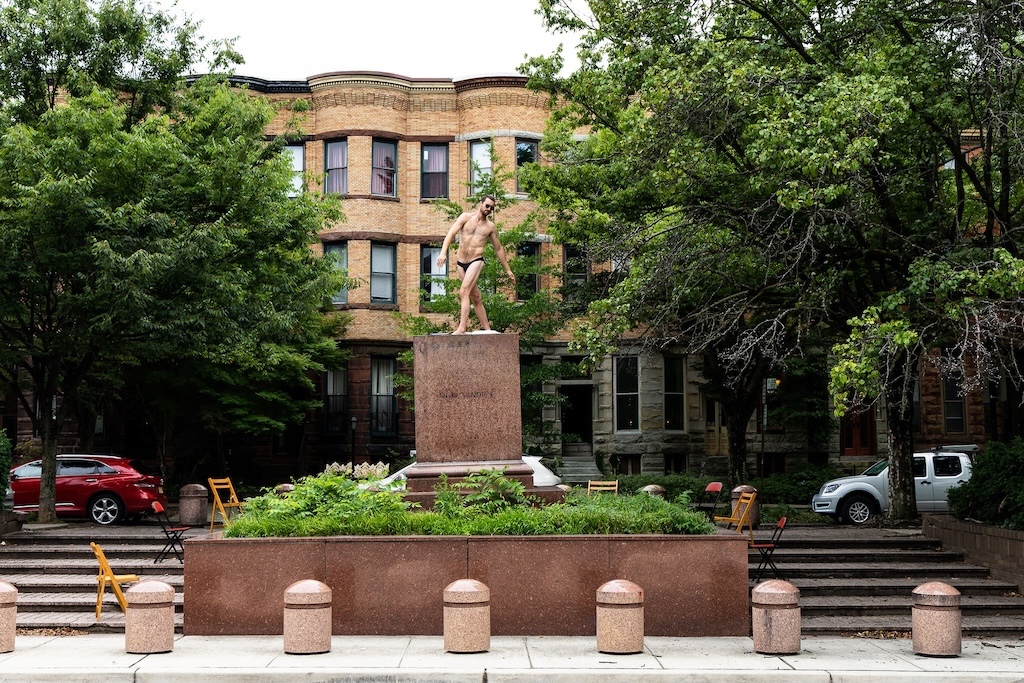
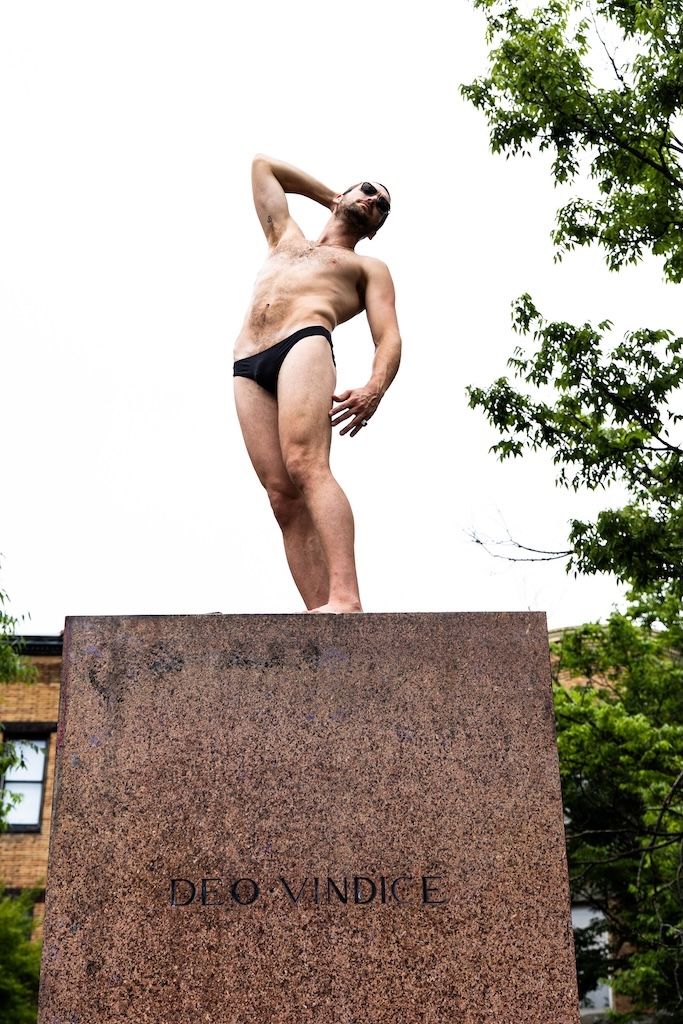
Sometimes it’s in freezing temperatures wearing only underwear. Sometimes he is completely nude atop Baltimore’s empty monument plinths, transforming himself into living art that is impossible to scroll past. His July 4 arrest on the former Christopher Columbus monument in Baltimore’s Inner Harbor made national headlines, but the performance itself was years in the making.
Performance artists of the 1960s and ’70s seem like an obvious influence on Ham’s art. Artists like Chris Burden, Carolee Schneemann, Vito Acconci, Marina Abramović, and later Tehching Hsieh used their bodies as their medium, enduring pain, discomfort, isolation, or extraordinary durations in performances where endurance itself became the art. Nothing existed beyond the action. Documentation of the action was just a byproduct.
However similar Ham’s performances appear to endurance artists, his philosophy is actually much more aligned with Andy Warhol. In his 1975 book, The Philosophy of Andy Warhol (From A to B and Back Again), the artist issued the famous, albeit cliched, quote: “Making money is art and working is art and good business is the best art.”
Warhol understood something many artists preferred not to admit: art and publicity have always been intertwined. Long before social media transformed artists into brands, Warhol treated celebrity, commerce, and self-promotion as artistic materials equal to paint or film. The Factory, Interview magazine, television appearances, parties, collectors, and celebrities weren’t distractions from the art. They were the art and Andy Warhol himself was the commodity.
Over the past few weeks in Baltimore, Ham has stepped into an unusual position between these two distinct art histories, after enacting a number of public performances in the region. Like many endurance artists, he stands nearly motionless for hours in public, often in extreme weather and sometimes completely nude. But unlike his predecessors, he insists the performance isn’t his primary art–it’s just marketing.
When we met for coffee at Doppio in Remington, I expected to talk about nudity, controversy, and the legal questions surrounding artistic expression. Instead, our conversation became something much more broad: a discussion about visibility, public space, authorship, and what it means to build an artistic practice in an age where attention often matters more than objects.
Ham insists he didn’t set out to become a performance artist. Trained as both an engineer and sculptor, he describes performance as the inevitable result of refusing social media while still wanting to build an audience. Rather than making content, he became it. His art—a collection of paintings, sculptures, photographs, and journal pages—remains in his Hollins Market gallery, largely unseen and deliberately absent from social media.
In an age when artists are expected to feed a constant stream of images into an algorithm, Ham has arrived at an unlikely proposition: if visibility has become contemporary art’s most valuable currency, perhaps the artist—not the object—has become the primary medium. Whether that idea feels radically contemporary or strangely old-fashioned remains an open question.
Our conversation has been edited and condensed for clarity.
Cara Ober: You often describe what you’re doing as “anti-marketing.” What do you mean by that?
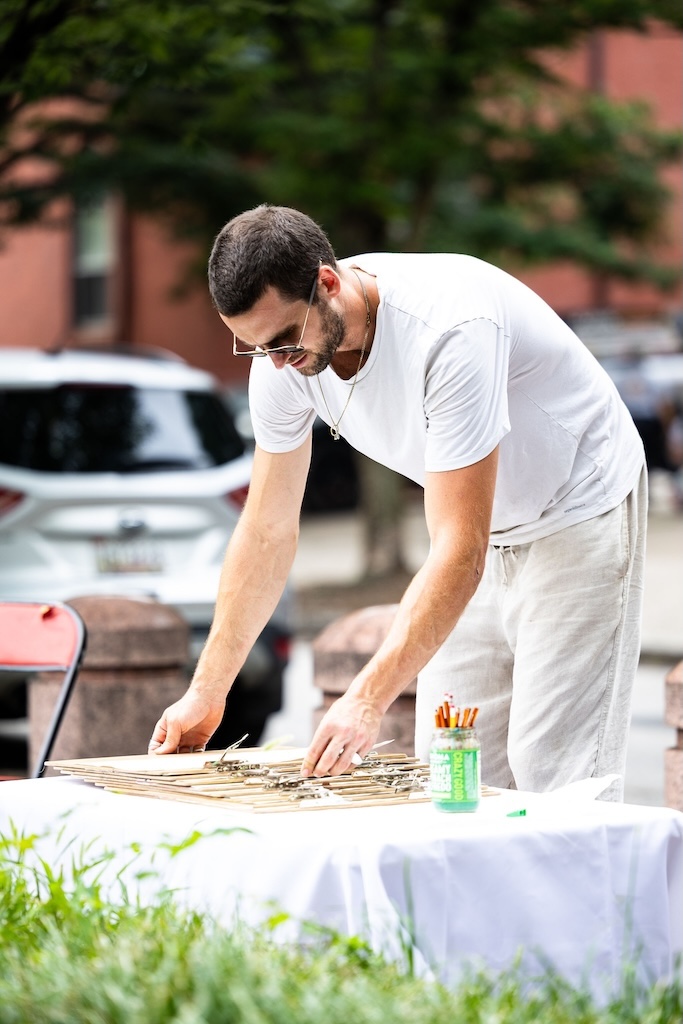
Ham: When I decided I wanted to be an artist, everyone told me I needed Instagram. I rejected that completely [until recently, with the performance series]. Every artist I knew was competing for attention online, so I thought the easiest way to stand out was to do the opposite. Instead of promoting my art digitally, I started promoting myself physically.
I’d sit outside my apartment with a snake draped around my shoulders, a painting beside me, shirtless in sweatpants. It created this strange situation where someone had to really want to engage before they’d come over and ask what was happening.
I called it anti-marketing because I wanted fewer superficial conversations and more meaningful ones. Later I realized something else: I’d rather be the content than the content creator.
Ober: You didn’t originally think of yourself as a performance artist.
Ham: Not at all. I didn’t even know that’s what I was doing until classmates told me at my ten-year high school reunion. I was trying to solve a practical problem. I wanted to build an art career without social media. Performance was simply the solution that emerged.
Ober: Your background is unusual. You studied engineering before becoming an artist.
Ham: At Dartmouth I was an engineering and studio art major. Originally I cared about understanding exactly how things worked. But, eventually I realized I cared more that something worked than why it worked.
That was a huge shift. I became comfortable trusting an aesthetic instinct and spatial intuition instead of needing scientific proof.
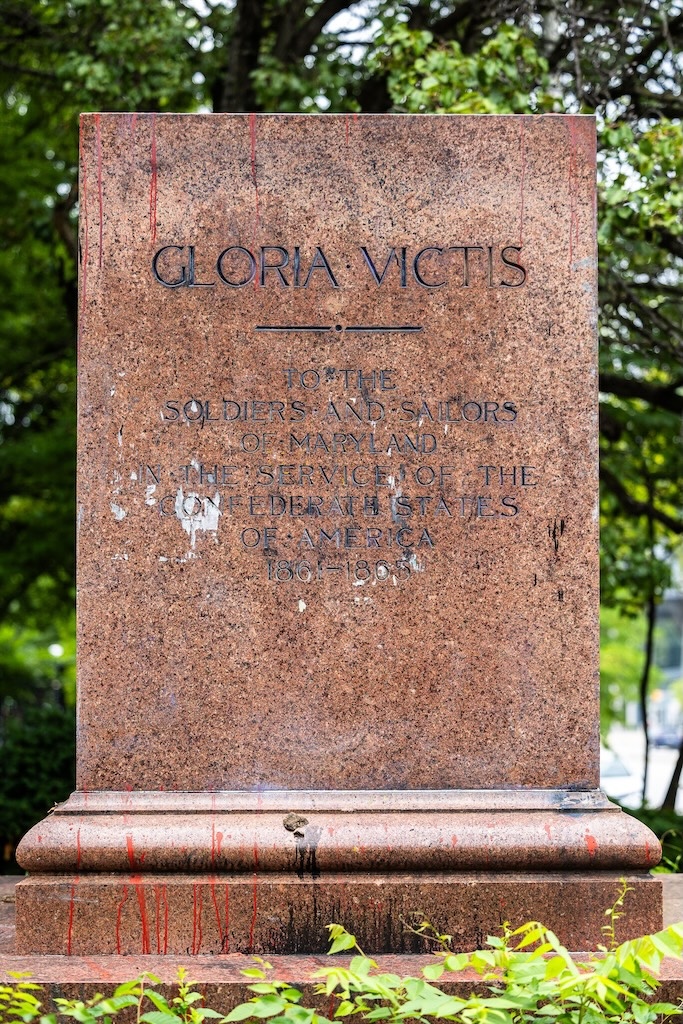
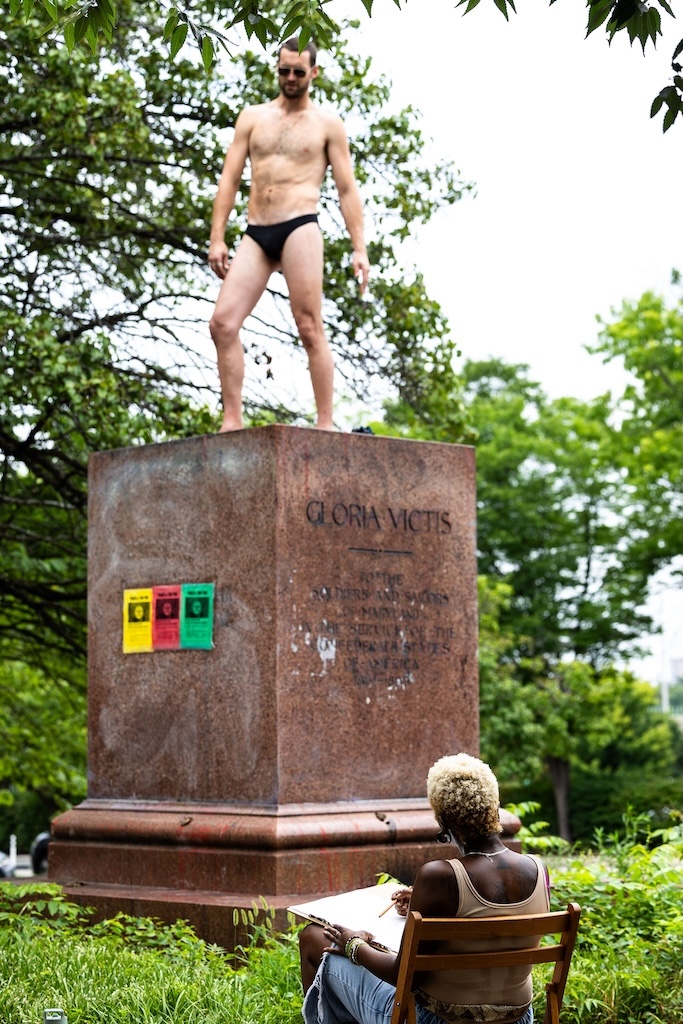
Ober: Your recent performances on Baltimore’s vacant monument plinths immediately invoke public sculpture and art history. After Confederate monuments and Christopher Columbus were removed, Baltimore was left with these empty stages. Why those sites?
Ham: Because people already understand they’re places where society decides who deserves visibility. I’m interested in who occupies those spaces and why.
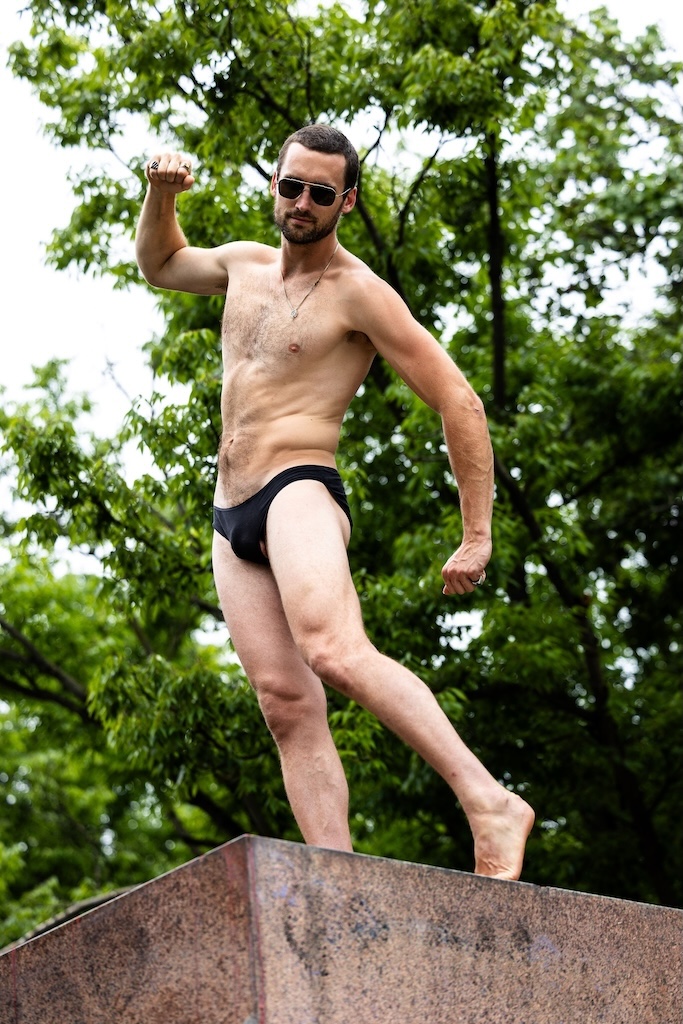
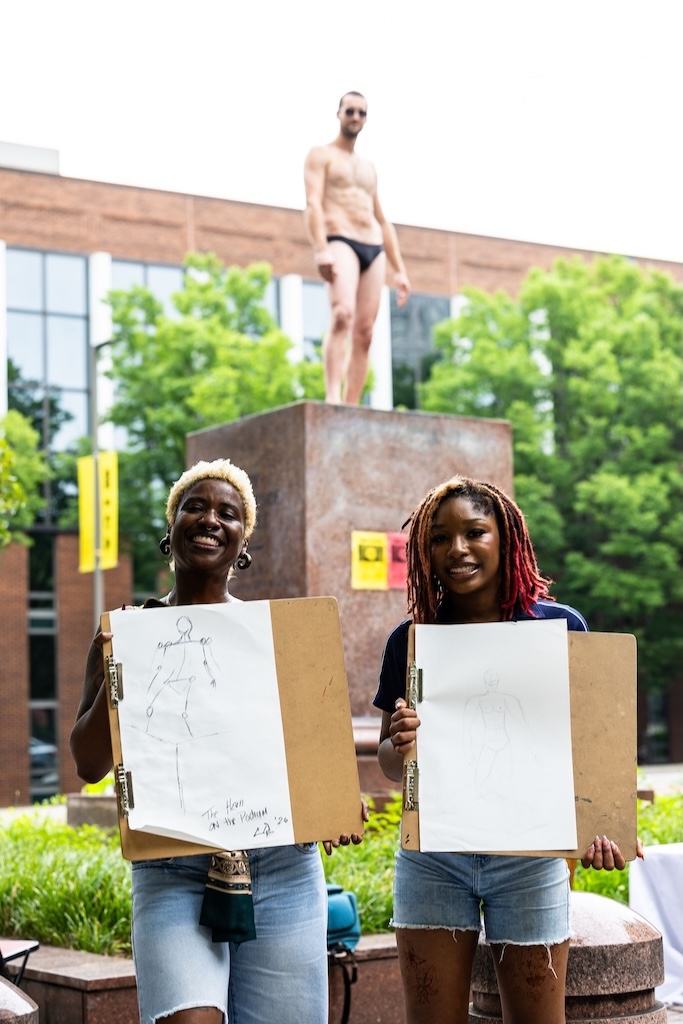
Originally the performances weren’t political. They were about endurance. I’d stand outside for six to twelve hours in freezing temperatures wearing almost nothing. People eventually couldn’t ignore it. They had to ask what I was doing. Initially I just wanted to introduce myself as an artist and talk to strangers – the perception of protest was projected onto me and eventually I ran with it to continue the conversation.
Ober: Your art inevitably raises questions about nudity and the history of the body in art—from classical sculpture to performance artists like Matthew Barney or Carolee Schneemann.
Ham: What interests me isn’t nudity. It’s our inconsistent relationship with it. We’re comfortable seeing nearly naked bodies in advertising everywhere. We’re comfortable with sexuality being used to sell almost every product imaginable. But we’re uncomfortable encountering an actual human body in public. Why?
I think we’ve suppressed the body so much that we’ve become obsessed with it. The body itself isn’t inherently sexual. We project sexuality onto it.
Ober: Your arrest last week in Baltimore and subsequent Sun and Banner articles garnered a lot of attention.
Ham: Which is unfortunate and inevitable… I’d spent years doing performances in different cities, but no one cared. Then suddenly there was a photograph of me lying naked on the pavement in handcuffs surrounded by police and suddenly, everyone cared. That image communicates something immediately. Whether people agree with me or not almost becomes secondary. The attention creates the opportunity for a conversation.
Ober: Listening to you, it seems like you’re treating narrative itself as an artistic material.
Ham: Absolutely. The value of art has always depended on narrative. Take the Mona Lisa. People think it’s inherently the greatest painting ever made. But, for centuries hardly anyone cared about it. Then it was stolen and it became a huge story. Now it’s priceless. Narrative changes value. The art world already understands that; I’m just making the narrative visible.
Ober: What did you mean by saying that you’d rather sell your body than your art?
Ham: I’m making paintings and sculptures, taking photos and writing journals—all of that exists in my gallery and will outlive me so I’m not interested in flooding the market for pennies on the dollar of what I’m betting it will be worth in the future. Right now my body is introducing people to my practice. Once people know who I am, they’ll eventually come looking for the art.
Ober: The art isn’t really about becoming famous for its own sake.
Ham: No. My gallery is in Hollins Market. None of the art is online. If people become interested, they have to come to a historic, yet underserved part of Baltimore. If they come here for me, maybe they’ll discover other artists while they’re here. And perhaps along the way, they may also grab a bite and a beer at Zella’s Pizzeria, sit down for dinner at Rooted Rotisserie, try a funky fish sandwich from Oh Honey on the Bay, or sample the treats at the new Black Cat Cafe, which they wouldn’t have otherwise come across. To me, that’s success.
Ober: That sounds almost like an economic theory of art.
Ham: It is. The art market pretends value comes from objects, but I think value comes from attention and community. Objects become valuable because people care about the person who made them and the space in which they exist.
As a kid, I hated going to museums because I was always told who made something before I was told why it mattered and the pieces felt disconnected from their environment. So I am trying to reverse the process. I’m establishing the “who” first. Then, when people ask why, I finally get to talk about the art and invite them to discover a new, more authentic place.
Ober: From the outside, your performances appear pretty extreme.
Ham: That’s funny because they feel like almost nothing to me. I’m standing still. I’m wearing almost nothing. I’m not eating. I’m doing as little as possible. I’m trying to make doing almost nothing into the art. And then I welcome everything else people project onto it.
Ober: So today you’re going to be standing for 6 hours atop of the empty Confederate sculpture plinth on Mount Royal Avenue, wearing bikini underwear. What are your goals?
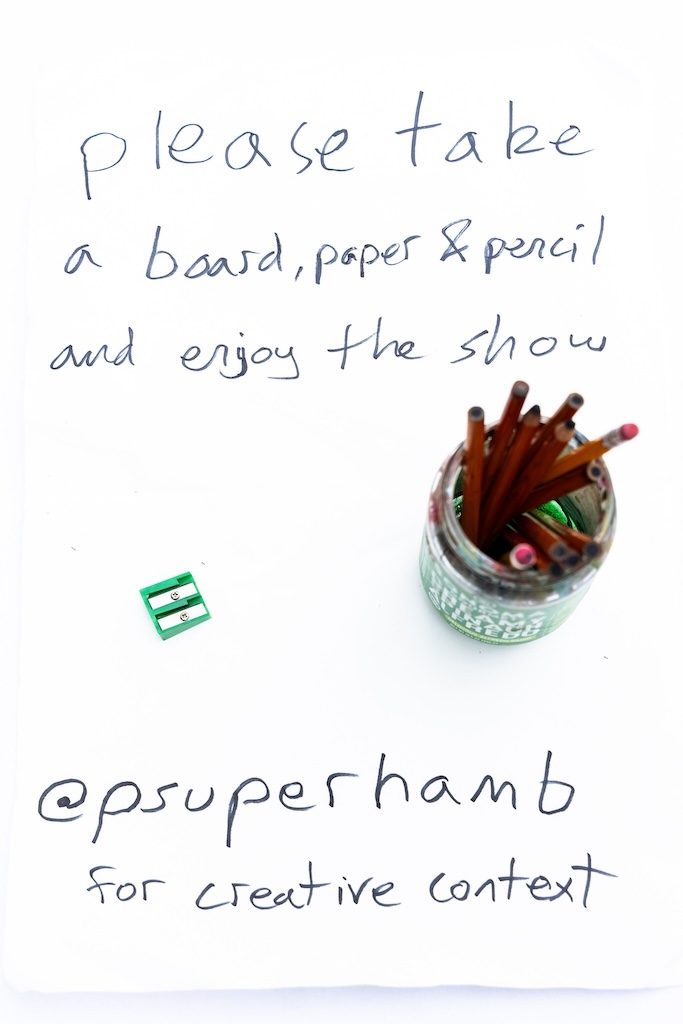
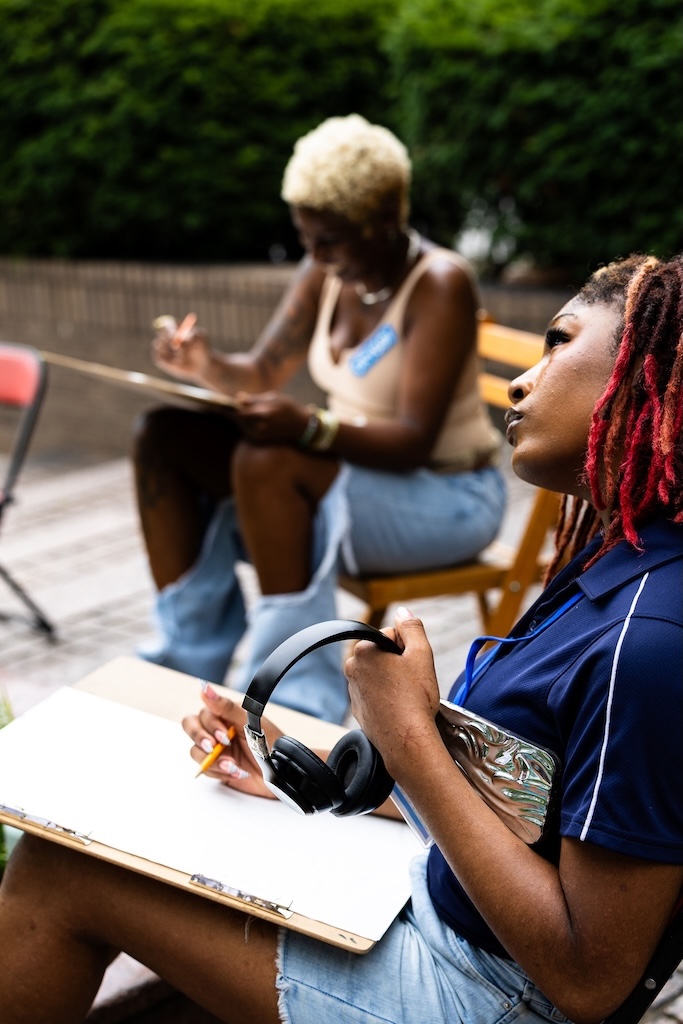
Ham: I do this project so that I can learn from people. The more that I’ve done it, the more that I’ve learned about myself, why I’m doing it, who I’m doing it for. And it’s all a function of having conversations with people and them giving me their feedback. Someone recently told me, it appears to lack purpose to the average passerby, and I think that confusion can often lead to frustration because we fear things that we don’t understand.
If a man is in skimpy boxers and running down the street in New York or Baltimore or wherever, nobody bats an eye because he’s on a run and it’s hot. And so it makes sense that he doesn’t want to be wearing clothes. And even if he stops at a stop sign for 30 seconds, it’s not inappropriate because he’s moving around a little bit. If I’m in the same exact outfit on the same exact corner, but instead of running, I’m standing there for 12 hours, all of a sudden it’s just confusing. And the purpose is not immediately interpretable, but it inspires conversation.
Ober: And the conversation is about the creative economy, as well as questioning the way an artist can connect with new audiences.
Ham: As a series, “controversial figures (drawing)” explores the concept of “casual nudity” and in the context of the monuments, I am using nudity to ask the question: if we’re stripping down symbols of slavery, where do we draw the line? (pun intended) As most manufacturing, fashion in particular, relies on effective or literal slavery so despite the lack of intention and the legal obligation, choosing to wear clothes is still a form of participation in that economy.
Ober: Last question: Are you wearing sunscreen?
Ham: No. I don’t like putting chemicals on my body.