This October, 2025, I attended the opening night reception of Everyman Theatre’s production of Art. The lively crowd, enjoying the wine and charcuterie, were a perfect example of Everyman’s appeal and its respected place in the theatre community—and in Baltimore at large. The show that followed was insightful, hilarious, and poignant, with outstanding performances by the small cast. This was the apt denouement to my interview with Vincent Lancisi, founder and artistic director of the theatre.
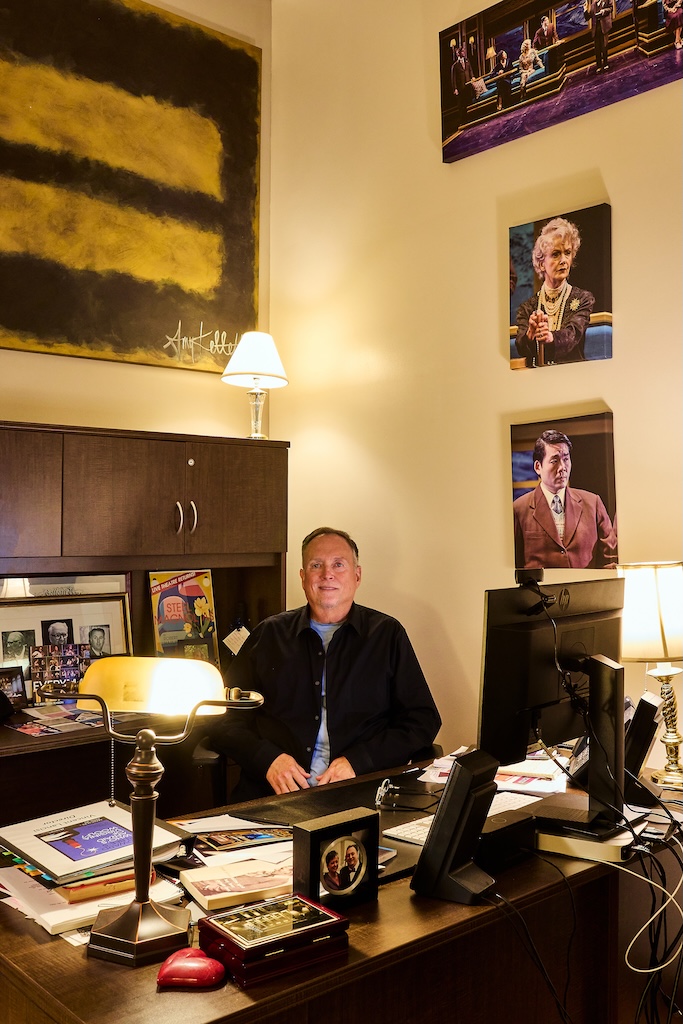
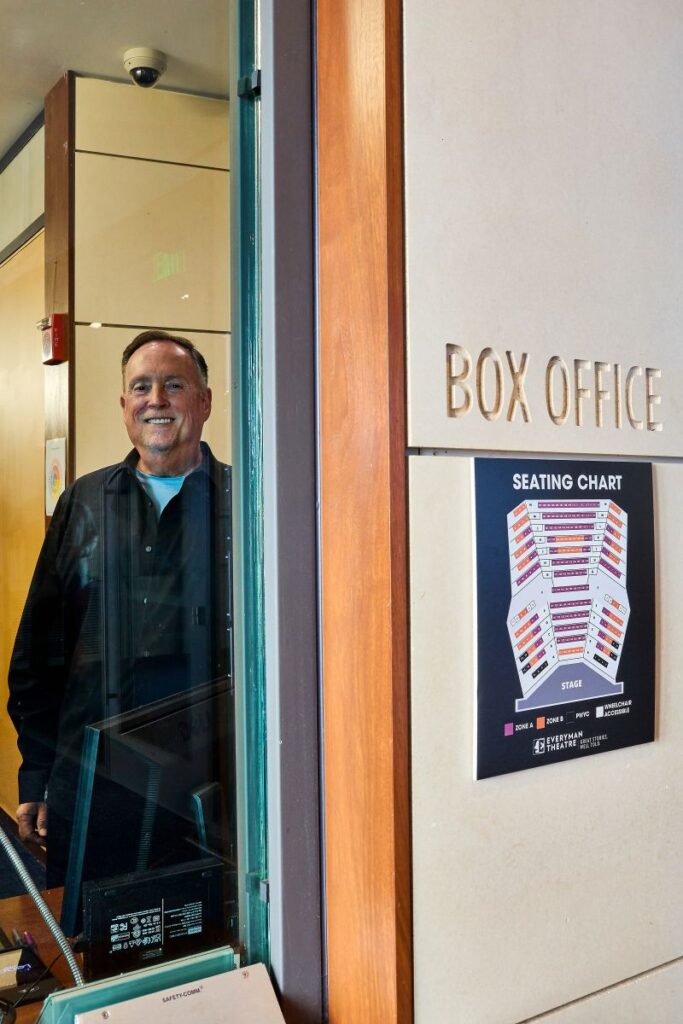
I met Lancisi at Everyman only a week before that opening—notebook and recorder in hand, curiosity honed by years of covering Baltimore’s stages. “Lancisi, it’s pronounced Lancheesie,” he corrected me kindly. Our conversation unfolded, revealing a career rooted in vision, a willingness to take risks, and devotion to both actors and audiences.

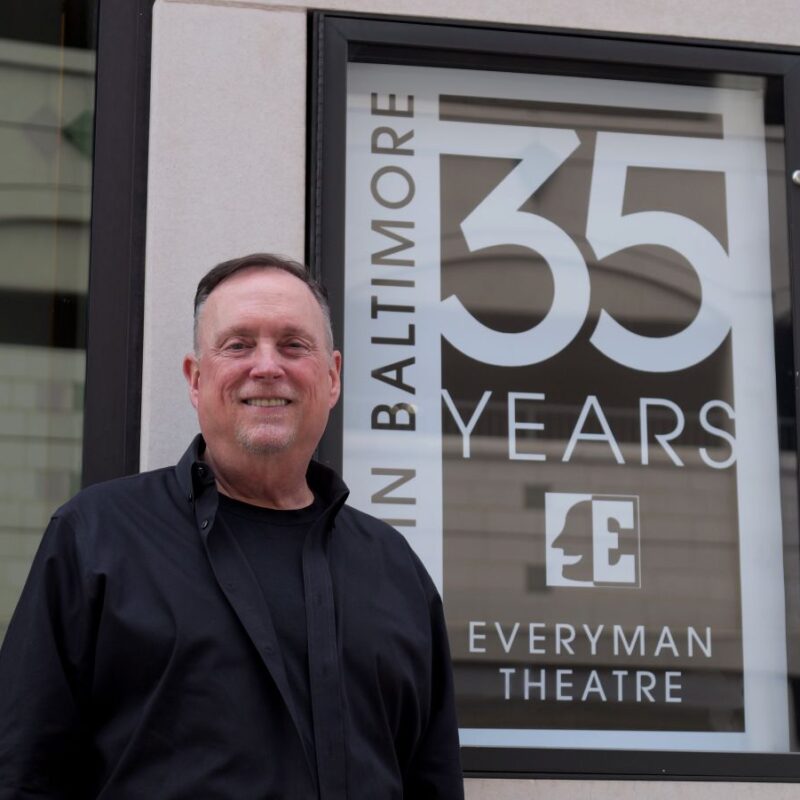
Lancisi grew up in Massachusetts, the son of a professional musician who also taught piano. After graduating from Boston College and earning a master’s in directing from Catholic University in Washington, DC, he knew he wanted to create his own theatre company. That ambition led him to found the theater company that would become Everyman, launching its first production, The Runner Stumbles in late 1990. In the early years, the company had no permanent home, yet they managed to produce a show every year or so. By 1994, they found their first space on Charles Street, where they stayed for 18 years.
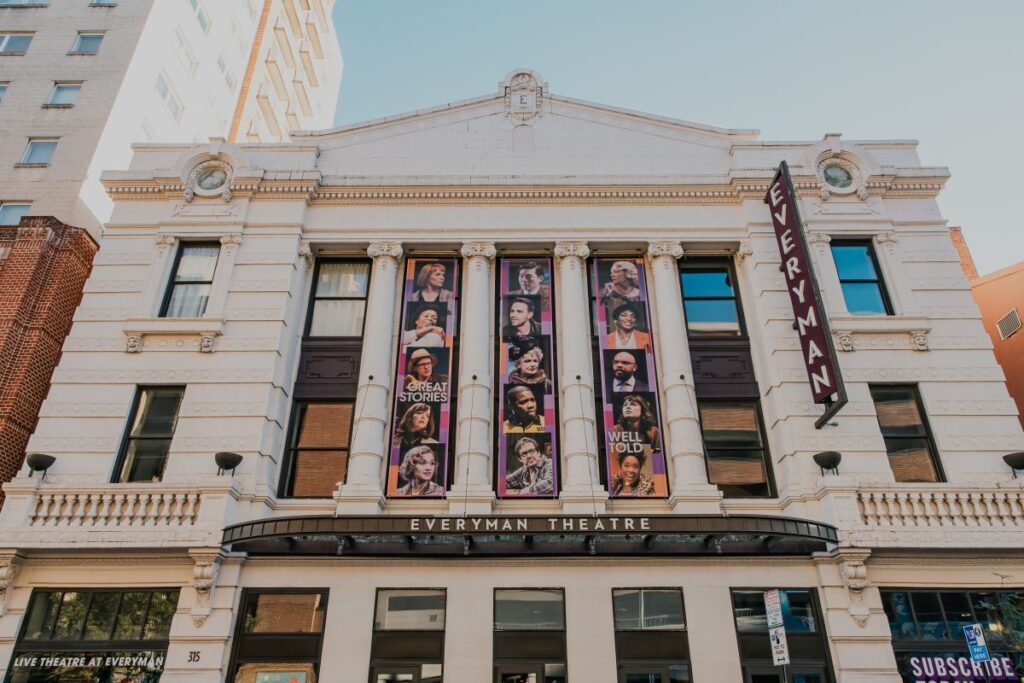
“It was intimate because we didn’t have much space,” Lancisi recalls of the small venue. “But that’s what made it such a good experience theatrically.” Even decades later, that sense of closeness remains a hallmark of Everyman. By 2014, the company had completed an $18 million fundraising campaign and moved into its current headquarters, a beautifully restored building in downtown Baltimore. Over the years, Lancisi has directed 58 productions while Everyman has produced over 180 plays, always guided by a commitment to make theater welcoming, relevant, and affordable—a philosophy evident in every choice he’s made, from repertoire to casting.
Looking back, he reflects on the vision that drove him from the start. “I had a dream—it was very specific—about building an institution that had two or three stages and would house a company of 15 to 30 actors who would be working all the time.” His commitment to the resident company model, inspired by Trinity Rep near his Massachusetts home and Arena Stage in Washington, shaped Everyman’s core: the actor at the center of storytelling. Lancisi is a firm believer that audiences respond exceptionally well to seeing their favorite and familiar actors in different roles, as happens in the repertory model for theatre companies.
“It’s about creating a supportive environment where actors can take risks and audiences can witness transformation,” Lancisi explains. “Two actors in an empty space… with no lighting, no sound, no costumes, no script, no direction… that’s what I’ve been interested in my whole life. How can I support actors in their storytelling? How can I provide an environment that is rich, that lifts them up, allows them to do their best work?”
That dedication produces what he calls Everyman’s “secret sauce” —the relationship between the ensemble and the audience. “They (the actors) become local celebrities. And so people want to see what they’re going to do with this particular role and how it’s different from the one before. Which is why I am attracted to actors who transform.”
Vincent LancisiIt’s about creating a supportive environment where actors can take risks and audiences can witness transformation.
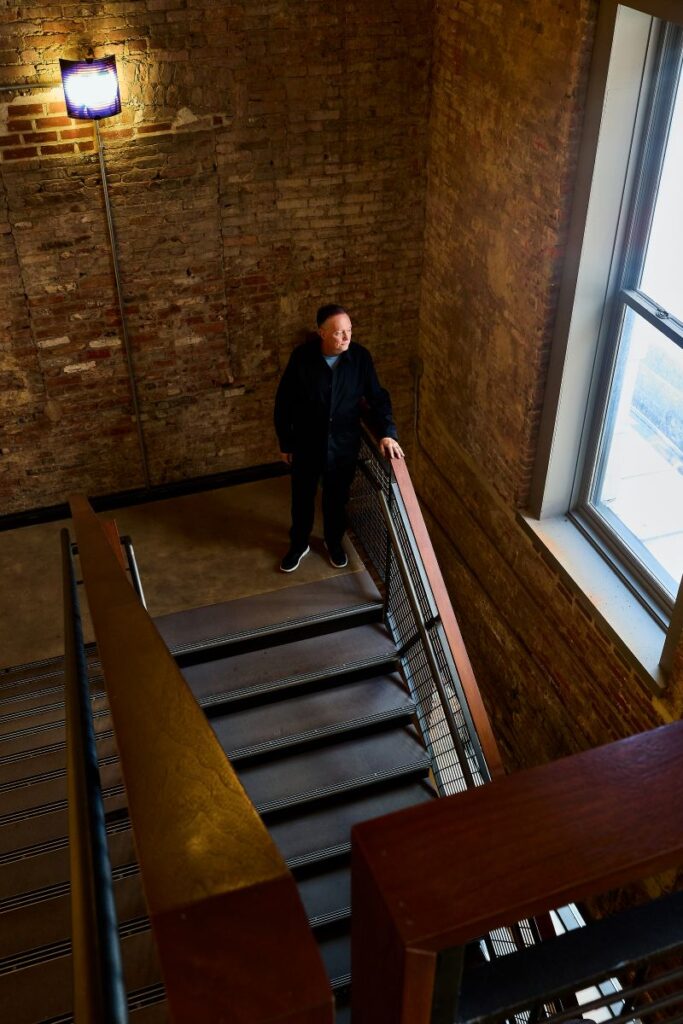
For actors, working together over decades creates an unspoken rhythm and a shared aesthetic. Newcomers are welcomed into a disciplined, collaborative culture, learning the company’s language and philosophy as they contribute their own voices.
Lancisi speaks about the resident company with quiet pride—not as a marketing hook, but as the heartbeat of the theatre. “They’ve grown together. They know how to listen to one another on stage.” For him, the resident company has always been a place to tell stories that feel authentically lived-in.
He has added only two new members recently: R.J. Brown and Chinai Routté, both rising stars with deep connections to the company’s history and values. Each addition strengthens the ensemble’s capacity to explore new roles while honoring the company’s traditions. “One of my parting gifts to the next artistic director is to leave the larder well stocked,” he said, with the gentle humor that punctuates so much of his reflection.
Over the decades, Lancisi’s artistic vision has remained remarkably consistent. His core values have not shifted. Yet Everyman has evolved alongside society. The theater has embraced younger, more diverse audiences, recognizing the urgency to reach new communities as longtime baby boomer patrons naturally diminish. “Theater is an organism that needs feeding and nurturing,” he said.
Vincent LancisiTheater is an organism that needs feeding and nurturing.

This evolution extends to playwrights and programming. Early seasons relied heavily on familiar works, predominantly by white men, because they were financially reliable. Over time, Lancisi’s perspective broadened: voices previously excluded—female, BIPOC, LGBTQ+—deserved platforms. Leadership, he insists, is about assembling a capable and trusted team. Stability and trust within the company, built over decades, allow both creative and operational efficiency. New associate artistic directors, younger and from varied backgrounds, now complement his decades of experience, ensuring fresh perspectives and continuity.
One of the most important aspects of Everyman’s evolution was recognizing that the theater had not fully reflected the city—a city that is 65% Black. “By doing those famous plays that people wanted to see, I was being financially responsible. But I didn’t realize all the voices we were denying that were equally as creative and talented. And deserved to be on our stages.” Lancisi and Everyman began actively pursuing plays by writers of color and others who were underrepresented. “There were fewer of those writers—we call them BIPOC as an inclusive term. We want their stories out there. And now it’s like we live in a golden age of playwriting. So I would say that the vision, the aesthetic, the core values of the organization haven’t changed, but the curation has.”
Planning a season, he explained, is a careful balancing act. Each line-up is curated to offer classics and new works, comedies and serious plays, mostly non-musicals, and occasionally a surprise. Crucially, the company’s talents shape selection: roles are chosen to stretch actors’ abilities while highlighting their strengths. Bruce Nelson, for instance, previously typecast as a comedian, has been cast in profoundly serious roles under Lancisi’s guidance, revealing unexpected depths. Lancisi works with his three associate artistic directors to curate the season collaboratively.
The theater’s DNA goes beyond artistic decisions. “Starting a theater is a hugely risky proposition…to keep a professional theater alive, you have to be the best you can be. Even if ticket sales are strong, you have to raise a dollar for every dollar you earn,” he said. It’s a gamble he embraced daily for decades, with tenacity and by his leadership. Everyman’s story is, above all, about commitment—to actors, to audiences, and to the city. Lancisi’s philosophy is simple but profound: support the artist, tell compelling stories, and remain deeply connected to the community. One of the defining taglines of Everyman is ‘Great stories, well told.’

As Lancisi looks forward to stepping back, he is confident that the groundwork he and his team have laid will continue to advance the theatre’s core missions. The next artistic director inherits a company strengthened by experience, diversity, and a culture of creativity. “We want their stories out here…we want the next generation of voices,” he said.
The theater, he notes, is an organism; it must continue to be fed, nurtured, and challenged. And with the ensemble he has cultivated, Everyman is poised not just to survive, but to flourish. Personally, he’s looking forward to some reading that doesn’t begin with “Act 1, Scene 1, the curtain rises…” At the end of the season when he steps down, he and his wife plan to spend time at their house in Rehoboth and, hopefully, fit in a trip or two to Europe.
Everyman may be the House That Vinny Built, but not as a monument to himself; rather, it’s a home and a haven for performers and audiences alike—a place where actors are nurtured, the team breeds excellence, takes risks, and supports each other. A place where stories of all kinds find their stage. As the theater moves into its next chapter, the imprint of Lancisi’s legacy is indelible, guiding Everyman toward a future that honors its past while embracing the possibilities yet to come.