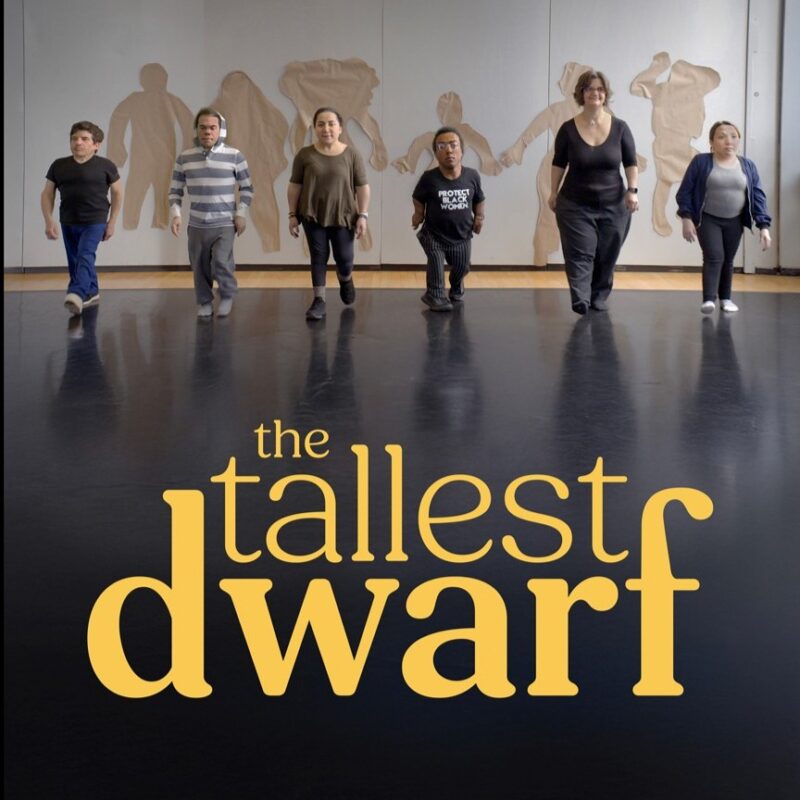
There’s a moment early in The Tallest Dwarf, Julie Wyman’s most personal film yet, when she asks her mother what she thought about her body. Her mother’s response?
“I thought you were normal.”
Wyman never quite felt comfortable in her body. Perhaps that is why her films have always shed light on embodiment and body image. A filmmaker, dancer, and UC Davis professor based in Oakland, California, Wyman has a rare form of dwarfism, hypochondroplasia dwarfism to be exact, but she didn’t start exploring and naming it until 2014. She was 45 years old when her journey started.
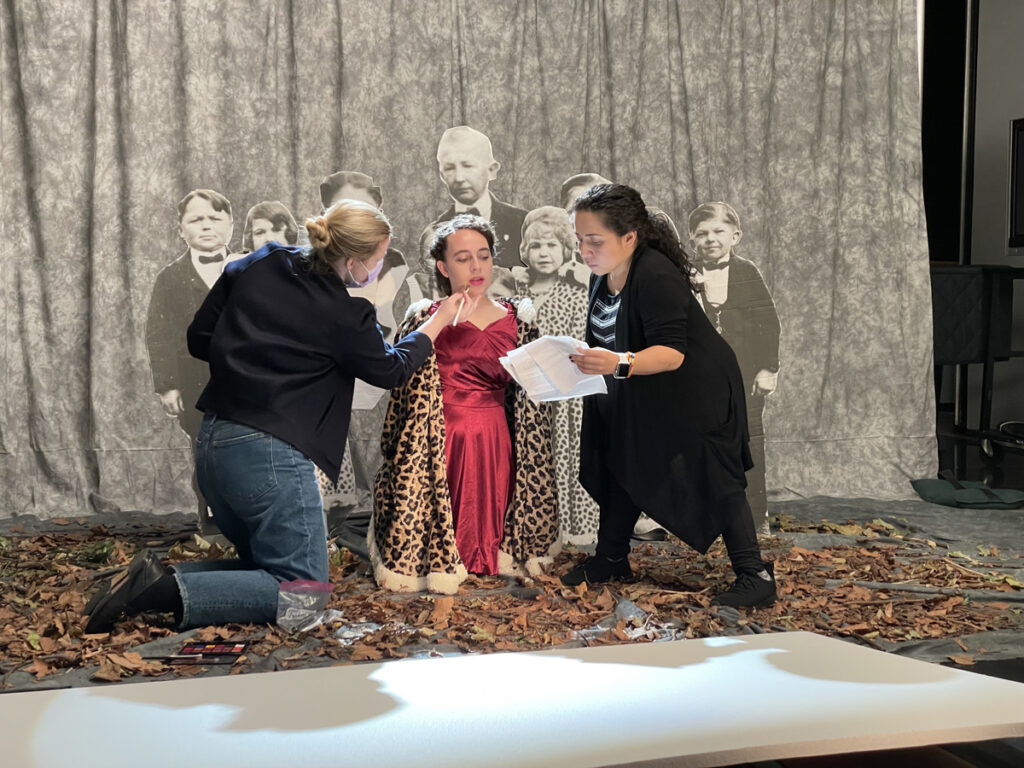
In The Tallest Dwarf, Wyman begins her investigation with her dad—with whom she shared physical similarities—measuring their bodies to compare with a book on human proportions. Her search takes her to the Little People of America conference, into the archives of little people across history, and into a studio with artists to conduct a workshop on body image. The film also explores the subject of pharmaceutical drugs which promise to make little people taller—forcing urgent questions about identity, autonomy, and whether dwarfism is something that needs to be fixed at all.
During the filmmaking journey, Wyman reached out to Baltimore-based artist Jonna McKone, who joined the project as a producer in 2022. The documentary premiered at SXSW in March of last year and, after going through the festival circuit, will air nationally on PBS’s Independent Lens on April 6. Viewers can watch it on YouTube and the PBS app as well as through local PBS stations—that’s channel 67.1 (WMPB) in Baltimore.
Before the national launch, Wyman visited Johns Hopkins University and led a workshop at Wide Angle Youth Media. I spoke with Wyman and McKone about the decade-long road to get here.
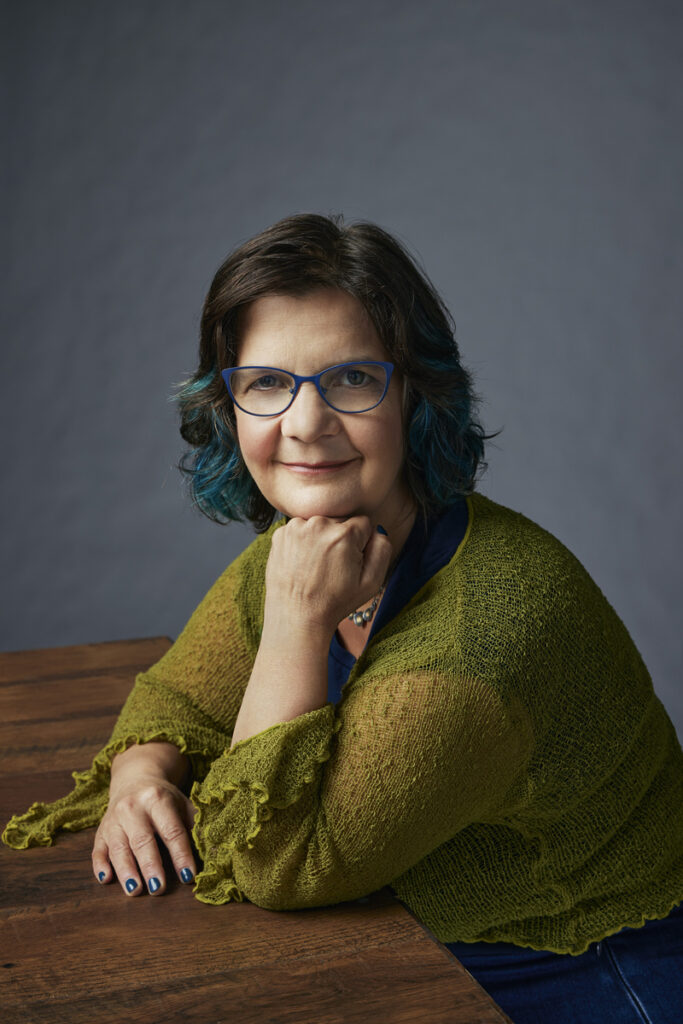
Julie WymanIt had always been kind of at the back of my mind. But also a thing that drove me to make the films I made—feeling different in my body, not exactly having words for it, certainly not a diagnosis
You’ve said you started this project in 2014, at 45. What took so long to ask these questions about your own body?
Julie Wyman: It had always been kind of at the back of my mind. But also a thing that drove me to make the films I made—feeling different in my body, not exactly having words for it, certainly not a diagnosis. I didn’t know if I was just imagining it. And your family didn’t name it either. My dad and my aunt had the same body type. I think for them, they just had other challenges that were harder for them. My grandfather was a minister, and they grew up having to be very good—they couldn’t do anything to get in trouble. When I talked to them about what it was like, they did have experiences of being teased about their short legs. But I think it wasn’t as defining for them as it was for me.
When did it become a film, rather than a personal exploration?
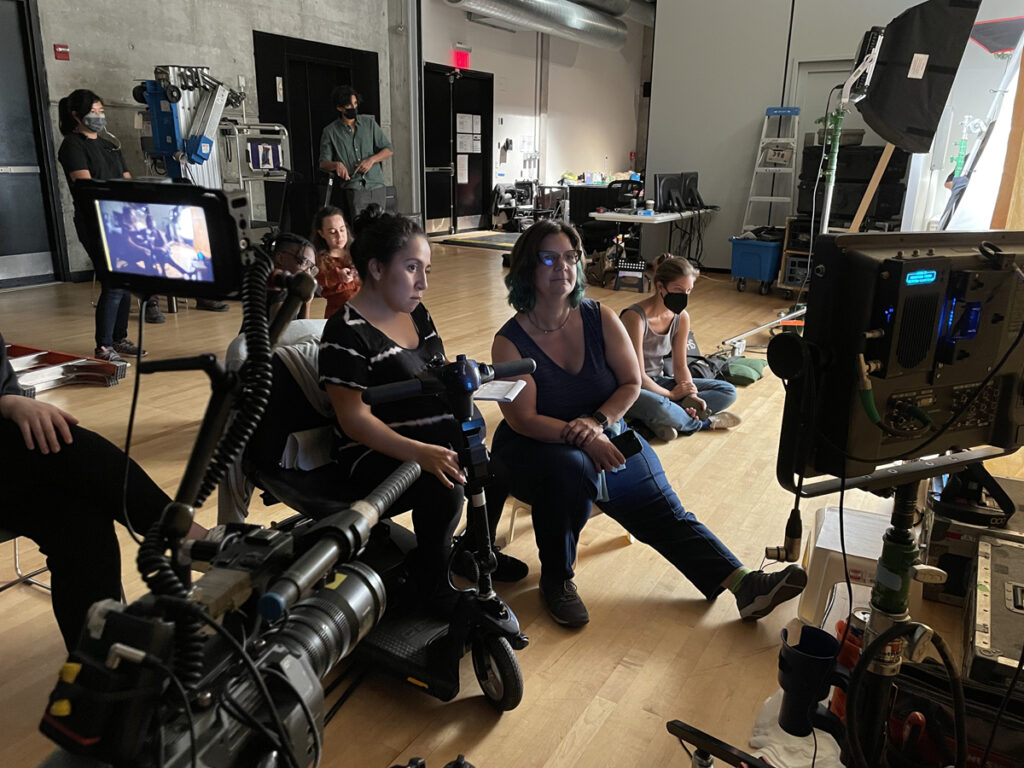
JW: Within a year or two of starting, it had opened up into something that was bringing me into the Little People community. And that act—of both being there and trying to make a film that encompassed all this delicate territory—made me realize I needed support. I needed a team to help me think through what access means, what it means to film in this community. I was so personally invested in the question.
Jonna, how did you come into it?
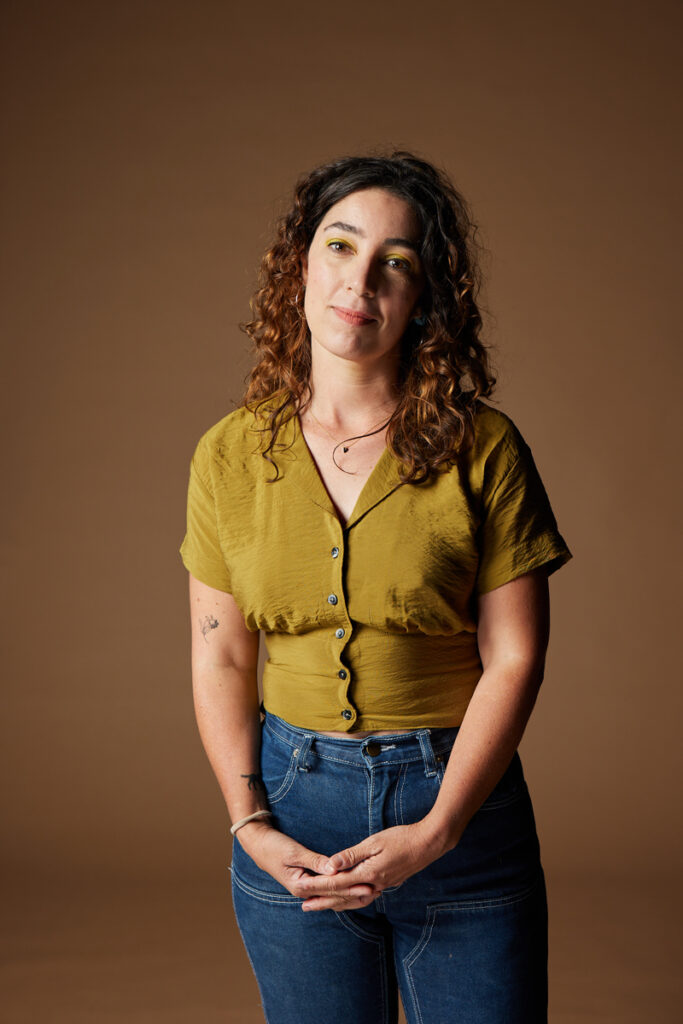
Jonna McKone: Julie reached out to me by email. She said she admired my work and was looking for a collaborator. I said yes.
You two had actually crossed paths before.
JM: We met almost twelve years ago at the Flaherty Film Seminar, before the film was even started. And then in 2022, Julie reached out more specifically about working on the film together.
Jonna, you came to this as a producer, not a director, as you yourself are a filmmaker. How did you find your way into filmmaking?
JM: I started as a journalist and got my MFA in experimental and documentary arts. I worked at WYPR here in Baltimore for a while, and at WNYC, but I really wanted to keep making work the way I had in school. The year I started producing Theo Anthony’s film All Light, Everywhere I also got a photo fellowship. It was a transformative year. Those two tracks—photography and producing—are basically how I’ve worked ever since.
Tell me about the film’s Baltimore roots.
JW: One of the shoots midway through was filming with Chandler—a young woman who had limb lengthening—and she held an annual conference for people who want to learn about medical interventions for dwarfism. Her first conference was in Baltimore. So I was there filming with her personally, and then later filming the conference that you see in the film. The project already had some roots here.
And then Johns Hopkins became part of this visit.
JW: Hopkins has probably the biggest skeletal dysplasia clinic—the place where people are treated for a lot of the complications and specialist care needed with different kinds of dwarfism. There are a few centers around the country, but Johns Hopkins is probably the biggest and best-regarded one. And some of the early research into growth hormone and medical interventions for dwarfism from the early to mid-twentieth century also happened at Johns Hopkins. So it was exciting to bring the film to people who are thinking about those questions now.
JM: Little people from all over the country come to the Greenberg Center for Skeletal Dysplasia for treatment. It really is a center for what she’s talking about. And we were able to meet with some of the folks there—thinking in very tangible ways about how the film could be used in medical education, and specifically how we work against the ableism that can infiltrate medicine. These same doctors come to Little People of America conferences. They’re right in the overlap the film is trying to talk about—community and medicine, and what the questions are.
The Hopkins connection runs even deeper—Alicia Puglionesi, a poet and scholar in Hopkins’ Medicine, Science and the Humanities program, helped bring you here.
JM: She’s a collaborator of mine who teaches in that department. She kind of invited us. There are just so many threads that connect.
And the Wide Angle Youth Media event is a different kind of engagement entirely, right?
JM: For the workshop, we’re going to focus on how your lived experience and your perspective frames how you see the world as a filmmaker, as a documentarian.
JW: These are young people who are building their skills, thinking about the possibility of telling their own stories, making projects about the worlds they want to see on screen. I’m hoping they get a chance to ask me questions that can help them go further.
The film took eleven years to make. What did that span feel like with the shifts in media and film watching?
JW: When the project cohered—maybe around 2017 or 2018—we were in the era of Netflix commissioning docs before they were even done. We’ve moved to a time that’s really different for independent documentary makers, where you piece together the support you get. Even that is a creative, piecemeal, gradual process. This is part of our work as artists—figuring out how to keep going.
JM: It really required all of that at different intervals. You’d have to pause or slow down, then money would come in. And it also shaped what we could and couldn’t do at different stages. But it was incredible to get this kind of support for a project like this—we were able to pay people, convene people to give feedback on the film and compensate them for their time, and bring in consultants to think about the edit with us.
Tell me about engaging with the Little People community and the involvement while making the film.
JW: It was quite delicate, and there was quite a learning curve. Very early on I was like, oh, there are these pharmaceutical treatments, I want to learn about them, I want people to tell me how they feel about them. And there was some resistance. It’s a topic that’s very loaded and very personal for people. Coming into community meant really deeply—on an intuitive level—starting to understand that.
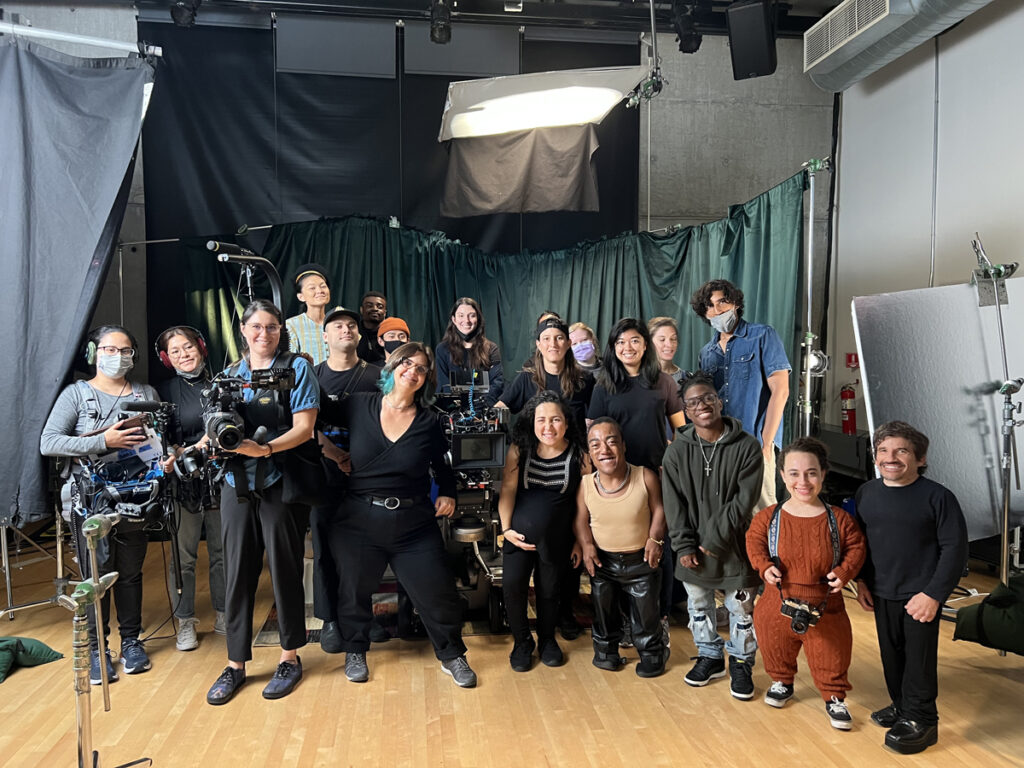
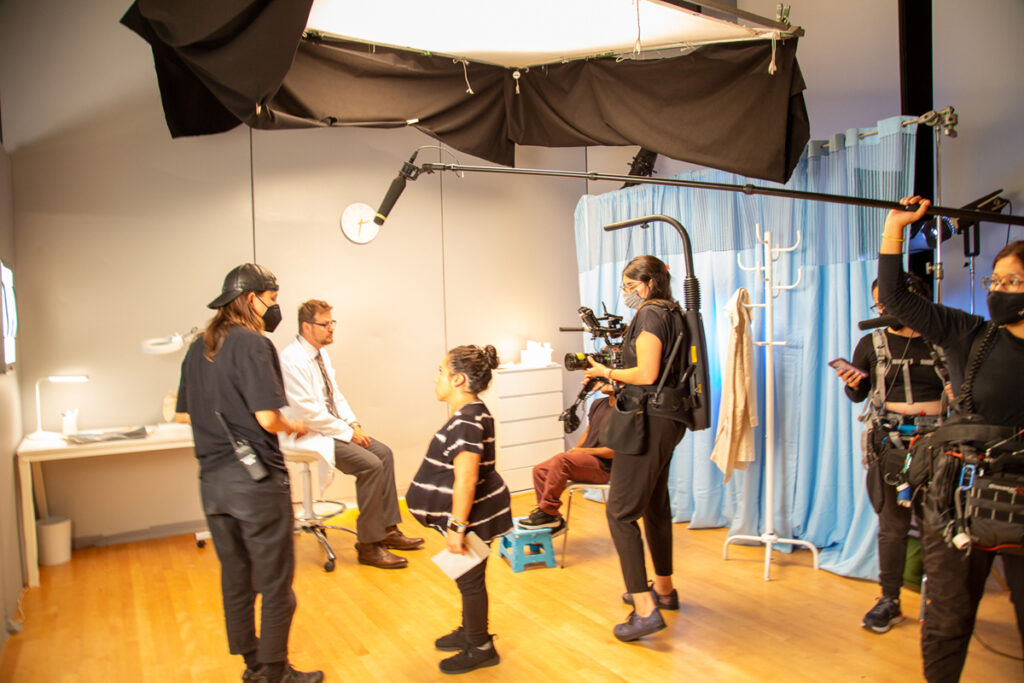
That’s why the group of performers became such a big part of the story. That was an environment designed to be filmed. We involved people who wanted to be part of the creative process. And we really worked on access on set—if people were talking about something they didn’t want filmed, they had the power to stop the camera. Consent was ongoing. The film has resonated differently inside and outside the Little People community.
Can you expand on the film’s reception from the community both from the LP and outside?
JW: The thing that sticks with me most is that the film seems to have a big emotional impact on people. It’s a feeling film. Outside the community, the common response has been people saying, I didn’t know about this world. I never thought about little people and what it means to live in this world or be in this community. Within the community, it’s been incredibly gratifying to hear—both from the people in the film and other little people who watch it—that this film does something they haven’t seen before in their representation. Specifically being in the community from an inside perspective. And the way the archival images are shown—the circus images—people have said it really shows our history and where we come from, but in a fully humanizing and empowering way, instead of just: these people are here for your entertainment.
Julie WymanI really care about trying to make more space for people to move, to feel comfortable, to inhabit the shapes we are.
What do you hope someone carries out watching your film?
JW: I want people to know that there is a way to find comfort in their own skin. A lot of us, in all kinds of ways, feel discomfort when we measure ourselves against these really arbitrary, narrow standards. And sometimes that comes through community—through friends who relate, who can reinforce that kind of acceptance. I want people to feel a sense of joy and comfort in their bodies, and to know that it’s possible to find connection especially in the things that make us feel different.
Your father is a major presence throughout the film. You dedicated the film to him—Forrest Paul Wyman, 1943–2024, who passed before the premiere.
JW: It is really sad, especially that he’s not here for audiences. He’s like the star of the show—that would have been his joy. Seeing it in a theater with a bunch of strangers is intense. It’s very powerful. It’s vulnerable. But the thing that is still most powerful for me is having him in the room. These memories come to life, especially on a big screen… somehow it feels more epic. That’s been a kind of revelation. Even though I knew he was in the film, how it feels to bring him into the world has been something I didn’t even think about until I was sitting in the theater.
So the film sort of gives you a bit of closure in your personal identity and you’ve found this new incredible community via the Little People conference. What’s next?
JW: I hope I’ve gotten a lot of the personal stuff out of the way with this. This was my exploration—exhuming and celebrating and playing with a lot of my personal journey. But I really care about trying to make more space for people to move, to feel comfortable, to inhabit the shapes we are. I think that will continue to inform what I make films about and where I go, filmmaking-wise, next.