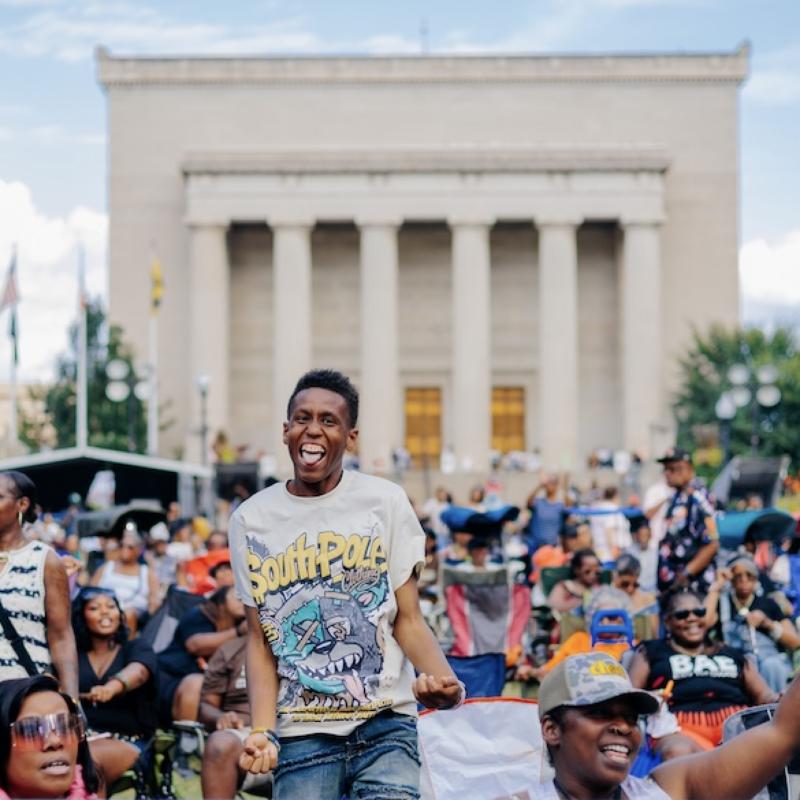
The sound emanates with such intensity that the tower of speakers becomes a shaky blur. I can feel the music more than hear it or even see the room—the thumping bass pulsing through my body while multicolored lights flash onto a sea of dancing figures. Even though light moves faster than the speed of sound, the visceral nature of the music dominates my senses first. Ultra Naté stands at the helm of the blinking DJ decks like a pilot in a cockpit. Yet her command of the dance floor at the Paradox is more akin to a preacher; hundreds of people groove to the music as if in a trance.
It is here, at Ultra Naté’s Deep Sugar party, that you might catch a glimpse of what our society could be—with Naté as our leader, music as the medium, and dancing as the act that brings us all together regardless of race, gender, class, creed, or sexuality. Like the lyrics in her 1997 hit, Free, you feel the soundness of “if we open up our hearts, love can finally start… ‘Cause you’re free to do what you want to do.”
For four decades, Ultra Naté (her real name!) has been an integral part of the Baltimore music scene. Born in Havre de Grace, Maryland and residing in Baltimore since her childhood, Naté veered away from studying medicine when she began writing original songs and performing with music producers The Basement Boys in the mid 1980s.

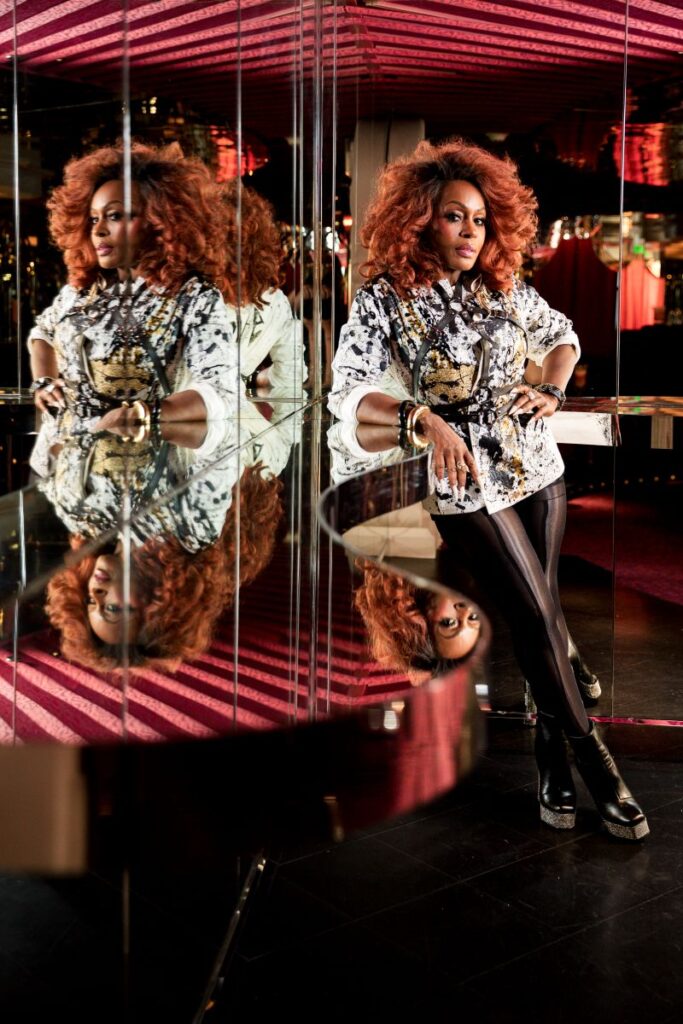
Ultra NatéIt was easy for me to migrate from the dance floor to making music because the opportunity presented itself with no judgement and no fear.
Her interest in creating music stemmed from the underground dance culture of Baltimore. She found herself at home as “a club kid at Odell’s,” a former nightclub located on North Avenue known for its sound system and good vibes. “Everyone just got into the soup together and danced ’til the sun came up, then we’d meet you back next week and go to ‘church’ again,” she remembers. “Once I stumbled into underground house music culture, it opened up a lot of different avenues and worlds for me that were full of exciting new adventures around every corner. I found a sense of freedom and self-discovery in the process. I’ve been on that journey ever since.”
When the Basement Boys sought out singers for collaborations, her nonchalant attitude and approach was exactly what they were looking for. “It was easy for me to migrate from the dance floor to making music because the opportunity presented itself with no judgement and no fear,” she recalls. “And so I stepped into that and experimented. It turned into a career with a major record label.”
In the early 1990s, Naté signed a deal with Warner Records in the UK and achieved international acclaim as her early hits climbed Billboard dance charts. In 2016, she was named #12 among “Billboard Top Dance Artists of All Time”—ahead of Whitney Houston, Lady Gaga, and Katy Perry. By the time she released Free in 1997, her status as an icon in the electronic dance music scene, particularly among the LGBTQIA+ community, had long been established. Yet it’s this particular track that has been her lasting legacy, cherished by so many—including Paris Hilton, who calls it her favorite song.
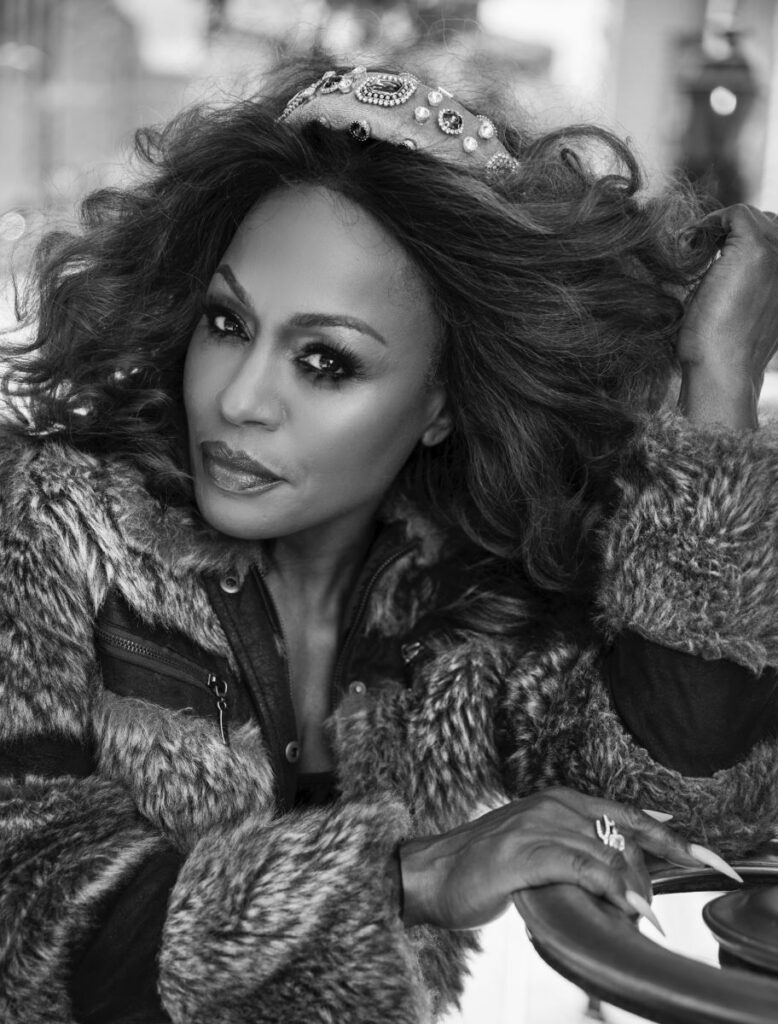
House music was “the ‘daughter of disco’… it was the music of rebellion and a much maligned community finding their own safe space,” Naté says, acknowledging the genre’s connection to vogueing and ballroom culture as well as the music’s many pioneers who lost their lives during the AIDS crisis. “It’s underground and it becomes really cool, and then the world figures it out. That’s what happened in the Baltimore scene and with the greater dance music culture and the LGBTQIA+ community at large.” By the late 1980s to the 90s, house music became an instrumental part of mainstream pop.
“As time went on, the industry started to change, especially in Baltimore,” Naté recalls. By the turn of the century, club-goers’ interest largely shifted to hip hop and R&B. “As things got tougher, it became incumbent upon me to add whatever I could to our scene here in Baltimore, as it had poured into me early in my life and early in my career, and so I became a club promoter.”
Naté found herself at home one night in between tours. There wasn’t a dance party happening locally, so she and a group of friends decided to get together and play vinyl records of their favorite hits. The impromptu gathering would spur her evolution from singer-songwriter and producer to DJ and cultural organizer. As an artist, she says, “you migrate into things naturally… as you just live in your truth and work in the flow of what feels natural for you and continue to build community.”
Joining forces with her tour manager Jonathan Knox and her collaborator Lisa Moody (who passed away in 2021), Naté started Deep Sugar, a series of dance parties that reclaimed the values that brought her to house music in its early days. The event persists in service of the “underground scene that was the safe space for LGBTQIA+ [and] Black and Brown communities to dance and find fellowship without judgement.”

Ultra NatéLive in your truth and work in the flow of what feels natural for you and continue to build community.
Beginning at the sprawling complex of the Paradox in 2003, Deep Sugar would go on to bring Baltimore’s house music to places like Los Angeles and Amsterdam. It continues today with the Deep Sugar Rooftop Jam at the Lord Baltimore Hotel and the monthly party at Factory 1722.
Whether Deep Sugar hosts an event for 1,000 people or 100, the thread weaving through this series—and all of Naté’s artistry—is that the club is more than a venue for music and dancing. When it nurtures connection through a common experience, it can become a transcendental space. “Anyone can find their spiritual center on the dance floor,” Naté says, “We leave all of our drama and stress behind.”
In the face of a national political environment stoking division and amplifying dehumanizing rhetoric against already underserved communities, Naté’s dance floor offers an alternative. Move to the music. Sway in time with countless silhouettes. Feel all the ways connection can transcend how we look, what we think, or what we say to each other. Listen to Ultra’s gospel in Free again; we “live in this world together.”
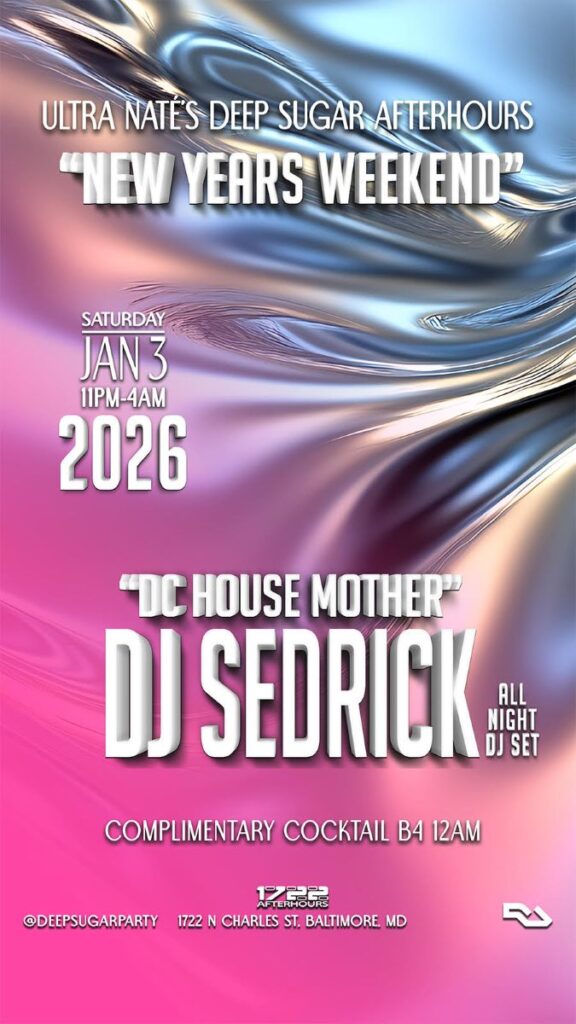
This January 3rd, 2026, catch Ultra Naté’s Deep Sugar Afterhours “New Years Weekend” party at Factory 17 a.k.a. Club 1722 in Baltimore. For more information and to get your tickets click HERE.
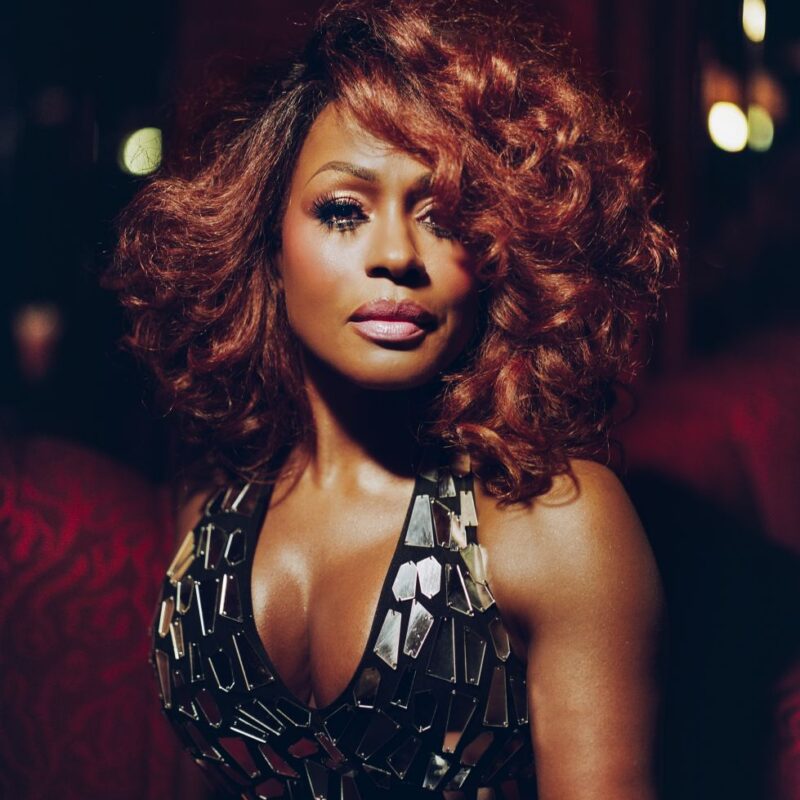
Photos of Ultra Naté appearing in this story were taken at Bloom’s Cocktail Lounge, Hotel Ulysses in Baltimore. Photo Assistant: Sky Bernard; Makeup Artist: Cyndi Oshodi; Production Assistant: Jada Davis