If ten restaurants and two wine shops over the past thirty years do not inspire veneration for the restaurateur Tony Foreman, how about doing it all while enduring three open-heart surgeries and surviving an eventual double-organ transplant of both his heart and kidney? Is veneration even a big enough word for the respect one man can earn for transforming a city with his story and his relentless pursuit of life?
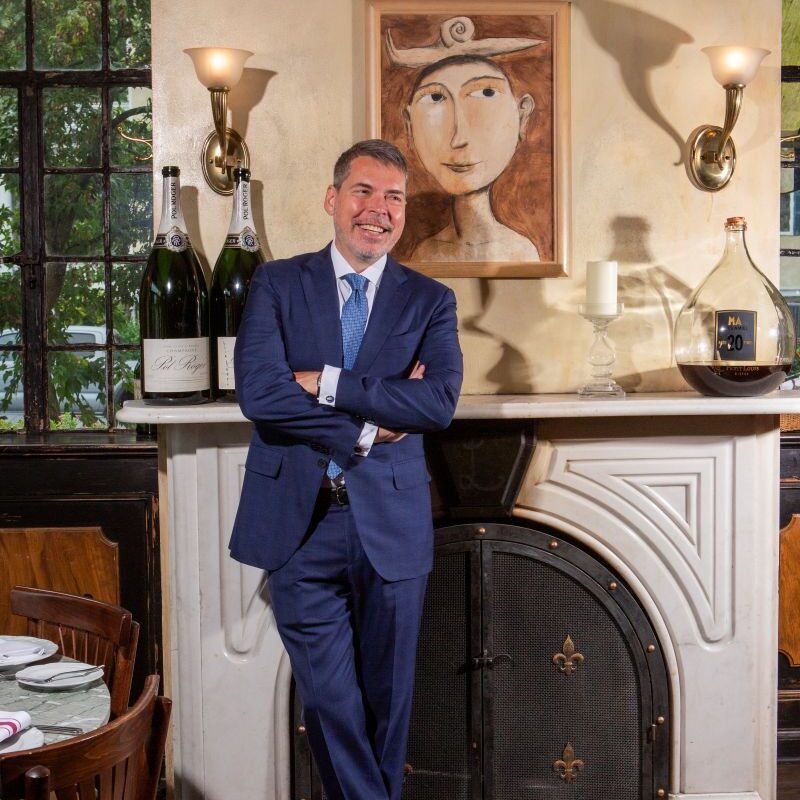
Foreman is a larger-than-life character in print and photos. Dressed in well-tailored suits, he appears sleek and soigné in portraits overlooking his well-appointed dining rooms and perfectly curated wine collections. The weight of his knowledge and passion for wine can be physically experienced in the wine list at Petit Louis, his French restaurant in Roland Park, where the long, leather-bound menu contains nearly 600 wines (140 wines from Burgundy alone), and weighs several pounds. Wine aficionados can also benefit from Foreman’s oenophilic expertise at wine shops BIN 604 (2001) and BIN 201 (2009).
His legacy precedes him as the fountainhead of Baltimore restaurateurs. So when I approached his home, tucked neatly under a lush canopy, I expected grandeur, opulence, and ostentation. It was anything but. The tattered flag of an English football club I didn’t recognize hung over the door of a three-story home. The big window facing the street framed a warmly lit interior and dining room table filled with wine glasses and smiling faces. It was 2 p.m. on a Monday.
“Did I get the time wrong?” I wondered as I pulled out my phone to double-check. Before I could, the door swung open to a smiling and casually dressed man.
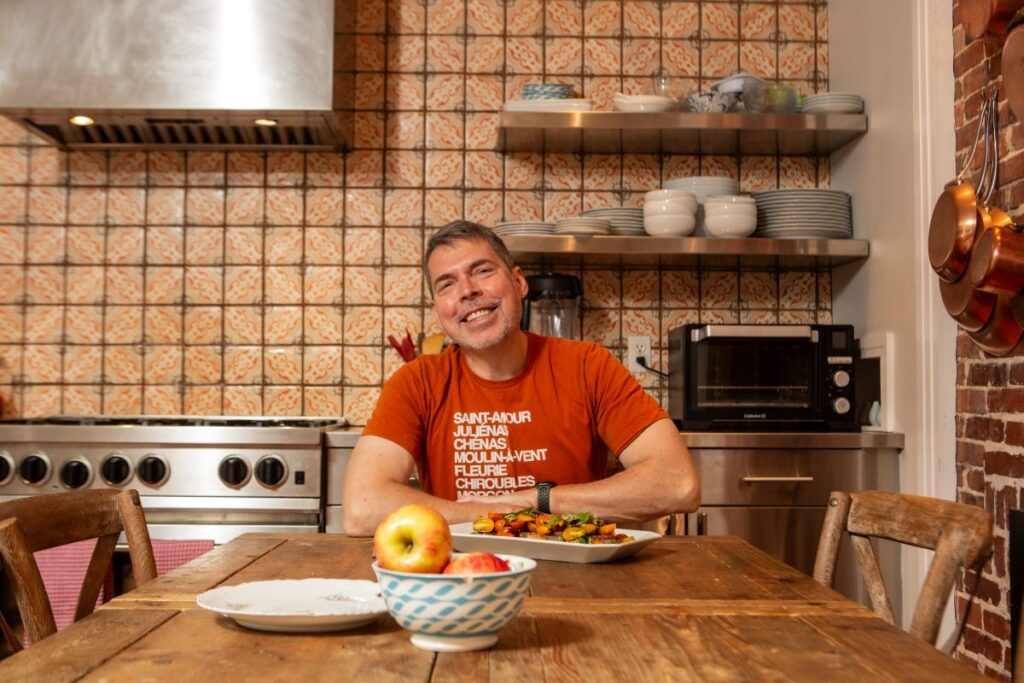
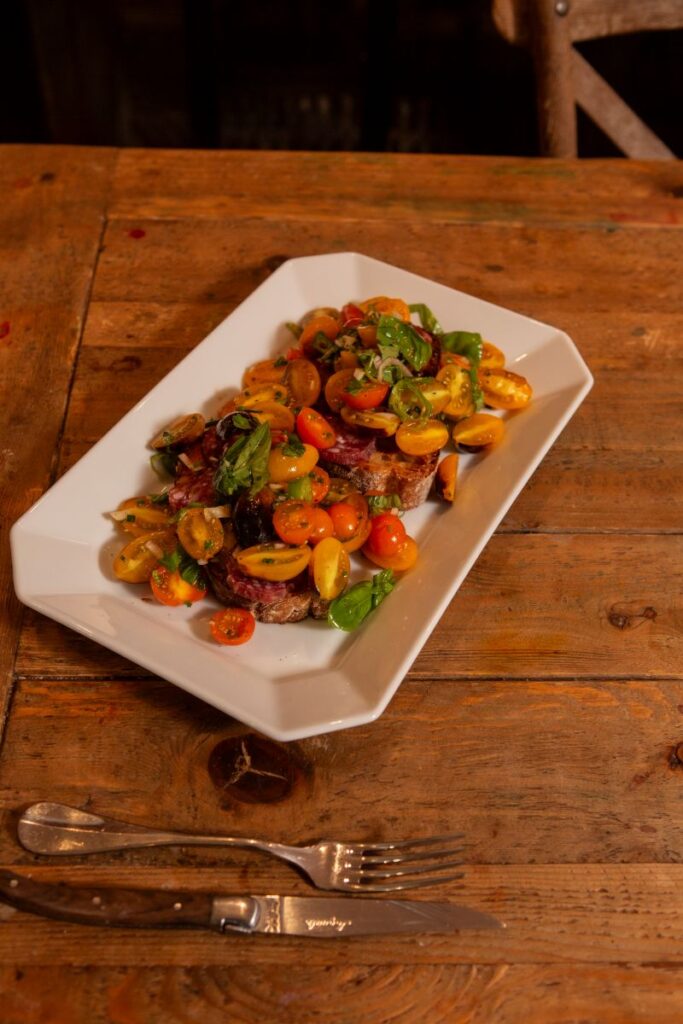
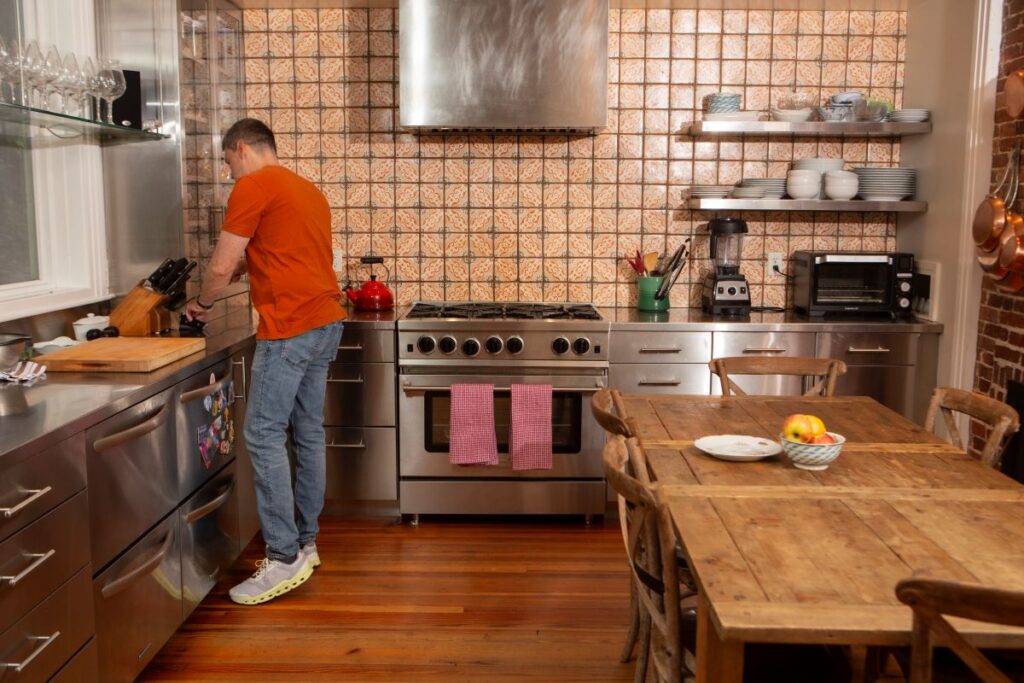
“Nani, come in,” Foreman said in a measured voice, “We are running a little behind. Do you want some pasta?” Within seconds, I am whisked into the kitchen with Foreman, who’s dressed casually in a playful orange graphic t-shirt, jeans, and sneakers. He hands me a gorgeous dish of pasta alla norma, an eggplant marinara served over rigatoni. He drizzles olive oil, sprinkles basil, and spoons pecorino on top before he ushers me to the table where I join his marketing team for the end of their lunch.
Everyone has a glass of red, sans his two young daughters, who are sitting at the table scheming quietly. He searches for the perfect wine glass and opens a new bottle, presenting it to me for approval. I nod unwittingly.
This is the first time I’ve met Tony Foreman.
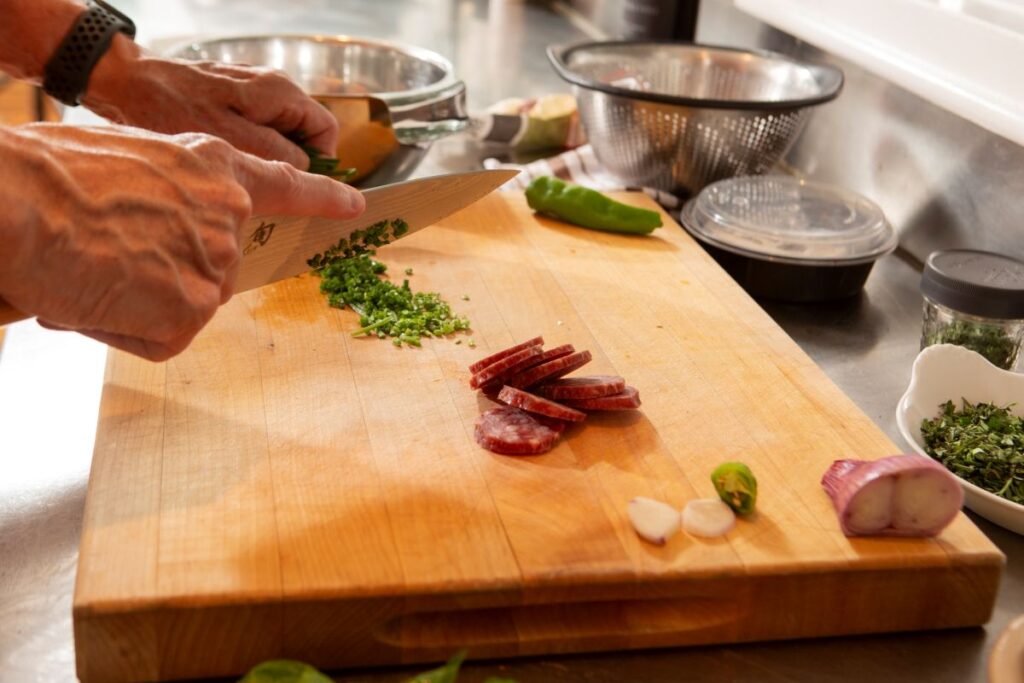
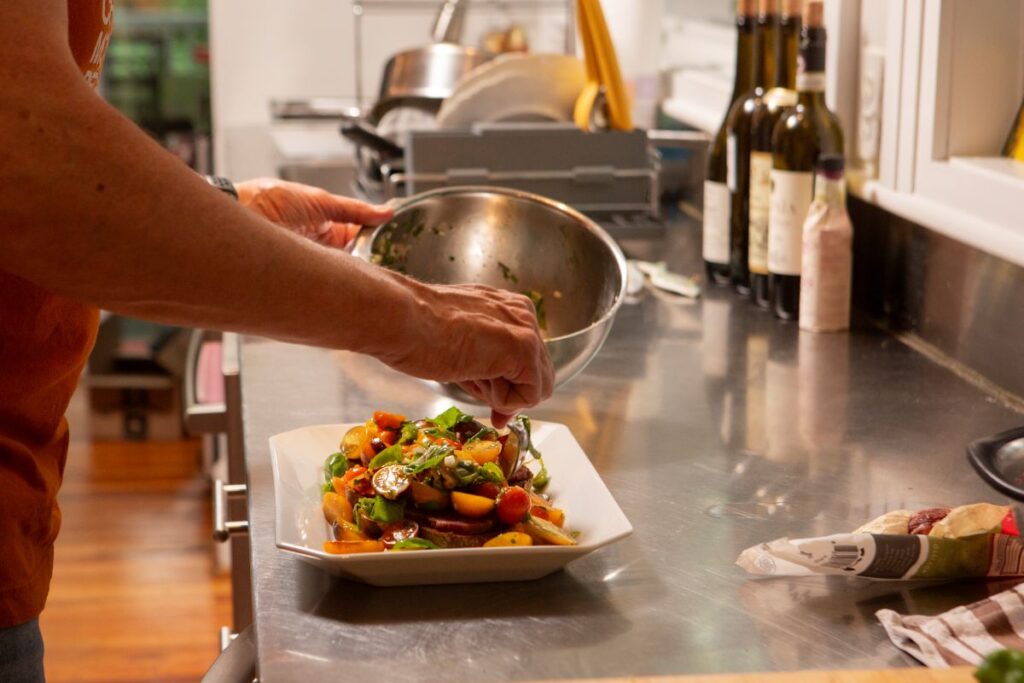
The dining room is moody but comical. An octopus hangs from the corner of the ceiling, a friendly master of ceremonies overlooking an austere and serious dining room with stately wood furniture. I am passed a plate of figs and cured sausage. Everything tastes perfect. The wine is jammy and bright. The pasta is acidic, earthy, and just a little spicy. It all hits. We eat and chat before retiring to a sitting area on the other side of the main floor.
Don’t Just Read BmoreArt – Belong!
Memberships are your passport into Baltimore’s creative landscape.
Click HereForeman settles uncomfortably onto a leather sofa. He’s only two years removed from a double organ transplant, but I sense he’d prefer to be moving as he struggles to get comfy on his own couch. “Working with something physically grounds me a lot… just making the sugo and making the eggplant to then fold into it to make the norma sauce like that, spending an hour just doing that, is very good for me,” he says, leaning forward, placing his elbows to his knees.
Sugo is the Italian word for sauce and is often a red sauce that serves as a base for other Italian dishes, like pasta alla amatriciana (with guanciale or pancetta) or pasta alla norma (with eggplant). It doesn’t take long to uncover that his brain is a culinary encyclopedia.
“History is long, diverse, and everything is recorded in the food,” he shares. “Katie (Foreman’s wife) always jokes that what I do is ‘grandma translation’… Your grandma is French, your grandma’s Italian, Spanish, your grandma’s Argentine. Tony speaks their language,” he says, chuckling. It makes sense, as he learned to cook from his great-grandmother.
Tony ForemanHistory is long, diverse, and everything is recorded in the food.
Each of Foreman’s restaurants—Savannah ‘95, Charleston ‘97, Petit Louis ‘00, Pazo ‘04 turned Bar Vasquez ‘16, Cinghiale ‘07, Johnny’s ‘12, Petit Louis Columbia ‘14, Lupa ‘16, The Milton Inn ‘21, and The Duchess ‘24— represent chapters of his culinary evolution. Each has its own theme, from the American South to California, France to Italy, Argentina to Spain, and Guam to Polynesia.
His first endeavors at Savannah in 1995 and Charleston in 1997 were opened with co-owner and former wife Cindy Wolf, with whom he hosted a radio cooking show, “Foreman and Wolf on Food and Wine” for 15 years on Baltimore’s NPR station, WYPR. While she stayed loyal to the Southern cuisine, eventually winning a James Beard for The Charleston’s wine program this year, Foreman says, he strayed. “I’ve been the one who’s been sort of culinarily promiscuous, and done lots of other things,” he says jokingly.
It’s only fitting that he would take inspiration from a world of cuisine, not because he’s a jetsetter—although arguably he is—but because his mind is an expanse that likely couldn’t settle on only one region. He recalls Pazo, known for its Mediterranean dishes, “It was western Mediterranean food, all food of the Aragon empire,” he says before explaining the importance of the Aragon empire on food between Naples and Barcelona. “I’m a medieval history nut,” he explains.
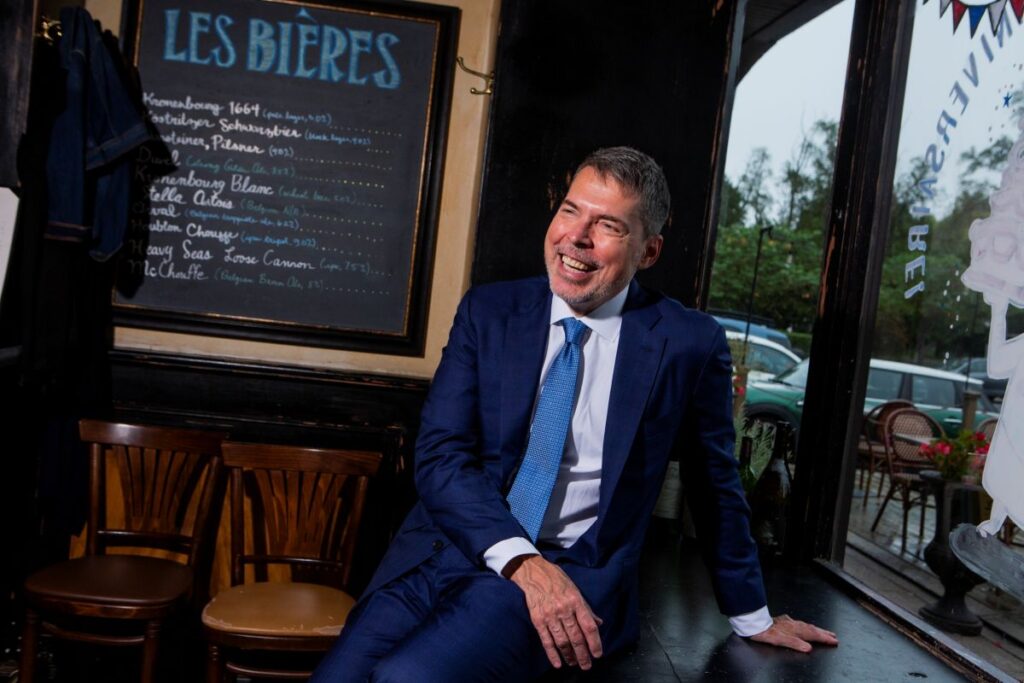
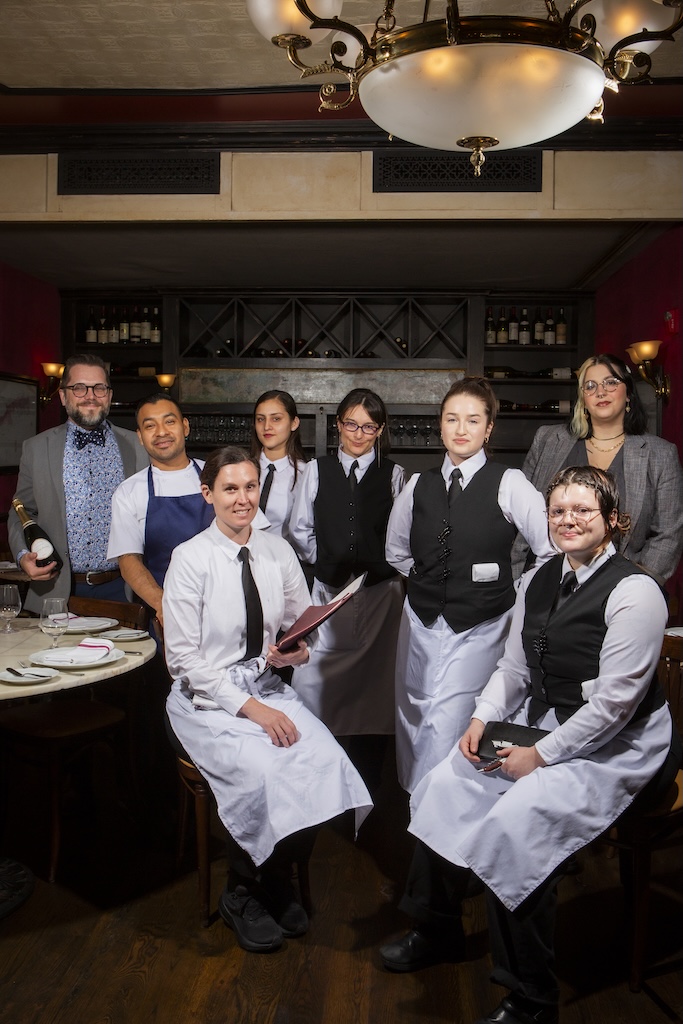
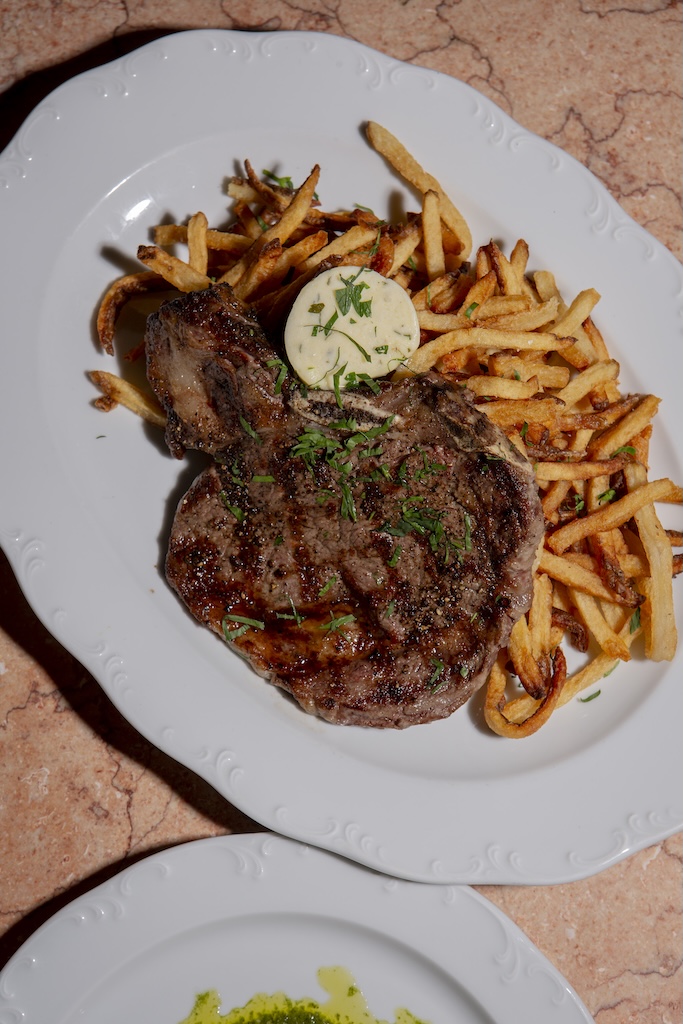
Before starting his own culinary empire in Baltimore back in the 90s, Foreman was a cleaner. And by “cleaner,” I don’t mean brooms and mops. “The cleaner is the person who goes in and removes someone and trains their replacement,” Foreman explains of his job before he and Wolf opened Savannah. “They would move me from place to place… I was a Swiss army knife; I could replace the chef. I could replace the GM. I could remove the accountant or be the bookkeeper,” he explains.
His multifarious approach to restaurants became a superpower as he opened his own, one after another from 1995 until 2025. Foreman has worked in every one of his restaurants in multiple roles: chef, wine director, designer, and construction. “I’ve built no restaurant that I’ve not slept in,” he says, chuckling.
He was born and raised in Baltimore, the oldest child to a single mother. He learned how to cook from his great-grandmother, who took him to Lexington Market to meet fishmongers, butchers, and farmers. “We were not that solvent,” he explains of his home life.
His work ethic was formed at a young age when he began delivering newspapers; his childhood route ran through the neighborhood he still lives in today. In 1979, as a 9th grader, he began working as a dishwasher at The Governor’s Club, a supper club known for its big band and political scandals. Here he spent his teenage years learning French cuisine from the French and Danish chefs. “If you could not outwork me, I did not respect you,” he says.
Beyond his predilection for hard work, Foreman says he’s at his happiest when he’s teaching. With his massive culinary and wine knowledge, he enjoys cultivating talented chefs and ambitious staff to achieve their career goals. Whether it’s a line cook looking to move up to executive chef or partner, a hostess hoping to advance their marketing prowess, or a budding sommelier, Foreman is a mentor.
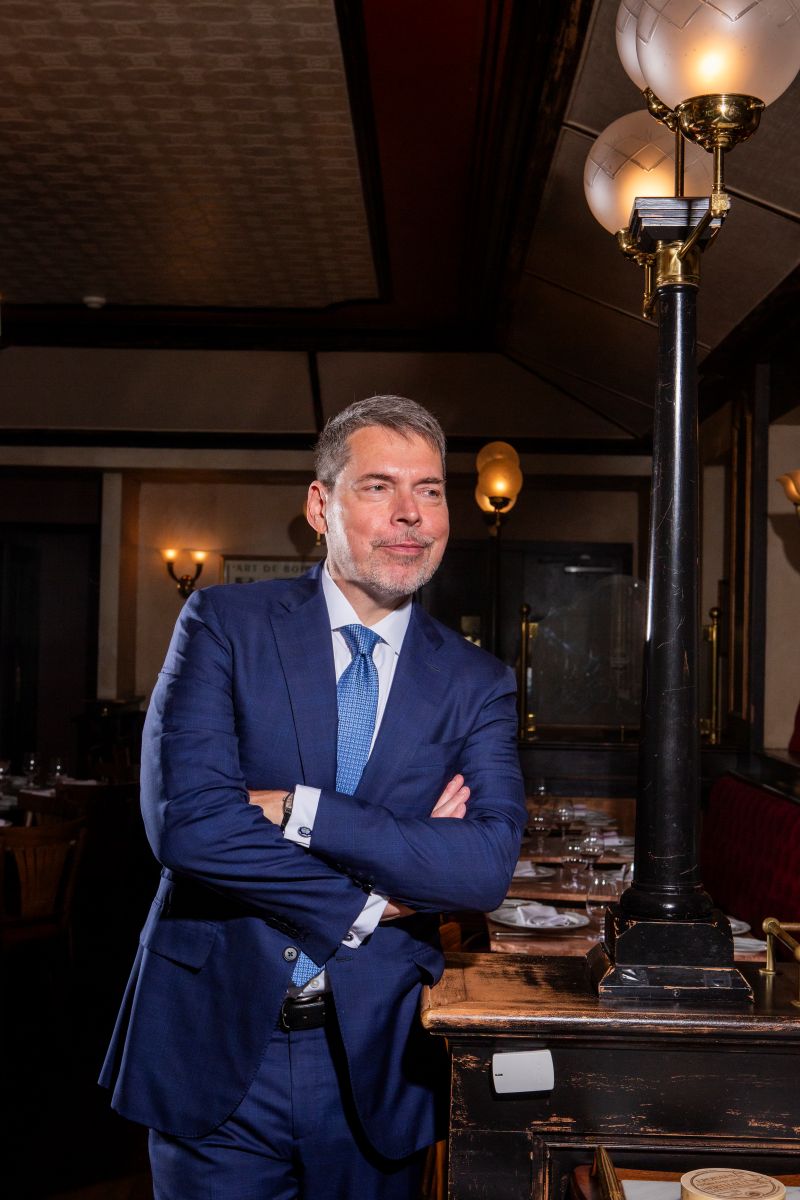
Nani Ferreira-MathewsHe’s known for being persistent in the pursuit of good hospitality. But more than all of that, he’s known as a teacher and a mentor.
Foreman + Co restaurants and wine shops employ over 300 people in the Baltimore area. Many kids in the Roland Park neighborhood have had their first jobs at Johnny’s or Petit Louis. His wine protegé, Lindsey Willey, who won a James Beard award for Outstanding Wine Program at The Charleston in 2025, has worked with him for 18 years. Willey started as a server at Cinghiale in 2007 before Foreman, who recognized her talent and ambition, asked her to manage the wine cellar at Charleston and Cinghiale in 2010.
“People don’t think of me as being in a silly T-shirt making pasta,” he says matter-of-factly. “They all think I’m the wine guy. I’m the business guy. I’m the scary guy. I’m very serious,” Foreman says soberly.
“You’re not scary to me,” I say, laughing as we share a smile.
“No, no, I’m not scary,” he says with a hint of bitterness. I suspect his directness and ability to recall tasting notes from wines he drank decades ago could be intimidating, but Foreman is anything but—he’s a giver and a cultivator.

Sure, he is known for organized trips to European vineyards with a relentless sun-up-to-sun-up-to-sun-down schedule and for wanting things done right. He’s known for being persistent in the pursuit of good hospitality. But more than all of that, he’s known as a teacher and a mentor.
“I have to recognize that there are cultural and generational expectations that are changing all the time, and I have been open to those things. It keeps me vital and engaged to be able to lead people effectively. And that’s the most rewarding and humbling thing, is the leading and the teaching,” he shares.
Since 2021, Foreman has opened two restaurants in collaboration with long-time chefs of his establishments who have an ownership stake in their companies: Chris Scanga at The Milton Inn in Sparks, MD and Kiko Fejarang at The Duchess in Hampden. Both chefs have worked at multiple Foreman + Co restaurants before taking the helm in the cuisines of their choice. The Duchess showcases Ferajang’s Guam/Chamarro heritage (think Spam Musubi and kelaguen), while The Milton Inn leans heavily on the French fare that Scanga cultivated through years of running Petit Louis.
“Obviously, their personal brands have to grow, because they’re partners and they should become prominent people in their places,” Foreman says of his partners.
How many branches does one legacy sprout? Three hundred employees at any given time could multiply to numbers of influence I can’t comprehend. Foreman interrupts my internal math equation to announce he has to wrap up so he can go watch his football team at The Duchess at 4 pm. That tattered flag outside his home is for Everton, the lesser-known Liverpool club that is often overshadowed by the much more prominent city namesake. After that, he’s hosting a back-to-school dinner for the teachers at his daughters’ school because, he says, “People should be taking care of the teachers.” Damn right, I think. And as a teacher, I hope someone is taking care of you, Tony.