There’s an Irish term, craic, that roughly translates to some combination of juicy gossip, fun, and a sense of community. In my family, it’s almost always used in reference to a great bar.
The first time I went to the storied Mount Royal Tavern (MRT) with my father nearly twenty years ago he remarked upon leaving through the alley, “this bar has the best craic in America,” seemingly forgetting that the word is a homonym for a certain infamous narcotic. Almost instantly, we heard a woman ignite a lighter and cackle from behind the dumpster, “I know that’s right, pops!”
I share this anecdote because it’s proof of just how good the MRT’s “craic” is. There are precious few places in this world where that woman, a weirdo art student such as myself, and my dad would all feel welcome—and actually interact. The dive bar has long fostered the kind of spontaneous chance encounters across class, gender and sexual identity, racial, and generational divides that artists working in “relational aesthetics” or “social practice” try so very hard to manufacture in institutional contexts. But that craic/vibes/je ne sais quoi is like lightning in a bottle.
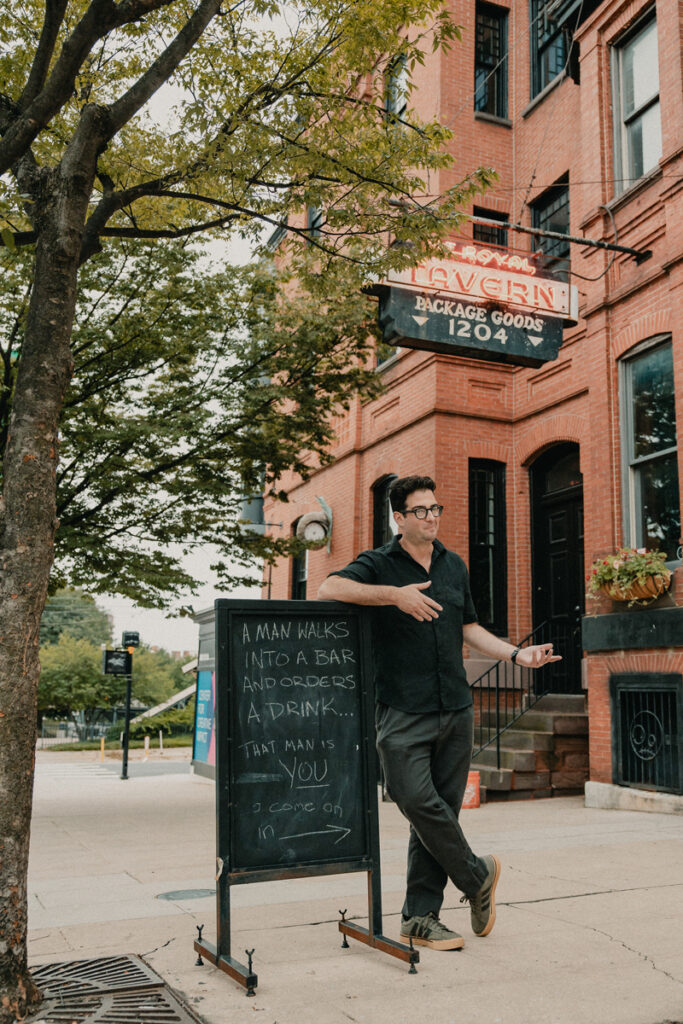
So when the future of the bar at 1204 Mount Royal Ave—a pre-Civil War building whose use as a watering hole dates back at least as far as the end of prohibition—was uncertain, it was all-too-fitting that a group of artists known for building community would step up to ensure its survival.
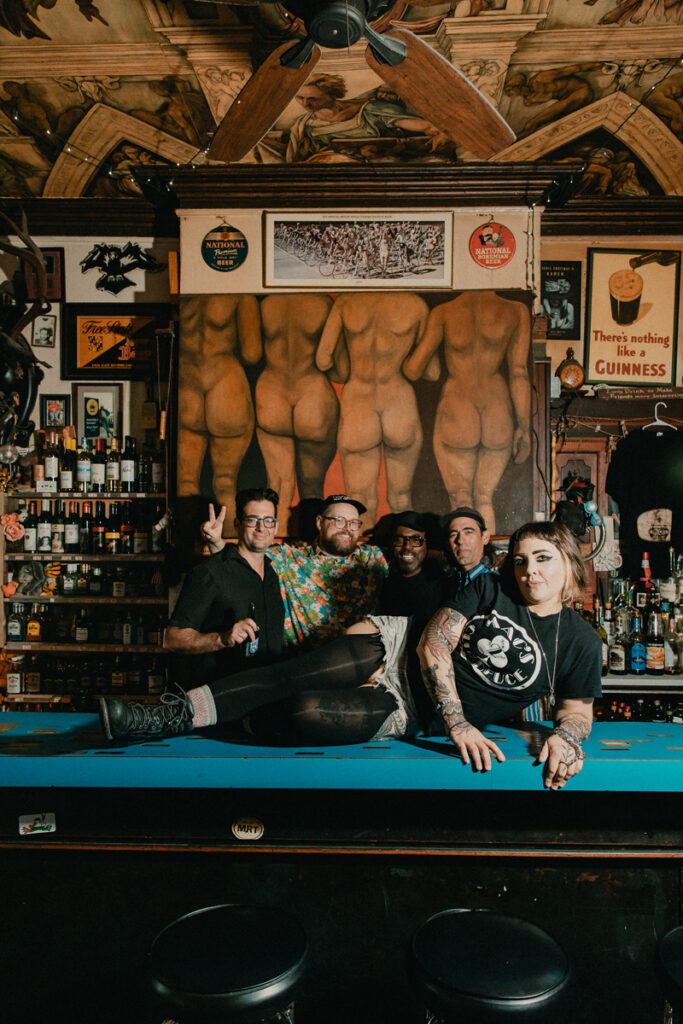
Chloë VaughanIt’s the one place where everybody has known they’ve always been welcome without any pretense of prescribing to anybody’s identity politics… I think that’s really cool and missing in our society today.
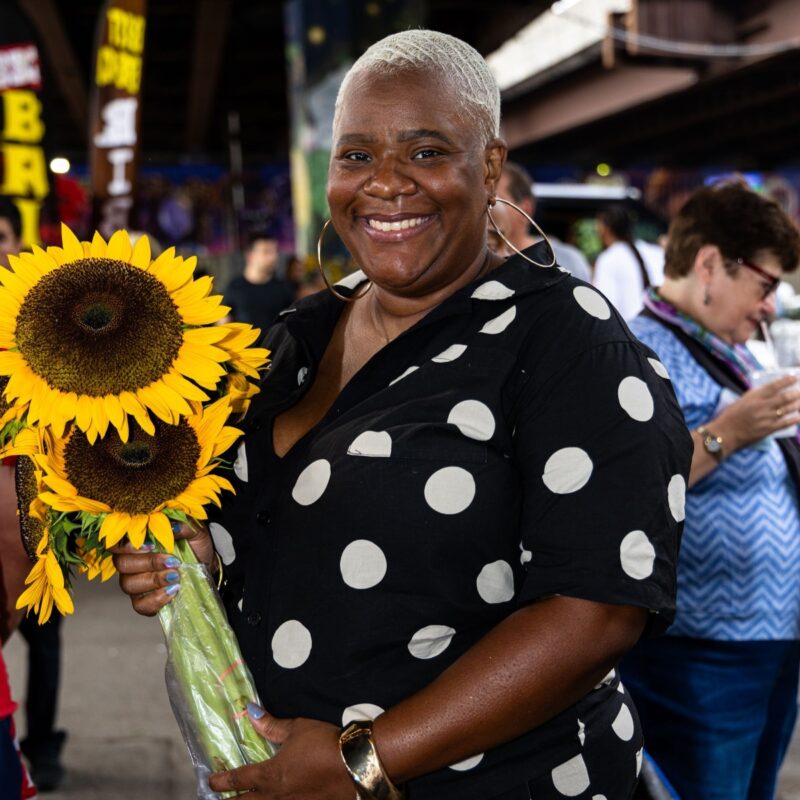
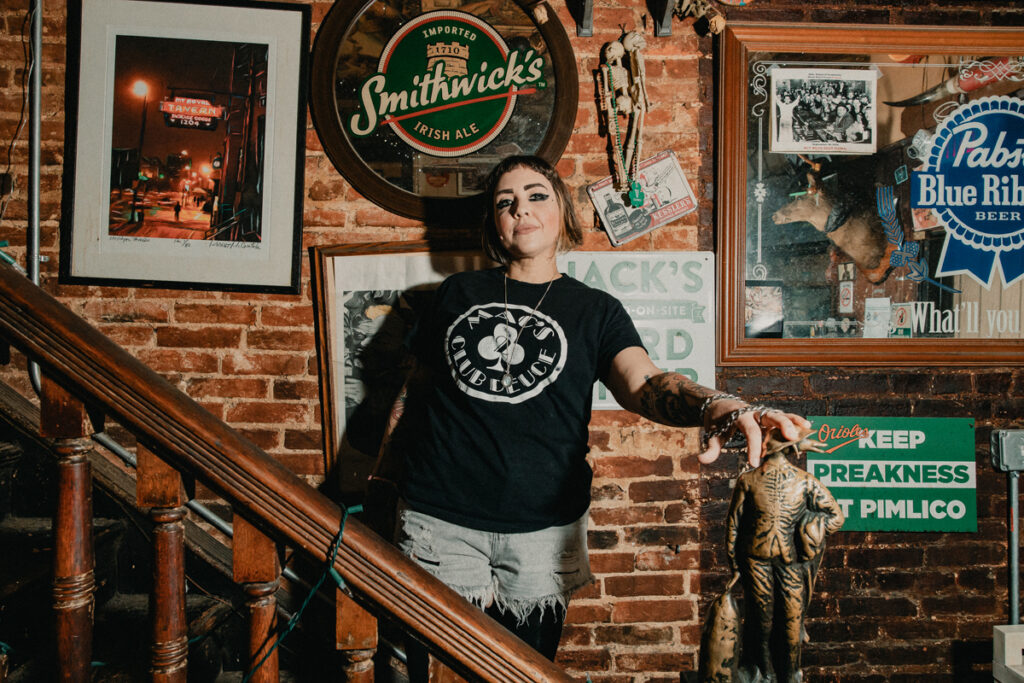
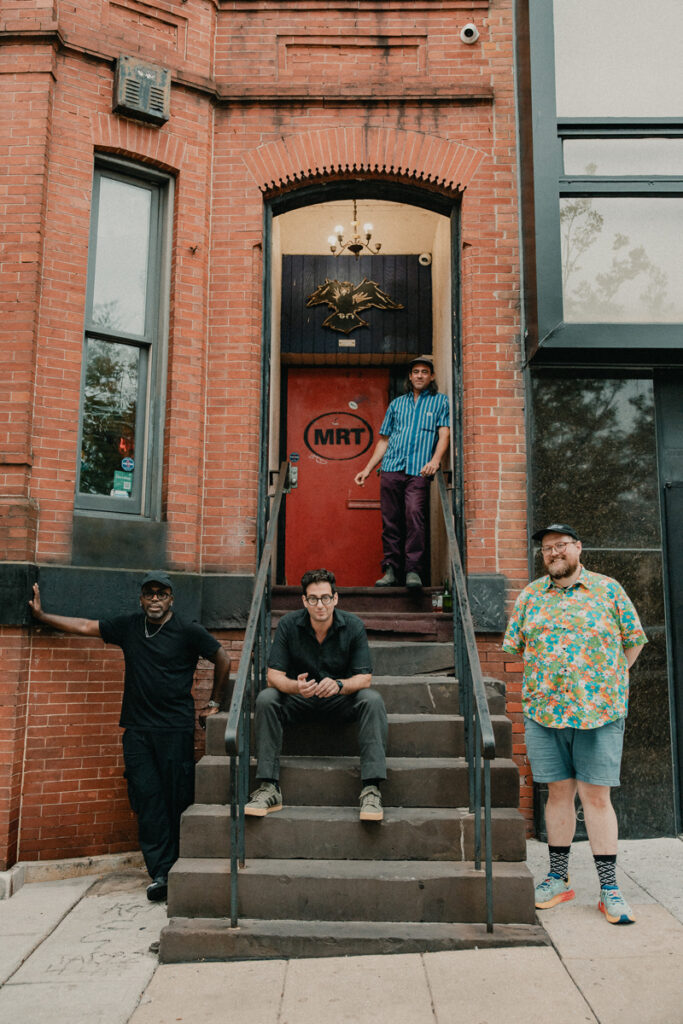
One fateful afternoon in May 2022, neighborhood resident, acclaimed musician, and Wham City co-founder Dan Deacon stopped into the Tavern for a drink on his way to the light rail across the street. Chloë Vaughan—longtime bartender whose mischievous smile and infectious, booming laughter feel as much a part of the place as the infamously grimy condom vending machine—was in an uncharacteristically foul mood.
“I was pissed off,” Vaughan chuckles, “I was soaking wet. I had just been vacuuming up a sewage leak in the basement. I got drunk as a skunk… Dan asked me, ‘hey Chloë, how’s it goin’?’ and I just shouted ‘EVERYTHING IS AWFUL! They’re selling the bar!’”
Business partners Ron Carback and Chris Kozak had owned the Tavern since 1985, stewarding and solidifying its reputation as one of the country’s best dive bars. “I had spent my entire adult life with them, they practically raised me,” Vaughan recalls. “Ron always said he’d sell the bar on his deathbed. But then he goes and dies in his sleep!”
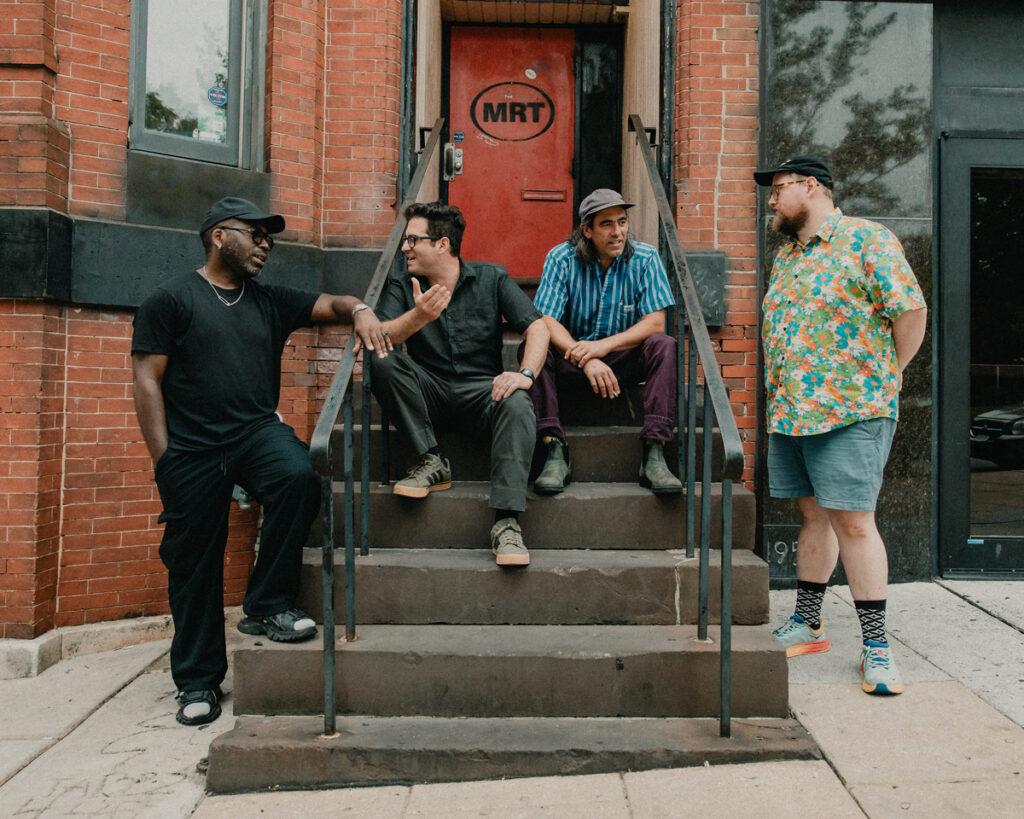
Deacon had an idea, one he spent the rest of the day pondering at an Orioles game. He proposed forming a collective to buy the Tavern, reaching out first to his friend Marlon Ziello, who had worked at the MRT in the early 2000s as a MICA student. Ziello initially thought, “That’s impossible.There’s no way—that’s crazy!” But when Vaughan followed up with a surprisingly professional text, the number was saved in his phone as Vaughan’s late, great partner, Eric Meyers, the bartender who had mentored them both. It seemed like a sign.
Ziello in turn convinced artists Derrick Adams and Nicholas Wisniewski to come on board. The three already had experience in civically-minded real estate endeavors around Baltimore—Adams is the founder of Charm City Cultural Cultivation, which encompasses an artist residency, a digital database, and a women’s writers collective; and Wisniewski and Ziello had purchased The Compound, a live-work complex and venue, together back in 2010. The three are also presently collaborating on restoring the nearby Sock Factory into studio/nonprofit space.
Their newly-formed company One District, LLC purchased The Mount Royal Tavern for $800,000 a little under a year later. It was a hefty investment, but shouldered between the four, one that was doable and worthwhile. “Baltimore feels perpetually at risk of being stolen by developers,” Deacon explains. “We really didn’t want that to happen to the Tavern and knew that was important for Chris and Chloë as well. The goal was for the transition to be as seamless as possible—to keep things the way they have been.”
For all parties involved, it represented somewhat of a homecoming. Like Vaughan, Ziello had started out as the door guy checking IDs before being trained by Eric Myers, “The best bartender I’ve ever encountered.” Around the same time, Wisniewski was also a MICA student and regular—often popping in for informal conversations with his professors. Although both Ziello and Adams now primarily live and work in Brooklyn, NY, the Tavern feels like a logical second home and escape.
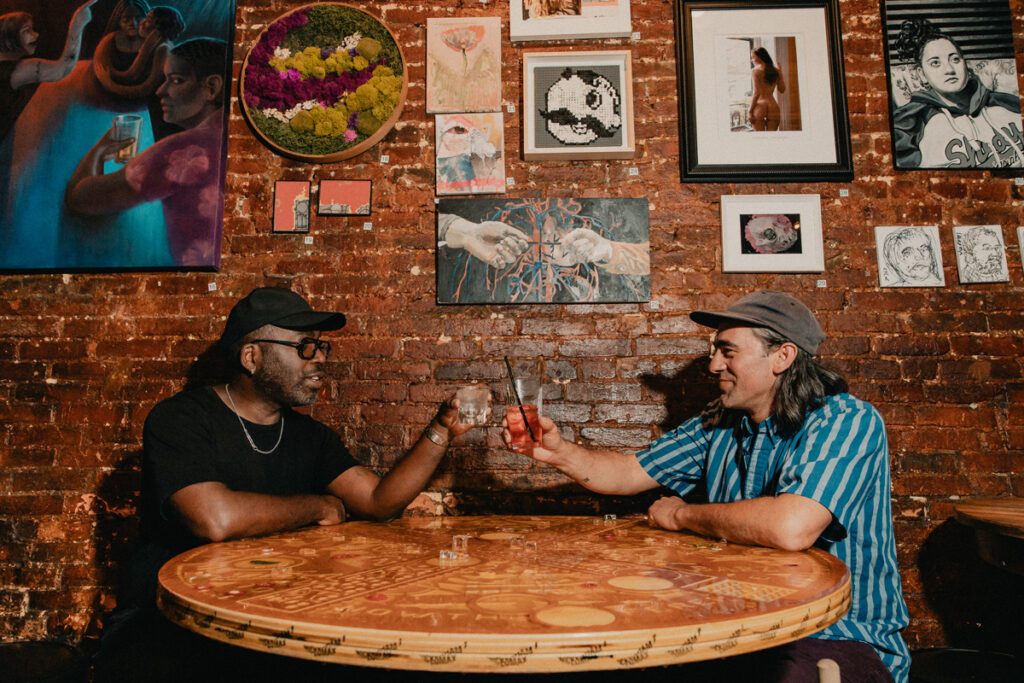
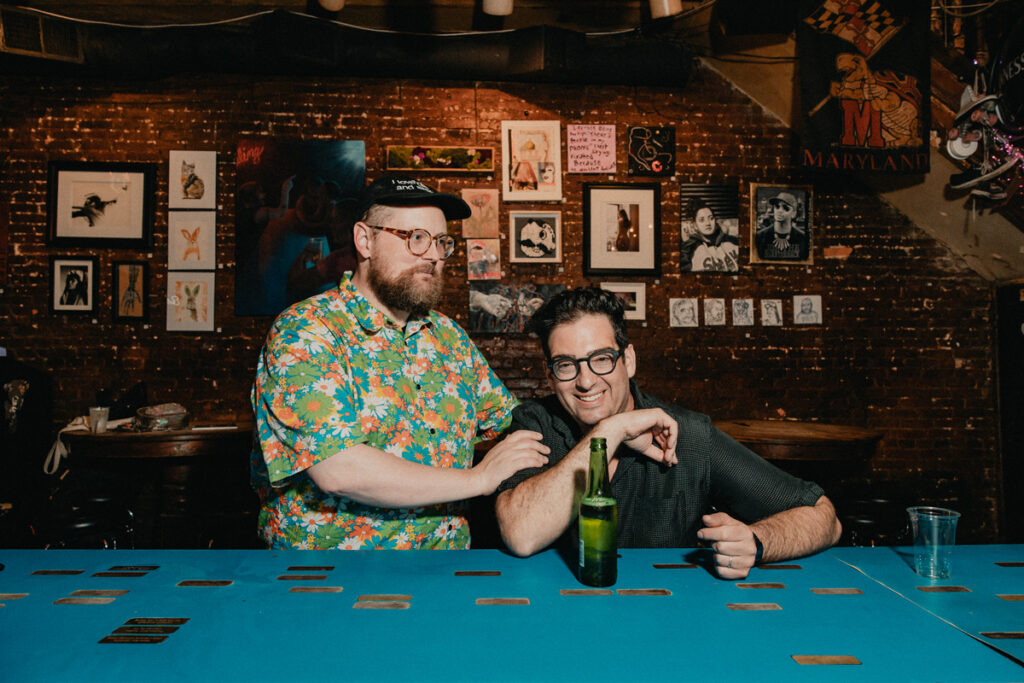
“In New York I get a little tired of attention,” Adams says of his art-stardom. “Here I can just unwind. No one knows who I am.” At this, Vaughan laughs and points out that two of Adams’ cousins had been regulars at the MRT before learning that he was now one of the owners. Wisniewski met his partner at the Tavern and notes it was where Ziello’s parents dated when they themselves were MICA students. “Marlon probably owes his whole existence to the Tavern,” Vaughn jokes.
“The bar is a special place for two reasons: the people who work there and the people who go there,” Deacon explains. “They really care about the bar and make it the magical icon that it is. Chloë and the rest of her staff truly care for that place and the patrons like a temple unique to them. They are what make it special. They are the Mount Royal Tavern.”
For Vaughan, the bar is a bit like an eternal flame she’s determined to keep lit for the many formative people it brought into her life. The MRT was the first place in Baltimore she ever set foot, straight off the light rail from the airport back in 2004. She was offered a free shot, and it has been a kind of home ever since. Over the last two decades, she’s lost a number of coworkers, mentors, and regulars—each of whom left an indelible mark on her and the Tavern. “This is all really a tribute to them,” she says with resolve.
Vaughan also loves the strangers the bar brings together given its location by Penn Station, between various institutions and socioeconomically diverse neighborhoods—noting the unlikely combination of sports fans who come in to watch games, astrophysicists who work at NASA, and queer sex workers eager to kick off their heels after walking their beat. “That’s really what makes it so magical. It’s like the one place in Baltimore you can walk into and still hear a dirty joke and not feel guilty for laughing,” she says. “The one place where everybody has known they’ve always been welcome without any pretense of prescribing to anybody’s identity politics… I think that’s really cool and missing in our society today.”
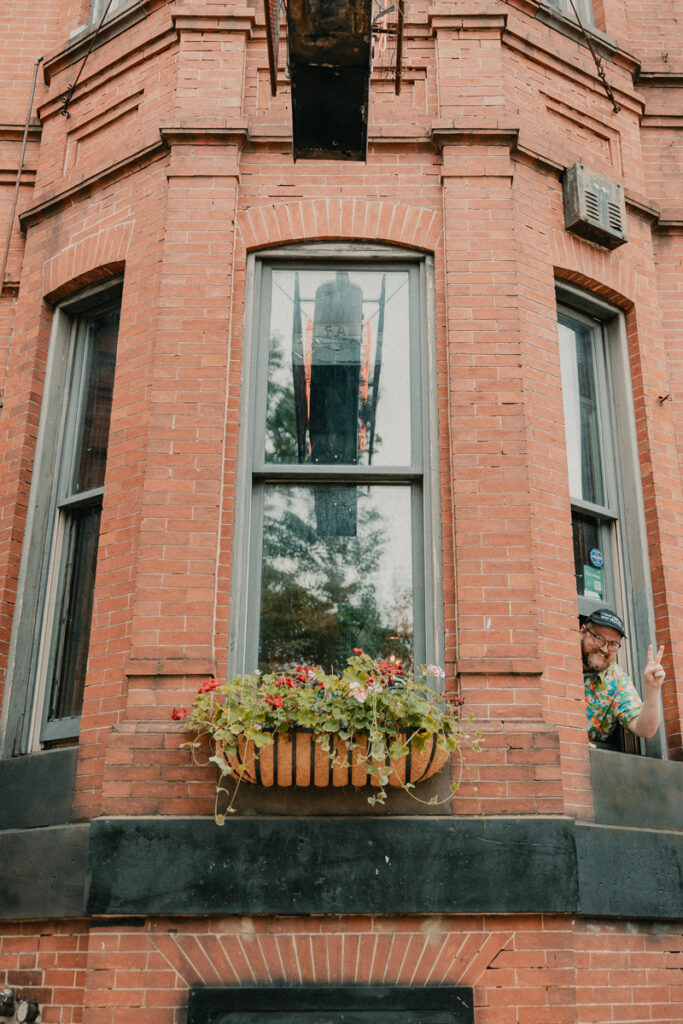
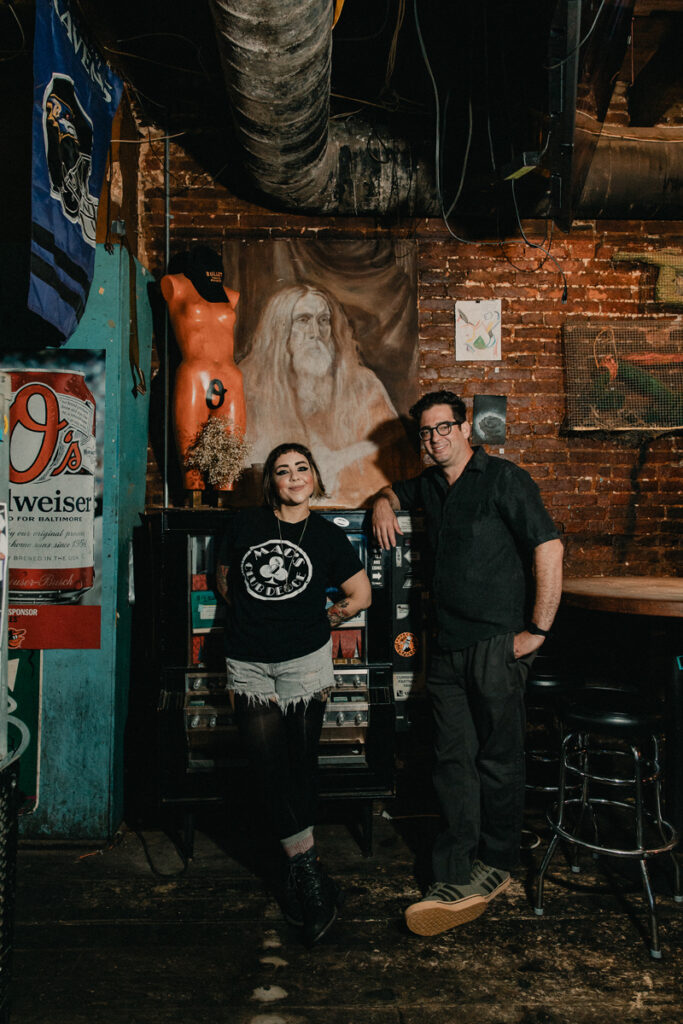
Dan DeaconThe bar is a special place for two reasons: the people who work there and the people who go there.
Between mortgage payments, necessary upgrades, and rising overhead, maintaining that accessibility hasn’t been easy. “The financial viability of taking over a legacy place like this… it’s a dive bar! It’s known for its cheap drinks and its nickname is ‘The Dirt Church’… how do we preserve it while addressing its infrastructure needs?” Wisniewski asks. “The formula has been hard to maintain. It’s been a challenge to figure out how to keep this business afloat without changing what it is, which is a constant debate.” But all the new owners agree that keeping prices affordable is an important priority, especially to gain the trust of longtime regulars. If they can figure that out, it’s my hope their collective ownership model could inspire others in Baltimore and beyond to resist the tides of gentrification.
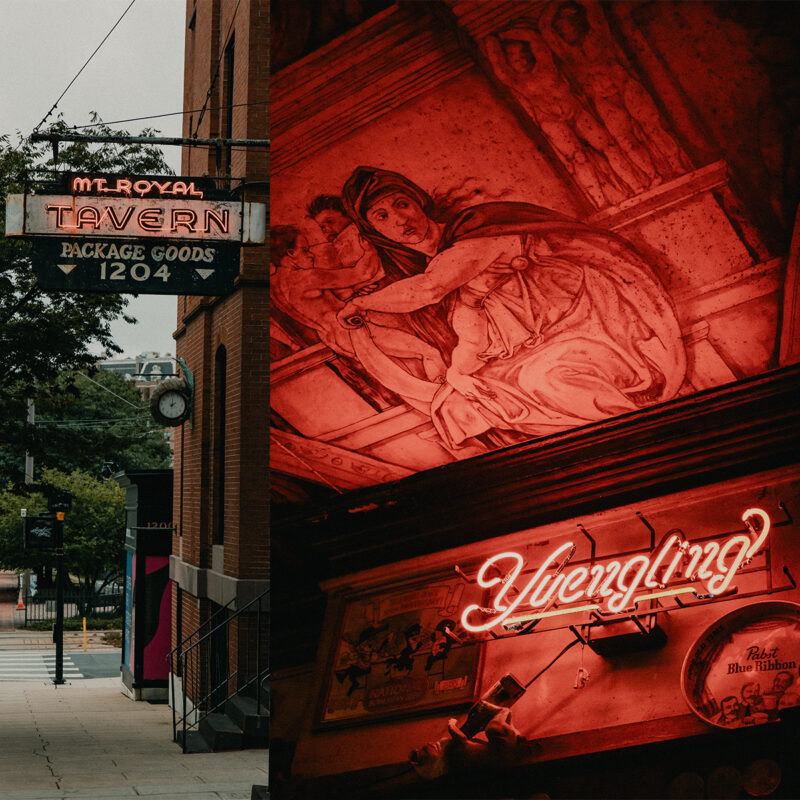
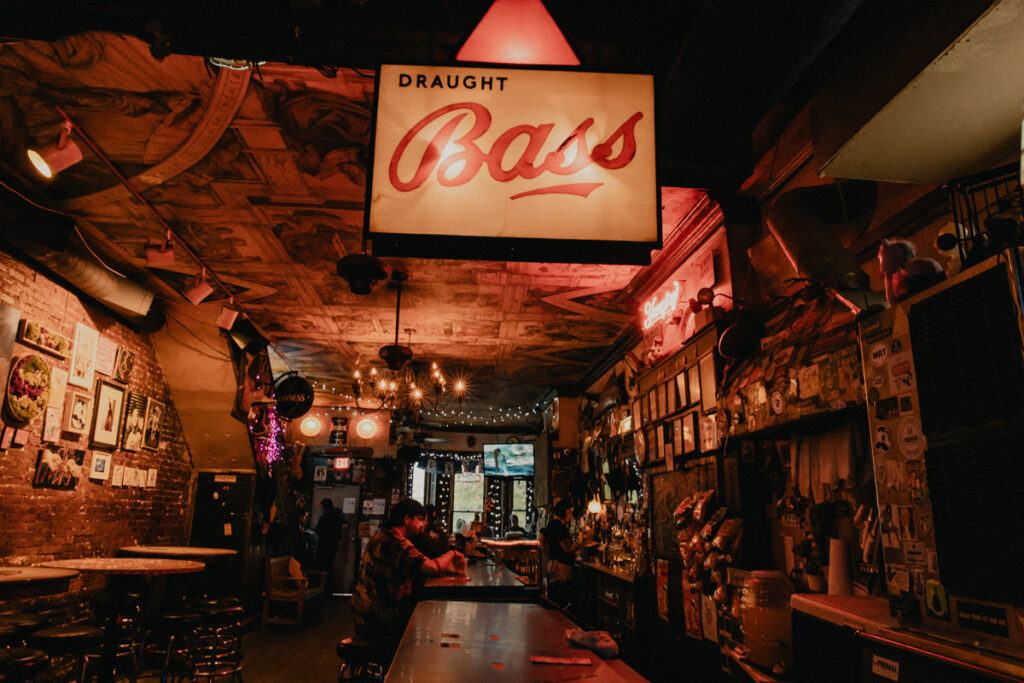
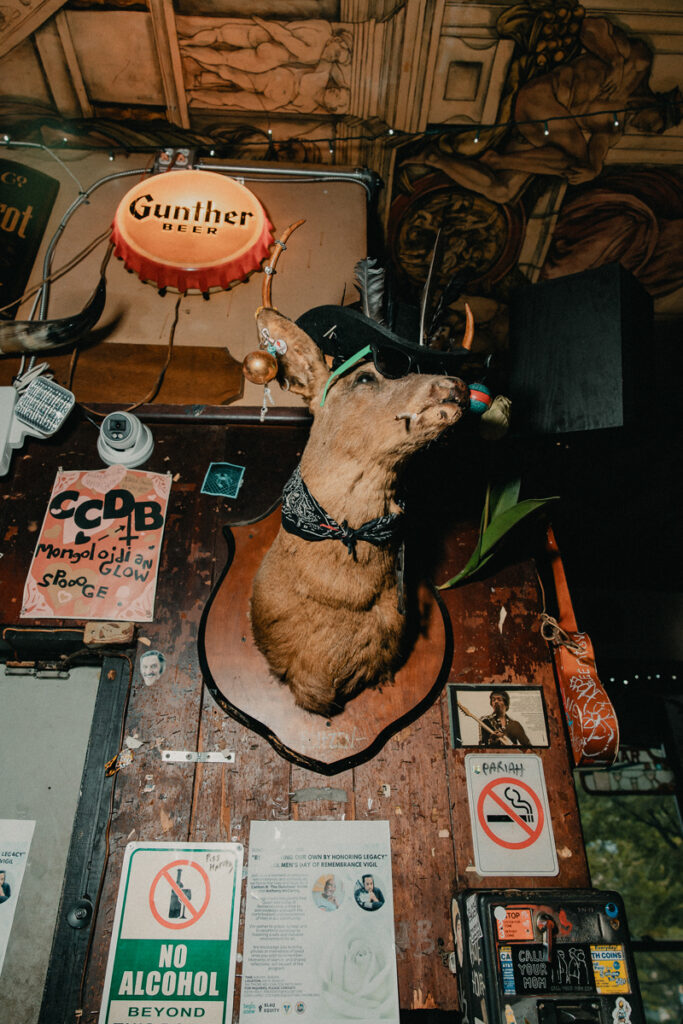
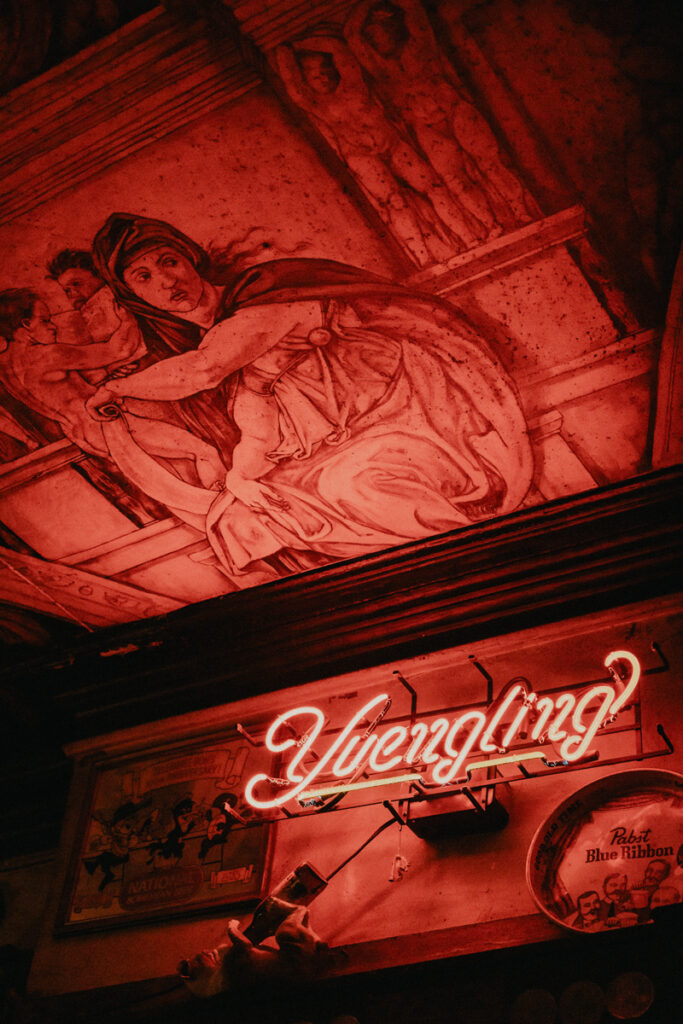
They all speak of “The Dirt Church”—a nickname owing to the bar’s nicotine-patinated recreation of the Sistine Chapel ceiling, painted over the course of a week in 1994 by then-MICA-student Joe C. Helms in exchange for a lifetime bar tab—with something akin to reverence.
For their part, Adams, Deacon, Wisniewski, and Ziello are determined to balance the Tavern’s eccentricities with necessary maintenance—which has been a bit more than they bargained for. Cleaning out storage spaces with the accumulated paraphernalia of decades worth of artists and musicians who’ve worked or frequented the space has also been full of surprises.
Let’s raise a toast to many more years at Baltimore’s center of gravity.
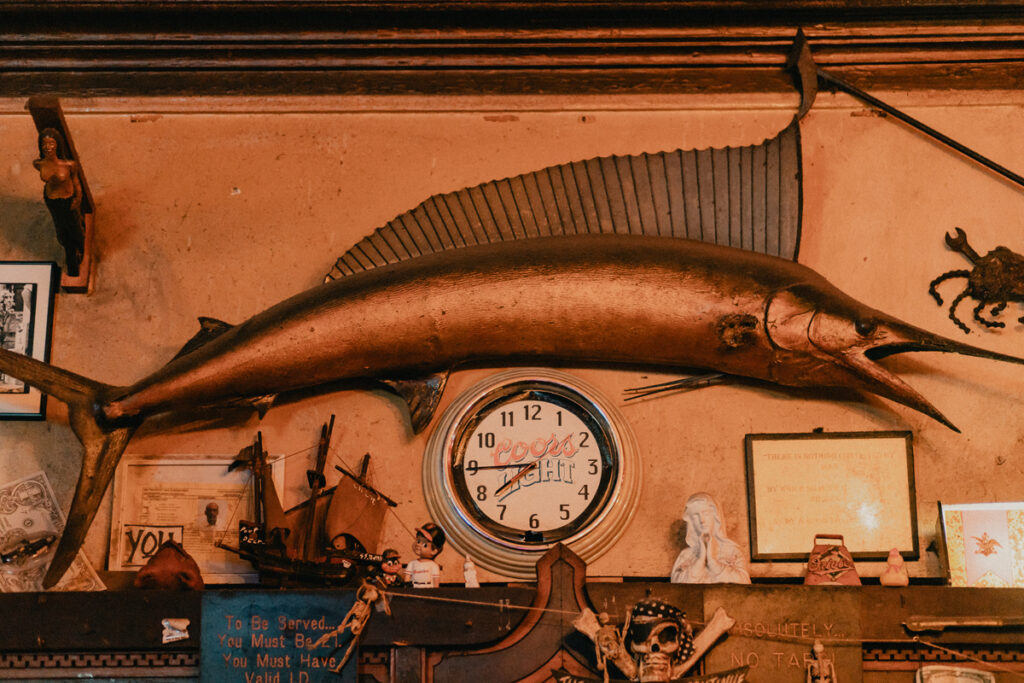
Don’t just read – belong!
BmoreArt memberships are your passport in to Baltimore’s creative landscape.
Click Here
This story was originally published in print issue 20: The Icons
November, 2025