Tucked in the woods in northern Roland Park, Mary Ann Mears’ home is set on a large lot which is practically glowing green on the warm May morning of my visit. Bursts of red, magenta, orange, purple, and yellow punctuate the verdant grounds. In one section of pachysandra, curved red metal is reminiscent of a gliding serpent. In another area, three fuchsia forms look like lily pads or sting rays. In a garden bed, a tall piece, “Lilium 1”, is a flower with wispy leaves and petals in pink and purple that gently move with the breeze.
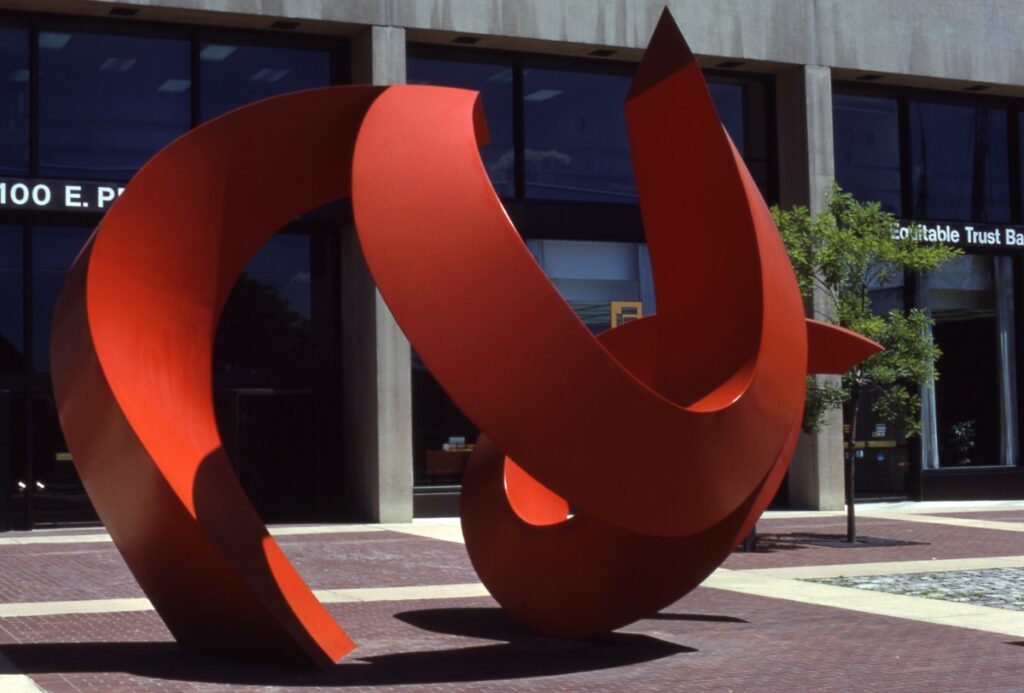
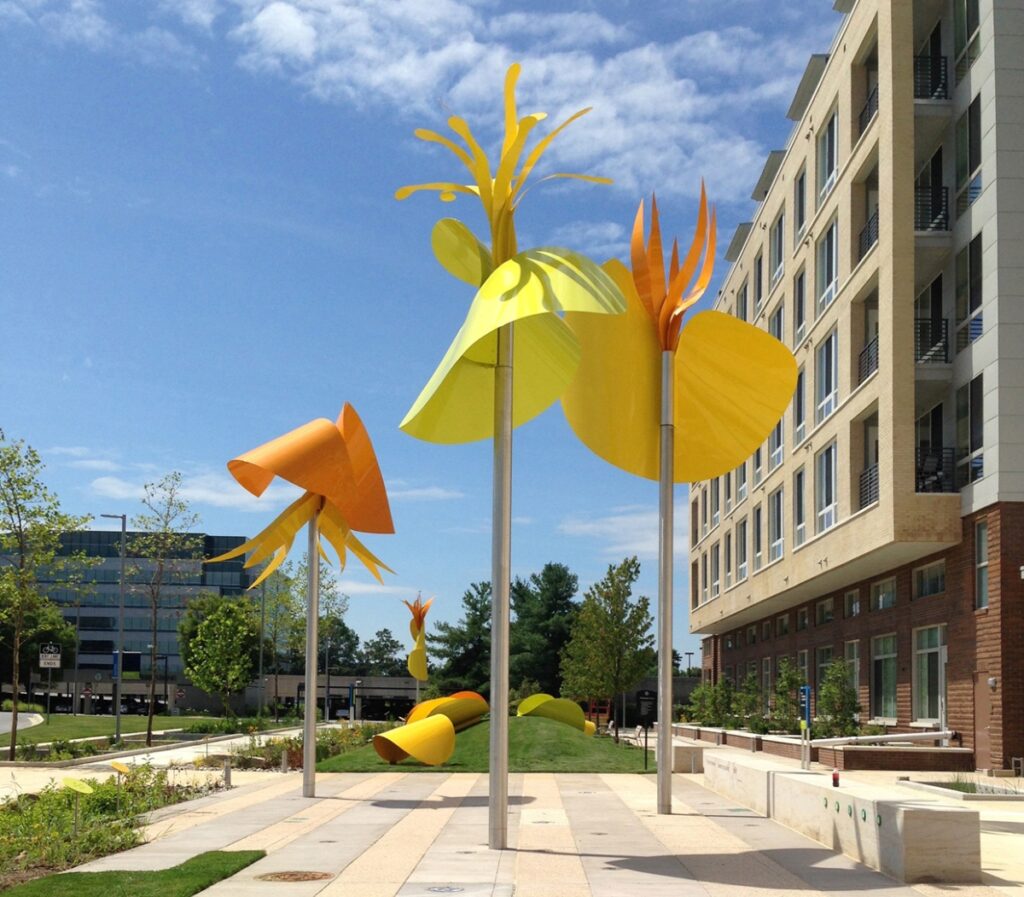
The sculptures on her property date back to the 1970s when Mears was in graduate school at NYU, and it is likely that if you live in Baltimore, you have seen her work around the city. “Red Buoyant,” a 15-foot curving structure in glossy fire-engine red, has been a landmark on Pratt Street since it was installed in 1978, and Mears has completed installations for schools, hospitals, and parks around Maryland and beyond.
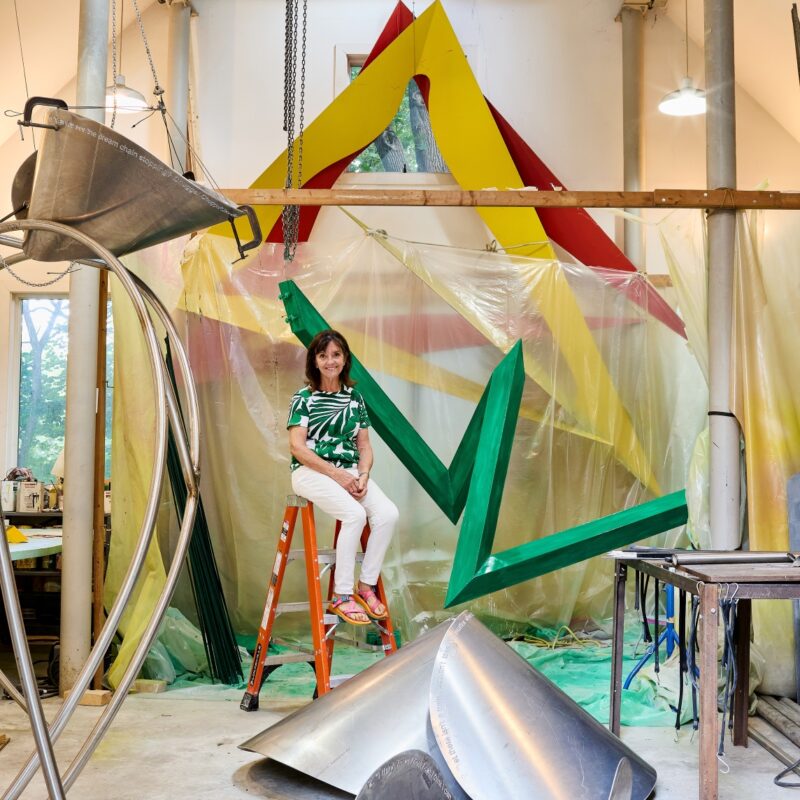
Mears is a petite woman, and at first I found it hard to believe that she often handles the cumbersome pieces of metal on her own, but as I spoke with her it became clear that she has earned the “Icon” status BmoreArt bestowed on her; she is a powerful force with a clear vision and the grit to see that vision through. As she gave me a tour of the art inside her house, installed throughout the property, and in progress in the studio she designed and built herself, I could see that she won’t be slowing down any time soon.
Mears’ desire to create is an essential part of who she is. “I just always made art,” she says. “And part of it was I grew up in a family where art was considered really important.” Even though Mears never met him, her grandfather, a painter himself, was a big influence. “He was sort of a mythic figure for me,” she says as we look at some of his watercolors that hang in her sitting room. “People think that it’s arrogant for an artist to talk about immortality, but it is why artists make art. I knew my grandfather through his work.”
Initially, Mears thought she would be a painter like her grandfather; she came to sculpture somewhat by accident. “When I went to Mount Holyoke College in 1964, I couldn’t get into the painting class, so the painting teacher said, ‘Why don’t you take sculpture?’… The studio was a one-horse, old New England firehouse, and there were a bronze casting foundry and welding stations. I thought, This would be fun to learn. And I’ve been welding ever since.”
Mary Ann MearsHow do you fit something into an environment so that it’s not just art off the pedestal? How does art interact with the space? That’s been an important part of my work as an artist who does public art.
Mears gestures to a metal piece on a shelf. On a heavy base, three figures—one adult and two children—seem to be dancing in a circle. Even in this sculpture from her sophomore year in college, Mears manages to use the heavy material to create a sense of movement and levity; the figures are caught mid-dance, the gestures implying motion and joyfulness.
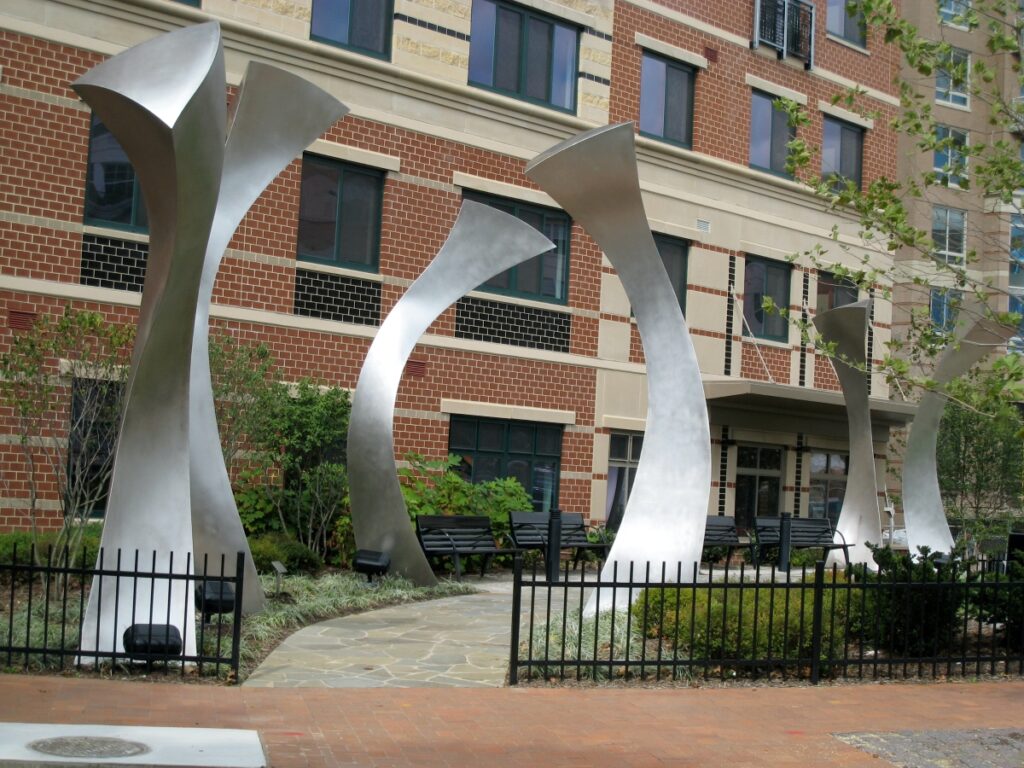
Taking material as heavy and imposing as metal and finding the softness and movement is “part of the story. How do you take a piece of steel and make it graceful?” One piece called “Breakers,” Mears explains, “is about the triangular form which, in addition to being very sturdy, is mysterious.” The piece is unpainted metal, three triangular shapes arranged close together. “We’re used to boxes, but a curving triangular form is a mystery. It’s simpler and less massive, but also more elegant and more beautiful. So, I’ve used that vocabulary. I discovered that form in college and then came back to it. I think that happens with artists. You use something and then come back to it later.”
Indeed, there is a continuity in the sculptures that span the six-plus decades during which Mears has practiced as a sculptor, though there have also been notable developments in scale as well as in the use of color and texture. When Mears started out, she was limited by the small studio space at Mount Holyoke, but at NYU the studio was a former gymnasium. This allowed her to make much larger pieces, eventually leading her to create site-specific public art. She began exploring new questions: “How do you fit something into an environment so that it’s not just art off the pedestal? How does art interact with the space? That’s been an important part of my work as an artist who does public art.”
The trajectory of Mears’ career depended in part on timing. “Coming of age as an artist in the 60s,” she says, “there were lots of different movements,” she explains. In addition to kinetic art and the increasing use of technology like lights, there was earthwork, minimalism, and conceptual art. Most importantly for Mears, perhaps, “site-specific art really started back then. And public art. It was 1964, my freshman year in college, when the Percent for Art Bill was passed in the city of Baltimore.” This bill states that 1% of the construction budget for certain public buildings is used to commission works of art, and its institution led to the integration of art into spaces throughout the city, providing numerous projects for public artists like Mears.
Mears currently serves on the Public Art Commission for Baltimore City, working to preserve the myriad works on display. “Contemporary art is outliving contemporary architecture,” she says. “There is built-in obsolescence. And we have a throw-away culture. Many of the commissions in the 60s and 70s were for schools, and as buildings go out of use, what happens to the sculptures?” Sadly, the answer has been that many public art works end up being scrapped, so maintaining and protecting public art is one of Mears’ passions. “You do it for the ages, and people need that. These things show that humans matter.”
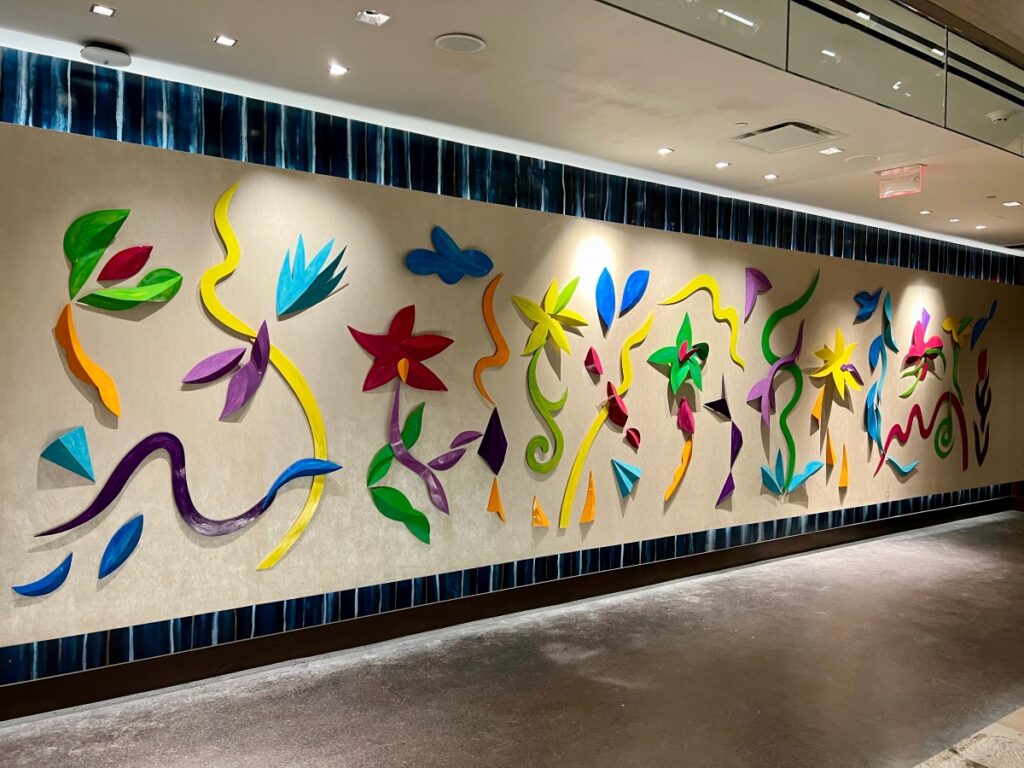
The fact that Mears has dedicated much of her career to creating and conserving art in public spaces where everyone is able to access and enjoy it aligns with her advocacy for art in schools and for better opportunities for artists. She helped found Maryland Art Place in 1981, understanding that Baltimore needed more venues for artists to exhibit their work and more incentives for artists to settle in Baltimore.
Mears has also played a role in arts education in the city. She was a member of the Maryland State Arts Council in the 90s, chaired the Arts Education in Maryland Schools Alliance (AEMS) from 1992 until 2006 when she became Chair Emeritus and a trustee of the organization. In 2014, she co-chaired the Governor’s P20 Leadership Council Task Force on Arts Education in Maryland Schools.
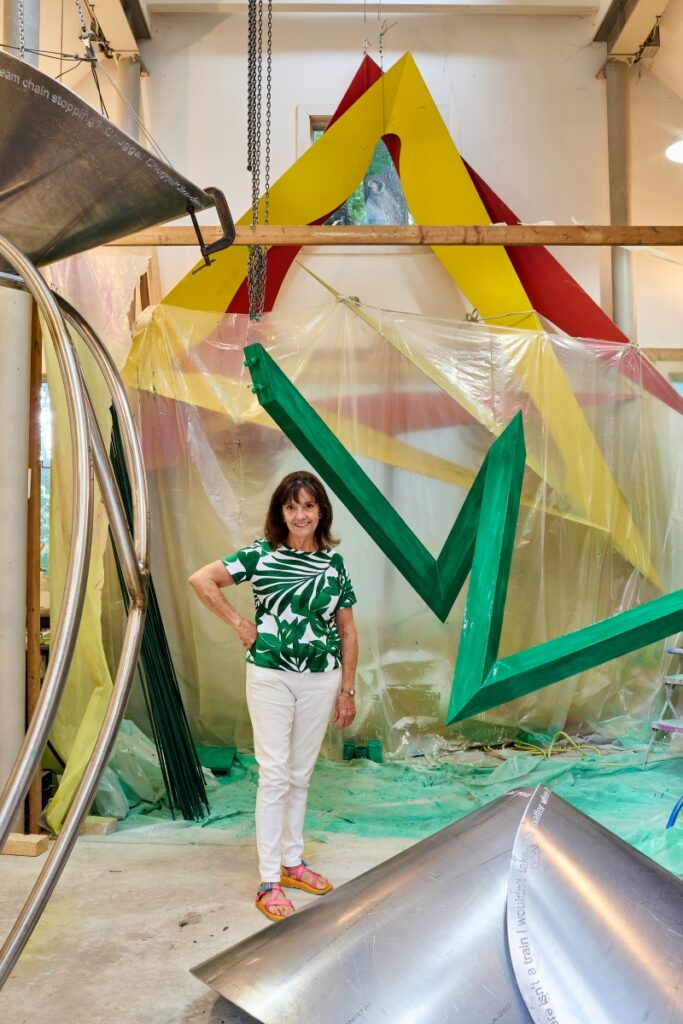
In addition to the hours Mears gives to working on policy related to art education and public art, she typically spends seven days a week in her studio. At the time of our meeting, she was working on a commission for Hagerstown that will be installed in a public park across the street from the historic house of Mary Titcomb, a librarian who is credited with running the nation’s first bookmobile—a horse-drawn cart. The area is also near the Boonsboro Trolley Museum and the railroad.
All this information about the site is integral to Mears’ process as she plans her work. “Hagerstown is a big train place historically, so these pieces are going to look like train tracks or trolley tracks going into and coming out of the ground. I’m going to have a whole crew there to help me arrange it before we dig any footings because I really want it to work with the site,” she explains. “Then for the Mary Titcomb part, I included quotes from children’s books about trains.”
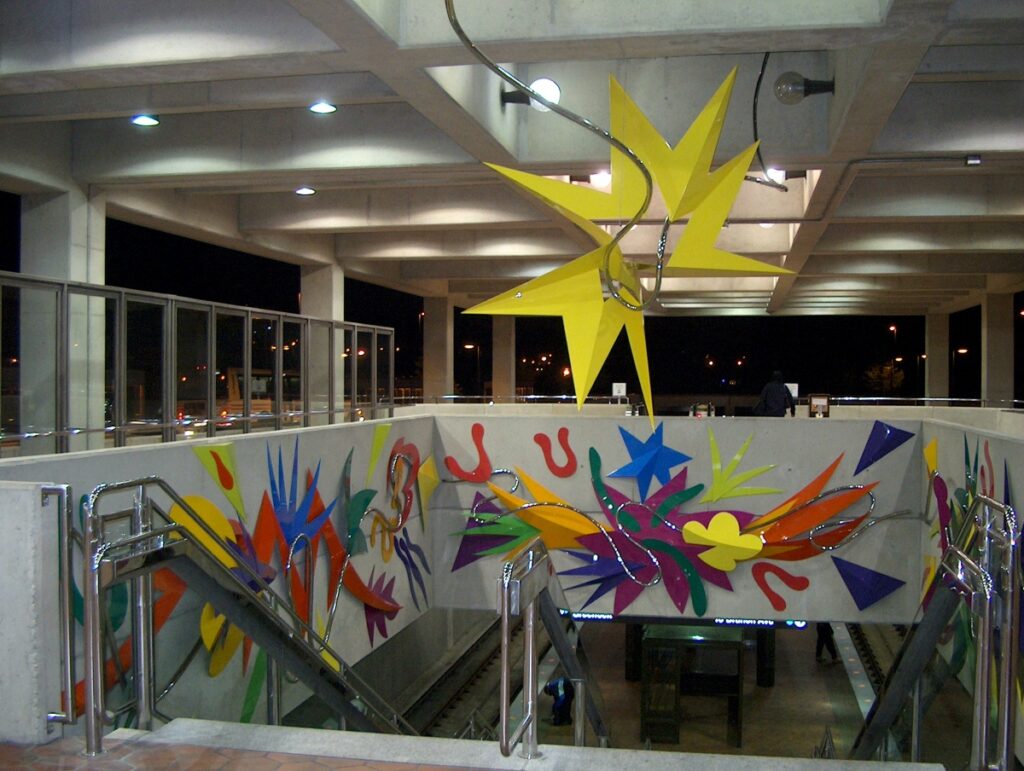
In her studio she shows me the models for a range of projects—pieces that are in the DC metro, at schools, health centers, and people’s private residences. In each case, she visited the site and assessed the function of the space before planning anything. For a North Carolina school of science and math, her work, “Oasis Diffraction” (the students came up with the title), is a series of hanging shapes—swirls and zigzags and bursts—in bright colors. “I was thinking about the Fibonacci thing and all of that, the deer skeleton I saw on campus—things kind of melding together.”
At St. Agnes here in Baltimore, Mears wanted to create a calming vibe with her gorgeously curved white sculpture, “Spun Grace.” She explains, “It was a hospital where people with serious illnesses go, so kindness and gentleness are important. These [pieces] move very gently. It’s a place where people are sitting and waiting while someone is being cared for, and I’ve had several people tell me how it was helpful.”
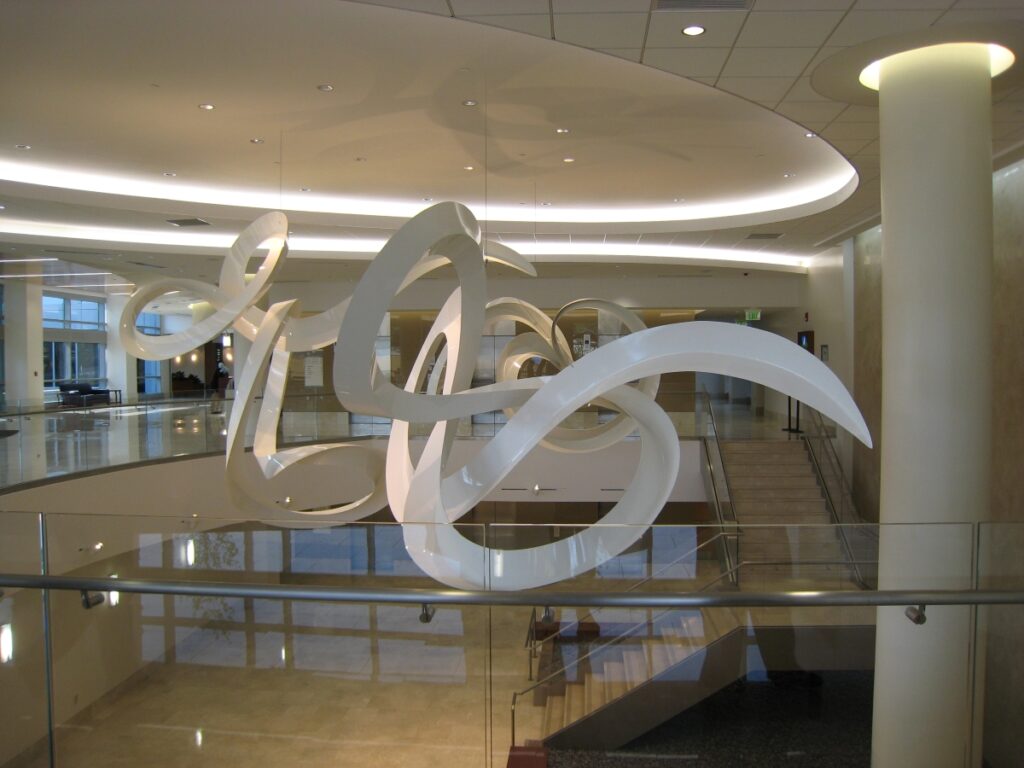
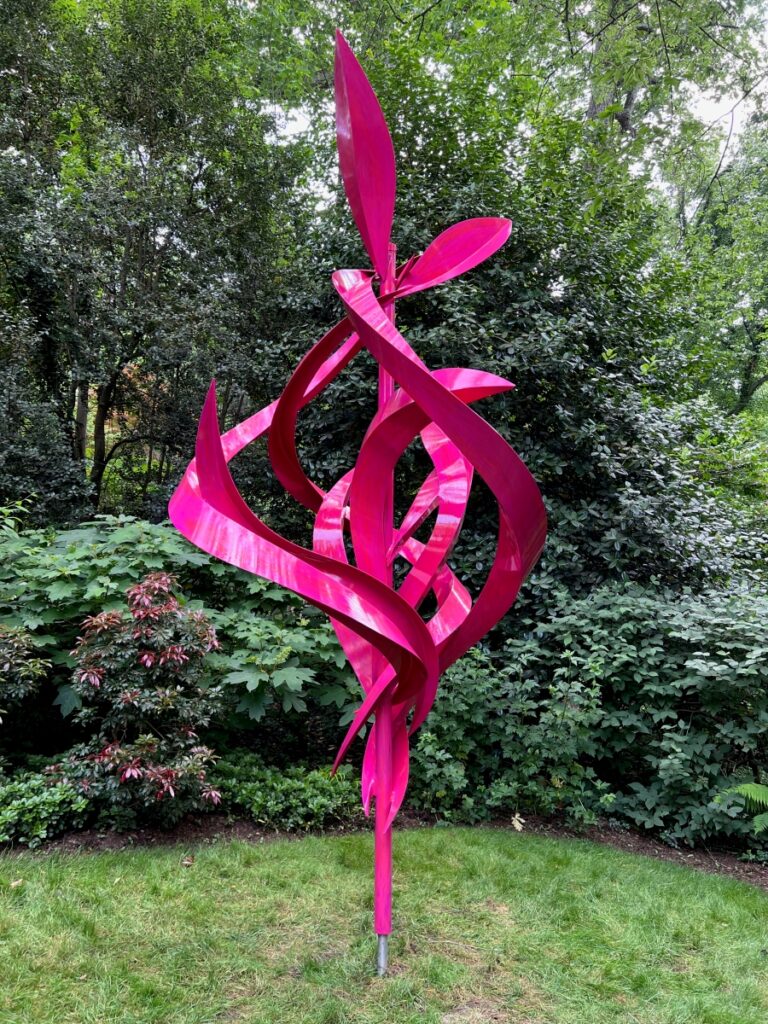
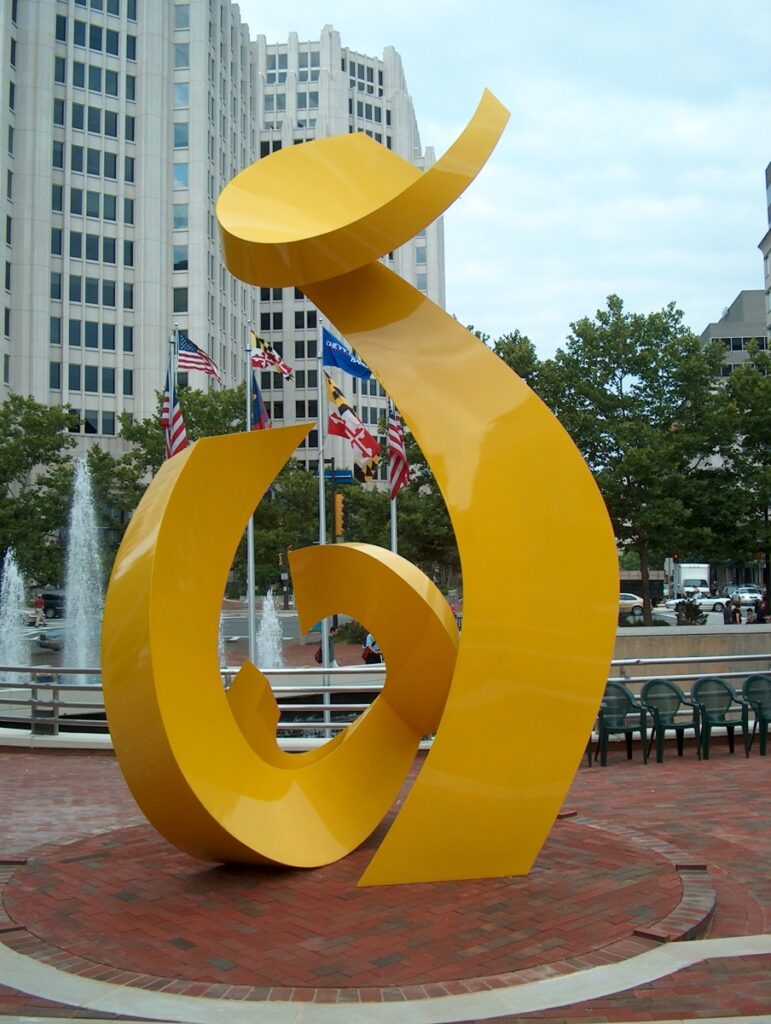
Mary Ann MearsYou find out by looking at your work why you’ve made that piece. You discover things about yourself when you’re looking at the work.
Mears appreciates the process of creating public art because “each time, it pulls something out of you. I love doing that because otherwise I’d be in a rut. Where does your brain go? It goes to the familiar. Maybe it goes to art you’ve learned about, but mostly it goes to what you’ve already thought about.” With site-specific pieces, the artist is forced to consider elements outside her own experience.
Creation is an act of continuous learning and deepening understanding of oneself. “One of the things I feel as an artist is that you find out by looking at your work why you’ve made that piece,” says Mears. “You discover things about yourself when you’re looking at the work.”
I ask Mears what she has learned about herself. She thinks for a while, showing me a few more sculptures in the yard before answering. “It really came through to me when I had a baby die—it was a hideous life crisis, but it was very important for me to get back into the studio and work. It took a lot to get myself to do that, and what I found was that in the depths of despair, I was doing optimistic work. And I always have. I had this understanding that that’s how I fight death. I think we all do that. From the beginning, everything I’ve always done—it’s that energy and life force.”