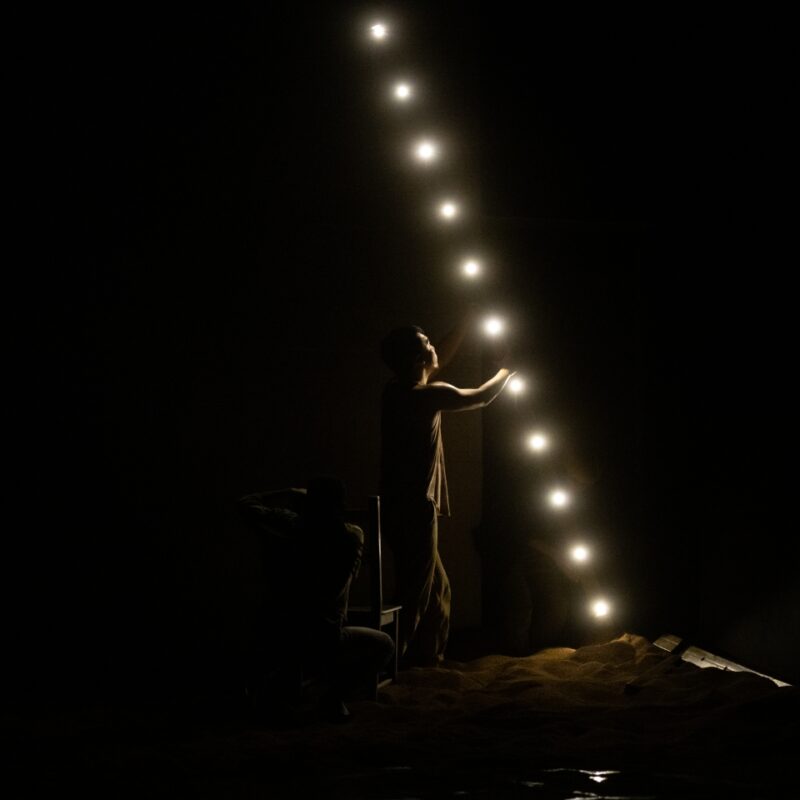
Sometimes it is difficult to separate the dancer from the dance. The art form is so physically and emotionally embedded that identity and expression become intertwined. As a former dancer, I know the exhilaration, the thrill of finally grasping a movement until your body fits it like a glove, that intoxicating alignment of discipline and freedom.
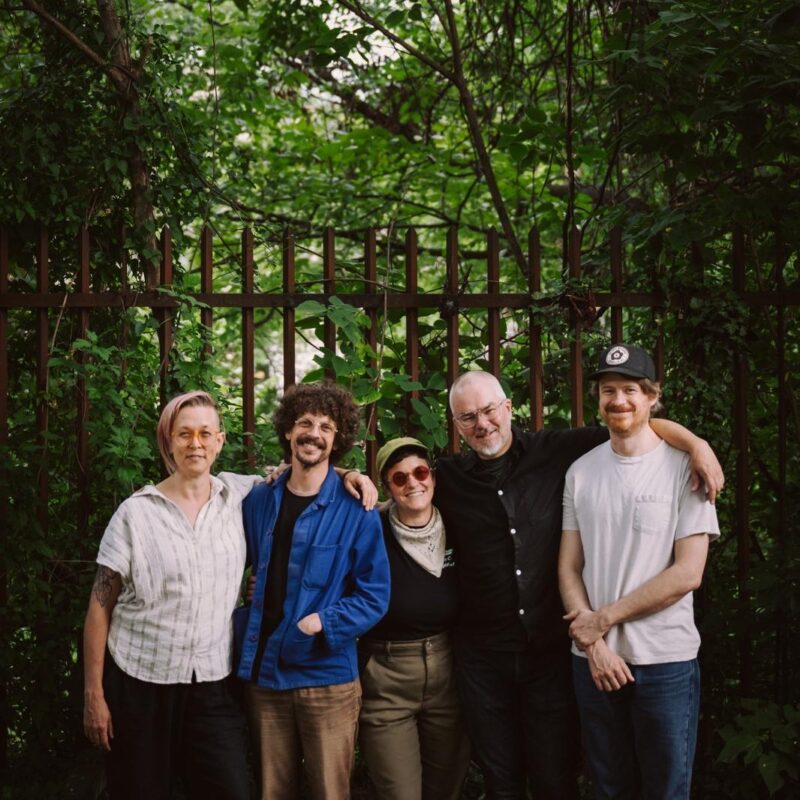
Two of the finest artists currently working in the form are Colette Krogol and Matt Reeves, the founders and creative forces behind Orange Grove Dance (OGD), based in Baltimore. The group prides itself on seamlessly weaving film, dance, music, and technology into a focused stream of consciousness that undergirds each work. In the fifteen years they have collaborated—both professionally and personally—their reputation has steadily expanded. As new artists join the fold, the company continues to evolve, deepening and refining its artistic identity.
After I saw OGD’s rehearsal of Nevermore, ahead of its premier at The Voxel in the fall of 2026, we met up for a conversation at the Peabody Institute, where both Krogol and Matt serve as instructors. I wanted to look beyond the mechanics of movement and understand the hearts and motivations that drive these two remarkably multifaceted artists.
There was something especially appropriate about sitting in a ballet studio—mirrors reflecting mirrors, the faint scuff of rehearsal shoes on the black marley floor—while talking about their backgrounds, their coming together to form a company, and where they are today, after nearly two decades of collaboration.
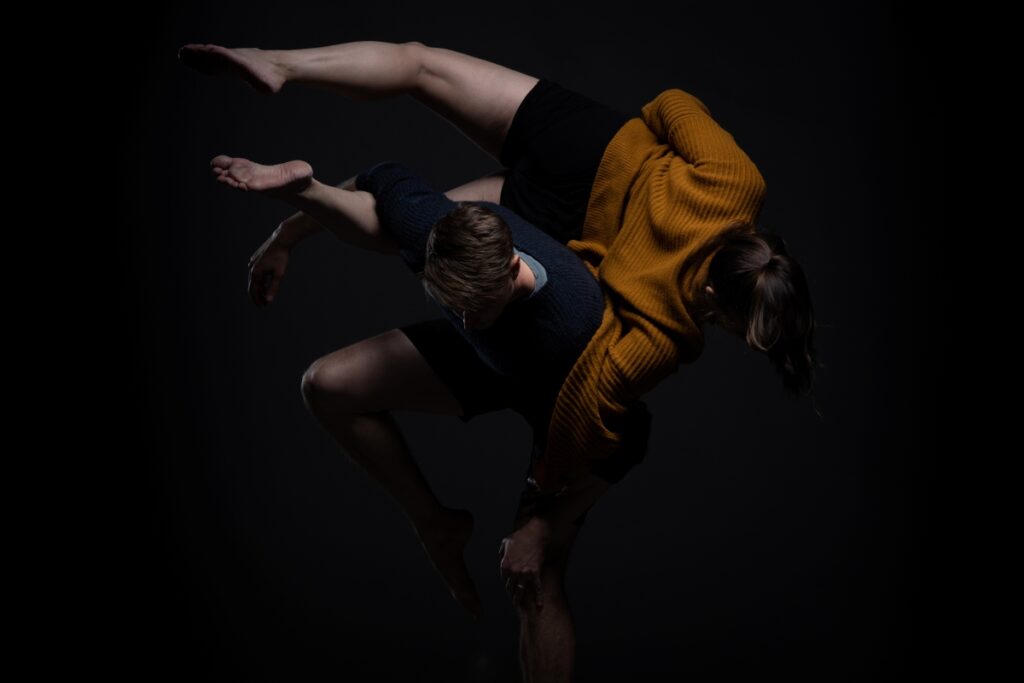
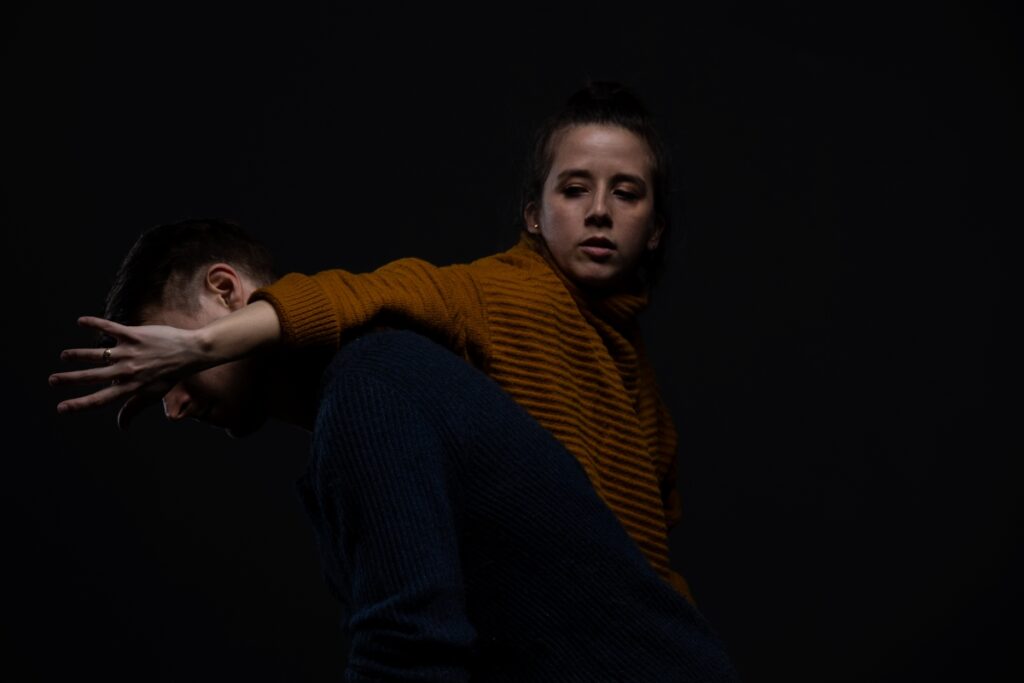
Krogol and Reeves met as undergraduates at the University of Florida. In 2005, they performed a duet, pas de deux, set to their own choreography. It was the early spark that illuminated a shared artistic vision—and something more; Krogol says their creative collaboration, in many ways, laid the foundation for what would grow into a romantic connection in 2006.
After graduating, they relocated to New York City. They’d been honing their craft dancing with other companies, and realized they could build something together, even as they were still developing their own identities as dancers. They began Orange Grove Dance in 2007. With a distinctive perspective on movement–blending technology, music, environmental awareness, and a commitment to expressing emotional landscapes through physical form—OGD garnered attention. They would go on to receive the Helen Hayes Award, Rubys Artist Grant, Maryland State Arts Council Artist Award, and the Baker Artist Award, to name a few.
I asked them how they navigate authorship and collaboration. Are they always in sync from the outset, or does alignment emerge through friction? Krogol paused before answering, thoughtful and measured.
“Well, it depends,” she said. “We not only work together, but we live together. We share a life together. It’s hard to separate our personal, professional, and artistic life—it’s all so interwoven. Our entire selves, our entire journey goes into the work. So when we enter a process, sometimes we’ve already been discussing it while we’re cooking dinner—an image we’re trying to capture, something we’re trying to decipher. By the time we get into the studio, we’ve already had those conversations: What is it? What is it not?”
Reeves expanded on how that shared life translates into the broader company dynamic. “We try to create an environment for what we call image harvesting,” he explained. Sometimes they enter the studio with a clear image in mind: something to organize, craft, and shape. Just as often, however, they trust the process. They begin with a list of words, inviting each dancer to generate from their own movement DNA. Those individual impulses become the raw material, woven together and layered one against another until the choreography evolves into something no single artist could have created alone. “That’s when the ‘aha’ moments happen,” he said.
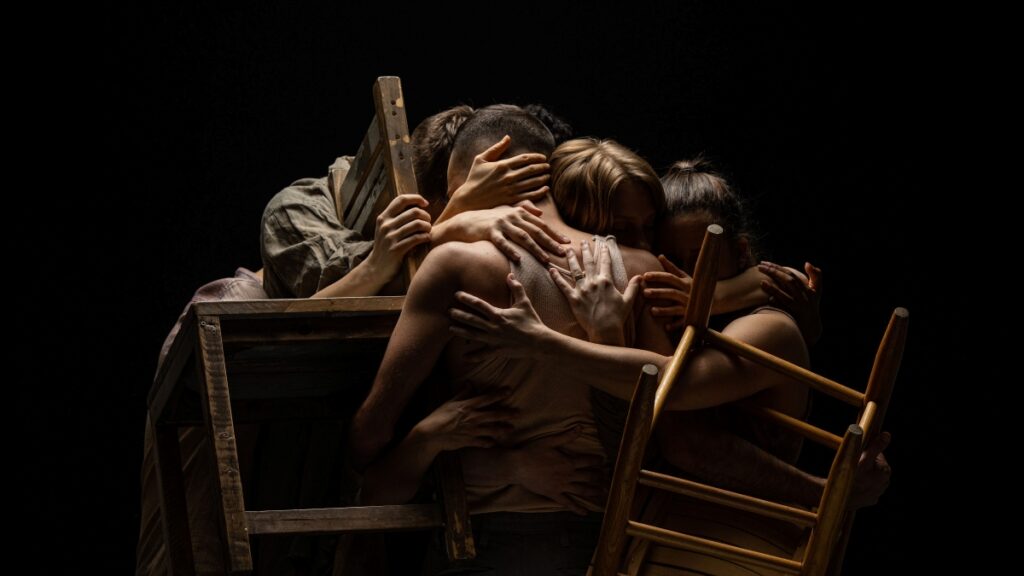
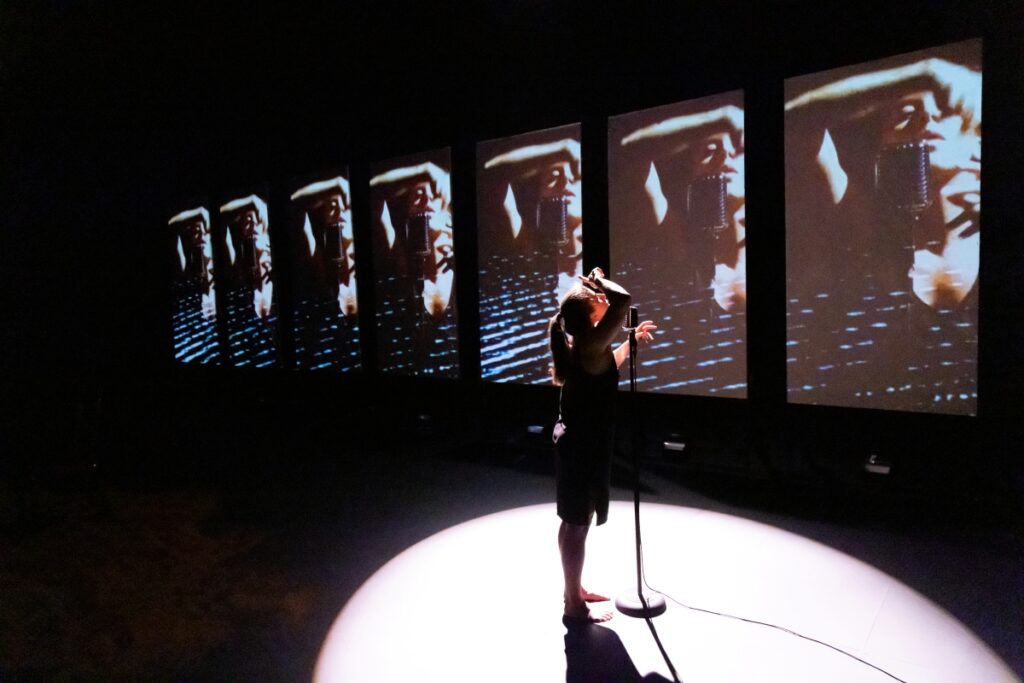
Timoth David CopneyAs a piece takes shape, the process feels almost magnetic—a push and pull of ideas and bodies, movements drawn toward one another, building on phrases the original concept may not have anticipated but that fit the evolving tone perfectly.
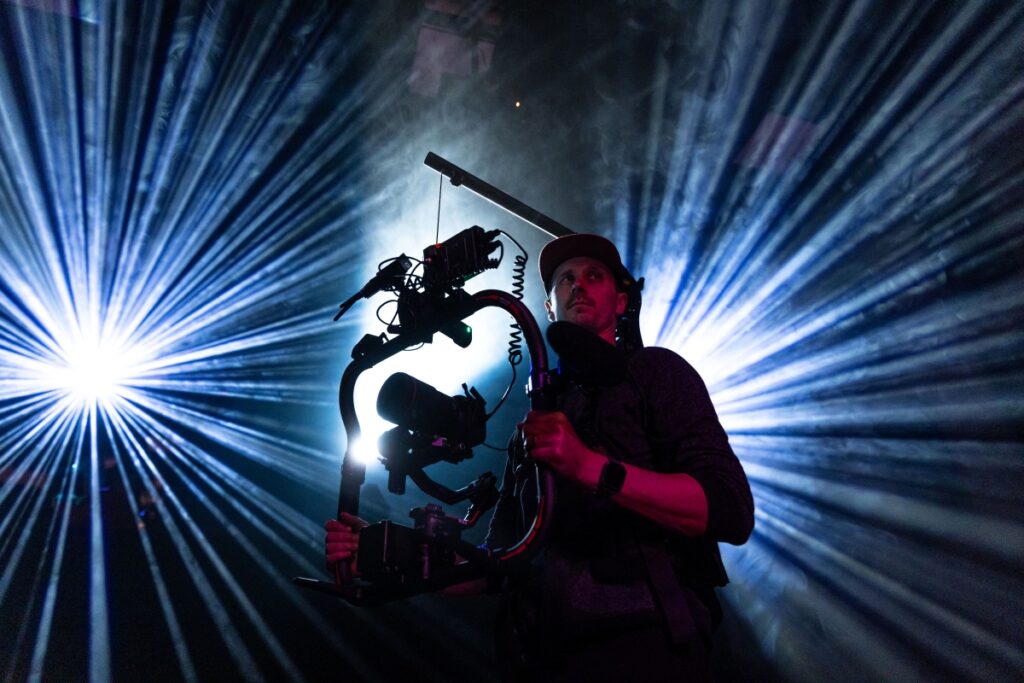
A shifting core group of 13 collaborators make up the company of OGD; the artists and performers change with the pieces they create, though some members are involved in every production. Each wears multiple hats based on their skill sets—which include technological design, costuming, media design, and filmmaking, as well as being superior dancers.
The input of their collaborators is essential to realizing the vision Krogol and Reeves initiate. In the formative stage, they listen closely and incorporate ideas from other company members to help realize their vision. As a piece takes shape, the process feels almost magnetic—a push and pull of ideas and bodies, movements drawn toward one another, building on phrases the original concept may not have anticipated but that fit the evolving tone perfectly. Watching them describe it, I was struck by how they seem to listen kinetically—hearing movement, seeing emotion emerge from a single image until it expands into an entirely new work.
The two choreographers take pride in the fact that their work resists easy categorization. BmoreArt reviewer Dereck Mangus wrote of their production A&I in the spring of 2024: “What had I experienced?… it was equal parts captivating and disquieting. Spellbinding yet unnerving… the experience was at times aesthetically pleasing; at others, anxiety-producing.” That genre-defying quality has become central to their appeal, often leaving audiences with a reaction that is much more visceral. For me, that anxiety was rooted in the degree of fearlessness the dancers demand of themselves.
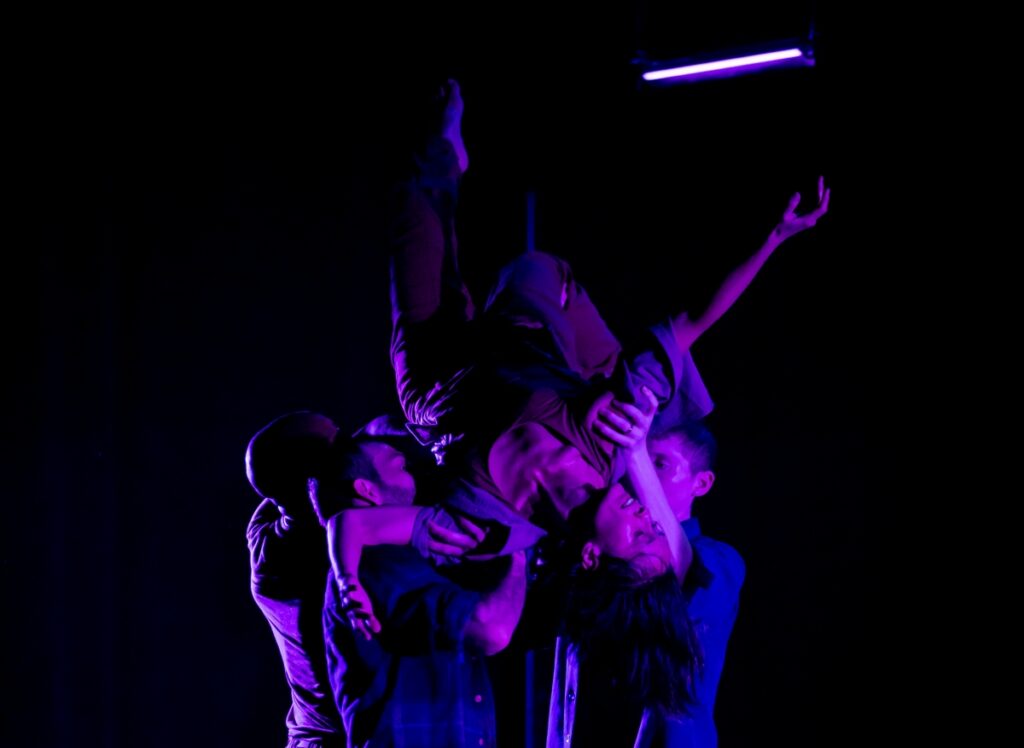
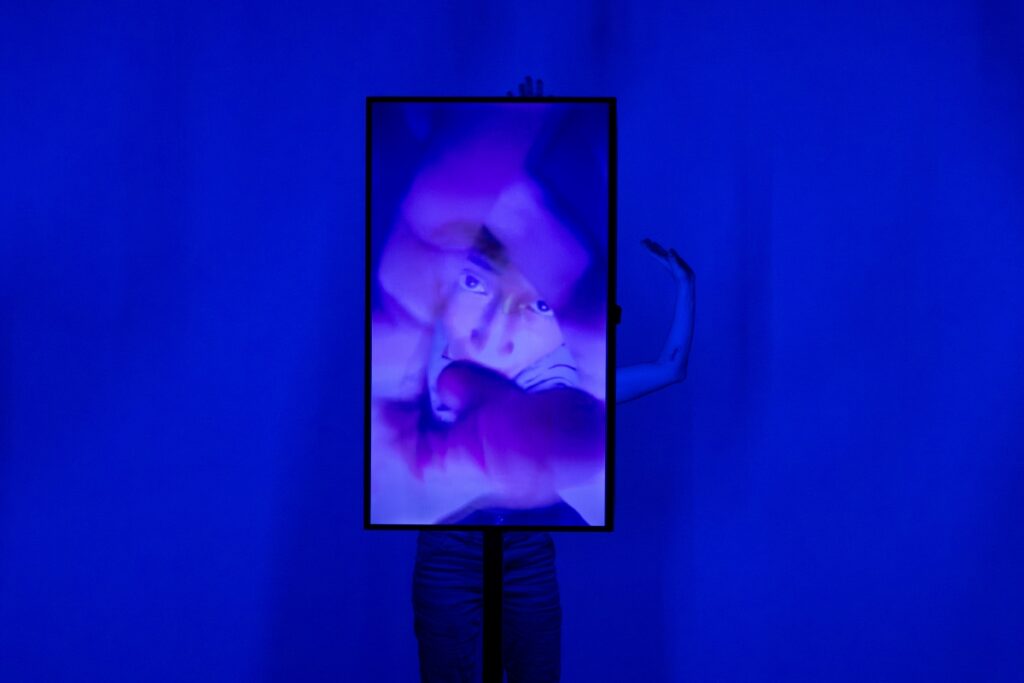
Krogol and Reeves emphasize the patience behind the process. Their dancers are extraordinary athletes who continuously push themselves—something for which they are both humbled and deeply grateful. But risk is approached incrementally. What may not be possible in one rehearsal might emerge in the next. “Sometimes it’s about being patient with the idea,” they explained, trusting that the body will arrive there in time. That patience is grounded in mutual trust—choreographers who trust their dancers, dancers who trust their directors, and an ensemble that learns to trust one another. Movements are attempted carefully and built safely, layer by layer, repetition by repetition. Through that steady process, what once seemed impossible begins to surge into being.
Since COVID, they don’t take anything for granted—not studio space, not collaboration, not even the simple act of gathering in a room together. That awareness of the delicacy of these conditions has deepened both their urgency and their gratitude in the creative process.
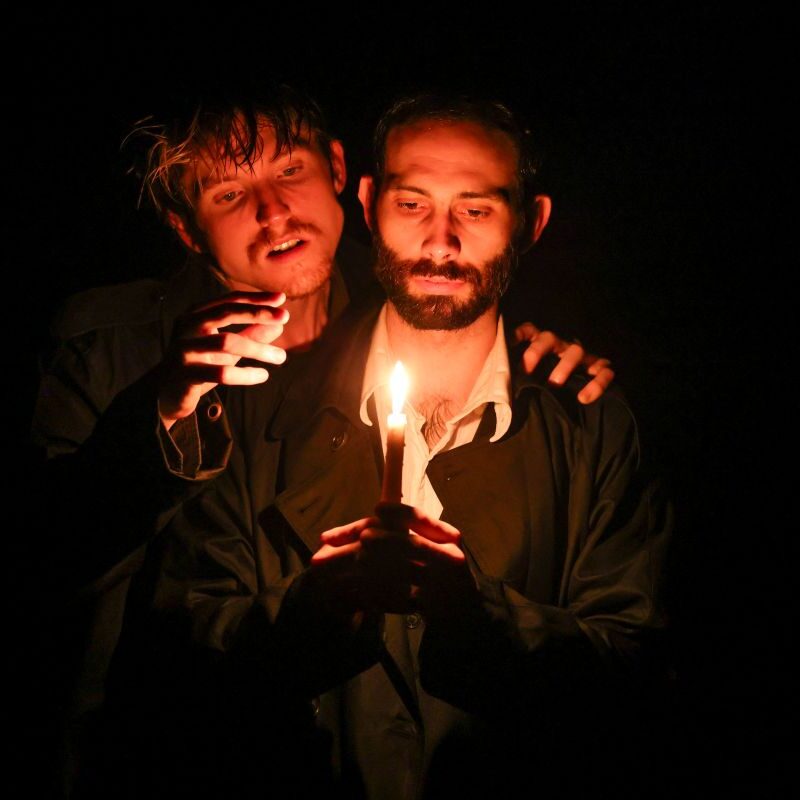
In Nevermore, their newest project, the incorporation of physical elements, such as water, signals yet another step forward. The multimedia odyssey is a nod to their adopted home of Baltimore and an homage to Edgar Allan Poe. Much of it unfolds inside an installed pool. How fortunate for OGD that they found an ideal venue at The Voxel, a tech-forward North Baltimore facility known for avant-garde artistic expression. The demands of this production—which require nearly the entire performance space to be transformed into a vast wading pool—engage the full range of the theater’s technical capabilities, from its projection-mapped stage to its sophisticated sound technology. The dancers move within this environment that is not merely staged but fully realized. The immersive landscape also envelops the audience.
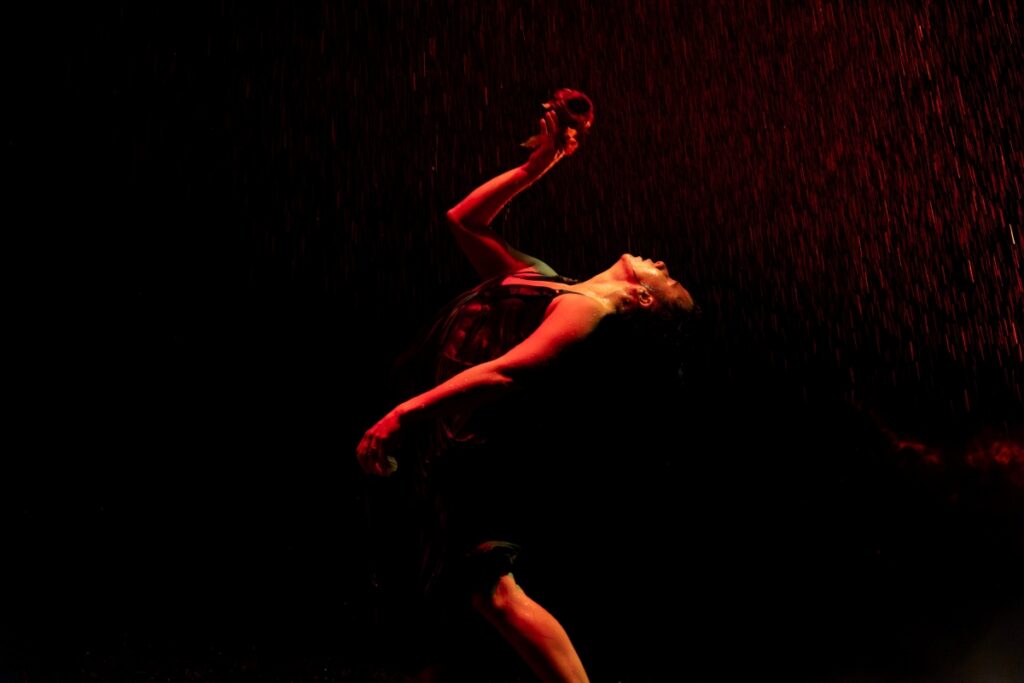
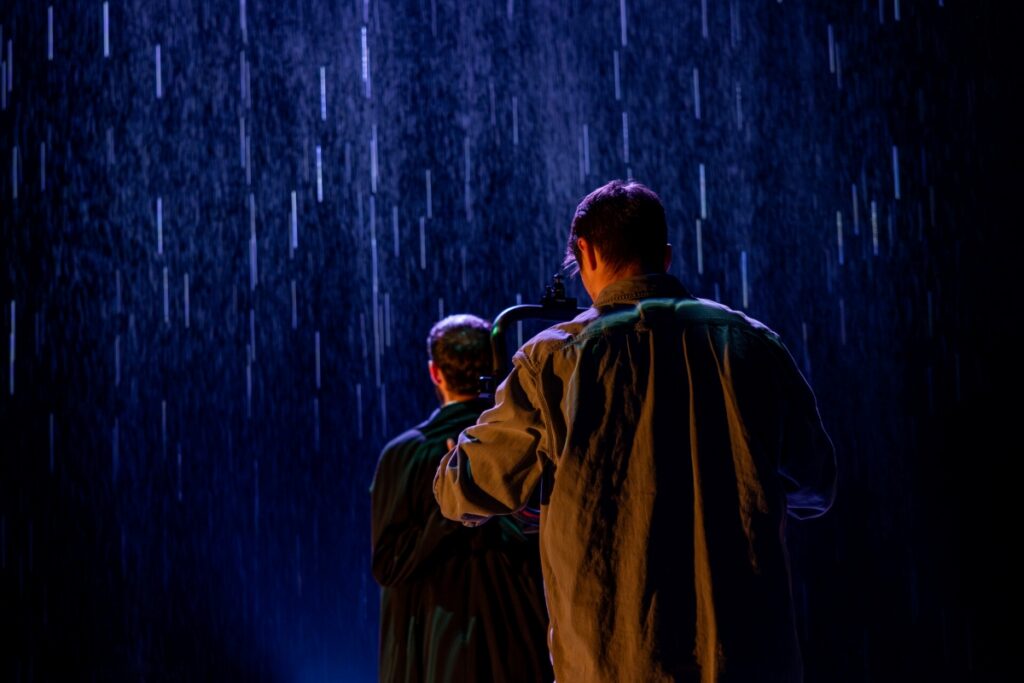
Timoth David CopneyIn Nevermore, their newest project, the incorporation of physical elements, such as water, signals yet another step forward. The multimedia odyssey is a nod to their adopted home of Baltimore and an homage to Edgar Allan Poe.
Like most of OGD’s works, Nevermore responds to lived experience—Krogol and Reeves’ own and that of their collaborators—rather than from any deliberate attempt to address a particular theme. At the same time, broader social conversations inevitably surface. Their choreography doesn’t preach, but it does respond to the political, social, and cultural environment surrounding us all. For Krogol, a Cuban-American, renewed national debates around immigration have reframed their ongoing four-part tetralogy, Four Recurring Dreams, centered on her family’s exodus from Cuba during the 1980 Mariel boatlift. The work feels newly resonant.
Reading through the collaborators’ bios, I was struck by the breadth of their practices—artists who move fluidly across dance, design, and film, shaping work through movement, image, and environment with equal depth.
As a duet in the early days, the founders took on much of the creative labor themselves, including filming their own work. Over time, interdisciplinary artists have been drawn to OGD. One dancer, Jonathan Hsu, has grown into an accomplished photographer and videographer—a versatile presence ready to move from a leap to his lens. This versatility, modeled by the founders themselves, has become a defining feature of the company’s creative DNA.
This remarkable duo and their company seem unbound by physical structures—shaping the spaces around their vision rather than the other way around. For this aging danseur, witnessing the direction the art form is taking in our own city is deeply heartening. I mentioned earlier how difficult it can be to separate the dancer from the dance. In the case of Orange Grove Dance, there is no separation. These dancers are the dance. And I cannot wait to see their next steps.
Nevermore premiers at the Voxel in October, 2026. Tickets are now on sale here.