When Nellie McKay’s first record, Get Away from Me, came out in 2004, I was 15 and beginning to learn the American Songbook. Her originals sounded like new additions to these standards, with relatable lyrics about having a crush on her music teacher and the conflicting ache of wanting to get married, even though it robs you of your freedom.
The following year, in high school, my best friend, who was a genuine punk (raised by well-respected activist-squatters on the Lower East Side), made me mix CDs of great post-punk female legends like Poly Styrene of X-Ray Spex, and Donita Sparks and Suzi Gardner of L7. On one, she included a song by Nellie McKay that fit with the anti-authority theme of this compilation. It was “Sari,” a fast-paced rap about not being sorry for being an outlier in society.
As a composer and performer, McKay draws on jazz, reggae, and rap, intermixing them to realize her vision. Listening to “Sari” in this context, I realized her soul is punk! She has always been anti-establishment. In her lyrics, she declares herself an unapologetic underdog and makes it clear that, though she looks and sounds like Doris Day, whom she covered on her fourth studio album, she is outspoken, pissed off, and, most of all, unwilling to be squeezed into a single genre.
I’d go on to see Nellie McKay perform on stages of all sizes—from cabaret-style clubs like Le Poisson Rouge to her Broadway debut at The Roundabout Theater when she performed in Bertolt Brecht’s The Threepenny Opera. One cold winter night after seeing her play at a small club called The Duplex in the West Village, I went across the street to a dark pub. I was surprised to find her sitting alone with a martini at the bar.
Working up the nerve to introduce myself, I moved to fix my hair and remembered I was wearing a black rabbit fur hat that a friend had gifted me earlier that winter. McKay, a well-known PETA activist, and lover of animals, is someone I did not want to be caught wearing fur in front of. Embarrassed by my fashion choice, I stopped short of approaching my idol then.
In 2009, McKay appeared in mini-documentary produced by NPR’s Project Song that asked songwriters to write and record a song in two days. It allowed viewers into her process. She composes at a piano with a sketch pad, writing down the notes on sheet music she drew herself. She moves on to record her composition one track at a time, playing the ukulele, piano, and drum machine, nonchalantly bowing a cello, then singing her own backup vocals, all in a few hours. As McKay travels from one instrument to the next, she gently guides the sound engineer with astounding humility and warmth. Eventually, she asks to excuse herself before laying down the final vocals, then calls her mother, the actress Robin Pappas, for some last-minute fine-tuning of her ideas.
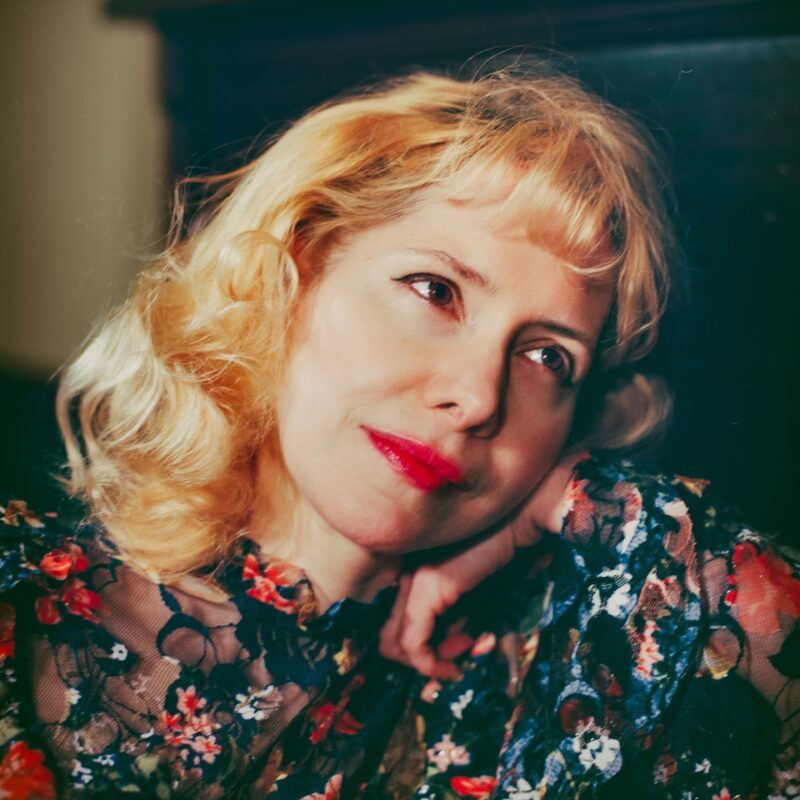
McKay, so full of musical talent and recognized by her beaming smile and blonde locks, approaches her work with a delicate conviction. Her soft-spoken voice and disarming charm proved a powerful force as she fought Columbia Records to keep her premier album from being edited down to a single disc. It is hard to imagine what breadth would have been lost had she not insisted on the release of all 18 tracks.
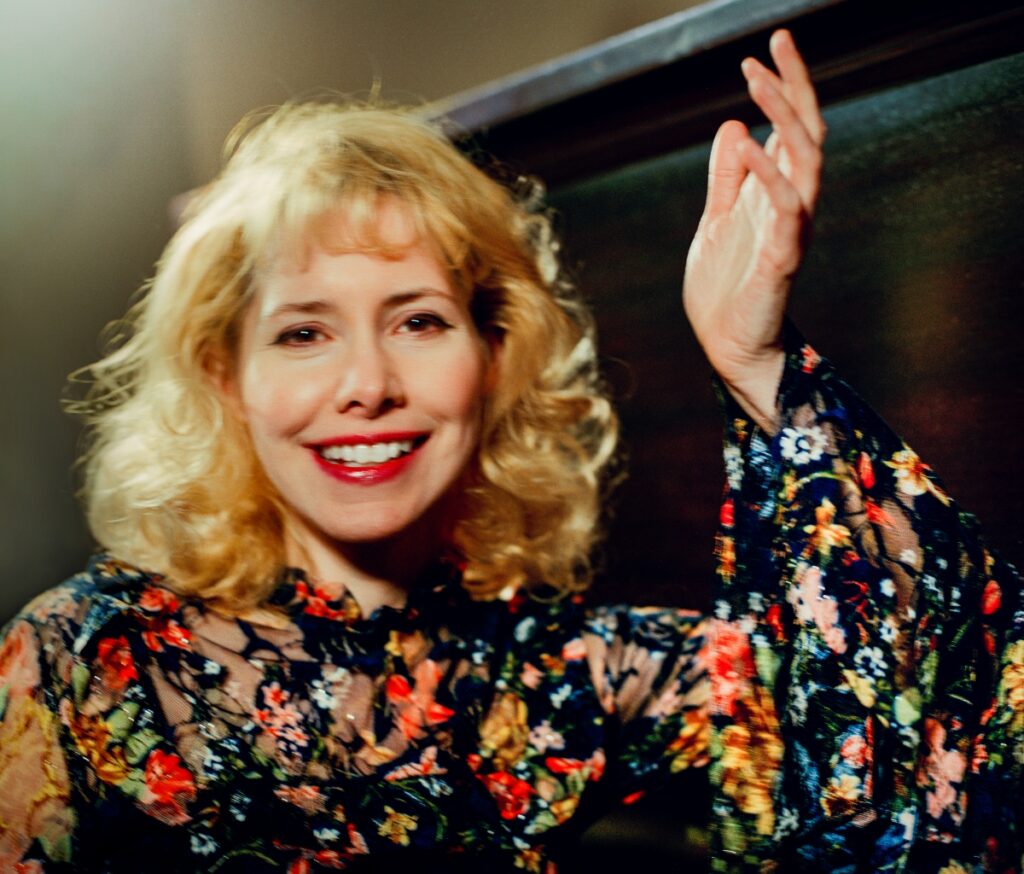
Saskia KahnIn her lyrics, she declares herself an unapologetic underdog and makes it clear that, though she looks and sounds like Doris Day, whom she covered on her fourth studio album, she is outspoken, pissed off, and, most of all, unwilling to be squeezed into a single genre.
When I heard McKay was coming to perform at the Creative Alliance in Baltimore this past February, I cold emailed her publicist and offered to photograph her. Though McKay agreed that we could meet for a portrait, everything seemed touch-and-go. She flew from Tulsa, Oklahoma, during a late-night snowstorm, where she had been a featured singer for a concert celebrating the 60th anniversary of “Uncle” Bob Dylan’s Blonde on Blonde.
At the Creative Alliance, McKay played a concert of every track from her newly released album Gee Whiz: The Get Away from Me Demos (Omnivore Recordings). While snow and wind were blowing outside, she kept the audience soothed and warm with her crystalline voice, piano, and ukulele.
After the concert, and 15 years after I missed my opportunity in that West Village bar, I finally introduced myself to McKay and asked if we could still take that portrait. She cheerfully agreed and said she and her mother would meet me at her hotel.
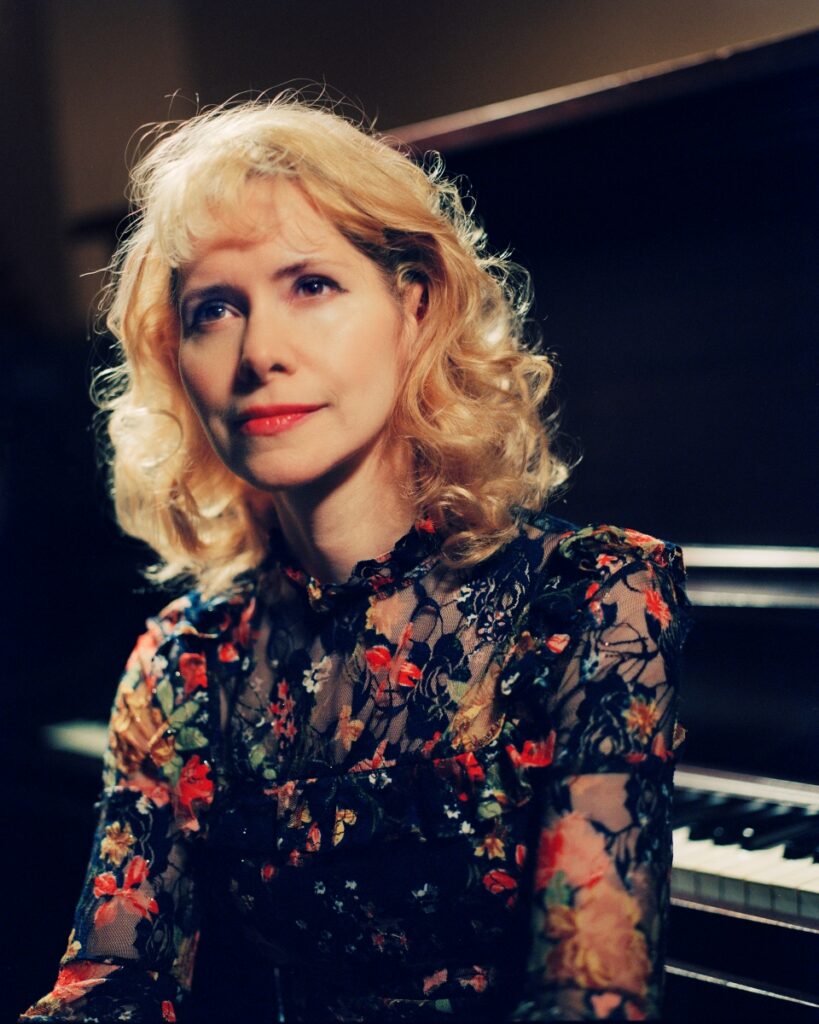
My partner, who also doubles as my assistant, and I rushed down to the Lord Baltimore Hotel to find an appropriate location. We arrived around 11pm and had just a few minutes to peek around their empty ballrooms. We were surprised to find that behind a shut door was a cold, dark room with an upright piano in the corner. We set up some lights, and when McKay arrived, she sat down at the piano without hesitation and started playing, her hands effortlessly zooming over the keys like Oscar Peterson. Sadly, I had to ask her to stop so I could photograph her.
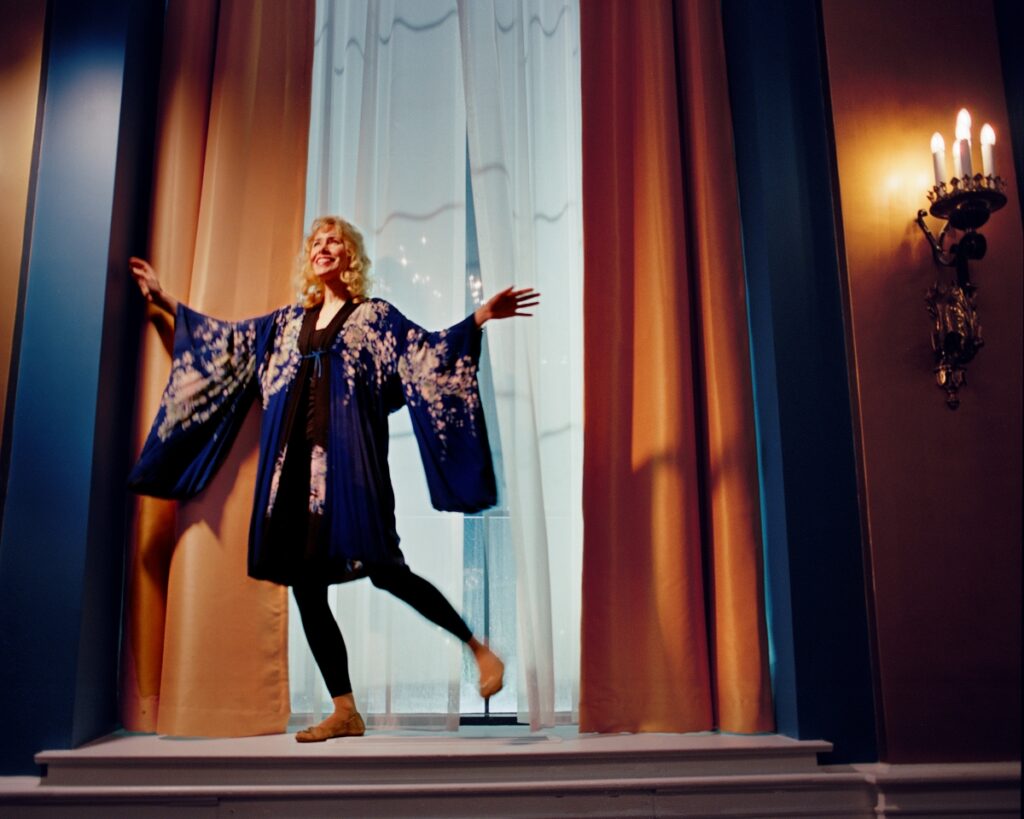
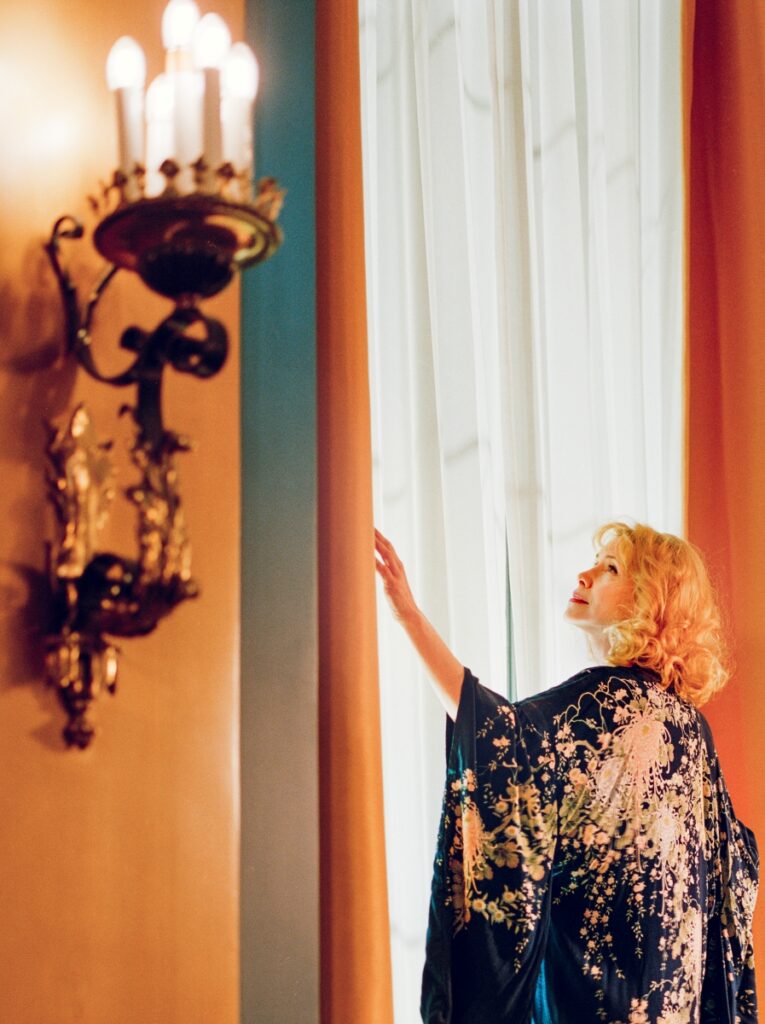
As always, to set the ambiance, I’d made a playlist for the occasion, and I was moved by her joy in the music I had chosen. Especially by how she playfully danced with her mom in the middle of the large empty room, asking her earnestly, “Do you think I should play this at my next show?” when hearing the Cole Porter song “Do I Love You?” It was surreal that my mix of songs inspired a new idea for the singer I had long played for my dearest friends. After taking a few frames, we went to the adjoining, chandeliered ballroom to continue making our midnight portraits and have a conversation.
When your debut album Get Away From Me was released, the Iraq War had just begun. Your lyrics spoke directly about President Bush, the war, and our country’s hypocrisies in songs like “David,” “Respectable,” and “Sari.”
During this 25th-anniversary tour of that album, you updated the lyric from “Iraq” to “Iran”. At Creative Alliance in Baltimore, you ended your encore with the anti-Vietnam War protest song “I Feel Like I’m Fixin’ to Die Rag,” but changed “Vietnam” to “Iran,” and the room went completely silent. Within days, the United States bombed Iran.
What has it felt like to play that song across the country? Do audiences feel very different depending on where you are?
At this point, most people see through the wars, but we marinate in manipulation coming from the major political parties, from media, we receive a steady drip of propaganda from news outlets and sociopathic, yet disarmingly familiar and charming personalities.
There’s a tiny group of people who benefit financially from war, and they hide behind people in uniform—‘if you attack the war you’re attacking the soldier’ when, of course, the opposite is true—trying to prevent and end wars, wars fought by low-income people for the benefit of the rich, is obviously to the benefit of everyone, including people in the military.
The songs you wrote at 19 feel so relevant in today’s political climate. How has it felt to revisit them today?
As my mother has been telling me forever, politics is circular. Now, I know she’s right, so then what’s the point in making anything… ‘Justice’ is now the name of a major brand at Walmart—the word is printed on short-shorts. I believe Zappa said, ‘politics is the entertainment division of the military-industrial complex.’
Above all, people won’t treat each other better until we stop exploiting animals. Our behavior towards them is pretty much the template for how we treat each other.
What is a memory that has stayed with you from when you were writing the songs that eventually became your debut double-album, Get Away from Me?
The women’s dressing room in winter on the Staten Island ferry, our coats bumping together as we perched on tiny stools, chatting and ratting our hair, how cold it was living in a crappy attic with no heat.
What do you remember about recording the record that felt distinct from the writing process? Did the music change when you got into the studio with Geoff Emerick?
We recorded and performed the songs on the demos, and after signing with Sony, the expectation and directive were to throw money at the music by re-recording it, which, in retrospect, was a mistake.
There’s a game in the industry called ‘beat the demo,’ and it’s almost impossible to do.
We mixed at Capitol Records in Hollywood; I still have the notepads with composition paper on the back. Geoff was a lovely friend, now in heaven. We called him ‘Big Ears’ because he was great on sound.
While touring Get Away From Me, you are performing your debut record in full, playing solo, and premiering a video projection for each song. The entire performance is all Nellie.
In the decades since your first record and across your eight subsequent studio albums, you have done a great deal of collaborative work, whether it be with David Byrne, performing with Alan Cumming on Broadway, acting in a play directed by Ethan Coen, and dueting with Cyndi Lauper, or appearing as a guest in Aimee Mann and Ted Leo’s variety show, just to name a few.
In one interview, you said that the best way to engage with people you admire is to work with them. When you collaborate with someone new who has a distinct style, how do you approach the process?
It’s fun to follow their muse or their style, like taking on an accent in a different part of the world; they make you write or play in an unexpected way.
You are a polymath, with many channels for your creative gifts. When do you feel most at ease in your creative process?
It’s nice to just walk around; the best part of music is tuning out… Commiserating with a friend the other day, he said, ‘people think you’re in the arts, but you’re really just another American.’
There have been many musicians you’ve covered over the years, including your masterful album Normal as Blueberry Pie, the Doris Day Tribute album, which featured her renditions of American Songbook classics.
If you were to suggest one place to start for those who don’t know the American Songbook, where would you tell them to begin?
If you listen to records from the 20s through the 40s (maybe the 50s), those songs will bloom in your soul. Or just turn on the old movie channel! Music is always an oasis and inspiration; I love old stuff.