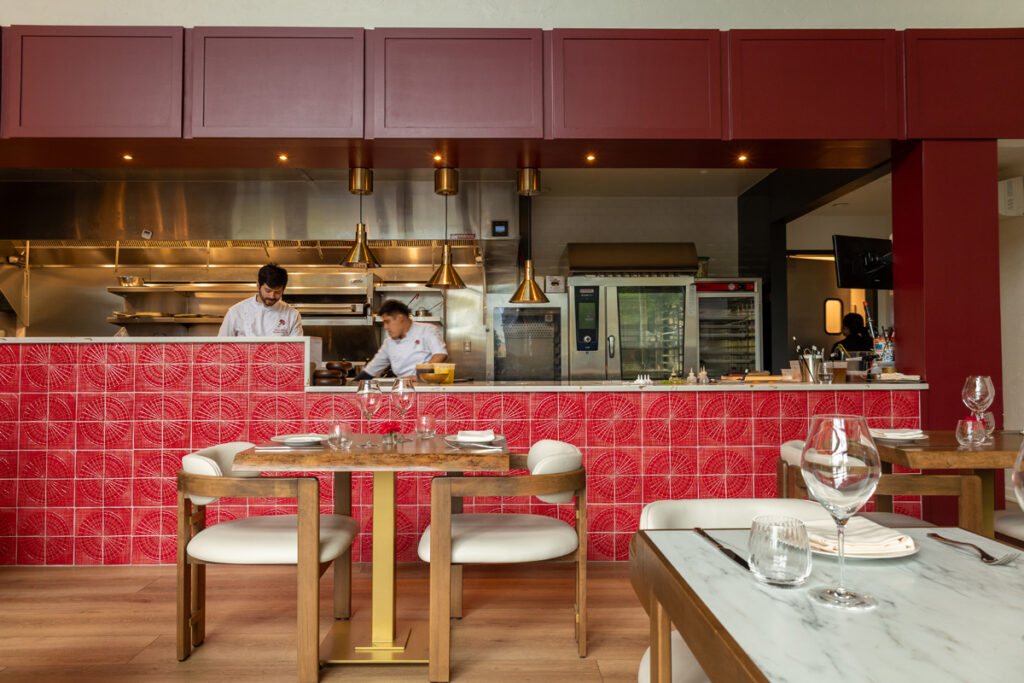
From a distance I see a bright warm yellow sign with a clavel—carnation flower—a symbol of devotion, passion, and the national flower of Spain. As I enter the restaurant Josefina, I am welcomed by red tones, tall ceilings, organic shapes, ceramic patterns, Flamenco music, and the delicious smell of seafood.
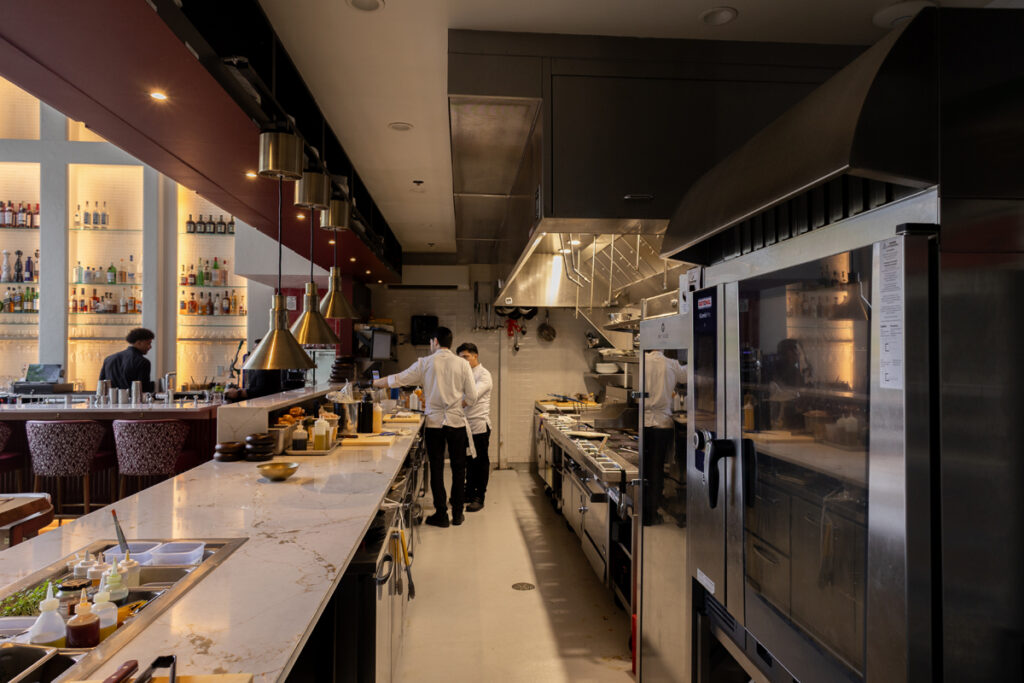
Sitting down, I observe the rhythm of the cooks in the open kitchen—the repetitive movements of their arms, the carefulness but precisive rotation of their bodies as they walk around the tight space. As if they were dancing flamenco, their flow mimics the tone of the music or the subtle orders of the Executive Chef and owner, David Zamudio.
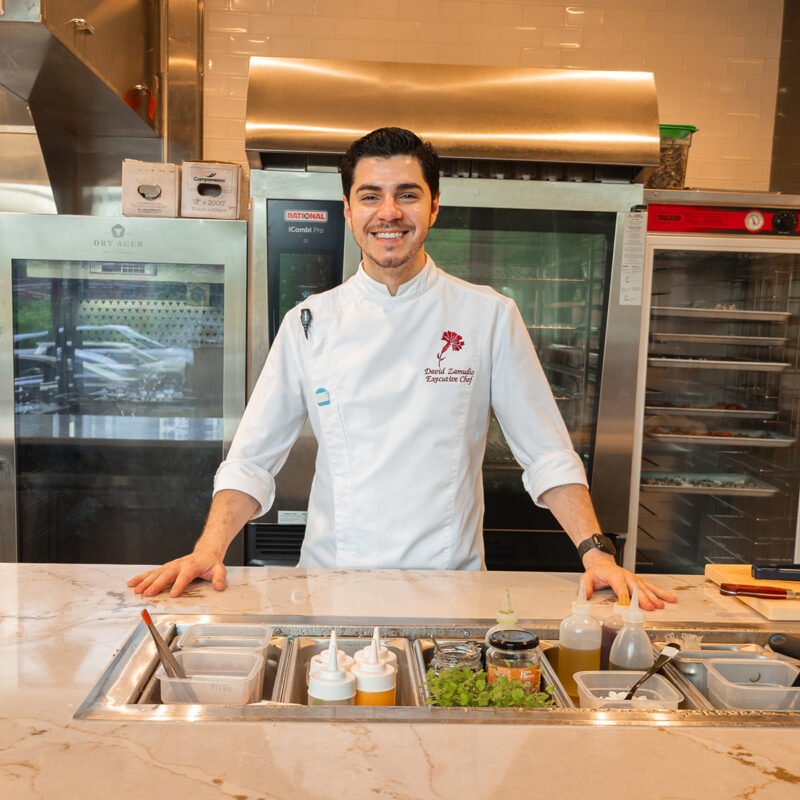
When the pace in the kitchen slows down, I am welcomed with a big smile from David. We have known each other since 2022, when David hired me as a hostess at Alma Cocina Latina. Four years later, we’re sitting down together to recount and celebrate the opening of his Harbor Point restaurant Josefina, Baltimore’s new destination for authentic Spanish cuisine.
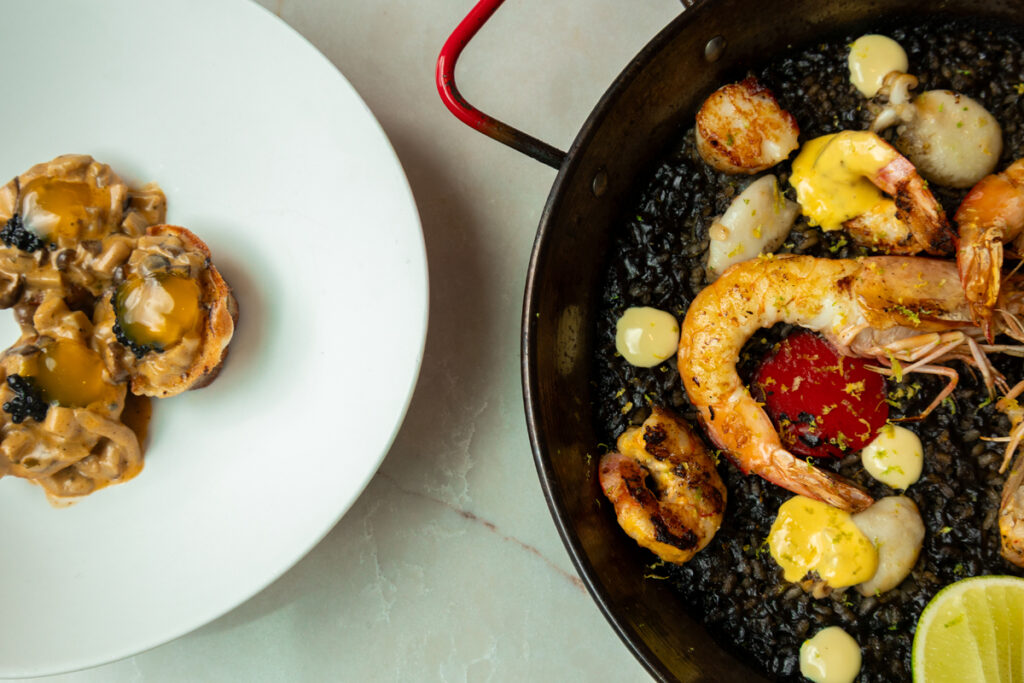
As in any gathering in Spain—but also in Venezuela, David’s and my native country—our conversation was accompanied by a variety of tapas. These small and savory Spanish plates are designed to be shared with drinks. We start off with pan de cristal (crystal bread) with a flaky crust and airy interior with butter, garlic, and sea salt. This simple tapa brought me immediately to my childhood in Venezuela. Even though this is not the typical type of bread you will find there, David still wanted to evoke that specific garlic butter bread served at any restaurant in Venezuela. “It was the standard thing: you’d sit down at a restaurant in Caracas, and they’d bring you garlic butter bread—guaranteed—toasted, smelling amazing, and delicious”.
Looking at the drinks menu, I was immediately drawn to Fuerza y Fe, not only because I am an Old Fashioned fanatic—mostly if it involves a hazelnut-infused bourbon—but because of the name: Strength and Faith.
Since I have known David Zamudio, he has been pretty resilient and passionate about his goals. Starting his culinary path in the Island of Margarita, Venezuela, he began working at a local bakery under the guidance of a pastry chef who would later become Josefina’s Executive Pastry Chef. From the beginning of culinary school, Zamudio’s goal was to own a restaurant by the time he was 30. “Whether it was my own business or just a hot dog stand—whatever worked, the sky was the limit, tu sabes?”
Due to Venezuela’s political issues and the struggle of obtaining a work visa as a Venezuelan, David’s situation kept shifting. He went to Dublin, Ireland to study English and work at pubs, came back to Venezuela to study Hotel Management and Tourism at Universidad de Oriente in Margarita, then headed out to the open sea and worked on a cruise ship for seven months. To end this odyssey, David arrived in Baltimore, and started working at Alma Cocina Latina under the guidance of Enrique Limardo, Executive Chef [2014-2019], and Nacho, David’s baking instructor. Later on, he moved to Mexico to handle the administration of a spot called, El Comedor de los Milagros, consisting of seven Latin American food stalls featuring Uruguayan, Argentine, Mexican, Colombian, Venezuelan, and Peruvian cuisine. Having his work visa denied in Mexico, David moved to Spain, and joined Martín Berasategui—a three-Michelin-star restaurant in the Basque Country. Followed up by another denial on his work visa, David arrived again in Baltimore with an offer as Executive Chef at Alma Cocina Latina.
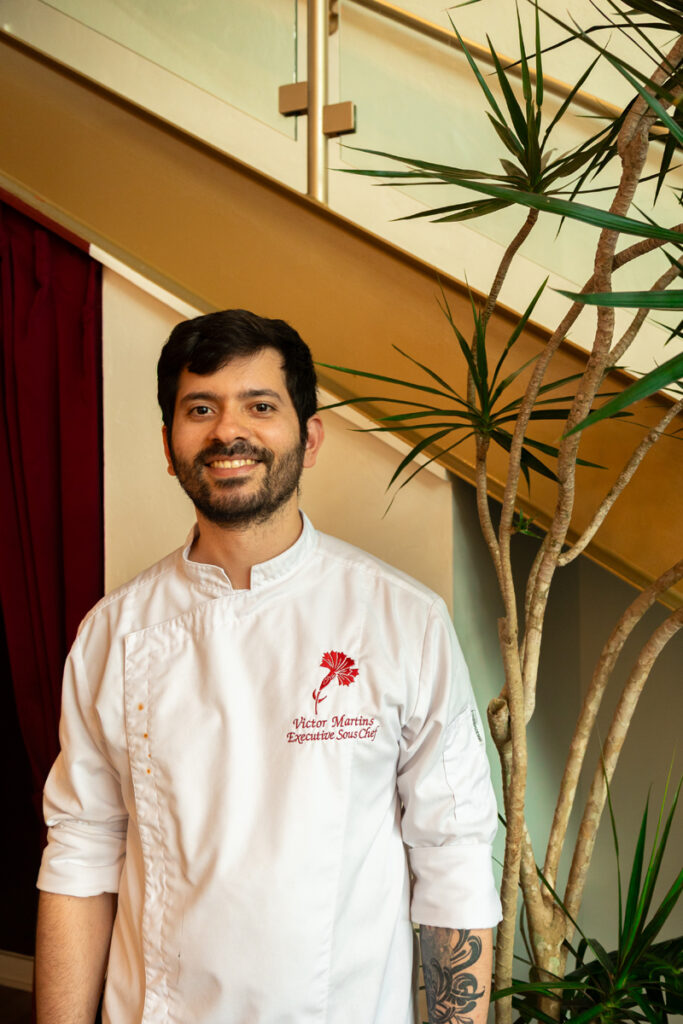
In 2023, David Zamudio departed from his position at Alma and started developing his new restaurant, Josefina. Years later, it’s a beautiful and motivating experience to see David’s growth and to hear him talk about his work team as a family who supports and makes each other stronger. When I used to work in Alma for David and his team: Victor Martins—now Executive Sous Chef at Josefina—Edín, Luisito, Josias and many others, there were emotions involved. As in any restaurant kitchen, and in life, we shared miscommunications, errors, rejections, celebrations, laughs etc.
But regardless of the situation, David would always end up his sentences with fuerza y fe. Now at his first restaurant, Josefina, holding a Fuerza y Fe in my left hand, while listening to his path to this moment, I understand those two simple, yet powerful words.
María Sánchez: From the multiple cuisine experiences you had, why did you decide to open a Spanish restaurant in Baltimore?
David Zamudio: I felt Baltimore really needed a Spanish restaurant—a cuisine I’m very comfortable cooking. My mom has lived there for ten years, I’ve lived there myself, and I’ve visited a thousand times. Spanish culture has a huge influence on Venezuelan cuisine—well, on Latin American cuisine in general. So, it made sense—since I’ve always dreamed of owning multiple restaurants—to start with Spanish cuisine. It’s the foundation for much of Latin American gastronomy, which evolved through the fusion of local traditions and what the Spanish brought over. Of course, no one can deny the horrible colonization the Spaniards did to us, but they left us some good things—specifically, the culinary advancements Latin America gained from the processes, methods, and practices they introduced.
David ZamudioThe food the three of us are creating and plating makes me happy. My goal is for all of us to grow as a company.
When deciding on the menu, how is your collaboration with your team?
I met Victor at Alma. He’s always been my Sous-Chef; ever since I became Executive Chef, he’s been my right-hand man. Honestly, he collaborates on almost every dish—he has some level of input in all of them. Either I give him an idea and he executes it one way or another, or we just collaborate together. We worked on the 100% Acorn Fed Pork—it’s a ibérico tenderloin; we joined three small pork tenderloins together, wrapping them in bacon, and making a medallion. It’s similar to the bacon-wrapped pork tenderloin medallions we used to make in Venezuela, but using this specific pork, Acorn-Fed Ibérico Pork. We work really well together, honestly, I give him credit for everything we do because this restaurant couldn’t exist without him.
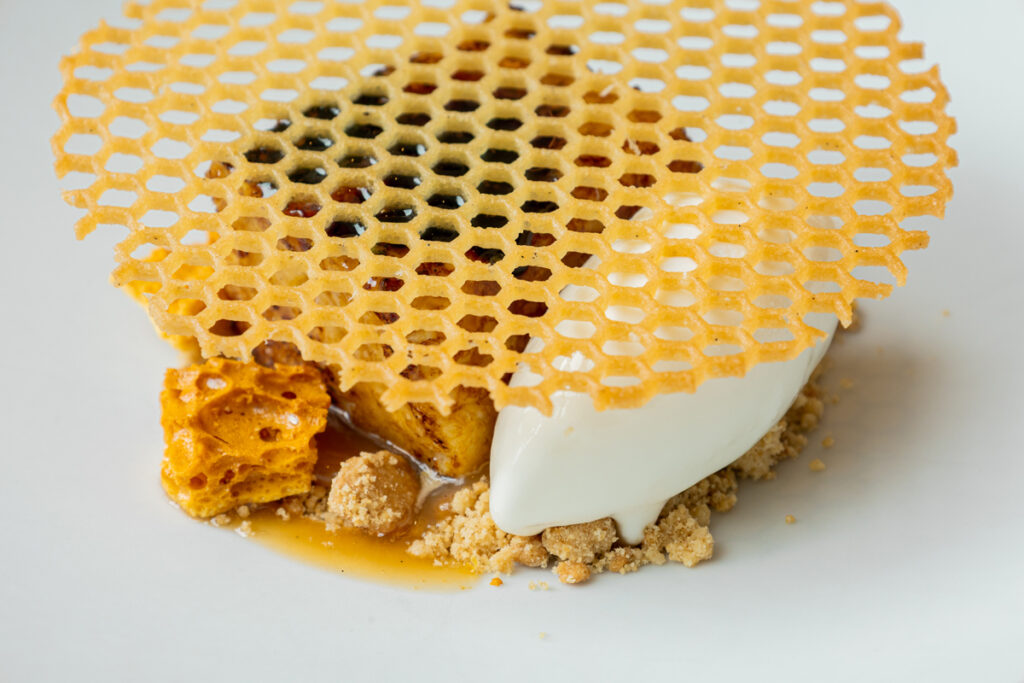
As soon as we opened Josefina, the Executive Pastry Chef already had an idea of what I was looking for, and they executed it perfectly. With them, I can say, “Look, I need you to do A, B, and C,” and they do A, B, and C. If I don’t like it, I tell them and they do the work of giving me options based on the idea I’m trying to execute. For example, in particular, they didn’t like turrón. They never been to Spain and hadn’t really tried many varieties, but when they finally did, they told me, “David, I’m not sure about this.” I told them, “We need to make a house turrón.” They nailed the recipe on the first try, though they were still a bit unsure about it. I told them, “Man, this turrón is better than ten million versions from Spain.”
They do the research, executes the dish, and then have me taste it. Honestly, I don’t do any pastry work here in the restaurant at all. We collaborate by offering me ideas—contributing my creative vision—and then they figure out how to bring it to life.
As someone who has lived in and visited Spain multiple times, could you tell me a bit more about some of the dishes you selected for the menu?
The menu focuses heavily on tapas—specifically the most classic and widely recognized ones, both globally and here in the US, as well as the ones I personally love best. Out of all the tapas I’ve tried in Spain, these are my favorites. So, starting with Madrid’s most classic, iconic tapa: Patatas Bravas which we did a slightly fancier version, but ultimately, it’s just a potato with salsa brava and garlic mayo (aioli).
I see you have included chistorras (a special type of chorizo) into the menu… I have not eaten a chistorra since I lived in Venezuela and it made me very nostalgic. I am pretty sure this is the only restaurant in Baltimore that serves them…
Well, exactly. That’s the reason why I decided to open a Spanish restaurant. Because, well, you love chistorra, I love chistorra too. It’s amazing. Chistorra is the best. And it was quite a struggle because hardly anyone sells them here in the States, I swear. Only one supplier sells them. The ones they have are excellent.
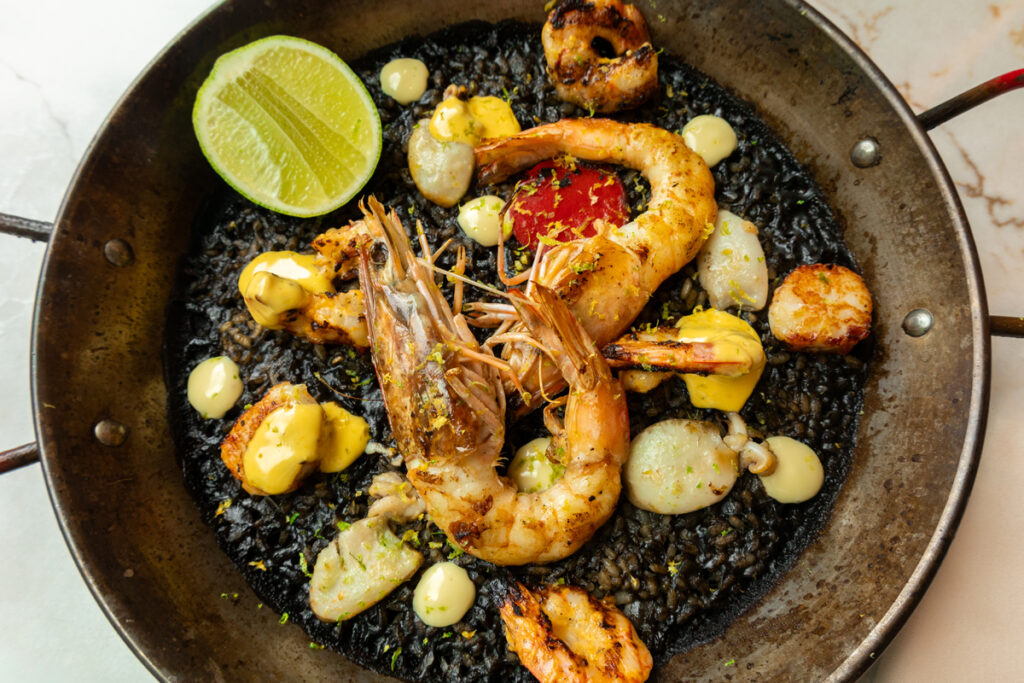
Josefina is heavily focused on tapas, and I noticed how each cocktail has its own little tapa… could you talk about the cocktail menu?
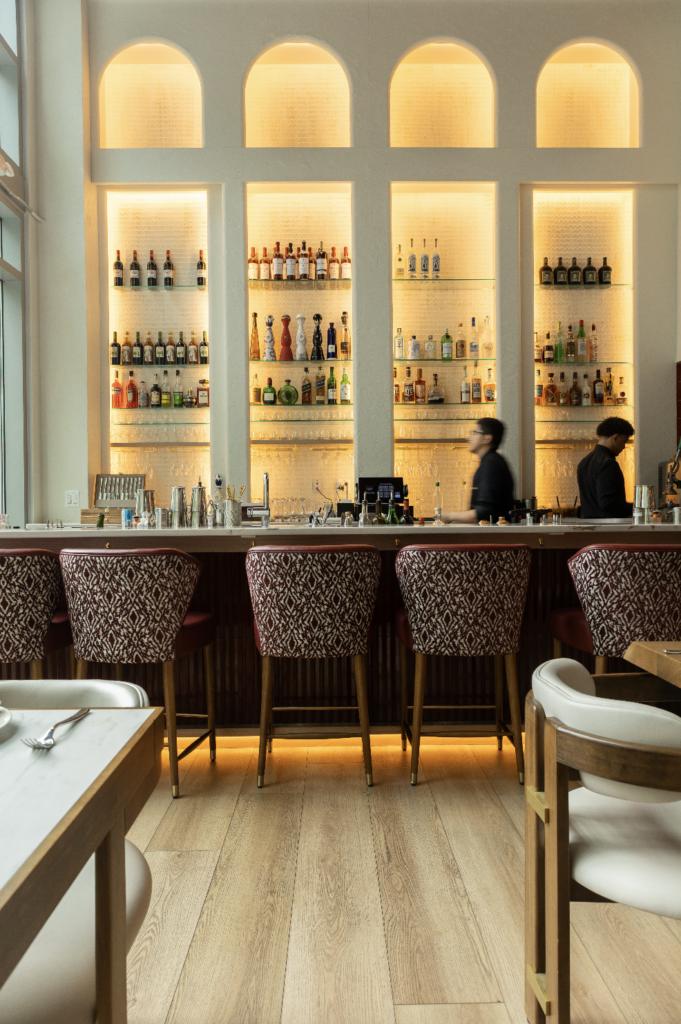
The cocktail menu is where we started when creating the dish menu. I wanted it to be a distinct experience—something new. I mean, generally, every bar is defined by a specific spirit. In Latin spots it’s usually rum, but for ours specifically, I wanted it to be Sherry. Vermouth and Sherry are what people drink all over Spain. That was my goal.
When I started creating the cocktail menu with Carlos and his team—Carlos runs a Venezuelan company that does bar consulting and menu development, they’ve worked with me for a long time on restaurant consulting projects—I told him: “Look, aside from the cocktails pairing well with my food, I want them all to be Sherry-based so that the bar concept itself is centered on Sherry.”
Sherry cocktails are something truly unique. You can get an Old Fashioned anywhere, but here, the Old Fashioned is made with Sherry. The Dulce de Humo is a completely different kind of cocktail, yet it’s Sherry-based. It’s the same with the martini—martinis often contain Sherry anyway, but ours uses tomato water, making it a really cool tomato martini variation. So, that was my vision and concept, and I think it came together really well. Honestly, I’m very happy with the drinks; I really like them.
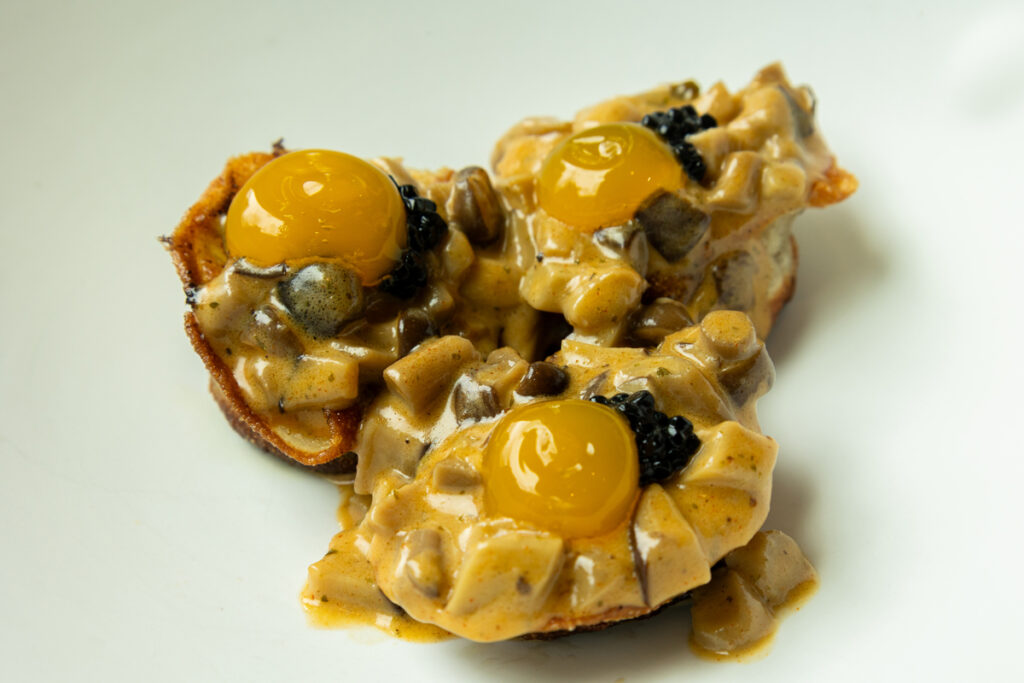
You tend to curate your plates very beautifully. The Carpaccio de Pulpo a la Gallega looks like a Jackson Pollock painting, could you tell me about your inspiration behind plating?
I don’t know… I swear, I really don’t know.
It’s always been something I don’t quite understand myself. When you’re developing as a cook, you always have that fear: “What am I going to serve when I become a chef?” Some people take off, while others don’t quite get it. Some stay as sous-chefs their whole lives, whereas others become chefs at a very young age and start creating their own original dishes. I don’t know how it came about, honestly.
I owe a lot of that influence to Enrique Limardo because he has an incredible eye for it—the guy is an artist. Personally, I had no idea I could create such beautiful dishes until I started seeing things differently—you know, after working in so many restaurants and developing that vision. I started making dishes, plating, playing around, and arranging in different ways. And they started turning out well. I learned on my own—watching videos, looking at photos, checking Instagram.
Nowadays, it helps a lot to see how people with way more talent than you handle things, if you keep looking, you know? You develop your own touch. That’s why I designed the kitchen the way I did: so that the last person sending out the dishes is either me or Victor. We finish every plate—adding the olive oil, the zest, everything—to ensure it’s all just right, absolutely perfect. Otherwise, it turns into the kind of kitchen you see in any other restaurant.
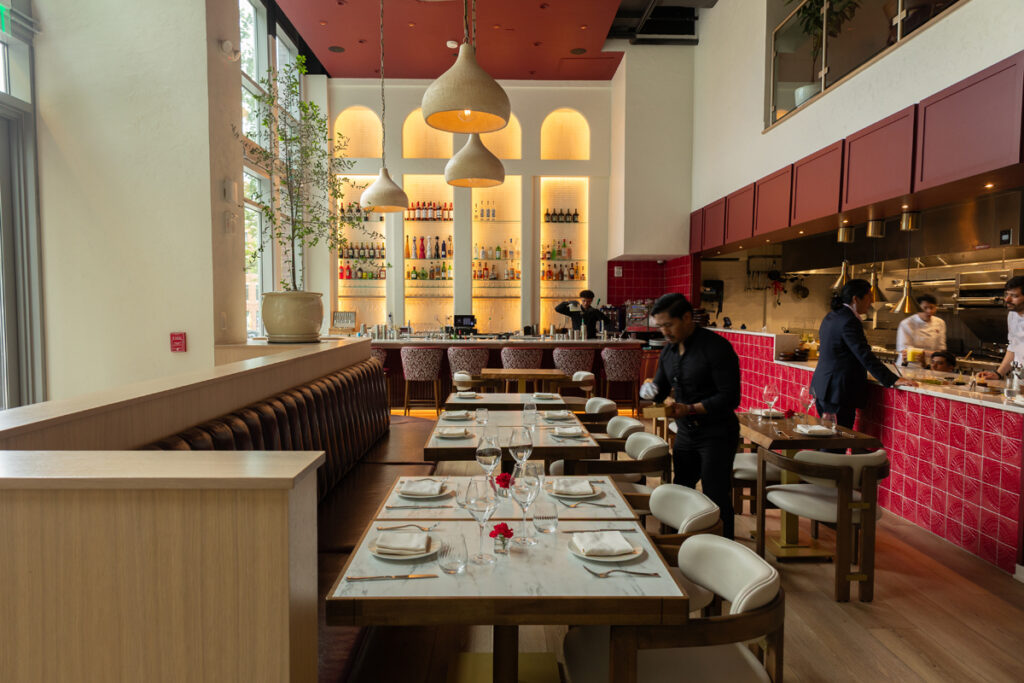
There is something familiar about the design of the restaurant, the name Josefina, the flower, the logo, if you look carefully you can notice the level of detail that was put into the space, could you talk more about those decisions?
I spent time thinking about the name—wondering what to call the place. I didn’t want a name that didn’t mean anything. After discussing it with a lot of people—asking Americans, “What do you think of ‘Josefina’?”—they’d say, “Oh, that’s a Spanish name.” The vast majority of people I asked associated it with something Spanish, and it seemed to make a lot of sense, both to me and to people when they see the name Josefina, they assume it has some connection to Spain or Latin America. Its meaning stems from the fact that it’s my grandmother’s name—she used to sing to all the plants and flowers—and it is also my mom and my aunt’s name.
For the Josefina logo, we started with my grandmother’s actual signature; I gave it to the company so they could design something based on it—making it a bit more legible while keeping the curves of her original handwriting. From there, I asked Kelly Walker to create an identity for Josefina using two images: one portrait-style and another with flamenco dancing.
From our conversation, it feels like you are investing in the city, you are someone who has moved around a lot, and I am curious as to why you decided to stay in Baltimore and what are some of your plans for the future?
Well, there are a few answers to that. I think part of what really drove me to open a restaurant in Baltimore is the high demand versus the limited supply. When you weigh it against the major culinary cities in the U.S., Baltimore has a lot to offer. And—well, I don’t want to get into politics—but the scene is pretty monopolized. Everyone knows it; it’s not exactly a secret.
But there’s significant opportunity for small businesses, and there’s strong support for them. The community here in Baltimore is truly incredible in that regard; they really back small businesses. Ultimately, I wanted a restaurant of my own—something that could keep growing. You know, in other cities, you face challenges where you might open a restaurant but have to stay put for years and years before taking the next step.
The second aspect is that it wouldn’t have been possible, or well, maybe it would have been possible, but it would have been far more challenging and, let’s say, would have cost me years of my life in terms of stress.
Opening a restaurant isn’t a one-person job; it requires a team. In Baltimore, I have my team: Víctor is crucial to me—he’s like my right hand—and the Executive Pastry Chef is like my left hand. I wouldn’t feel nearly as confident without them, and I owe part of my success to them. That’s a huge factor for me—it gives me great peace of mind knowing we have what I call “a guaranteed culinary success”.
The food the three of us are creating and plating makes me happy. My goal is for all of us to grow as a company—to own not just one restaurant, but several with multiple concepts—for Víctor to be a chef and for my Executive Pastry Chef to be a corporate chef, creating desserts and developing their skills elsewhere.