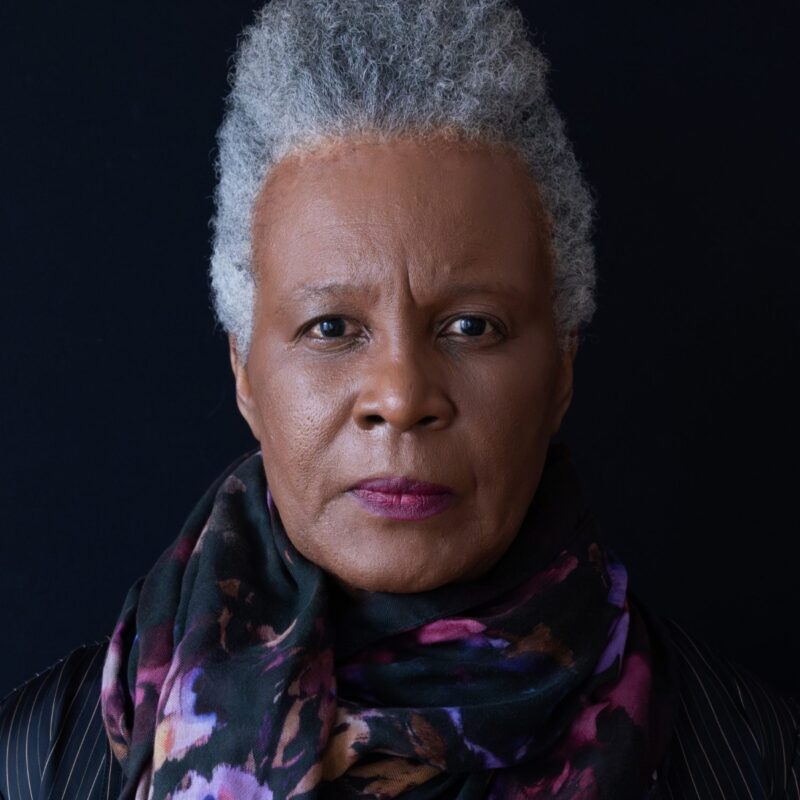
Writers are often asked to place our work into neat and clearly defined boxes. Fiction or nonfiction. Poetry or prose. Then there is Claudia Rankine.
A 2016 MacArthur Fellowship recipient and a chancellor of the American Academy of Poets, Rankine’s books defy categorization. They blend and blur the lines between genres or classifications as they interrogate and reflect on her lived experience navigating a world that exists in opposition to a Black female body. She is also the co-founder of The Racial Imaginary Institute (TRII), an organization “committed to the activation of interdisciplinary work and a democratized exploration of race in our lives.”
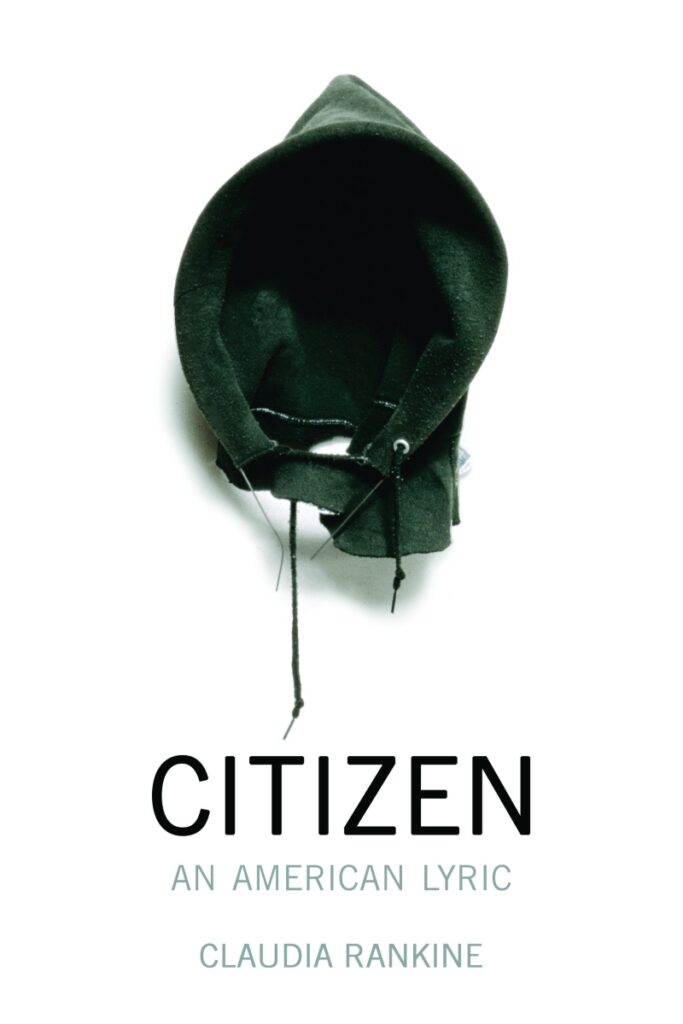
The Jamaican-born writer is perhaps best known for the groundbreaking National Book Award Finalist Citizen: An American Lyric, published in 2014. Citizen is a part of the American trilogy, the middle book between Don’t Let Me Be Lonely: An American Lyric and Just Us: An American Conversation. Collectively, the three works examine the grasp racism has on American culture and how pervasive it is in our day to day lives. I was introduced to Rankine’s work while studying for my MFA at the University of Baltimore. Discovering her was transformative for me as a writer. She revealed that creation can be limitless.
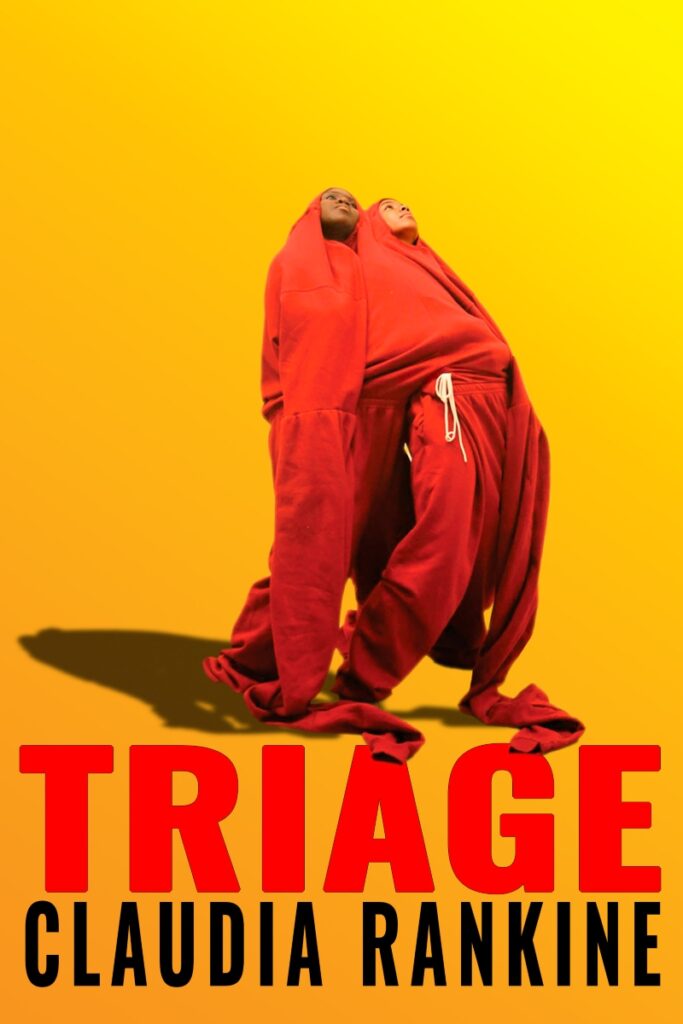
Claudia Rankine’s new book, Triage is part memoir, part fictive exploration, and wholly inventive. Touching on both her own personal losses and drawing larger connections to the genocide occurring in Gaza, it centers on friendship, shared grief, and collective mourning.
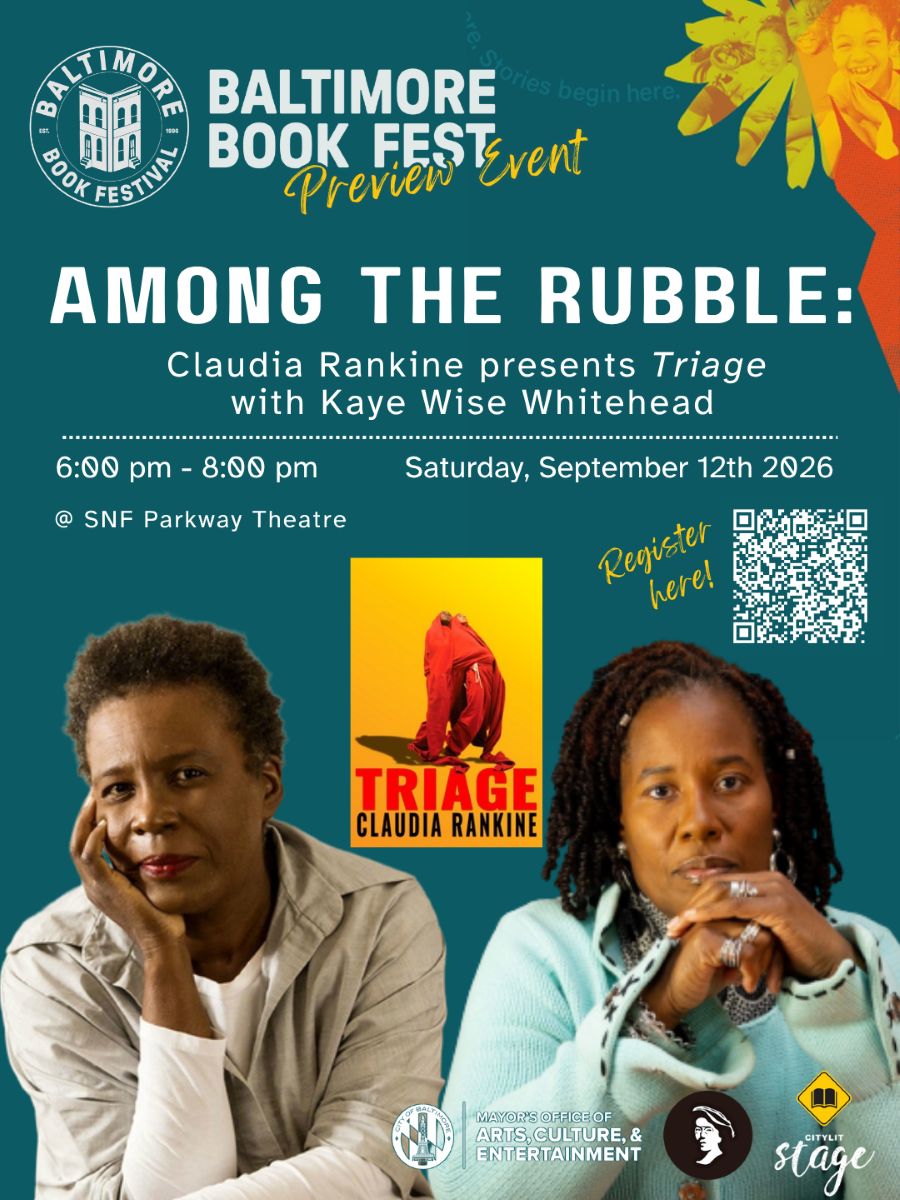
I got a chance to meet with Rankine ahead of her September 12th appearance at SNF Parkway where she will present Triage in conversation with Dr. Kaye Wise Whitehead. The free event is sponsored by CityLit Project, Red Emma’s, and the Mayor’s Office of Arts, Culture & Entertainment as a not-to-be-missed preview to the upcoming Baltimore Book Festival.
The following interview was edited for length and clarity.
Can you tell me a little bit about your recent release, Triage?
It’s a story of two women using the blueprint of Antigone as a lens that allows us to consider who should be grieved and whether grieving without action is useful. The two characters are composite characters because I wanted the book to be interdisciplinary among genres. It is poetic at times. Sometimes, it’s autobiographical. Other times, it’s fabulation. I like to think about it as an interdisciplinary genre—a hybrid, performative text. It’s not an easy book. It asks a lot of the reader and the reader’s ability to think conceptually—not in terms of plot, but in terms of ideas.
Historically, your writing does defy categorization. How do you approach what you refer to as an interdisciplinary genre?
I think each genre offers certain things, and I want those things to be available to me when I’m writing. For instance, the lyric allows for a build of the interior life without the pressures of a linear timeline that you sometimes find in fiction. Fiction allows for the building of stories and in this book, I wanted the opportunity to do that. Art journalism allows me to talk about artists I love. I could go on, but each genre is a door… I’ve done playwriting and I love working conversations on the page. I wanted this book to turn on those conversations.
In many ways, I do respect each genre to the point where I don’t feel I can do without them. I just need them all at once.
Was your writing process for Triage different from any of the past works in your American trilogy?
Yeah, I think I couldn’t have written Triage ten or fifteen years ago—even after working separately in each genre. Though my work in the past has always been known as a hybrid, the works have sat in one category or another, even as some people refuse them in those categories: the lyric, the prose poetry, the plays, and the journalism that has shown up in newspapers.
Having had thirty years of working in these different ways, I really wanted to be able to utilize what I’ve learned to create a text that performed its questions and allows the reader to be inside the thinking and dissecting of one’s emotional reaction to the ability or inability to act.
I think that our emotional lives are tied up in our performative lives, so I wanted this book to really be able to sit with the emotional range of people in a period of great distress. And confusion. And injustice.
Claudia RankineReading allows our imagination to build its own possibilities. And education is the key to that. The dismantling of the educational system is as lethal as the dismantling of the voting apparatus.
Going back to Antigone, the play touches on the unjustness of laws and governing, which we’re becoming more and more familiar with in the US. Across the whole world, honestly. What keeps you in a mindset where you’re able to find the peace to write? How do you stay in a receptive place that’s conducive to creating anything at all?
Well, I think like all of us, I am stunned by my own inactivity in the face of genocide. In the face of climate change. In the face of deportations. The taking of babies from families, from their parents at the border. All of those things are unthinkable, and we’re being forced to coexist with the impossible. I wanted not just to perform that impossible ask, but to interrogate it.
You’re also a Professor of Creative Writing at New York University. You have a personal stake or responsibility in combating the rise of anti-intellectualism, misinformation, and generative AI. What can be done when we’re shifting and becoming a society that doesn’t value writing? Or history, or art, or facts?
Well, I think we’re asking to be spoon fed fictions. If we just lay down and take what this administration is handing out… I hope everybody knows that reading allows our imagination to build its own possibilities. And education is the key to that. The dismantling of the educational system is as lethal as the dismantling of the voting apparatus because then you have an uneducated, passive citizenry, which is obviously the goal. It’s frightening, the kinds of things that are going on.
Terribly, terribly so.
And that’s an understatement.
The daily horrors are just so hard to stomach. And when you have journalists intentionally citing untruths, I want to say that it’s disheartening, but it’s more than that.
It’s devastating because we now live in a country where we cannot trust what is being told to us. We all know how this goes, don’t we?
There’s an equally awful side to that coin where Black art has been consistently undervalued by critics, simply due to its creators. How do we as creatives and artists withstand this? Is it even our responsibility to consider the critics?
I do think there have been periods of Black Renaissance. We have a lot of Black artists and art critics who have elevated the work of Black artists. I think it’s useful to look at what’s happening within the Black community itself and not always think about it outside of that community.
Within the Black community, in the last 25 years or so, we’ve seen some of the best work, the best scholarship done on Black art: Hazel Carby, Darby English, Hilton Als. There are so many writers who have brought the work of visual artists and writers to the forefront, like Kevin Quashie.
Even as this administration is working 24/7 to remove Black art from public buildings, we still know what that art is because people have been writing and talking about it up until now. The question is what will happen in the future when institutions feel that it will affect their funding if they put Black art on display or when the boards of these institutions begin to control the decisions that are currently made by the curators. I would be careful that we frame the question of valuing from the right perspective.
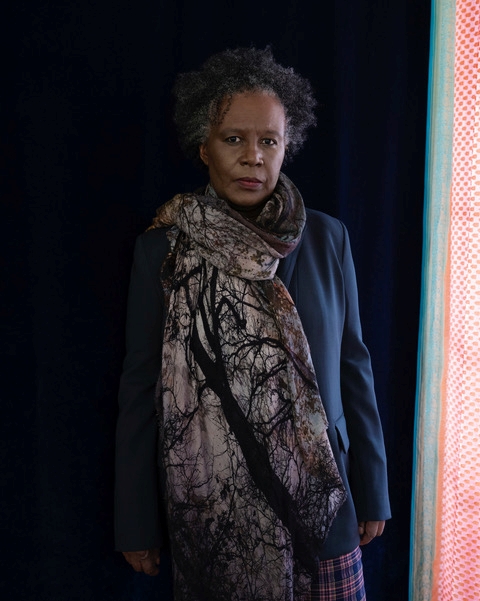
Claudia RankineTriage is a book that demonstrates a binary, one person against another, but it’s really a relational book. It’s about how you create a third way by being in the company of others.
We spoke earlier about Antigone and how it plays a large part in the context and framework of Triage. What other classics or creators inform your work?
Triage uses Antigone as a kind of blueprint, but the book itself is built on the work of Judith Butler, Sarah Schulman, Carolin Emcke. There are so many philosophers who are both quoted in the text and who inform my thinking in terms of the writing, such as Hisham Matar.
Then there are filmmakers who are very important to me, people like Claire Denis, the French filmmaker. Or Chantal Akerman. Spike Lee. Then Beyonce’s work. Prince’s work. In terms of the classics, we always go back to a book like Sula by Toni Morrison, which is about the friendship of two women.
Triage is a book that demonstrates a binary, one person against another, but it’s really a relational book. It’s about how you create a third way by being in the company of others. That’s something I think is important in the development of the argument of this book.
Since you’re coming here for the Baltimore Book Festival, do you have any favorite memories from past festivals or prior visits to Baltimore?
One thing that I love about the Baltimore Book Festival is that everybody comes. I was very impressed by that. People are there with their families, their kids. Often writers go to these festivals and there’s just a certain demographic who’s there, but you’re not encountering families. That stuck with me. From the very first time that I went to the festival, I would see mothers with their three kids making their way downtown so they could hear authors read their work. It impressed me so much that not only were the kids being exposed to books and writers at such a young age, but that it was a priority for these parents. You could see that for these mothers and fathers, their kids belong to a world of books.
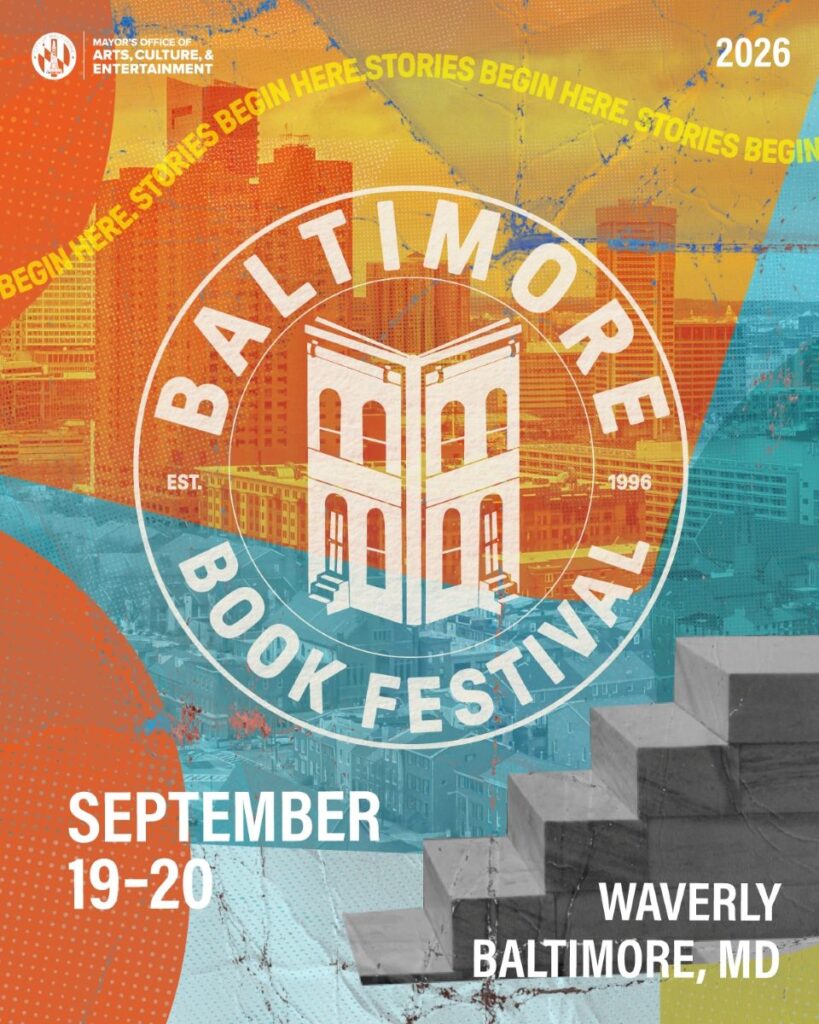
Claudia Rankine will present Triage in conversation with Kaye Wise Whitehead on Saturday, September 12, 2026 from 6pm to 8pm at SNF Parkway Theater. This event is free, but you must RSVP to be guaranteed admittance. Brought to you by CityLit Project in partnership with Red Emma’s and Mayor’s Office of Arts, Culture & Entertainment as part of the 2026 Baltimore Book Festival.
Find more information about the 2026 Baltimore Book Festival here.