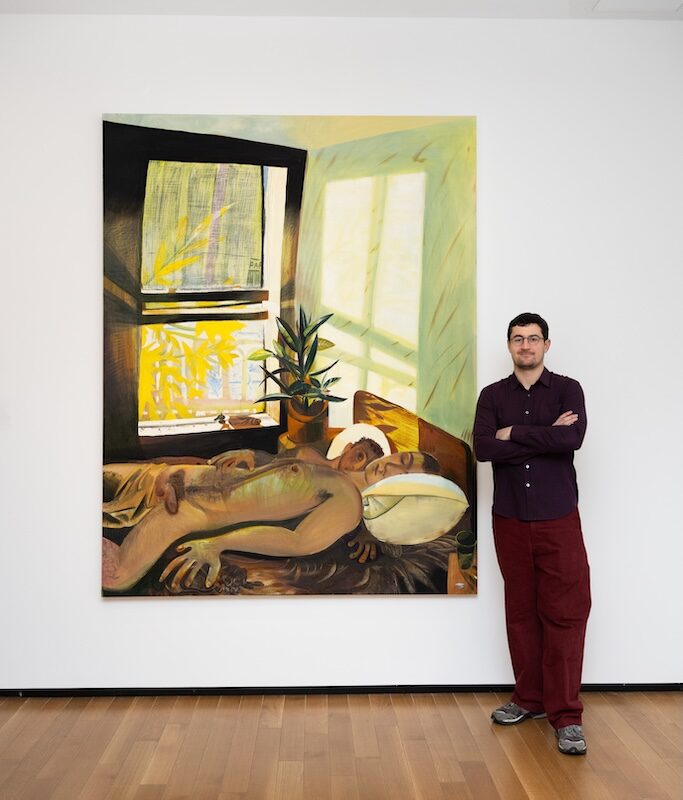
Keeping tabs on Miguel Braceli could be an art journalist’s full-time job. On any given day, it seems more likely that the Venezuela-born, MICA-educated provocateur might be hard at work on a project on another continent than one in his studio in Tulsa, Oklahoma—his home base for the past few years.
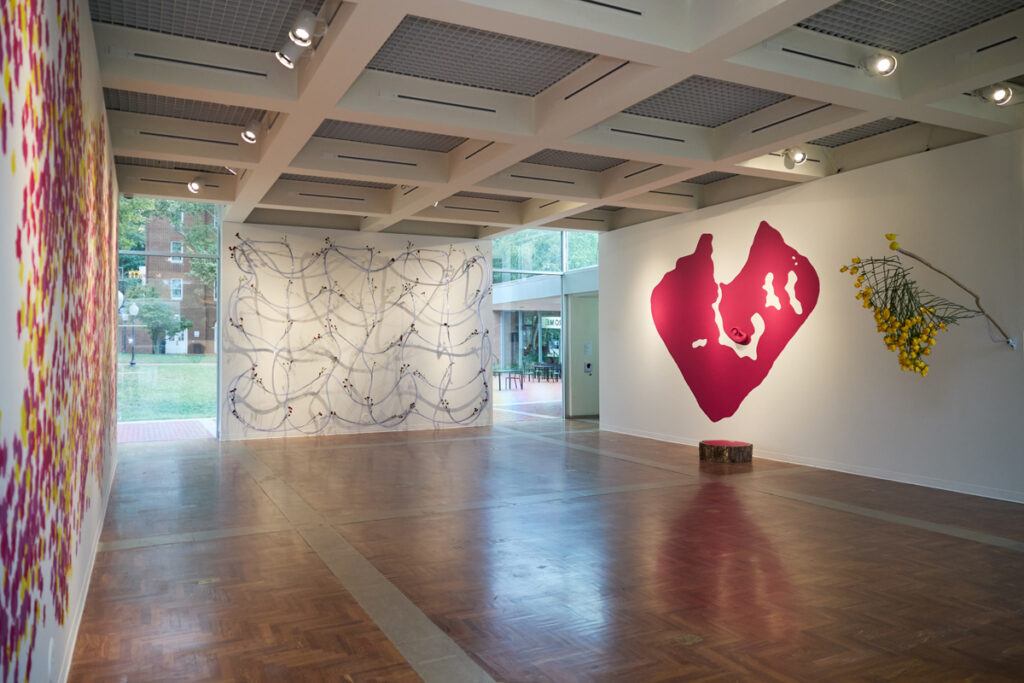
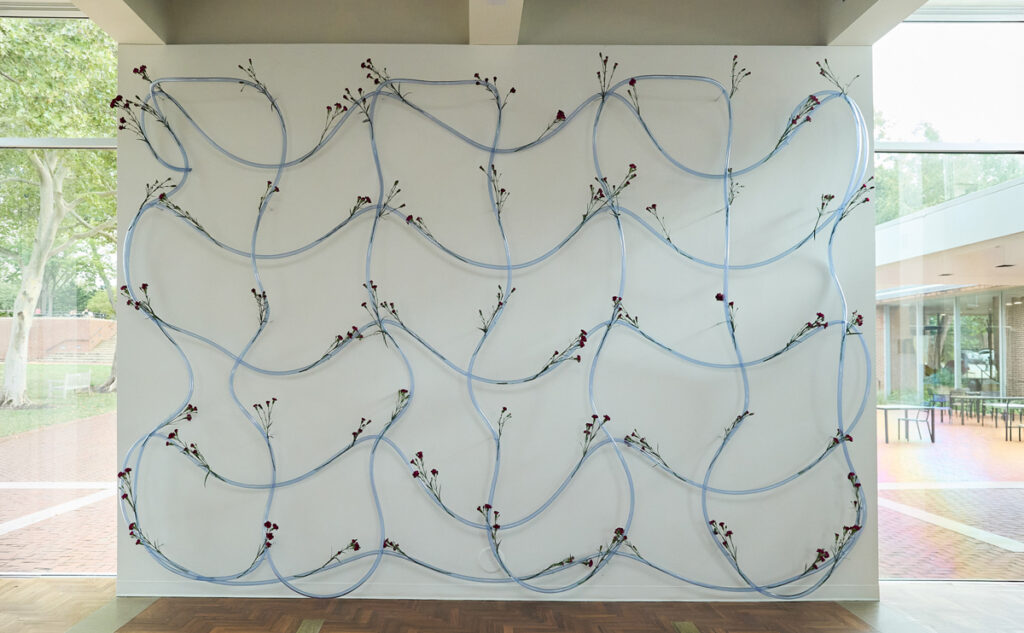
In September, he opened the solo exhibition UNBURIAL at the Mitchell Art Museum in Annapolis. That project is a celebratory memorial for the Liberty Tree—an ancient, iconic feature on the St Johns College campus that once hosted Revolutionary War meetings in its shade, and sadly died just before the new millenium. UNBURIAL (on view through December 6, 2026) comprises murals, live plants, and playful gestures against the notion of national identity—a concept both the tree and the word “liberty” have historically been conscripted to serve.
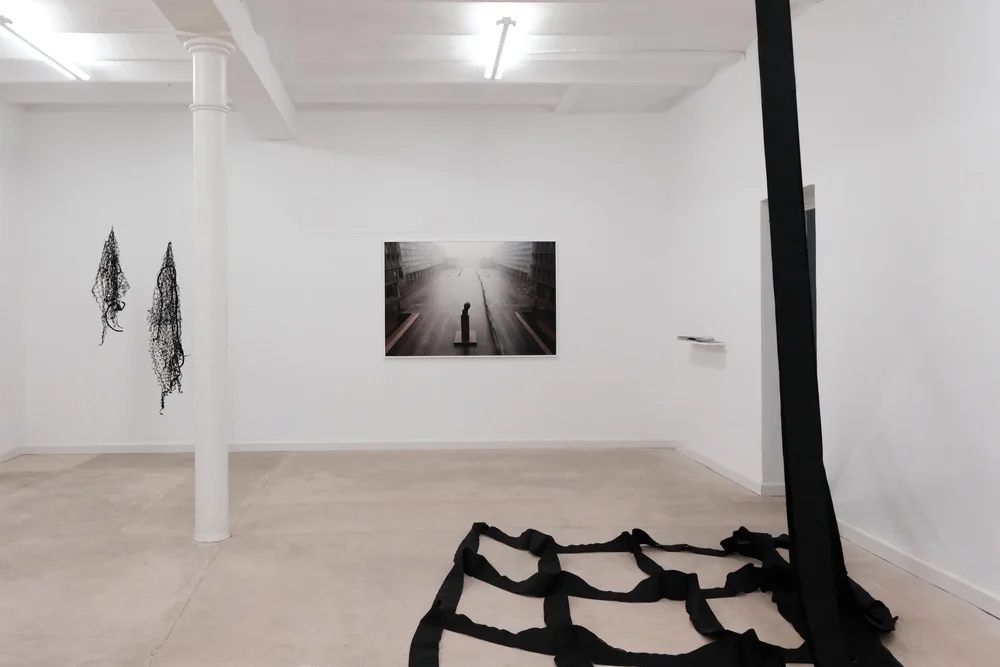
Just days later, Braceli was in Europe for Barcelona Gallery Weekend, opening the two-person show Ejercicios de Permanencia at Sorondo Projects. I hoped we could meet up for an in-person interview when we were both in New York the next week—Braceli’s art/education nonprofit La Escuela had a fundraiser auction at Sotheby’s. Alas, by the time our schedules aligned Braceli was in Chile for a conference, so we had to catch up over Zoom. The week after that, he was back in New York to host the public art happening Piñata Party on Governor’s Island—in which participants could smash a piñata in the place of a flag, continuing Braceli’s tradition of subverting symbols of nationalism and state authority. After a quick detour to Gothenburg, Sweden as a keynote speaker at an international conference on art and education, Braceli is now in France for the opening of his solo booth at Paris Photo (open until Sunday, November 15) presented by Sorondo Projects.
Miguel Braceli is one busy guy. Thankfully, he made time to talk about education, his past life as an architect, travel, transforming his studio into Oklahoma’s premier queer strip club, and the question “Can you whisper to me the last breath of a tree?”
Michael Anthony Farley: It’s wild that we both lived in Baltimore for years and never met. I actually think I have just missed you at your own shows at art fairs or galleries or events in Miami, New York, Mexico City… I was just joking about that with the BmoreArt team about an hour before I saw that you were opening a show walking distance from my apartment in Barcelona and sprinted over to finally meet you. And now you’re in Chile this week! What are you doing in Chile?
Miguel Braceli: I came here for a conference, and then that conference became another conference with other laboratories and then it became… several. So now I’m doing many things! But Chile is a place very close to my heart, where I’ve been working before, and also very close to La Escuela. So it’s a nice environment here.
So tell us a little bit more about La Escuela. I know it’s an alternative education project, but I don’t remember exactly what La Escuela does.
Well, because La Escuela does many, many things and it’s always changing the type of things that it does… but it’s a platform for arts and education; collective learning in public spaces. We have on-site projects that come as collaborations between universities, artists, and communities… bringing all of these together to experiment about collective learning in public spaces. We do the same thing with online laboratories, bringing people from different places in America to share research and projects. Together with that we have editorial content, mostly about art and education
Basically, I think La Escuela now is a community—a big network of art and education, but also understanding education as something that involves a social practice, a community-based work, and any type of artistic practice that involves the other and knowledge production. We understand education in a very wide sense—which is something that is very strong in Latin America historically—so most of the projects also involve reference and building genealogies with Latin American artists from the last century and contemporary artists.
We just opened a not-for-profit in New York to start working across the Americas and create an exchange between the Latin American community with its diasporas in the U.S. But also working about education and social practices at large. I would say that that’s always the core of the project.
So you’re in Chile for La Escuela?
Well, yes and no. I think it began as a personal invitation to share both my practice and La Escuela, which at this point it’s kind of blurry… I think there are some opportunities where I am the one that is invited, and then I bring La Escuela. Other times, La Escuela is invited and I can bring some of my own practice.
As an artist-run space that’s always present—not only through my own work, but also through the work of many other artists.
Speaking of work, you were also just in New York during Armory Week, just after I saw you in Barcelona, just after you were in Maryland. So I have to ask: what is your jet lag strategy!? Are you one of the people who tries to stay up and work on the plane or sleep?
Oh my god… I try to sleep but I fail and at some point I end up watching movies or opening my laptop… even if there’s no internet, I end up just organizing and cleaning my desktop.
This is the story of my life! It’s the curse of the people who live out of a suitcase. On that note, you have a practice that’s very mobile and seems to often use a really limited material palette for each project… and you end up with very different projects that feel very site-specific—even when it’s a project that was intended for one place and you’re sort of displaying documentation or artifacts from that first intervention. Your show at Sorondo Projects, for example, is work originally made for Caracas and it is so visually distinct and has such a distinct vocabulary and aesthetic from your show in Annapolis. I was just thinking how rare it is that an artist opens two shows in the same month that are so different… can you talk to us a bit about UNBURIAL, working with the Mitchell Art Museum, and how you respond to different contexts?
Yeah that’s a great question and that’s something that I even discussed with Juliana Sorondo, the director of the gallery, because what I’m showing with Sorondo Projects is my early work from Venezuela. It’s a two person show with María-Elena Pombo another Venezuelan artist based in New York. We both decided to show earlier work from Venezuela. In my case, work that was site-specific to a public space. And now thinking about how to present it in a gallery in a way that also feels specific.
In the case of the Mitchell Art Museum, it is different because it’s a very site-specific show and for me that was an interesting opportunity to approach the gallery space in a similar way that I approach projects in public spaces, natural landscapes or any other territories. That’s the big difference between those shows—it’s a new body of work answering the place, which is Annapolis, the St. John’s College campus, and the history and memory of the Liberty Tree.
That began by thinking and reflecting about the Liberty Tree that was there for so many years and is part of the identity of the U.S., connected with the independence and the revolutionary meetings that happened under the canopy. It was dying by age until it was removed after a hurricane in 1999. It was a great opportunity to think about what “liberty” means today, and that was the prompt of the invitation from the director Peter Nesbitt.
Miguel BraceliNature doesn’t have these systems based on borders and restrictions—it is unlimited and has a better way to relate and co-exist.
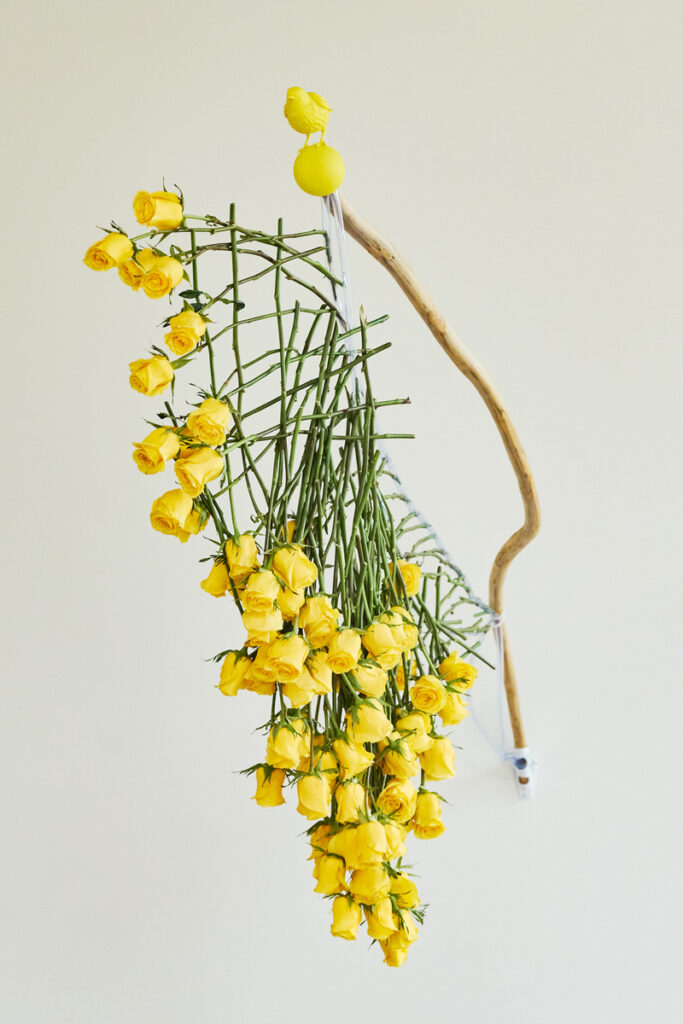
My approach to that show was about creating murals in the gallery space made of nature, like a garden that mourns and grieves the loss of the tree, a metaphor about mourning freedom. In the place where the tree used to be, we installed a memorial, a ring made of flowers that connects and articulates with the show inside.
That’s something that I have been exploring in recent projects—thinking about national identity, as a transnational identity, aiming for another approach to national state symbols through nature. Translating the logic of nature to that iconography… hoping to dissolve geopolitical structures. Nature doesn’t have these systems based on borders and restrictions—it is unlimited and has a better way to relate and co-exist.
I don’t think I had actually ever heard of the Liberty Tree prior to reading about your project… but what a loaded metaphor for the United States! Like a tree that was supposed to represent freedom and then rotted…
It’s interesting that the tree was removed after the hurricane, but it was already dead before. I’ve been seeing pictures with many structures trying to hold it up, but it was dying on its own. I think maybe that’s a metaphor that we have not discussed in the show yet. This particular museum has a thing—every show has a question—and I try to avoid the methodological, like, logical structural question or research-based questions and substitute for something more open-ended and poetic. My question was “Can you whisper to me the last breath of a tree?” to acknowledge the way that nature behaves… there isn’t a clear distinction between life and death. There is not like this immediate moment of transition. It’s something that takes a long time to acknowledge and how it’s perceived by humans.
And then of course “the whisper” acknowledges the idea of intimacy, and also “whispers” [could mean] something that happens even in a more complex context—political context—like the revolutionary meetings that happened in these circles under the canopy. There is something about conspiracy and secrecy and revolution that somehow is connected with this idea of the whisper.
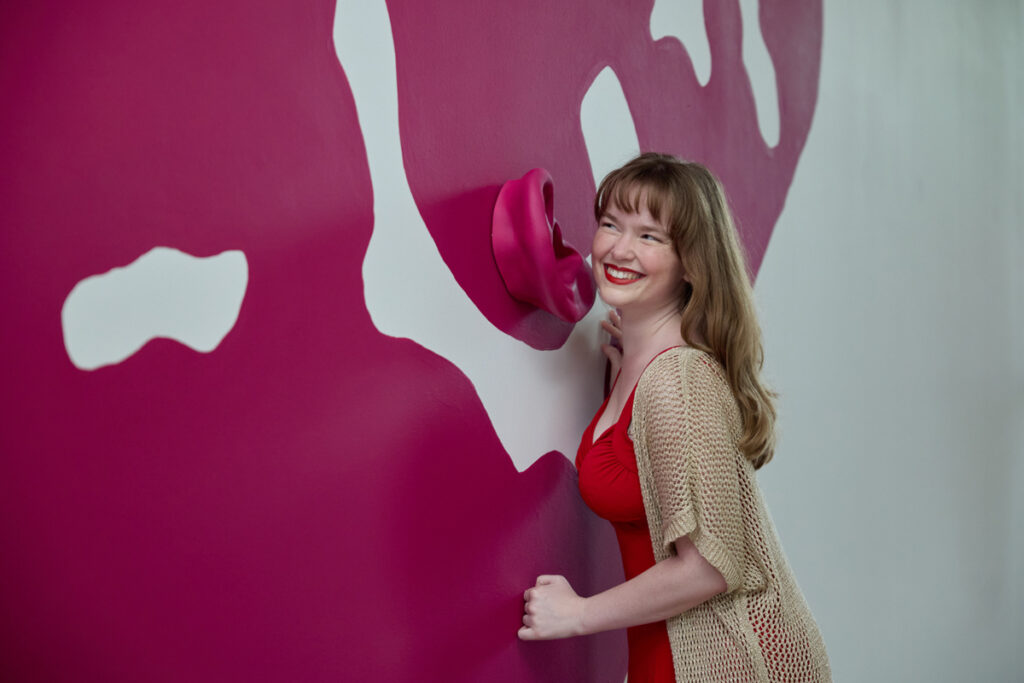
I think you have a penchant—a gift—for finding a context or symbol that is almost like a found metaphor that already exists. That’s really interesting to me. I was just thinking about the first time I became aware of your work and started following you on social media. It was during the pandemic lockdown, when you were a Sondheim finalist. Ironically, I lived about two blocks away from the Walters but never saw your show in real life! Damn COVID! But I remember getting excited to watch a Zoom conference in which you and other artists and academics were talking about Venezuelan architecture. My nephew, who shares my love of brutalist architecture, had just discovered a box of Polaroids from Caracas in the 1960s-70s while he was isolating at my sister’s house. Our family moved to Caracas for work during the “Boom Petrolero” and I was so fascinated by these nostalgic photos of what was then very “utopian” and optimistic architecture. I digress, but I remember that was what sparked my interest in that talk. Because you originally trained as an architect, right?
Yes I was trained as an architect, and I think that, in the context of Venezuela’s sociopolitical and economic crises, I started to work on projects addressing that crisis and looking for other ways to build. I was even building libraries that were out in public—just putting books in public spaces for people to access these books and recycling old libraries that were being left behind because people were migrating and leaving the country and abandoning these books.
So in very different ways I was looking to explore how we can practice architecture and exercise architecture in that context. Also many of these projects were related to university protests and other social movements. And then the art world in Venezuela discovered what I was doing, and then I discovered the art world. And little by little I started finally understanding these projects as an “art practice”, but it was a very slow transition.
I also had to learn about the art world and even about many references in the history of the art world about similar performative practices. But I was teaching architecture. I like to say that I became an artist by being a professor working with my students in public spaces outside the institutional walls of the university and looking at other ways to build and other ways to create knowledge production. That’s somehow something that I’ve kept in my practice until now—not only the reference about public space, but also the social commitment of architecture… even education as a medium itself.
I want to believe many of these projects somehow address education in the way that there is some collaboration—not a production for the project to happen—but also some explorations. There are projects that happened during my studio classes as an architect, but other projects were just like an invitation for people to participate in a performance. So there’s different grades of what collective learning and collective making can mean… a practice that somehow is very specific in the way that it was born out of that context.
I never studied art to have the task to “do an artwork.” I was doing these projects—in response to the context around me—as a medium to propose solutions or responses or reflections to issues. I didn’t do this planning to be an artist, and then it became an art practice. I discovered the power of art to create something different: if not solutions at least a way to understand things, using art’s sensibility to connect with that of other people.
Miguel BraceliI never studied art to have the task to “do an artwork.” I was doing these projects—in response to the context around me—as a medium to propose solutions or responses or reflections to issues.I didn’t do this planning to be an artist, and then it became an art practice.
La Escuela also has an interesting connection with Baltimore. It grew out of La Escuela Desnuda, which was my thesis in MICA. It was this metaphor about the building without walls to learn and engage from the social realities—and the realities in general—that surround the institution. That was kind of acknowledging how the universities or art schools try to replicate the art world’s existing dynamics instead of trying to propose different systems, becoming more and more like museum and gallery spaces and leaving behind all these social practices or other ways to produce art.
I graduated in 2020 during COVID when we didn’t have the possibility of a grad show and an exhibition, so many students were suing their programs and I was amazed about how these students were so obsessed about the show and the exhibition and not even proposing other ways to approach art in this particular context of COVID.
So La Escuela Desnuda (The Naked School) was a text about those reflections and thinking about many references in the history of Latin American art… places and alternative systems that have been happening in Latin America historically as a reference to public and free education and alternative systems that challenged these ideas of—or these structures of—art schools in general.
So this was a disappointment with my own education in the U.S., or in art schools in general. It’s an interesting connection for me between my own personal history as an architect and as a professor that then—in the very particular sociopolitical context of Venezuela—discovered art as a possibility to build and create these activism and social practices. And then I emigrate to the U.S. and study art for the very first time and then I feel disappointed about art schools in general. And then COVID happened, and then I ended up also collaborating and founding this school as an alternative system… so everything somehow is kind of linked and funny.
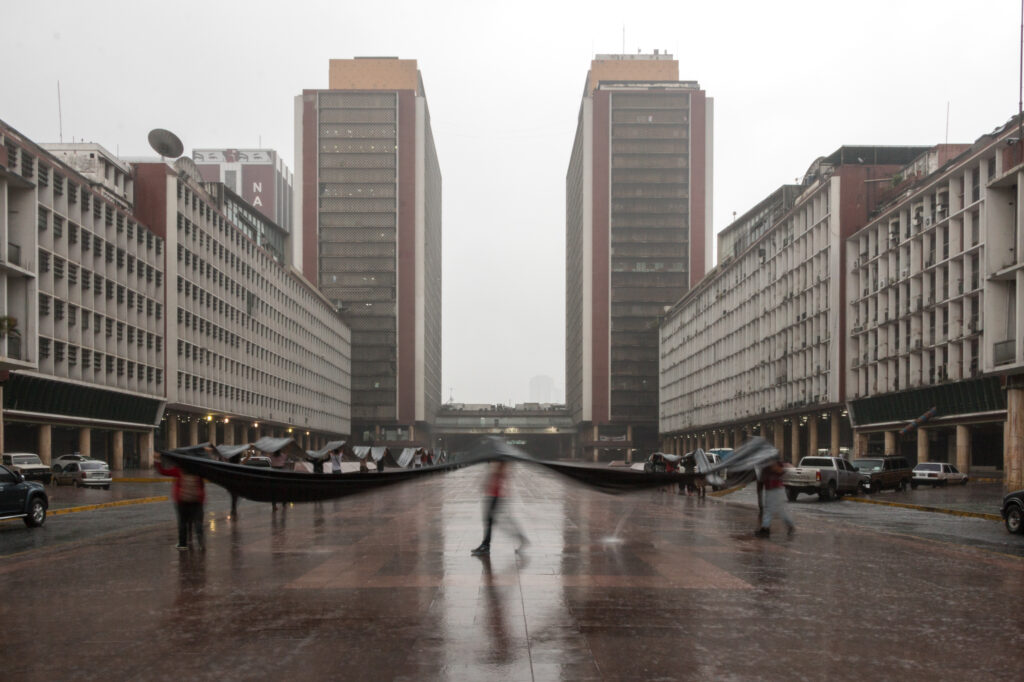
It seems like part of this equation is that you’re a contrarian—maybe that’s not the right word—rather, you present a counterpoint to whatever you’re studying and the institution in which you are studying. A lot of people like to think of architecture as something solid and permanent… I keep coming back to the image of Caracas’ monumental superblocks, the weighty concrete, a cityscape scaled for the automobile… and then in this context you become an architect who “builds” temporary structures with participants’ bodies, the most mutable, human scale possible. And then you give up teaching architecture to study art, and end up reinventing the art school..
Yeah. I would not be able to do the type of work that I do if I was not trained as an architect. I believe this idea of conversation, of a space in a very large scale, and very specific to that place somehow… and answering to the logic of the social commitment of architecture.
I think more like an architect than a performer when I am approaching my documentation. It’s more like a film set, and I am doing the direction of photography. It is so important for me because it becomes an artwork in its own right. That plaza in Caracas is a very important governmental and symbolic place in Venezuela about power and state, and I believe in the power of images.
We had all these people holding fabric and it started to rain, but nobody left the performance. They just approached it in a different way, using it to cover their heads and continued the action. The gesture was an invitation to create a common area—a common zone—in the political heart of the city, challenging the idea of political polarization, which I thought was triggered by the government or enhanced by the government for their own benefit… like creating this division between citizens for their own political campaign.
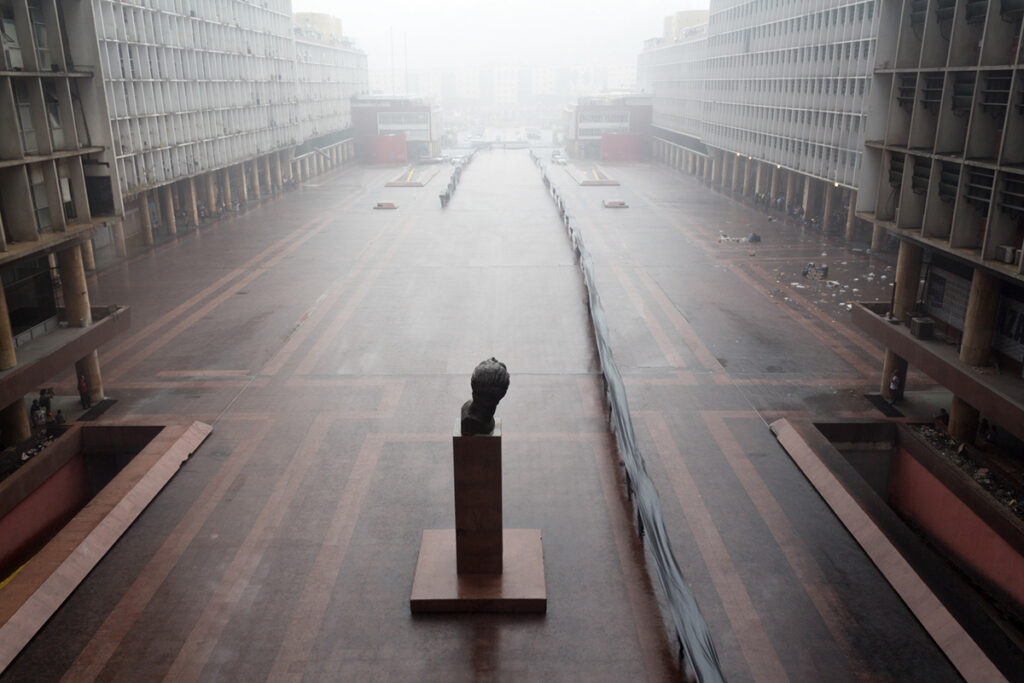
So I was trying to challenge that idea and invited everyone to come together and occupy this very important governmental place in the political heart of the city.
And I think that idea is portrayed in the images and photographs and video of the action. I think the way photography works, it becomes more than a document. It becomes like a network itself. Somehow there are gestures and architecture that only exists in a photograph.
And I think that’s the moment where this piece becomes like a network, through these mediums, but also it’s a network not only because of the medium. The network is about moving people.
Speaking of that documentation, is that the same series you’re showing at Paris Photo with Sorondo Projects?
Yes, exactly, with a new sculpture. Even though I’m showing early work, I was eager to share something new, more related to what I’m doing right now, more related with what I’m showing, the mission I’m taking on.
So there will be a sculpture that will be a burial that is transformed into a flagpole…. and the flagpole aims to be topped not with an imperial American eagle, but a guacamaya, which is a very iconic bird in Caracas and very playful, very colorful.
So I think the goal is in continuity with this research about transforming these iconographies and these geopolitical and power systems about flags and monuments and the imagery of the city and the way that somehow also creates this narrative, but also challenging them with systems of nature.
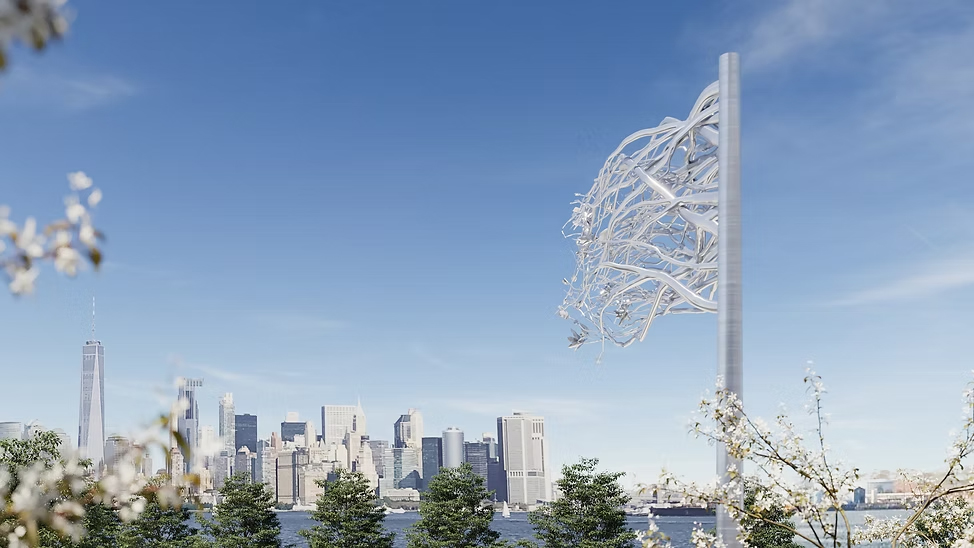
I also have a flag that will be installed in New York City… a permanent work.
It’s like a 25 foot tall sculpture, but it’s a flag made of branches in stainless steel. And in the Mitchell Art Museum, it’s a flag made of roses.
Paris Photo is one of the only art fairs in the world that has such a beautiful architectural space, the Grand Palais, and I bet your work looks great there… speaking of flag poles, you made a stripper flag pole!
Oh my God. That’s my favorite project so far… I’m not going to lie. And it’s related to many of the topics we’ve been talking about now.
It’s like an inverted flag pole where the eagle is against a pink platform and transformed into a disco ball. It’s activated by pole dancers and go-go dancers.
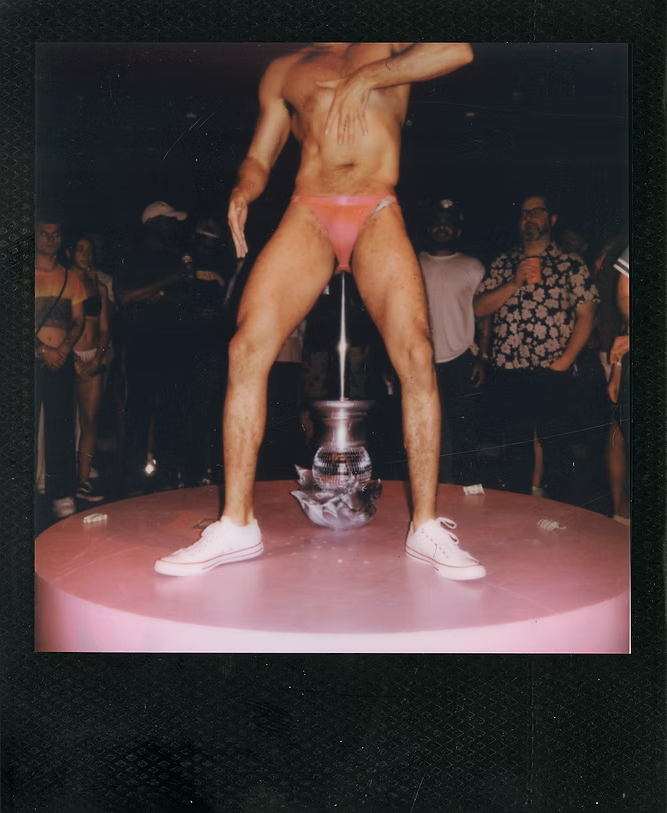
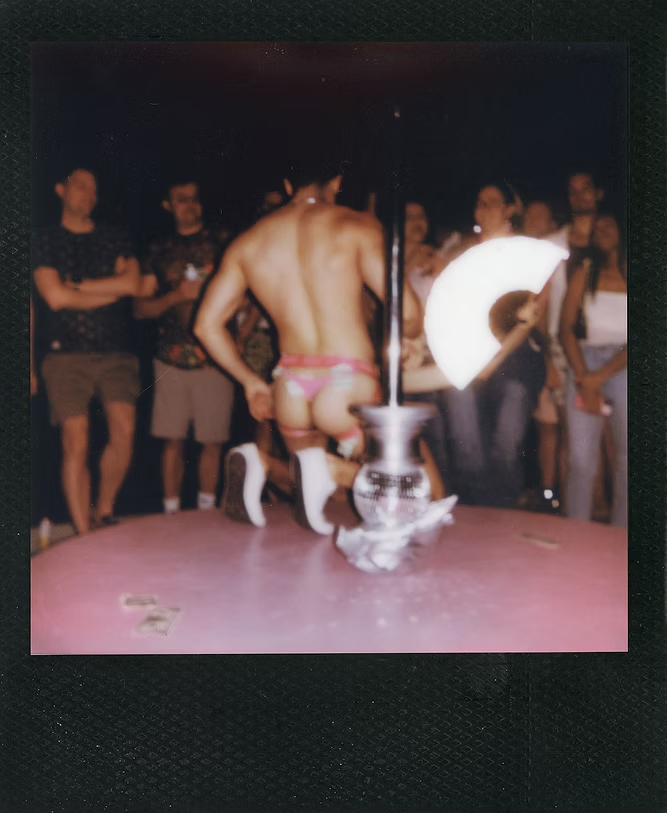
Miguel BraceliI’m interested in those political works that are not just a metaphor. It’s a tangible gesture, a tangible action.
I like to continue rethinking these symbols of power, but at the same time challenging these symbols and challenging them through joy, play, resistance.
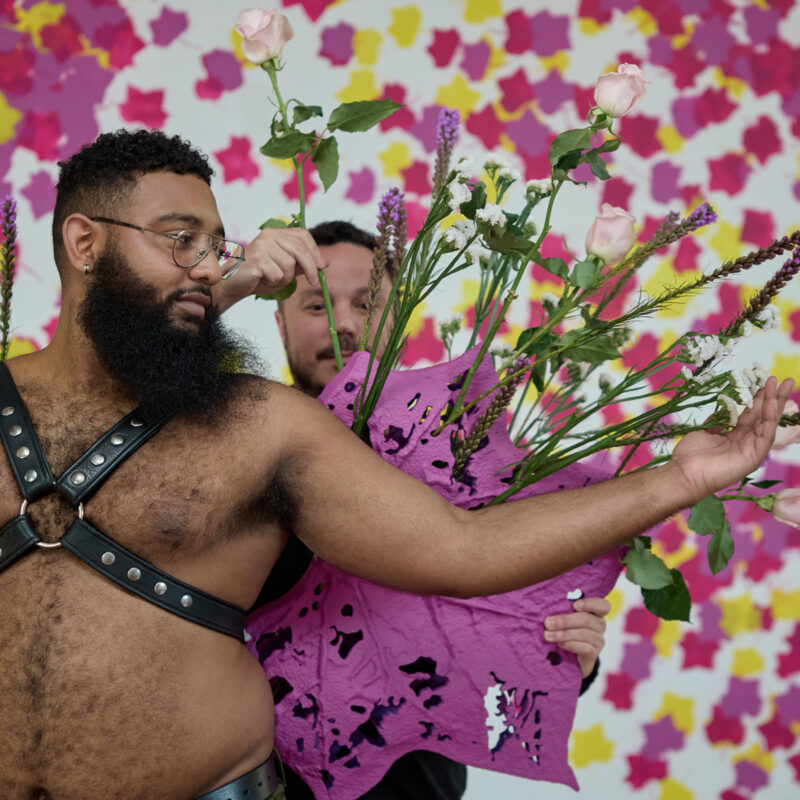
I transformed my studio for this. It was not a museum or an institution. I mean, the studio is within the Tulsa Artist Fellowship, another institution. But still it was my artist’s studio and basically it was transformed into this very queer nightclub. And I also think it’s important to say that happened in Oklahoma—one of the most conservative places in the U.S.… like, radically conservative.
We don’t really have those kinds of spaces there, so basically it was kind of like creating by our own means and queer community in Oklahoma, creating a network that triggered the celebration… That’s the type of work that I’m interested in doing now. Instead of inviting 100 people to hold fabric for a political context, inviting 100 people to have a celebration connected with a sculpture that can trigger other meanings, but also using celebration and joy as another way of resistance. I’m interested in those political works that are not just a metaphor. It’s a tangible gesture, a tangible action.
I’m curious about Tulsa! I know so many artists have gone there for residencies or studio opportunities, but I have never been.
Going through the fellowship, it was a good opportunity to visit a different area of the country of the US.I’ve been working mostly in Massachusetts, Provincetown, Baltimore, New York, or Miami, but never so deep in the country. And you can find somehow even the true country and other realities and the challenges of that reality.
I would say that it was the first time I felt I understood the challenge of being an immigrant in my own flesh because somehow we live in New York as this kind of different reality of the U.S.… and then you visit and inhabit and relate with other parts of the country that are radically different.
I think especially people in the U.S. need to move around and to understand—in their own flesh—the complexity of the country.
Are you back in Baltimore often?
I’ve been back to Baltimore often because of several invitations, mostly related to MICA. I have close faculty members like Monica Moore, for example, who invite me back to her programs. Through the university, I’ve been able to stay connected with Baltimore. And now I have the luck of being invited to this exhibition in Annapolis that gave me another opportunity. Many colleagues from Baltimore went to the show, so it was a good opportunity again to connect with Baltimore.
I think I’m learning to treasure the moments that are not in a plane or that are not in a foreign place.
UNBURIAL is on view at the Mitchell Art Museum through Dec. 6, 2026