Most bakeries dream of drawing long lines of guests eager to catch the moment a croissant leaves the oven and is at its peak. There’s a psychology to it: the anticipation, the shared energy, the chase for that unbeatable bite of warm pastry with its flaky crunchy exterior and the taste of the buttery, airy interior.
Café Dear Leon has had its line since day one. Admittedly, when they first opened their business in a small rowhome on O’Donnell Street in Canton, it was because of the pandemic. Opening in July 2020 meant social distancing, and in their small shop, not even a handful of people could be inside at a time. Still, they gained popularity quickly.
At their first popup with Ekiben in Canton (known for their signature bowls and buns), the line for the event—three hours before opening—had already wrapped around the block, with over a thousand people waiting to order.
To truly understand the Café Dear Leon experience, and the reason people continue to line up for their baked goods and lattes almost six years after their debut in Baltimore, you have to go back to the beginning.
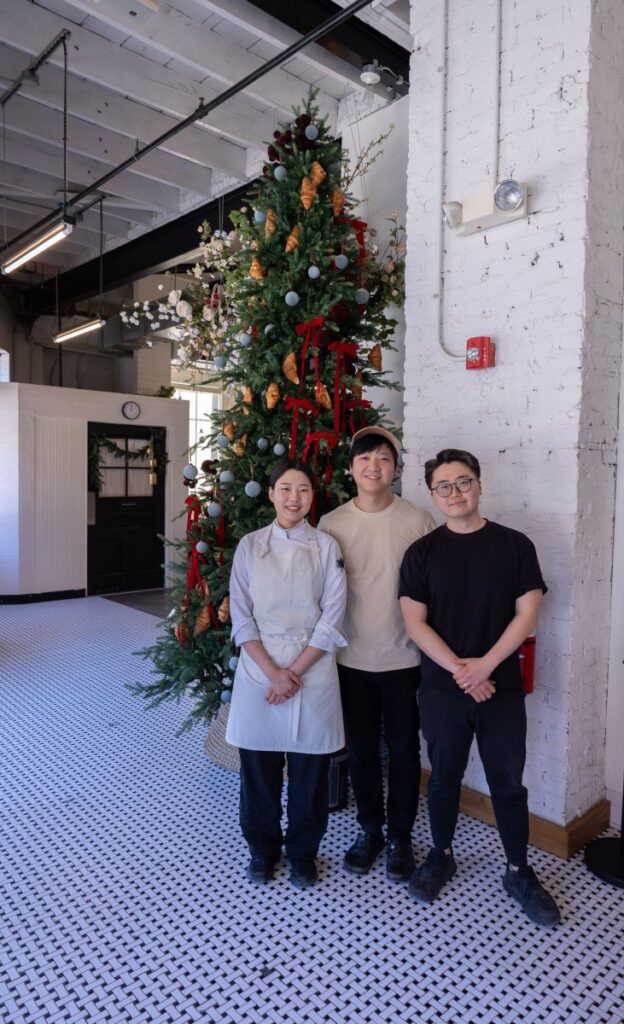
Co-owners Min Kim, Cheolsoo “Charles” Lee, and Sungae “Sunny” Lee, had not intended Café Dear Leon to be a full-fledged bakery. They envisioned a sit-down coffee shop with pastries, where guests could enjoy their cafe space on the second floor of the rowhome.
But when the COVID pandemic suddenly eliminated human interaction, the team had to confront a new question: what does hospitality look like when you can’t serve in the traditional sense? Trained at the Culinary Institute of America, the co-owners leaned into a shared philosophy. As Kim describes it, they firmly believe they’re “in the people business, not a food business.”
So the trio decided they would make croissants. Despite Min Kim and Charles Lee having zero pastry experience, they chose the most technically demanding pastry they could think of. “Even among chefs, croissants are a very technical product,” Kim explains. “It’s a labor of love. It takes three days. You can’t really speed up.”
In their minds, croissants were the embodiment of the warmth they could no longer deliver in person. If they couldn’t serve guests tableside, they would serve them through the pastry itself—timed to the second, baked to its peak, and handed over still warm. The precision, the care, the effort usually reserved for a dining room would now live inside a single pastry.
And that decision would define everything that followed.
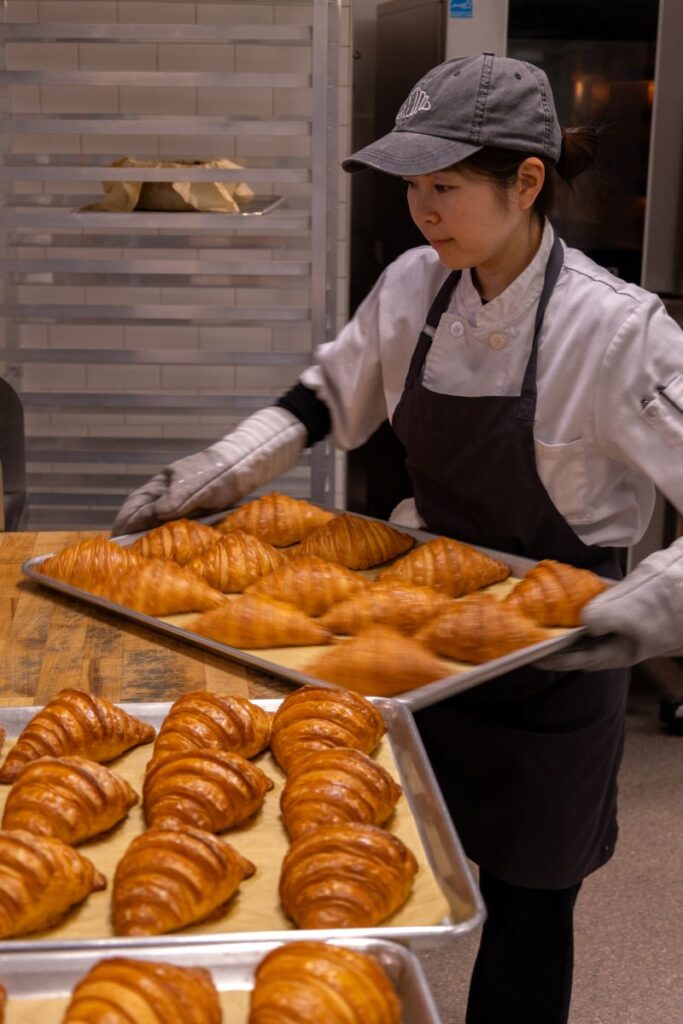
Min KimWe believe the best baked good is fresh out of the oven. So that was the sole goal of our operation—how can we deliver the freshest baked good possible?
Scheduling around peak freshness sounds easy—until you try to execute it, and at scale. Bread, as the team quickly learned, does not obey the chef. “As a chef, you get to tell food what to do,” Kim explains. “With a steak, you temper it, season it, cook it, plate it. Baking is the opposite. Bread tells you what to do.”
Any baker knows, lamination needs time: hours of timed precision; temperature controlled to make sure the butter doesn’t melt; folding the dough with butter to get that airy texture and letting the result proof. The team had to time their work backward from the moment they wanted a guest to take their first bite.
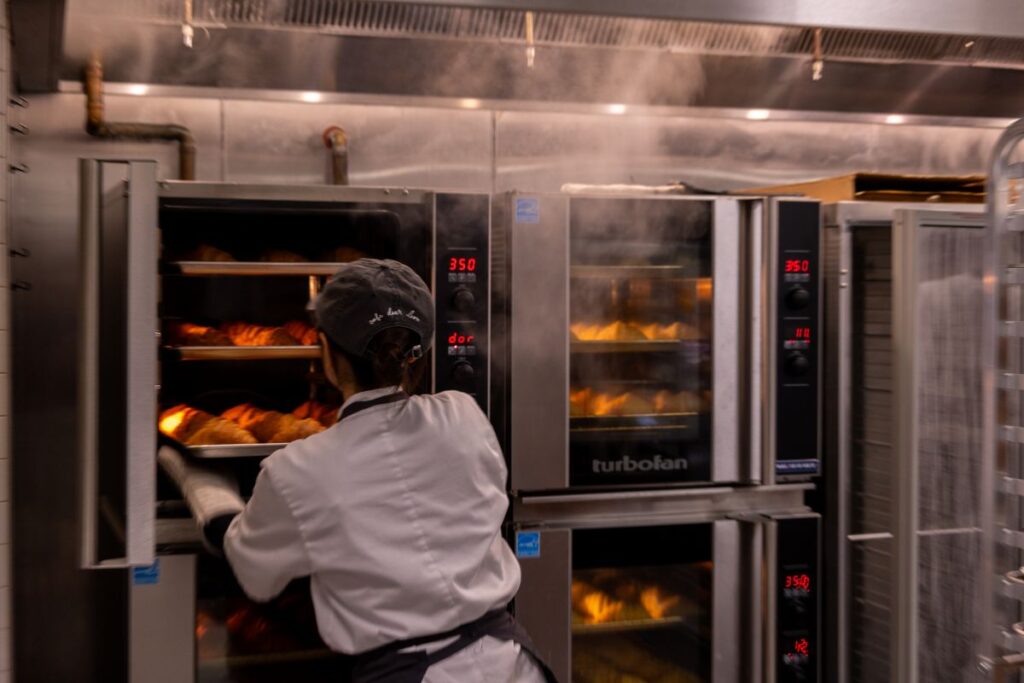
Let’s say the croissant is going to drop at 6 a.m., that means it needs to be done baking by 5:30 a.m., but the lamination has to happen the day before, the proofing has to start overnight, and the team has to show up at 3:30 a.m. to make it all align. Every detail, down to timing and spacing in their two stacked ovens in the backroom of the rowhome, dictated their day.
“It was foolish of us to think we could tell bread what to do,” Kim says, laughing at the memory. “But we believe the best baked good is fresh out of the oven. So that was the sole goal of our operation—how can we deliver the freshest baked good possible?”
This philosophy was a radical departure from the traditional bakery model where pastries are finished at 3 a.m. and sit on racks for hours before opening. Everything at Café Dear Leon is timed to a moment. “Let me get you the best croissant,” Kim says. “Come at 9 a.m., because it comes out of the oven at 8:30 a.m.”
That’s exactly what people did. The line wasn’t only hype—it was simply what happens when an entire business is built around a peak moment to offer the freshest pastry possible.
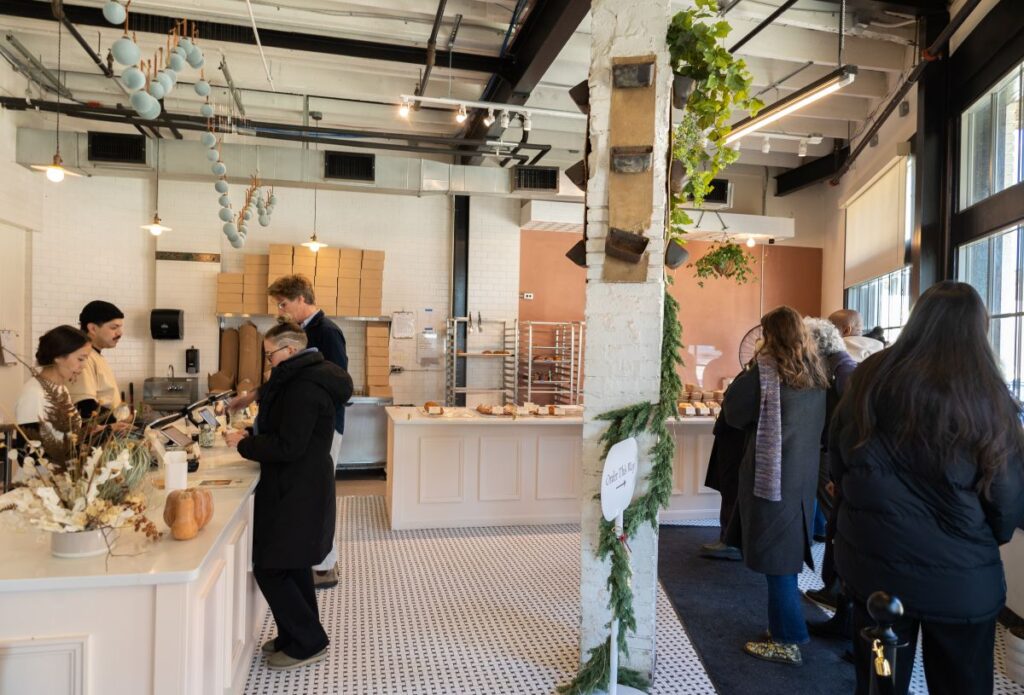
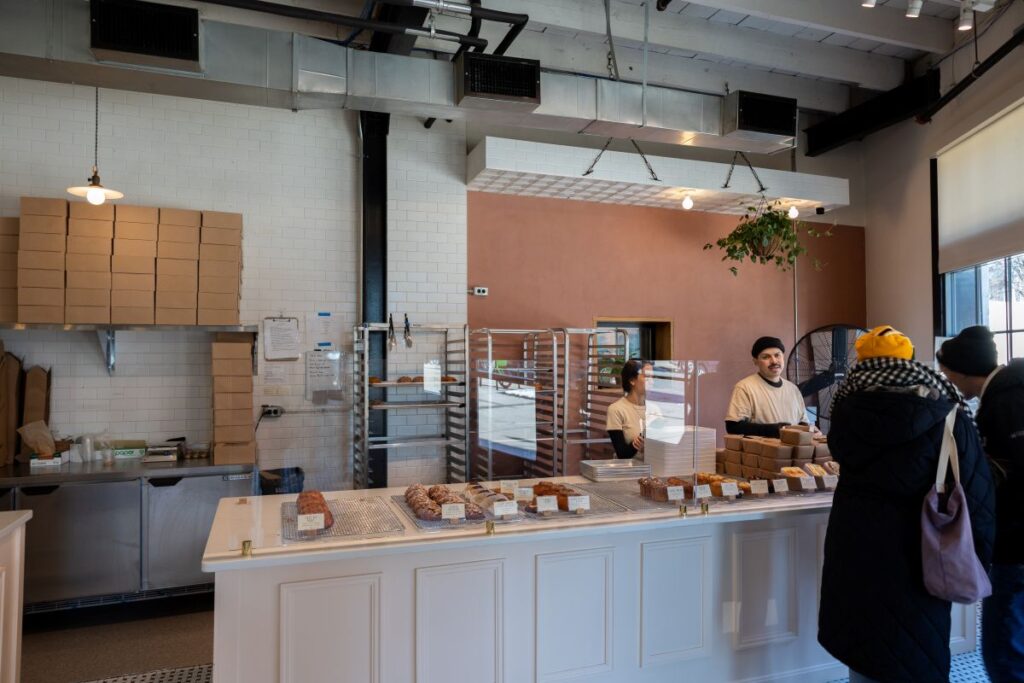
But in time the line started to become a source of frustration for patrons, and a source of exhaustion for the team working the ovens. “There were a lot of guests saying, ‘Why don’t you guys make more?’” Kim recalls. The staff was working grueling hours, crafting a menu that changed seasonally and reinvented itself as the trio found new sources of inspiration from other cafes and bakeries around the world, yet it still felt like their efforts went unseen.
The turning point came when they noticed the same frustrated customers kept coming back, willing to wait all over again for another chance at a warm croissant. “They were giving us criticism because they liked us,” Kim says.
That realization forced the team into an even deeper level of discipline and accountability. “All three of us come from restaurant backgrounds, working in New York City at top-tier, very professional places,” Kim explains. “And we all had the mindset that we needed to make it happen. There were no excuses.”
And even when the feedback hurt, they took it in. “Of course it hurt when we were trying our best, but they were right. I guess we hadn’t tried our best—there was room to be better. We were always trying to be better.” Charles Lee pauses, considering it. “Does that come from how we were trained? Maybe Korean-ness also? Yeah, probably.”
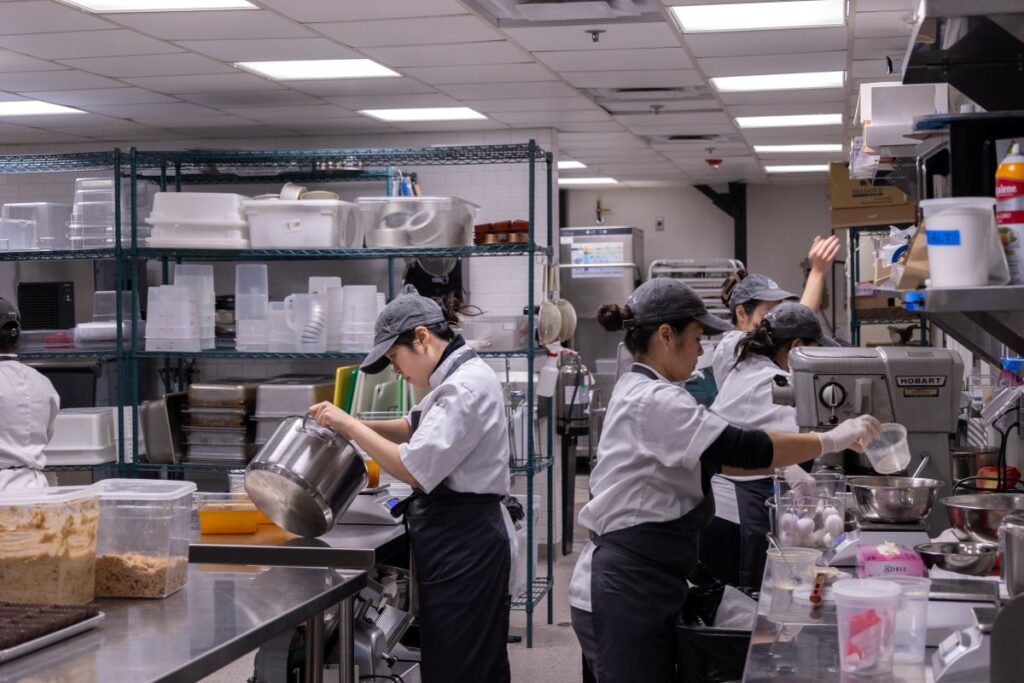
As the months went on, in order to meet demand, the staff grew too. What began as three people in a tiny rowhome kitchen slowly grew to accommodate 10, then 12, then 13 or 14 people packed into a space never meant for the capacity.
“At some point, around noon [at shift change], there was a full band of people shoulder to shoulder,” Charles Lee explains. There was more prep to be done, more ingredients to gather. Working in a poorly insulated rowhome now packed with body heat, that meant working faster in the summers to make sure the lamination dough never melted but retained its shape and texture.
The physical constraints of the O’Donnell shop were becoming impossible to ignore. They needed to grow not just to create a better customer experience, but because their people—bakers, baristas, front of house staff—were showing up at their door, eager to learn and to stay. That’s when expansion stopped being a business opportunity and became a responsibility.
Kim states it simply: if good people show up at your door, you make space for them. If you don’t, they’ll grow somewhere else. The possibility of losing their team—people who had chosen to build their careers at Café Dear Leon—to a lack of space was unthinkable.
In the former JBGB—and before that Parts & Labor—space, originally designed by James Beard Award–winning chef and restaurateur Spike Gjerde, exists a massive walk-in fridge. Placed there from Gjerde’s desire in 2014 for whole-animal butchery and farm-to-table cuisine, it was the cold room that once held whole animals that became the team’s biggest draw.
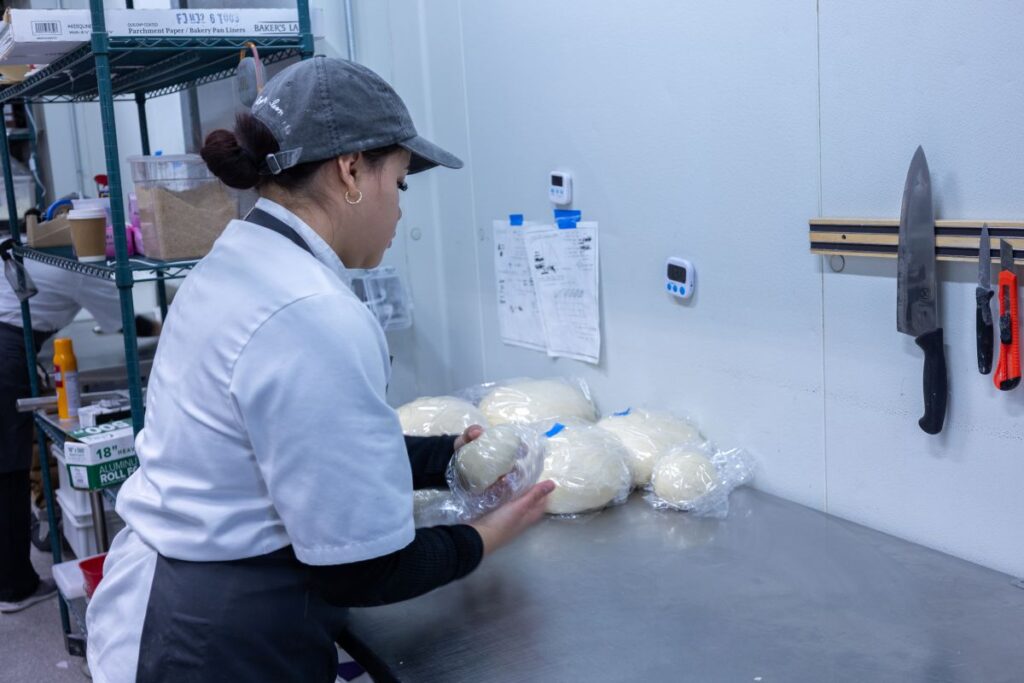
In Canton, summer made lamination nearly impossible. But this space in Remington offered a temperature-controlled room with massive stainless-steel tables where the team could rest their dough without fear of butter melting, and properly go through the training process. It was more than square footage—this location would be five times bigger than the rowhome—that walk-in fridge provided the one thing they’d needed most: a lamination room.
“This space gives us room to grow our team, to train people the right way,” Charles Lee says. “It also allowed us to create a more chill environment [for our customers].”
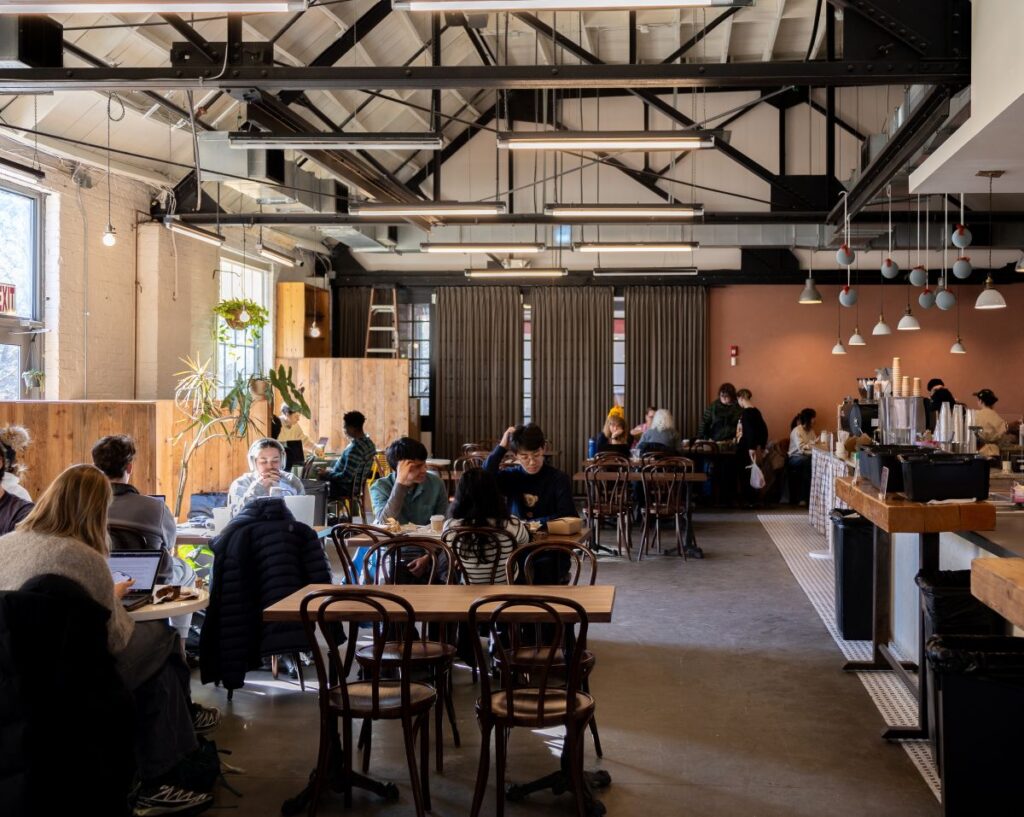
The expansion and a sister location would give the team a place to build real careers, matching the ambition of the people inside it, and actualizing their long ago dreams of a sit-down cafe.
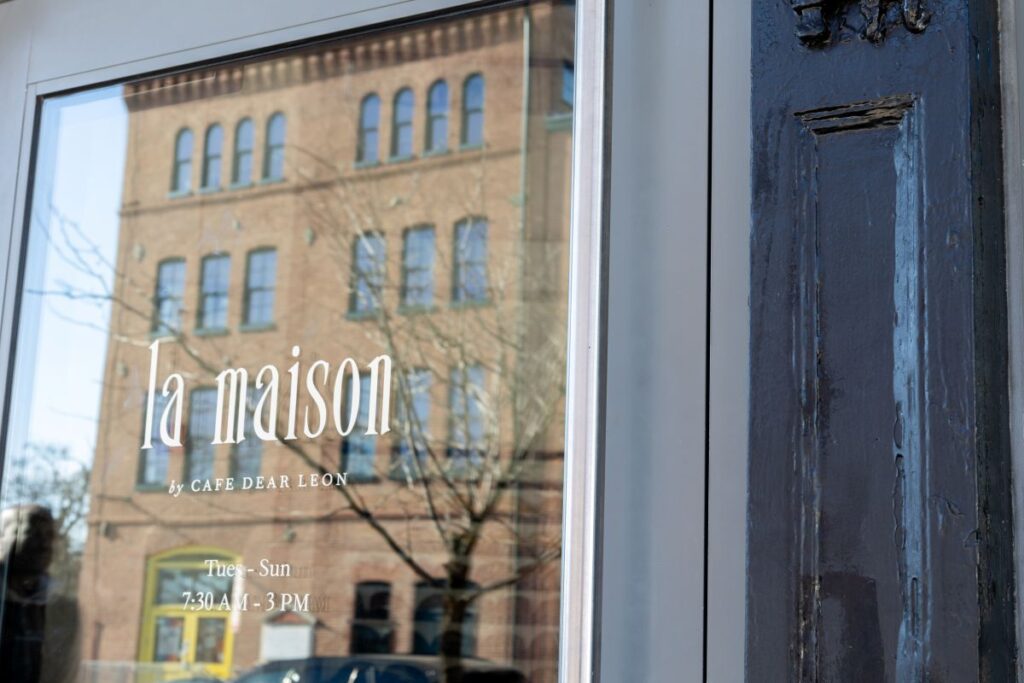
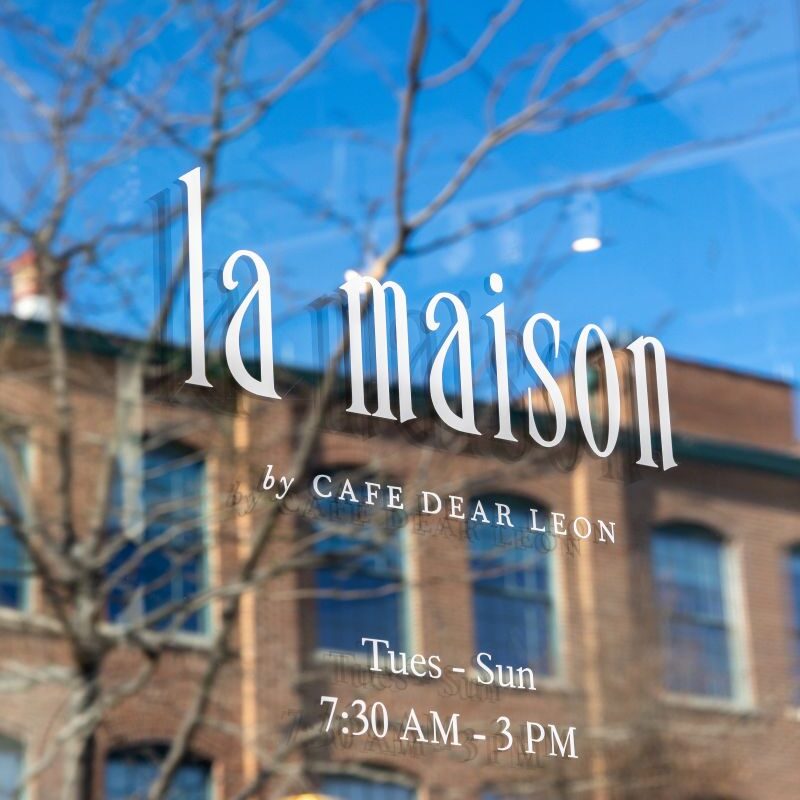
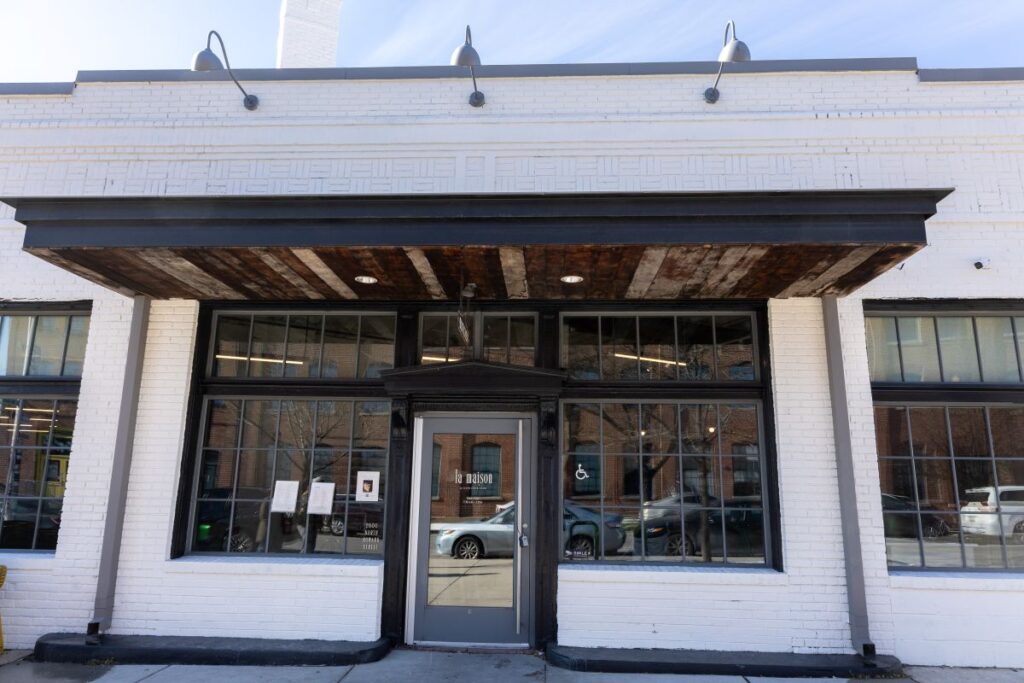
La Maison by Café Dear Leon debuted in Remington on a crisp fall day in October, 2025 to a soft opening that, in true fashion, drew crowds of people in an otherwise slow part of the neighborhood. Streets were lined with cars and people alike. While the line continued to grow ushering in more patrons, the inside bustled with a spacious seating area, a first for the team. In the back, behind the expanded checkout counter, guests could watch chefs baking. “We want this to be a great training ground for the next generation of hospitality leaders,” Kim says. “That’s the legacy we want to create.”
Yet for the famed bakery, and for the owners too, this new location marks even more than the fulfillment of a dream. “After all this time, we finally feel like Baltimore is our home,” Charles Lee says.