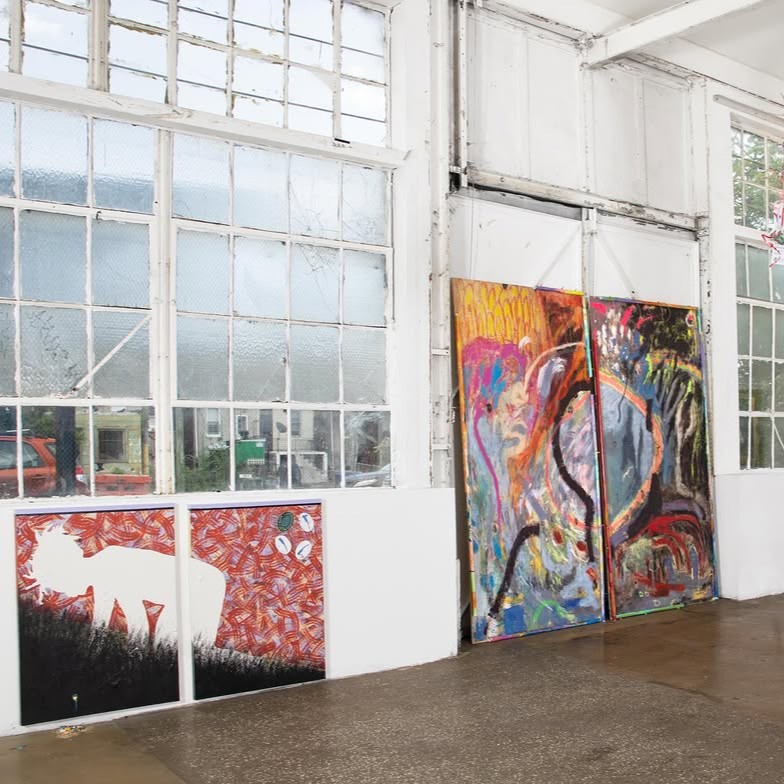
Baltimore has stayed busy through the heat, and three exhibitions on view right now shouldn’t be missed. Current Space is showing two: Demolition by Neglect: Research and Residues, a solo exhibition by Marian April Glebes, and the group show Bed Bath & Body Works. The shows at Current are typically exciting, but this is a particularly fantastic combo, and with both being great hits you get a really lovely two-for-one deal.
At The Compound—another of Baltimore’s beloved artist-run spaces—it’s been exciting to watch the relatively new Director of the Multidisciplinary Arts Program Rui Jiang develop robust exhibitions, which includes collaborating with guest curators. The curator for the current show, Materio-mancy, is Baltimore-based artist VILLAGER, who also has work in the show.
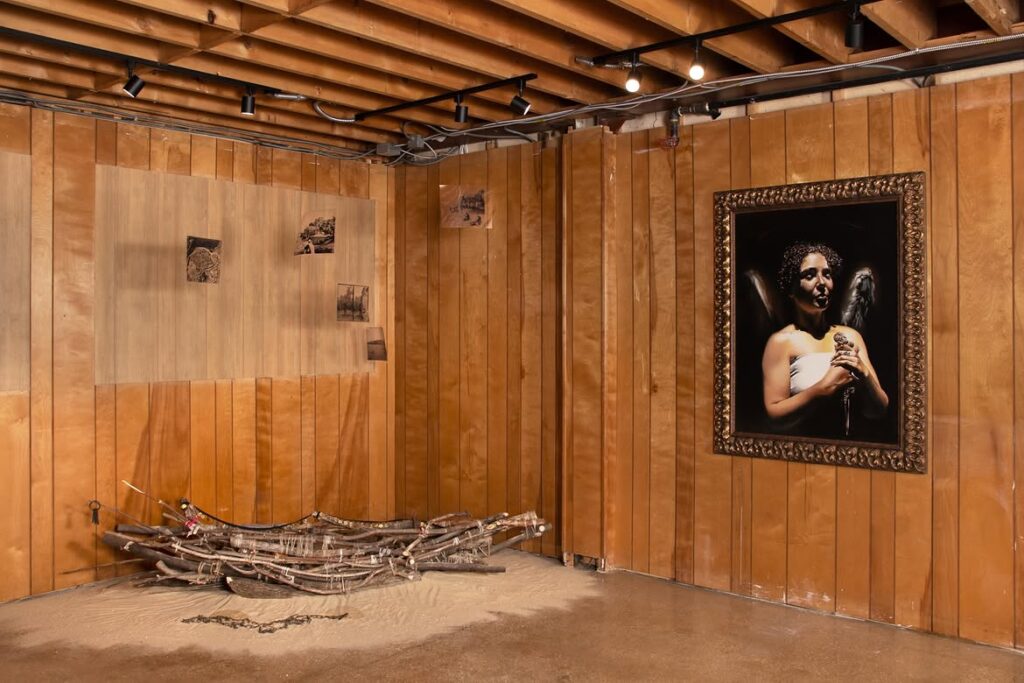
Materio-mancy is an eclectic grouping of seven artists who work across a wide range of media, here showing painting, sculpture, and installation. The full roster includes Jasmeen Al Rayyes, Alexander D’Agostino, Anna Divinagracia, Winter Dior Hart, Lehna Huie, G. Pack, and VILLAGER.
G. Pack is one of the standout artists. With this show, his work in the Scout art fair this year, and his recent show at The Last Resort Artist Retreat, the artist has really taken advantage of the myriad opportunities 2026 has provided him. Pack’s work is at once very traditional and still contemporary. Like Kehinde Wiley, using a baroque style and the occasional ornate frame, G. Pack takes the people, and often animals, around him and elevates them. Oftentimes the figures are raised to sainthood, similar to the way Wiley elevates people into historical roles of power. That said, G. Pack’s style is realistic while staying away from the hyperreal, and he creates religious-feeling compositions without relying heavily on the compositions of the European masters. In Materio-mancy two of his pieces use the heavy contrast of chiaroscuro, especially “Celange” (2024), to render scenes that feel mysteriously important.
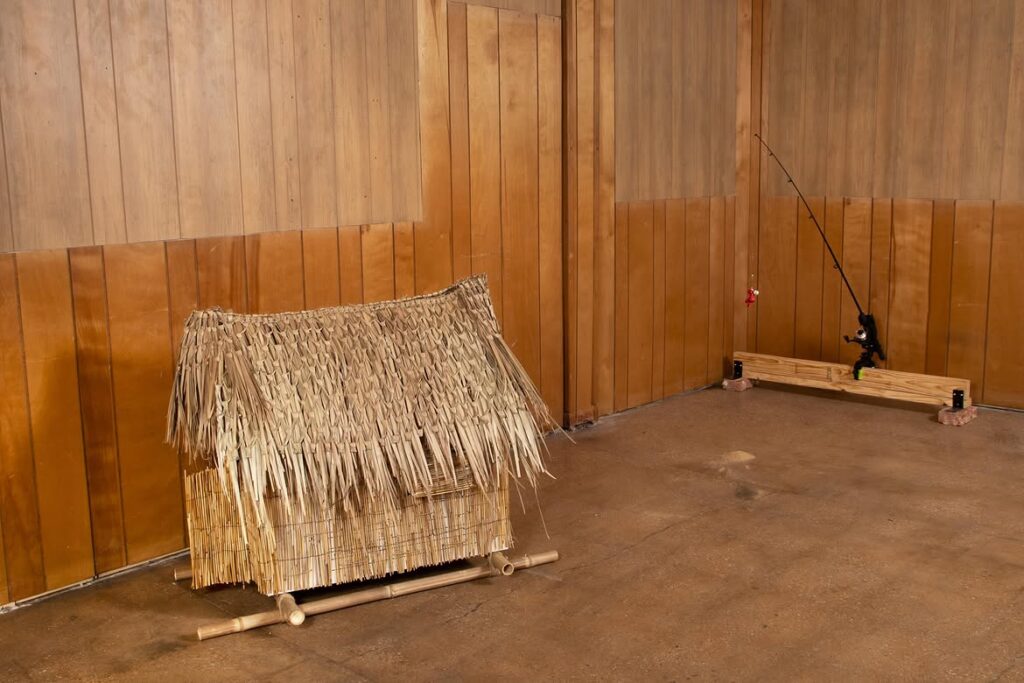
Some other standout works include Winter Dior Hart’s “Don’t Go Fishing on Sunday” (2025), a somewhat innocuous yet alluring composition that mounts a fishing pole in the corner of the smaller gallery space with a lure on the end that is a small ceramic figurine of a baby devil. Anna Divinagracia’s “A Game of Dreams” (2024) is another of these highlights. Divinagracia has two works in this show, both sculptures, which feel like a departure from the photographic work for which I have come to know the artist.
While I love to see artists spread themselves and experiment, it is all the more satisfying when the effort does not feel in vain, and with “A Game of Dreams” it is especially exciting to see Divinagracia grappling with ideas in a way that transcends any particular medium.
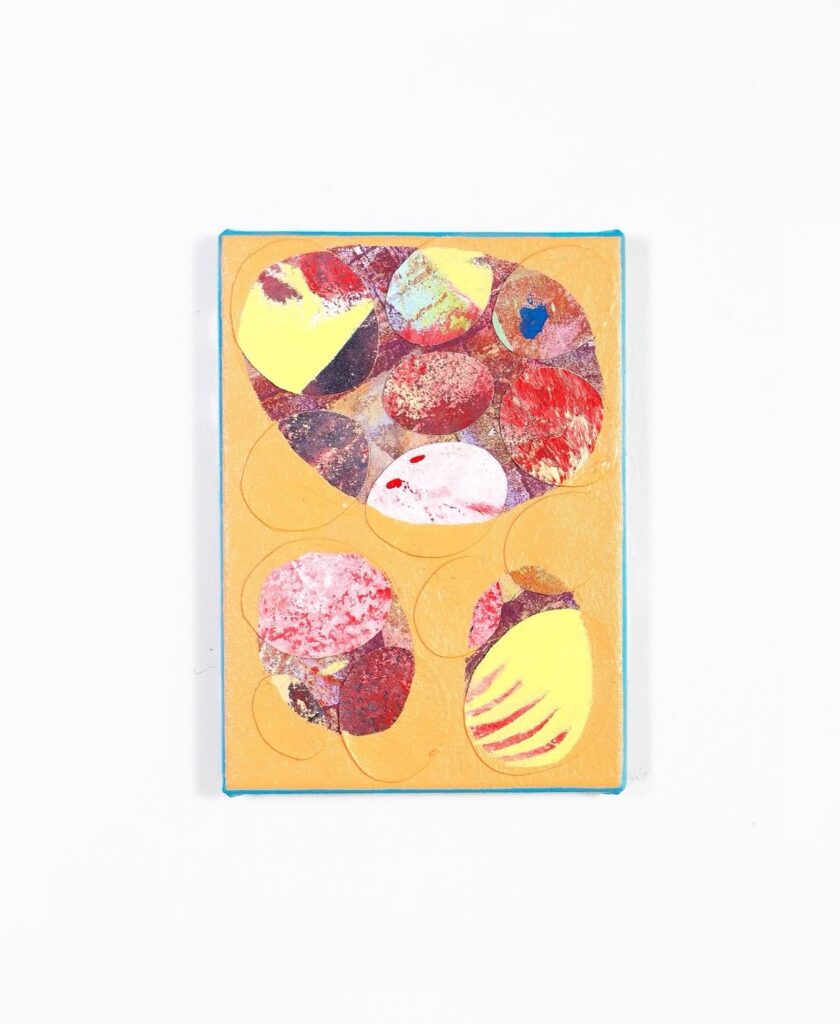
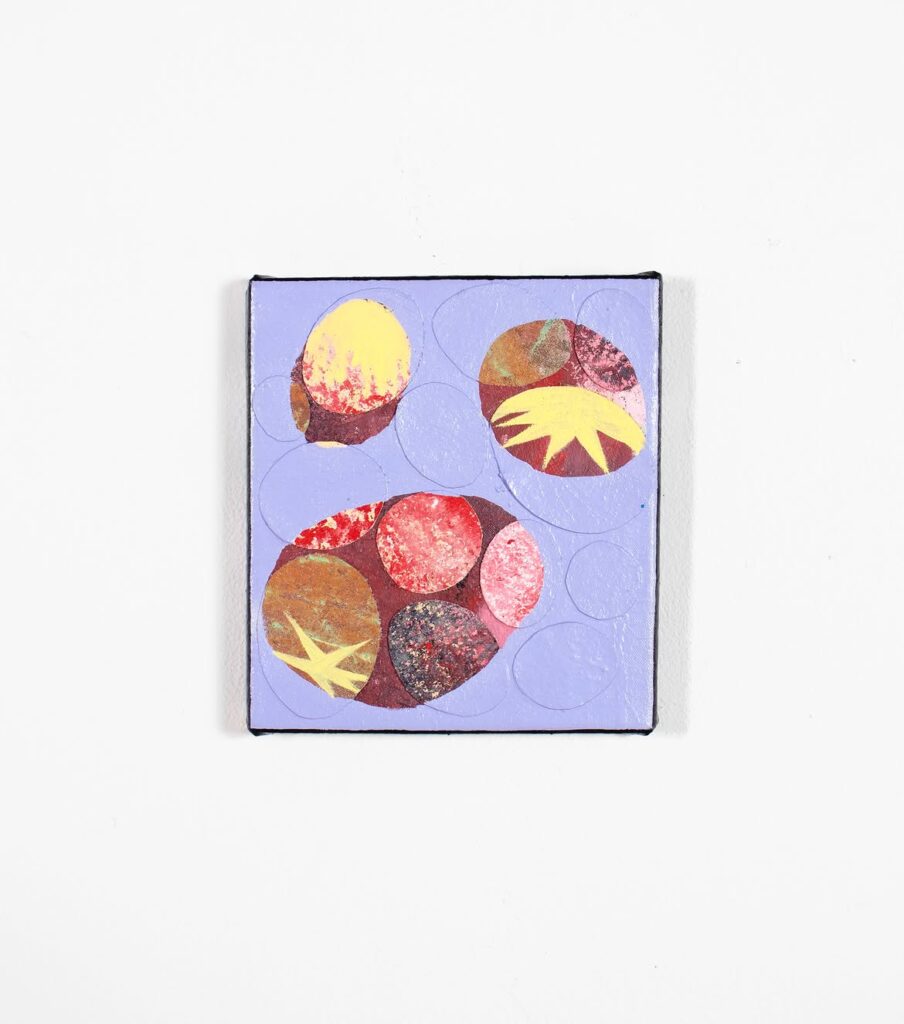
Also of note is the curator’s own work: VILLAGER has four works in the show, but I am particularly drawn to “seeking simplicity” (2025), “the sweetness of departure” (2025), and “unexpected resilience” (2025). These acrylic paintings are relatively, gently quiet. Physically they are small—none bigger than 1′ on their longest sides—and they consist largely of soft pastel colors interrupted by heavily patterned forms. The patterns are exposed in some areas and disguised in others by the color mentioned above, creating a visual phenomenon of texture that I find contemplative and engaging. Ultimately the show is another strong statement for the exhibition programming that has become a relatively new staple at The Compound.
At Current Space there are two great shows currently up. In fact, Marian April Glebes’ show, Demolition by Neglect: Research and Residues, feels in conversation with the work of the Director of The Compound, Nicholas Wisniewski. Both artists work in drywall and joint compound and often use material extracted from the abandoned or uninhabitable row homes that scatter the city. While both create work that directly engages with what it means to live in a city that so often neglects the domestic and commercial spaces people are meant to inhabit, Glebes’ primary divergence comes in her role as a preservation planner.
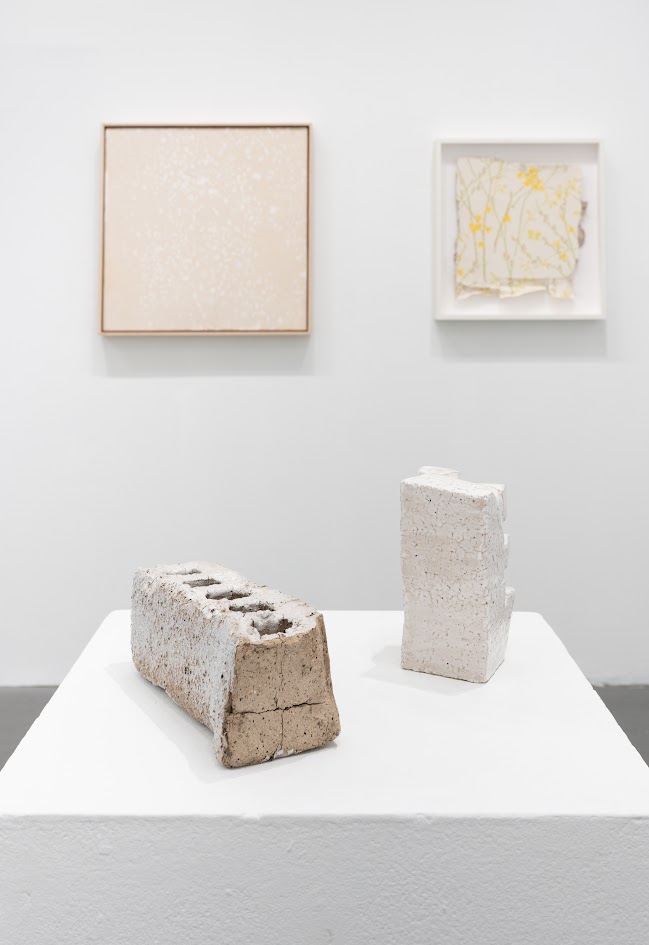
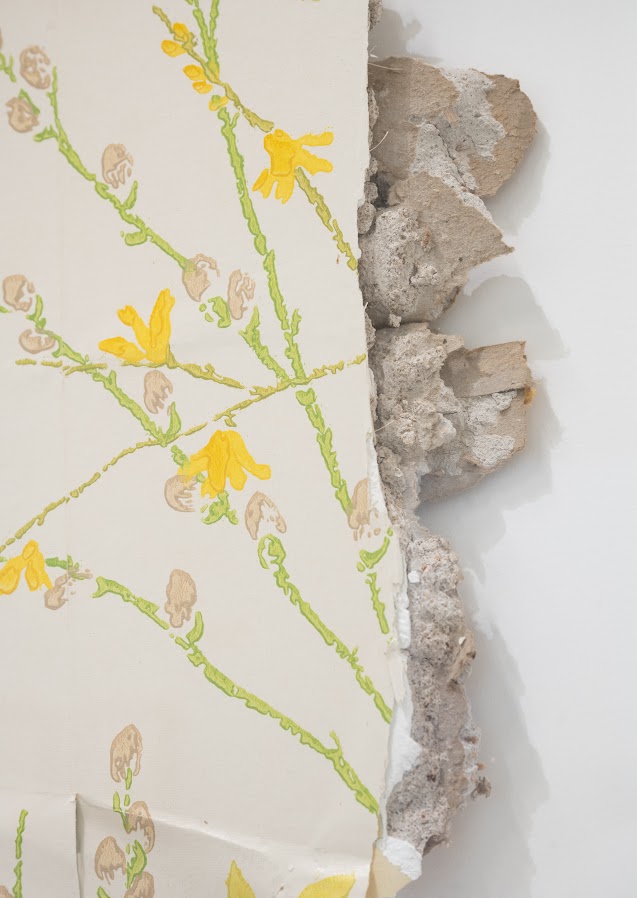
Glebes mentions this extensively in the text for the show, which gives great context to a show that is otherwise relatively minimalist in the works themselves. Some works, like “Untitled Material Study (5906 Kingswood Road, second attempt)” (2018-2026) or Negative Space 03 (2019-2026), feel like physical records. As cutouts from a specific place during a specific time they act as historical documents. Glebes mentions the idea of “cultural landscape theory,” which suggests that “place [is] something made continuously by the people who inhabit it, even as it makes them in return.” This idea feels most present in these and similar pieces. Glebes’s works proclaim a value on the interior spaces that have become unseen, unloved, and uncared for.
The other end of these works is the NR-1013 series, from which Glebes shows No. 1-7, as well as works from her B-4504 series. In these works Glebes takes more agency in the creation. Oil, chalk pastel, conté, and other materials enter the pieces, often keeping the base as gypsum board, the salvaged material so indispensable to building. Works like “B-4504 (Plinth 01)” (2026) and “NR-1013 (No. 03)” (2025) bring the artist’s hand more directly into the composition, creating subtle, atmospheric works that float both within their frames and against the white walls of the gallery, built of the very same materials. Glebes also has a series of sculptural works in the gallery that should not be ignored. Works at either end of the gallery are pseudo-collaborations with the brickmaking company Taylor Clay, using bricks damaged by accident or acts of nature. In the case of the white bricks, the works had fallen off the factory line and were reclaimed by the artist and glazed white. In the case of the black bricks, the works were left out in a hurricane and then fired without glaze, leaving a raw, almost charred surface quality.
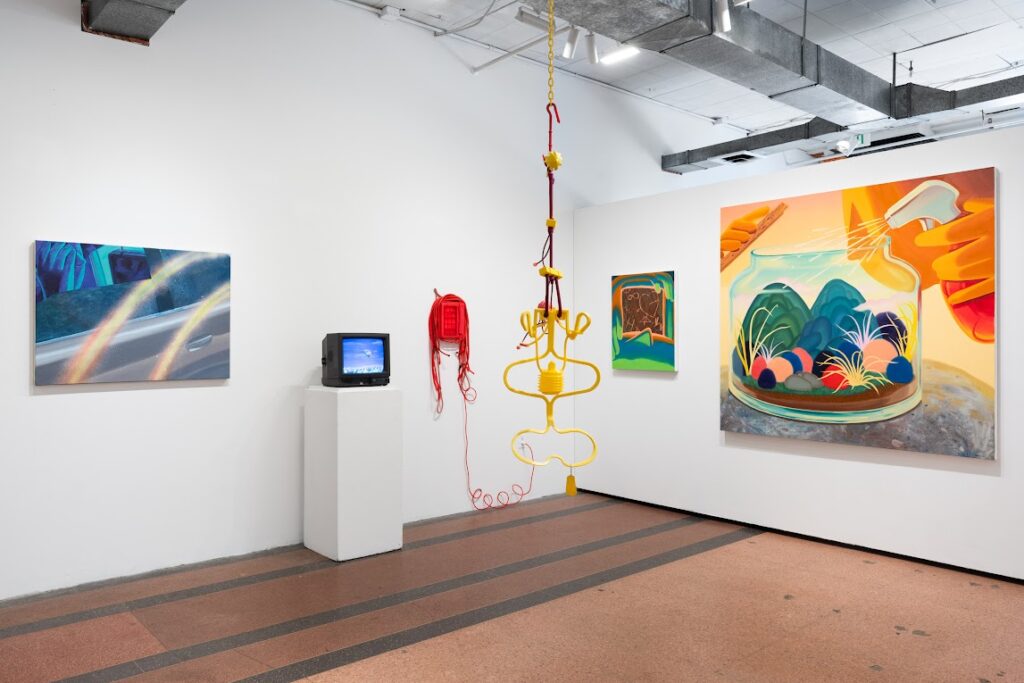
Last but certainly not least is arguably one of the best shows of the summer. Well known in the Baltimore arts scene, heavy hitters Heejo Kim and Danni O’Brien teamed up with Buffalo-based artist Jenson Leonard for Bed Bath & Body Works. If you, like me, are not yet familiar with Leonard’s work, do yourself a favor and carve out a good chunk of time at Current before the show closes to sit with his video work. The pieces are not especially long, but they genuinely deserve the time. Leonard makes work that “explores how digital media shapes contemporary life,” here showing videos that use generative AI to some degree. They range from the more base, pleasurable scenes of “Fauna Jam” (2026) to the heavy-handed political commentary of “Droney” (2026), all while remaining uncanny and disturbing in the way that only AI can be.
If you already know O’Brien and Kim, don’t write this off as more of the same. Both artists, known to be prolific, are showing pieces made primarily this year. Kim is fresh off showing at Felix and NADA, and O’Brien currently has work in the Walters Art Museum as part of the Sondheim Finalists Exhibition, following their solo show Toning Systems Volume II at Stove Works this year and a two-person show at Junior Gallery. It is always a pleasure to see their work in the city, and their pieces at Current Space live up to the exploratory rigor one has come to expect.
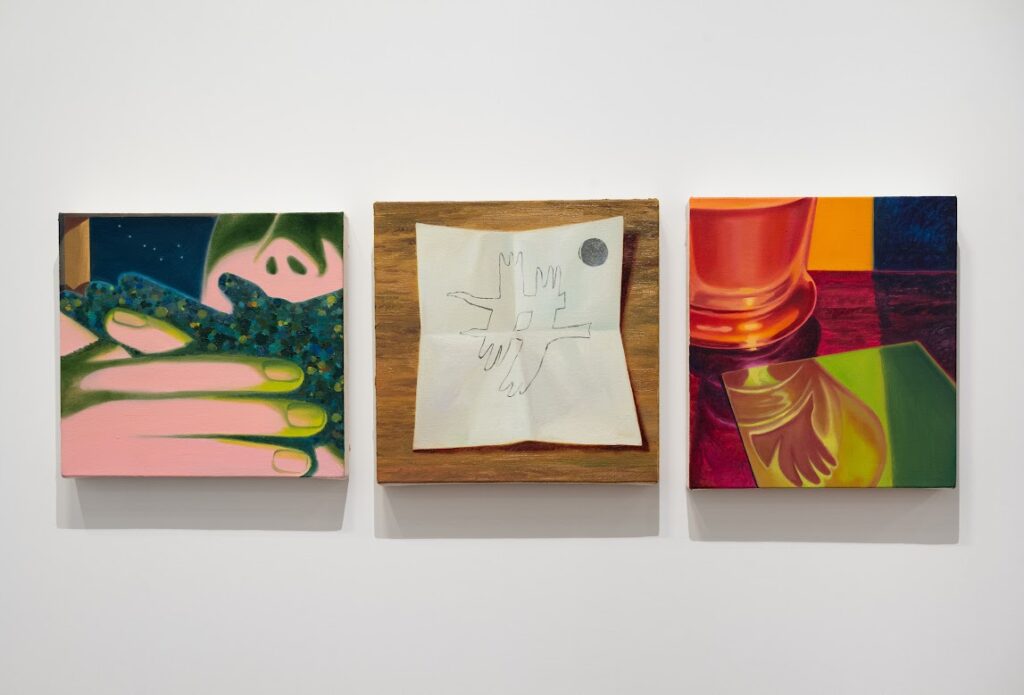
Kim’s works are a mixture of some of her iconic large-scale, simplified figures, as in “Island Adrift” (2026) and “Small World” (2026), and smaller, more intimate pieces like “Shadow” (2025) and “Tranquility” (2024). “Tranquility” in particular is an exciting standout, taking on a sense of trompe l’oeil that I don’t typically associate with Kim’s practice. That painting depicts a small graphite sketch on a folded piece of paper atop a wood-grain background. The drawing is abstract, and while its shapes may connect to the stylized hands the artist paints, its mystery and abstraction are particularly curious and alluring.
O’Brien’s assemblages continue to feel fresh and innovative. O’Brien has worked with the found and constructed object for years now, and at times it is hard to imagine how they keep producing work that is at once referential to specific objects and defiant of definitions. Pieces like “The Intensity and Pressure are Entirely Under Your Control” (2026) and “Twist Stepper, I Barely Know Her” (2025) are prime examples. Using materials like an ab rocker, a napkin holder, jump rope handles, a wine holder, and anti-cellulite massagers, O’Brien masterfully builds compositions that feel almost manufactured, as if—instead of a compilation of dissonant parts—these objects came fresh out of the factory as the confusing, function-defying forms they are.
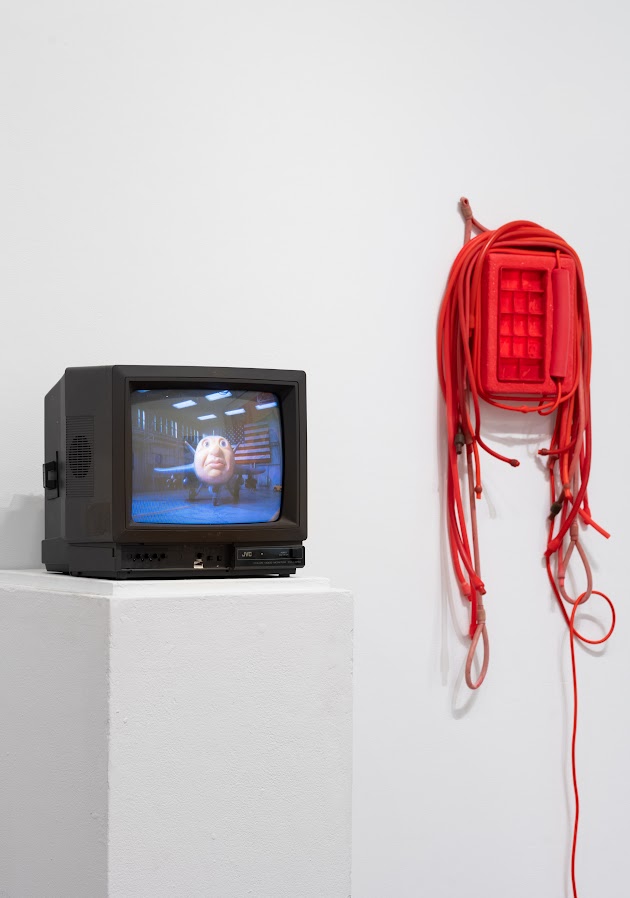
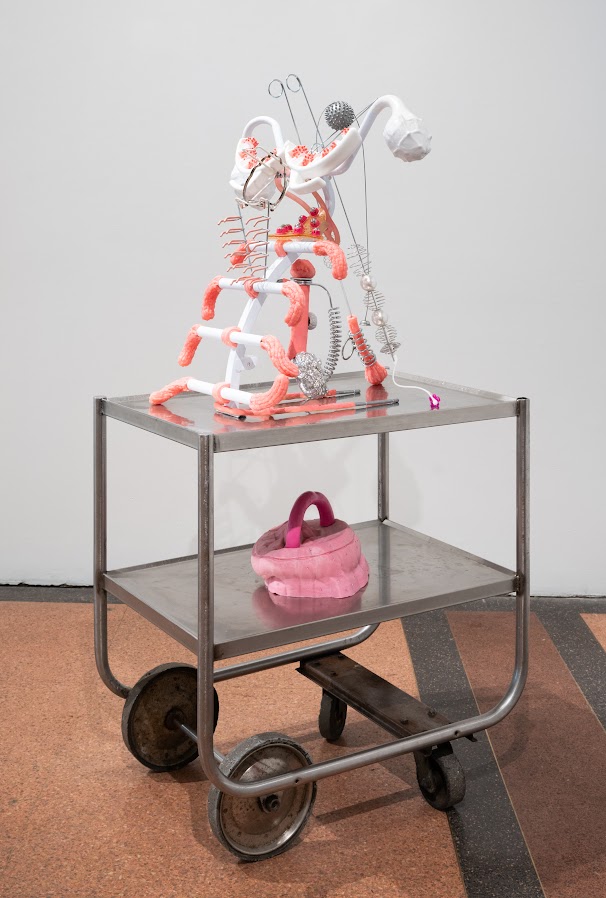
Other works like “UFO” (2026) and “Red Light Therapy” (2026) are more pared-down and show the restraint the artist is capable of. In the latter, O’Brien’s characteristic use of subtle light and intentional cord-color matching results in a work that feels far more minimalist while still boasting eight different materials, most transformed so far beyond their recognizable form that they become much more than the sum of their parts.
Taken together, these three shows make a strong case against the notion that summer is an off-time for galleries. In some cities the heat empties the calendar but in Baltimore, between The Compound and Current Space, Baltimore’s art scene is offering some of its most innovative programming of the year. Materio-Mancy closes with an artist talk on Saturday, August 22, and both Bed Bath and Body Works and Demolition by Neglect close with a reception at Current Space featuring artist talks on Sunday, September 13. So mark your calendars—you don’t want to miss either.