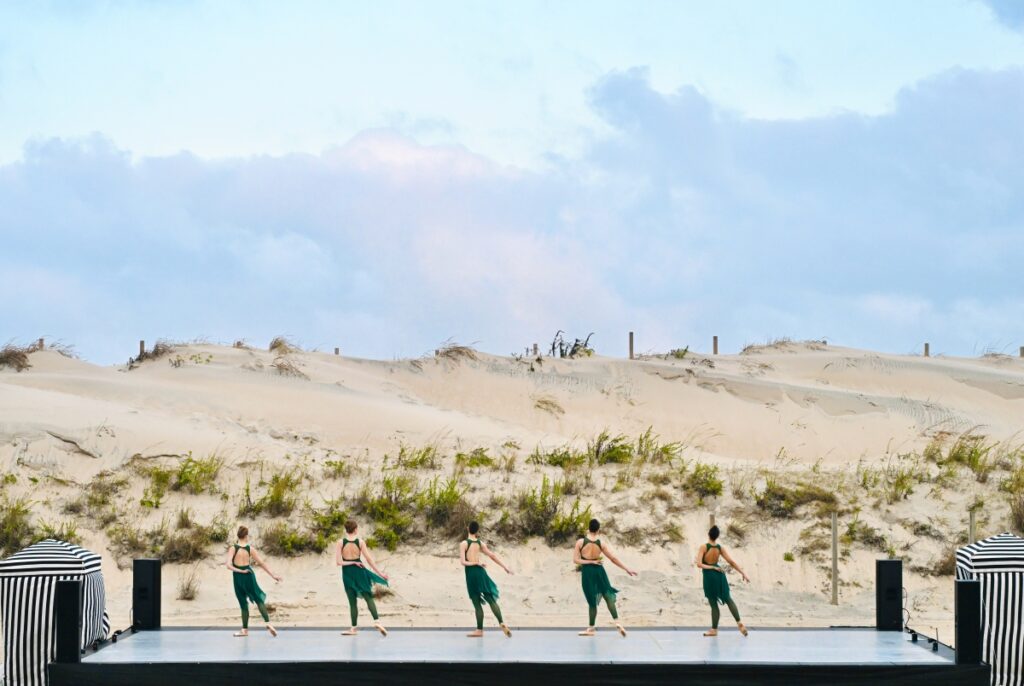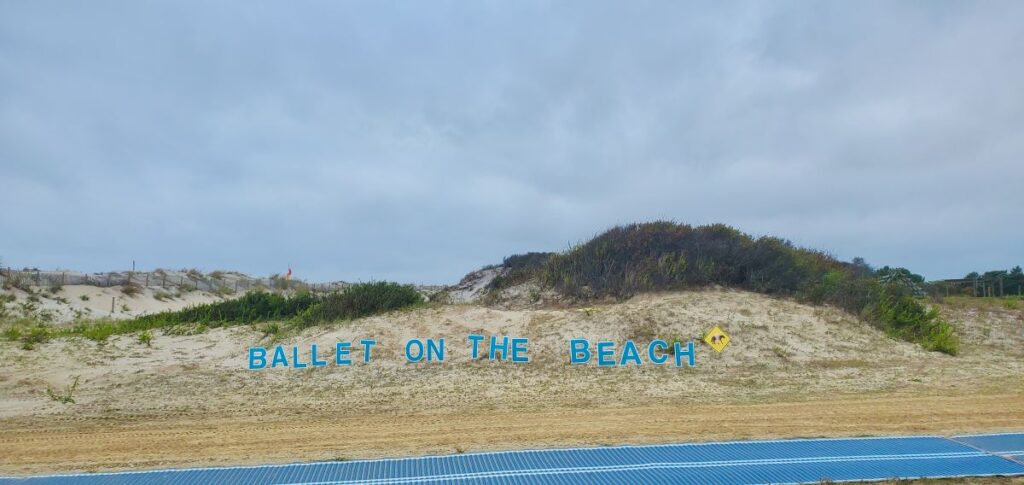
This Saturday, before a sand dune and beneath the evening sky, dancers performing at the fourth annual Ballet on the Beach Festival on Assateague Island will take their bows just before sunset. This 5 p.m. curtain—midway between a matinee and an evening show—is mandated by stage lighting.
That lighting? The sun, just three days shy of the autumnal equinox. Overhead lights and light trees are out of the question on an island whose only permanent residents are a herd of wild ponies.
Vanessa Salgado, founder and director of Ballet on the Beach, has the show’s timing down to a science. Curtain—proverbially speaking—at five, wrap by 6:30 p.m. That will give the audience of 700+ just enough daylight to get back to their cars. The moon will rise. The tide will recede. And the stage that was assembled at 10 a.m. will be dismantled and driven back to Annapolis.
After hosting a night at the ballet, Assateague State Park will be left as it was found. That’s of utmost importance to Salgado, who long dreamed of bringing ballet to her favorite seashore.
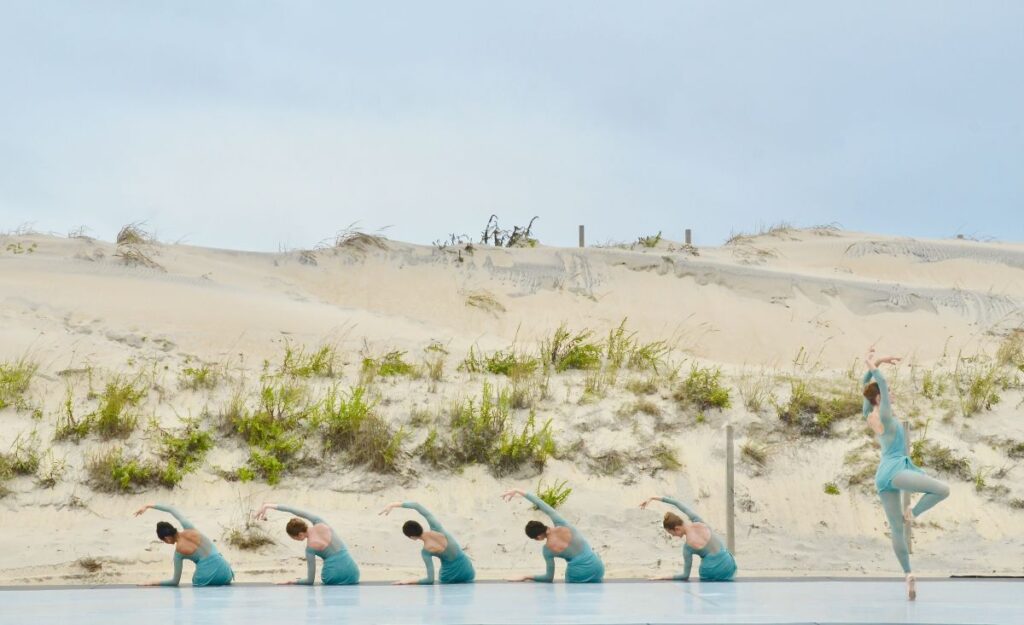
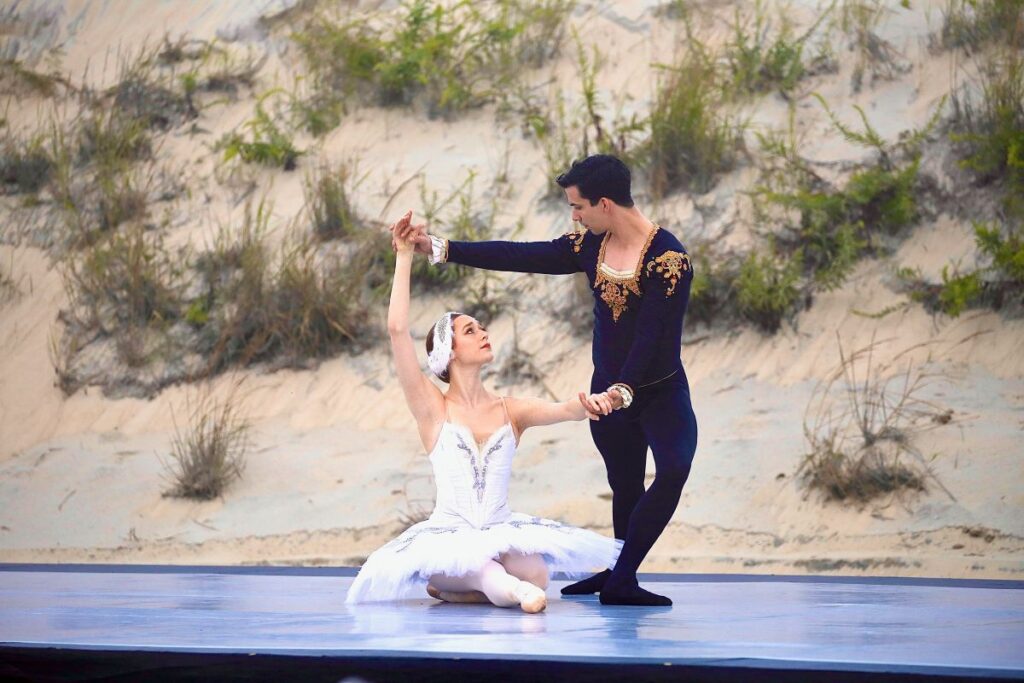
On Saturday, September 19, dancers from The Washington Ballet, Dance Theatre of Harlem, Janusphere Dance Company, Continuum Contemporary Ballet, and the Ballet Theatre of Maryland will perform in Ballet on the Beach, an outdoor dance festival Salgado founded in 2023. The performance—which is interspersed with “eco talks”—is free and open to the public.
Salgado, a Salisbury native, spent childhood summers visiting Assateague. Salisbury gave Salgado her start in ballet at age five, but after high school she left the Eastern Shore to dance in New York, studying in a joint program at Alvin Ailey and Fordham University, where she earned a BFA in Dance Performance. Lincoln Center sat at the center of her universe. But the Eastern Shore was always on her mind. She pictured dancers performing outdoors on Assateague, as she’d danced outdoors at Jacob’s Pillow Dance Festival in the Berkshires. And she dreamed of professional dancers performing on the Eastern Shore, a region without a professional ballet company.
Salgado returned to Salisbury during the COVID-19 pandemic. In 2023, she crossed paths with Meghan Rhode, Assistant Park Manager for Assateague State Park, who was looking to bring arts to the park. The pair got to work figuring out how to turn a beach into a stage.
“The area we set this up in is already a developed area of the island, though it has a dune as the backdrop. It’s in a picnic area, a grilling area,” Rhode says. “It’s right along our public access to the beach, so literally hundreds of people come through there every day. It’s very heavily impacted already. So the one day setup of the stage—which is always amazing to see—and the transformation that happens throughout the day is just unreal. It’s a good balance. We do have to be careful about what we allow into the park. But the way this is done—the group that Vanessa works with—they’re so respectful of everything.”
The public set-up coaxes unsuspecting beach goers into a night at the ballet. “People come across it and see it, and then it captures their attention and they stay for a while,” Salgado says. “Some people don’t plan for it; they plan for that day at the beach.”
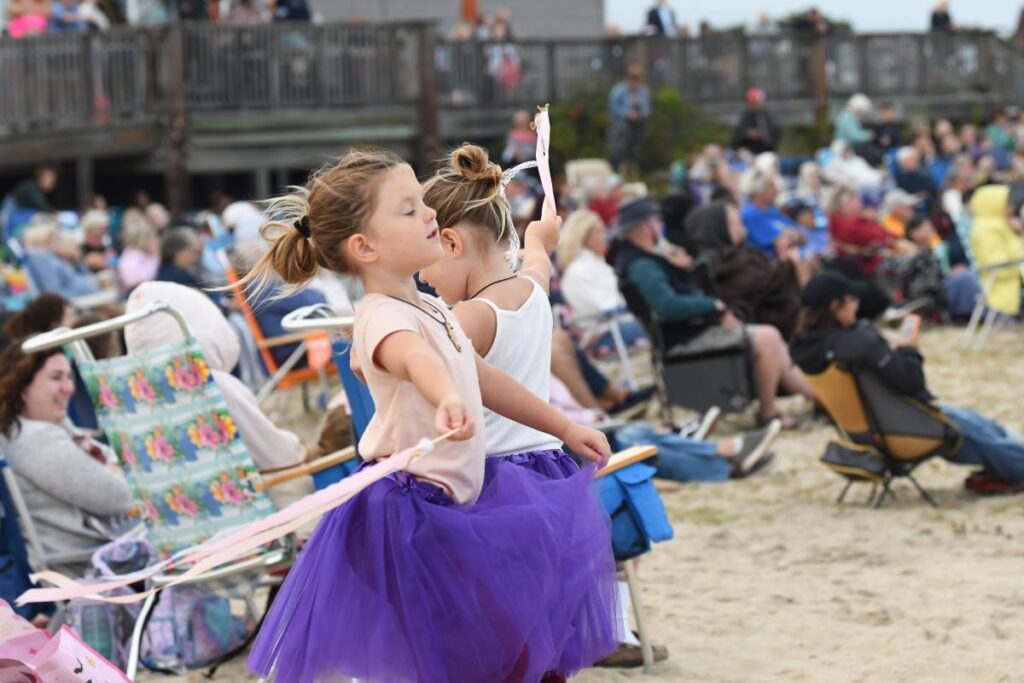
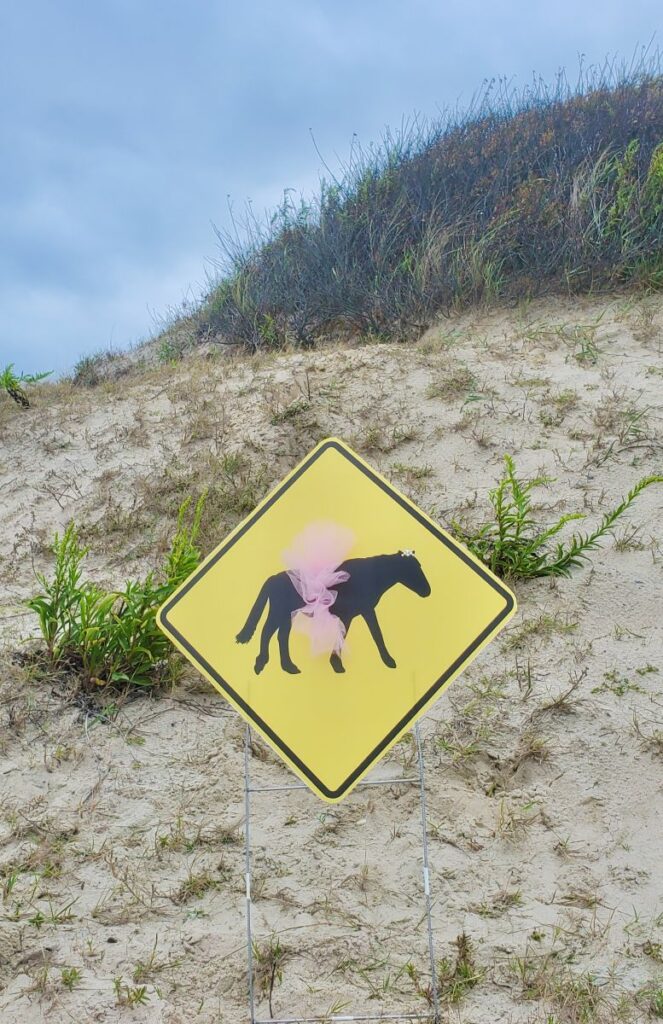
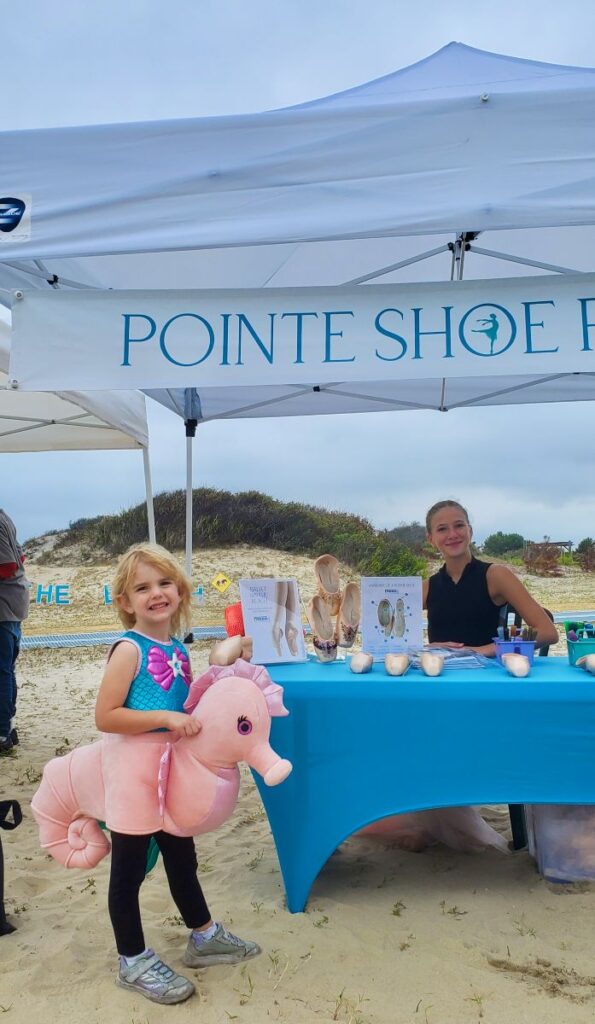
The ballet also attracts locals to Assateague. “Our local community doesn’t always come into the park as much as it could or should, but the ballet draws a lot of locals from Berlin and Ocean City to come visit the park and experience the island that’s in their backyard,” Rhode said.
Both groups, ballet and beachgoers, will be treated to more than a dance performance. Salgado interspersed “eco talks” throughout the show, paying tribute to the land that makes way for her stage. This year, Rhode will focus her talk on the dune, which she calls “a bit of microecosystem.”
“We have different species of plants like the American beachgrass that live and thrive right there where you get the ocean spray where a lot of other plants would ultimately die,” she says.
Madhumi Mitra, a professor of Biological and Environmental Sciences at the University of Maryland Eastern Shore, will give a talk about seaweed. “When [seaweed] is washed onto a beach, we may see something very ordinary, right?” Mitra says. “But scientifically we are looking at organisms that are part of an extraordinarily sophisticated and interconnected marine world.”
Mitra’s expertise in macroalgae—commonly known as seaweed—was integral to “Seaweed Symphony,” a piece by Donna Salgado, which had its world premiere at the 2025 festival. (Donna is Vanessa’s sister, and the founder and director of CONTINUUM Contemporary/Ballet).
“Donna, Vanessa, and I envisioned a piece in which science and art would speak to each other. So I contributed the scientific and ecological perspectives on seaweeds,” Mitra says. “The dancers became the seaweeds. Their bodies respond to imaginary currents… and their formations could suggest underwater communities.” Mitra herself is learning Mohiniyattam, a form of Indian classical dance rooted in circular movements.
Madhumi MitraThe dancers became the seaweeds. Their bodies respond to imaginary currents and their formations could suggest underwater communities.
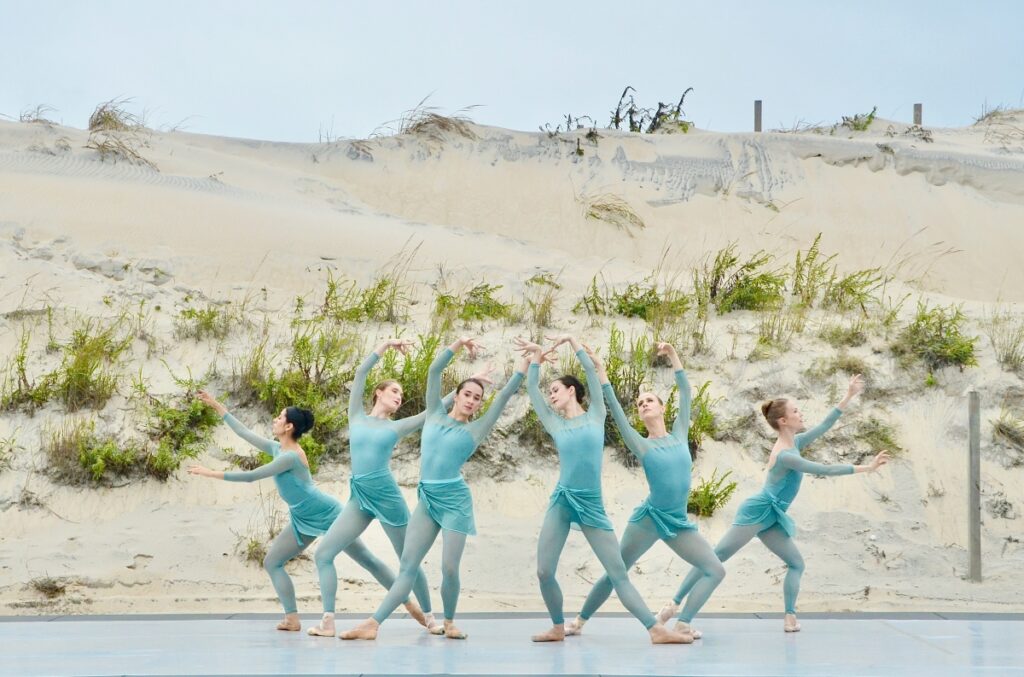
Her descriptions of seaweed evoke the language of choreography. “They bend, float, expand, contract, and they’re all responding continuously to water and light, so they actually have a rhythm in this ecosystem, just like ballet has,” Mitra says.
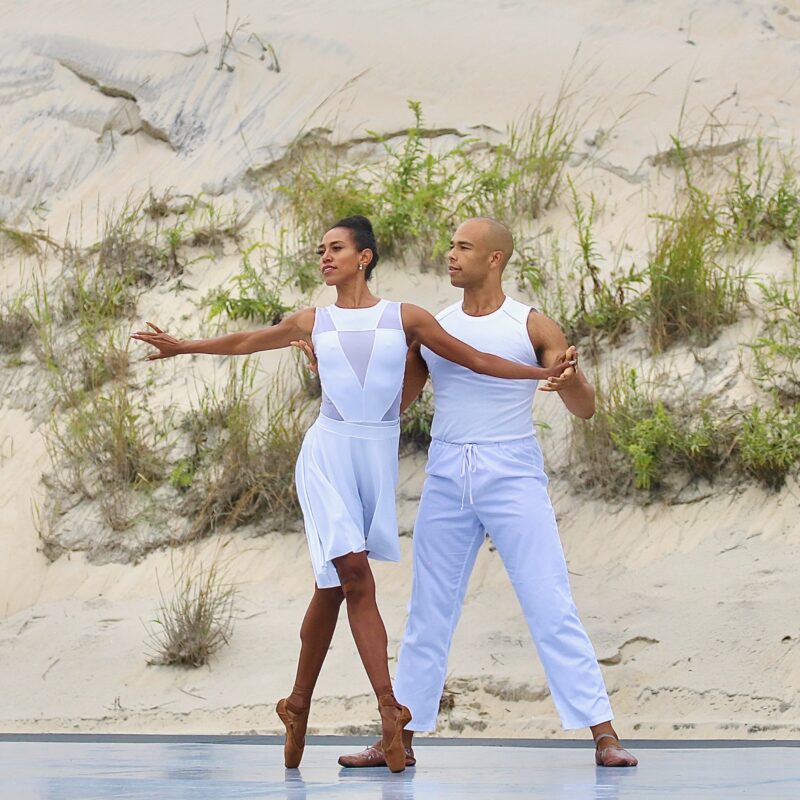
After studying videos of seaweed, Donna Salgado realized how well suited her choreographic style was for depicting the macroalgae. “They cascade with the water and have a lot of freedom and movement.” Some seaweed branches out more than others, which Salgado mimicked through arm and leg movements. “My movement style is fusion-based, where I am using classical ballet vocabulary, which includes the pointe shoe, and then arabesques and tendus and pirouettes, and all these basic building blocks of ballet. And then I also use contemporary dance movements, which are more built out of modern dance and present-day movement trends.”
“Seaweed Symphony,” set against the dune, goldenrod waving behind the dancers, reminds us of the festival’s deep commitment to the landscape. And of that landscape’s fragility, which is often on the minds of both Rhode and Mitra.
“This winter, with no storm events at all, just normal high tides, we were seeing the ocean come up into portions of the dune to eat away at it,” Rhode says. The park has adjusted their dune management strategy by stabilizing the dune with fencing and planting dune grasses. “The root system for American beach grass is so massive that it holds the sand in place. That’s kind of like an anchor,” Rhode explains.
Seaweed, on the other hand, is a non-vascular plant. Without roots, it attaches itself to a substrate to grow and eventually becomes a floater. “[Seaweeds] are sources of food for other marine organisms,” Mitra says. “They are producing food because they are trapping carbon dioxide. They are producing carbohydrates and releasing oxygen into the water, and oxygen is life.”
“Seaweed Symphony” will return for a second year as Salgado uses the festival to highlight the island’s biodiversity.
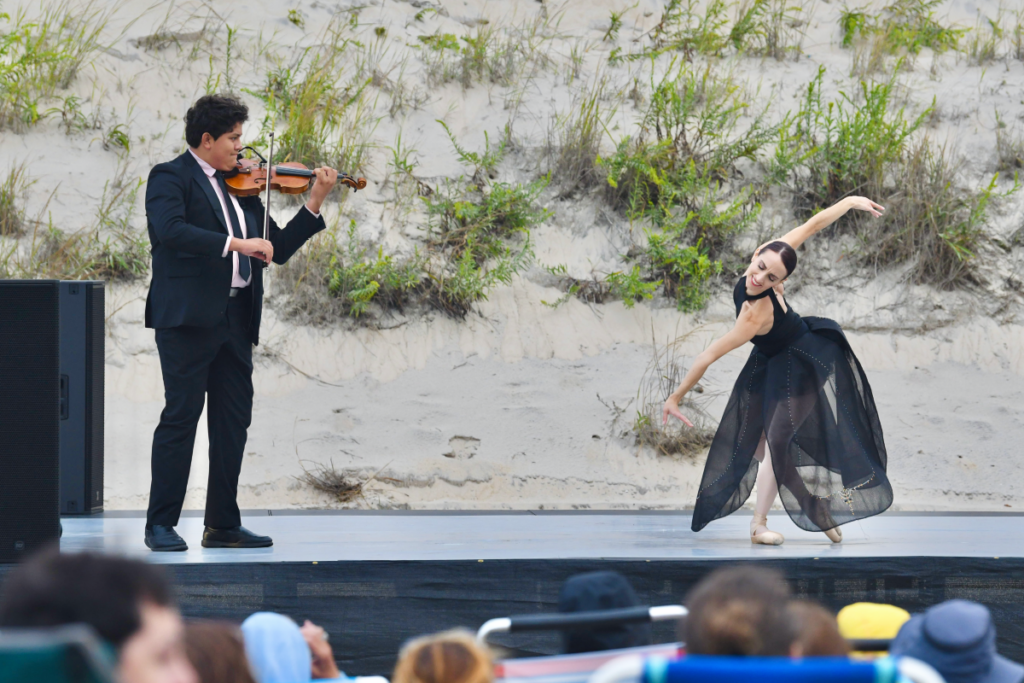
Vanessa SalgadoHaving an eco-talk makes a verbal connection for people. It can help them appreciate the piece in a different way, or look at it differently, and then make the connection that art and science can intersect.
“Last year, Isaac Martinez of Ballet Theatre of Maryland choreographed ‘Wildflowers of Assateague,’ inspired by the island’s native wildflowers; Rose Pogonia, Eastern Prickly Pear, and Seaside Goldenrod,” Salgado says. Two years ago, “Scoop,” a pas de deux by Darion Smith of Jansuphere Dance Company, paid tribute to the Black Skimmer, a bird listed as a threatened species in Maryland. Kim Abplanalp, the Bird Habitat Coordinator for the Maryland Coastal Bays Program, assisted Smith with research about the bird that migrates through Assateague from April through November.
Salgado sees the eco talks as an entry point for first time ballet goers. “Having an eco-talk makes a verbal connection for people. It can help them appreciate the piece in a different way, or look at it differently, and then make the connection that art and science can intersect.”
“Environmental awareness does not always have to begin with all these data or statistics,” Mitra says. “Sometimes it actually begins with beauty. Once we see it, we feel it, then we want to know more.”
Ballet at the Beach Festival is Saturday, September 19, 2026, 5pm at Assateague State Park. The event is free and open to the public, but reservations are encouraged. Find more information here.