Baltimore Youth Arts founder and Co-Executive Director Gianna Rodriguez’s vision came into focus during her seven years working at the nonprofit AS220 in Providence, Rhode Island. “I started as an events coordinator for the programming inside the detention center for the kids there. And I realized, wow, this is the merging of all my interests.” As someone who had taken lots of visual arts classes and who had a commitment to social justice—specifically the correctional system—her ideal was “an inside-outside program where young people are engaged in an arts mentorship and get paid.” And when she moved to Baltimore in 2014, she began the hard work of establishing such a program here.
After extensive research, Rodriguez found few fine arts programs for youth in the city and no arts programming within the Baltimore City Juvenile Justice Center, so she approached them, determined to bring art to the young people inside. She says, “I just took my portfolio, I went to the BCJJC, and said ‘Can I teach your kids art?’”
What began as a volunteer gig eventually grew to become Baltimore Youth Arts, a nonprofit that, per their mission statement, “is a creative entrepreneurship and job training program that provides artistic and professional opportunities to young people ages 14-25, focusing on those involved in the justice system.” Those who are lucky enough to participate in BYA’s after school and summer programs (there is a waitlist) include youth who have been directly impacted by the justice system as well as those who simply want to, as Apprentice Lapraya Mayo says, “be away from Baltimore violence and to have a space where they can be themselves.”
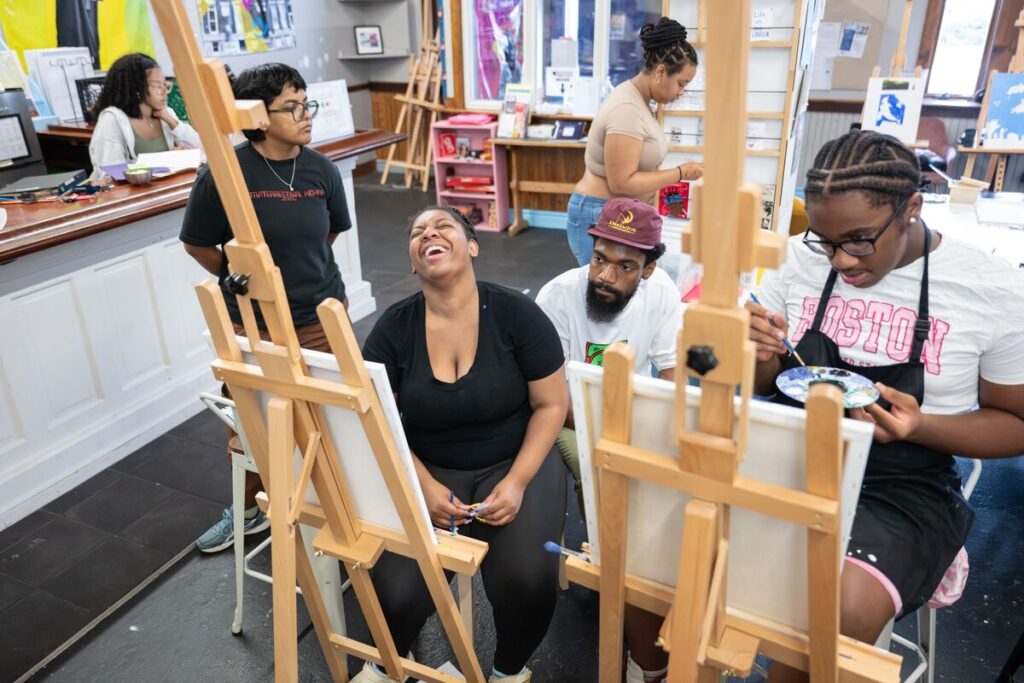
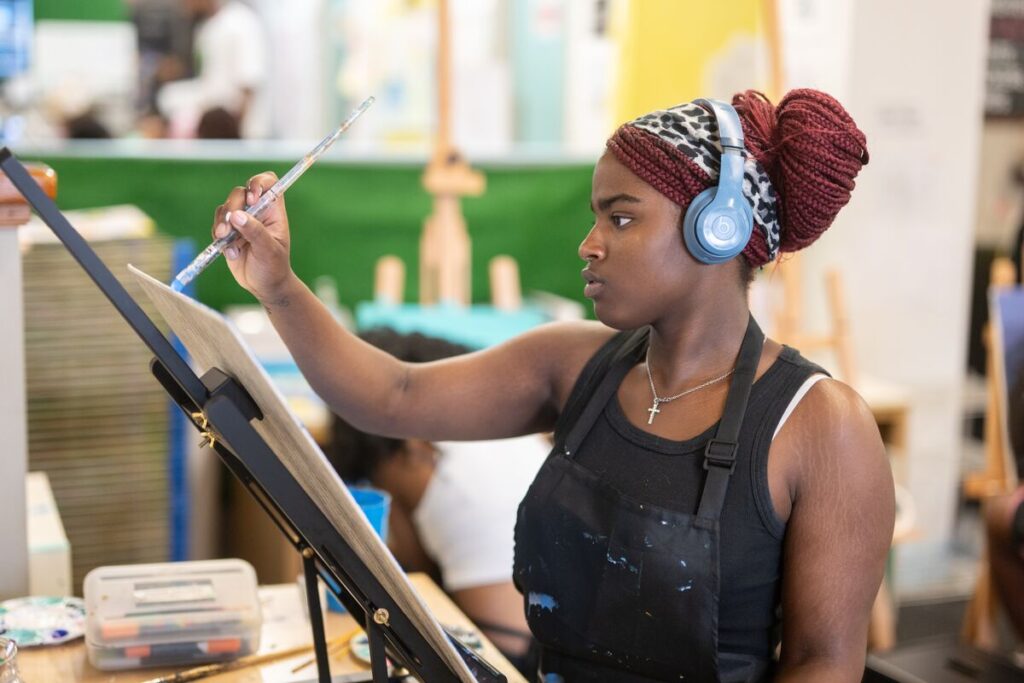
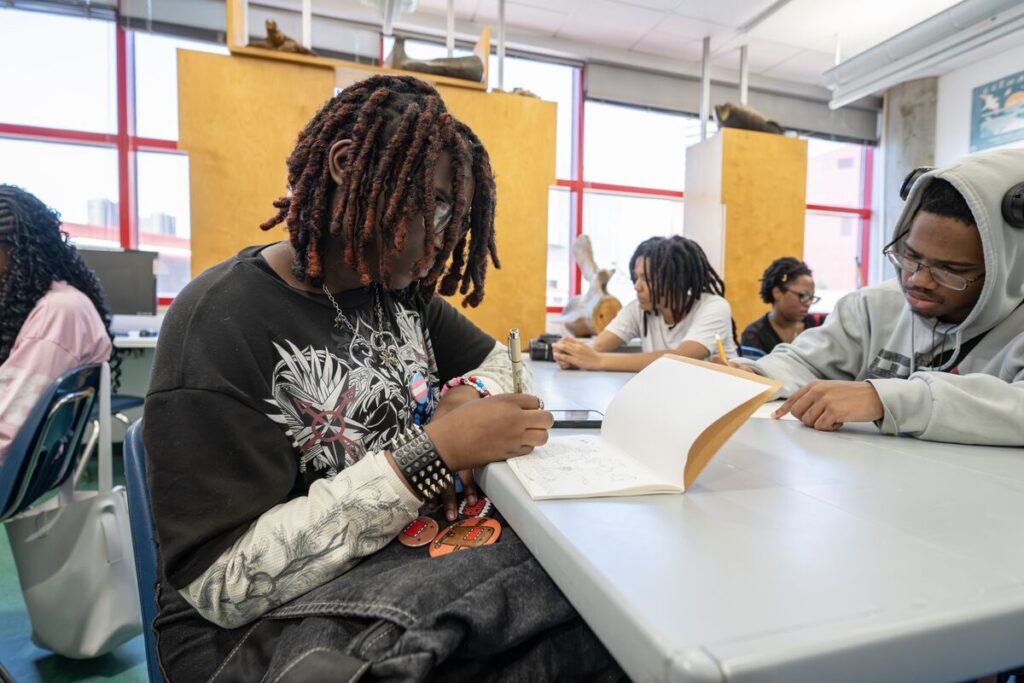
Rodriguez was able to secure funding from organizations like the Grit Fund, the Baltimore Office of Promotion and the Arts (BOPA), the Robert W. Deutsch Foundation, and others. After the Family League of Baltimore provided support in 2016, she was able to hire BYA’s first two Apprentices. “They helped me think about what this could look like. And they worked with me on molding it. BYA has been employing kids ever since.”
Dave Eassa, a long-time friend and collaborator of Rodriguez, served on the Advisory Board from 2015-2017, joined BYA as Deputy Directory in June 2026, and became Co-Executive Director in October, 2026. He says, “G has built this understanding with funders, our families, the youth, and DJS, that the biggest thing is the depth of relationships. We’re not numbers-based. It is a relationship-based output.” Often, students stay involved with BYA over several years. “We’re watching multi-year growth happen,” says Eassa. “It’s amazing.”
Apprentice Jada Hinton is just one of many students to experience this growth, with three years as a BYA Apprentice. “Over the Summer Studio Apprentice Program, Jada was one of three Senior Apprentices who were tasked with helping to shape programs, facilitate and lead community meetings, and help establish the norms of BYA,” says Eassa. “She is self-described (and by all of us) as an MVP of BYA.”
Hinton credits the relationships for her long stint with BYA. “I really like the community,” she says. “I come in and they’re so grateful and cheerful.” Hinton was also one of 31 apprentices involved in a year-long collaboration with the National Aquarium to design three spinners for their Harbor Wetland exhibit.
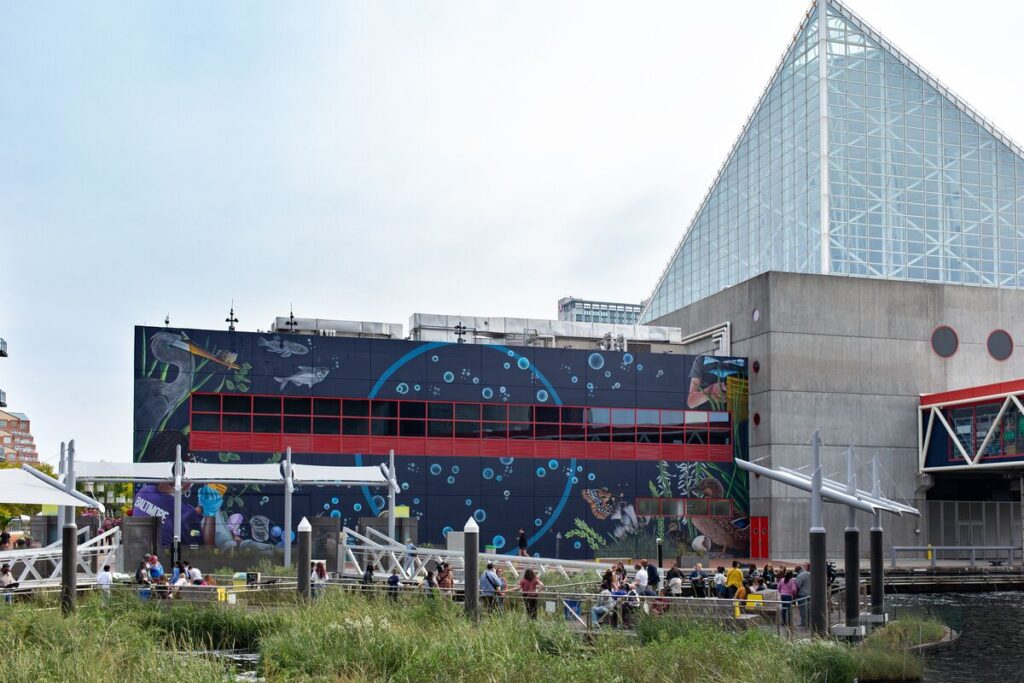
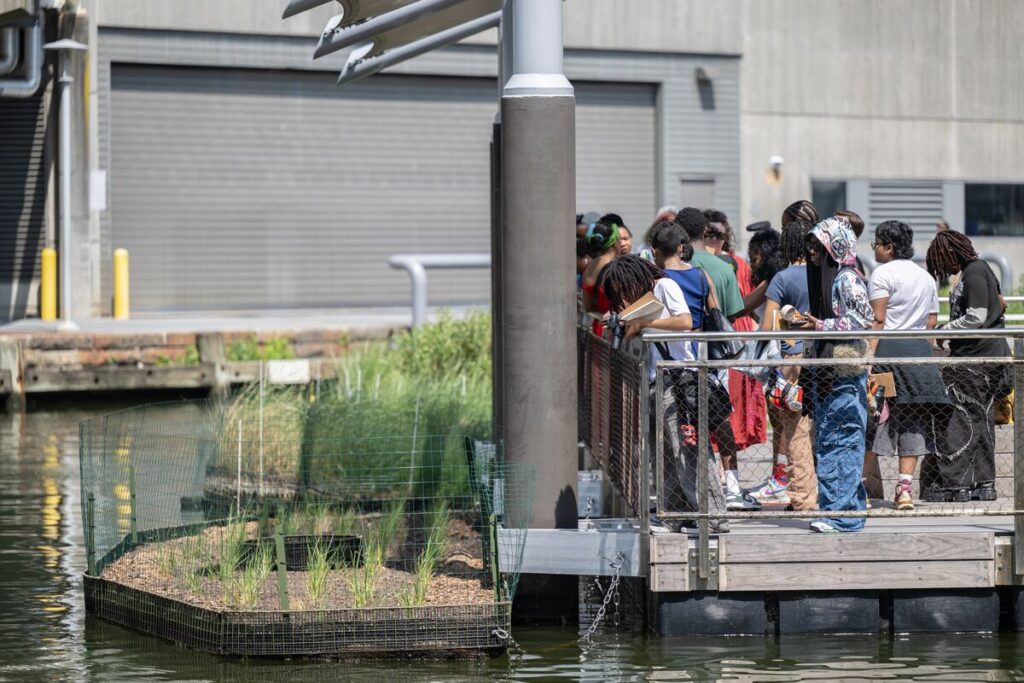
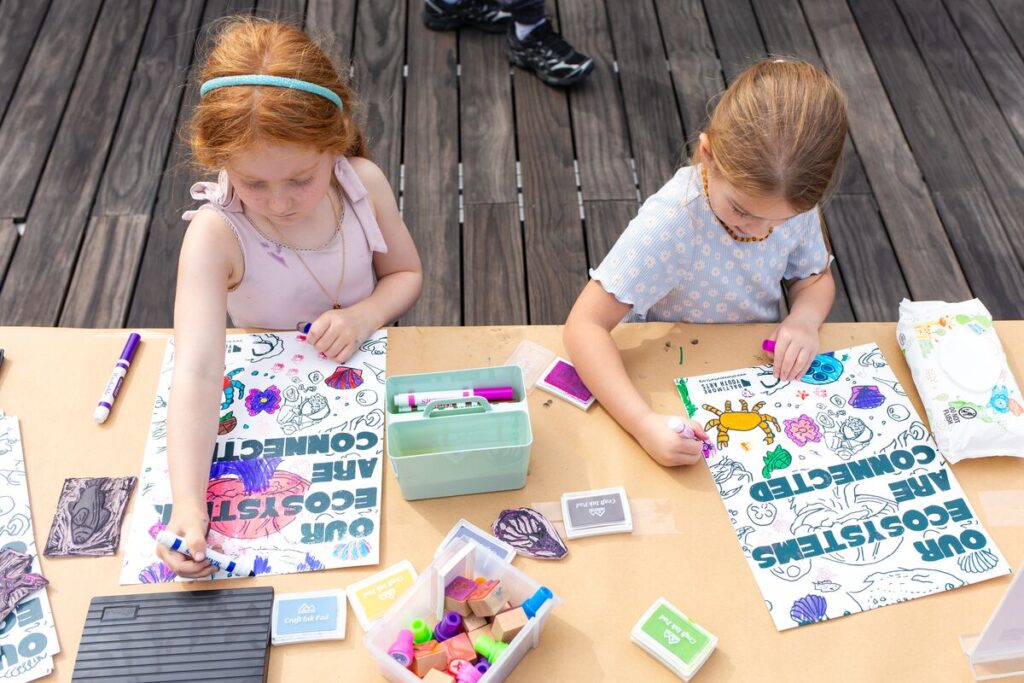
According to Ciara Cryst, Manager of Experiential Development at the Aquarium, “This art commissioned from BYA is part of a larger experience created around the floating wetland habitat which helps improve the Inner Harbor’s health and resilience, building a cleaner, greener future based upon imagination and community action.” The purpose of the works, Cryst adds, is to “give guests the opportunity to process their experience and feel hopeful about our collective ability to build a more sustainable future, living in harmony with nature in urban environments like the Inner Harbor.” To this end, the BYA apprentices brainstormed answers to the question, “What should the Inner Harbor be like in 25, 50, and 100 years?”
Developing a cohesive plan with 31 voices was no easy feat. Mayo, who came to BYA through YouthWorks in 2024, says the process was “kind of complicated because we all had different ideas.” Despite inevitable disagreements, the overall experience was positive. Rodriguez credits the summer staff with facilitating the project and bringing joy to the team. “Fortunately, the core team was incredible,” she says.
“The Dream Team,” as she and Eassa call it, included Graphic Design Facilitator Pran Gupta, Fine Art Facilitator Brandon Slewion, and Operations Coordinator and BYA Alum Jasmine Artis. These three worked alongside Eassa and Rodriguez to guide the 31 young people through numerous iterations of the displays.
They began with two trips to the aquarium, after which the Apprentices returned to the studio where they “just ran wild,” says Rodriguez, brainstorming for four days. Eassa notes that even with so many Apprentices, there were jobs for everyone: “BYA programming is so varied and has so much depth, you have Apprentices who naturally are drawn to different things. We had a painting crew, a drawing crew, a sculpture crew, and then we had our folks who were really into illustration and Photoshop and graphic design. Everybody filled a role.”
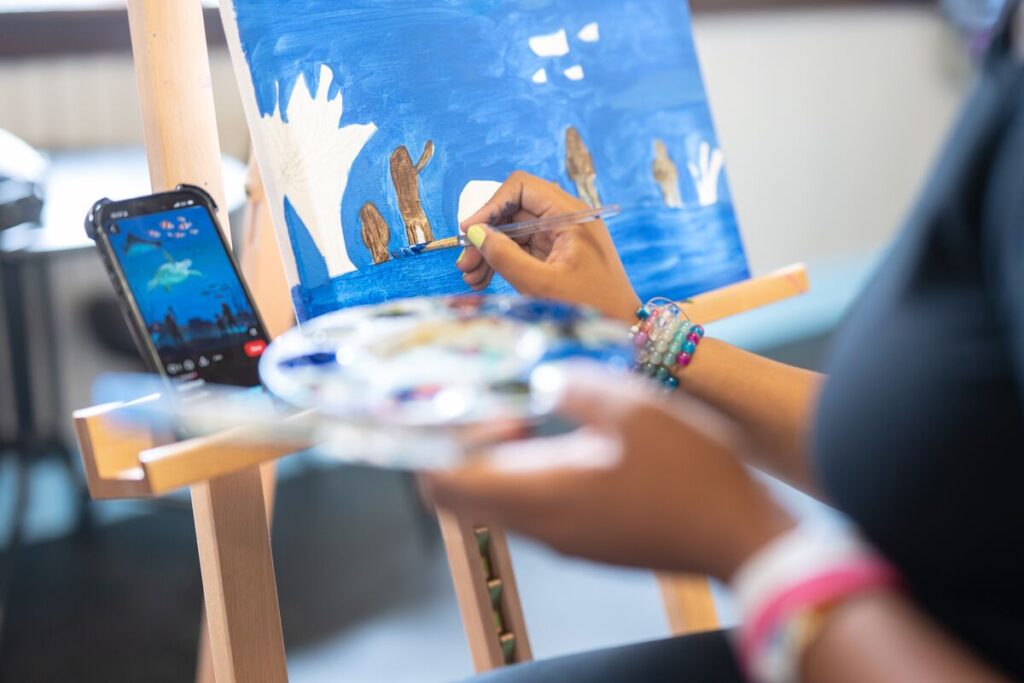
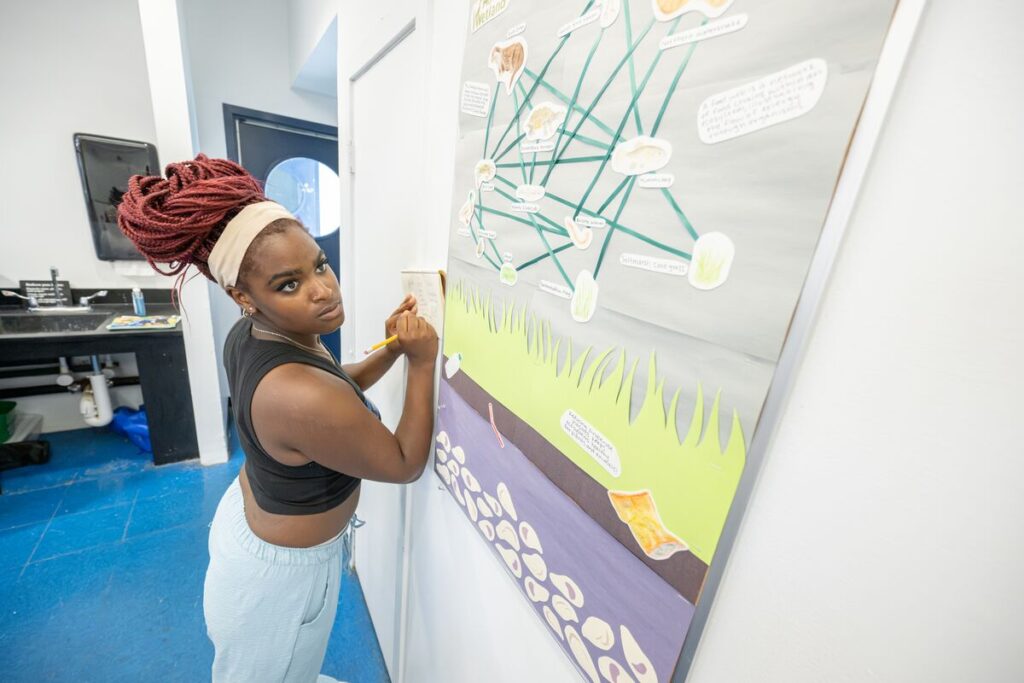
After the initial conceptualizing, Rodriguez says, “Pran and Brandon were like, ‘Okay, what are the strong images here?’ So, our first iteration was taking their artwork and collaging it together, knowing the final result will look nothing like it.” The group went through multiple subsequent versions, giving one another feedback and making changes. Apprentice Kimora Banks explains, “If someone didn’t like something, we would revise and then it would start looking clearer.”
Openness to feedback, compromise, and collaboration are just a few of the skills the Apprentices learned through the project. “From the jump,” Rodriguez says, “we said this is not Miss G’s. This is not Pran’s, not Dave’s, not one person’s. It’s all of ours.”
The team at the Aquarium was also deeply involved in the process. Jennifer Hamilton, the Aquarium’s Director of Community Partnership Strategy, admits, “It’s a delicate dance to provide feedback on scientific accuracy in a way that doesn’t squash creative self-expression,” and according to Rodriguez the tone of their critiques was spot-on. The Aquarium team “gave very detailed feedback in a way that young people could see,” she says.
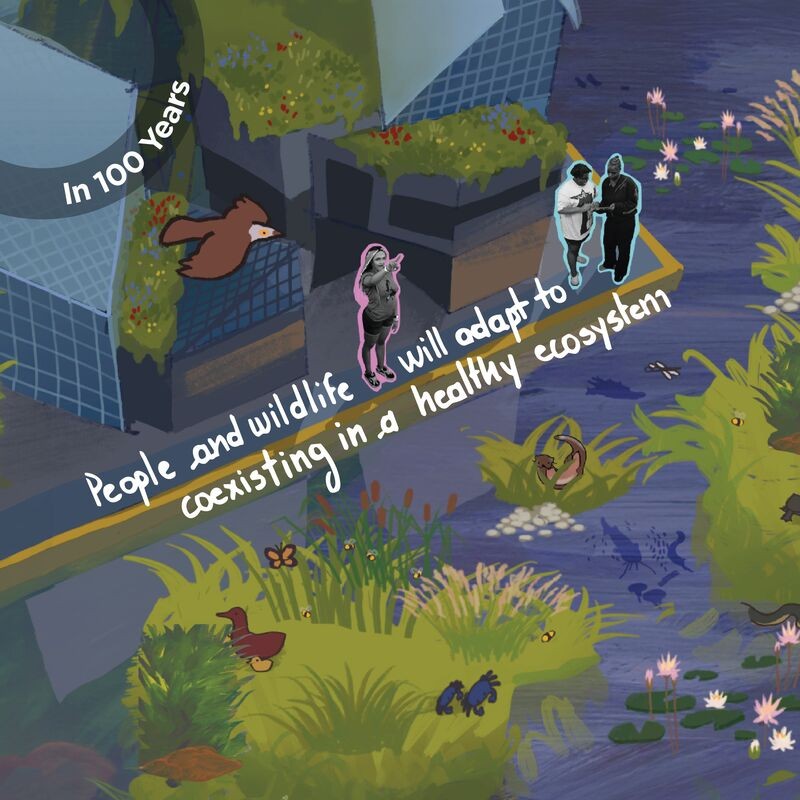
The resulting spinners, which were unveiled on October 10, 2026 are whimsical amalgamations that not only show the hopeful possibilities for the future of the Inner Harbor but also demonstrate the power of Baltimore’s young artists working together. The panels include photographs of people collaged onto painted backgrounds of bright green grasses and blue water intermixed with manmade elements like walkways, modern buildings, and cars. Otters, eagles, crabs, turtles, and other wildlife complete the scenes. “I think the language that we built is maybe that cohesion of this mismatched hodge-podge collage,” says Rodriguez.
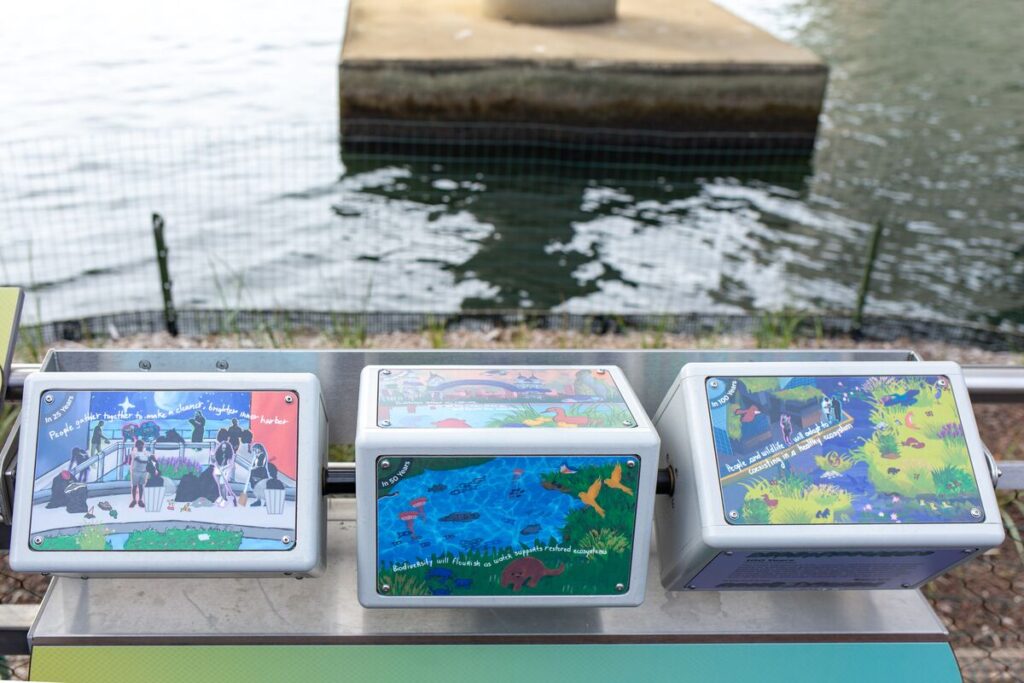
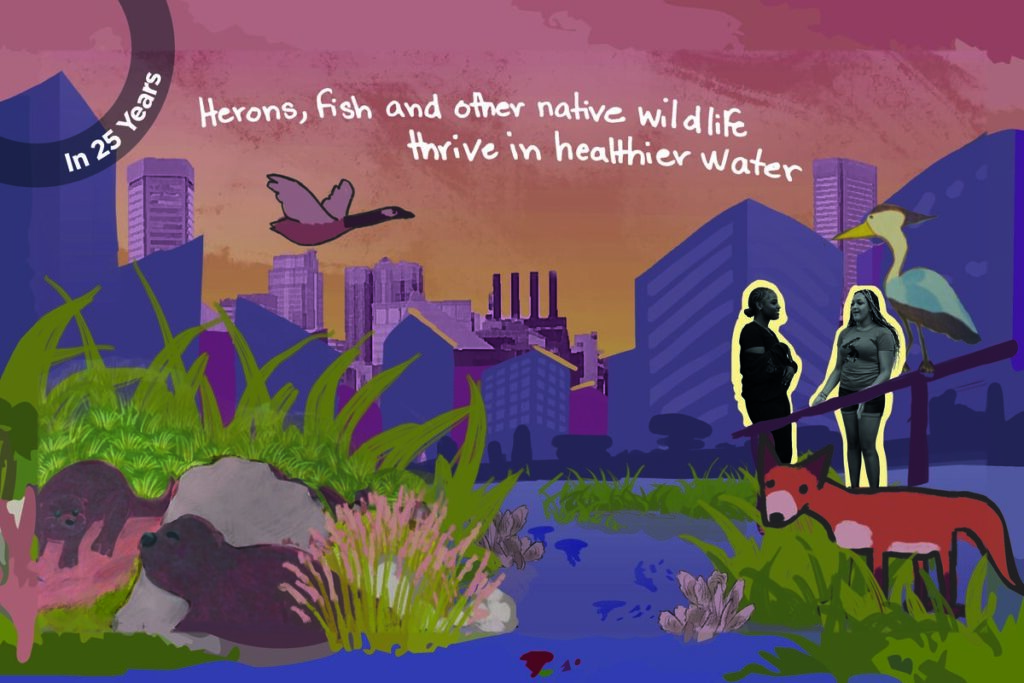
Elizabeth HazenThe resulting spinners, which were unveiled on October 10, 2026 are whimsical amalgamations that not only show the hopeful possibilities for the future of the Inner Harbor but also demonstrate the power of Baltimore’s young artists working together.
While the aquarium project dominated the studio time for BYA this past summer, other off-site projects have been planned and implemented, as well. When I sat down with Eassa and Rodriguez in mid-October, a mural was just a day or two away from completion. Eassa and Rodriguez had been working with Graphic Design Facilitator Shadi Kamrani and Lead Artist Stan Pearson, along with a group of Apprentices. “We spent two weeks designing a mural in the intake facility of BCJJC,” says Eassa. “It’s the moment when a young person is arrested and booked, and some of our youth had been through that space, and the question was, ‘What would you want to see when you were maybe hitting a pretty low moment of your teenage years? What would you want to be told?’”
The resulting artwork is bright and energetic. On one wall, a yellow ribbon of paint highlights the words “Keep pushing,” beneath which is a red background and the silhouette of someone doing pushups. Scrolled across two other walls is Bishop Desmond Tutu’s quote, “Hope is being able to see the light, despite all the darkness.” An indigo nightscape merges into a bright blue sky and then an orange sunrise.
“It was a beautiful inside-outside collaboration that BYA, over the last ten years, has been building to,” says Eassa. “Like, how do we create a conversation where there’s obvious barriers, where we can’t necessarily have these young people interacting in a physical manner, but we can have them interacting through an idea?” Rodriguez adds, “The thinking was, we have young people with experience, who have gone through this process, who have been in detention, who are now on probation, working outside. Let’s get their eyes and work with the kids who are in here.”
Just over ten years since its founding, BYA is going strong: a major commission by the National Aquarium, murals in several locations around the city, and most importantly a reach that has young people throughout the city excited about joining a community and making art.
Apprentices are currently planning designs for their holiday markets, spending as much time as they can in the studio. And why wouldn’t they? Rodriguez, Eassa and their team have built something Baltimore needs: a welcoming, safe, energizing space in which young people can gather and create. As Lapraya Mayo says, “You can come here and you can be yourself. You don’t have to try to fit in. We’re gonna accept you for who you are.”