The first time I worked with metal clay, it seemed like magic.
It wasn’t just that something soft and pliable could become solid fine silver. Magic came from what I could do with the material before that transformation happened. I could roll it, texture it, cut it into shapes, mold it, and sculpt it. Once dry, I could carve it, adding details that would become permanent in metal.
All those years ago, I fired my first small piece with a crème brûlée torch, turning a fragile object into fine silver. I still have and love that half-inch pendant.
What I didn’t realize then was how much this material would change the way I approached jewelry design.
Traditional silversmithing typically begins with metal in the form of sheet, wire or tubing. The metal is cut, shaped, hammered, formed and often joined through soldering. Much of this work happens at a jeweler’s bench, using specialized tools and equipment. Metal clay changes that starting point.
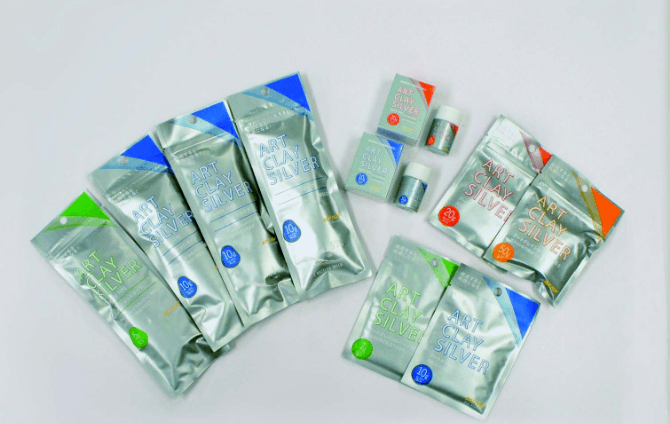
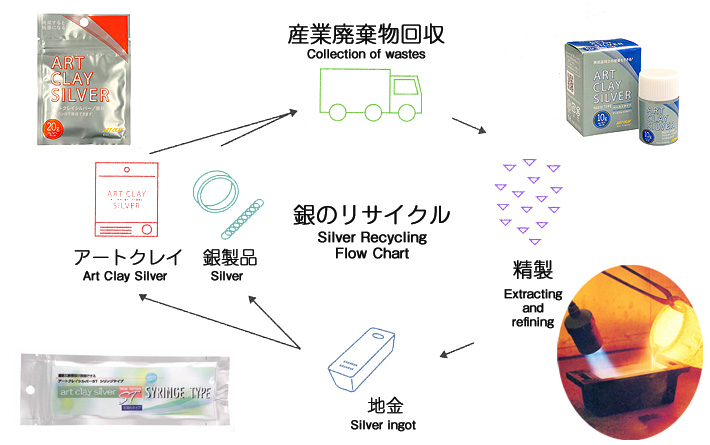
Precious metal clay emerged in Japan in the early 1990s, when manufacturers developed a way to suspend fine silver particles within a workable media. Made from microscopic metal particles combined with an organic binder and water, metal clay can be shaped while soft, then dried, refined, and fired. During firing, the binder burns away and the metal particles sinter together, creating a solid metal object. The finished piece is silver.
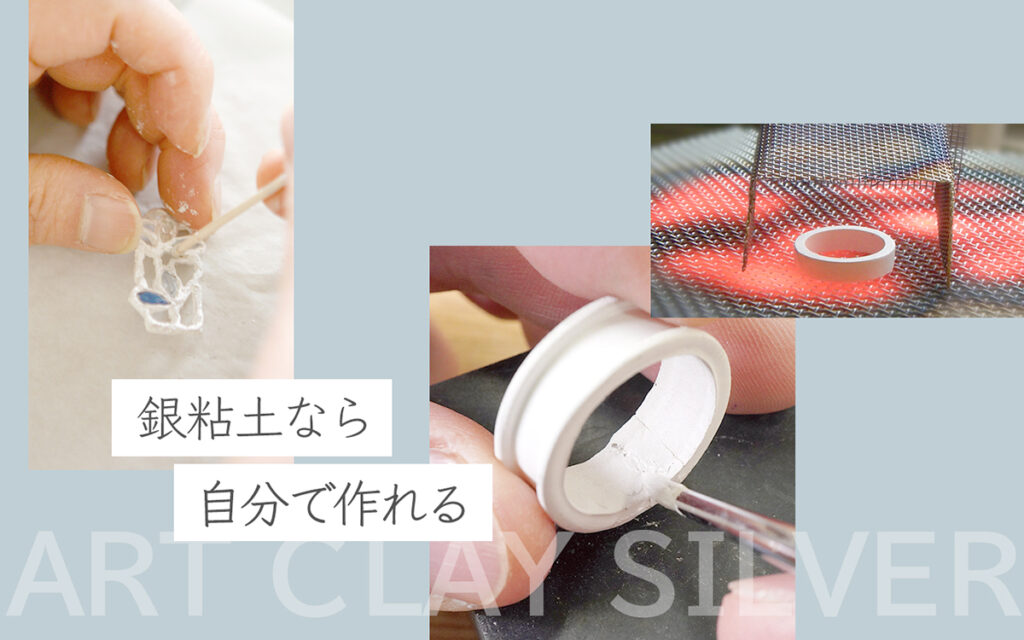
Mitsubishi Materials Corporation introduced Precious Metal Clay (PMC), while Aida Chemical Industries developed Art Clay Silver. In the United States, metalsmith Tim McCreight introduced PMC in 1995 at an experimental workshop, and Art Clay launched in the U.S. in 1997. These products opened up a different way for artists to work with precious metals. What began primarily with fine silver has expanded to include sterling silver, gold and base-metal formulations such as copper and bronze. Firing methods, materials, and techniques have continued to evolve—transforming what was once an unusual new product into an established jewelry and art medium.
And because the material begins as clay, artists can approach it in ways that are very different from traditional metal fabrication.
Before metal clay, I often designed around the silver sheet, wire and tubing I happened to have on hand. Working this way sometimes limited my designs to available materials rather than what I really wanted to make. Metal clay gave me another way to work. Instead of designing around specific sheet gauges or wire sizes, I could create the forms I envisioned. It was like starting with a blank canvas.
Working with metal clay unleashed a huge amount of creativity that I didn’t even know I had. When I discovered the material’s potential, I went texture-crazy for a while. Everything I created was texture-forward. Even today, I rarely go for a hike without collecting botanical materials such as leaves, seed pods, pinecones, twigs, or grasses to make impressions or create molds that transfer intricate details into silver.
Inspiration comes from unexpected places, too. Shells, wallpaper, decorative cupcake liners, corn husks, buttons, and silverware can all provide interesting patterns. Artists can also carve their own textures or use commercially available texture plates.
The material can be sculpted, carved, layered, and assembled into dimensional forms to construct hollow beads, pods, and boxes. One can even incorporate compatible gemstones or glass, and combine fired metal clay with traditional metalsmithing techniques. After a period of experimentation, I’m back to designing with a purpose, incorporating my metal clay pieces with traditionally silversmithed elements. The material no longer dictates the design; the idea does.
And it’s a material that’s democratized access to jewelry fabrication.
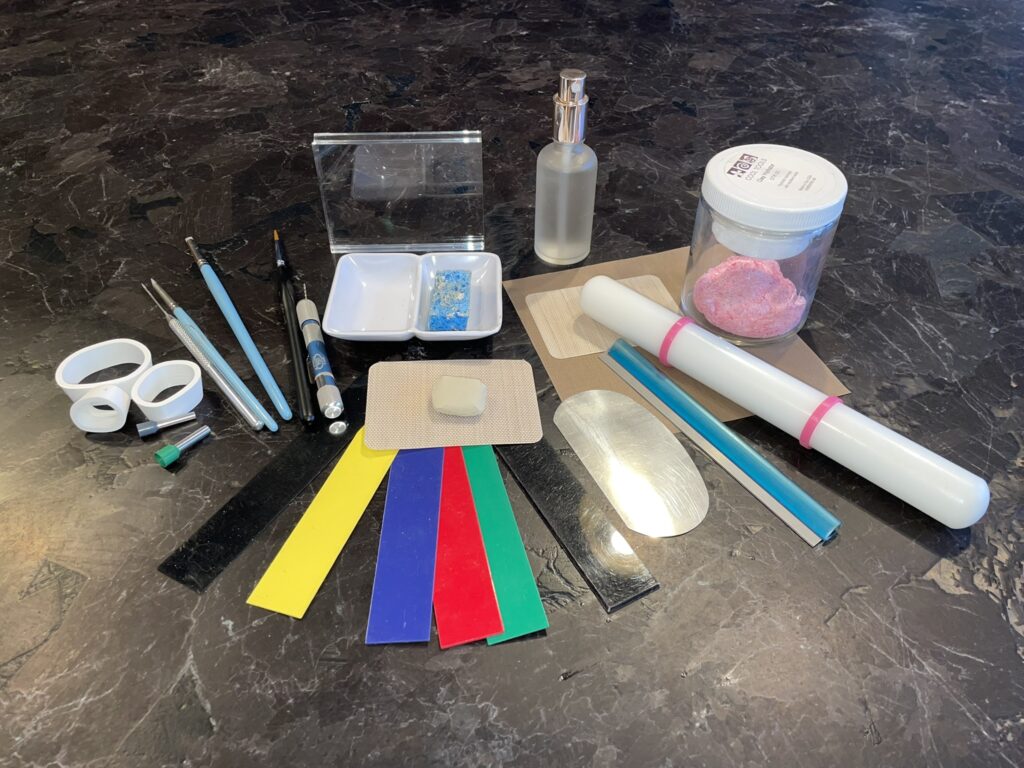
Establishing a traditional silversmithing studio can require a substantial investment in equipment and dedicated workspace. Depending on the techniques involved, artists may need a jeweler’s bench, saws, torches, soldering equipment, and specialized forming tools. Metal clay offers anyone the chance to begin with everyday materials such as a rolling pin, cookie cutters, or toothpicks—along with a relatively small collection of hand tools. Many projects can be created at a kitchen table or in a small home studio.
Some fine silver clay pieces can be fired with a handheld torch, although other formulations and more complex work require a kiln. Classes, shared studios, and firing services can provide access to equipment before an artist invests in a kiln.
The clay itself isn’t necessarily inexpensive, particularly when working with silver. But the initial equipment costs can be considerably lower than those of a fully equipped metalsmithing studio. For artists who might otherwise find traditional metalworking inaccessible, that lower barrier to entry can open the door to creating in precious metal clay.
A beginner might press a leaf into a thin sheet of silver clay, cut out two circles and earwire holes and create a pair of textured earrings. The techniques are straightforward, but choices about texture, proportion and finishing can produce a sophisticated design.
More experienced artists can construct hollow forms, carve intricate designs, incorporate gemstones or create articulated pieces with moving parts.The technical challenges grow along with the creative possibilities.
Working with base-metal clays introduces a different set of techniques. Copper, bronze, brass, and other base-metal formulations offer alternatives to precious-metal clay, along with different colors and surface finishes. Although generally less expensive than silver clay, many require more demanding firing procedures and can be more technically challenging. Oxidation must be controlled, often through firing in activated carbon. Artists need to understand firing schedules, shrinkage, and sintering to produce structurally sound pieces.
The possibilities for metal clay extend well beyond jewelry made entirely from clay. Artists are combining metal clay with fabricated metal, gemstones, glass, ceramics, and enamel. Some experiment with mixed metals, while others create sculptural objects and larger-scale work such as bowls and boxes.
A piece might begin as a sculpted metal clay form, then incorporate a fabricated bezel, a gemstone or a handmade sterling silver chain. Another might combine metal clay components with traditional hinges to create movement. Metal clay doesn’t replace traditional metalsmithing. It adds another way to create.
I consider myself both a metal clay artist and a silversmith, and increasingly, I don’t see much reason to separate the two. I might create a textured or hollow form in metal clay, then use traditional fabrication techniques to set a stone or make a chain. Each approach offers something different, and combining them gives me more freedom to create what I envision.
Ultimately, it’s the finished piece that matters, not which techniques I used to get there.The jewelry customer doesn’t necessarily need to know how a piece was made. But metal clay has a great backstory, and understanding the process can add another dimension to appreciating the finished work.
By the way, I still have that first little silver pendant I made all those years ago.
At the time, I was fascinated by the transformation of clay into metal. What I couldn’t have anticipated was how much the medium would change the way I approached jewelry design. Today, I move between metal clay and traditional silversmithing, choosing the techniques that make sense for each piece.
The possibilities have expanded far beyond that first pendant, but the appeal remains the same: the freedom to create something I might not have imagined making any other way.
Metal clay’s creative range is perhaps best understood by seeing how different artists use it.
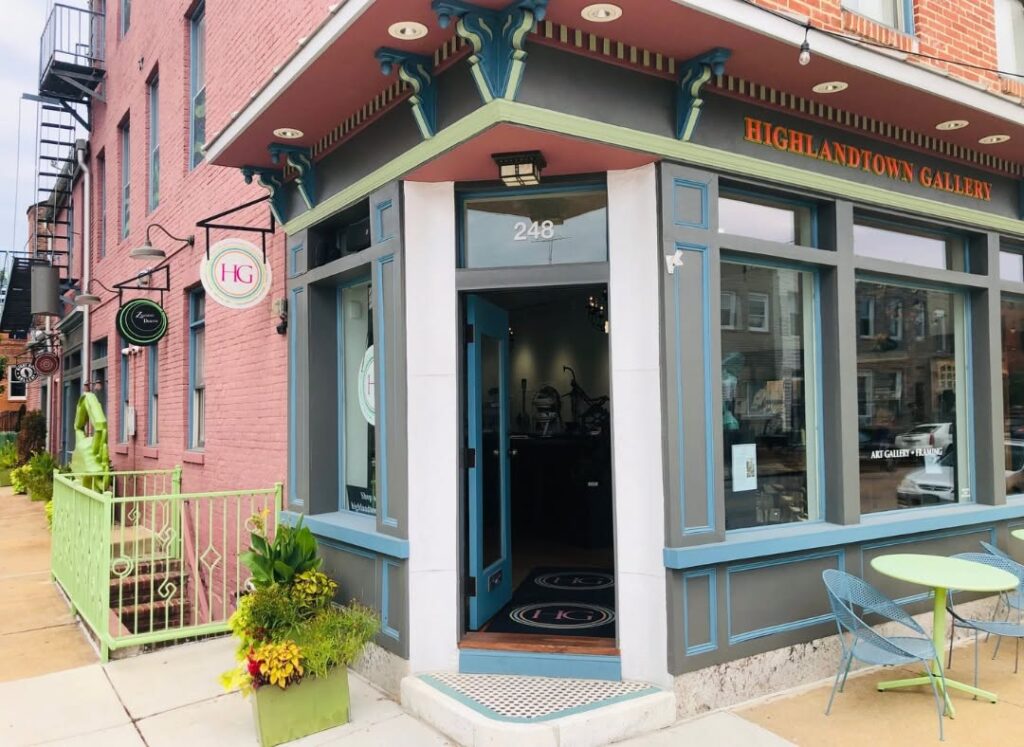
In Baltimore, Highlandtown Gallery is showing the work of four metal clay artists through December 2026. This Friday, November 6, the gallery will be open from 5-8 PM during the First Friday Art Walk, offering an opportunity to see how one medium can produce remarkably different forms of artistic expression. Full disclosure: I am one of the artists.
Although we share the same fundamental medium, our work takes distinctly different directions, demonstrating that metal clay is not a particular style of jewelry, but another way of creating in metal.
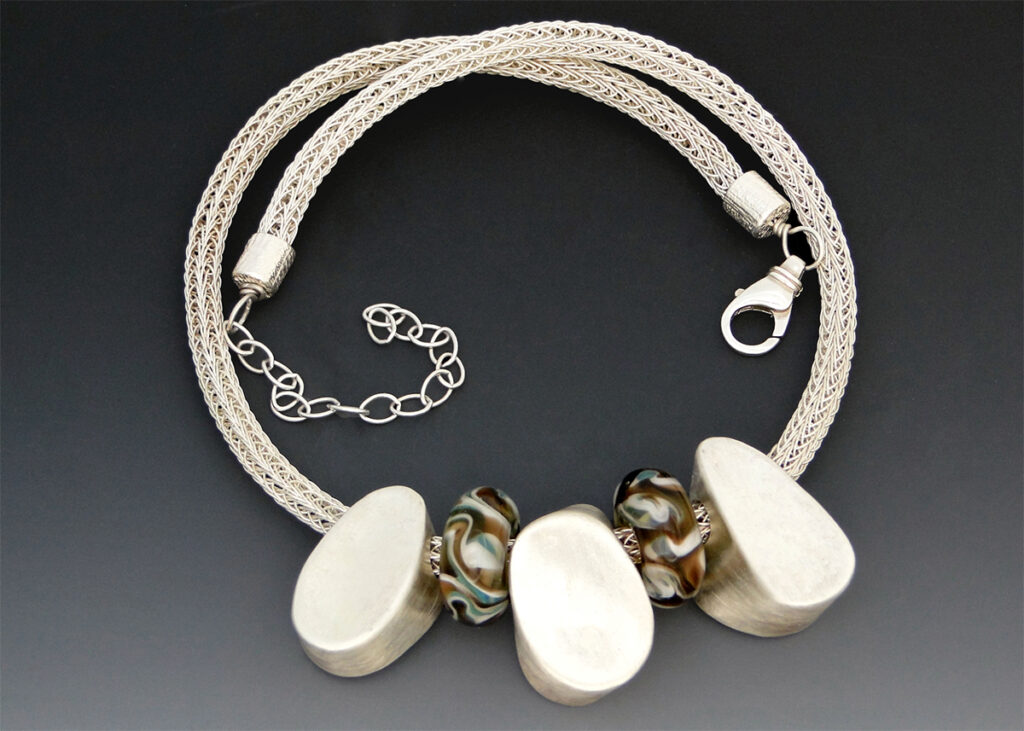
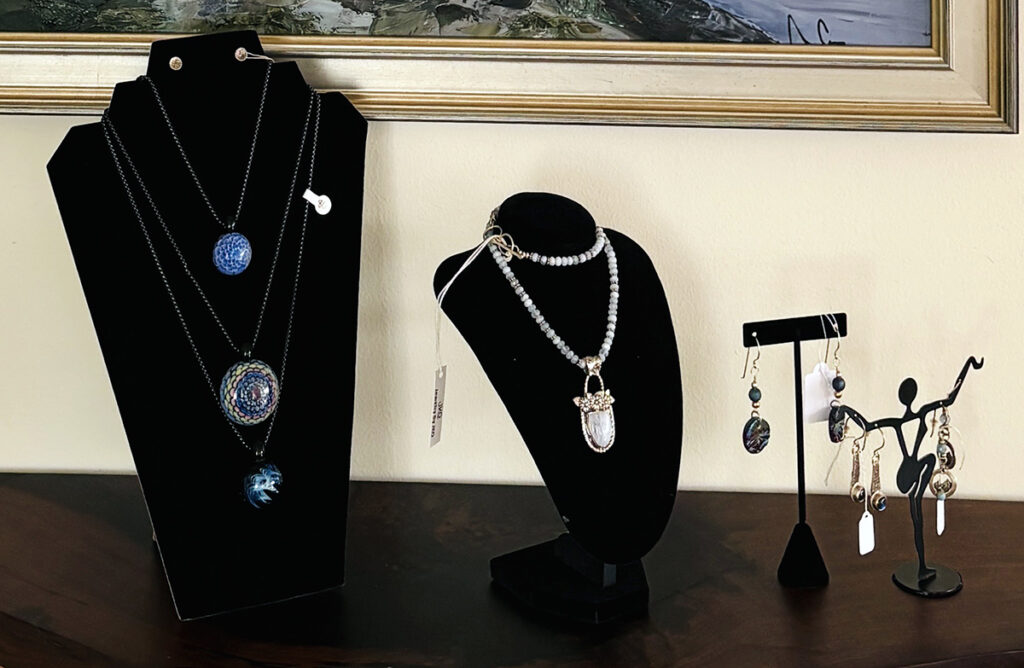
Alicia and Amy Buckler-White combine smooth, sculptural silver forms with richly patterned glass beads, arranging them along a hand-knit Viking-knit silver necklace. The contrast between the organic shapes, colorful glass, and intricate woven silver creates a striking contemporary piece.
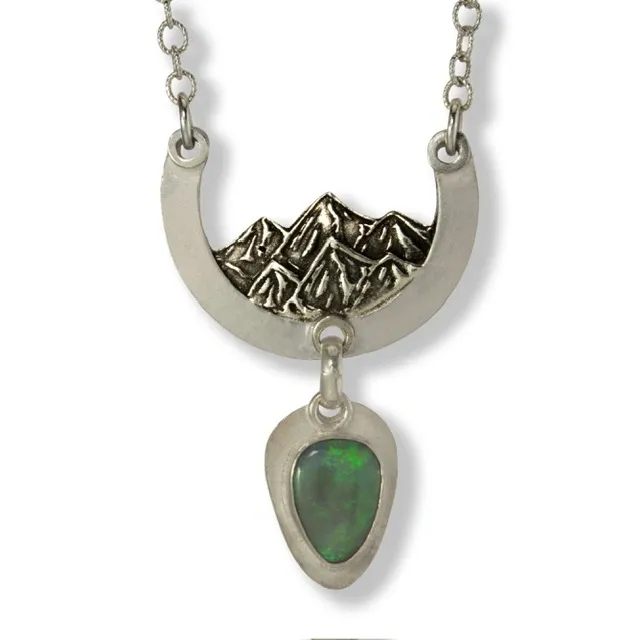
Jan Oldenburg combines sculpted and textured silver with gemstones. In one pendant, a three-dimensional mountain landscape leads to a suspended opal, integrating representational imagery with the stone’s natural beauty.
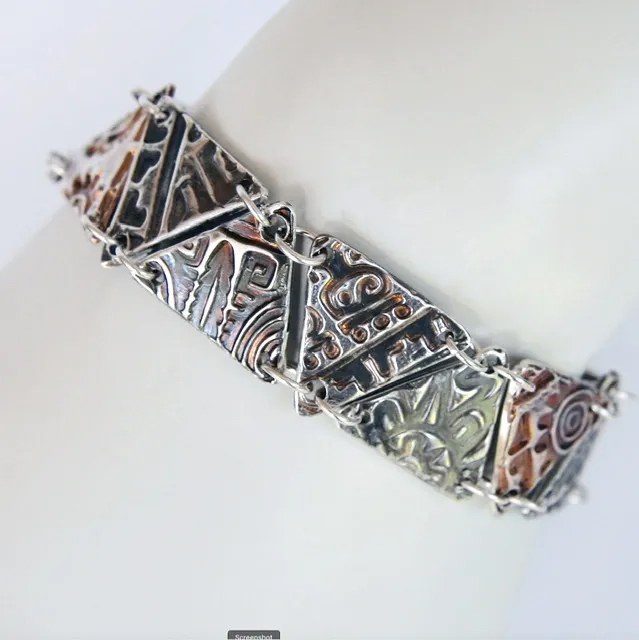
Jayne Roth builds articulated jewelry from individual metal clay components, connecting geometric shapes to create a piece that moves with the wearer. In this bracelet, deeply impressed patterns, darkened contrasting recesses and polished silver highlights emphasize the intricate details of each component.
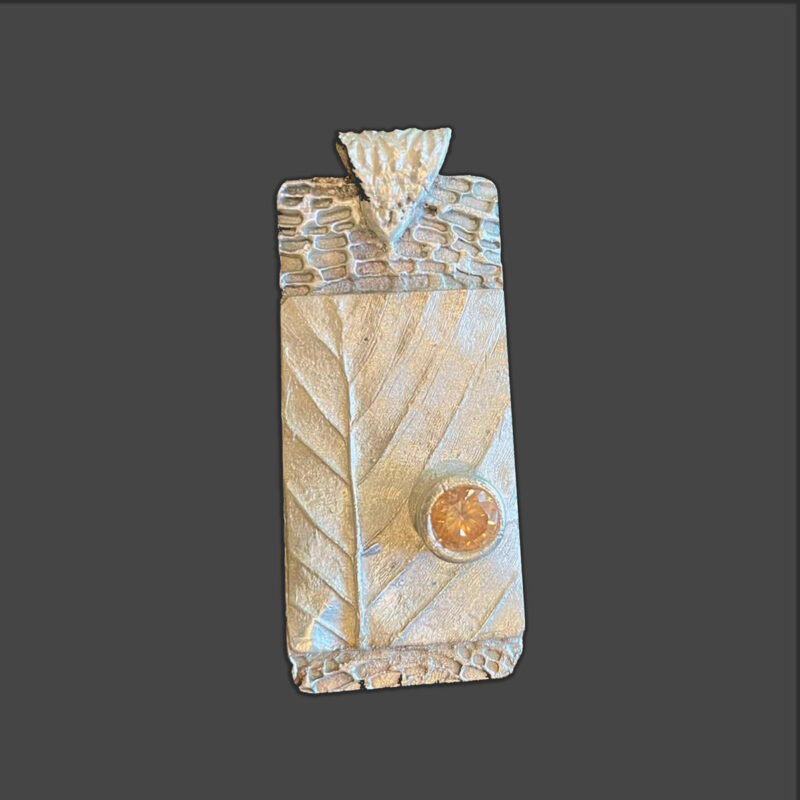
In my own jewelry, I draw inspiration from botanical forms and textures, capturing the delicate details of nature in silver. This pendant combines a prominent leaf impression with contrasting textures, sculptural details and a warm-toned gemstone. The result emphasizes the tactile qualities of metal clay and the interplay between organic forms and carefully constructed elements.
Each artist brings a different perspective to the material. The finished pieces may look nothing alike, yet all begin with metal clay—a media that makes working in metal more accessible.