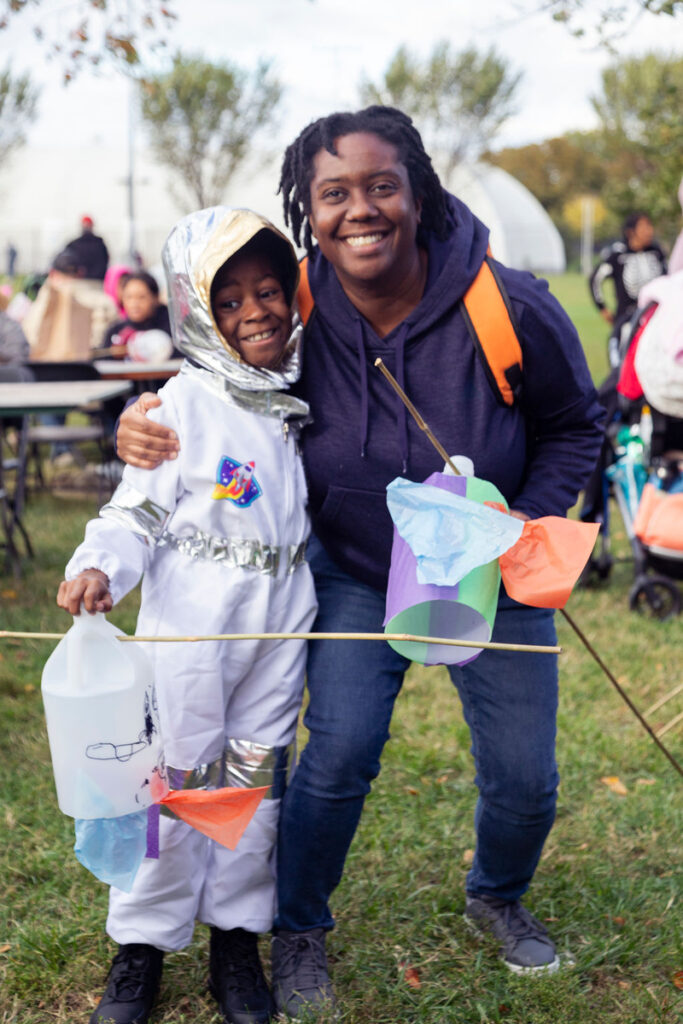
The day of the 27th annual Great Baltimore Lantern Parade brought ideal sweater weather: crisp, clear, and around 60 degrees in the buttery sunshine. As early as 3:30pm on October 24th, Spidermen and Elsas, Minions and Marios, devils, witches, unicorns, beetles, and bears all converged around the Pulaski Monument near the southeast corner of Patterson Park to register for the costume contest. One child came dressed as the National Aquarium, complete with the iconic glass pyramid. Another was dressed as the Titanic. A winning group costume portrayed the story of the three little pigs: a wolf, a pig, and a wearable cardboard box that had been decorated to represent the straw, stick, and brick versions of the houses the pigs built. Creative energy was all around.
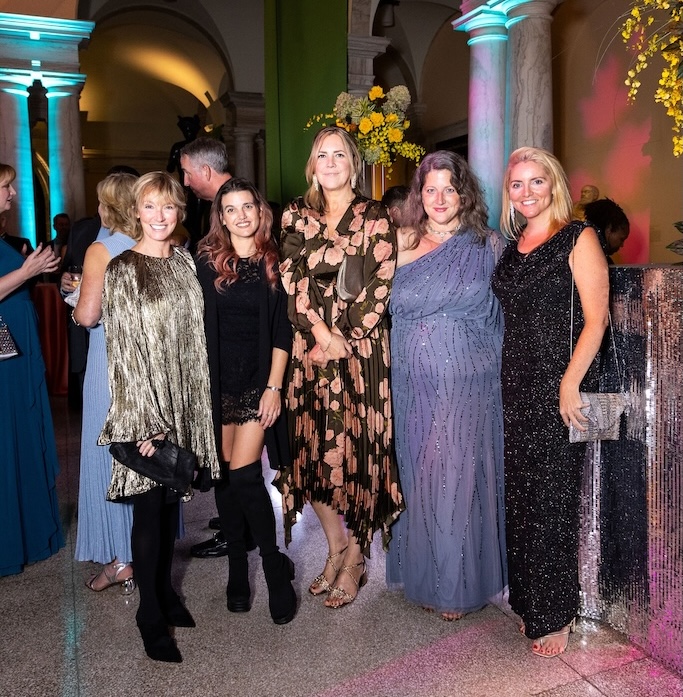
Since 2000, this celebration—spearheaded by the Creative Alliance and Friends of Patterson Park, powered by title sponsor PNC Bank—has grown in scope, drawing as many as 10,000 visitors over the course of the day. What once consisted of a few hundred residents of the Patterson Park neighborhood carrying simple candle-lit lanterns now welcomes thousands of people from all over the city and offers food trucks, artisans, lantern-making workshops, pop-up performers, and more.
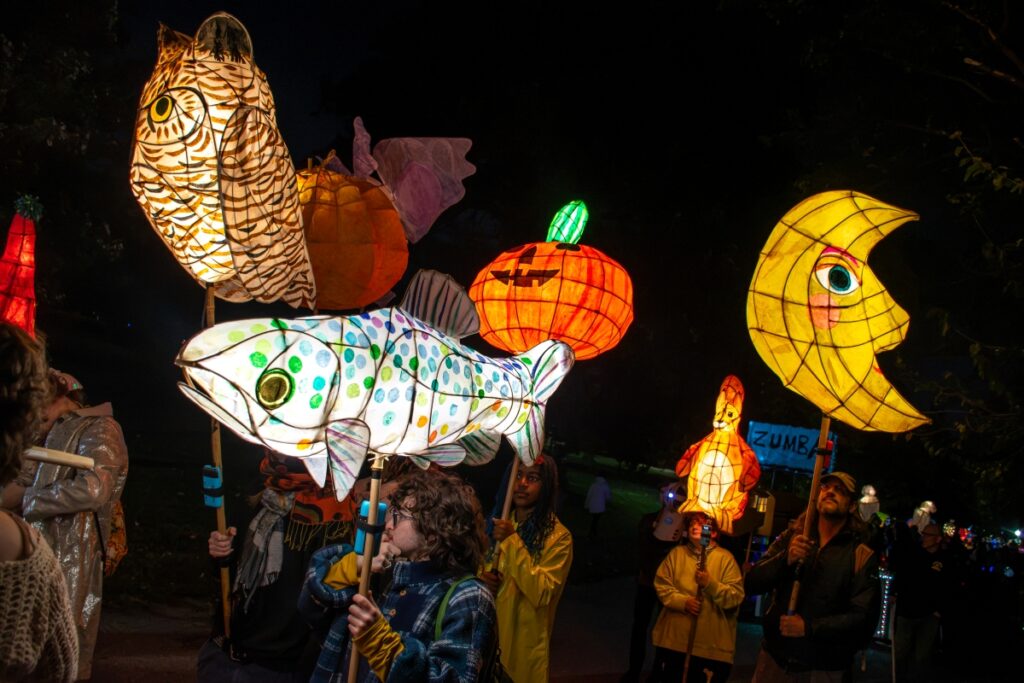


Elizabeth HazenSince 2000, this celebration—spearheaded by the Creative Alliance and Friends of Patterson Park, powered by title sponsor PNC Bank—has grown in scope, drawing as many as 10,000 visitors over the course of the day.
“Baltimore’s creative spirit is one of its greatest strengths, and nowhere is that more visible than at the Lantern Parade,” said Laura Gamble, PNC regional president for Greater Maryland. “From the lantern making tent to the floats designed by local artists and schools, this event invites everyone to take part. We’re grateful to the Creative Alliance and Friends of Patterson Park for building a tradition that reflects the energy, diversity and heart of our city.”
Well before the parade participants begin lining up, there are activities and performances for attendees of all ages. Creative Alliance Education Director and the Executive Producer of the Lantern Parade Rachel Rush explains that, as the festival has grown in popularity, more organizations want to take part. “We have our main stage,” she explains, “but we needed another area for student groups and other people to perform. In front of the Pulaski monument has really become a really great performance area.”
One such group was children’s clothing line Zari Emerson Designs. A group of young women and girls modeled the feminine wares, sparkling both literally and figuratively, as they vamped for the crowd and cameras. Ayana Harris, the designer, explains, “It was a really cool experience and a great fit for Zari Emerson models and brand. The outfits we planned and coordinated complemented the creativity and spirit of the Lantern Parade, bringing an added element of character and excitement to an event that already celebrates artistic expression and community.”
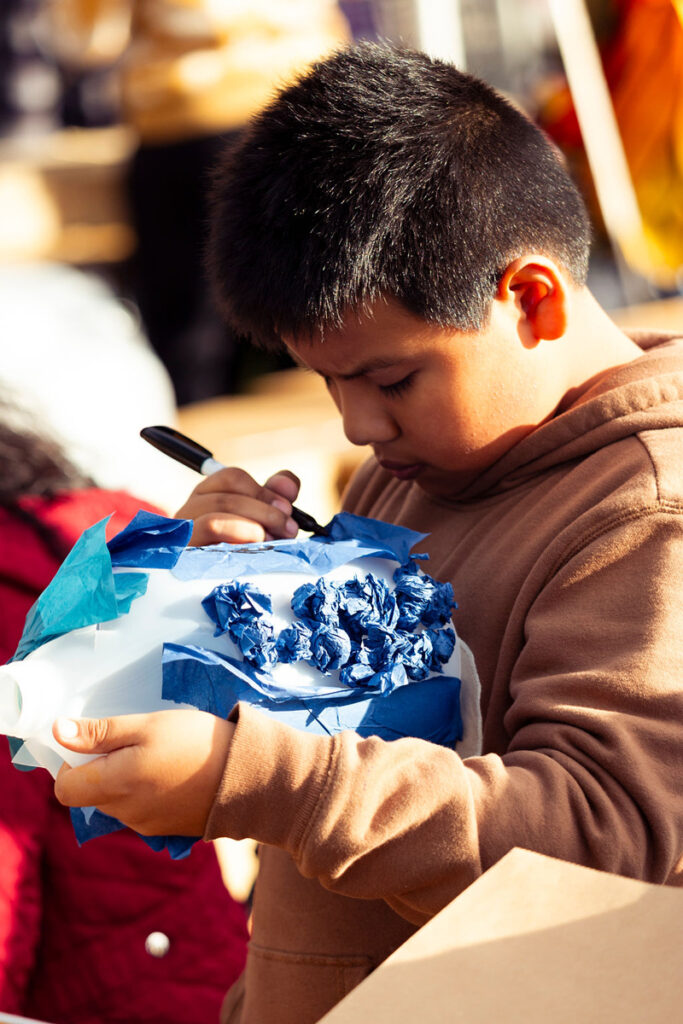
Other performers included Sokol Gymnastics, Charm City Mixed Martial Arts, The Towson University Asian Arts and Culture Center, and even B-more Yoyo Club which meets monthly at the Creative Alliance. “These kids can do yo-yo tricks that you will not believe,” says Rush. You could also find puppet shows, jugglers, and an on-demand poet as you walked around the festival. And, of course, there are the lanterns. The Creative Alliance brought 1500 lanterns on site for attendees to decorate the day of. “We always have our giant lantern-making tent that’s first come first served until we run out,” says Rush.

An exciting addition this year was installation artist Mike Bowman’s “Mircrorave,” a giant box that looks like a microwave, but the buttons allow people to select different Baltimore club music artists including K-swift, Blaqstarr, Cajmere, and others. According to Rush, Bowman is “a tech art nerd, so you can actually press the buttons, change the music, walk into it, and dance.”
The overwhelming number of experiences is by design. Rush says, “My goal for the festival is that you walk around and you’re just bumping into art. Like there’s just so much art and there’s so many fun little things happening that you’re just walking around and poking into things.”
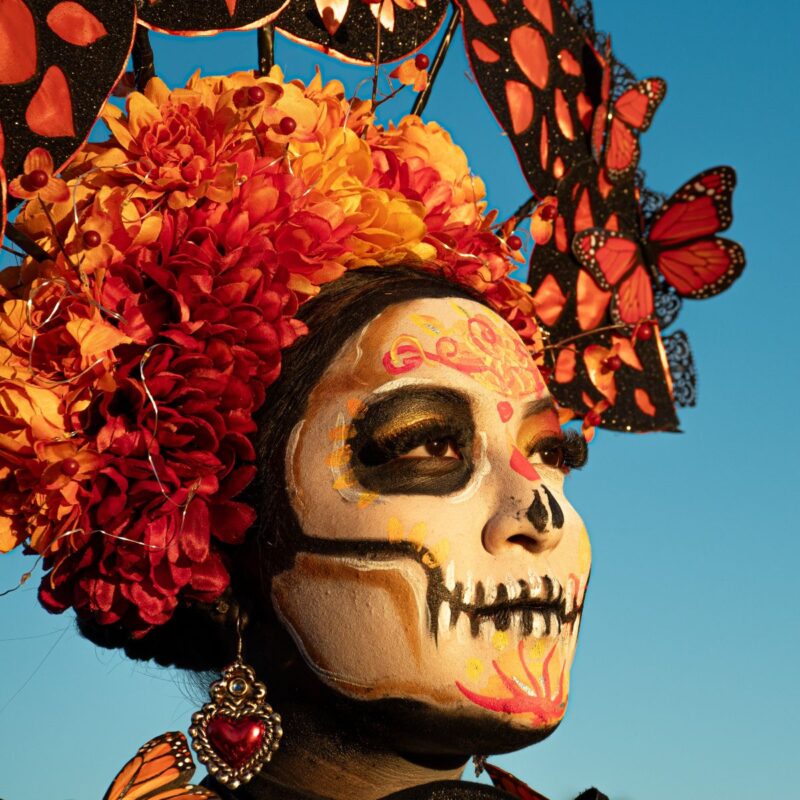
One stretch of the park was dedicated to Dia de los Muertos. Originally two separate events scheduled a week apart, the parade and the Day of the Dead celebration have merged into one. “This is only the second year that we incorporated Dia de los Muertos. Last year, we changed the title from ‘The Great Halloween Parade’ to the ‘Great Baltimore Lantern Parade’ because we know that a lot of our Latin neighbors don’t celebrate Halloween. We just want to continue making it as inclusive as we possibly can.”
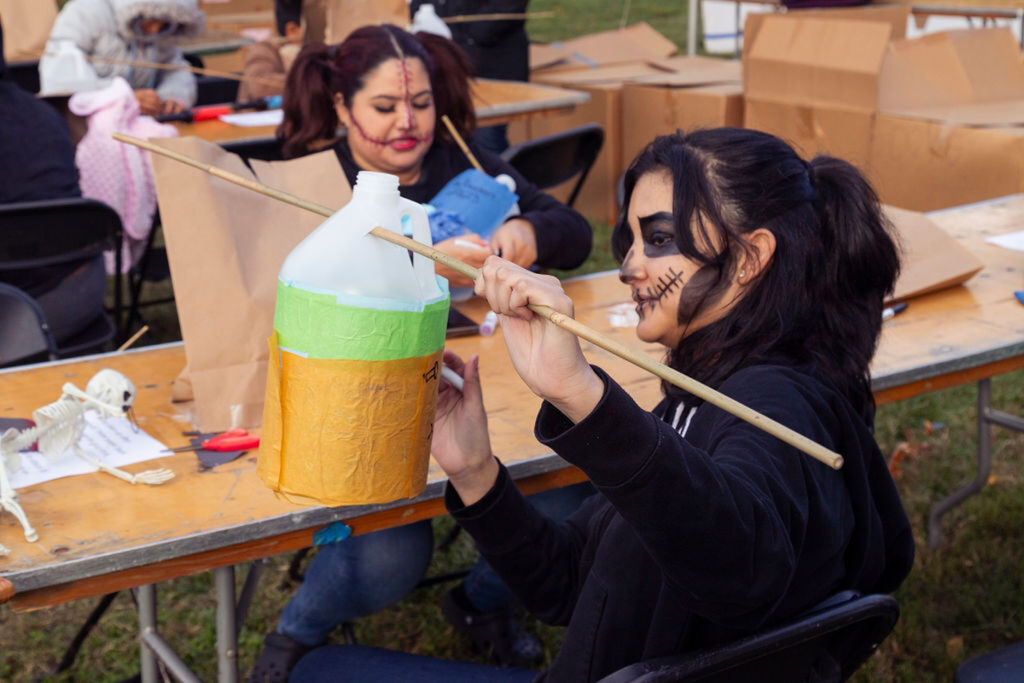

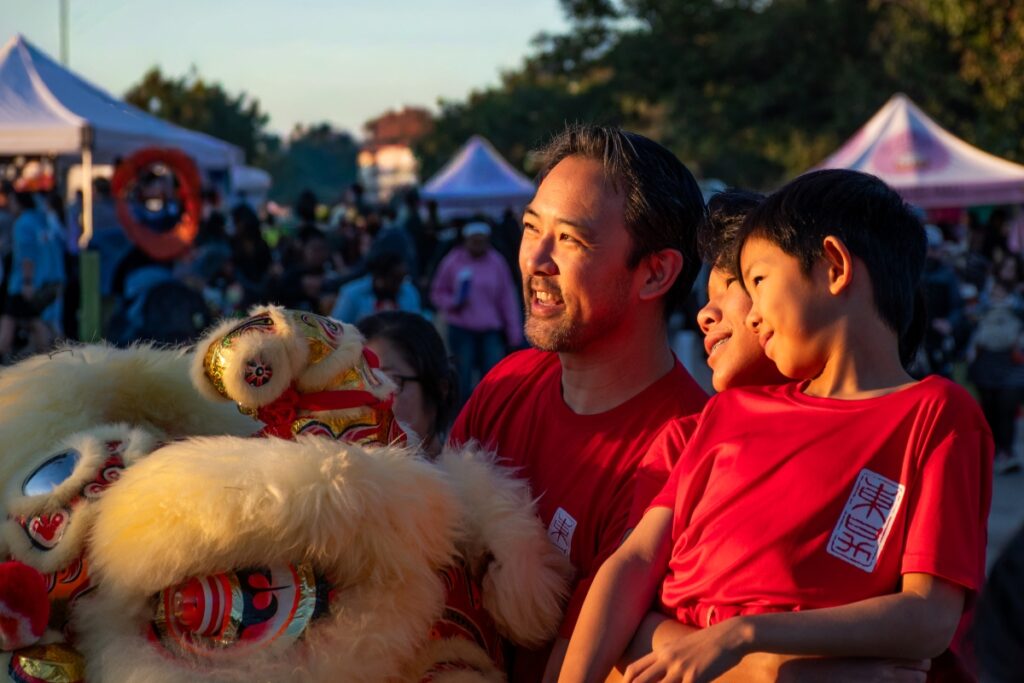
Having an entire arm of the Creative Alliance dedicated to Latino artists means that there were already experts on staff who could organize the “Calle de Dia de los Muertos,” a section of the park with thirty stalls dedicated to Dia de los Muertos. “We do have a CIELO manager, and within that department all the women are from different Latin countries in our neighborhood,” says Rush. “They run it and we just support them.”
In addition to stalls serving tacos and pupusas, there was a mariachi band and several crafts including sugar skull making, flower head making, and an altar set up. They were even giving out pan de Muertos, an orange-flavored Mexican sweet bread, and hot chocolate in celebration of Dia de los Muertos traditions. “It was a huge success,” says Rush. “We only see that expanding.”

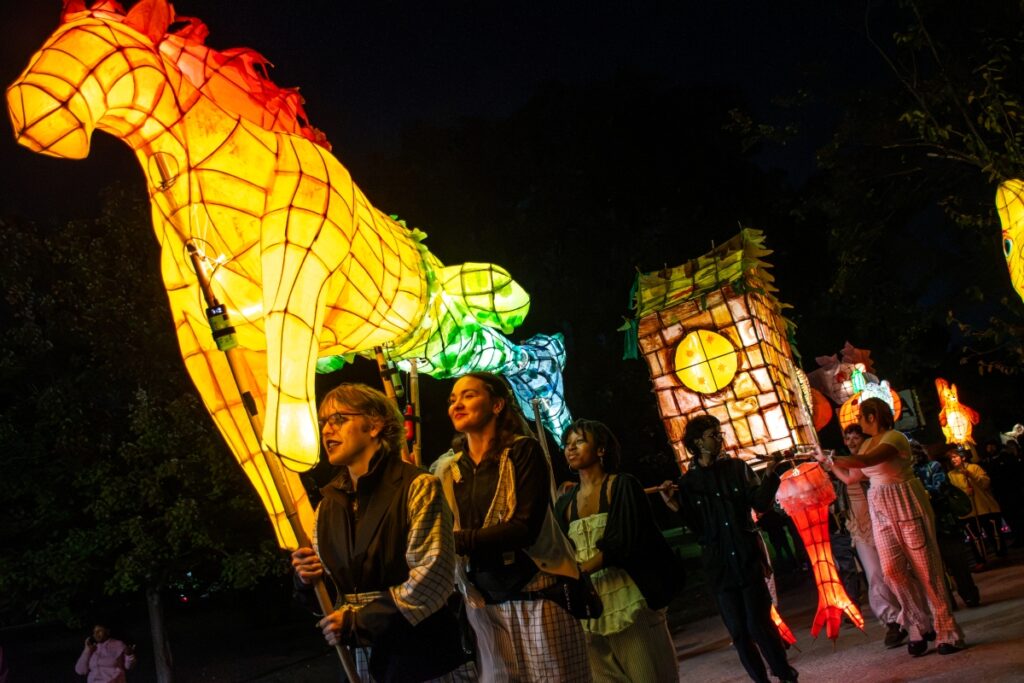
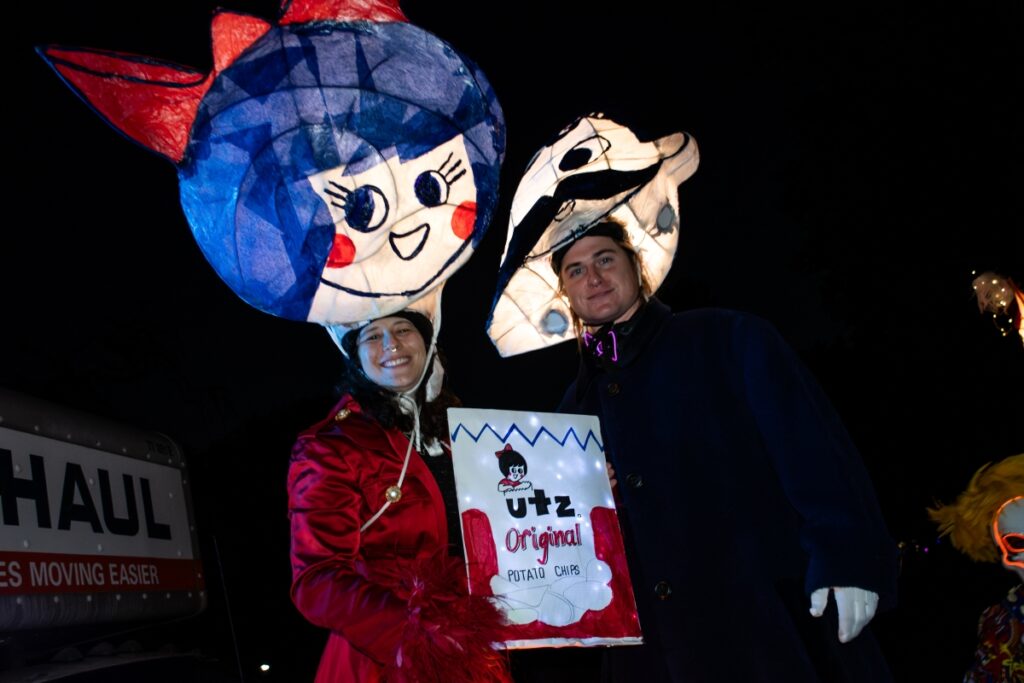
Just as the festival has grown in the past 27 years, so has the parade itself. This year, it opened with an energetic performance of “Thriller” by Dance Baltimore. What followed was a magical mix of dancers, stilt walkers, marching bands, people waving lanterns and glow sticks, and of course the floats. “We have about ten different Baltimore schools that come,” says Rush. “We have five different city marching bands. These people are all citywide. Of course, our mission is to showcase Baltimore artists.”
Other arts organizations are also enthusiastic participants in the parade. “A lot of different museums come to the event now,” says Rush. The Walters, Center Stage, and AVAM all were in attendance, and not only do these institutions attend the parade, but they also contribute their own floats. “This is the first time that The Walters is going to come, and they made two lanterns based on pieces in their collection,” says Rush. “They have Paco the Llama and a fat sparrow lantern.” The former is inspired by a Peruvian llama effigy; the latter is based on a mid-eighteenth-century ivory carving by artist Masanao.
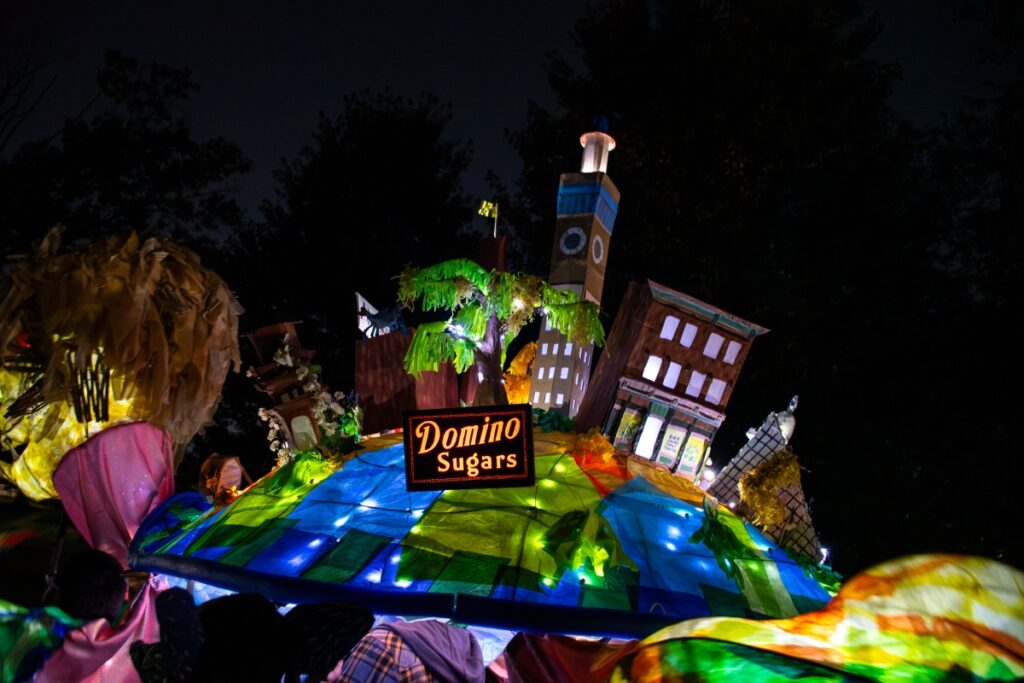
The Creative Alliance also commissions new floats every year. This year, the Black Cherry Puppet Theater spearheaded the new design. Board member Tavia LaFollette helped design and organize the theater’s contribution. She says, “I wanted to honor the Indigenous, who call this land Turtle island. I also wanted to tap into pop culture, and the Lion Turtle, from the Avatar Airbender series, does just that. Lion Turtles, like Turtle Island, have a world that grows on their back. Here, our world is Baltimore. So, we thought there would certainly be community investment in that idea!” The float has a lion’s head with a bushy mane, and a brightly colored turtle’s shell that bursts with Baltimore landmarks like the Domino’s Sugar sign, the Patterson Park Pagoda, and the Bromo Selzer Tower.
Many volunteers worked over many sessions to create the Lion Turtle, LaFollette explains. “Of course, being there makes everything worth it. The looks of wonder and squeals of delight—from all ages—stay with you forever. Seeing our gloriously diverse community glowing with pride and celebration makes me so proud to live in this city.”
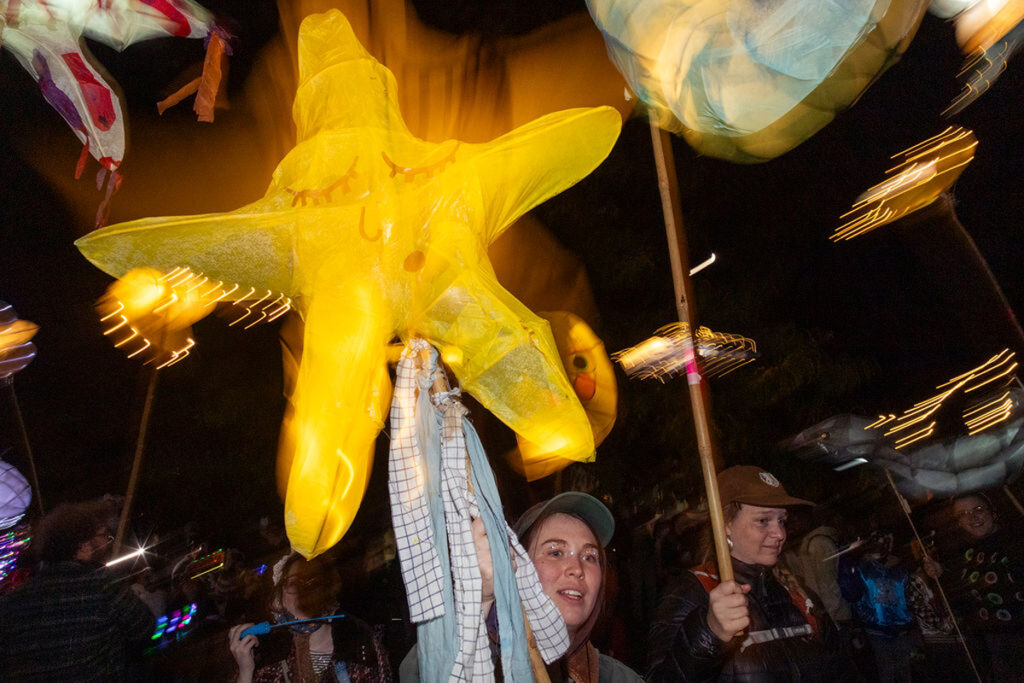
While the parade itself may be the main attraction, the celebration continues with an afterparty. “After the parade, we always have a finale,” says Rush, who cites it as her favorite part of the event. This year, premier Baltimore club dancer TSU Terry performed along with rapper RahRah100. The afterparty has also grown in popularity. In earlier years, Rush says, “people would just leave after the parade, but now they stay because they know it’s going to be this sick Baltimore club finale. It’s really grown into a mini concert. And Terry’s a star.”
It seems impossible that so many activities and performances could fit into the five hours of the festival, but the intensity of creative energy and convergence of people from all corners of this diverse city is exactly the point of the day.
First time attendee, Jennifer Keith Ciatti, describes the magic of the event: “Mighty thundering drums, fabulous dancers, gleaming lights, creativity and community. Thousands of people, so diverse in heritage and color, dancing under the near-full moon in the middle of Baltimore. It’s been a long, long time since I’ve had that childlike, slack-jawed wonder and sense of excitement.”
Or, as Rush simply says, “The whole festival is just a celebration of Baltimore City.”