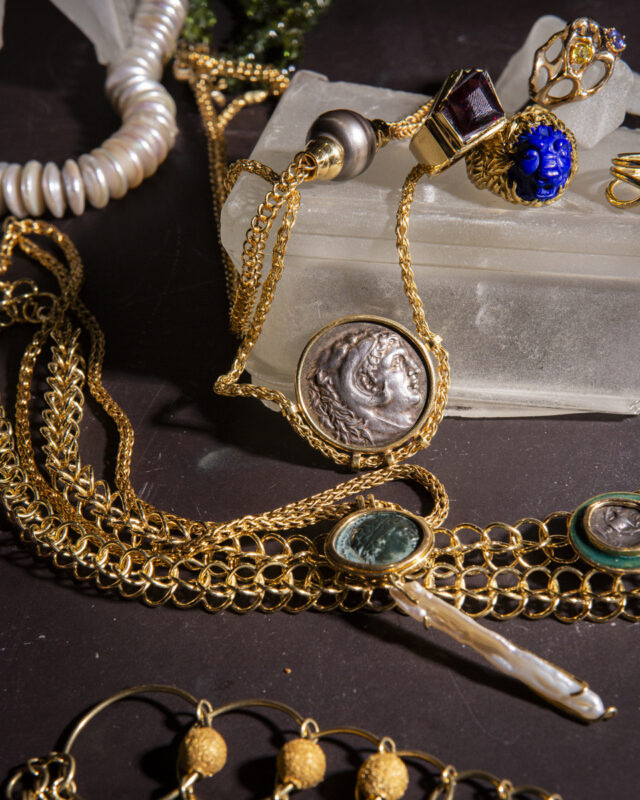
On Lauren Schott’s website, there is a link to a video that shows a young woman casting a gold ring. You can hear ambient music, Schott’s quiet instructions, a gleeful laugh, and finally the words: “It’s so cool!” What you can’t see in the video is the origin of the gold: the client’s mother’s wedding ring. Even cooler is the fact that the client herself is the one casting the metal as Schott guides her through the process of transforming the heirloom into her own wedding ring.
This collaborative approach and emphasis on repurposing materials characterizes Lauren Schott’s jewelry making and highlights the ethos of her business. Schott is not only a highly skilled jeweler with over five decades of experience, but she also is dedicated to reusing metals and gemstones and working collaboratively with clients. She finds her inspiration in “nature, color, and texture. Nowadays I am doing all one-of-a-kind pieces for clients, so they bring me a lot of inspiration with their stories and ideas of what they want.”
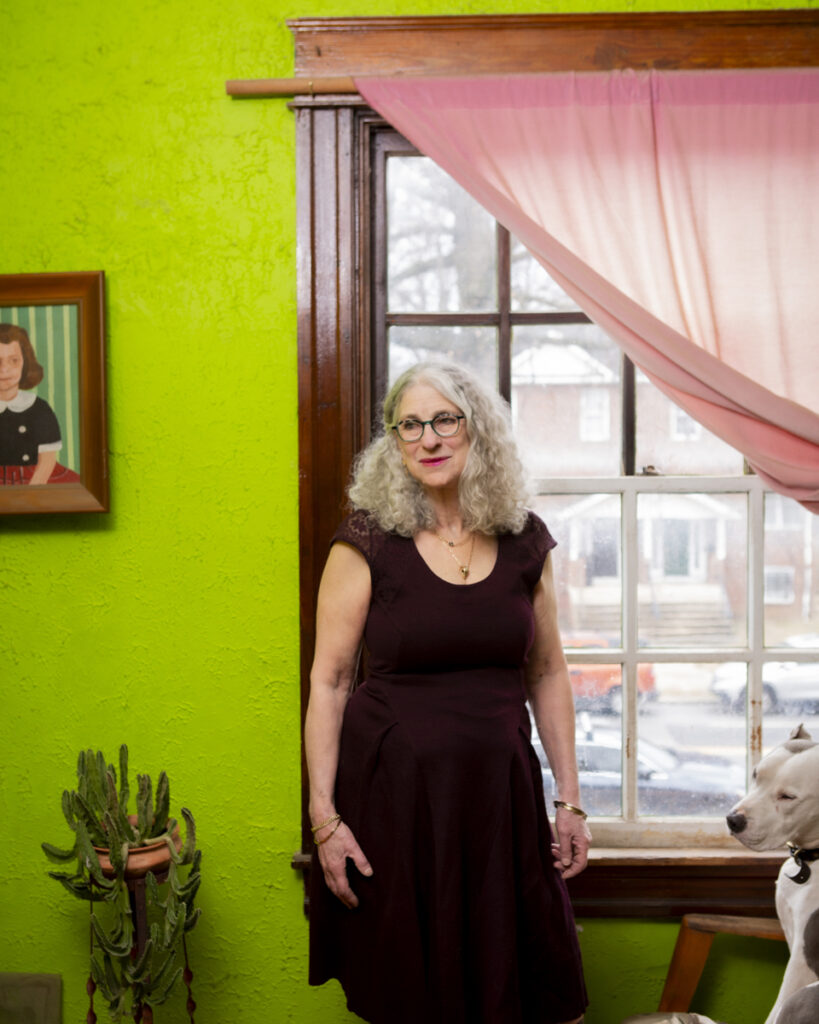
A self-described magpie, Schott has always been attracted to objects with everything from interesting textures and colors to the hardness of metal and beads. On the third floor of the row house in which she and her husband have lived for over forty years, her studio shimmers in the afternoon sun, a film of gold dust brightening her desk. Along with scraps of gold and works in progress, she has a cache of gems to use in her projects and has promised herself to use what she has before buying more.
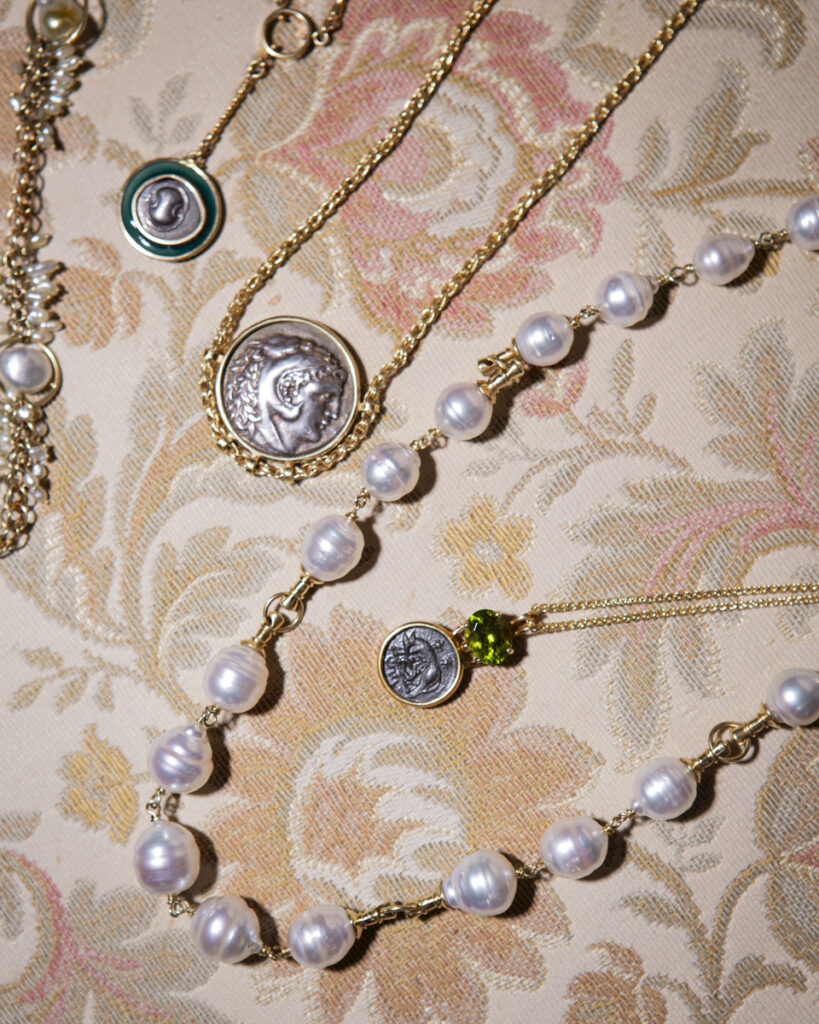
It is easy to understand the appeal of her materials: uncut diamonds, old coins, pearls, and rich colored stones. As she shows me pieces she has made over the past four decades, I am reminded of trips to the Smithsonian’s Natural History Museum’s Hall of Gems and Minerals where, as a child, I stood in awe before glowing specimens spinning in their cases—such richness and color and shine.
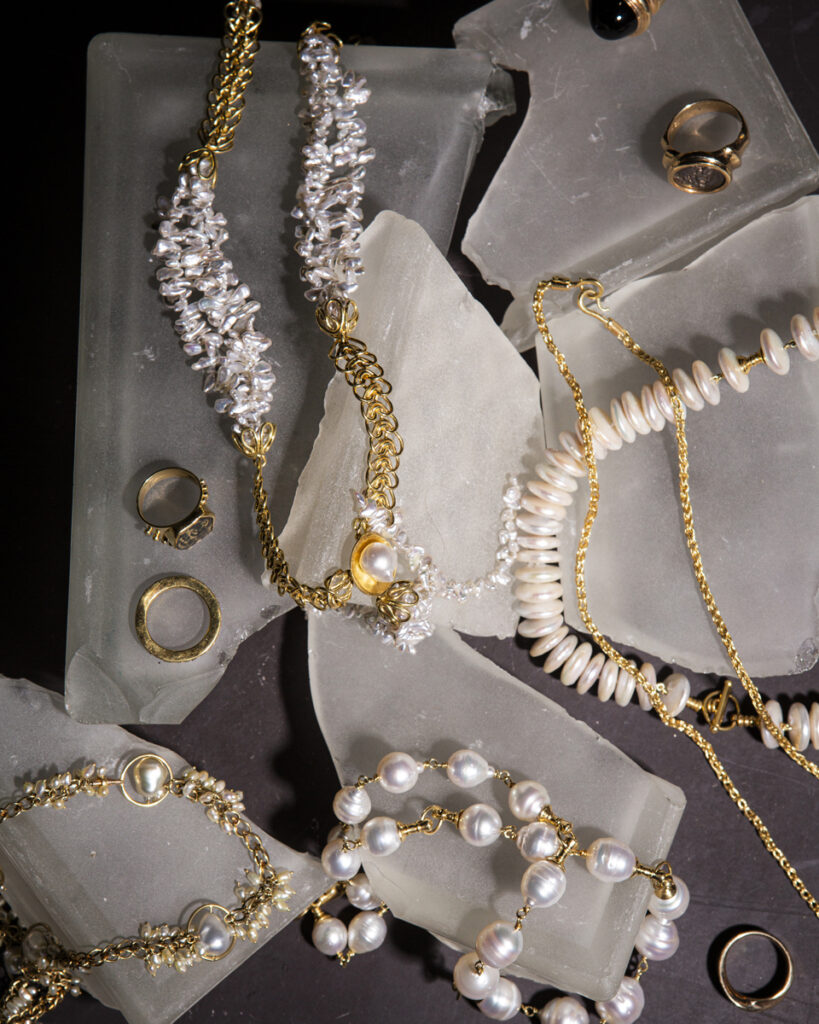
A self-described magpie, Schott has always been attracted to objects with interesting textures and colors, to the hardness of metal and beads.Elizabeth Hazen
Schott’s attraction to jewelry and interest in making her own pieces started when she was very young. Even as a five-year-old, she decorated herself with jewelry, some of which she made. When she started school, her parents appealed to this creative impulse to keep her focused.
“I was a dyslexic child before they knew what it was, but my mother was a kindergarten teacher so she knew how to handle it,” Schott explains. “She gave me art classes and supplies for good grades.” Around age eight, Schott began making Indian bead woven necklaces and bracelets on a bead loom she got from the Boy Scouts’ supply store. She sold her wares to neighbors and used the proceeds to buy more beads and equipment.
In high school, Schott was able to upgrade her materials, taking a class in which she learned how to cast silver jewelry. After just one session she fell in love with the feel of metal in her hands and at the dinner table that night declared, ‘I am going to make jewelry for the rest of my life!’ Seeing the passion sparked in their daughter, Schott’s parents helped her find an apprenticeship in a custom jewelry shop. For the summer of 1973, she worked with a mentor who told her, “Forget everything you’ve learned.”
He taught her how to form metal and make chains, a process she loves to this day for its meditative qualities. When she finished the apprenticeship, her father set up a studio for her in the garage, complete with casting equipment, so she could continue practicing her craft. When school started in the fall, Schott got an afterschool job at a headshop that made and sold Indian inlaid jewelry. “It was the seventies,” she notes to explain the unconventional venue. The next summer, she worked in a trade shop, polishing and sizing rings. By the time she graduated high school in 1975, she had honed a range of skills that would serve her throughout her career.
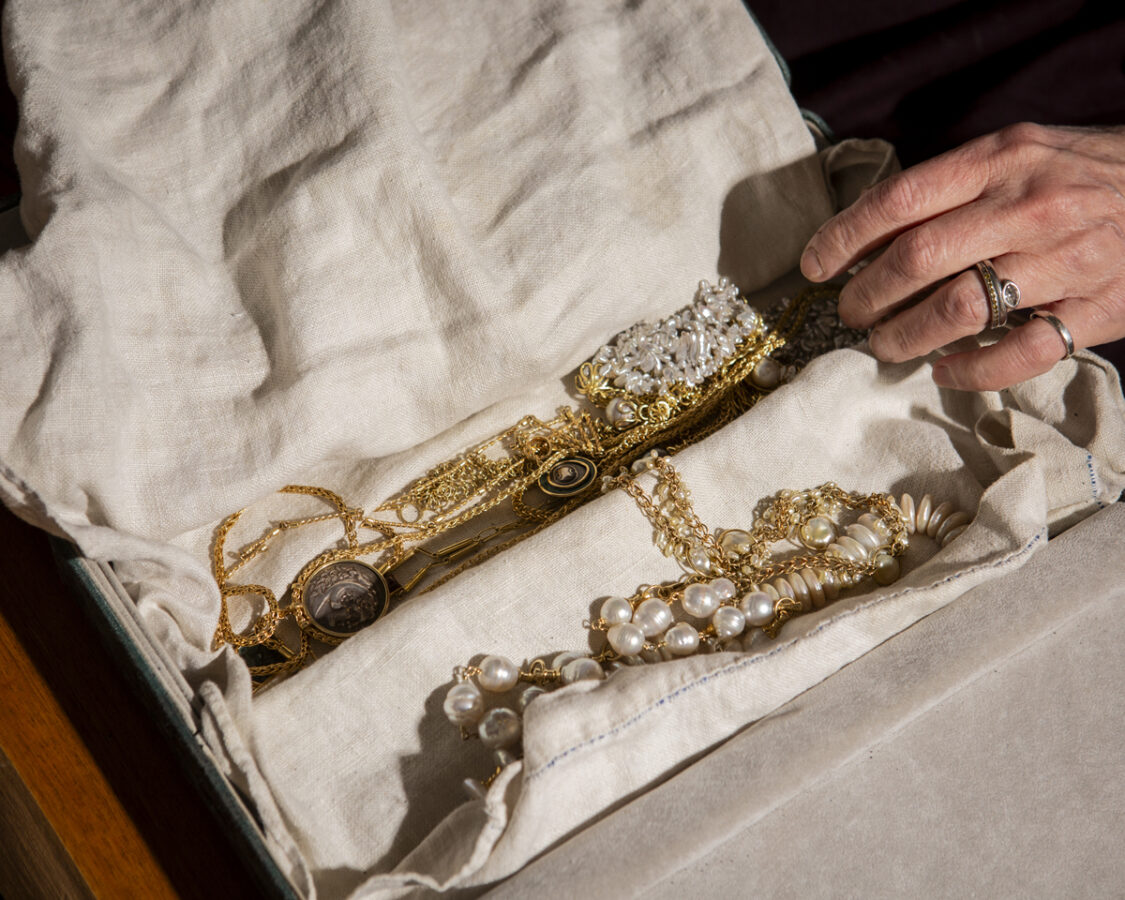
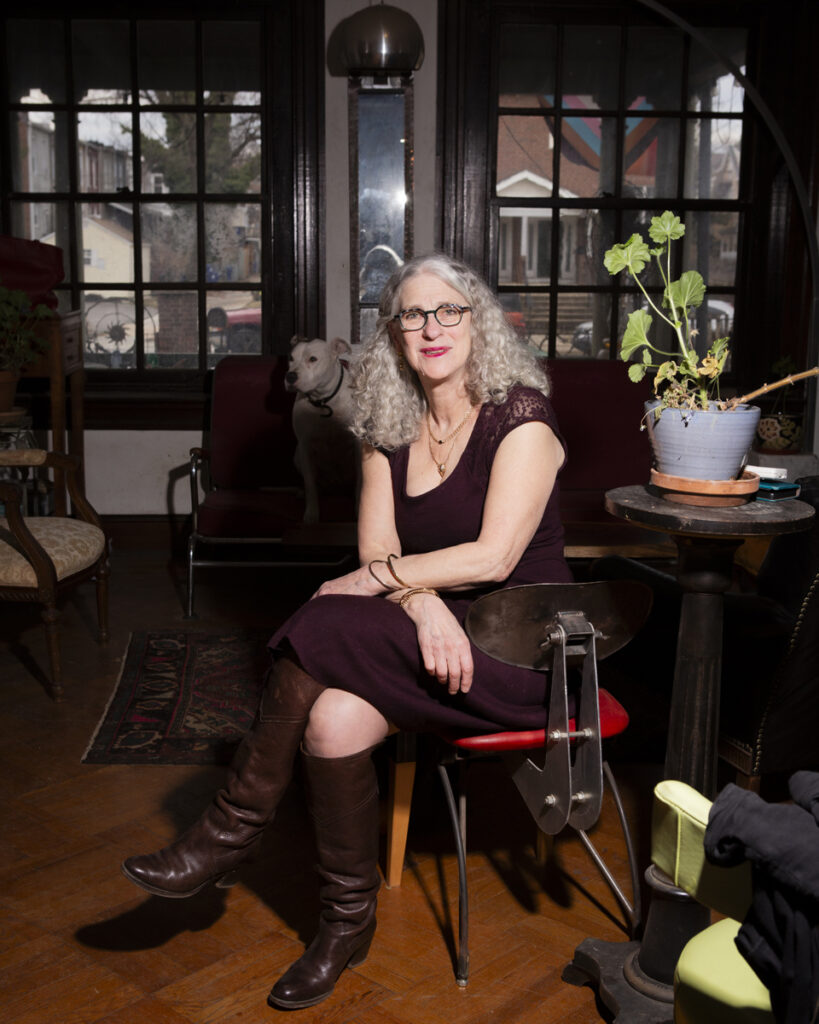
Her studio shimmers in the afternoon sun, a film of gold dust brightening her desk.Elizabeth Hazen
A native of Detroit, Schott started college at the Detroit Institute of Art, but because DIA only taught silversmithing and her interest was in working with gold, she transferred to the Nova Scotia College of Art and Design where she worked with a Norwegian goldsmith. After graduating with a BFA from NSCAD, she returned to the States and bounced from coast to coast for a few years. When Schott decided to settle on the East Coast, a friend offered a room for rent in Baltimore. She was delighted to find a thriving art community without the overhead of New York City and has lived here ever since.
Her first job in Baltimore came to her through a combination of savvy and luck. She sought out the best jewelry store in the city—at that time Dahne and Weinstein—and went there to ask for a job. Their jeweler had just announced her pregnancy, so the timing was perfect; Schott was hired. She has never had trouble finding work in jewelry stores, she says, because she likes tasks like sizing rings, lengthening or shortening chains, and repair work that many jewelers eschew in favor of design work.
Schott takes pleasure in it all, and she doesn’t limit herself to only making jewelry. Among her wares are a silver teapot, cake servers, a communion wafer bowl, and a variety of sculptural pieces made of materials ranging from leather to bronze to old keys. She currently spends two days a week at Baltimore Knife and Sword in Marriottsville, casting bronze sword handles and hilts for Renaissance festivals across the country.
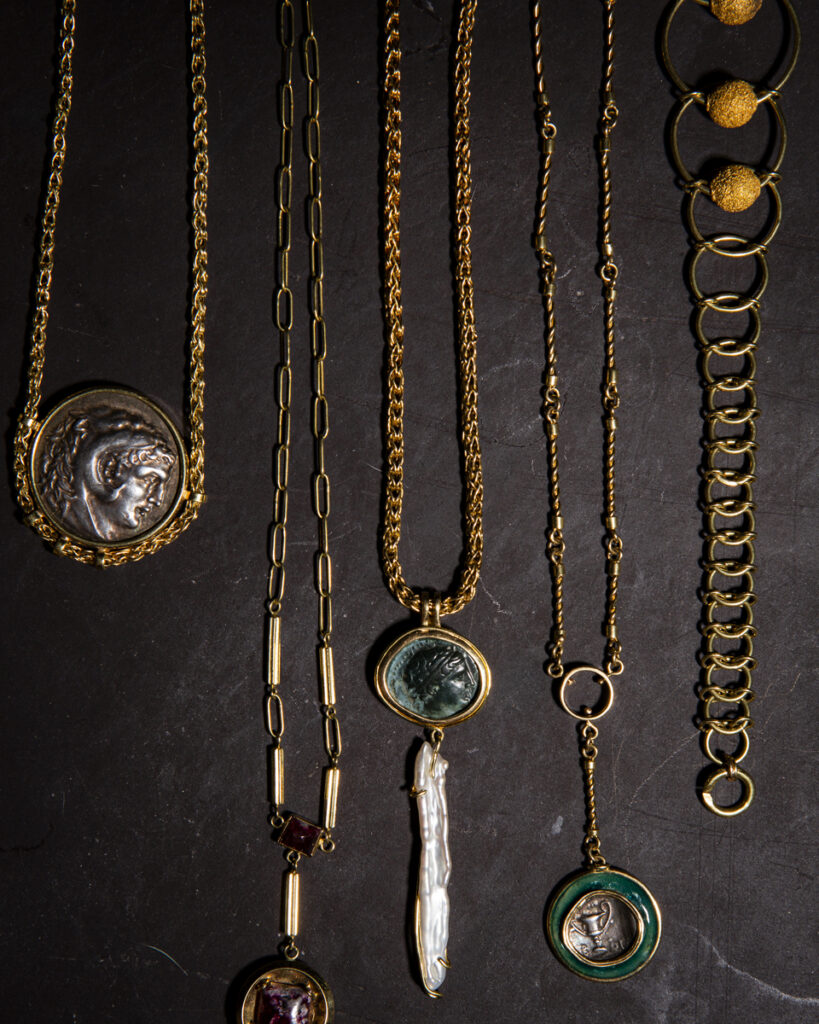
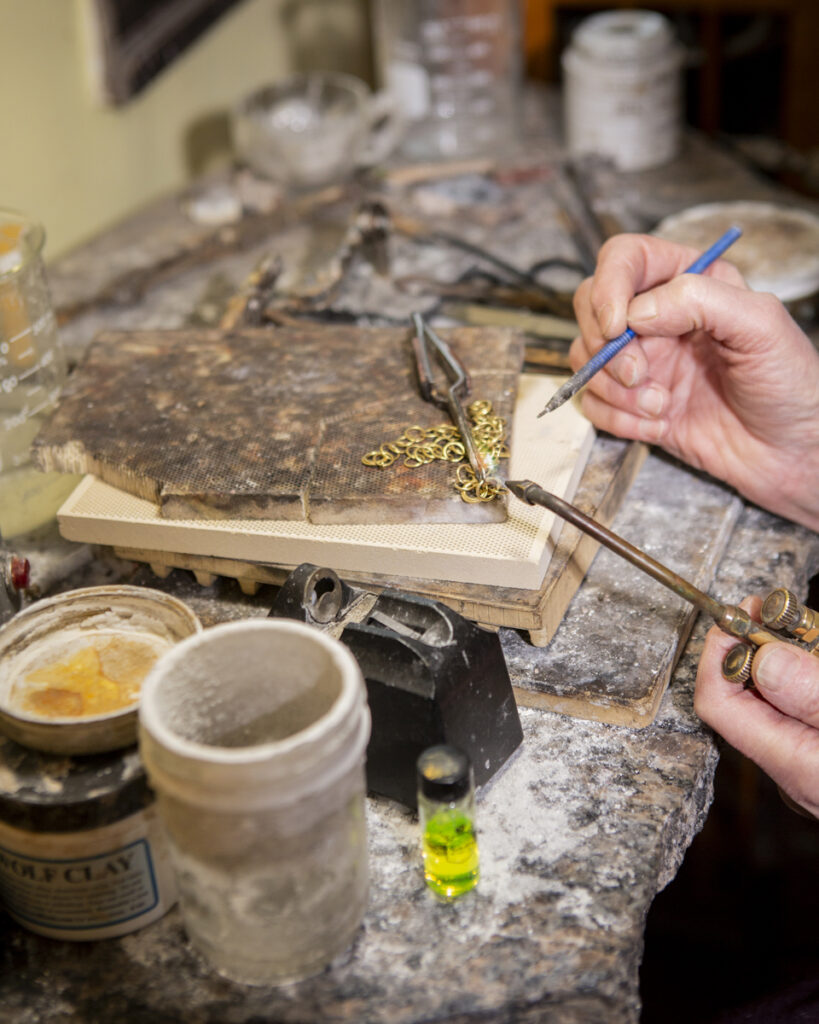
For many years, Schott sold her wares at craft shows, but these days she focuses on custom pieces. Making gold jewelry requires a lot of equipment, all of which she has in her studio. She describes the method: “I start with raw gold and alloy it to the color and karat that I want for the project. I then pour it into an ingot or cast. Shaping the metal into the wire or sheet that is needed, I then can solder the parts together forming the ring or earring I am making.” To make chains, something she does a lot, she uses an 1890s draw bench to pull the wire. Next, she winds the wire into a coil and snips the individual jump rings. Finally, she connects the jump rings and solders them closed. It can take several days to complete a handmade chain, but they are made to last a lifetime—and Schott has the patience and mindset for this vocation.
After over fifty years of learning and mastering a variety of techniques, Schott doesn’t show any signs of slowing down. She continues to take on projects that range from simple ring resizing to creating custom pieces from heirloom jewels. Of course, a great deal has changed since her first craft show at age seventeen in Midland, Michigan. Gold, for example, now costs nearly three times as much at almost $3000 an ounce. But her passion has remained, and the fortune she found in her cookie at the Chinese restaurant where she ate dinner after that show over 40 years ago still rings true. It said, “You will have gold by the bushel full.”