I met Maureen Nicol a couple of years ago when she joined the team at The Ivy Bookshop where I also worked. Sweet and soft-spoken, Nicol was picking up shifts as a bookseller while she developed her plan to open a play center for young children. When things were slow in the shop, she and I would commiserate about divorce, dating, work-life balance, and the many challenges of single-parenting. As she talked about her then-four-year-old daughter, I would think back to the exhausting, joyful, lonely days when my nearly-twenty-year-old son was small, when a place like the one she was dreaming of would have been a haven.
Nicol’s vision was ambitious, and I must admit to feeling overwhelmed just listening as she talked about the logistical challenges she faced as she worked with architects and contractors, trying to balance caregiving, bookstore shifts, and all the paperwork and preparation required to start a small business. But on May 1, 2026, Nicol cut the ribbon and officially opened Our House. By the time I visited the space in July, hundreds of families had used the space, about ten of which were there when I arrived.
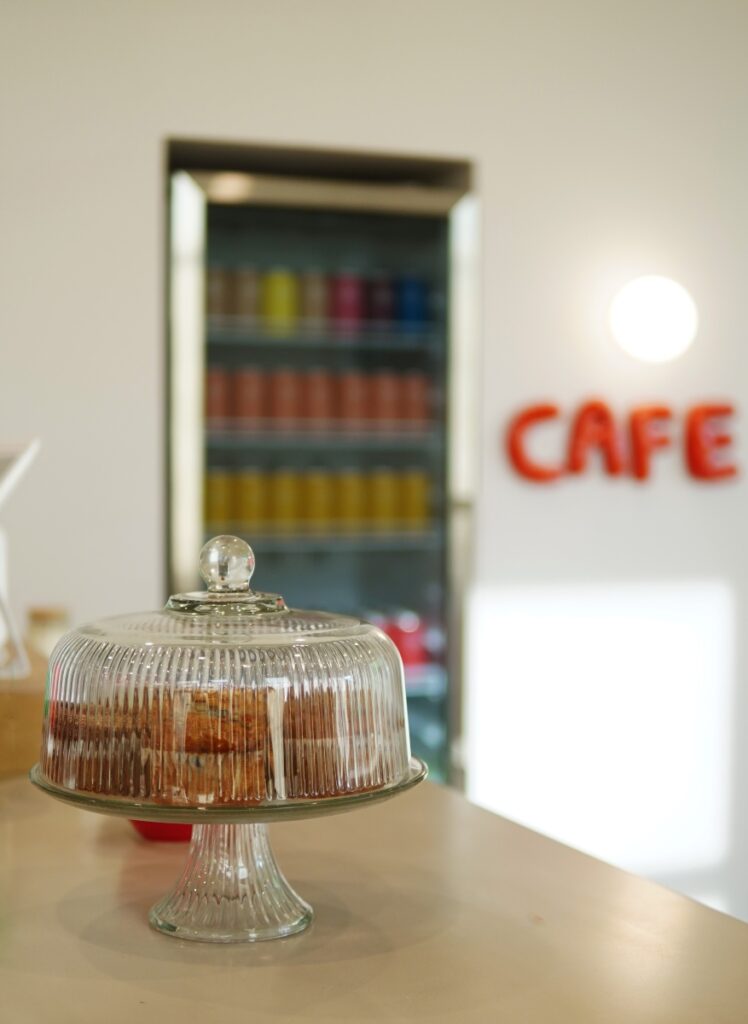
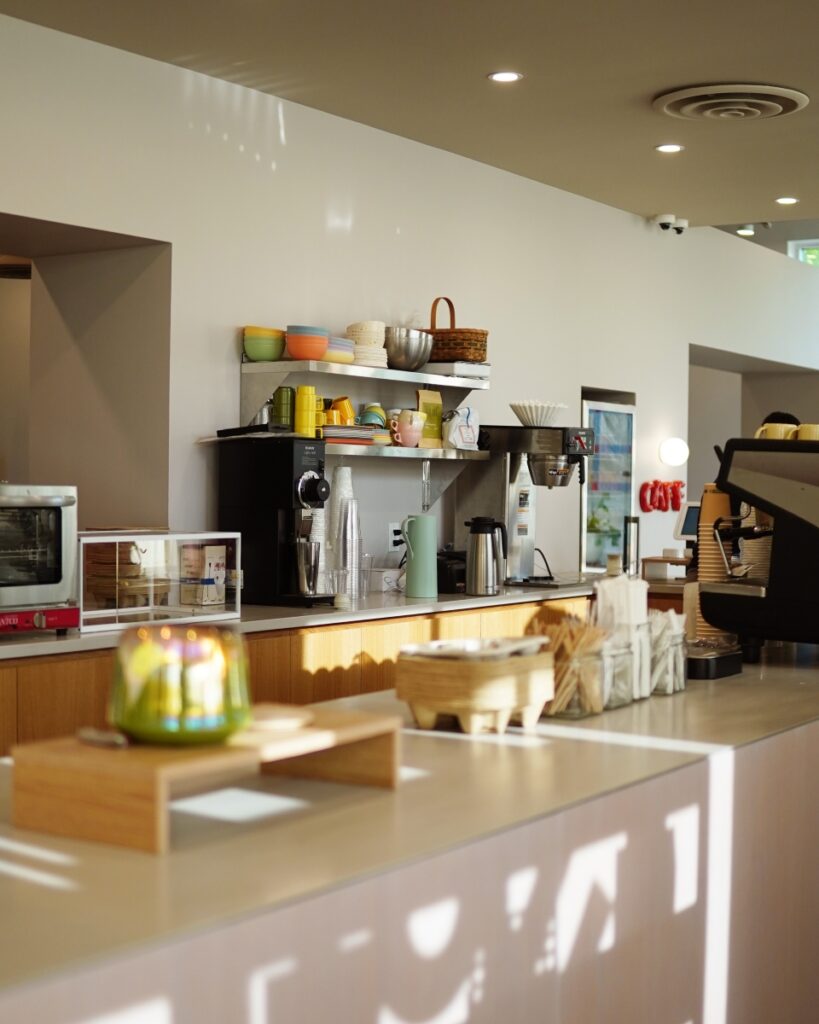
I held the door for a couple of newbies—a mother and her toddler daughter—as I entered. The little girl was wide-eyed, taking in the thoughtfully curated selection of locally sourced retail: art supplies and puzzles, soaps and lotions, and brightly colored rows of books. The café includes a seating area and offers espresso drinks, drip coffee, tea, baked goods, and, of course, milk and juice boxes.
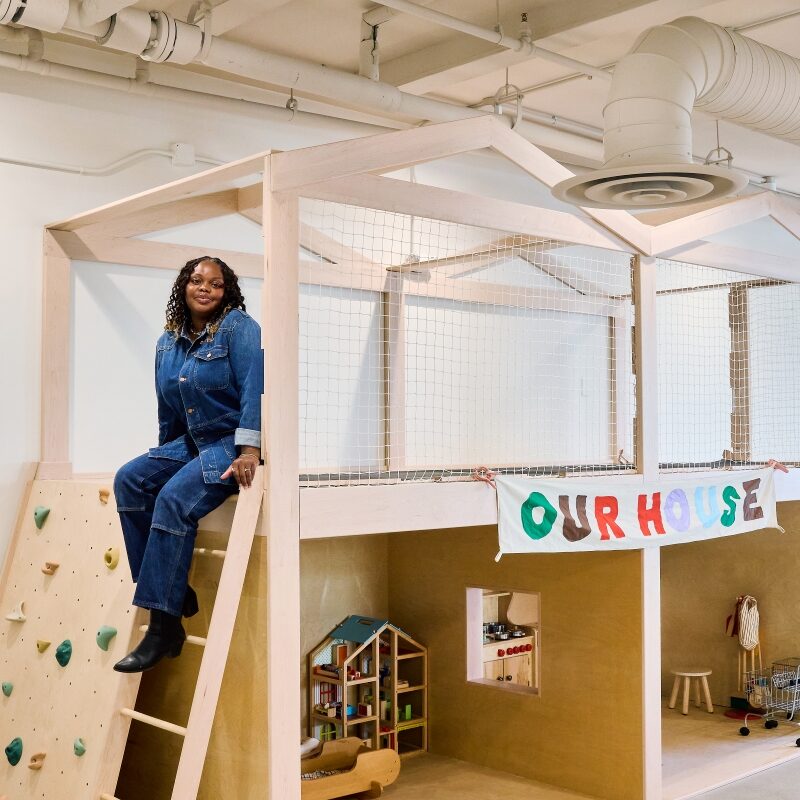
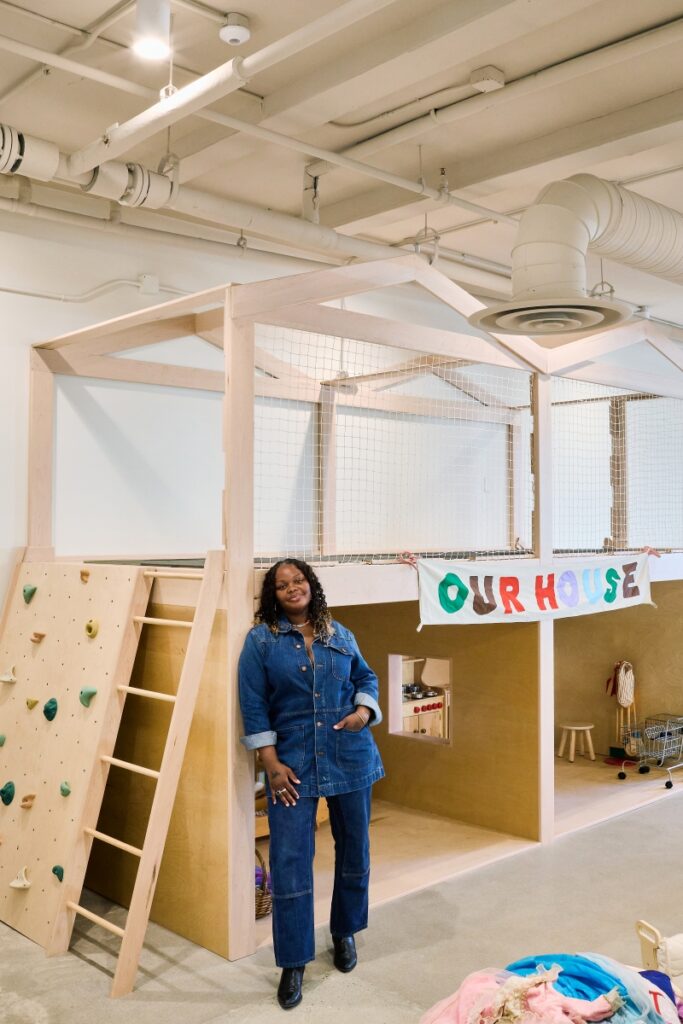
After Nicol handed me an iced coffee, I followed the babble of children’s voices around the corner to the play area: a gated space with a custom-made structure that creates a couple of small rooms and a second level accessible by a small ladder. Like everything in Our House, the play area is intentionally designed.
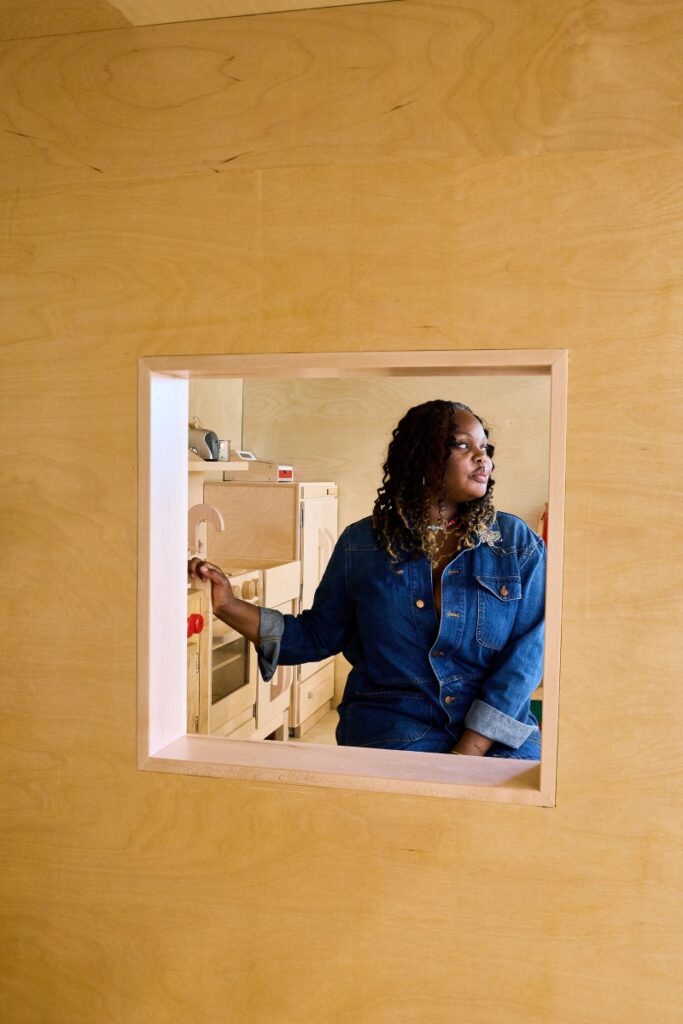
Made from pale wood and decorated with gentle colors, the space feels clean, calm, and inviting. Blocks, a toddler-sized kitchen, a shopping cart, wooden tools and toy cars filled the spaces between busy kids. It wasn’t quiet—there was giggling, the squeak of wheels, the clack of blocks, and the soft voices of parents and caregivers—but there was none of the electronic jangle and buzz that so often is part of spaces designed for young children. Nor was there any of the ubiquitous flashy plastic or licensed merch that often overshadows simpler toys.
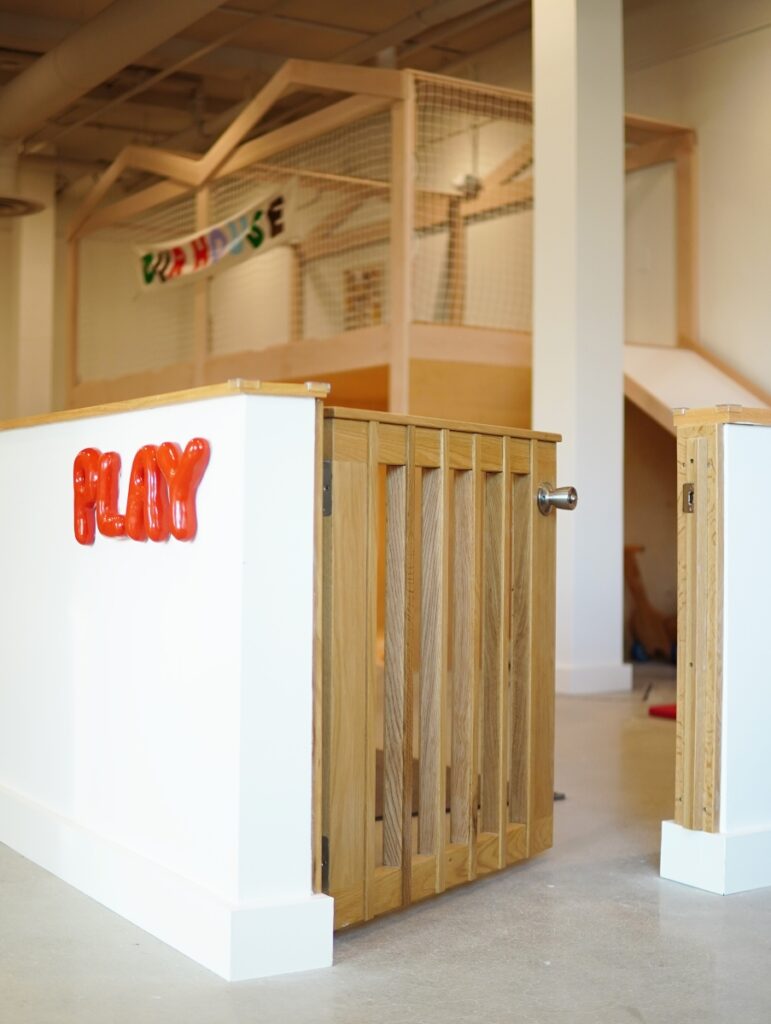
Most notably, both the children and their caregivers seemed relaxed and happy. Some caregivers were inside the play space, standing and chatting on the periphery or sitting on the ground beside their charges, while others sat at a counter that overlooks the area, sipping coffees and working on laptops. The vibe was warm and joyful, and even without a toddler of my own, I felt the sense of community and connection that Nicol set out to foster.
Our House caters to children 0 to 5, and it is open 9 a.m. to 2 p.m. Tuesday through Friday and 9 a.m. to 1 p.m. Saturday. Additionally, they offer music classes and puppet shows, and Nicol continues to evaluate possible partners to pop-up in the space. She answered some of my questions about Our House below, and you can learn more about class packs, memberships, and upcoming events here.
How did you come up with the idea for Our House?
My daughter was born during COVID, and I felt like there was literally nothing I could do with her. All I did was walk with her in a stroller. I was a poor doctoral student, and I couldn’t afford Chuck E. Cheese or anything else, and I was like, I’ll just create the space I want. But at that time, I didn’t think I could pay myself or early child teachers enough. In general, I didn’t think it was going to be sustainable. I also wanted to be able to offer sliding scale tuition, and it just wasn’t going to make sense then. But I had taught for ten years, and a lot of people told me they admired how I teach and how I parent, so they were always asking me for advice, and I was always having playgroups. Eventually I was like, okay, I can try to do this. So, I started thinking about how to create third spaces for families. And then that’s how it all came to be.
Maureen NicolI want children to have a sense of ownership and to know that this is their place. I want parenting to feel less lonely.
What is your goal for the space?
My goal is for the space to become a hub for families and community members in the city and beyond. I really want small businesses and other programs to know that they can use my space. I want children to have a sense of ownership and to know that this is their place. I want parenting to feel less lonely.
So many families visit from different parts of Baltimore and Maryland, and I want everyone, despite their income or what their family shape is, to feel that we have this thing in common here. Everyone deserves to be in a beautiful space.
And the space really is beautiful. Could you talk about how you wanted the space to feel and how you went about making that a reality?
I didn’t grow up with a lot of money. There were three of us all together, me and my siblings. My dad took us around every weekend doing everything free. We went to all the museums, all the zoos, and we were library rat kids. Those spaces really raised us. And since then, I’ve gone on to travel, and I started creating a digital memory book and a mood board of what I wanted the space to look like and feel like and sound like.
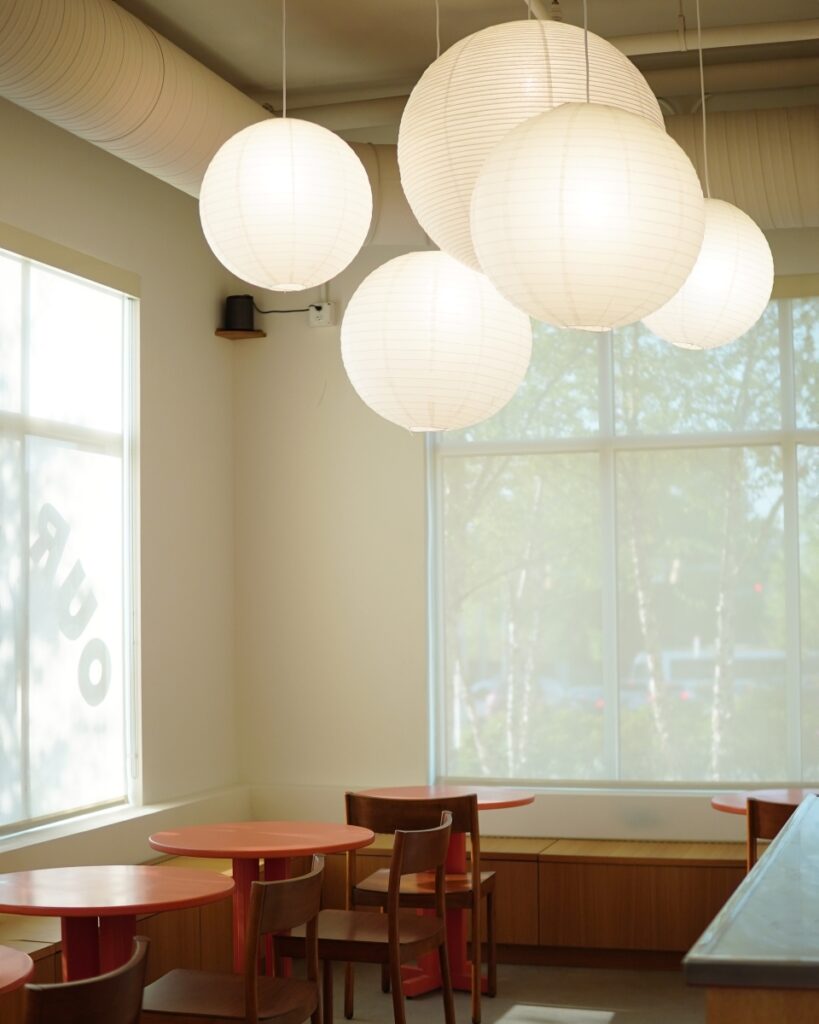
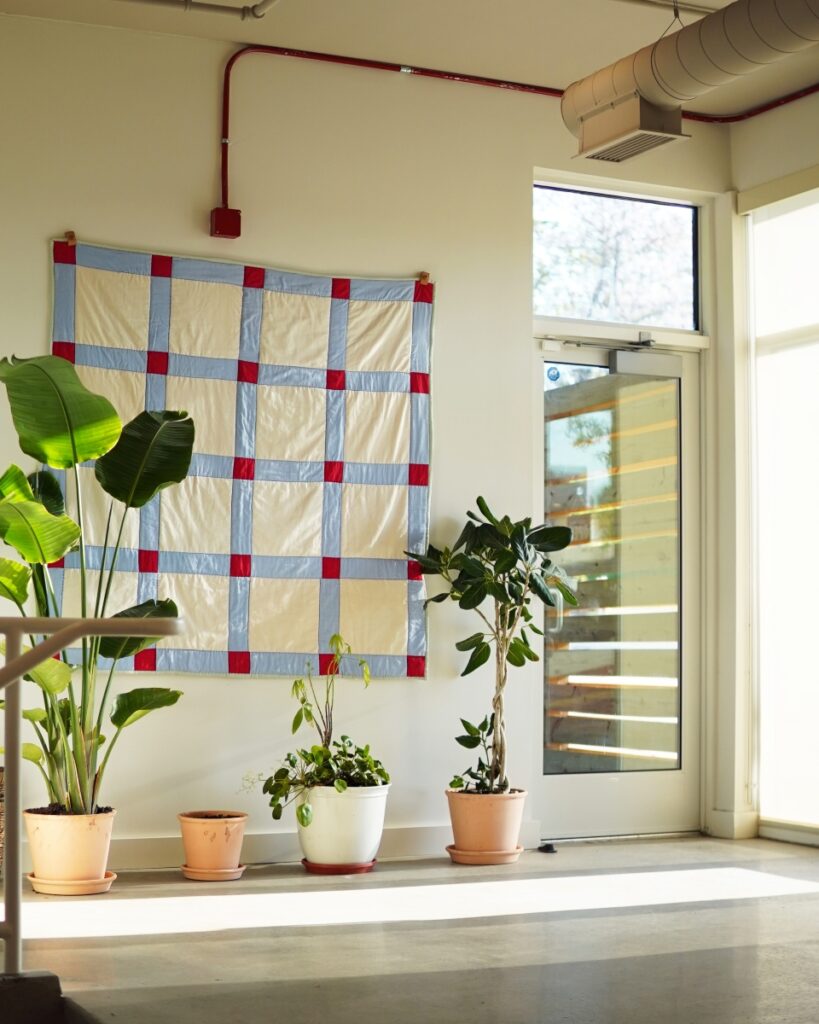
I knew I wanted real plants. I knew I wanted natural light. I knew I wanted something gender-neutral and soft, and I wanted people’s nervous systems to be calm and for the space not to be overstimulating. My mood board is large, but I think it was just a bunch of different experiences and places that came together to create this curated canvas. I wanted the space to be well designed, and when I met with the architect team they were like, “This is like one of our fastest meetings because you know exactly what you want.”
Maureen NicolBaltimore is an amazing city of amazing creatives and kids, and more can be done for the quality of life for young families here. It’s important to have a space that, regardless of the season outside or the season of parenting you’re in, you can go to.
What does Our House offer that other programs don’t?
I’m one of the only Black people doing this. I feel like that’s a big deal to have the lived experience and the necessity of cultural sensitivity, and to know from lived experience what it feels like to not be able to afford something. You want your kid to have the best, and then you try to create it. I bring an awareness of community infrastructure that I think is helpful. Also, a lot of people don’t have the early childhood or parenting experience that I do. I have clinical background. I’ve done the site research, and I have the lived experience. That combination is very important.
Also, the reality is that there’s no other space that is trying to meet the needs of both parents and children at the same time. Like, if you go to Port Discovery, you just have to sit on the edge while your child plays. If you go to Chuck E. Cheese, you’re like, how did I just spend $100? And the kids are just whacking at things?
The space has been mindfully curated. The kids are contained. You’re not overwhelmed. I think that feels nice, and I think that feels different, and we already have so many community partners. We’re not a big chain; so that allows for flexibility. I’m able to listen to parents. One parent suggested bag hooks underneath the counter. I was like, “Oh, of course!” Another said we need more mirrors. People feel comfortable telling me these things. That connection is lovely.
How have things been going since you opened on May 1?
It’s going well. I have no idea what “good” or “bad” is in terms of a small business, but I’m able to pay my staff and I’m seeing repeat people come in. New people come in every month. For June, we had 83 new families, and we’ve had close to 300 families come in already since May. I’m just learning and growing, seeing what works and trying to make it sustainable.
Birthday parties are going well. Everybody wants to book a party or event. I never thought that would be our bread and butter, but that is what it is. And our program relationships and partnerships are really great. I’m getting to learn about new people and their systems as small businesses, and they’re bringing in new audiences. That’s just opening me up to more and more possibilities.
Do you plan to incorporate more programming in the future?
Yes! We did 15 events in June. In July, we’re doing fewer, but we’re definitely having our music classes and puppet shows. We’ll be partnering with Maryland Book Bank, so every kid gets a free book. In August, we’ll do something for back to school. Right now, it’s a matter of deciding who’s good to work with, who do I want to work with? What do we do? What don’t we do?
Is there anything you wish people knew about Our House that isn’t immediately obvious?
I’ve been reading this book that talks about how small businesses are the things that are going to save cities, and I want people to understand the more human approach to running a business and supporting a business. Some people push back about the cost. We have scholarships, but someone put in an anonymous comment on Facebook saying, “Why would I pay $275 for a week of camp when I can send my child to Baltimore City for half the price and more activities?” And I think something that people don’t think about is—behind every small business is a human, probably still not paying themselves, trying to make the city better. And you can’t compare a small business that literally bootstrapped and created something out of nothing to a large city entity. Yes, you are paying us, but you are also supporting the future of Baltimore City and what families and children deserve.
Why is Our House a good fit for Baltimore?
Baltimore is an amazing city of amazing creatives and kids, and more can be done for the quality of life for young families here. It’s important to have a space that, regardless of the season outside or the season of parenting you’re in, you can go to.
Baltimore is also a city of community and connections. People call it “Smalltimore.” And I think that should happen with children and families and parenting. I love it when people come in and they’re so happy when I remember not only their kids’ names, but also their names. We need more spaces where children and their parents and whoever their caregivers are can really stand tall and feel good. That’s what I find most exciting.