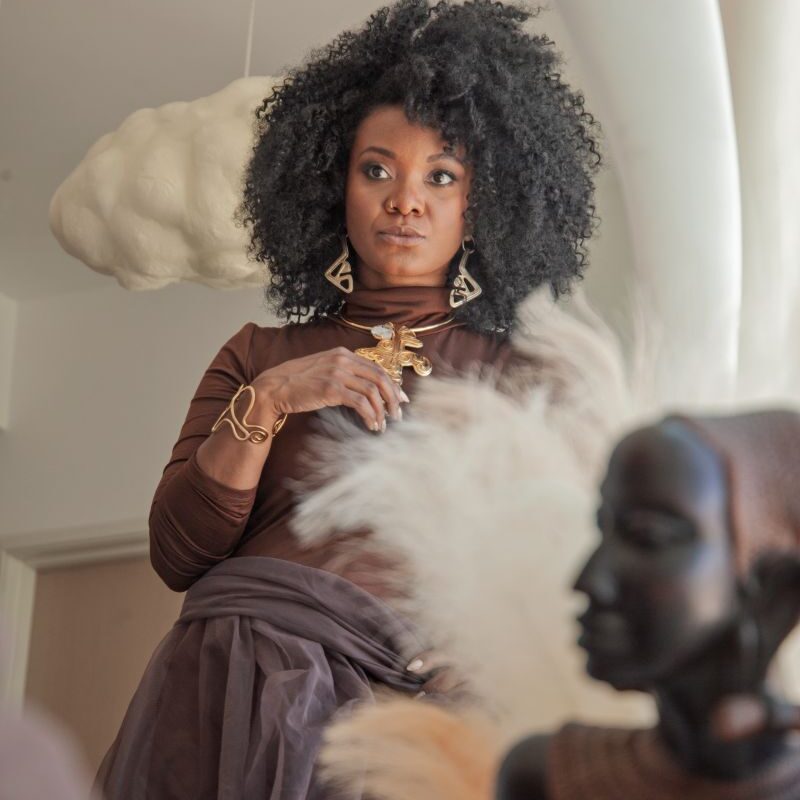
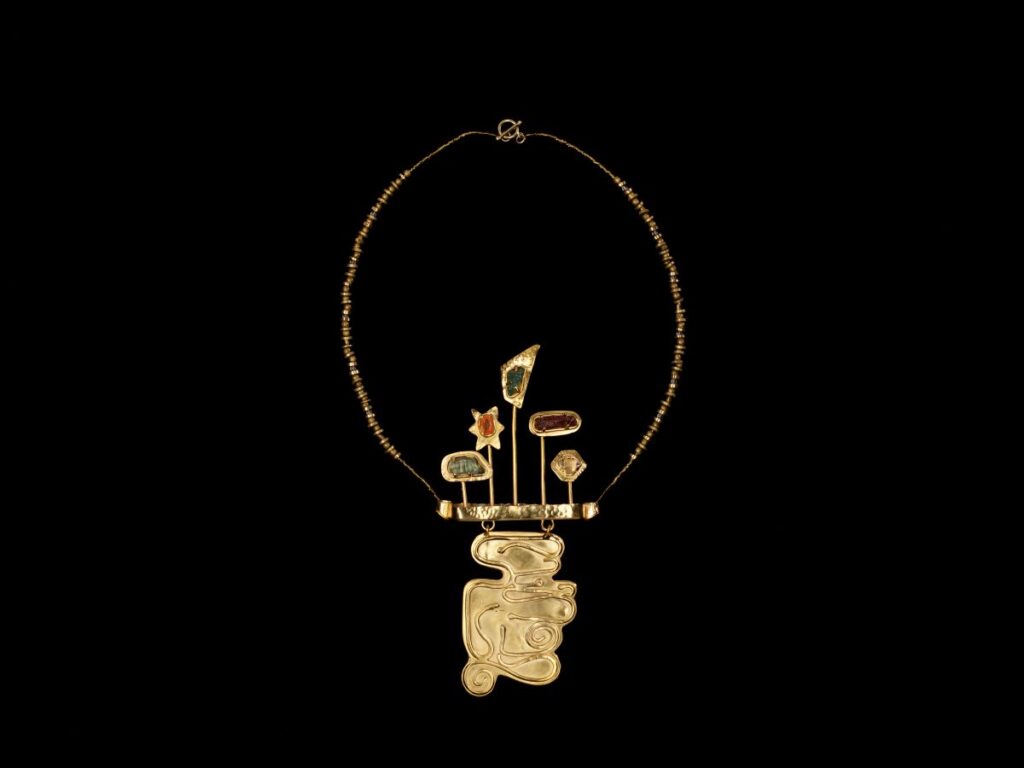
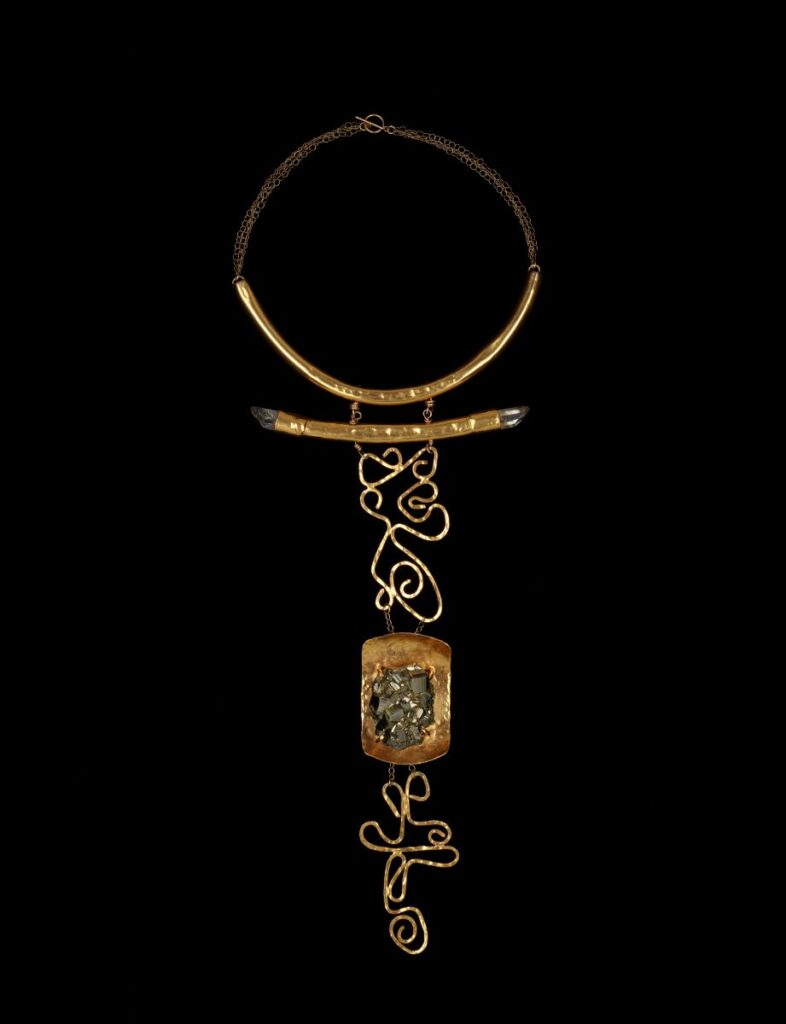
Not simply a necklace, but a whirled, golden cosmos to lay over the heart. Not a ring, but a cityscape of quartz crystals rising from the hand. Jeweler Douriean Fletcher’s creations call to mind both warrior and royal; both the ancestral and a future seated powerfully in Blackness.
As a young girl growing up in Pasadena, California, Fletcher’s aesthetic inspiration came from the women who raised her. Her grandmother, dressing for church, styled herself immaculately with jewelry and hats. Her mother refused to alter the natural texture of her hair, introduced her to West African dance classes, Kwanzaa ceremonies, and the treasure chest that was a thrift shop jewelry case.
“My work is the result of that foundation,” Fletcher says. “It comes from my grandmother’s elegance, my mother’s implementation of Black-centered activities, and my own curiosity.”
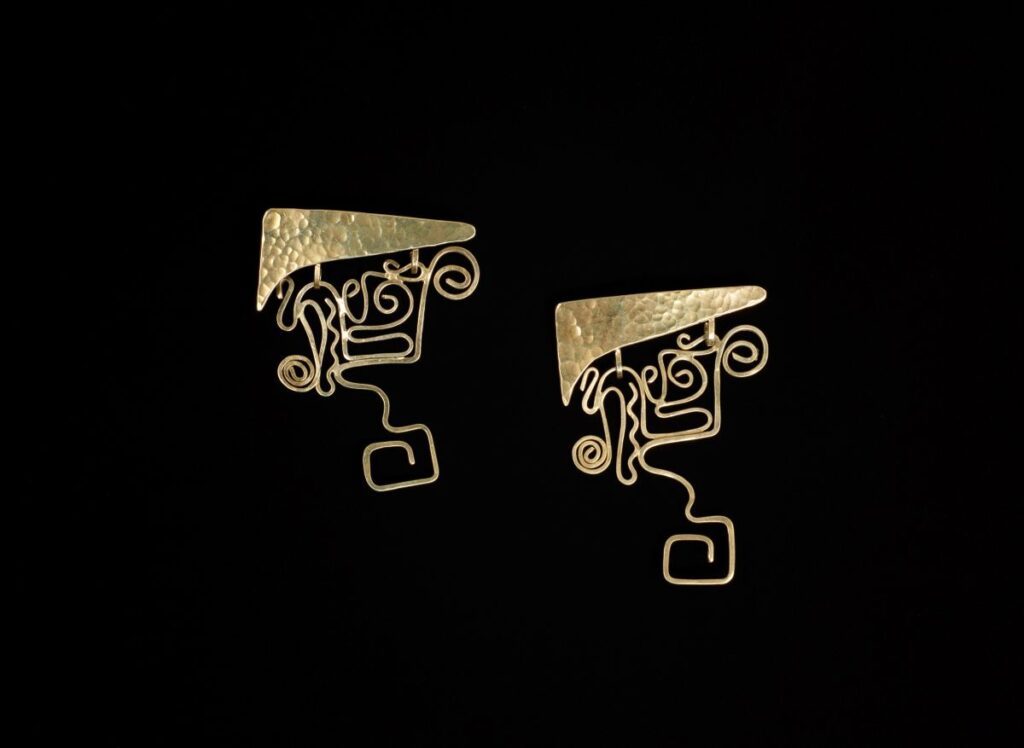
Today, she is perhaps one of the most acclaimed jewelry designers and artisans of our time. Her wearables—bold sculptures of gold, silver, and gemstones—hit the world stage when Fletcher accepted the role of specialty jeweler for Marvel Studio’s blockbuster film franchise, Black Panther, adorning the fiercely powerful Queen Ramonda and Dora Milaje.
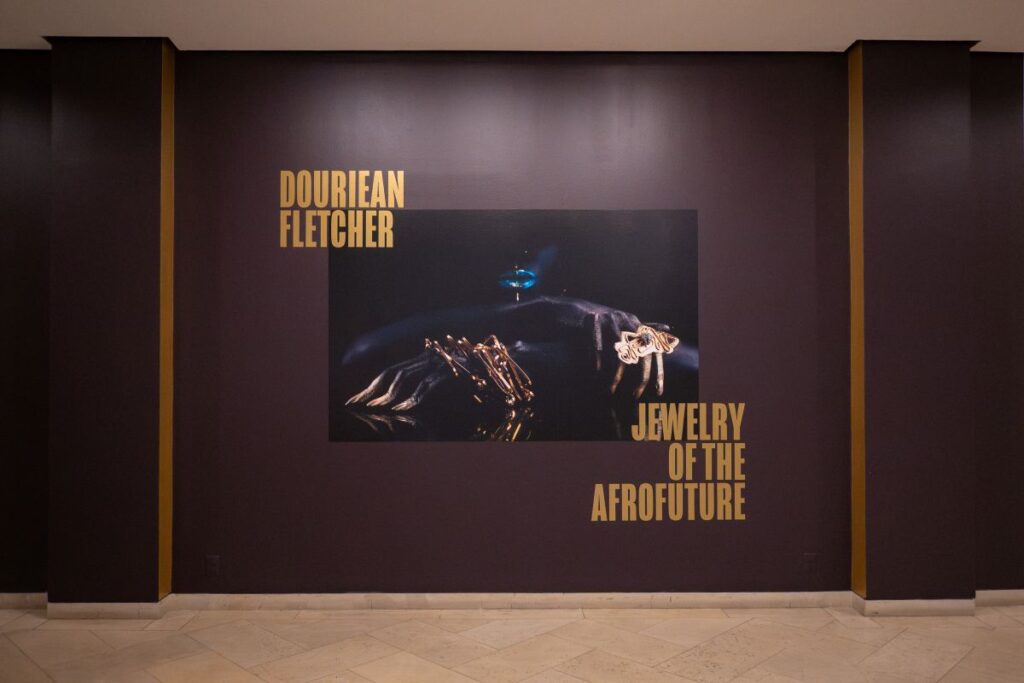
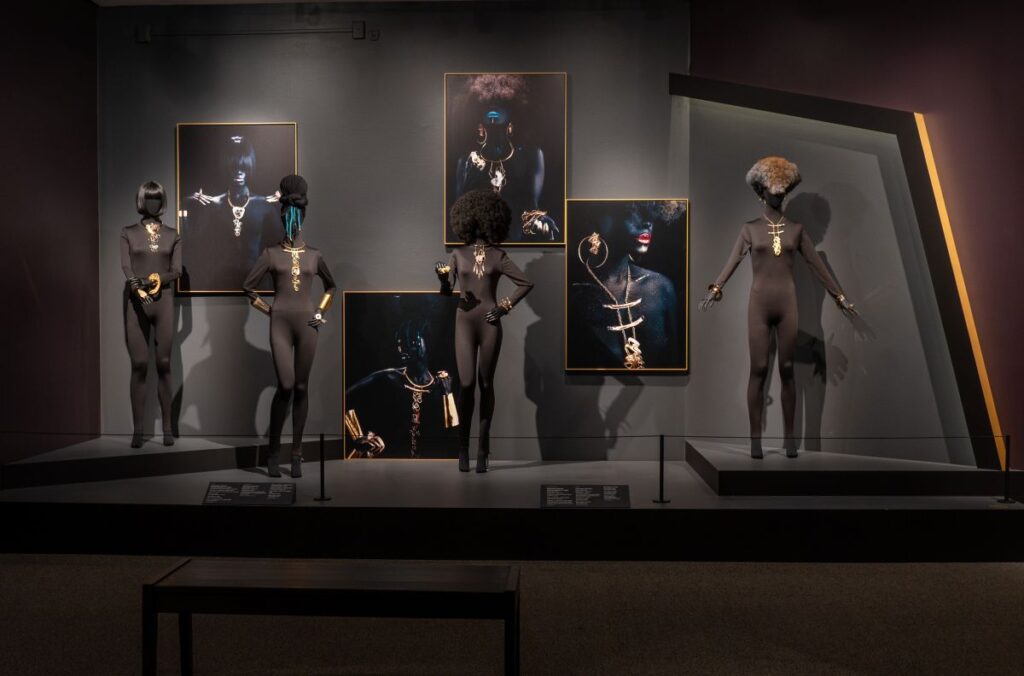
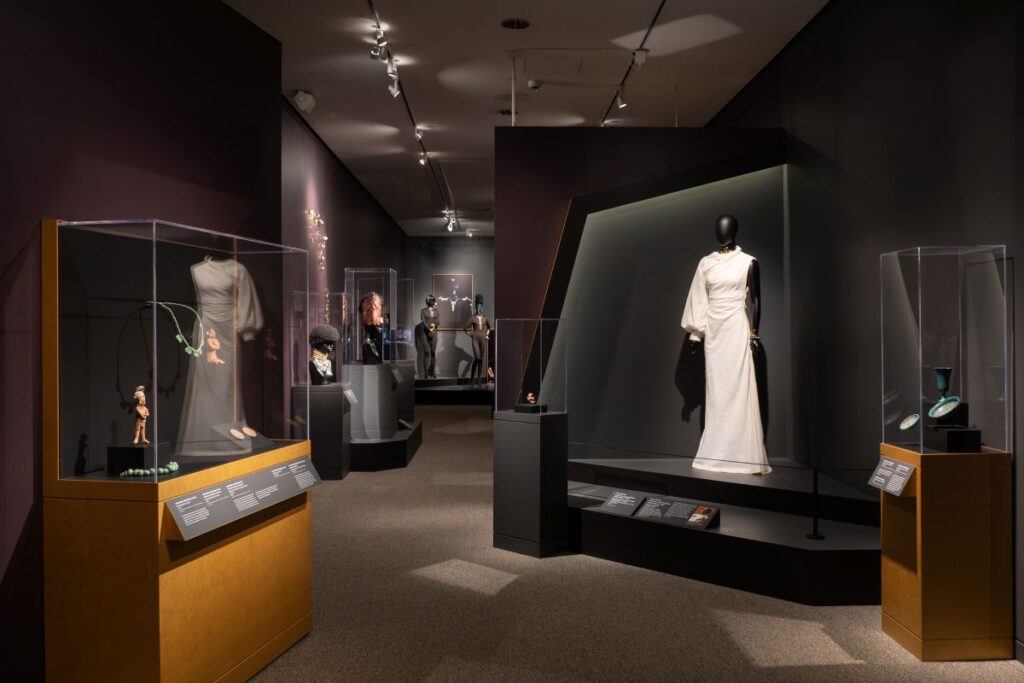
This year, her solo exhibition Douriean Fletcher: Jewelry of the Afrofuture, organized by the Museum of Arts and Design (MAD) in New York City, has arrived at The Walters Art Museum. Through more than 100 works, the show features pieces from Fletcher’s formative years and studio practice; her film and television work, and her current explorations. Her designs are displayed alongside a selection of historic jewelry and objects in the Walters collection and beyond, some of which directly influenced her path and vision as an artist. Delving into one of the stories behind this connection seemed the perfect place to start our conversation.
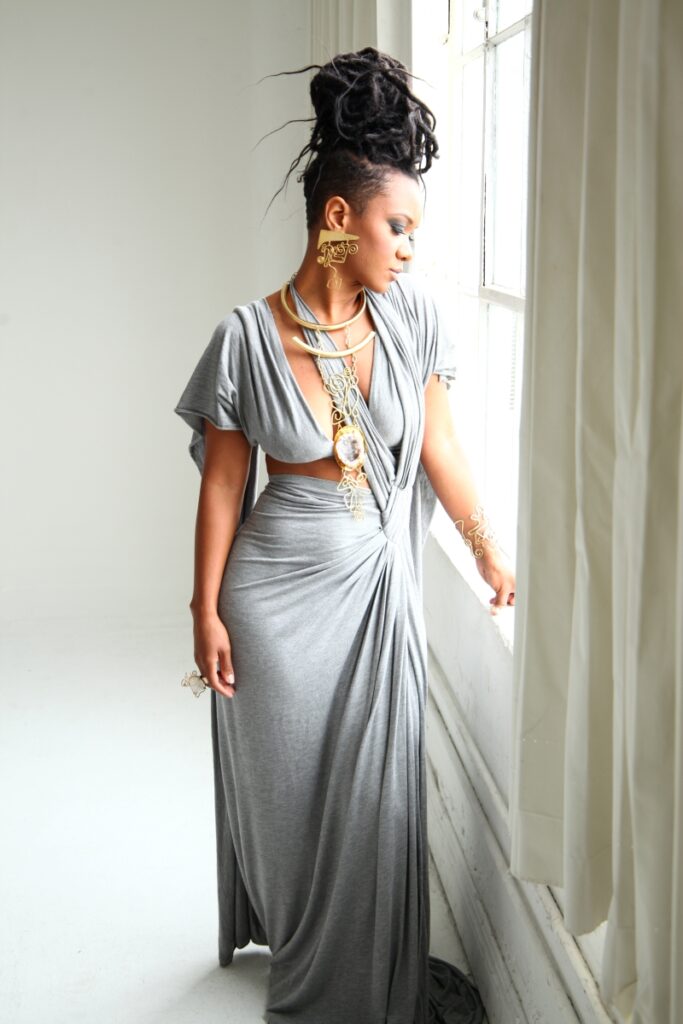
Your history as a self-taught metalsmith and jeweler has a serendipitous link to The Walters Art Museum. Can you talk about that?
There was a picture of an Egyptian ring that I found online when I first started making jewelry, between 2010-2012. At the time I was trying to understand my aesthetic and where I could reference it in history. And I saw this ring. It was like a talisman to me. I absolutely loved it. It gave me a direct connection to where I wanted my work to go. But I couldn’t figure out where to find it at the time.
So Jewelry of the Afrofuture came to The Walters through the Museum of Art and Design. I have been working with the amazing curator, Barbara Paris Gifford, on the exhibition for about four years now. While building this exhibition with Barbara, and also Sebastian Grant, I wanted to make sure that Egyptian ring was in the show. And it just so happens it was in The Walters collection! This has been a phenomenal experience; seeing how my work and my practice, and the work I’ve done in film, directly connects with pieces like that, and others from the Walters collections.
The title of your exhibition is Jewelry of the Afrofuture. How do you define Afrofuturism?
The theme of the exhibition is reminiscent of the Sankofa idea, which is taking what we know in our past and applying it to our now and our future. I think Afrofuturism is the idea of reimagining, but also accessing ancestral intelligence and the tools that we have now as we navigate improving our future and seeing ourselves as strong, capable, powerful people.
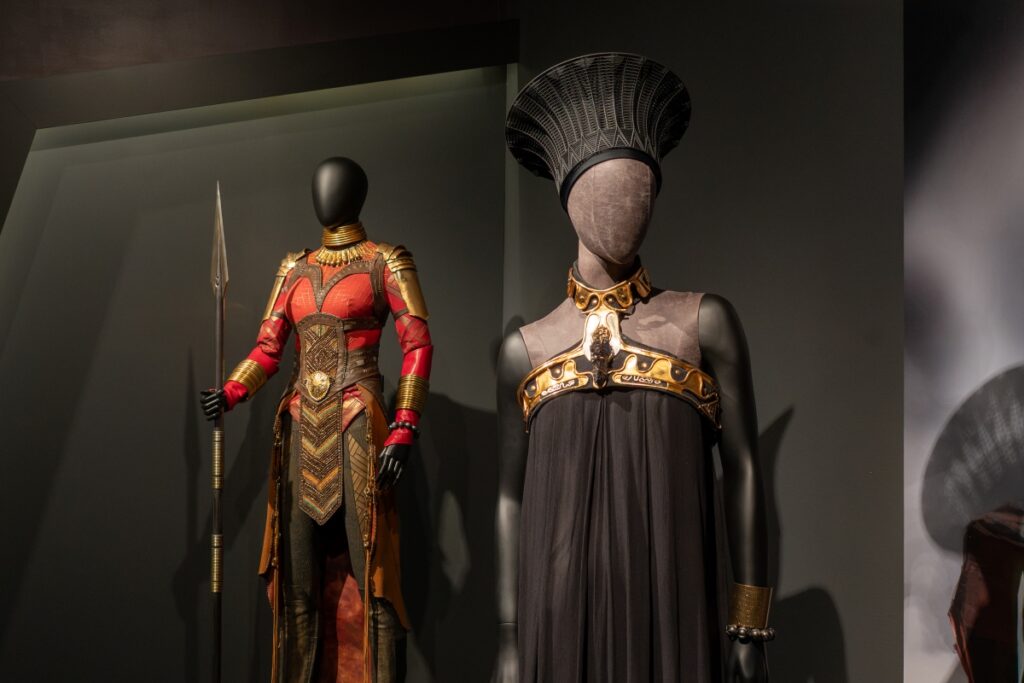
Douriean FletcherI think Afrofuturism is the idea of reimagining, but also accessing ancestral intelligence and the tools that we have now as we navigate improving our future and seeing ourselves as strong, capable, powerful people.
What are some of your favorite pieces in the show?
I have some new works featured in this exhibition, one of which is a necklace with raw tanzanite from Tanzania, pieces from Gabon, Herkimer diamond, malachite, and a fire opal from Kenya. That one is really important to me because even though it’s very similar to my past work, it’s an intentional expansion of how to adorn the body as an altar, as a space of reverence and memory. So I’m excited to be able to share that piece with folks because it’s a reflection of where I’ve been the past five years.
There is also a collection of my works from New Orleans. They hold a really dear spot for me, just because it was the beginning of this journey of navigating, being creative, being self-taught, and the support that I received. This was before my work in film. I was in a high experimentation season and era of my life and inspired by the incredibly talented artists I was around at the time. There’s so much Afrocentric culture there. And I was fully supported to just express as much as I wanted. It was a great marriage of creativity and community.
Would you say your jewelry is an extension of cultural expression?
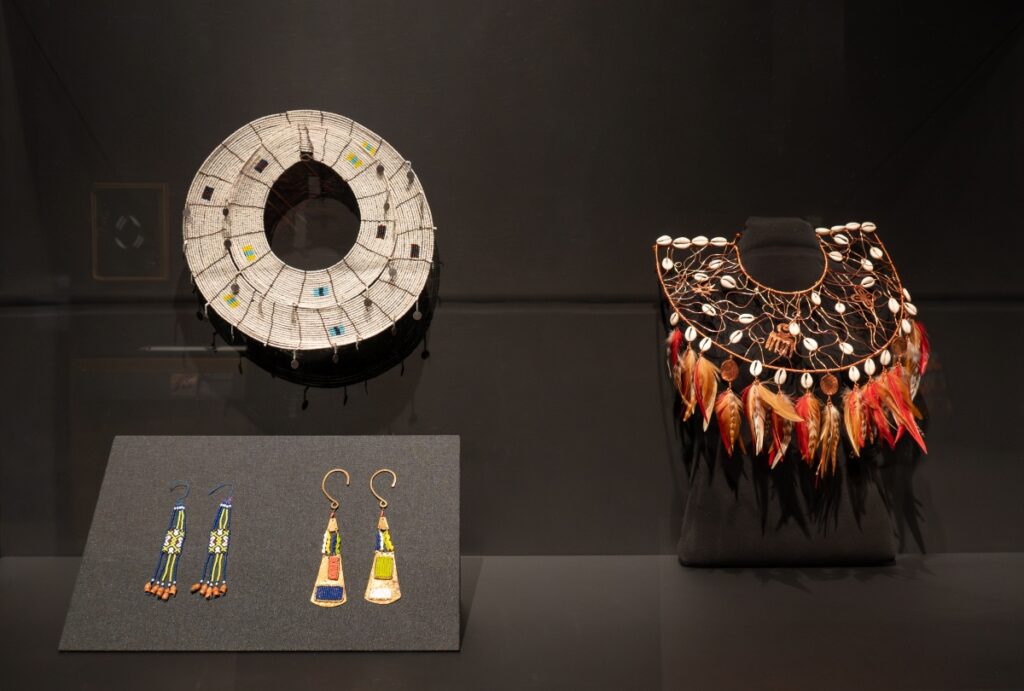
Jewelry is a communication tool. The initial function and use of jewelry was to adorn ourselves to communicate who we are, where we’re from, and differentiate ourselves. As far as my work goes, from a cultural perspective, I would say that it’s intended to be a reminder of our spiritual practice, outside of religious practices. A reminder of our power.
My work is naturally African informed, but it’s not intentionally created to look like Africa. It is meant to be a reminder of an origin outside of the constructs and the labels that have been placed upon us as people of African descent. And to express and establish beauty outside of those norms and outside of European aesthetics.
How has creating for film and television contrasted with your personal practice?
Knowing and understanding deadlines as tight as the ones I’ve been on for film and television provided an opportunity to test and challenge myself. I had to figure out how to deliver my products on time and still tell a quality story through this artwork with the time frame I was provided.
The questions were different from my own personal practice. What’s the best thing that I can make that can deliver the vision that Ryan Coogler or Ruth Carter has within the time frame that I have? That pressure actually created something better at times because I may have not even thought about it if I had more time to do it. Sometimes the spontaneity created some real gems.
Black Panther is etched in cinematic history. Both Michael B. Jordan and Ryan Coogler won Oscars for the film. You were part of the costume design team, led by Ruth E. Carter, that won an Oscar for not only the original Black Panther, but the sequel Wakanda Forever as well. That makes you the first jewelry artist to be part of an Academy Award winning team—twice. What was that like?
It’s an absolute honor to be in a space with incredible creatives and for my work to be appreciated, respected, and felt. Congratulations to Michael B. Jordan and Ryan. They tell really good stories that are very authentic and real to our experience, even in fantasy. I think the work they do, the work Ruth does, feeds the soul. So to be able to lend my talent, and my skill, and my passion to these visions, to people who get it and appreciate the art is all I can ask for. I’m thankful for Ruth and Ryan for believing in me and thankful for this power of storytelling through the diaspora.
You also made history as the first jewelry designer to be inducted into the Motion Picture Costumers Union; that’s the largest organization of costume artists in film and television. Can you tell us about that moment?
It was a lot of pressure. This is a multi-million dollar film that a legend like Ruth was given and she trusted me and my talent to be able to deliver. It was a bit scary initially. However, when I was able to get in my groove and understand how I fit into everything, and how I was able to tell stories and bring my voice and my style into the costume department, I was able to settle in. Once I understood the task that I was given and the trust that was bestowed upon me, it made it easier.
What do you want your legacy to be?
I want my legacy to be steeped in what is reflected in The Messenger’s Collection in the exhibition. And it is this idea of one, no matter where they are in their life, to be able to tap into our authenticity, and be able to share that with the world. The Messenger’s Collection is about us coming here as humans to share our gifts and our talents with other people, because it’s medicine. And that’s what I want my legacy to be. Whether it’s creating jewelry, or something that goes into the home, or activating women’s circles that I am in, I hope to empower people to use their voice.
Douriean Fletcher: Jewelry of the Afrofuture is on view April 18–August 9, 2026 at The Walters Art Museum in Baltimore.