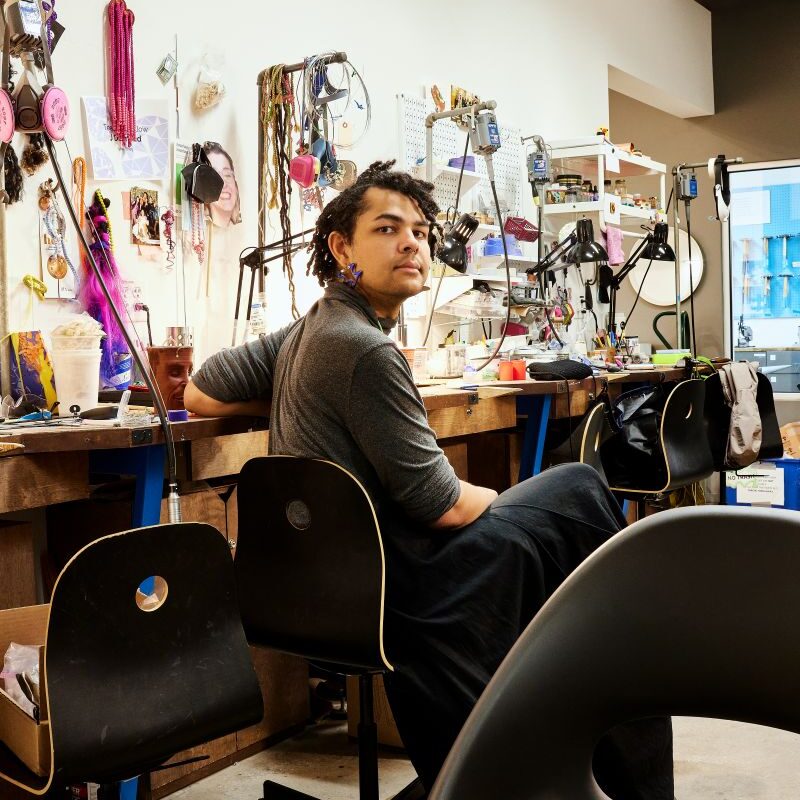
J Taran Diamond tends to keep to her home—outside of work and her Sunday-morning jaunts to Catalog Coffee. But you may find the metalsmith and craft educator on the street collecting synthetic hair.
“I’m sure that I look insane to anyone who sees me,” she says, “because often I’ll be walking somewhere and then spot a mat of hair, pick it up, put it in my bag, and say, ‘This is mine now.’”
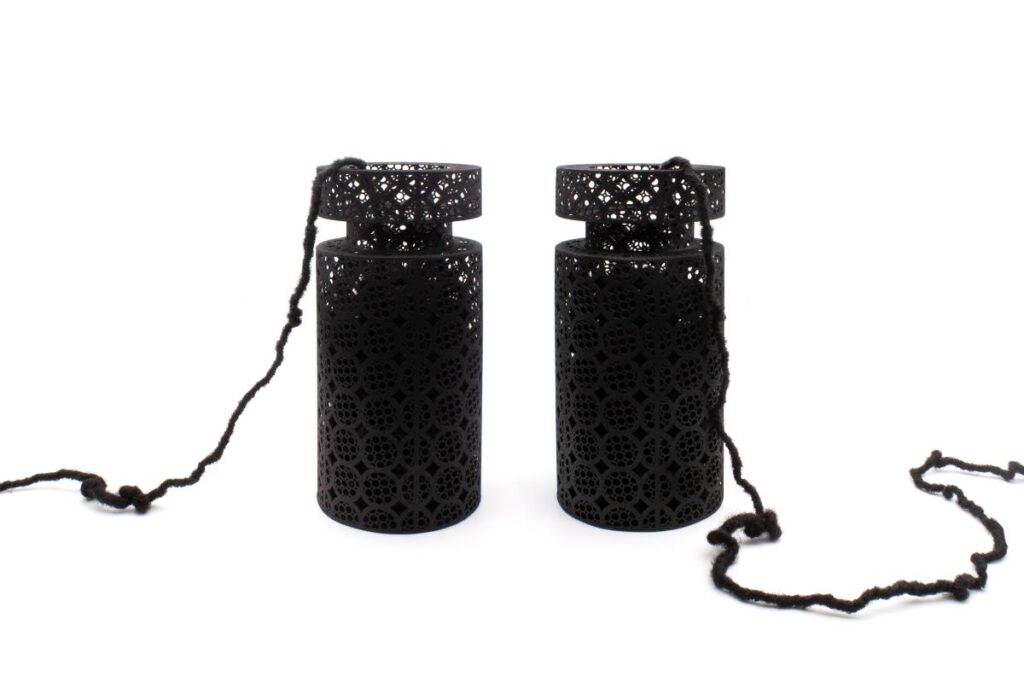
For Diamond, hair exists in the space between body and ornament—between real and fake. Authenticity and artifice are recurring themes in her creations. “I like to think those things are universal concerns in people’s lives,” she says, “but I do know that my work isn’t going to be very appealing to a collector or wearer who isn’t just a little bit nasty.”
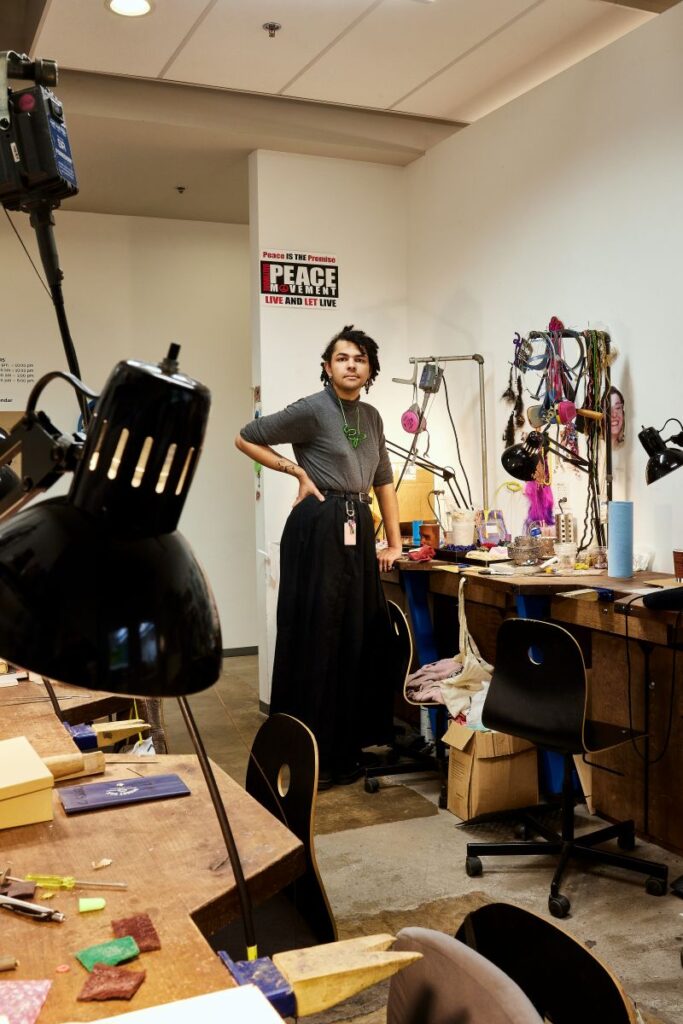
As part of an experimental roaming exhibition, Diamond sports a paper rendition of a necklace—and is giving out copies—made by a colleague at the Baltimore Jewelry Center, where she is a teaching fellow. She moved to Baltimore two years ago to work there after earning her MFA from the University of Georgia.
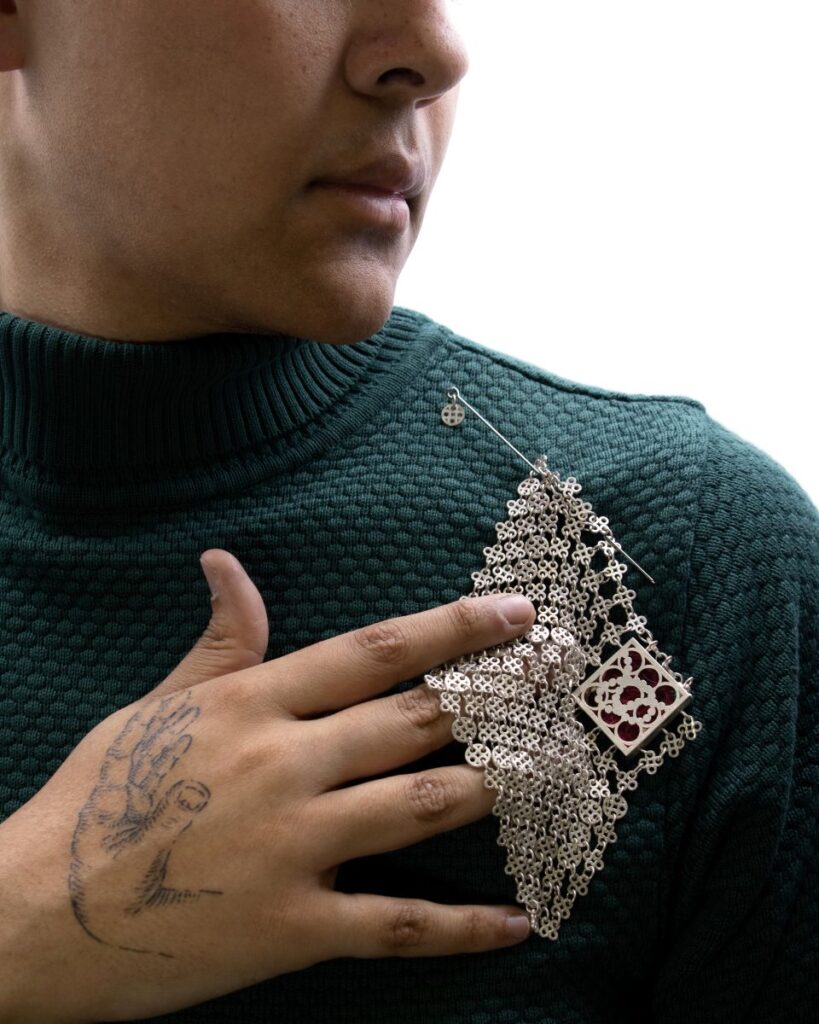
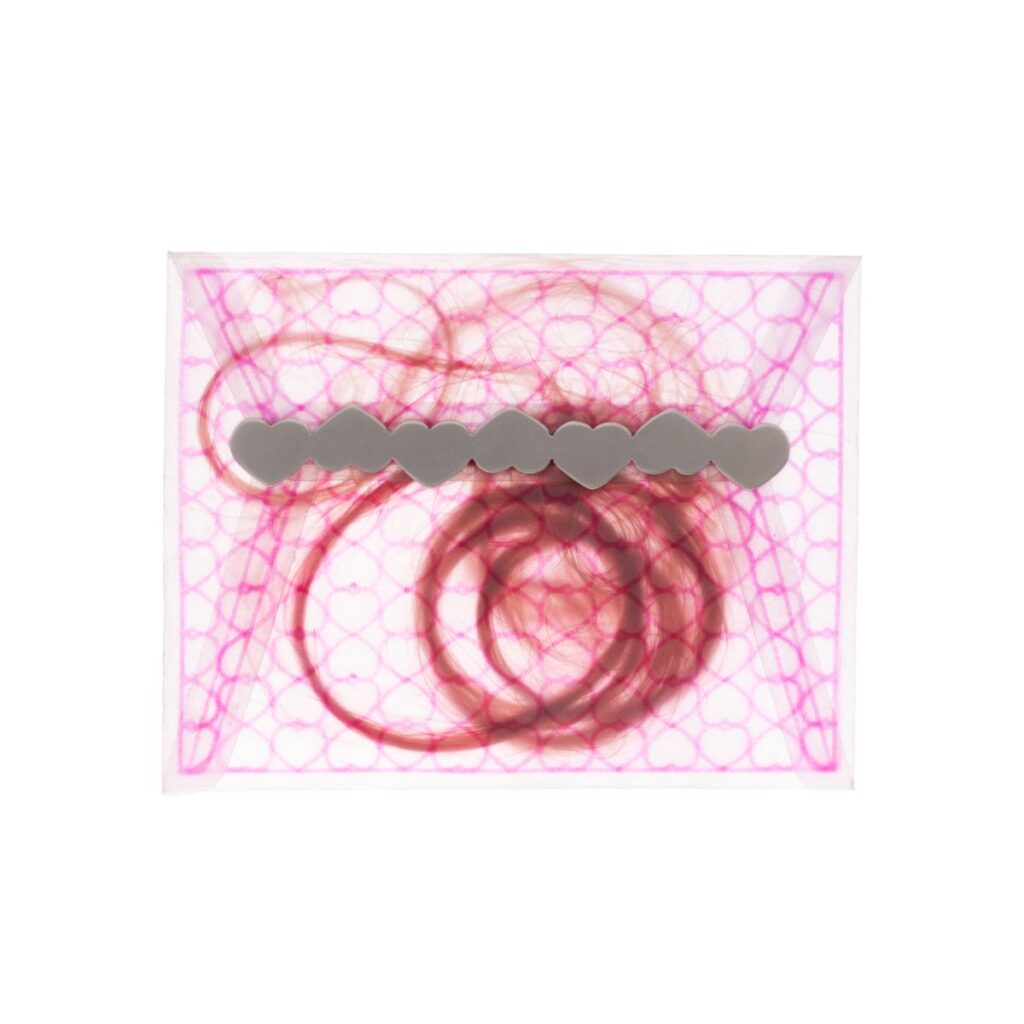
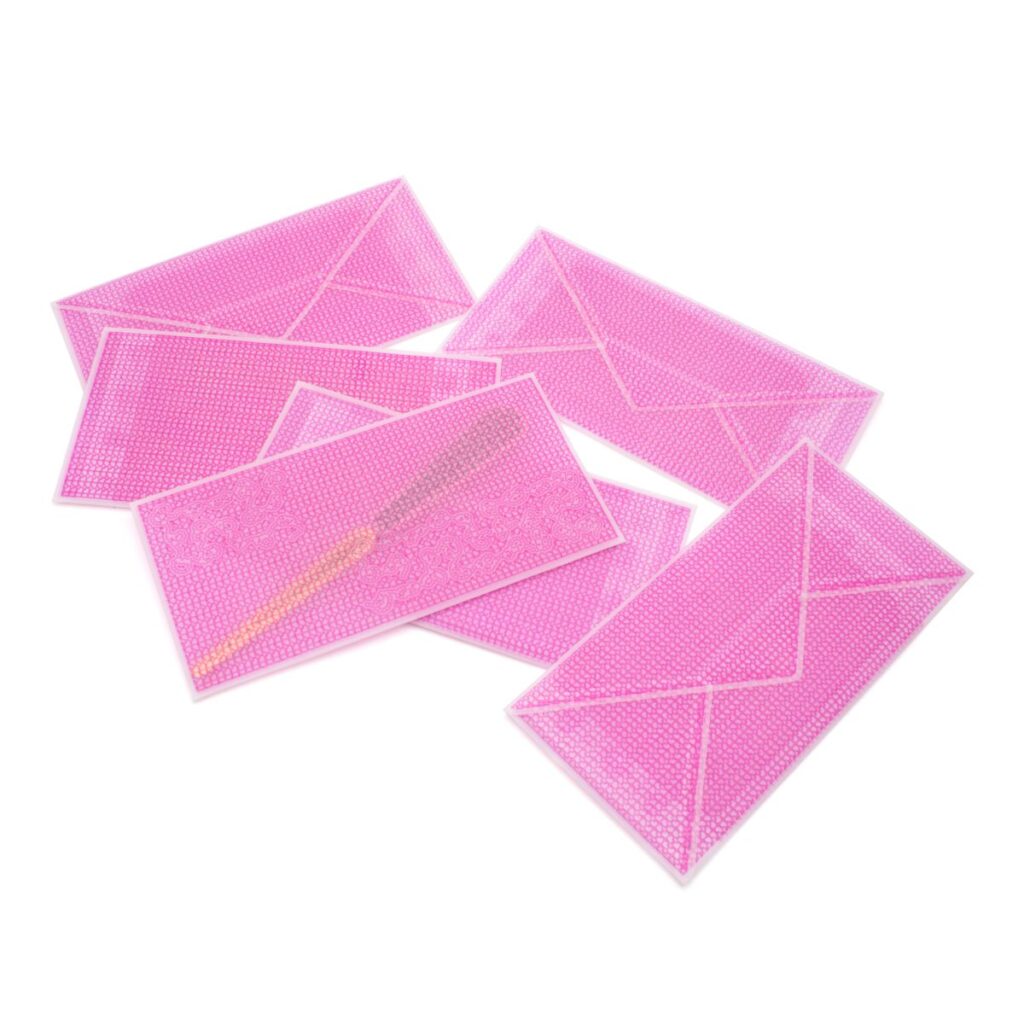
Lately, she’s been experimenting with mesh and making envelopes, some stuffed with hair. Both objects reflect the tension between what’s inside and what’s outside. This contrast is as personal as it is playful—informed by Diamond’s closeted past as much as by her love of secrecy. She often folds levity into her heaviest subjects and remarks, like when she wryly describes her thesis on Southern enslavement sites as “a bummer”—though she’s now actively trying to make more joyful objects.
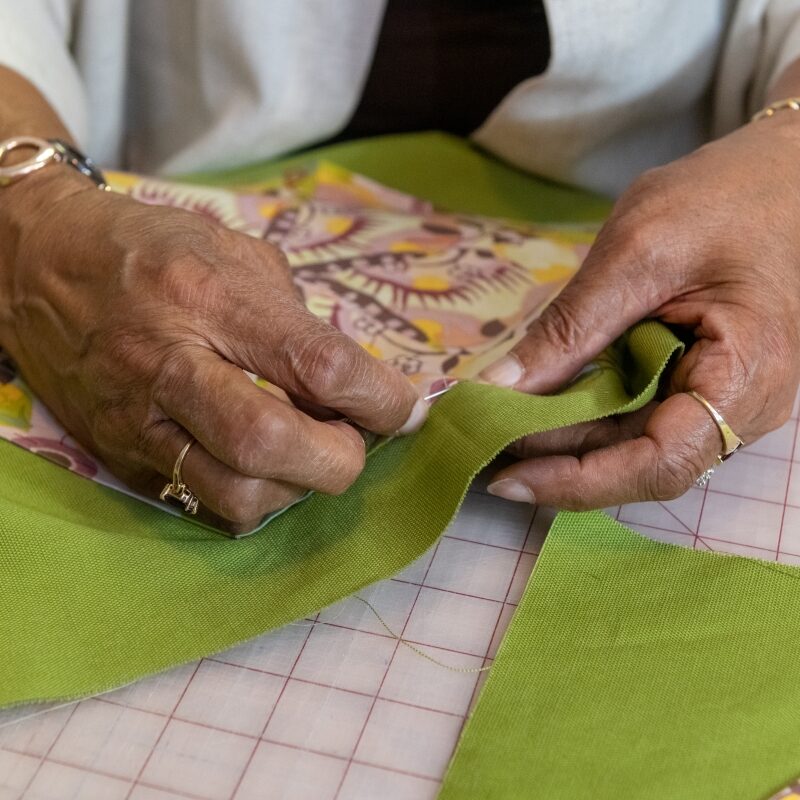
And though her art is ambiguous, she picks each word with precision, as if polishing or plating. Most of her practice consists of surface treatments. “I make really convoluted objects so I can make them play dress-up with paint, plastic, or whatever I’m applying,” says Diamond, whose style and techniques tend to reflect her former career as a costume designer. She grew up quilting with her mother and enjoyed creating clothing, but disliked working with actors and directors.
“I was taking an intro jewelry class and, at the end of the semester, the professor was like, ‘You’re going to transfer from this community college to this four-year university, and you’re going to major in this.’ Which I did—and which I do find to have worked out relatively well.”
What do you try to pass along to your students?
In my teaching, I emphasize attention to detail and critical thinking as a maker and as an artist. But, for a lot of students, there’s an impulse to try to find the right answer, or the answer that I want, and the thing I spend the most time harping on is: That’s not how art-making works. The goal here isn’t to make a piece of art that I like. I can make a piece of art that I like—I have yet to do it, but ostensibly I can.
Do you really mean that?
I find that a lot of jewelers are very neurotic—like, “Oh, this piece is mostly successful, but there’s this one moment that no one else will ever notice, but I know.” For the most part, I do work that I’m happy with. But I really prioritize for the students that the goal is to make a piece of work that you like, and learn more about art-making while you do that.
Have you had educators in the past who implicitly or explicitly favored students who were making art for them?
I’m pretty lucky that all of the people who taught me jewelry and metalsmithing did not. But there’s a lot of traditionalism in the field that’s a little bit harder to get away from. One of my professors in graduate school, Mary Hallam Pearse, really worked to make sure that her students were not prioritizing that.
A lot of jewelers, when they do a thing that is not needlessly boring and difficult, will feel like they’re cheating. Every time I’d be like, “Well, I wanna do this, but it feels like cheating,” she’d tell me, “It’s only cheating if it’s on your husband.” I think that’s important for students to remember: There are ways that are going to make it a more technically successful object, but maybe the thing that you’re going for isn’t the most technically involved object for no reason.
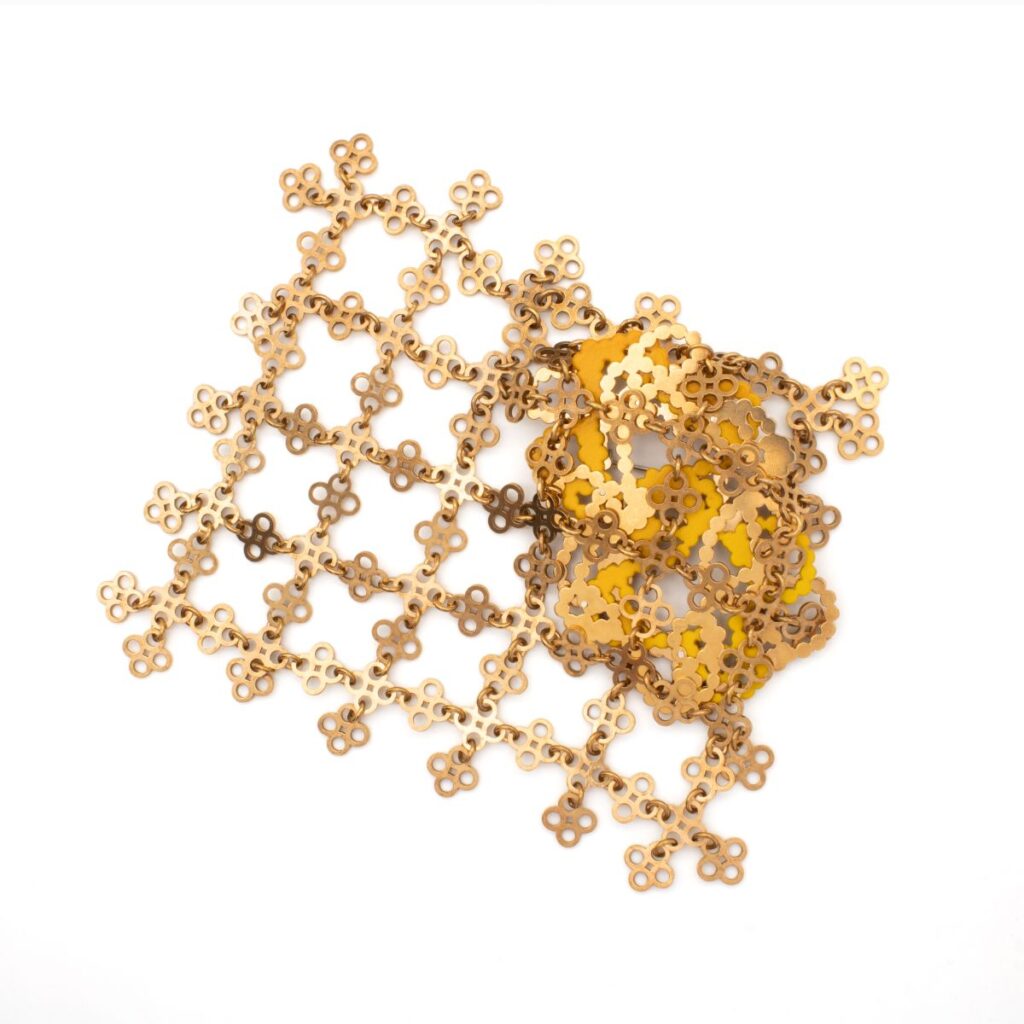
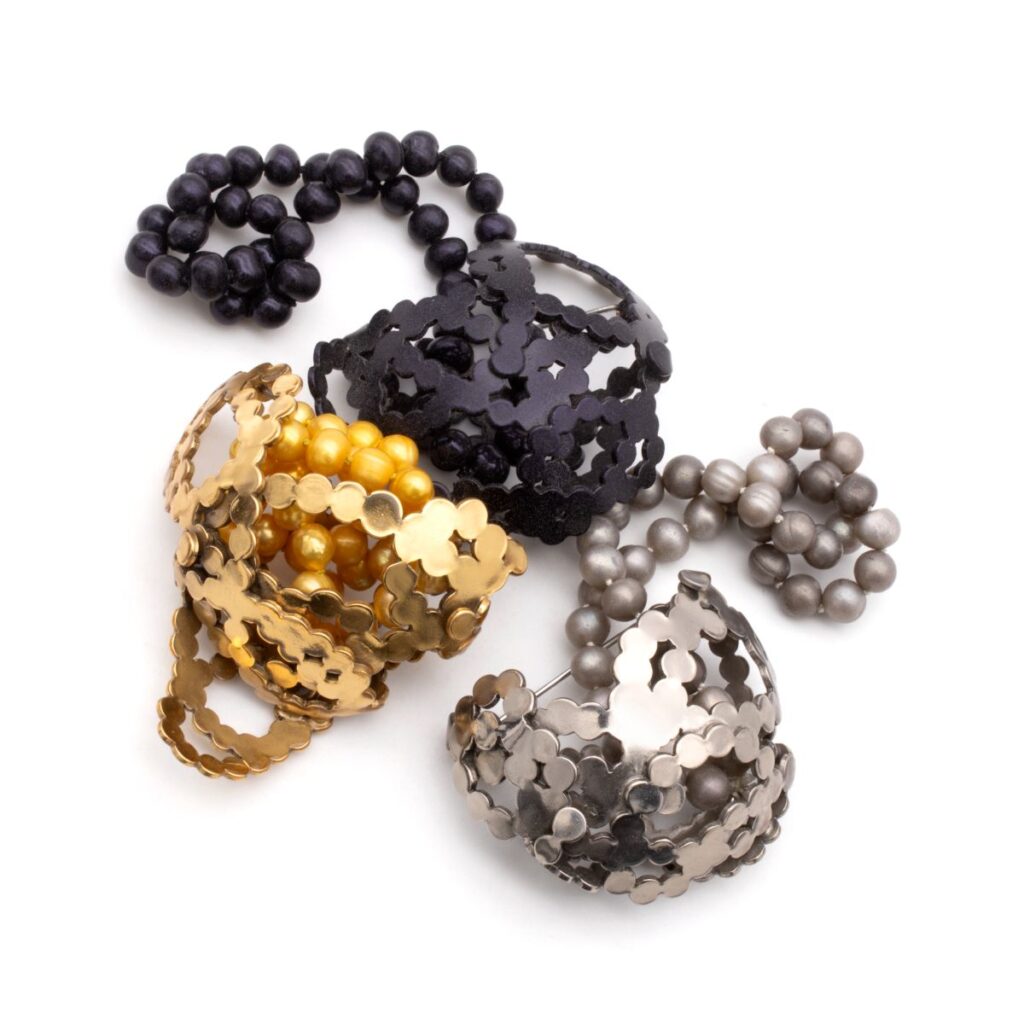
What materials appeal to you?
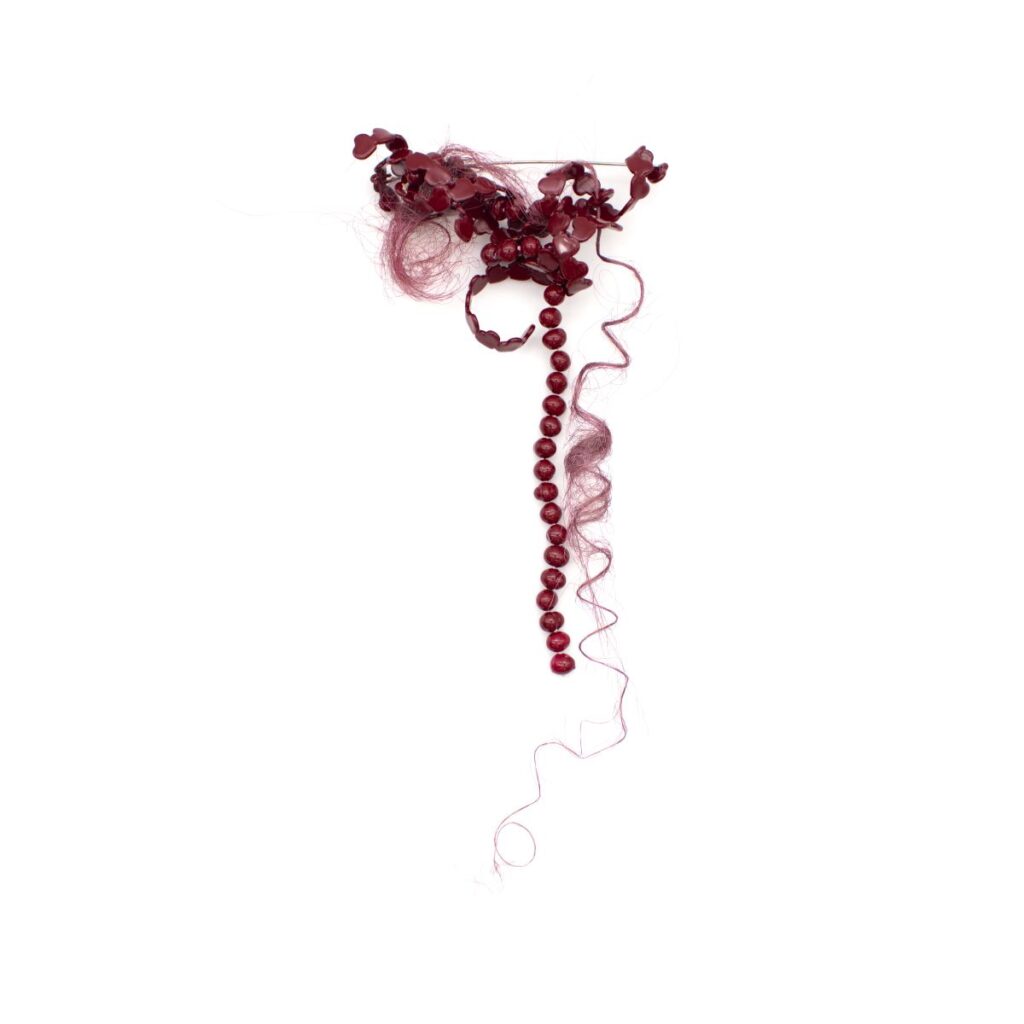
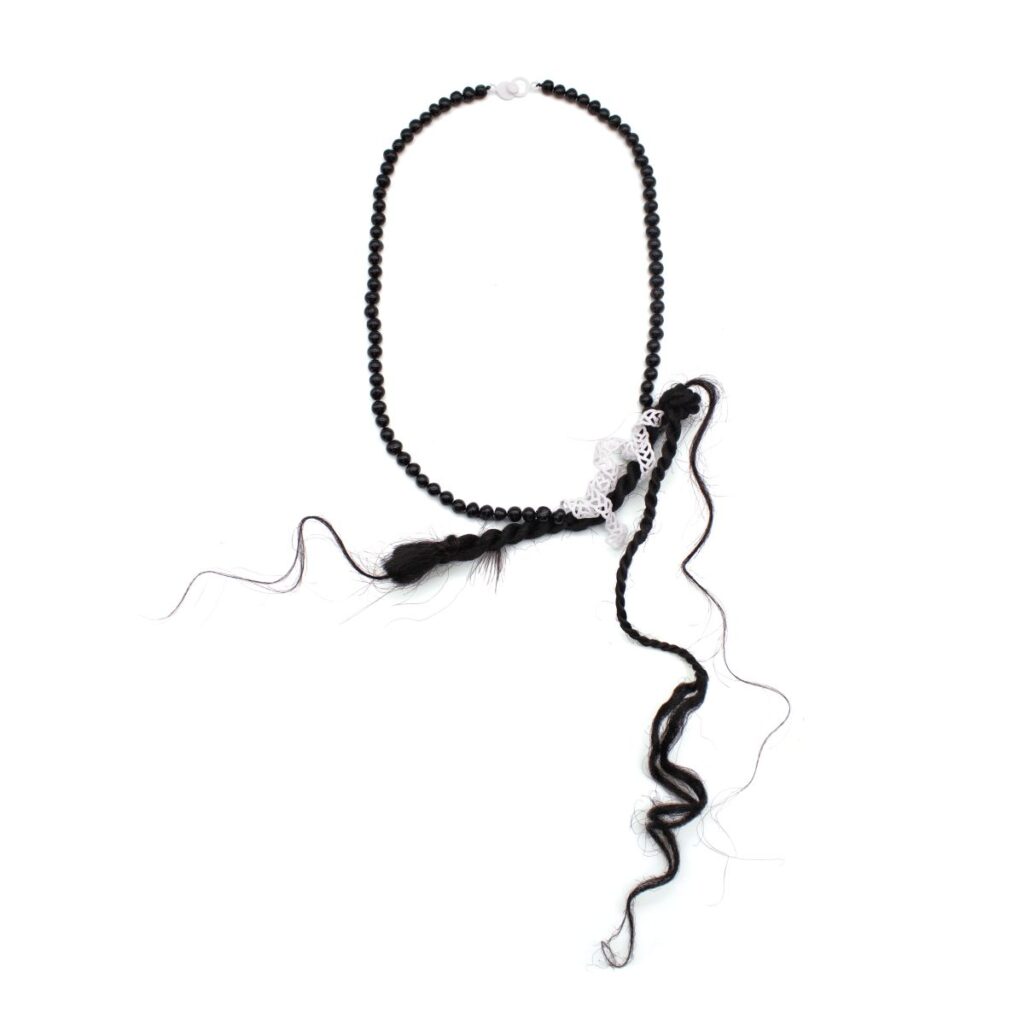
Hair, freshwater pearls, and powder coat—which is an industrial plastic that you fuse onto the surface of usually metal components. The most recognizable place you would see it is auto body customization and things like that. I’m interested in how aggressively synthetic it is.
In your description of Invert, you write about “materials perform[ing] identities.” I’m thinking about how Tenderheaded uses hair to explore, as you write, “visual cues” and “visual aesthetics” of queerness and Blackness. Would you elaborate on that idea?
A lot of the stuff I make is either directly or indirectly informed by my experiences as a transgender person who is a woman and lives as a woman, but maybe doesn’t look like one all of the time.
I think a lot about “What is this material? How do I know what it is? Does it look like what it is? How can I either make it look more or less like what it is?” I’m interested in making objects that pointedly fail to be rigid or masculine. When I was making Tenderheaded, I was specifically thinking about the gesture of the limp wrist and the role of exaggeration or bright color marking things as camp.
J Taran DiamondI think a lot about ‘What is this material? How do I know what it is? Does it look like what it is? How can I either make it look more or less like what it is?’
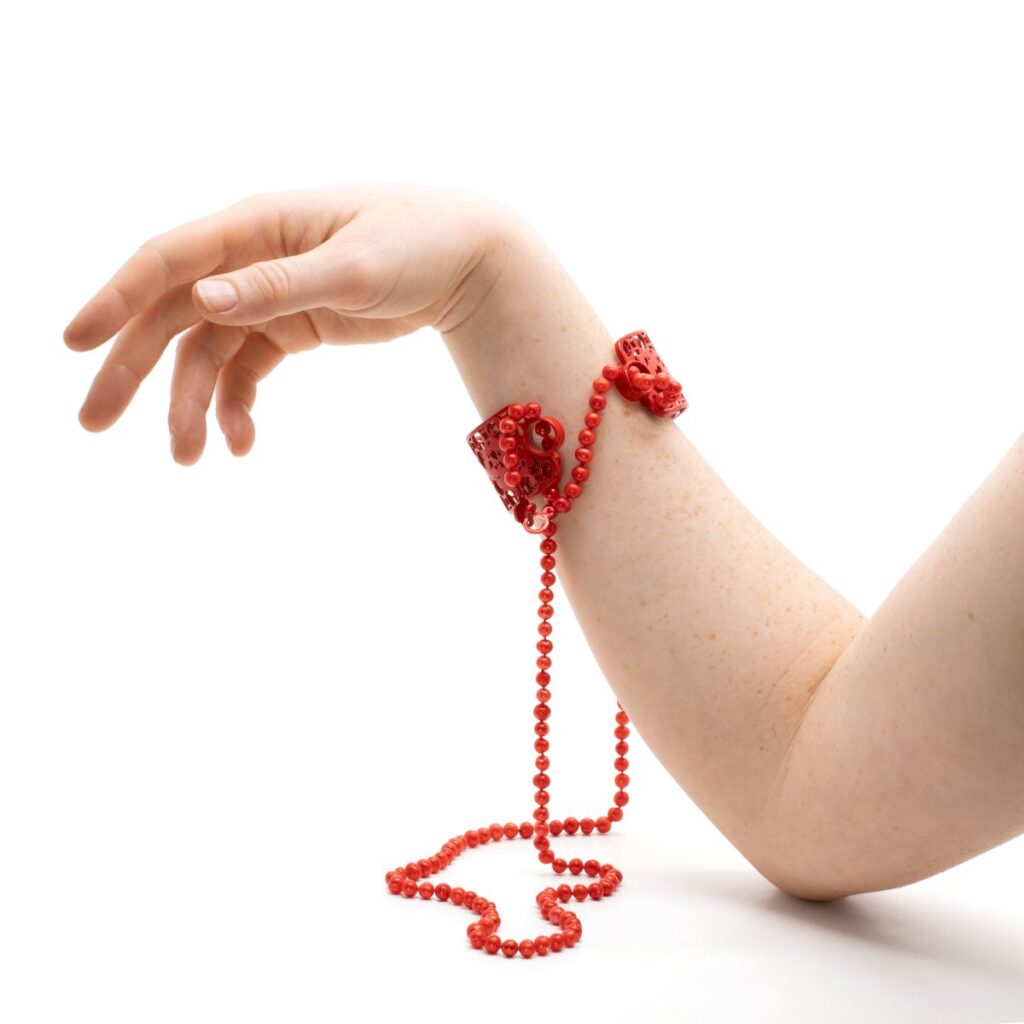
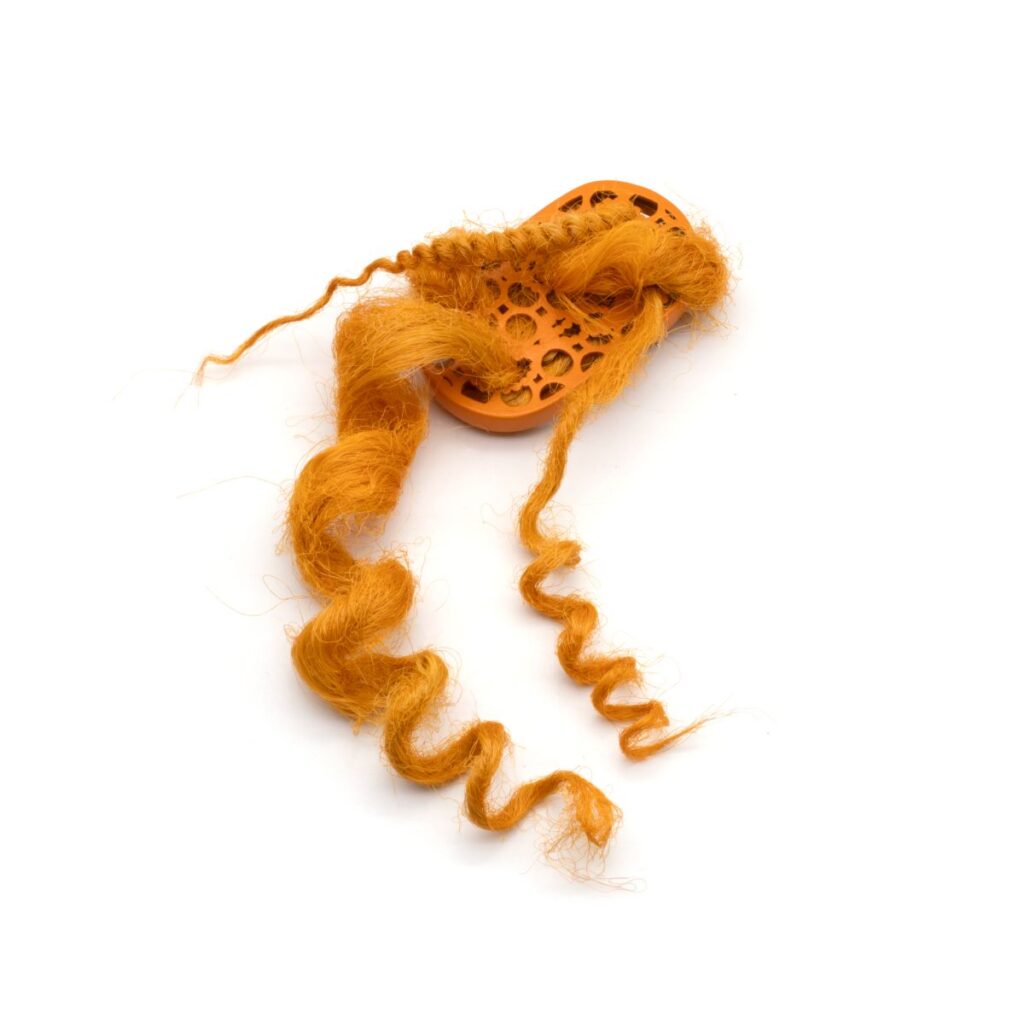
To what extent do you consider the viewer’s positionality when you’re crafting and presenting objects?
I find that I have a problem in my practice that I think a lot of contemporary jewelers have; if I’m thinking about the person wearing my jewelry, I am often envisioning someone with experiences very similar to mine, but I don’t necessarily want to make that a prerequisite.
All of the work that I make is, to some extent, rooted in my own personal experience, but I try to be a bit less visually representative of “This is art about being a transgender woman of color” and more like “This is two materials interacting with one another in a way that I find relatable.”
I’m less interested in my experience and more in what about my experience feels important, and I try to focus on that aspect to create an object that is hopefully relatable to a broader community.
How do you go about that process?
There are a lot of motifs and symbols that I use, including hearts and pearls. I spend a lot of time thinking about “What are the materials I’m using, and what are they doing with one another? How does this relate to my experience, and what parts of that experience do, or maybe should, matter to people who are not me?”
And I find that when I think about what parts of an experience are going to matter to a person who is not me, it’s usually a little bit less “Oh, I worry that this person on the street was looking at my brow ridge weird” and more “One of these things is not like the others, or maybe it is—and maybe it matters, and maybe it doesn’t.”
Why hearts and pearls?
Of the basic shapes we teach to children, the heart is the only one we ascribe an emotion to. And because we ascribe that emotion to it, we also ascribe femininity to it, and because we ascribe femininity to it, we don’t necessarily assign it value. We wouldn’t say a triangle is cliché, but in contemporary art, people often say, “Oh, that’s heart-shaped; it’s stupid,” and I’m interested in sarcastically engaging with that and asking what it means to still choose this object that is not assigned substantial value.
And the pearl, similar to hair, is part of the body, but also foreign to it. That feels interesting and relatable to me; there is something that feels very transgender to me about this thing that exists within a body while also being a stranger or intruder to that body.
I also think it’s really interesting that pearls are one of the first precious stones that we figured out how to manufacture. Farmed pearls are kind of real, but they’re kind of not, which is compelling to me in that space of “Is this thing real? Is this thing not? Does it matter?”
J Taran DiamondI’m less interested in my experience and more in what about my experience feels important…
What draws you to themes of realness and belonging?
When I started medically and socially transitioning, I didn’t really pass. I still don’t, and I don’t necessarily think that I want to, but I still get comments, and there’s this interesting dynamic—this wanting to be seen as what I am, but not necessarily wanting to go that much further out of my way to look like that.
Among openly transgender people, I have a pretty privileged life. I have as much work as I would want—and probably some more on top of that. I have a stable income, I have stable housing, and I teach at multiple universities. Especially now when it’s harder politically for other trans people, I feel an imperative to be visibly queer and engage with the visibility of that queerness. I feel a moral and ethical imperative to be a nasty little faggot.
What would it take to make craft and academia more equitable and accessible?
I don’t think anybody should have to pay for an MFA. If an MFA costs money, it is inherently going to be less accessible to people of color and people from lower-income backgrounds, and I’m tired of seeing art by people whose parents are in C-suite positions. Because of how much work an MFA is, if a person is doing an MFA, they usually can’t also have a full-time job. And I describe my MFA as a really important experience that I would have just done about anything for—except pay even a single dollar.
There is also a lot of breaking down of cultural value hierarchies that needs to happen in craft academia, especially in traditional American metalsmithing. The biggest thing—the thing I would change if I had to pick one—is that there are a lot of schools with really good craft degree programs, and a lot of those, at the very least on paper, are minority-serving institutions (MSIs), as opposed to predominantly white institutions (PWIs), but there are currently not any craft degree programs at Historically Black Colleges and Universities (HBCUs). At least none that I’m aware of.
There are not many programs where Black educators are teaching Black students, and as much as I valued and enjoyed my education, there were a lot of points at which I did not feel as welcomed in spaces. When you’re going to a wealthy PWI in the South and you look like this, they really don’t like it when you’re in the art building after hours. Young Black people deserve the same access to the ways making and craft can enrich one’s life that white students at PWIs have.
Is there anything you’d like to add that you wish I asked?
I’m very lucky that I teach for a living and that it pays all my bills because it means I don’t have to worry about selling my work. But it’s very important for those in a position to do so to make a concerted effort to purchase and collect artwork. I want artists to be able to make a living from their studio practice.