Baltimore is often reduced to two cultural extremes: John Waters’ endearingly wacky, trashy fantasia, and the grim systemic realism of The Wire. These representations stick because they are easily digestible and demonstrable narratives, but the city is much more than caricature and crisis.
Joseph Mario Giordano, a photojournalist, is seeking to depict the space between high camp and homicide with his new series at The Peale.
“The Secret City is the middle ground between kitsch and abandoned buildings,” he says. “It’s the secret part that people might not see driving or walking through Baltimore—these little gems that pop up in the periphery.”
J.M. GiordanoI’m just a white dude at a No Kings Protest taking pictures of people holding cool signs. I’m like, ‘What am I doing? What is my work? How is my work helping, or not helping, or contributing, or not contributing, to these issues? Maybe I need to step back and concentrate on other work—concentrate on my city.’”
While not ignoring Baltimore’s struggles, The Secret City offers a vibrant counter-narrative: a tapestry of neighborhoods defined by more than sensational headlines and plastic pink flamingos.
Friends enjoy each other’s company at a perfectly lit bus stop. Stockpiles of salt by I-95 rise like Himalayan peaks. And, perched on a graffitied fire hydrant, an apple exudes wry elegance while quietly radiating resilience and hope. “No matter how bad things are,” Giordano says, “there’s still an apple there.”
The exhibit was initially conceived as a retrospective of his book 13-23, which chronicles a decade of gun violence and grassroots advocacy. But then Giordano asked himself: Why retraumatize viewers with black-and-white, poster-size prints that show Baltimore grappling with the aftermath of shootings and killings? Is further promoting that vision of the city truly necessary? (In 2025, homicides in Baltimore fell to a nearly 50-year low, thanks in part to efforts addressing structural causes such as poverty.)
And so Giordano pivoted, and The Peale came on board.
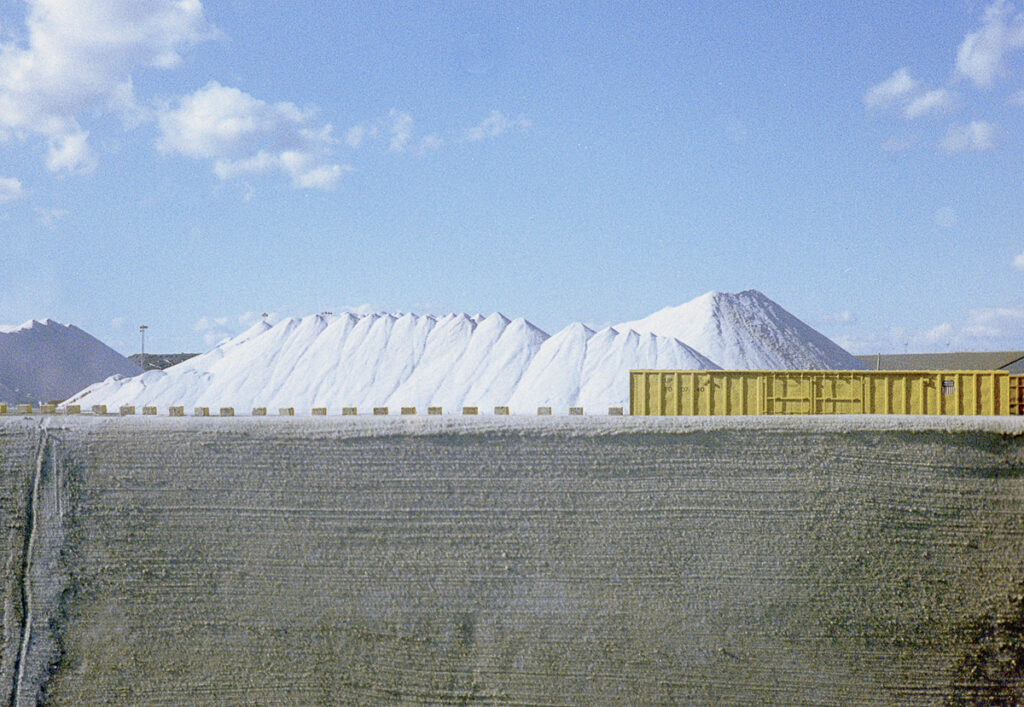
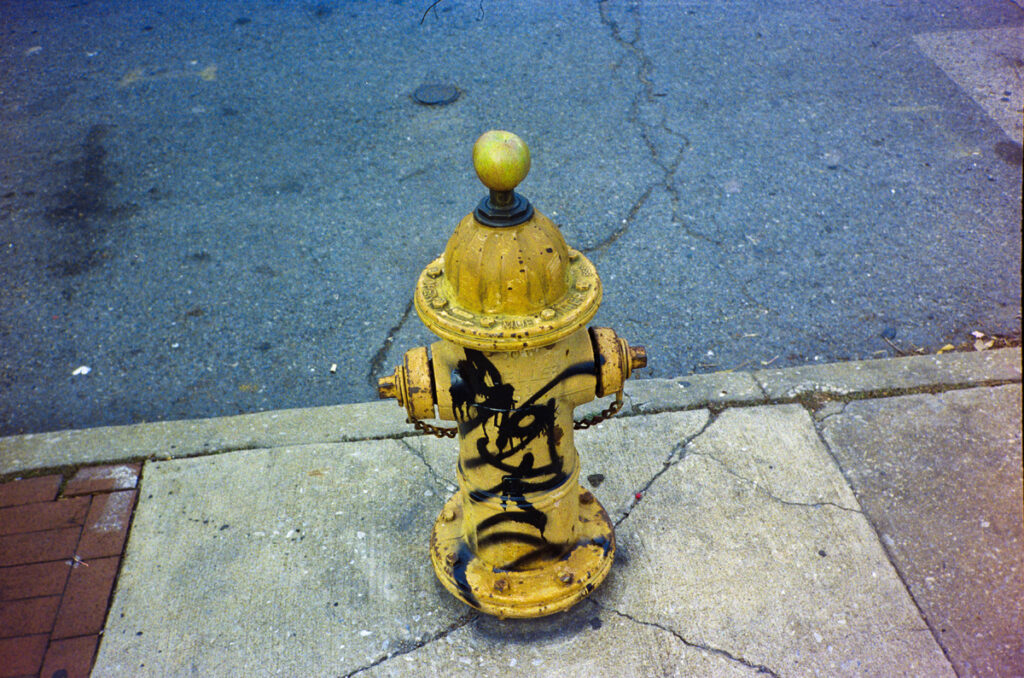
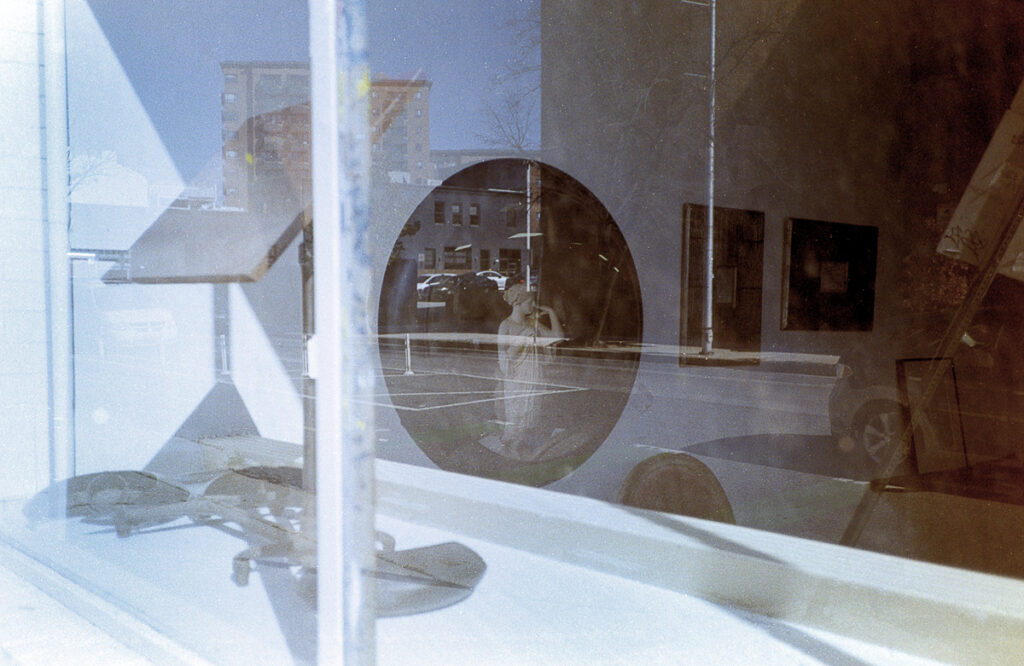
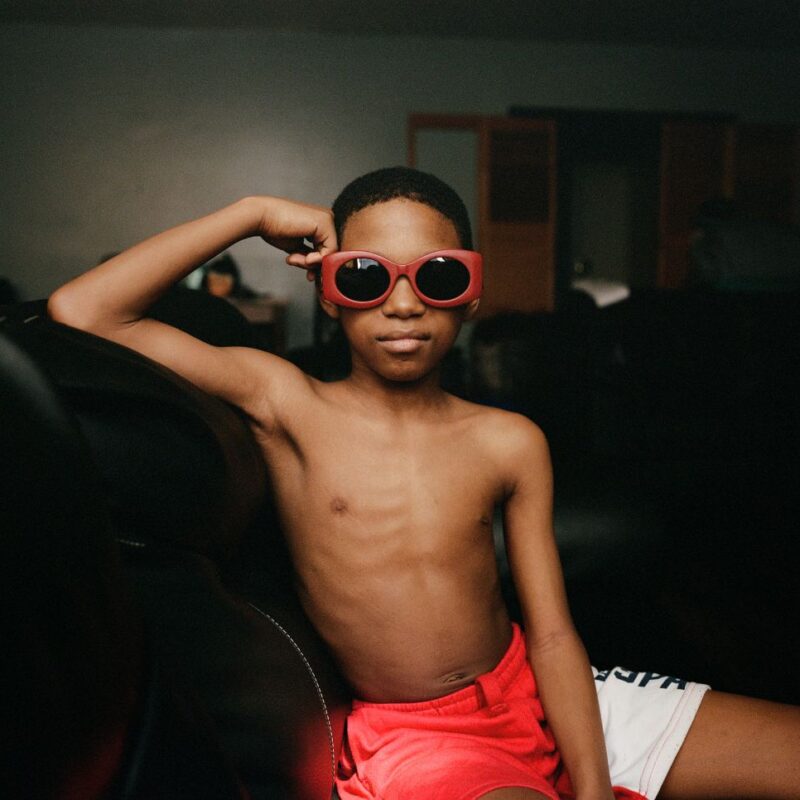
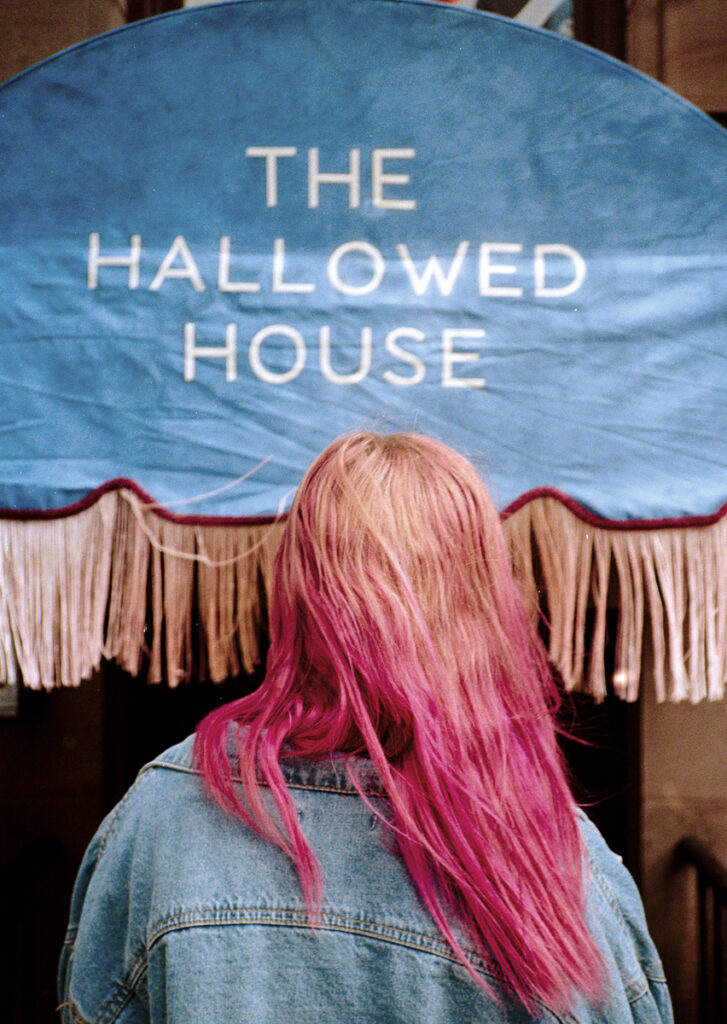
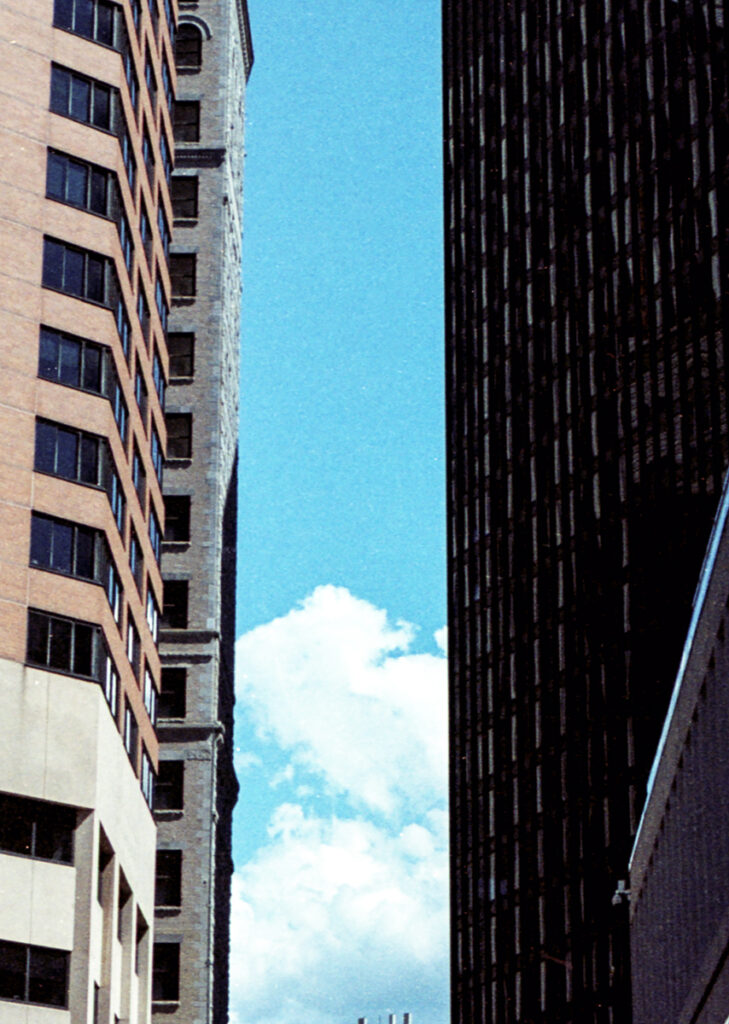
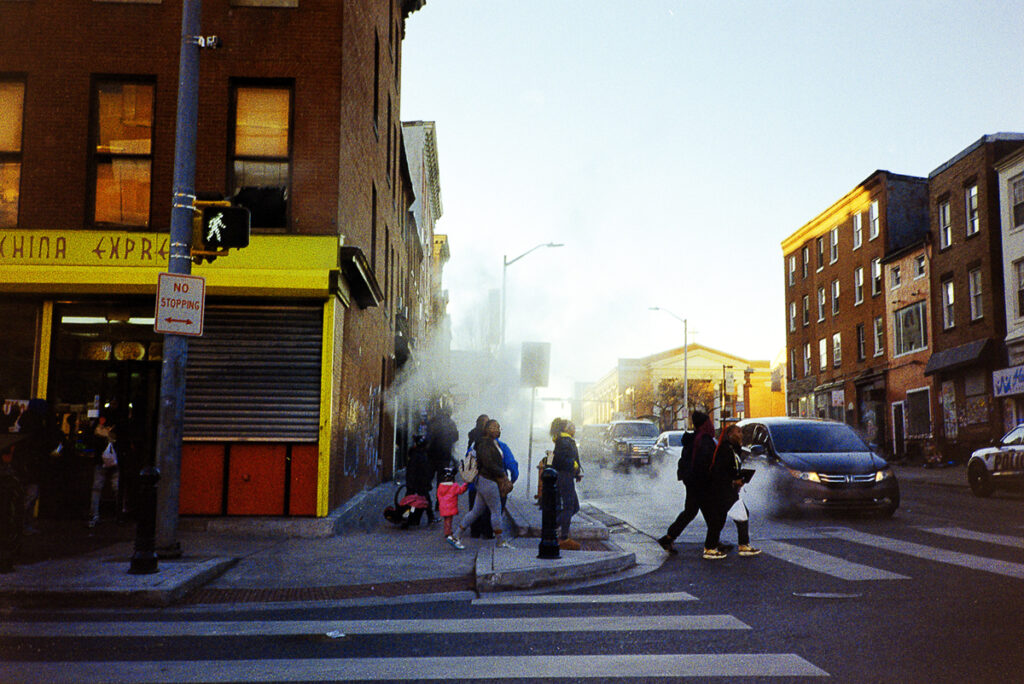
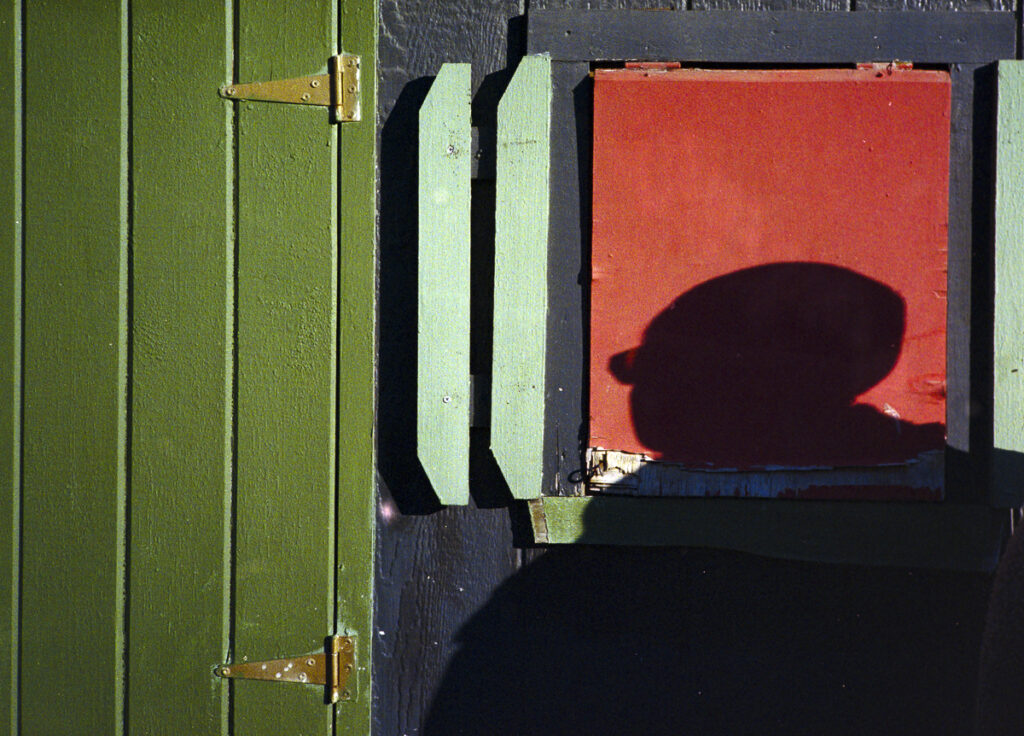
The Secret City: New Works in Color Film features roughly four dozen 5×7 and 11×14 color photographs framed in almost ethereal blonde wood. Through striking shadows and unintrusive glimpses of passersby, the pictures subtly evoke surprise, delight, irony, and intrigue. Light in presence but rich in suggestion, each image invites observers to co-construct the narrative—to create their own secret city. “I’ve never seen the city portrayed in this way,” Giordano says.
Yet he felt a bit of “impostor syndrome,” he tells me in a moment of self-doubt. “Are these just jokes? Is this just a farce?”
I think not. Yes, some pictures feel whimsical—like a backpack-clad student standing before a Mountain Dew truck, its design unfolding into snow-capped mountains and lush terrain, as if she could step right in. Yet this is also a critique of consumerism.
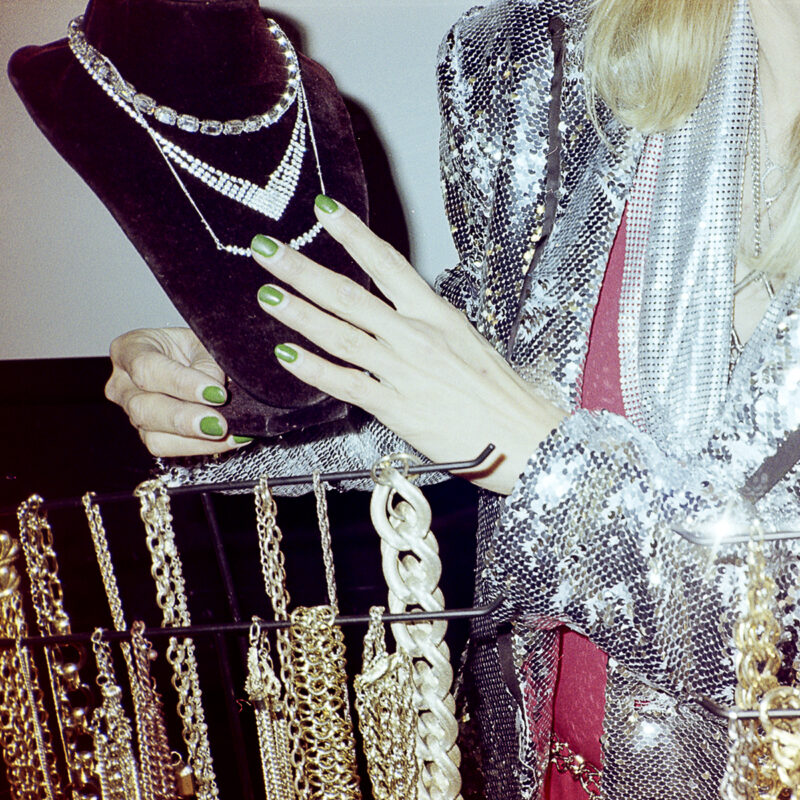
Giordano juxtaposes a man facing a Dollar General with a woman selling high-end jewelry, potently highlighting economic disparities. A blood-red prayer rug drapes over the dashboard of an old car; beside it, a split watermelon glistens at a summer farmers market. Alone, they are fragments of quotidian urban life; together, as if collaborating, they form a political statement.
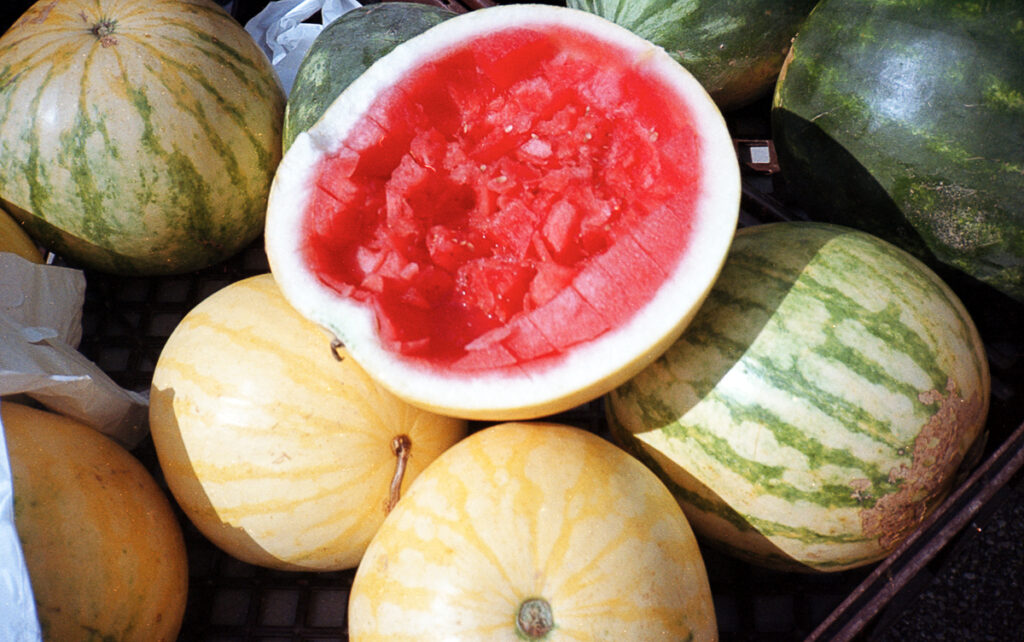
Shot entirely on a Nikon L35 AD point-and-shoot, The Secret City marks Giordano’s first foray into film photography. He switched from digital to analog last June after losing his SD card while covering an anti-Trump demonstration in Washington, DC, for BmoreArt, as it were.
“I realized that I didn’t miss any of the photos,” he says. “It was this freeing thing. I was completely not stressed about it, and all I really cared about was continuing on in film,” which he had been experimenting with for about half a year.
“I’m just a white dude at a No Kings Protest taking pictures of people holding cool signs. I’m like, ‘What am I doing? What is my work? How is my work helping, or not helping, or contributing, or not contributing, to these issues? Maybe I need to step back and concentrate on other work—concentrate on my city.’”
Giordano, who in 2013 left advertising and fashion journalism to cover gun violence for the erstwhile Baltimore City Paper, is now drawing inspiration from Luigi Ghirri, Guido Guidi, and Ugo Mulas—Italian photographers of the 1970s and ’80s who eschewed iconic landmarks like the Leaning Tower of Pisa and instead explored the overlooked and familiar, reexamining and reimagining the everyday landscape. “Tra un paracarro e un capitello, fotografo un paracarro,” Guidi once remarked—choosing to capture the humble curb over the grand capital, the mundane over the monumental.
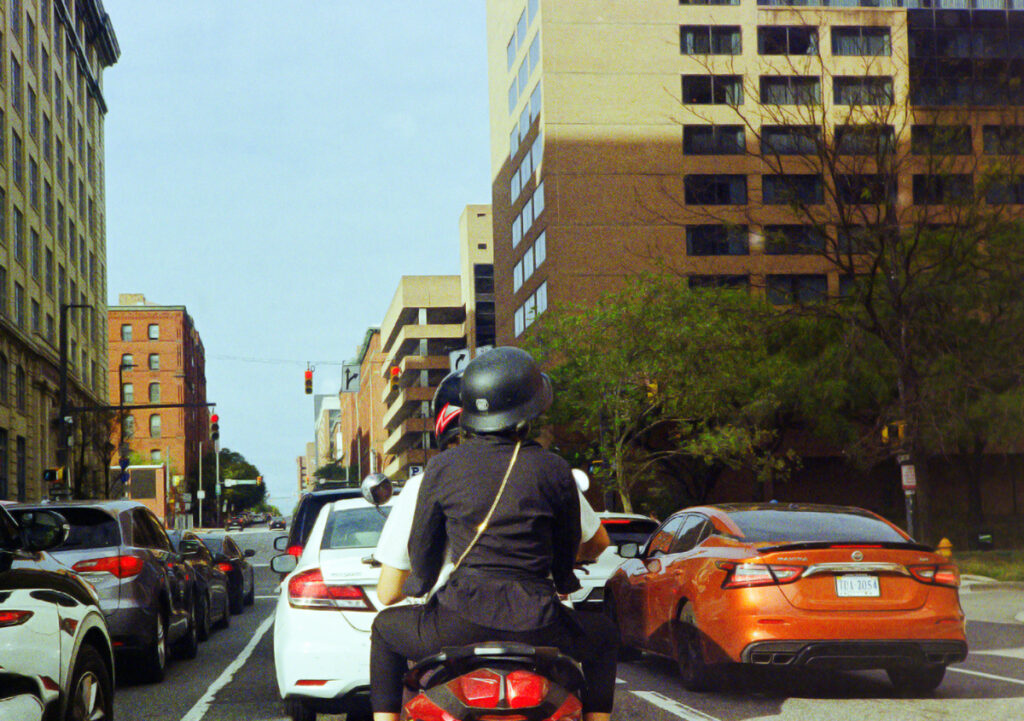
J.M. GiordanoThe photograph will take itself when it’s ready.”
In that vein, The Secret City recalls William Eggleston’s pioneering color photography of the American South, though in a less nostalgic way (for the most part). Well-versed in black and white, Giordano is retraining his eye to pay more attention to color, which involves seeing things in a new light, both literally and figuratively. He notes that Baltimore, with its lower buildings, is bathed in extraordinary light, creating vivid contrasts that lend themselves to dynamic compositions. (Fittingly, the exhibit is on The Peale’s third floor, which enjoys abundant natural light. It should also be mentioned that the building was the first in the US constructed specifically as a museum.)
“It’s great to be restricted to 24 or 36 photographs,” Giordano adds. “It really makes you slow down and think about what you’re doing instead of taking a thousand photos and picking out three.”
Sometimes he waits 20 minutes for a shadow to emerge, bringing the architecture’s primary and secondary colors into sharp focus. But he has also learned to act quickly when the person in front of him in traffic turns their head just so, or when their clothes happen to match their surroundings.
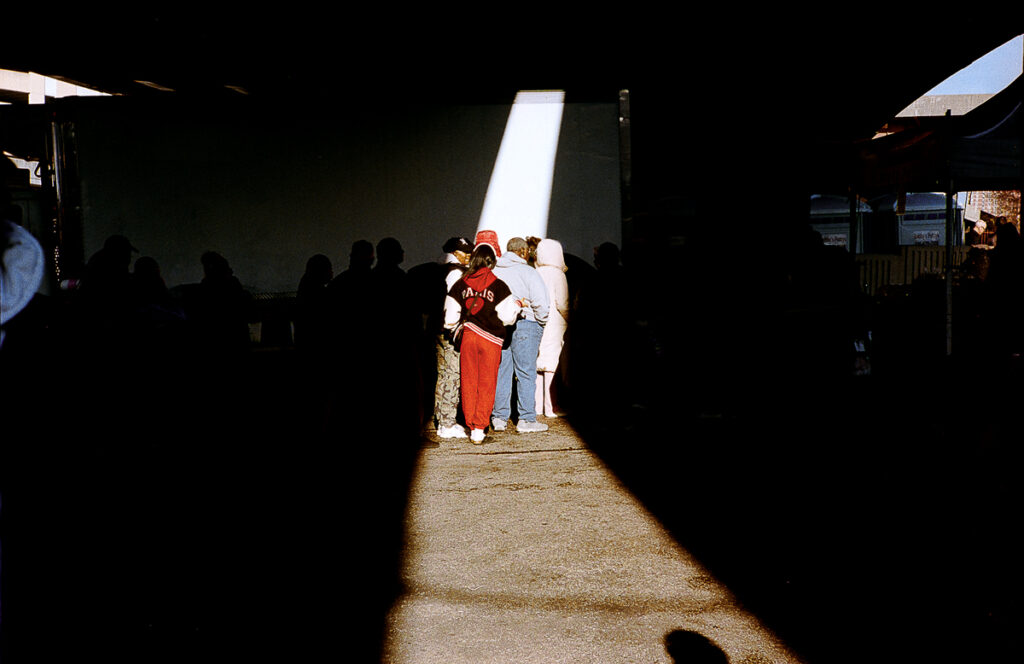
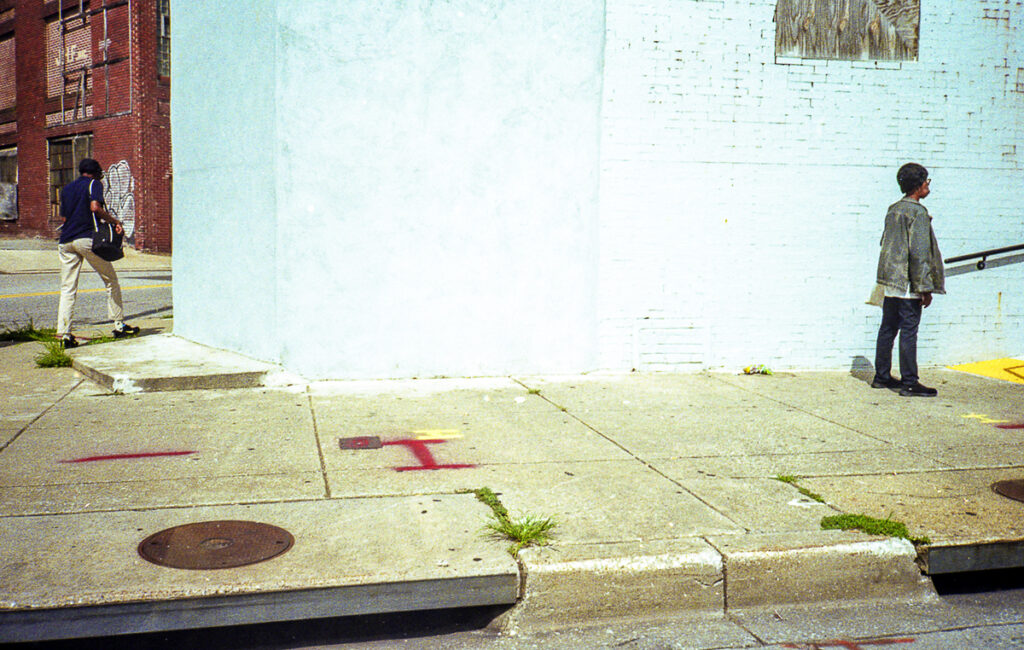
As he teaches to his analog photography students at The Baltimore School for the Arts, “the photograph will take itself when it’s ready.” He embraces this philosophy in his own work; it has “become a reflex to grab the camera” when “life lines everything up,” says Giordano, half-joking that such coincidences are proof we live in a simulation.
He admits, however, that fleeting details don’t always resonate once rendered permanent with silver halide crystals. Some images would not necessarily stand on their own—but they gain meaning and power through their arrangement in The Secret City.
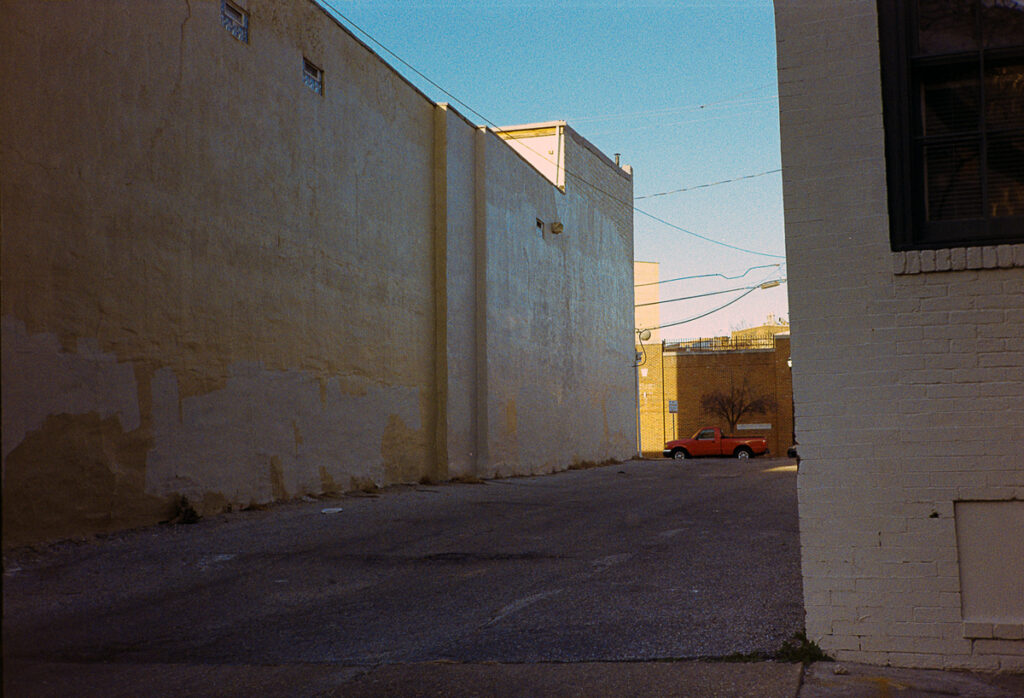
And some images might not work at all if they weren’t on film. “If this were on digital, I probably wouldn’t even like it,” Giordano says of a photograph of an alley, a red truck in the background, its hood catching the sunlight.
“There’s just something that’s very intangible about looking at and taking film pictures,” he continues, echoing a quotation by Mulas, one of his Italian influences: “Al fotografo il compito di individuare la sua realtà, alla macchina quello di registrarla nella sua totalità.” To the photographer the task of identifying his reality, to the camera the task of recording it in its entirety.
Giordano hopes that viewers will appreciate his approach and technique, and that they “get a different interpretation of their landscape”—one that defies the logic of spectacle.
“I want people to come away seeing the city in a way they might not have experienced before.”
The Secret City: New Works in Color Film by Joseph Mario Giordano is on view January 9, 2026 – March 29, 2026 at The Peale, 225 Holliday St, Baltimore.
Opening reception Friday, January 16, 6–8 p.m.