State fairs are known for many things, but art usually isn’t one of them. Deep-fried corn dogs, finger-licking funnel cake, and vomit-inducing carnival rides come to mind. The art contests are usually banished to a remote dusty corner in a side pavilion. At the Maryland State Fair last summer, I had to walk past a long row of award-winning hay bales to find the artwork.
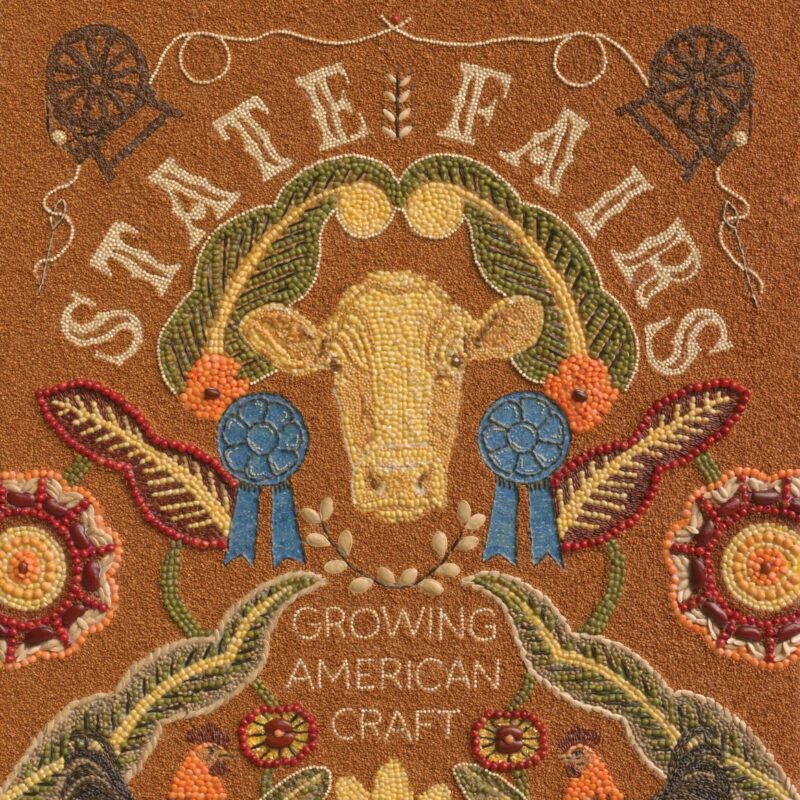
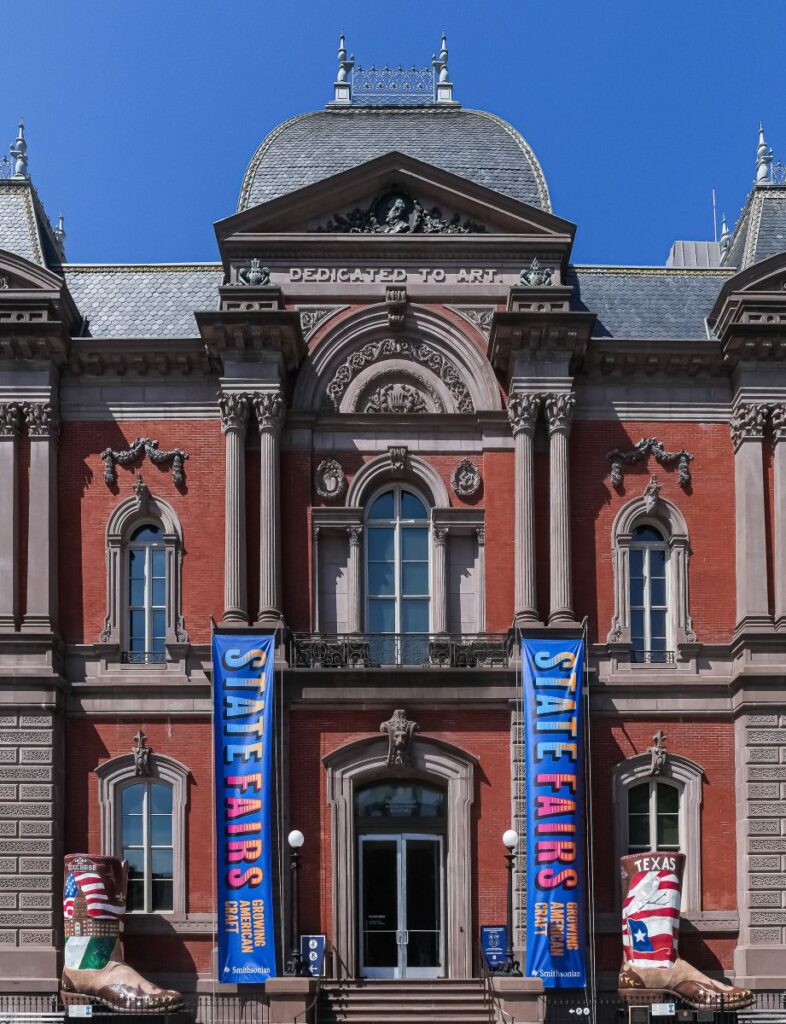
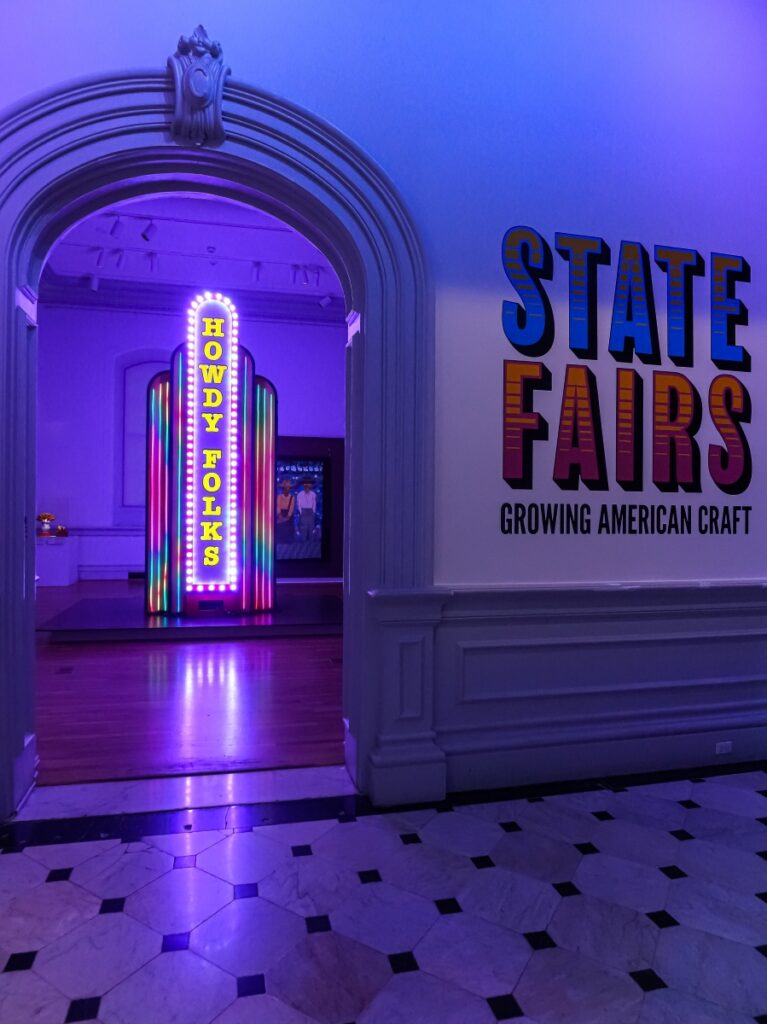
Now art from state fairs from across the country is being elevated to elite art museum status in State Fairs: Growing American Craft, a year-long exhibition at the Smithsonian American Art Museum’s Renwick Gallery in Washington, DC. And you won’t just see everyday art. You’re greeted outside the front doors by giant 10-foot-tall painted steel-and-Styrofoam cowboy boots. Inside, there’s a life-size cow crafted from butter confined inside a steampunk-ish refrigerated tank to prevent meltage. More on the butter cow later.
This exhibition is about as far as you can get from the vagaries and pretensions of the “art world” but some art from state fairs has definite crossover appeal, like Kelly Bohnenkamp’s “Corndog Vase.” At first glance, the blue-and-white underglazed porcelain vase could be from an 18th-century British manor, except for the bouquet of dozens of realistic porcelain corn dogs sprouting through small holes in the top. In a glaring example of judicial misconduct, Bohmenkamp only received an honorable mention for the vase at the 2023 Indiana State Fair.
The “Corndog Vase” instantly reminded me of Salvador Dali’s “Lobster Telephone”, which is a vintage black rotary phone with a lifelike resin lobster attached to the handset. While they’re separated by a century, both artworks twist and transform utilitarian objects into something more humorous and mysterious. Is a Lobster Telephone more surreal than a Corndog Vase? I guess it depends on your appetite.
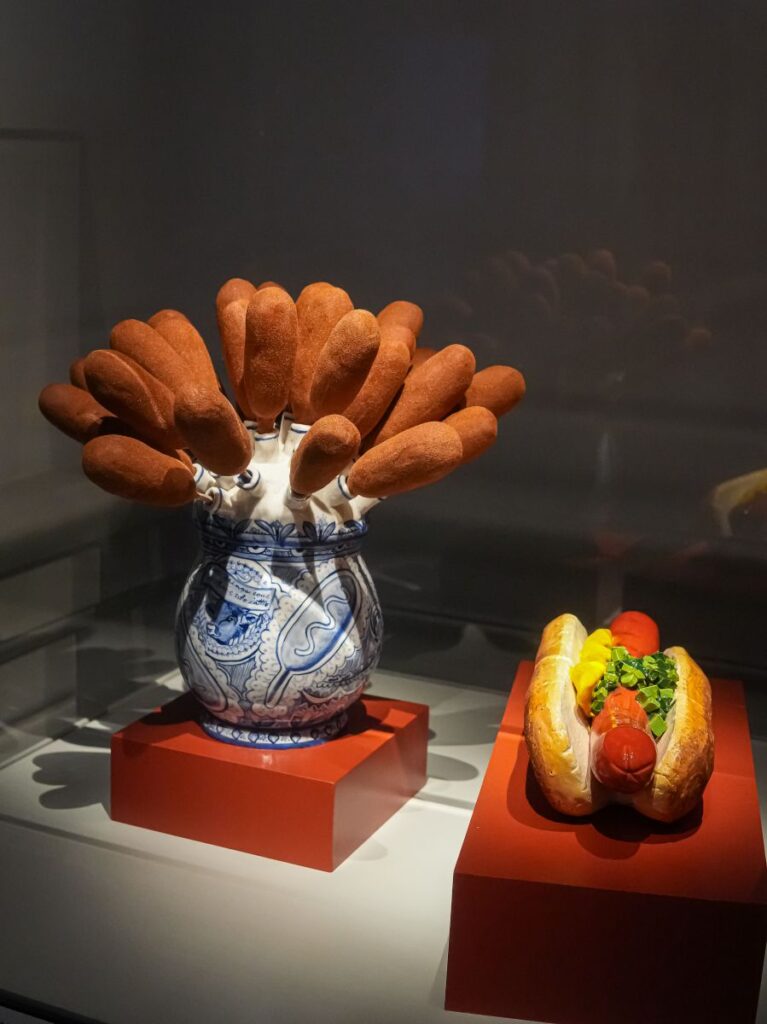
Brendan L. SmithAt first glance, the blue-and-white underglazed porcelain vase could be from an 18th-century British manor, except for the bouquet of dozens of realistic porcelain corn dogs sprouting through small holes in the top.
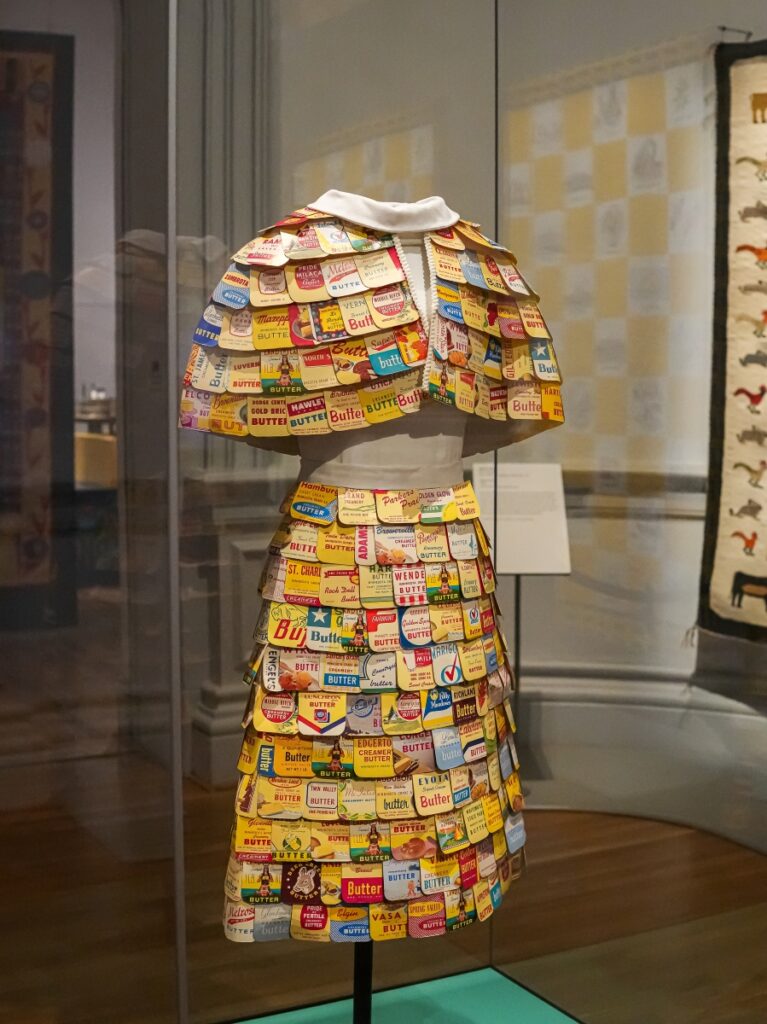
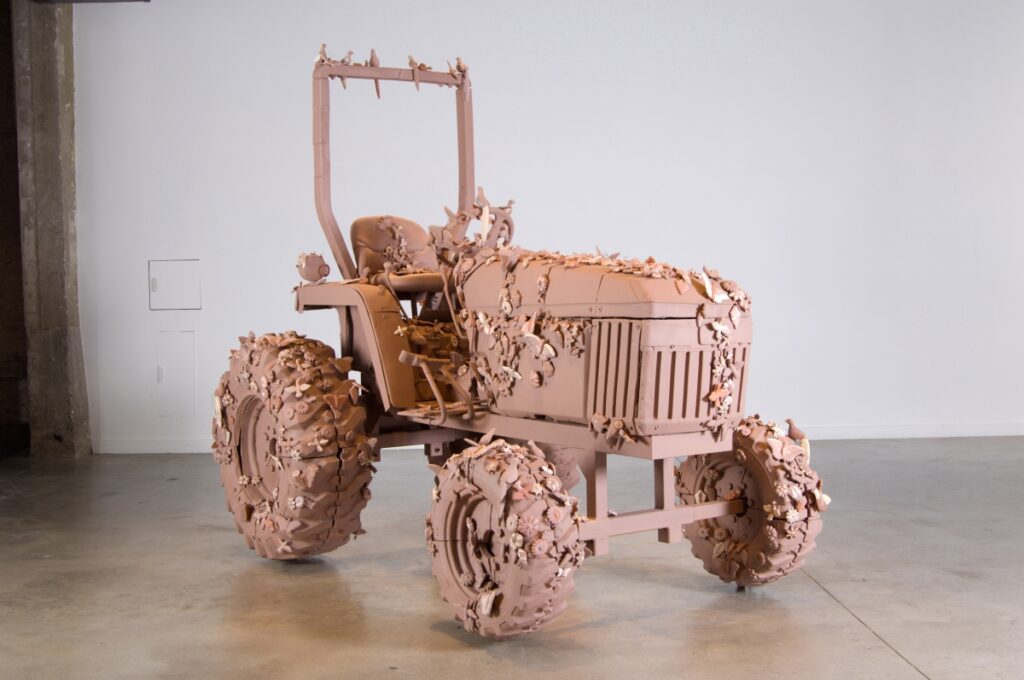
The exhibition, which took five years of planning by Curator-in-Charge Mary Savig and a team of curators, features more than 240 artworks from state fairs across the country, including elaborately detailed quilts, finely crafted pottery, and elegant hand-carved bird decoys. The varied collection raises the age-old debate about the dividing line (do we need one?) between art and craft and why craft is often unfairly relegated to a lower rung of creativity and respectability.
State fairs conjure the spirit of America through a celebration of hard work and the enduring roots of families and rural communities. My mother grew up on a small farm down a long dusty dirt road past the one-room schoolhouse she attended outside Hamburg, Iowa. I have a box of her red and blue ribbons from the Fremont County Fair. That bedrock of America is crumbling as small family farms are replaced by Big AG farms owned by profit-obsessed corporations that use genetically mutated seeds from Monsanto.
State fairs also are a neutral meeting ground for rural and urban dwellers to gather—not to protest over politics but to share their talents and the fruits of their often unseen and unappreciated labor. Where does our food come from? Most of us have no idea.
As a former resident of Santa Fe, I was drawn to Carol St. Clair Johnson’s “O Fair New Mexico – 41 Fair Years”, a large colorful quilt made from more than 600 ribbons she won at the New Mexico State Fair over four decades in knitting, crochet, pies, cookies, jewelry, canning, potted plants, and on and on. Not surprisingly, she also won Best in Category for this quilt in 2023.
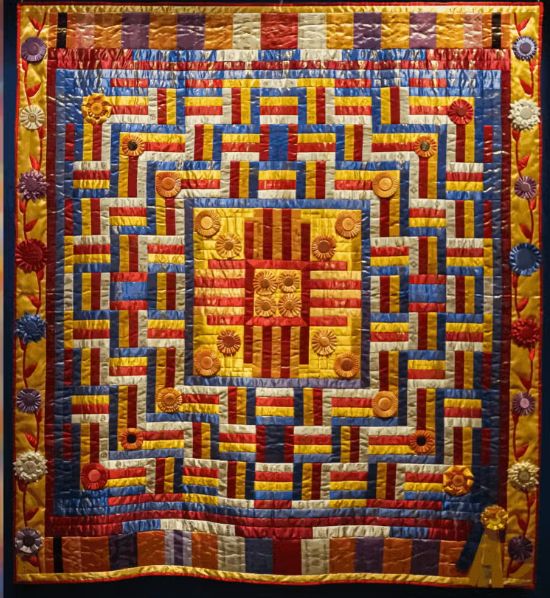
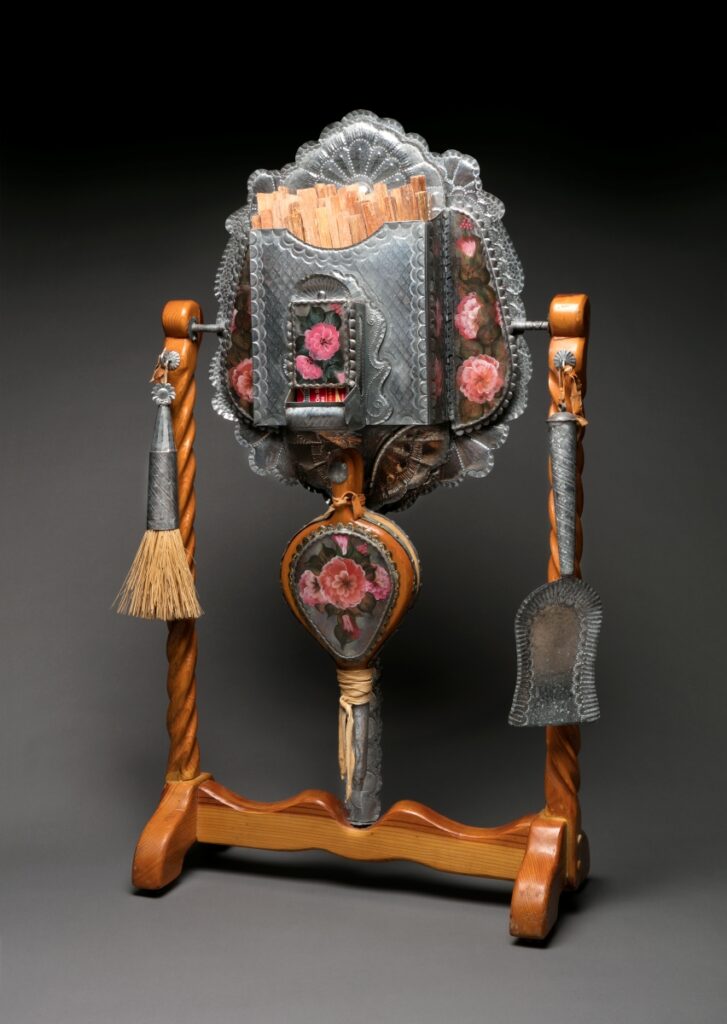
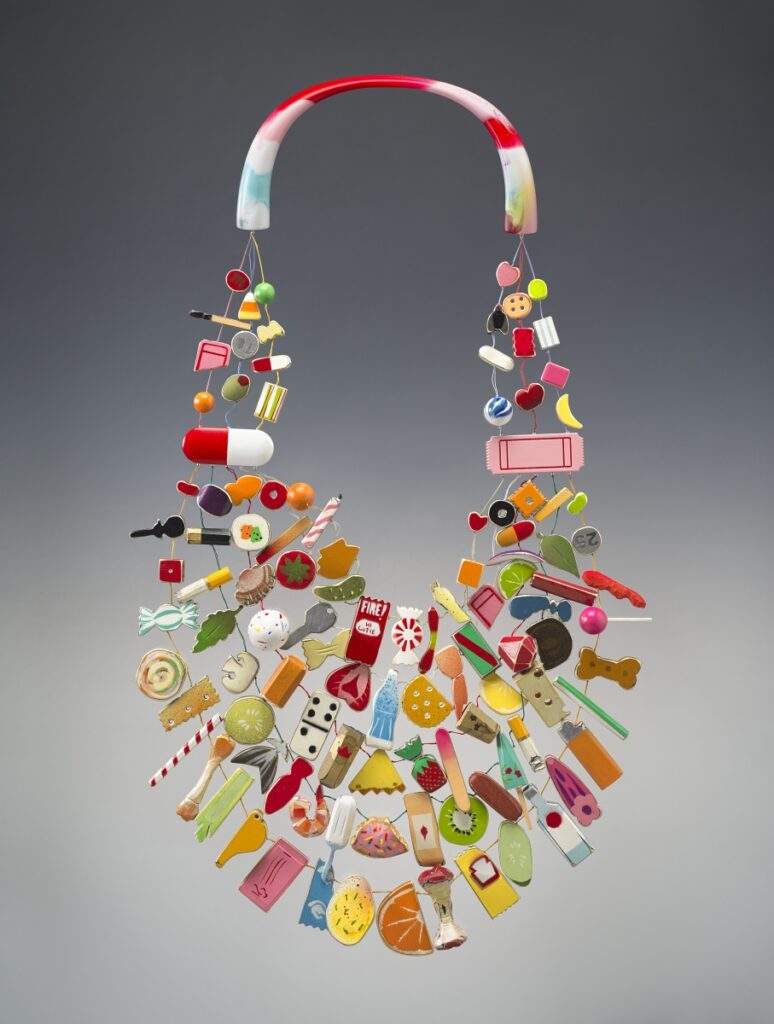
A wide range of work by Indigenous artists also is on display, including an array of pottery and wool textiles that convey the talents of America’s original people.
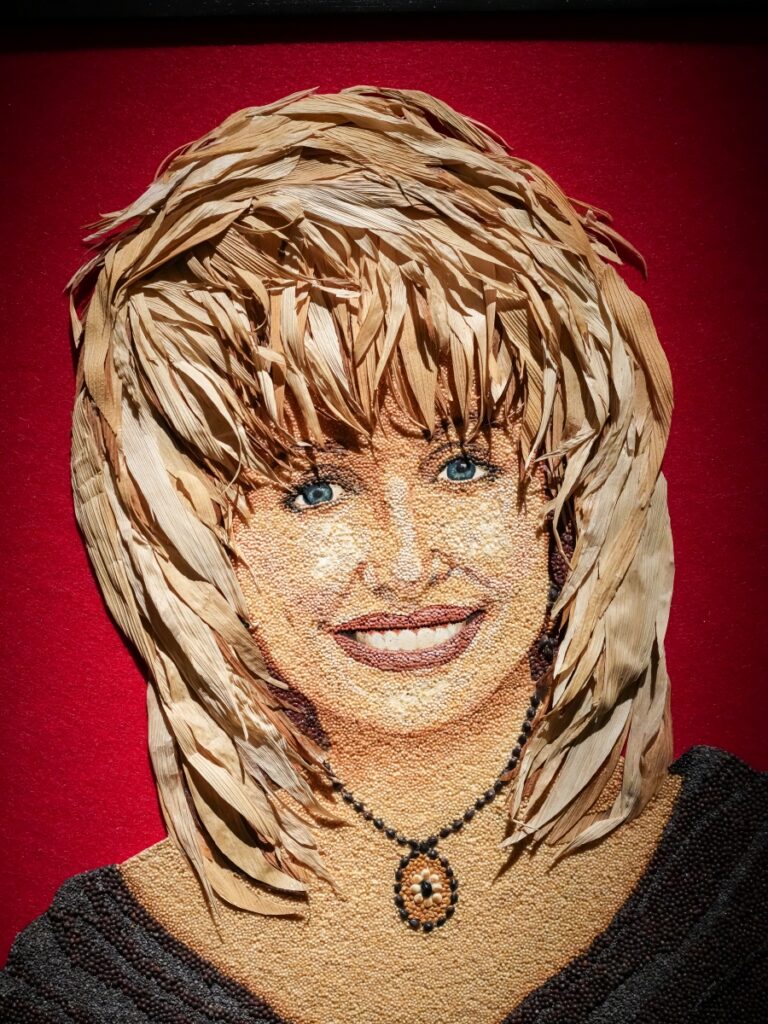
The most striking work is in a gallery filled with exemplars of crop art, a medium that I didn’t know existed. Portraits of celebrities and politicians created by Lillian Colton and her daughter Linda Paulsen feature a cornucopia of thousands of seeds of varied colors that were meticulously organized with a toothpick and glued together on cardboard to create the subtle hint of blush on Lucille Ball’s cheeks, the meandering curls in Prince’s hair, and Elvis Presley’s bushy eyebrows. Crumpled corn husks add texture to Dolly Parton’s hair and Willie Nelson’s braids; the work feels sculptural with its undulating peaks and valleys.
Beginning in 1966, Colton kept winning so many best-in-show contests at the Minnesota State Fair that she eventually stopped competing to give others a chance at winning. She kept displaying her work at the fair until her death in 2007 at the age of 95.
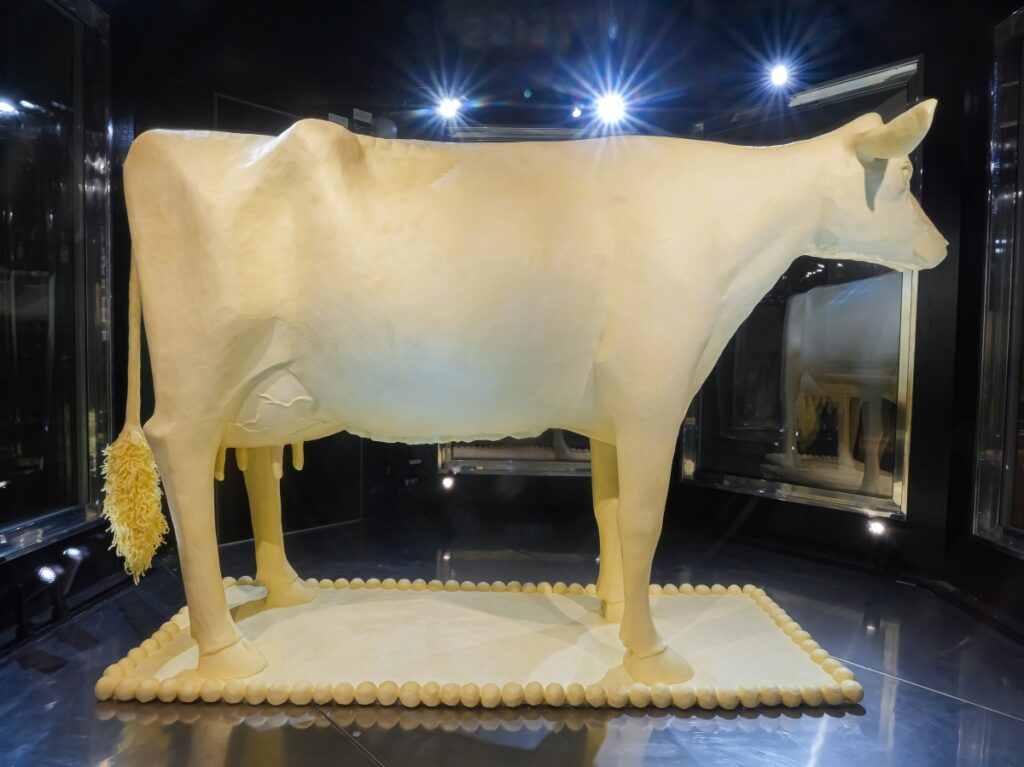
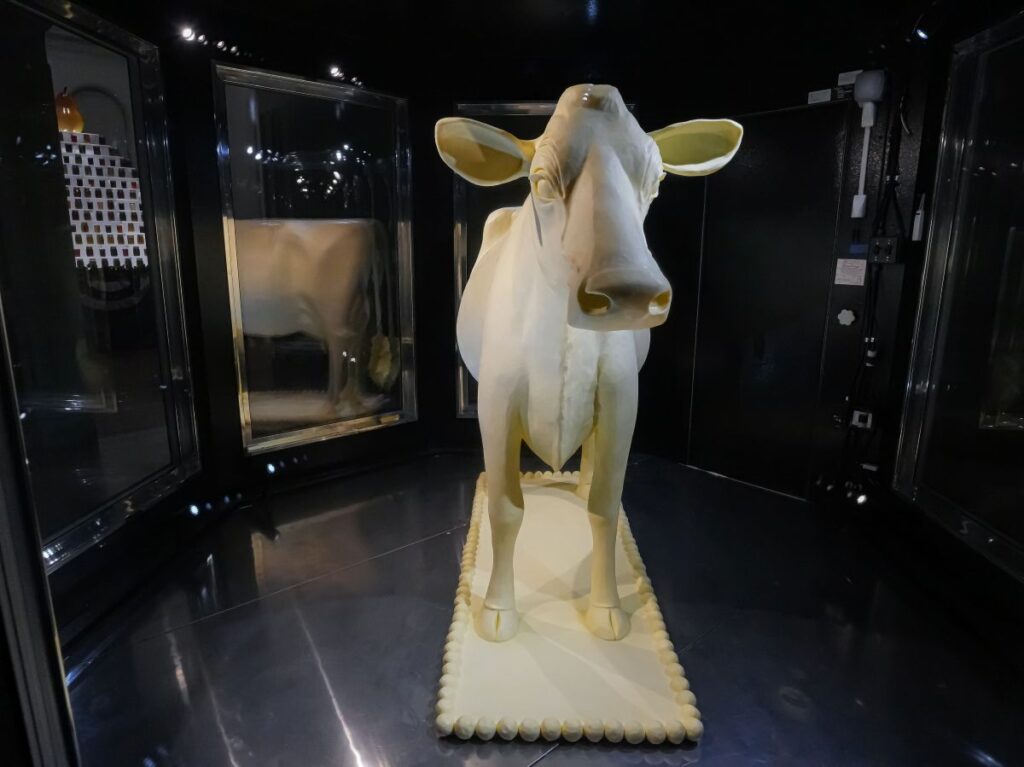
All right, let’s get back to the butter cow. Standing on a butter dish, the sculpture is eerily realistic and slightly unsettling with its dead-eyed stare and pale-yellow hide, like some moonlit apparition out on the range. The refrigerated tank resembles a space capsule with thick metal-framed windows, rows of coiling refrigeration tubes, and a shiny stainless-steel floor that reflects a mad cow science experiment vibe.
Sarah Pratt has been creating the official butter cows for state fairs in Iowa, Kansas, and Illinois with help from her twin daughters Hannah and Grace. They are the undisputed milky Michelangelos of the Midwest.
Brendan L. SmithStanding on a butter dish, the sculpture is eerily realistic and slightly unsettling with its dead-eyed stare and pale-yellow hide, like some moonlit apparition out on the range.
Their butter cow reminded me of a work by Damien Hirst, an overrated British artist whose career was launched in 1991 when he suspended a dead tiger shark in a steel-and-glass tank filled with formaldehyde. The impossibly pretentious title was “The Physical Impossibility of Death in the Mind of Someone Living.” When the shark decayed, a second shark was killed and carted to a gallery for the sake of art.
Is a dead pickled shark more creative or thought-provoking than a cow meticulously crafted from a melting medium? Is a lobster telephone more surreal than a corndog vase? The answers hinge more on location than merit. The shark in a tank and the lobster phone exist within the arbitrary confines of the “art world” while the corndog vase and butter cow live with us, rubbing shoulders with prize-winning goats and carnies seeking marks on the midway.
This exhibition is a rare place where those two separate worlds merge for a moment, when unheralded painters and sculptors, wood carvers and quilters, and weavers and potters get their due by seeing their work shift from the dusty corner of a fair pavilion to an art museum in the nation’s capital.
State Fairs: Growing American Craft is on view at the Smithsonian American Art Museum’s Renwick Gallery in Washington, DC, August 22, 2025 – September 7, 2026. Open Daily, 10:00 a.m.– 5:30 p.m