“I was thinking that if I was ever to teach,” Jenn Kotler tells me as we look at her work in Baltimore Art Gallery (on view through August 6), “I would prepare boards and I would just draw random lines on everyone’s board.”
That way, she explains, no one would be starting with a blank canvas, nor would they have the idea that there was anything to mess up. As a live painter, Kotler has let go of the notion of perfection. Her process is “very much like ‘I am a person in a place as a certain specific thing is happening’ and this is the output. And I think that’s really interesting artistically. I just fill things up. I make a line and then I cover the line. Nothing is precious.”
As a writer who struggles to “kill my darlings,” I welcome the idea that art need not be meticulously planned or endlessly revised, and this attitude makes sense for Kotler, who believes the point of artistic expression has less to do with capturing an accurate image and more to do with capturing an experience. “Painting that looks like photographs is not very interesting to me,” she says. “I think it made so much more sense back in the 1500s to want to share what things looked like; the more realistic the better. But now everyone takes photos on their phones and AI can make anything look like a painting.”
Trained as a medical illustrator, Kotler has certainly had experience with hyper-realistic work and an artistic process that is deliberate and precise. “With medical illustration, the contours of a blood vessel or nerve are important to get right,” she says. “There’s a lot of intense gazing at tiny details, focus, rigor, and research that goes into a medical illustration.”
Her painting, too, used to be more measured and planned out. “I’ve always been a fast painter, but I definitely used references and would fill a canvas over time, trying to do things a little cleaner and more controlled. I have had some pieces that required a lot of research and planning.” In the last few years, though, her process has changed. Kotler now practices live painting which is like plein air painting but does not necessarily take place outside.
Elizabeth HazenLevity fits the form, as live painting eschews the perfectionism and strictness of more traditional figure painting, focusing instead on capturing the energy of a particular time and place.
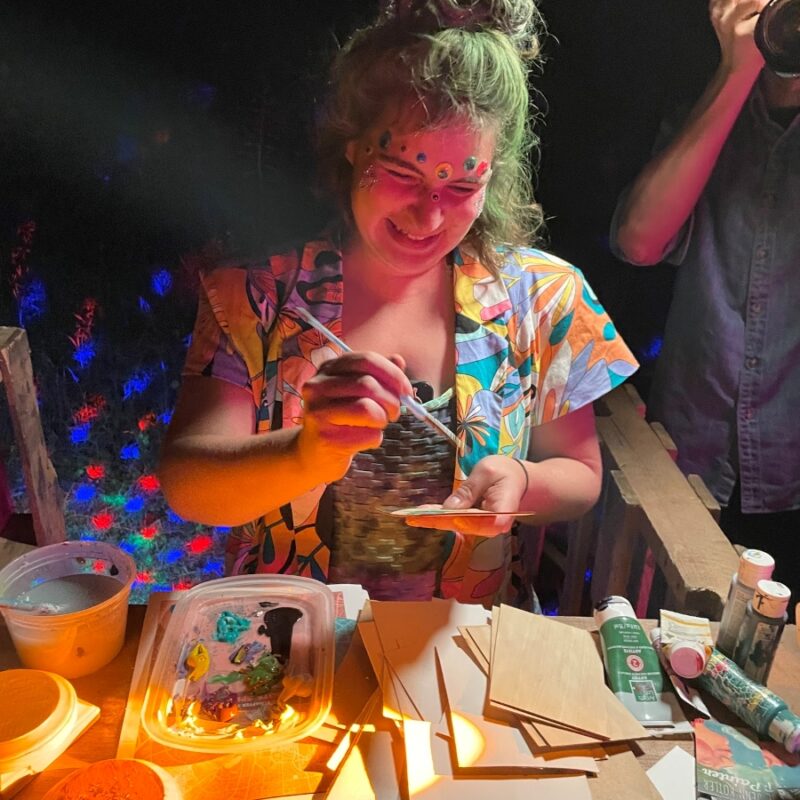
For Kotler, live painting involves “going to a place for something interesting that is happening and just painting it without doing anything ahead of time—not planning, not sketching—just painting as the event is happening and then being done with the painting when the event ends.” This real-time engagement with a particular place and the people in it suits Kotler. “I want to be out in the world. And the time component is capturing. It’s how life moves. It’s how time moves. I just think that’s so much more interesting for me right now.”
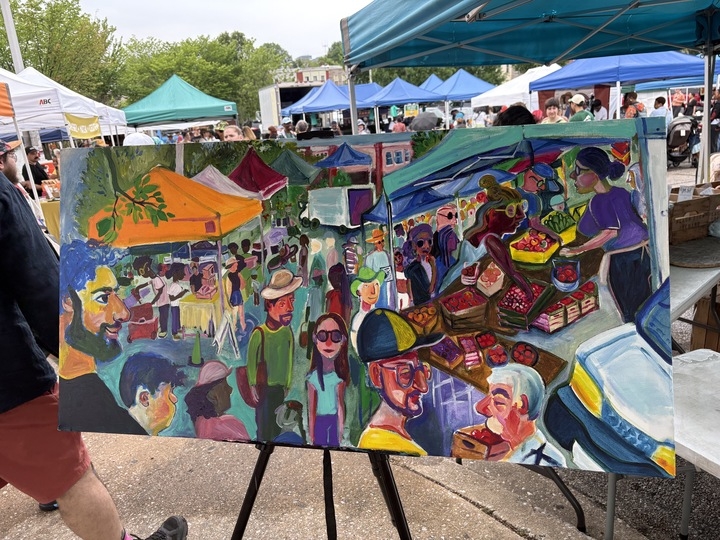
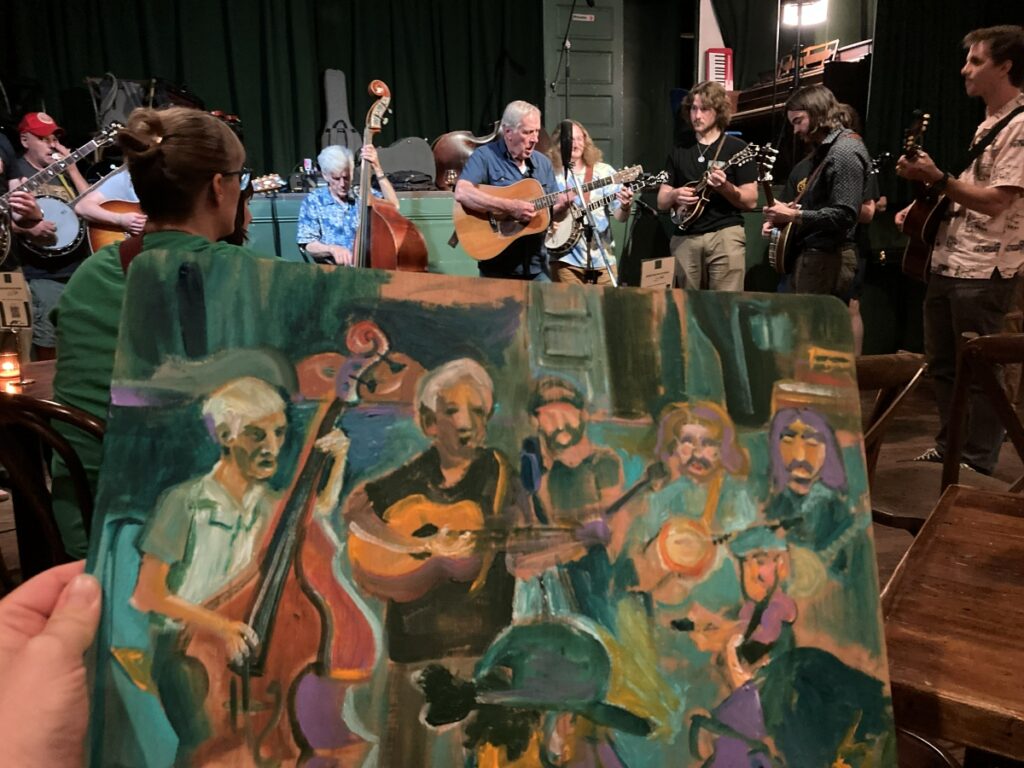
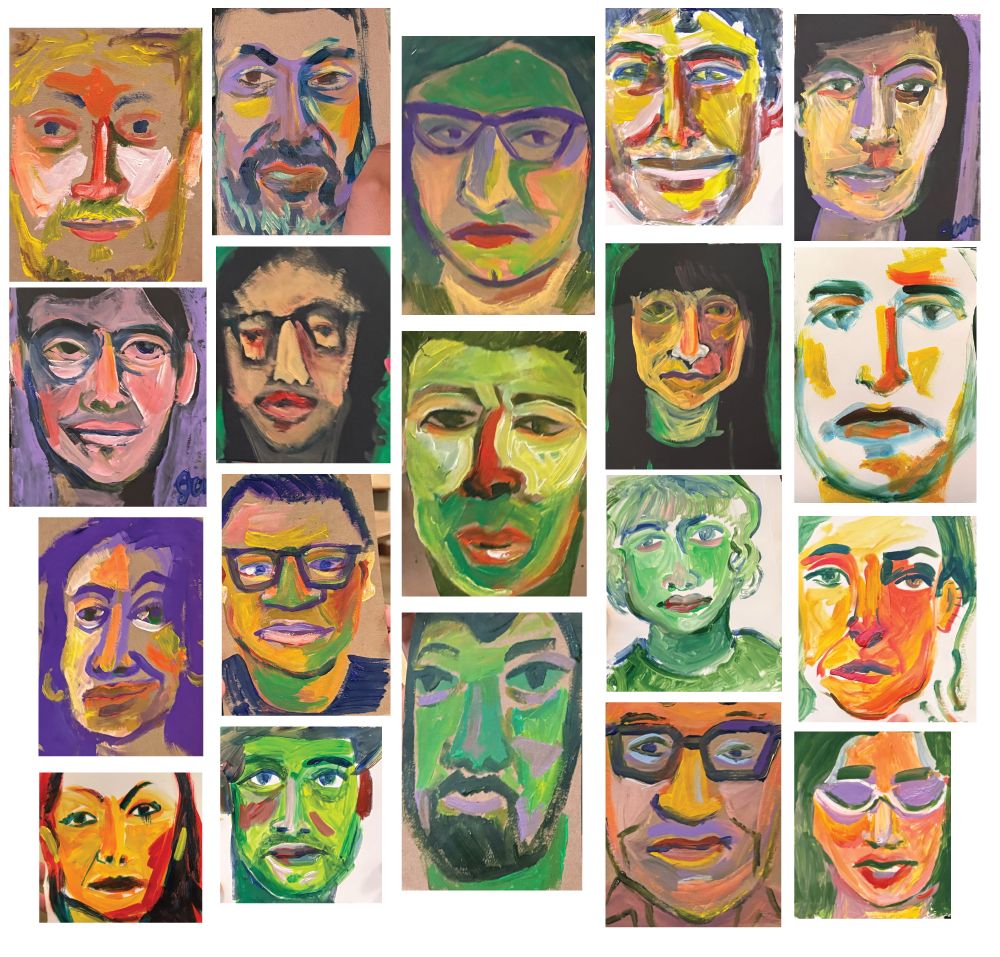
It is interesting to the audience, too. Kotler’s paintings are bright, full of motion and gesture. They invite viewers into the scene. I can smell the potpourri of fresh flowers, sizzling curry, and sugary donuts of the Waverly Farmers Market; hear the strum of bass and low buzz of chatter in the Green Room; and feel the swirling energy of the Pride parade. In a notecard under her painting of Pride, Kotler writes: “Pride is the only place that’s actually as colorful as the painting is.” This levity fits the form, as live painting eschews the perfectionism and strictness of more traditional figure painting, focusing instead on capturing the energy of a particular time and place.
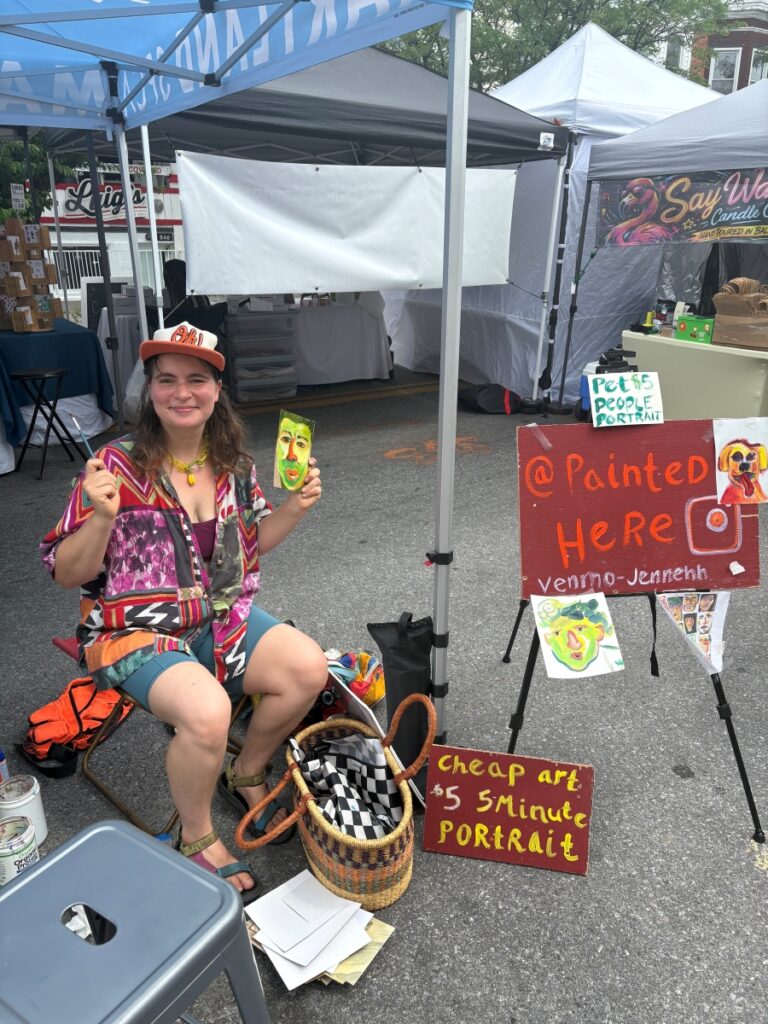
Ironically, even as the mother of a toddler, Kotler is painting more now than ever before. In contrast to the days when she carved out an hour or two to paint in a studio, now she simply plans to attend an event she finds interesting and completes a painting while she’s there—whether it is a visit that lasts half an hour or most of a day.
“The timing both works to help me commit time to painting, and as a parent it means I can find childcare for specific periods of time,” she explains. “If I was nebulously working on a painting in a studio I suppose I could schedule specific times to work. But for me it is too easy to push off nebulous plans for something more concrete I could be working on. With live painting I can’t push it to an undefined future. The event is happening at a specific place and time, and I must be there to capture it or the opportunity is gone.”
She adds, “I have a partner and a lot of supportive family who are eager to spend time with my son. That helps a lot. I wouldn’t have been able to go to all these events to paint for my gallery show if I didn’t have that support.”
Kotler began live painting almost as an afterthought. “My friend was hosting a garden party, and as I was heading there, I was like, ‘Oh, I have this canvas. Let me just bring my paints and let’s just see if it’s fun to be painting while the party is happening.’ And I did find it very fun and it was nice focusing on the portraits for a little bit, but then also the background. And after that, I started going to the Green Room and painting live music playing.”
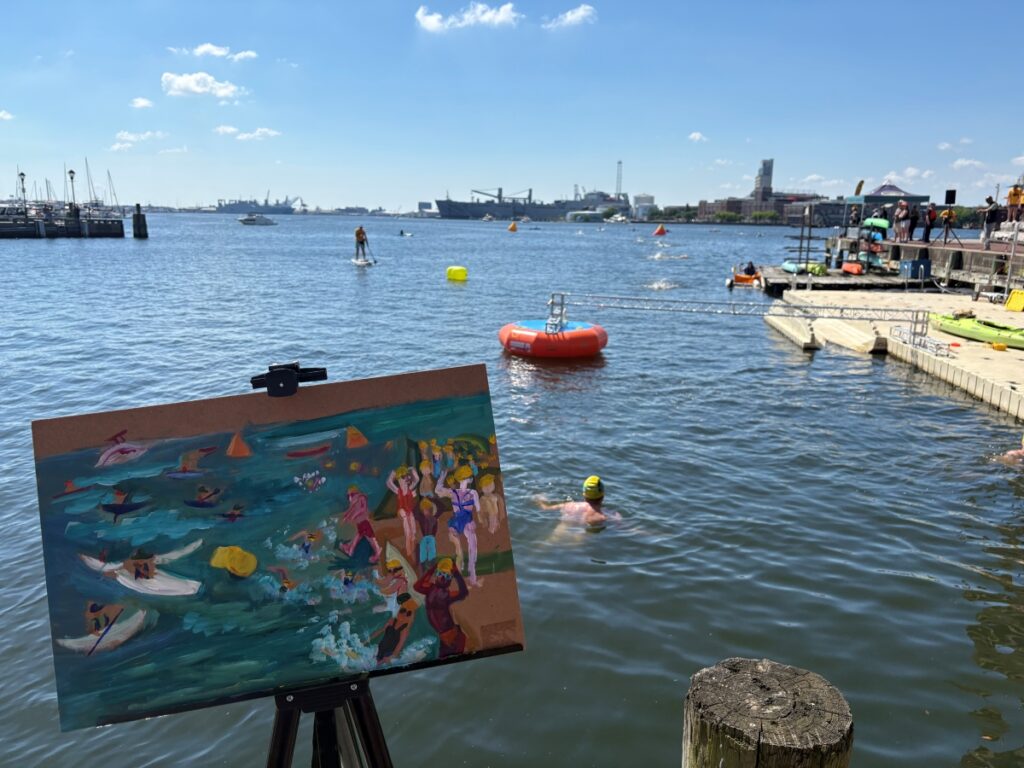
Other venues where Kotler has practiced her craft include the Hampden skate park, Sherwood Gardens, Baltimore Harbor, and even the Webb Space Telescope Mission Control.
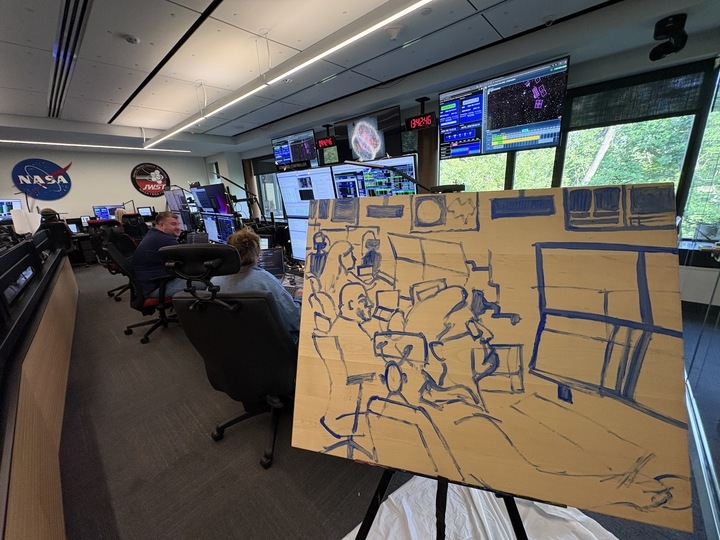
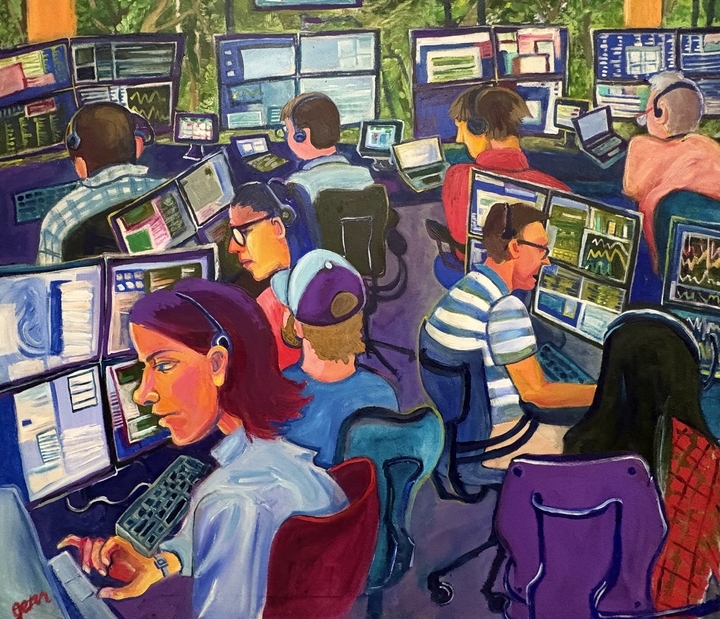
Jenn KotlerThis way of painting is about being in a space with other people and capturing other people. It’s a way of communicating that we’re in this time together.
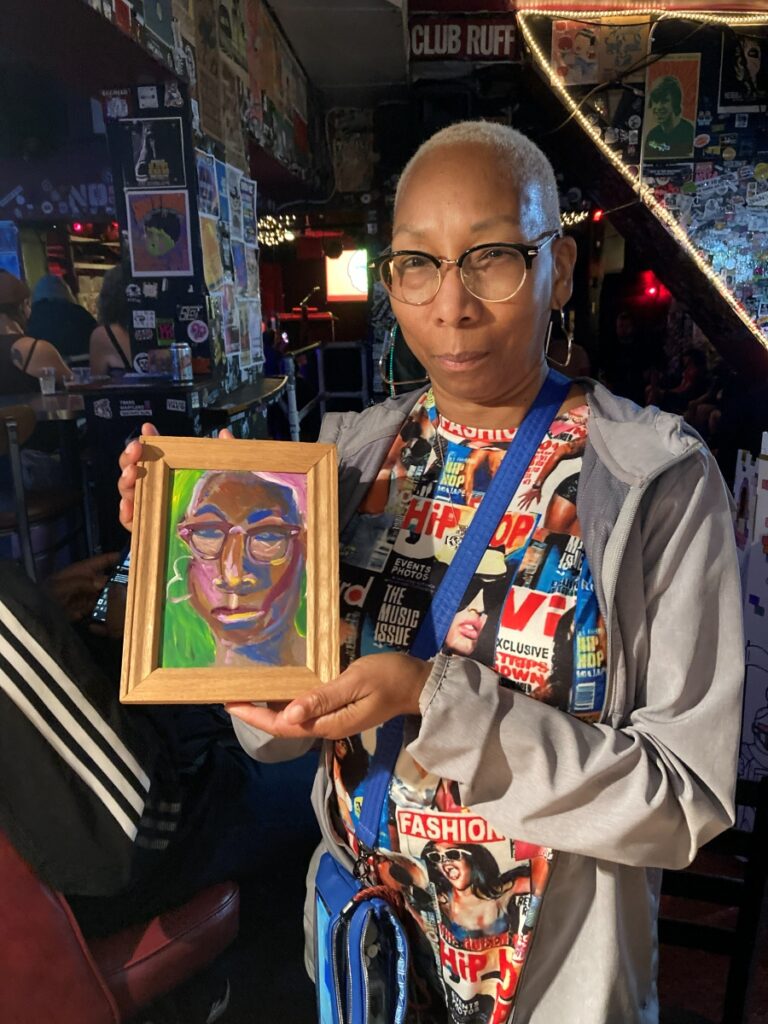
In most cases, Kotler just shows up at a location with paints and easel in tow. “It’s definitely an ask-for-forgiveness situation,” she says. “Obviously there are some private or very controlled spaces like Mission Control that I did need to get special permission to get into,” but largely, she paints in public spaces, and so far, no one has had any objections. In fact, the experience invites affirmation from passersby and involves an additional layer of artistry.
“There’s a performance aspect of it,” she notes, “which also makes it more interesting because people are watching me do it. It’s not private at all.” While this can feel daunting if the painting is not going well or if she is feeling self-conscious, Kotler mainly appreciates the interactions. “It’s also really cool to see people get excited when they see themselves in what I have painted.”
Sometimes, though, the faces on the canvas become amalgamations of individuals, the crowd moving and changing too quickly for Kotler to capture accurately. It is precisely this unpredictability and energy that Kotler loves. “I really like the excitement. I like that it’s difficult and I just like being out in the world as a person, so for me, it’s more fun. It’s really engaging.”
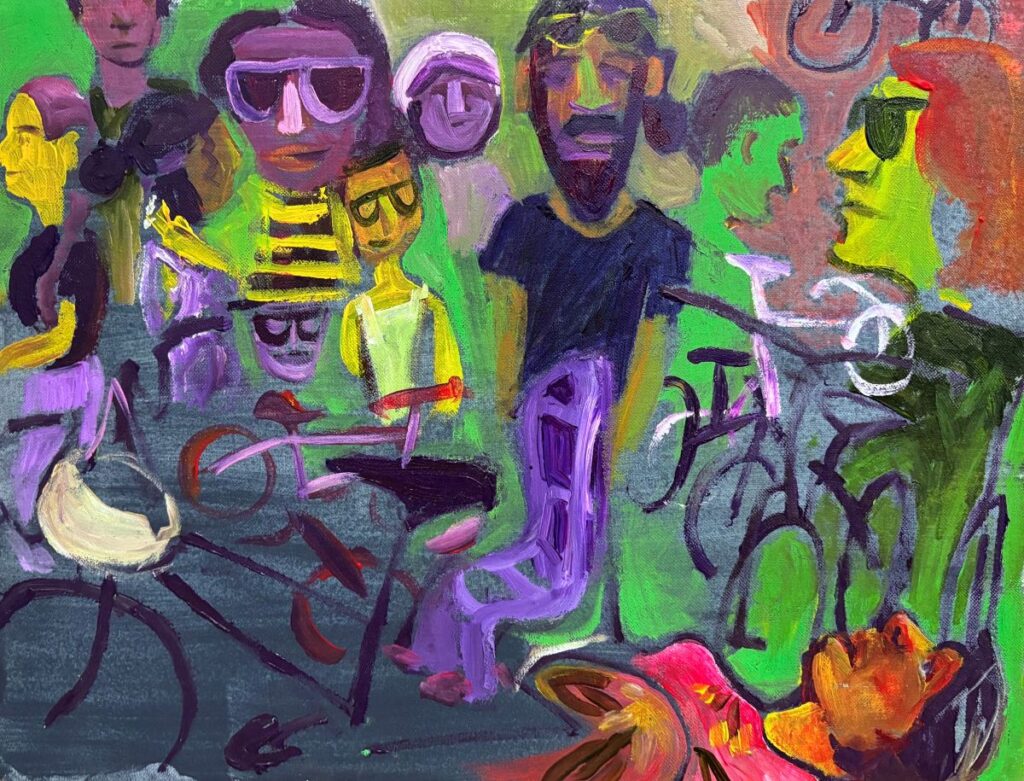
And the more she does it, the more ideas she has for new experiences she wants to paint in real time. Her list includes the theater, hiking trails, national parks, and science laboratories. “I have been considering what ‘extreme painting’ in action looks like,” she says. “I have a plan to be towed behind a bike during the Baltimore bike party to paint the event throughout. I have been wondering how far I can take that concept. Can I paint while skydiving? Can I paint while scuba diving? This is all very impractical, but it would be a dream to try.”
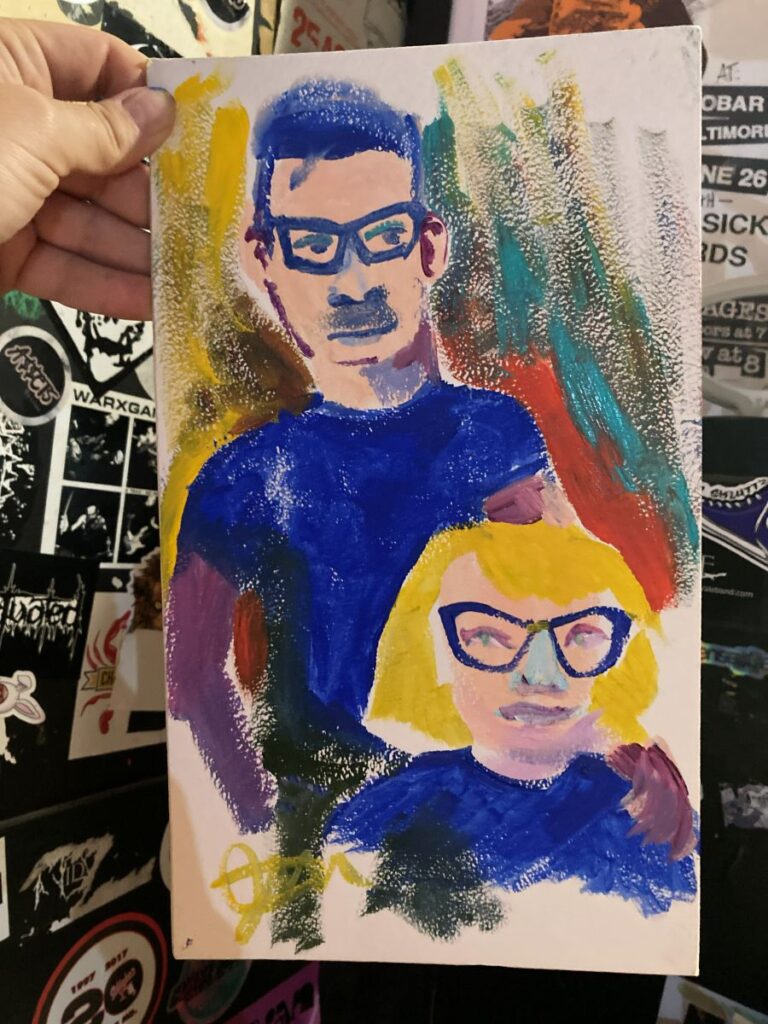
It occurs to me as we chat that Kotler’s work is a kind of protest against the pervasiveness of technology and the increasing sense of alienation that defines so much of modern life. Instead of using her creativity to create space between lived experience and art, she uses painting to create connections and highlight our humanity.
“It’s a community practice,” Kotler says. “The act of making in general is one of the most beautiful things we do as humans. It differentiates us from other animals, and this way of painting is about being in a space with other people and capturing other people. It’s a way of communicating that we’re in this time together.”
Jenn Kotler’s work is exhibiting July 3 – August 6, 2026 at Baltimore Art Gallery, 855 W. 36th Street.