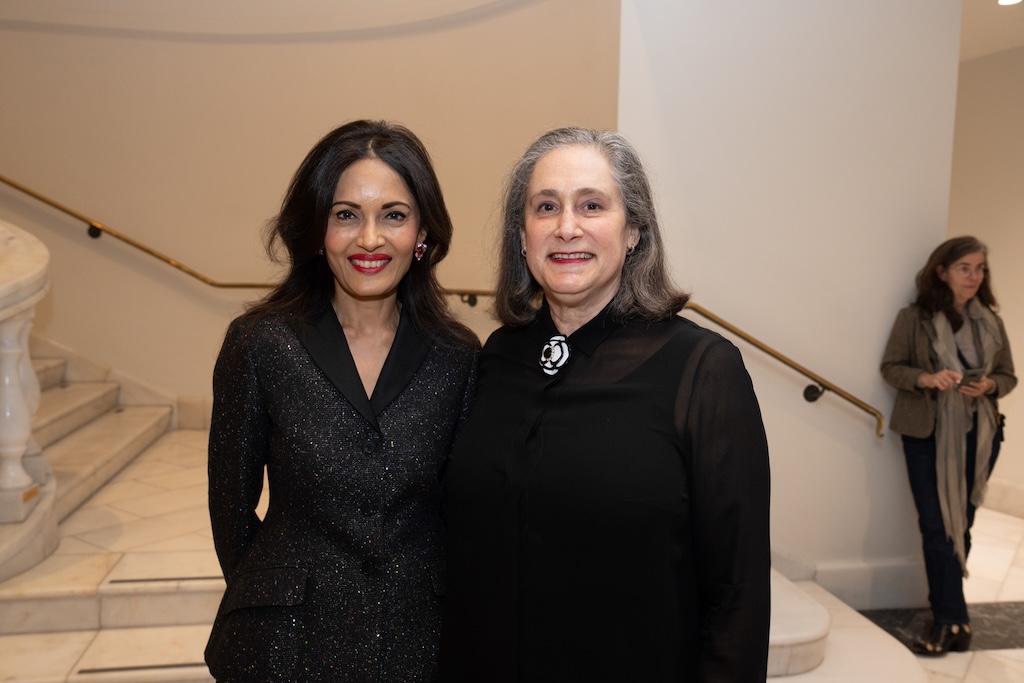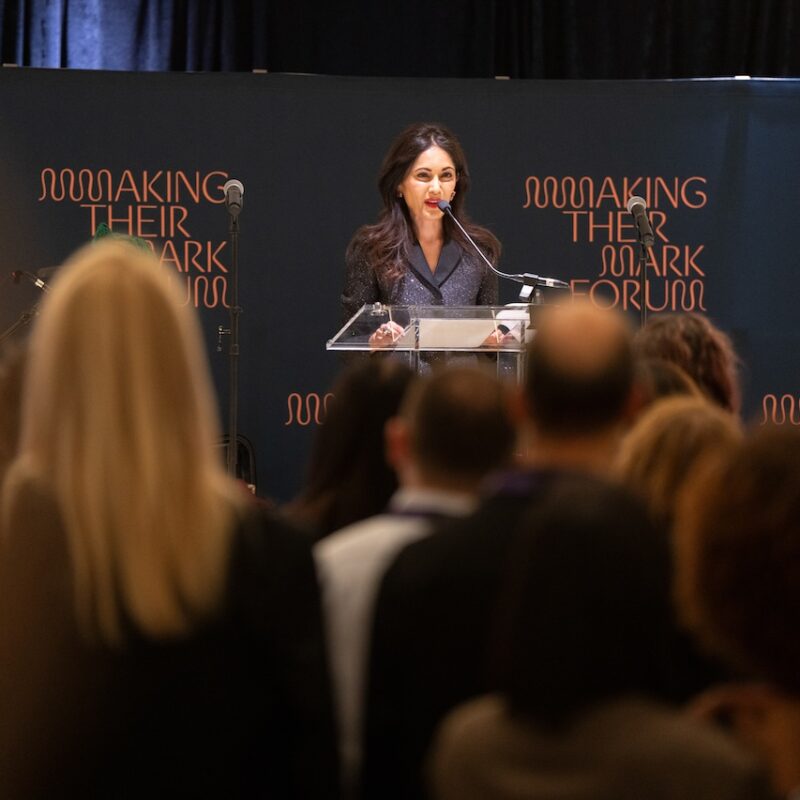
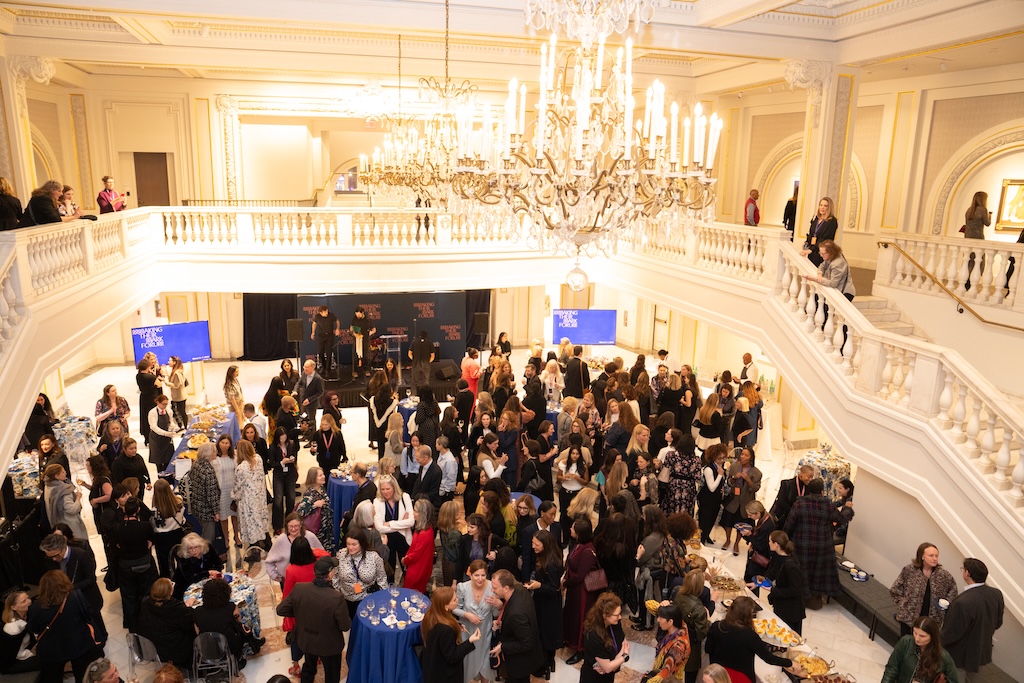
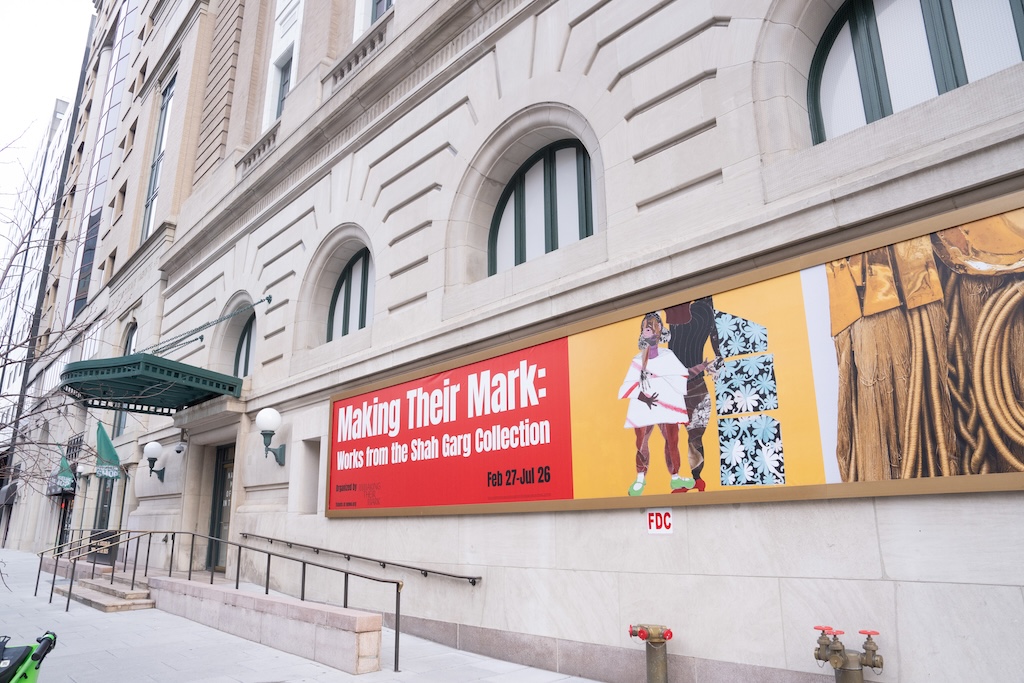
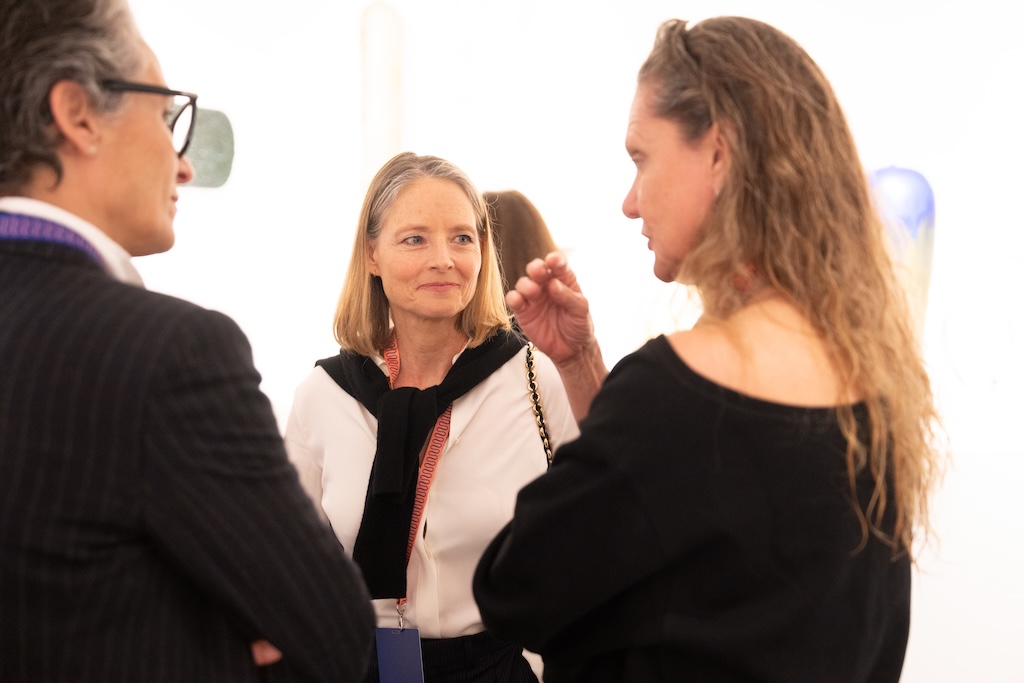
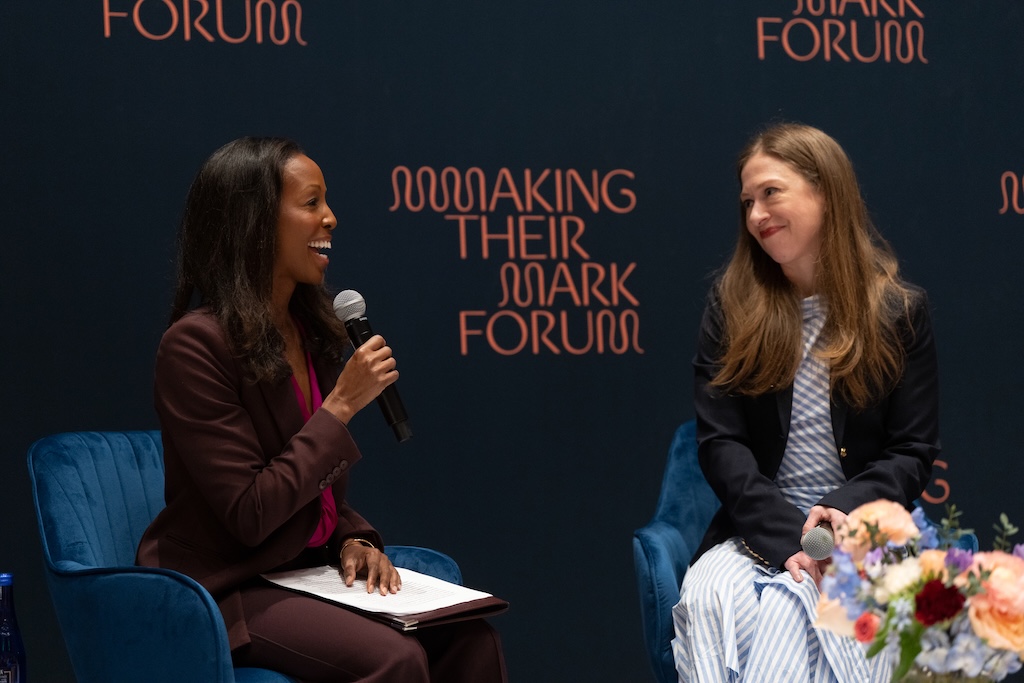
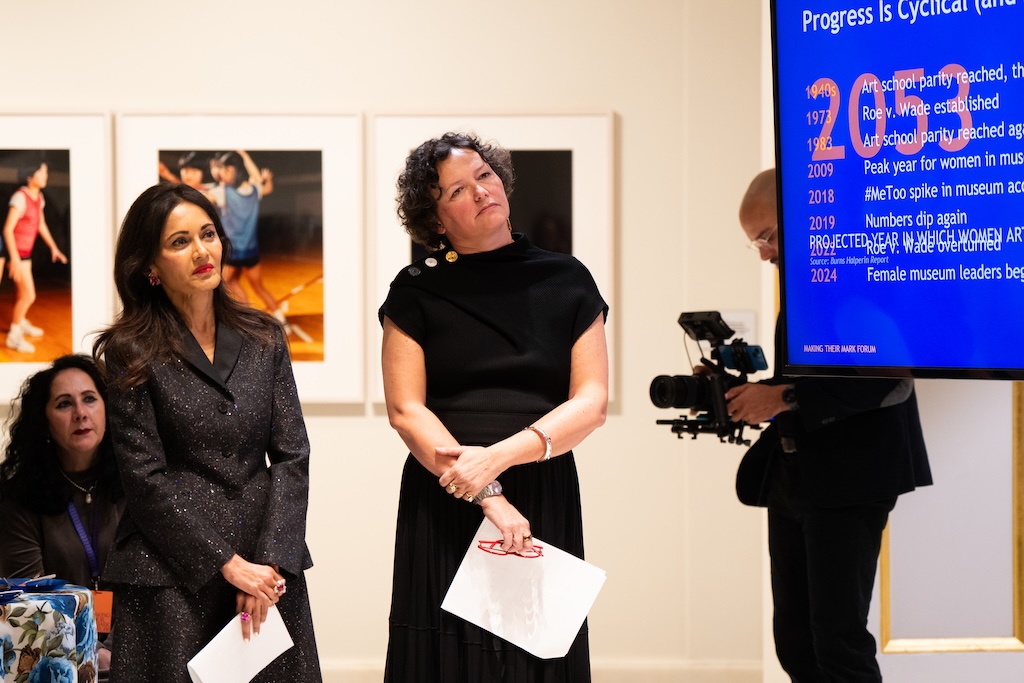
More than usual, this past year Washington, DC has pulsed with tension; brinksmanship tempered with tiny rays of hope. On February 27, 2026, that tension felt especially charged inside the National Museum of Women in the Arts, where the opening of Making Their Mark: Works from the Shah Garg Collection coincided with the inaugural Making Their Mark Forum, a new three-day gathering of artists, curators, collectors, and scholars that occurred the following week, March 5-7.
Timed through March 1, 2026, the conference unfolded across museum galleries, auditoriums, and nearby venues, drawing a tightly networked but unusually cross-disciplinary crowd—350 or so participants moving between panels, private conversations, and the exhibition upstairs. Speakers were headline-worthy: including Chelsea Clinton, Jodie Foster, and Ava DuVernay.
The exhibition remains on view through July 26, 2026, anchoring the conversation in something tangible: nearly 80 works by women artists spanning decades of abstraction, material experimentation, and an insistence on taking up space, all from the Shah Garg Collection. Both the exhibition and the conference came about from the initial efforts of one woman: Komal Shah, the Indian-born American art collector, philanthropist, business executive, and Silicon Valley computer engineer, along with her husband, Gaurav Garg.
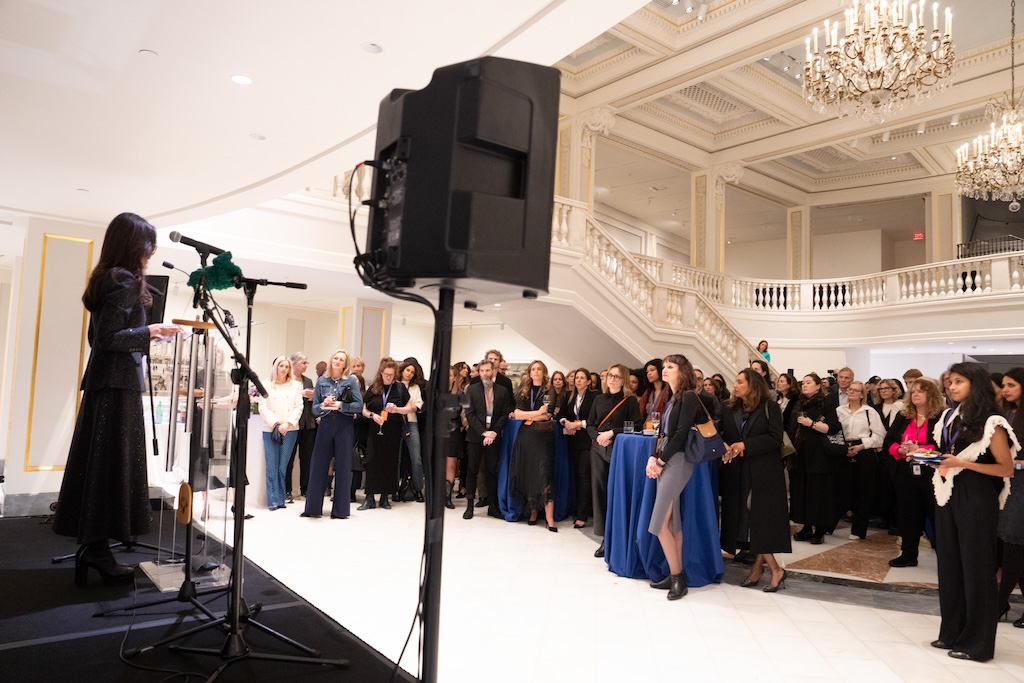
When I spoke with Shah just after the convening, she was still thinking about energy—how to create it, sustain it, and direct it toward something that lasts.
“I was in Venice in October 2022 for the closing of the Venice Biennale,” she told me, recalling a two-day symposium organized by Rashida Bumbray and Simone Leigh. “It centered on Black feminist thought, and what struck me most was the energy—students and attendees were genuinely ecstatic to be part of something celebratory and affirming.”
She paused there, not for effect but because the memory still seemed to carry weight. “I felt inspired, but also slightly on the periphery—I didn’t know many of the writers or poets being referenced. That made me wonder: what would it look like to create something like this that celebrates women artists more broadly?”
That question—simple, expansive, and a little audacious—became the seed for the Making Their Mark Forum. It lingered through doubt, timing concerns, and the quiet anxiety that often accompanies any attempt to do something at scale. “When we finally set a date,” she said, “we imagined we’d be celebrating Kamala Harris’s presidency. Instead, the timing became symbolic in a different way. Being in DC at that moment felt urgent… But honestly, there’s always a need for this kind of gathering.”
There’s a tendency, especially in institutional settings, to frame moments like this as arrival points—as if the work of equity in the arts can be measured in exhibitions mounted or panels convened. Shah isn’t interested in that kind of narrative.
“That’s part of why we invited Charlotte Burns and Julia Halperin to open the conference,” she said, referencing their widely cited research on gender disparity in the art market. “One of their findings is astonishing: the total auction value of all work ever sold by women artists roughly equals that of Pablo Picasso alone.” It’s the kind of statistic that lands with a thud, less shocking for its novelty than for its persistence.
“Picasso is, of course, a great artist,” she added, carefully. “But the imbalance is staggering.”
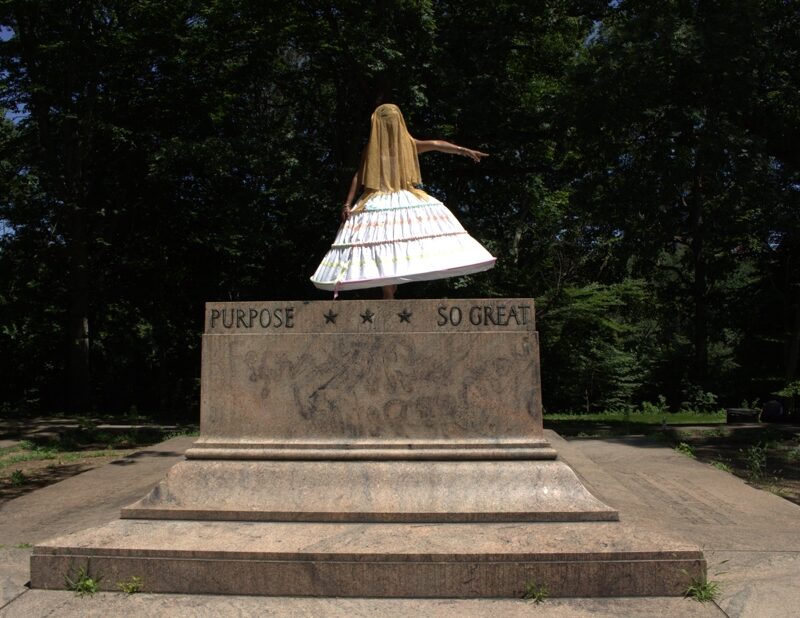
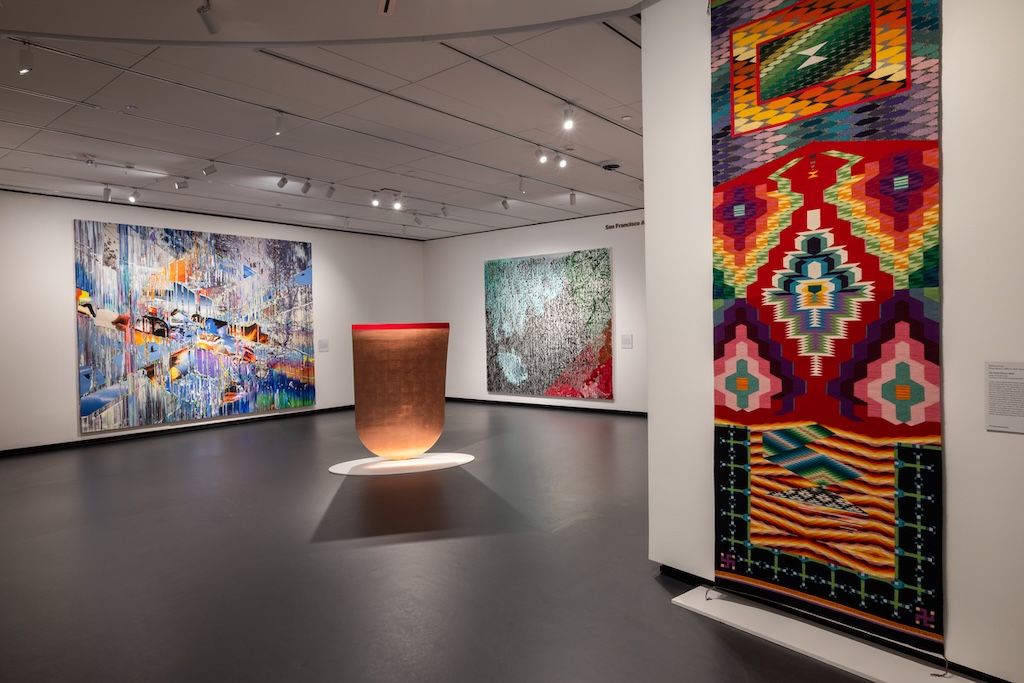
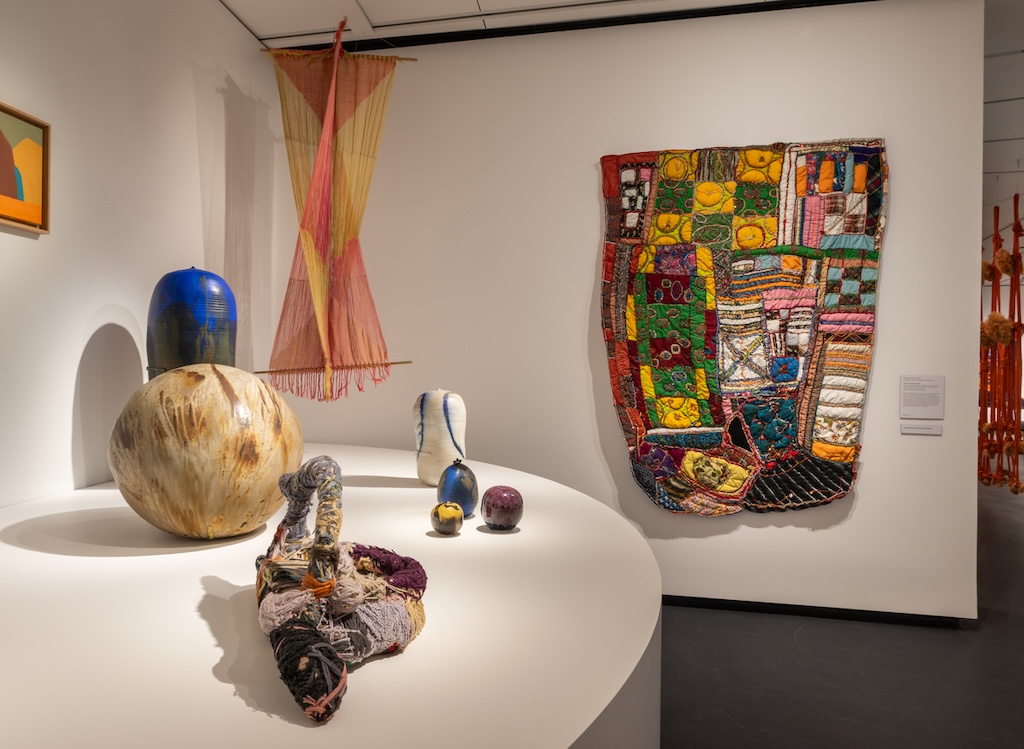
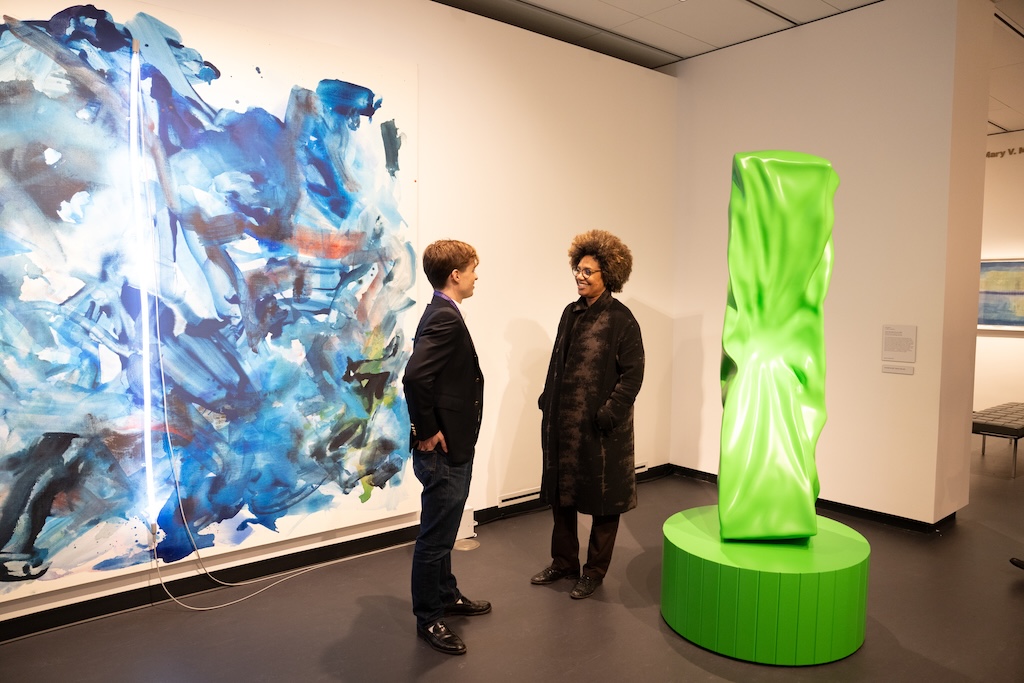
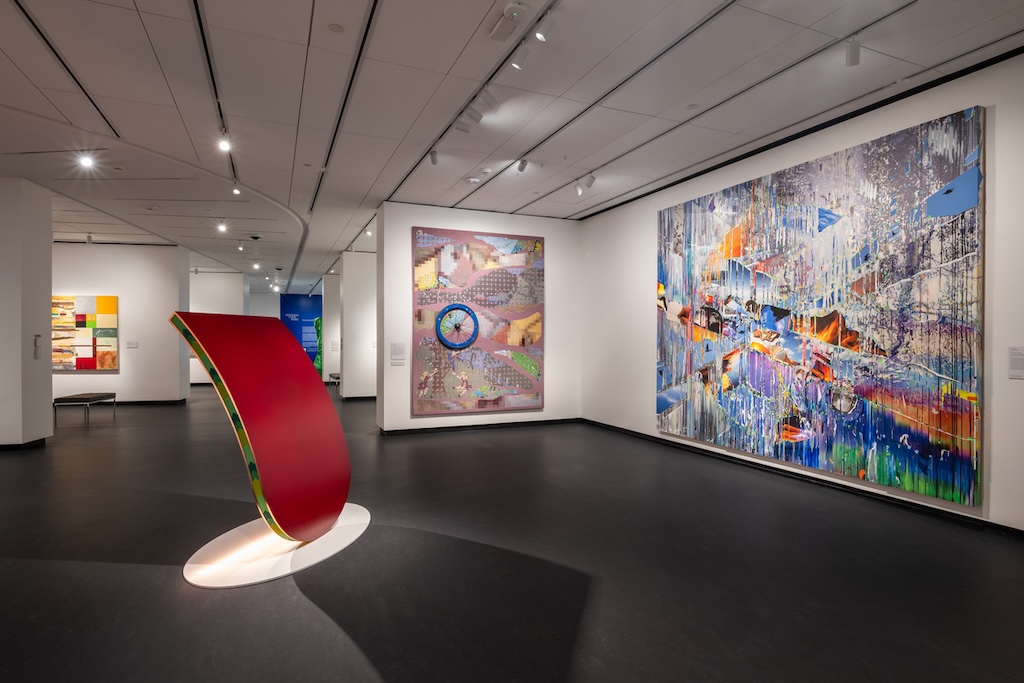
Upstairs, the exhibition makes that imbalance visible without belaboring it. Drawn entirely from the Shah Garg Collection, the works resist chronology in favor of conversation—gestural abstraction alongside textile, conceptual rigor brushing up against craft traditions long dismissed as peripheral. It’s less a corrective survey than a reframing, although Shah admits she has a weakness for giant “muscular” paintings.
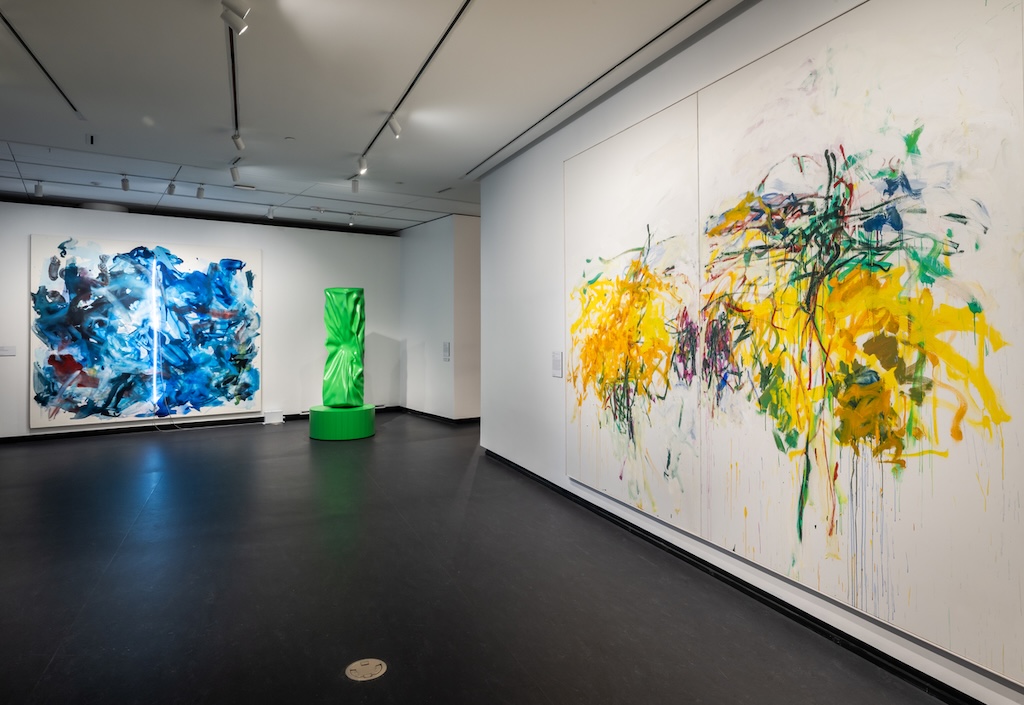
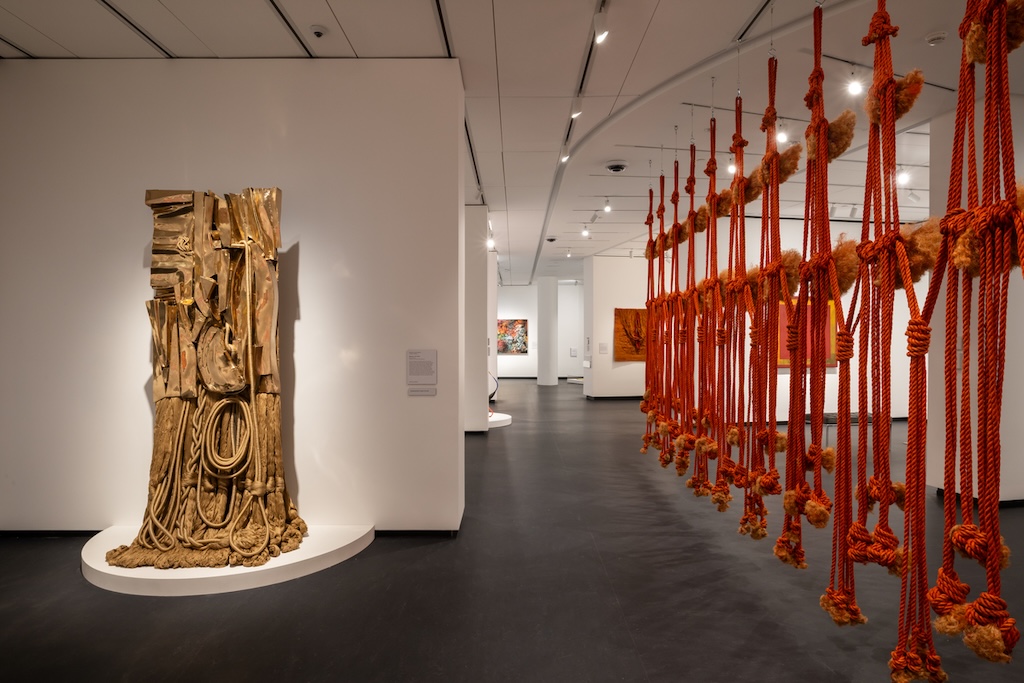
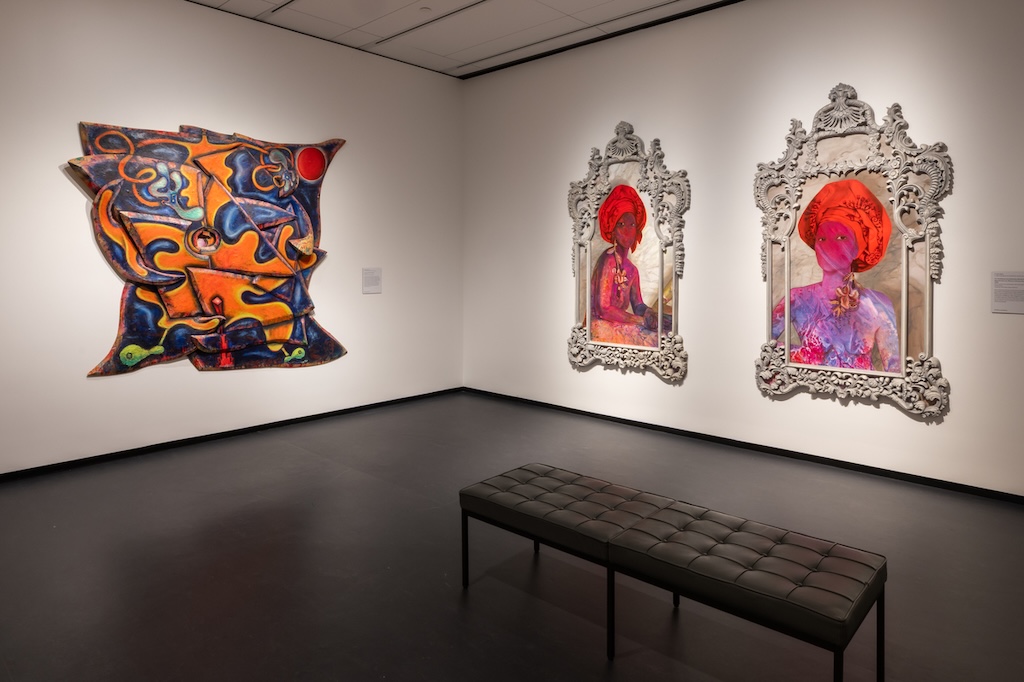
Cara OberIt’s less a corrective survey than a reframing, although Shah admits she has a weakness for giant “muscular” paintings.
If the exhibition is the visual argument, the convening is the structural one. “What frustrates me is how progress comes in bursts,” Shah said. “Museums will suddenly mount several shows by women, and people say, ‘We’ve arrived.’ But then it recedes. There’s no sustained momentum.”
For someone whose collection now operates at institutional scale, the limits of individual action are clear-eyed, not cynical. “I can support exhibitions, collaborate with curators, publish books, but that’s still a drop in the bucket. Real change requires the entire ecosystem: collectors, institutions, scholars, and audiences working together.”
That ecosystem was on full display in DC, including a panel on market-building that, refreshingly, didn’t sidestep the uncomfortable parts. “My partner initially hesitated to engage with the market discussion,” she admitted. “But I felt strongly that nothing should be off-limits. We need perspectives from auctions, primary markets, galleries, and academia.”
One of those perspectives came from Renée Adams, a researcher at Oxford whose work edges into behavioral economics. “In one study,” Shah explained, “randomly generated images were assigned either male or female names. Identical works were consistently valued higher when associated with male names.”
“It shows how deeply ingrained these biases are,” she said of the data. “Undoing them will take systemic effort.”
If that sounds daunting, it is—but Shah tends to pivot quickly from diagnosis to action. Even pricing, that most opaque and anxiety-ridden aspect of the art world, becomes a site of intervention.
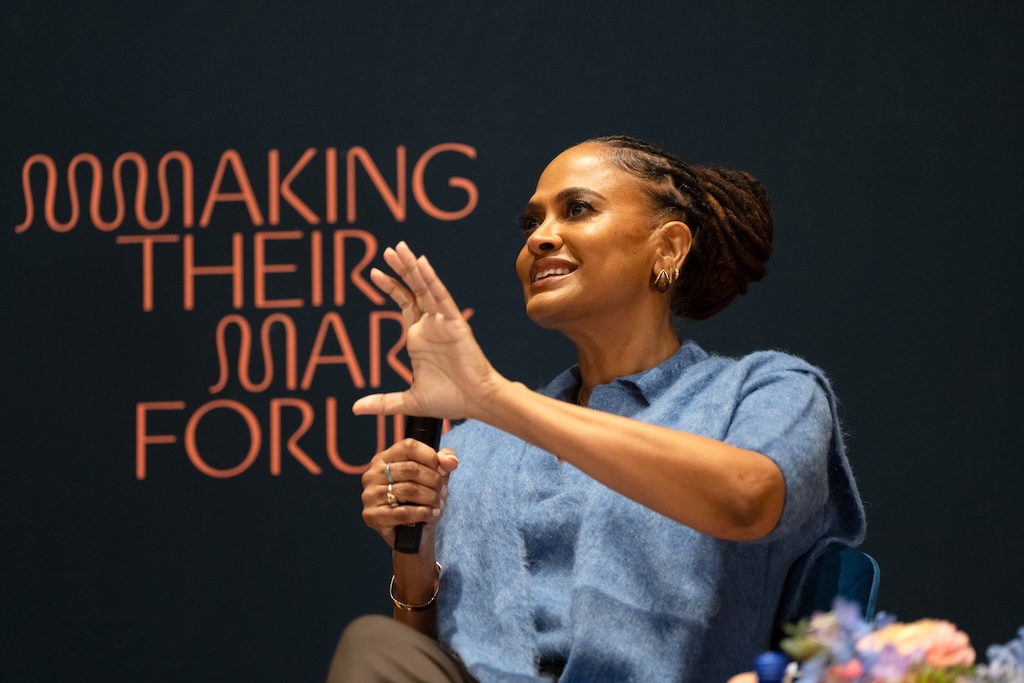
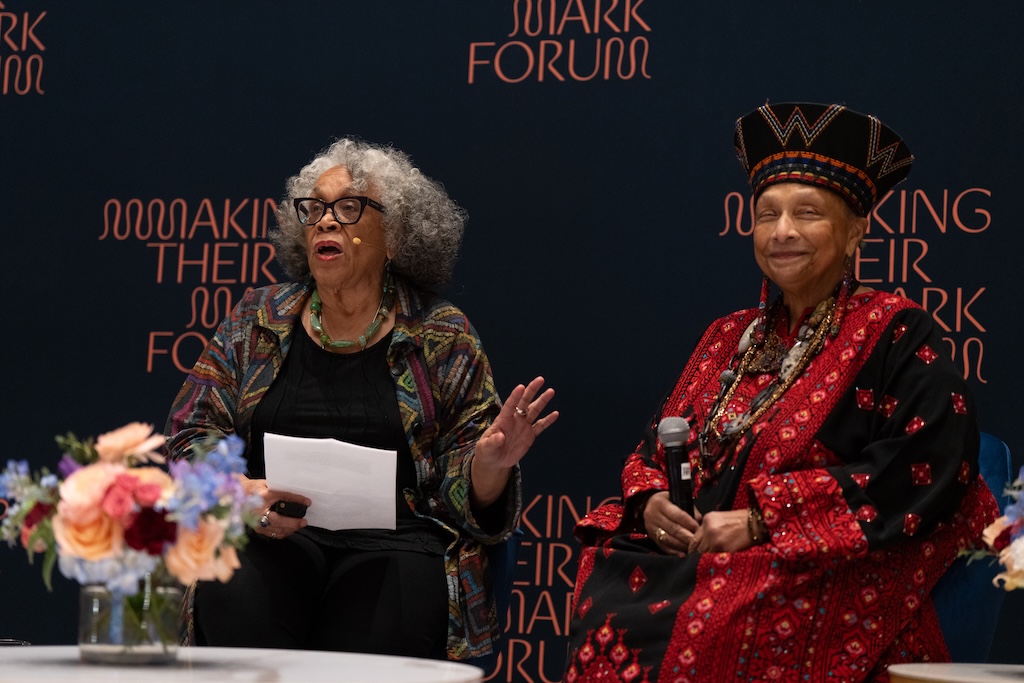
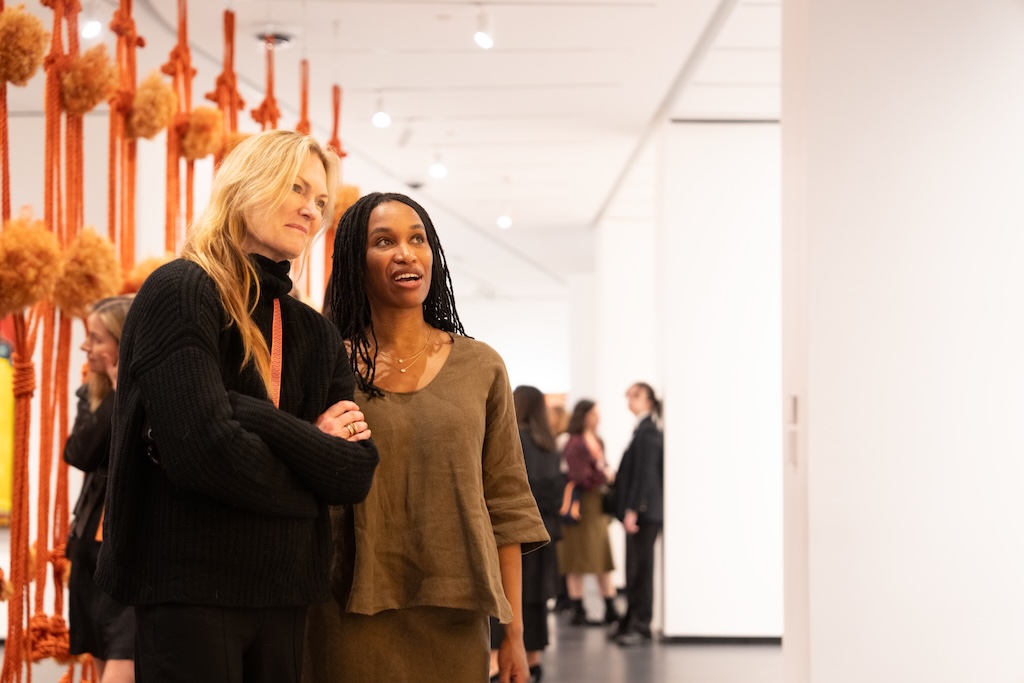
“I remember discussing this with a dealer representing Jacqueline Humphries,” she said. “There was strong demand, but prices remained cautious. Women artists—and those who represent them—are often hesitant to raise prices too quickly, out of fear of a correction.” That caution, she suggests, can quietly reinforce the very disparities it seeks to avoid. “Incremental adjustments can help shift perception.”
Her own path into collecting didn’t begin with strategy so much as instinct. One of her earliest acquisitions, in 2011, was a painting by Rina Banerjee she encountered at Christie’s—“a woman catching her tears in an inverted umbrella.”
“No one else was bidding,” she recalled. “A more experienced collector might have hesitated, but I asked a friend to bid on my behalf.” She still lives with the work. “It marked the beginning of trusting my instincts.”
That instinct sharpened over time, shaped by encounters that felt less like acquisitions than interruptions—moments when a work refuses to let you pass. A visit to the Whitney Biennial did that for her. So did, eventually, Joan Mitchell.
I asked if Mitchell had become central to the collection. “Her work had a profound impact on me,” she said. What followed wasn’t a quick purchase but years of looking, learning, and listening—absorbing context from curators like Katy Siegel, Sarah Roberts, and Gary Garrels.
“When I finally acquired a major Mitchell painting, it had impeccable provenance and had never really circulated on the market. It took patience—and confidence—to commit. But it became a cornerstone of the collection.”
If the collection now reads as cohesive, even inevitable, it’s because it has evolved into what she describes as a storytelling device. “It’s not just about acquiring beautiful works, but about identifying moments of innovation and constructing a broader narrative.”
That narrative isn’t driven by trend, which may explain why some of its most compelling threads come from the margins. At Art Basel Miami Beach, she wandered into a quieter section and encountered work by Noor Malas, a Syrian painter tracing the collapse and tentative renewal of her country. “I acquired one immediately,” she said. “Beautiful, unsettling, deeply compelling.”
Komal ShahThere’s something powerful about supporting artists who have persisted without acknowledgement.
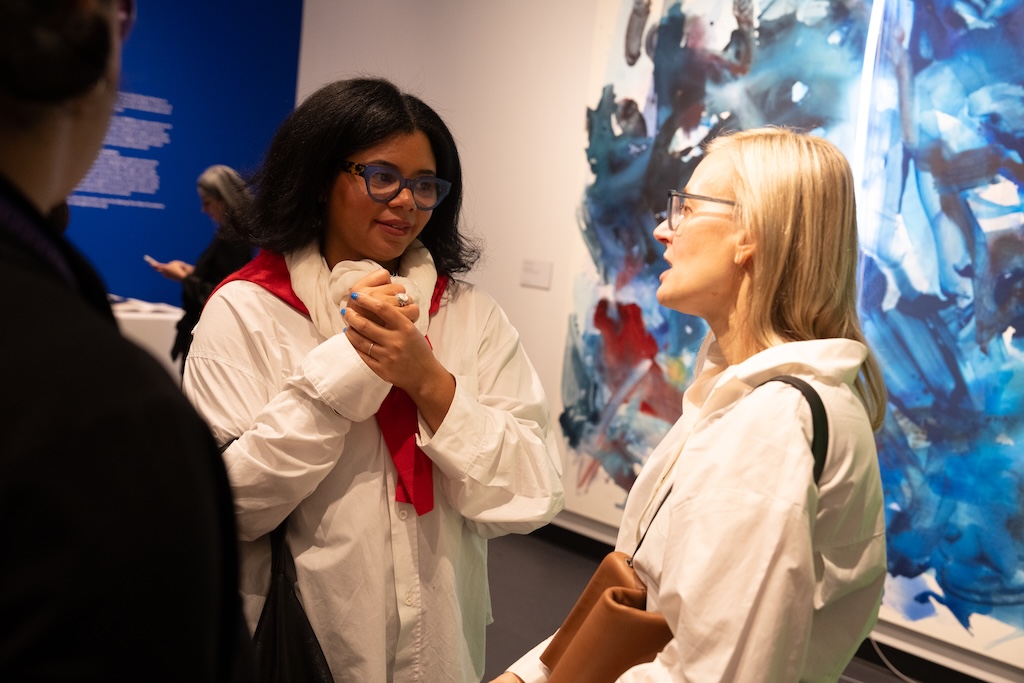
She’s equally drawn to artists whose recognition arrives late, if at all. Samia Halaby—now in her late eighties, still producing kinetic digital paintings performed with music and featured in the current Whitney Biennial—is one such figure. “There’s something powerful about supporting artists who have persisted without acknowledgement,” Shah said. “Seeing her work come into wider recognition now feels urgent.”
Persistence, of course, is not unique to the art world. But here, as elsewhere, it has often been the price of exclusion. Managing a collection of this scale requires its own kind of choreography. “About 20% is in my home, 25% is currently on view at the museum, and around 10% is on loan elsewhere,” she said. “The rest is in storage.” She tends toward large-scale works—sometimes larger than her home can comfortably hold—because scale itself becomes a statement. “It challenges assumptions about what women artists produce.”
And then there’s the question that inevitably follows: what happens next? “I think about the long-term vision,” she said. “Perhaps an institute—a space for exhibitions, scholarship, and dialogue. Not necessarily limited to the collection, but rooted in research and community.”
It’s a logical extension of what’s already happening, both in the galleries and in the rooms downstairs where conversations stretch well past their scheduled end times. Exhibitions, she insists, are essential—not as endpoints, but as entry points because, “they draw people in.”
The exhibition, originally slated to conclude its tour in St. Louis, continues to expand, an indication not just of demand, but of resonance. “That kind of interest underscores the relevance of the work,” she said.
Relevance, here, feels like an understatement. “It always will be,” Shah added. “The Equal Rights Amendment still hasn’t passed. The work isn’t done.”
Before we wrapped, I asked what she believes collections should ultimately do—a question that can veer into abstraction if you let it. “Tell a story,” she said, without hesitation. “That was the advice I received early on: decide what story you want to tell.”
Cara OberIf the collection now reads as cohesive, even inevitable, it’s because it has evolved into what she describes as a storytelling device.
For her, that story has come into focus over time, through instinct, research, risk, and a willingness to challenge the systems that shape value in the first place. “It became clear that the story was about the power, innovation, and resilience of women artists,” she said. “The collection now has its own identity, it guides future acquisitions.”
Sometimes, she added, the clarity is immediate. “I’ll encounter a work and just know: this belongs, or it doesn’t.” In a city like Washington, DC, built on negotiation, that kind of certainty feels almost radical.
Upstairs at NMWA, the massive, colorful works hold their ground—insistent, expansive, unwilling to recede. Downstairs, conversations continue, looping between optimism and urgency, data and feeling, market logic and something harder to quantify.
It’s not a moment of arrival; Shah’s ‘mark’ is much more durable than that.
More events at NMWA: Fresh Talk with Making Their Mark featured artist Andrea Bowers on June 17.
Tickets and more info can be found here.