Two hundred years ago, Baltimore was the fastest growing city in the country. Despite how much has changed in the last two centuries, the infrastructure and ethos of Charm City were already being shaped. Commercial gas streetlights lit the bustling harbor where most residents lived. Lexington Market was abuzz with commerce, plans for the B&O Railroad had just begun, the Washington Monument was nearly complete, and, within this context, Maryland Institute College of Art (MICA, originally The Maryland Institute for the Promotion of the Mechanic Arts) was established.
One of Baltimore’s earliest institutions and one of the country’s first art schools, MICA has not simply endured—it has thrived—and its existence has helped shape the city’s cultural life. In 1826, no one could have predicted the ways in which MICA and Baltimore would evolve together, expanding creativity and culture in a symbiosis that has resulted in one of the most vibrant art scenes in the country.
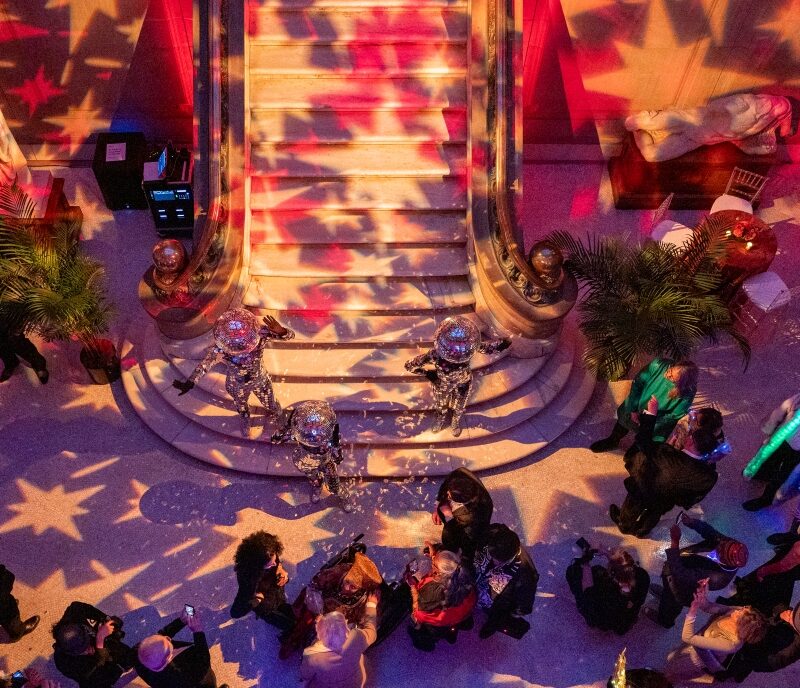
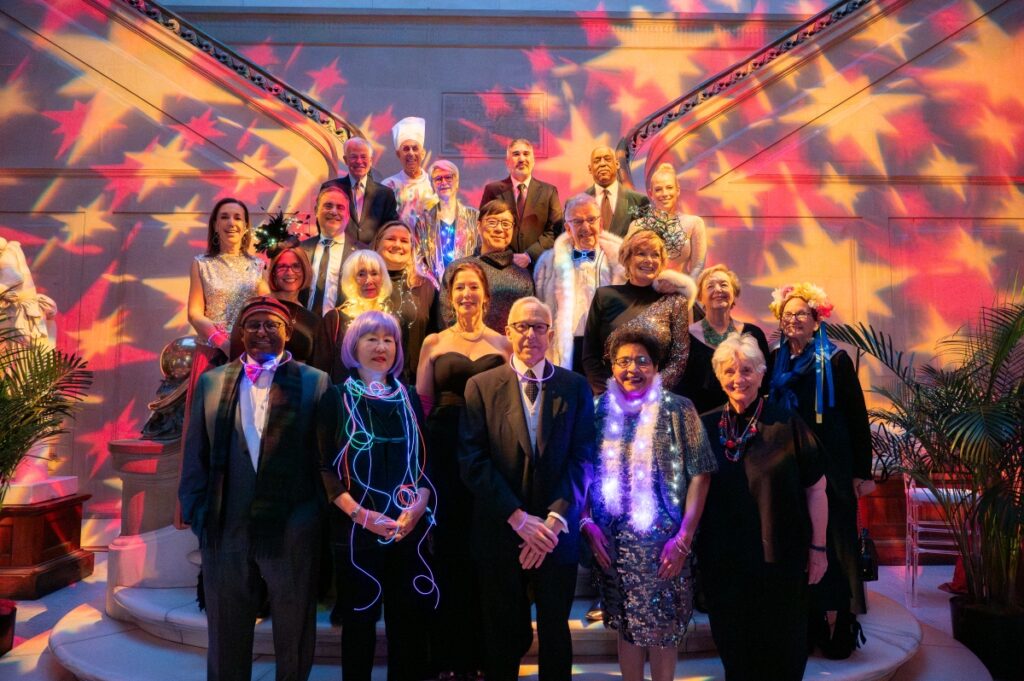
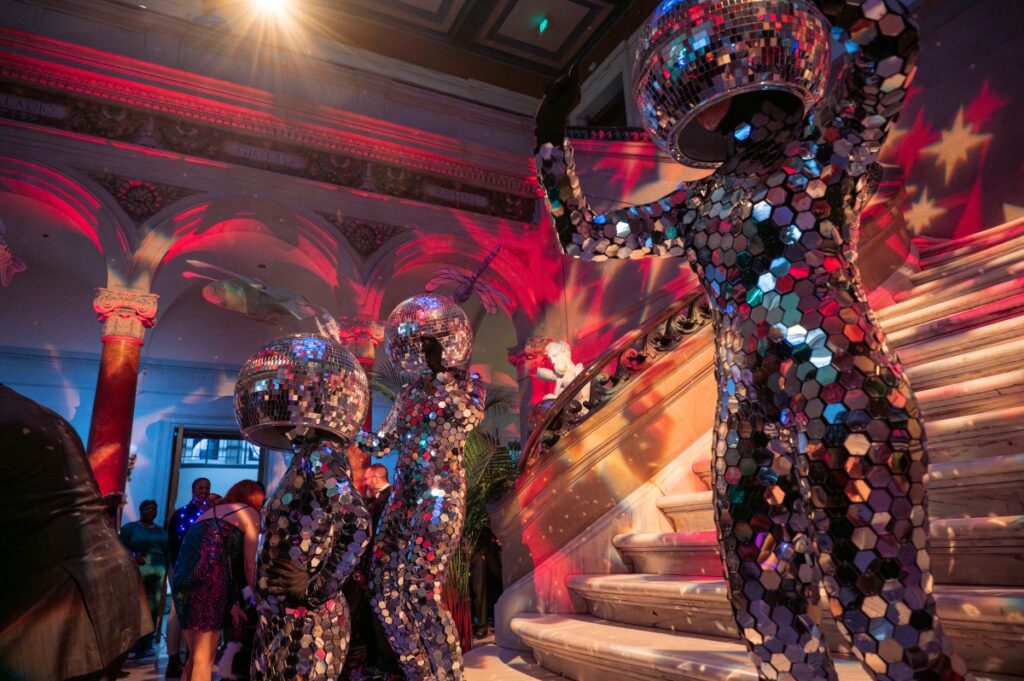
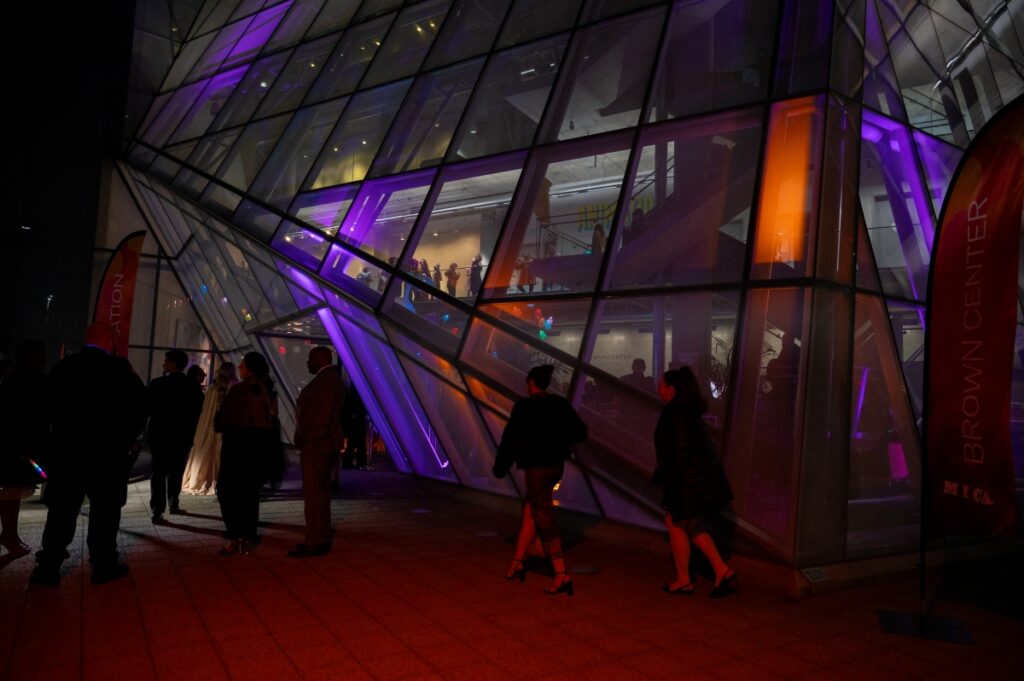
It is fitting, then, that celebrating the milestone literally lit up the neighborhood: MICA’s Fěte of Lights, hosted on February 21, 2026. Students and staff transformed the main building’s classrooms and meeting spaces into vibrant lounges pulsing with light. Women dressed as disco balls circulated through the crowd, and men in LED-lined suits strutted on stilts. The overhead lights were dimmed, but illumination came not only from red and blue-tinted spotlights, but also from guests’ outfits—dresses and blazers lined with fairy lights, hats glowing pink and purple, a headdress of mirrors, and oh-so-many sequins to celebrate the longevity of a beloved institution.
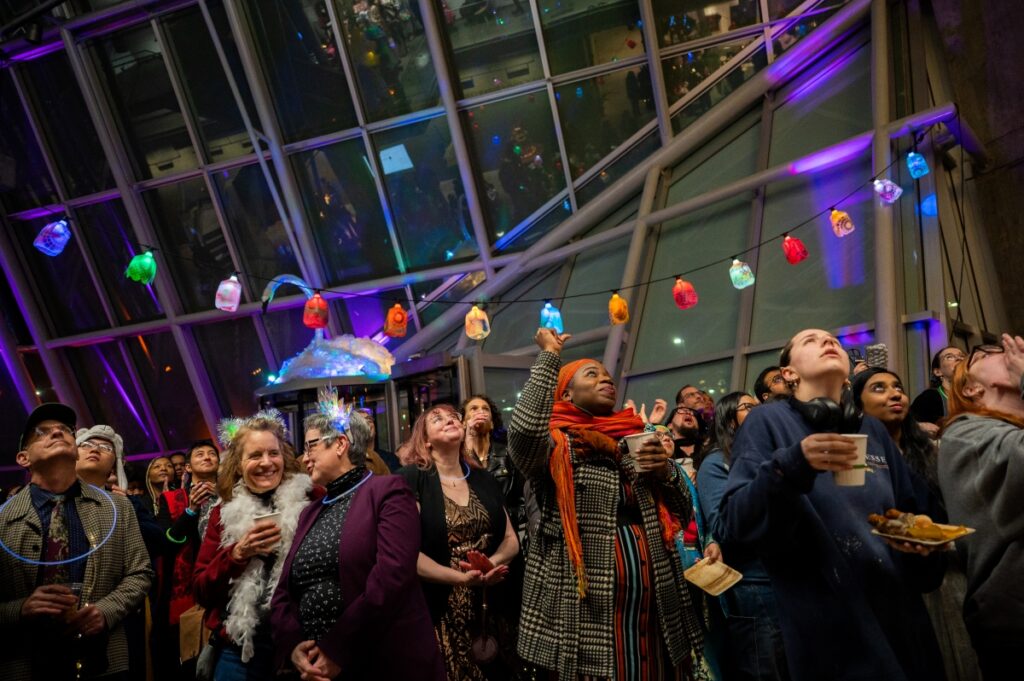
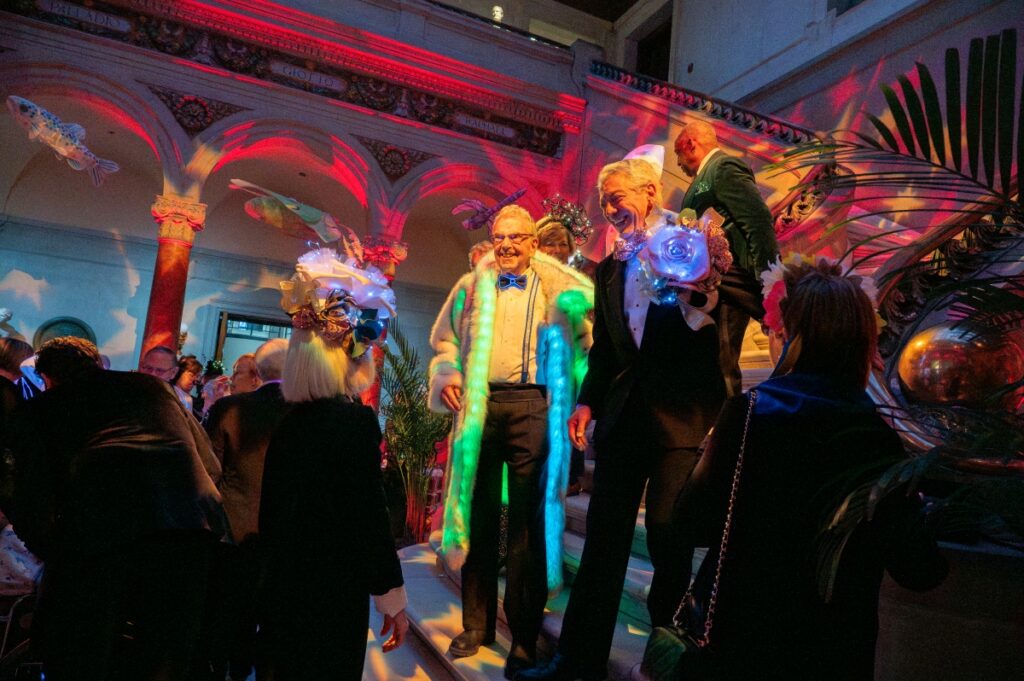
Elizabeth HazenThe Fěte of Lights and its accompanying wearable art competition are traditions that date back to 1951, and the revival of the event was a huge success.
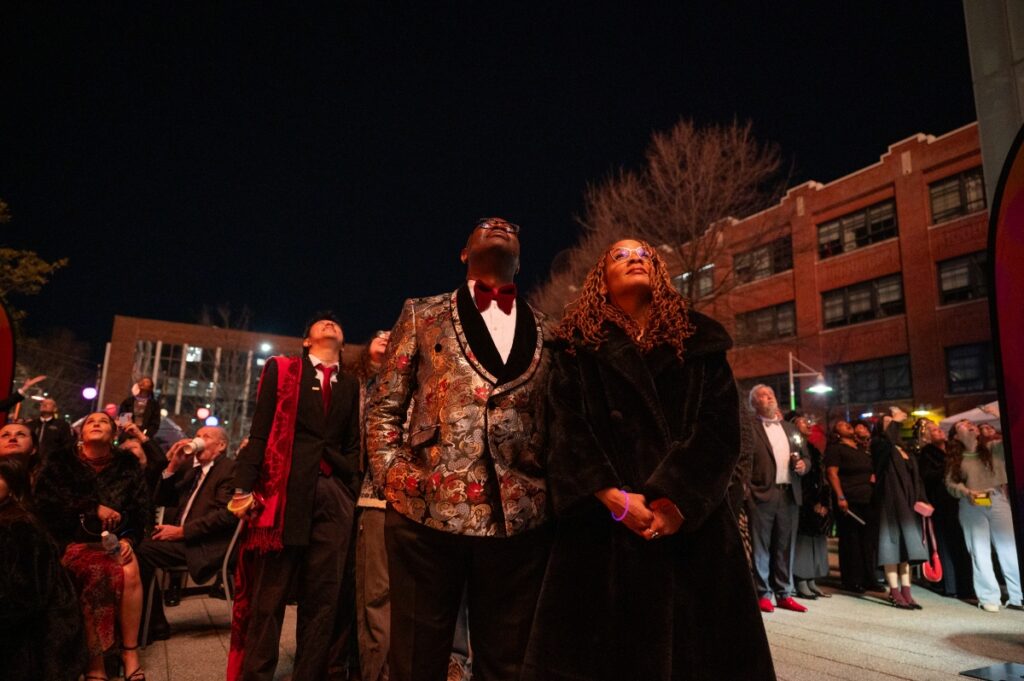
The Fěte of Lights and its accompanying wearable art competition are traditions that date back to 1951, and the revival of the event was a huge success. Guests gathered around the grand staircase to watch as MICA community members descended in outfits which included an anglerfish with a glowing lure, a Victorian style lamppost, and even a multi-person recreation of Lee Woodward Ziegler’s “Maryland” mural, which was presented at MICA’s centennial celebration in 1926 and hangs in the stairwell of the main building. The night culminated in a fireworks display, the sky above Mount Royal Avenue a reflection of the sparkling spectators.
Originally a student-led event, the Fěte of Lights celebrated creativity, community, and the joy of making art—values that have endured the institution’s long history along with the hopeful mission of empowering students “to forge creative, purposeful lives and careers in a diverse and changing world while thriving with the city of Baltimore.”
Over two centuries, the world has certainly changed, but MICA has managed to expand and evolve, even as other arts institutions across the country struggle to keep their doors open. According to President Cecilia McCormick, “MICA was founded on the belief that creativity matters. The State of Maryland granted the college its charter in 1826 because they understood the vision… They knew creativity could shape culture, drive innovation, and stimulate the economy. That singular belief in creativity is what has carried MICA through generations of change.”
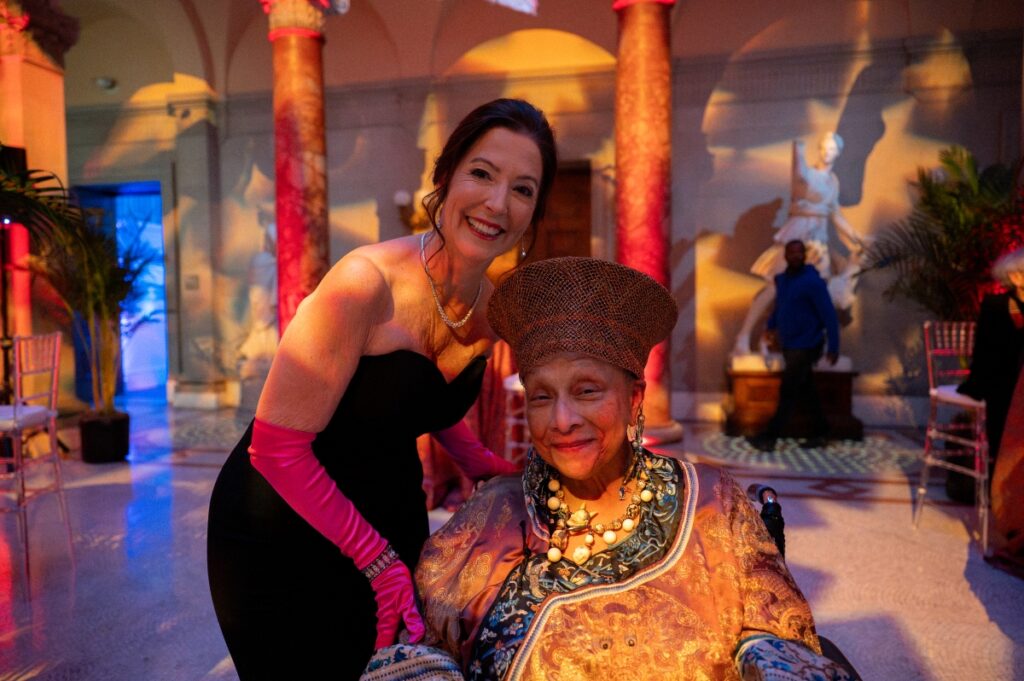
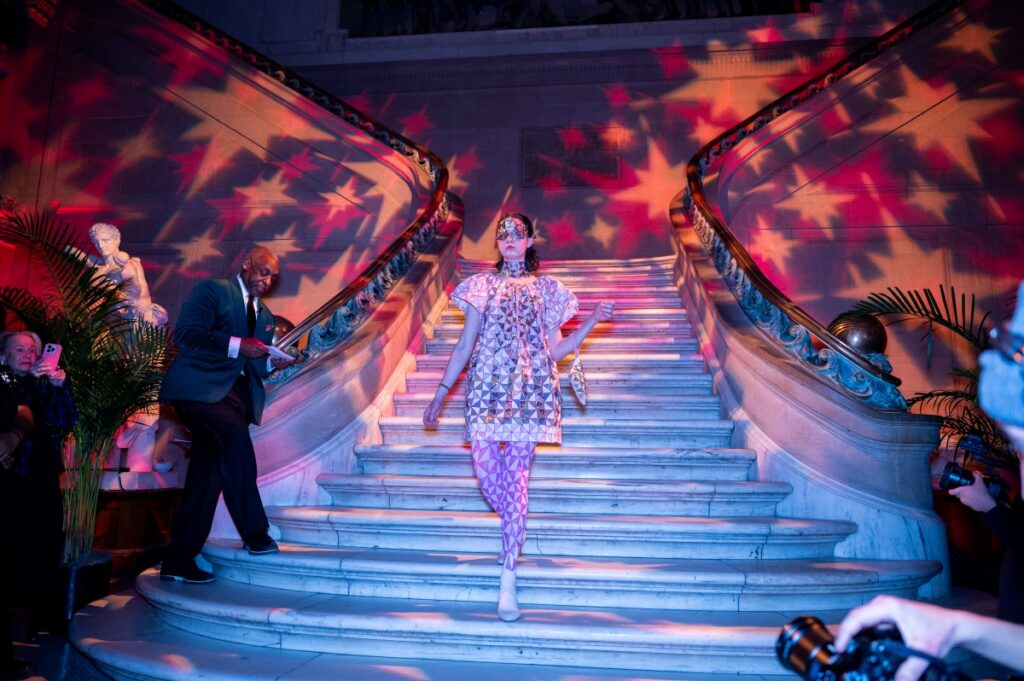
MICA has a long history of resilience and reinvention. In its first 78 years, the institution burned twice—in 1835 and again in 1904—both times rebuilding and reasserting its role at the heart of the arts in Baltimore. Until the Baltimore Museum of Art was founded in 1914, MICA was the main arts organization in Baltimore, but these days the city is rife with creative energy and cultural institutions. As the city has evolved, MICA has been integral to its burgeoning arts scene—a scene that is consistently ranked one of the most robust in the country.
“I do think it’s the fact that we’re nimble,” says McCormick. “We really can respond to the needs of the current moment, and we have morphed over the years. At our core we have always maintained a strong foundation in art and design.”
By the late 1970s and 80s, a number of galleries and arts centers began opening around Baltimore, including the C. Grimaldis Gallery, School 33, Maryland Art Place, the George Ciscle Gallery, and Gomez Gallery, offering artists and audiences new opportunities for exhibits and community. In 1982, Artscape was founded as an outdoor celebration of the arts, hosted for decades on Mount Royal Avenue, part of MICA’s campus. By the early 2010s, the Station North Arts & Entertainment district was formed, followed by other arts districts throughout the city. MICA was connected to nearly every cultural initiative through alumni and faculty involvement, as well as official partnerships.
In various and unpredictable ways, MICA graduates have helped to bring about exponential growth in the art in the region. “We estimate about half of our students stay in the Baltimore region,” says board member Fredye Gross. She explains that those students play an important role in the creative life of the city, taking what they learned at MICA and applying it to their work in fields ranging from traditional fine arts to gallery ownership to urban development to tech start-ups. Indeed, in the 21st century, MICA continues to expand the scope of what it means to be an arts college, taking experiential learning and multidisciplinary education to a new level and giving graduates real-world tools for success in creative fields.
Alumni Mantis Harper-Blanco BFA ‘24 describes an academic trajectory during her undergraduate years that was both inspiring and pragmatic. “A core focus of the thesis was homed in on the practical realities of being an artist, such as how to present yourself on paper and in person, and how to navigate the administrative side of sustaining an art practice. More than anything, the program helped us build an independent mindset about professional development and how to approach our careers as artists.”
Elizabeth HazenIn the 21st century, MICA continues to expand the scope of what it means to be an arts college, taking experiential learning and multidisciplinary education to a new level and giving graduates real-world tools for success in creative fields.
Advances in technology and changes to what constitutes art itself have also driven growth of MICA’s offerings. Students, faculty, and administration have proven to be both adaptable and innovative, offering creative problem-solving across disciplines and prioritizing human-centered design. Vice President Ray Barclay notes that it is MICA’s responsibility to “cultivate creative leaders who combine deep craft with strategic agility. The next generation of creatives must understand data analytics, audience behavior, and digital platforms, but they must also understand storytelling, design systems, cultural context, and ethics.”
In order to achieve these educational objectives, “MICA regularly looks at its existing portfolio of programs to determine where there is demand and where there is an educational or workforce development gap in the marketplace that MICA is currently not filling,” says McCormick. Creative Media Production and Design and Innovation, majors added just this academic year, will allow students to build new areas of study that are tailored to their interests.
In Fall 2026, students will be able to major in Film & Video and Game Design. They can also pair their major with a co-major in Biodesign. Michelle Shengyu Li BFA ‘25 explains, “Biodesign is a unique, growing intersection of art and science which explores the responsibility of human tools, systems, and output in conjunction or collaboration with other organisms of the living world.”
Another initiative, the Center for Creative Impact, allows MICA to “use creative thinking to address society’s challenges and make a transformational difference for organizations,” McCormick explains. “Our students are currently working on redesigning MICA properties near the Jones Falls Watershed to advance the gateway master plan, revive green space, and develop gathering spaces for the community.” For students, this kind of experiential learning allows them to apply designs in practical ways that add value to the community.
Creative Impact Fellow Thierry “Logic” Thompson ’28 has been working on the MICA Park project. “I’ve been interviewing stakeholders, locals, people who work nearby, students, just to get an understanding of what they would want out of a space like that,” he says. “I did some sketches and models for that green space. And, in collaboration with CCI, I’ve gotten to work with or meet and speak with the engineering and landscaping people to start to think and work alongside them to build out what we’ve been finding people want. So, a lot of system thinking, looking at a small space and wondering, well, if all these people want to use it, how does that happen?”
In a world that seems increasingly indifferent to the value of human-centered creativity, MICA proves, again and again, it is not only relevant but indispensable. Although some might view its location centered in Baltimore as a disadvantage, the reality is that the college and the city exist in a state of symbiosis where a thriving “city of artists” continues to attract new students, faculty, and staff. Baltimore’s affordability, accessibility, and creative ecosystem provide an excellent context for the MICA community to create art, cultural spaces, and collaborative projects that, in return, invigorate the city for all.
MICA’s past, present, and future, centered in Baltimore, has actually aided in its longevity, creating the condition for both the institution and the city to flourish. “MICA is an anchor institution,” says McCormick, “and we create a huge payoff for the city of Baltimore. I don’t think we could exist without Baltimore, but I don’t think that Baltimore could exist without MICA.”
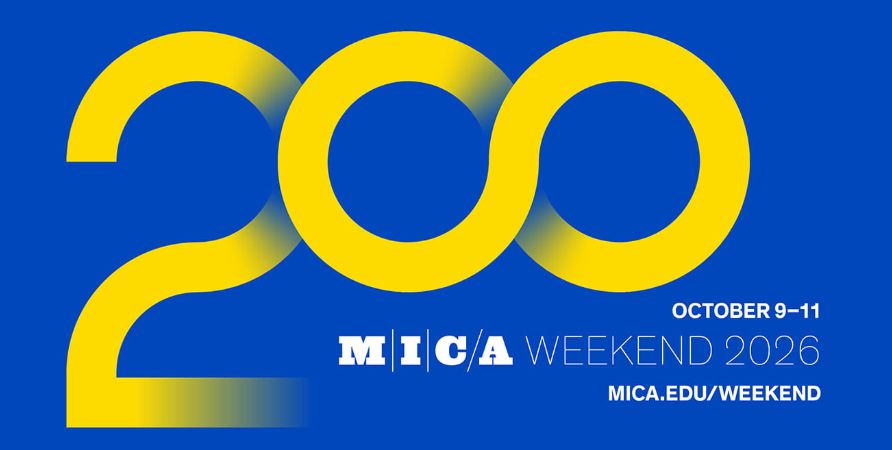
October 9-11: Celebrate MICA Weekend 2026, the centerpiece of the Maryland Institute College of Art’s Bicentennial celebration, honoring 200 years of creative impact. Join alumni, students, parents, families, faculty, staff, donors, and friends for an unforgettable weekend filled with inspiring conversations, hands-on art experiences, exhibitions, performances, campus traditions, and opportunities to reconnect with the MICA community.