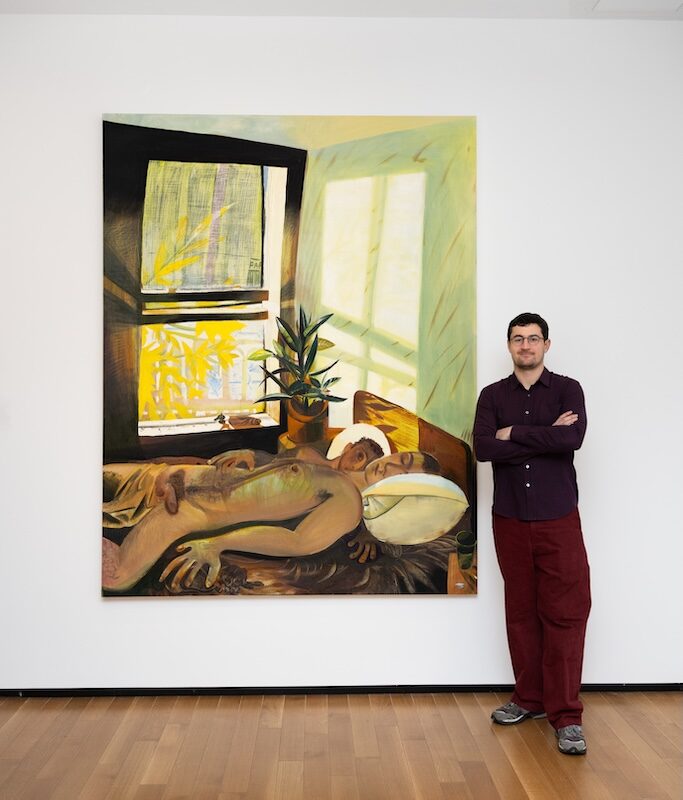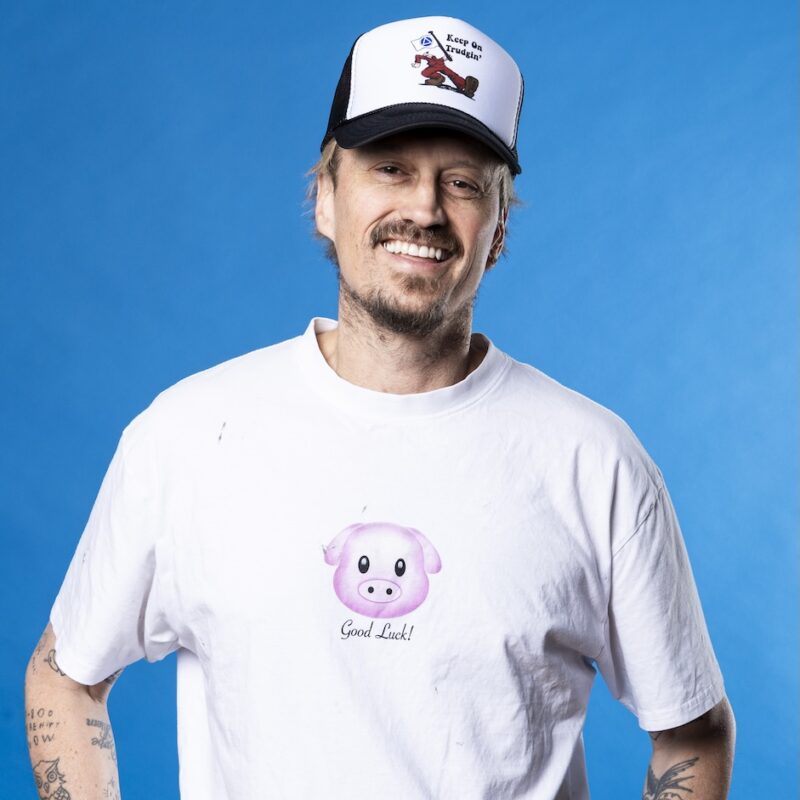
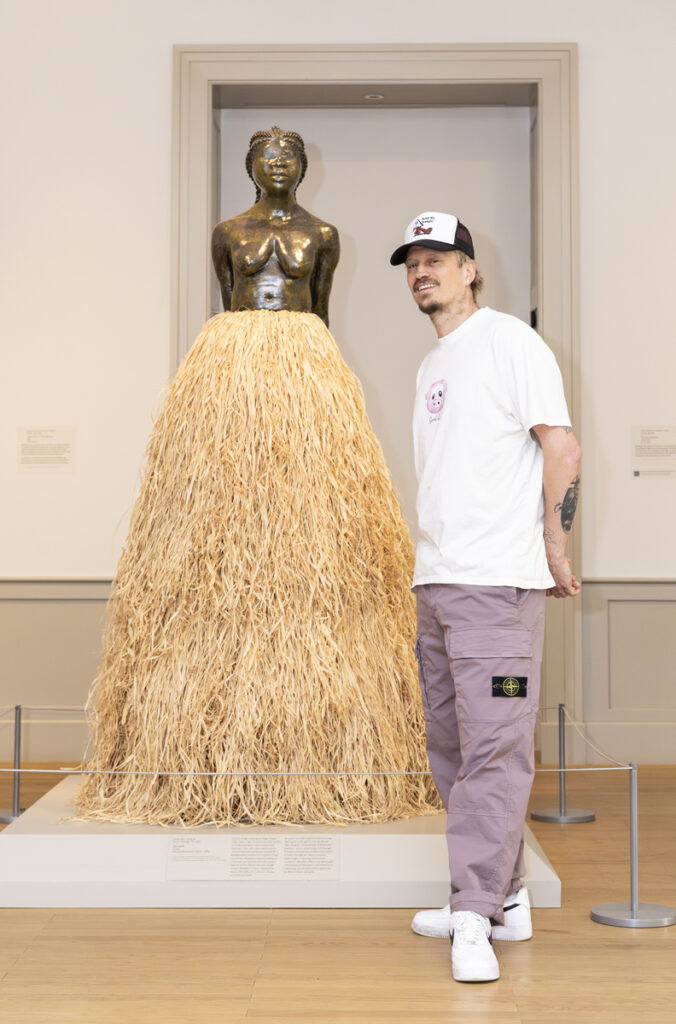
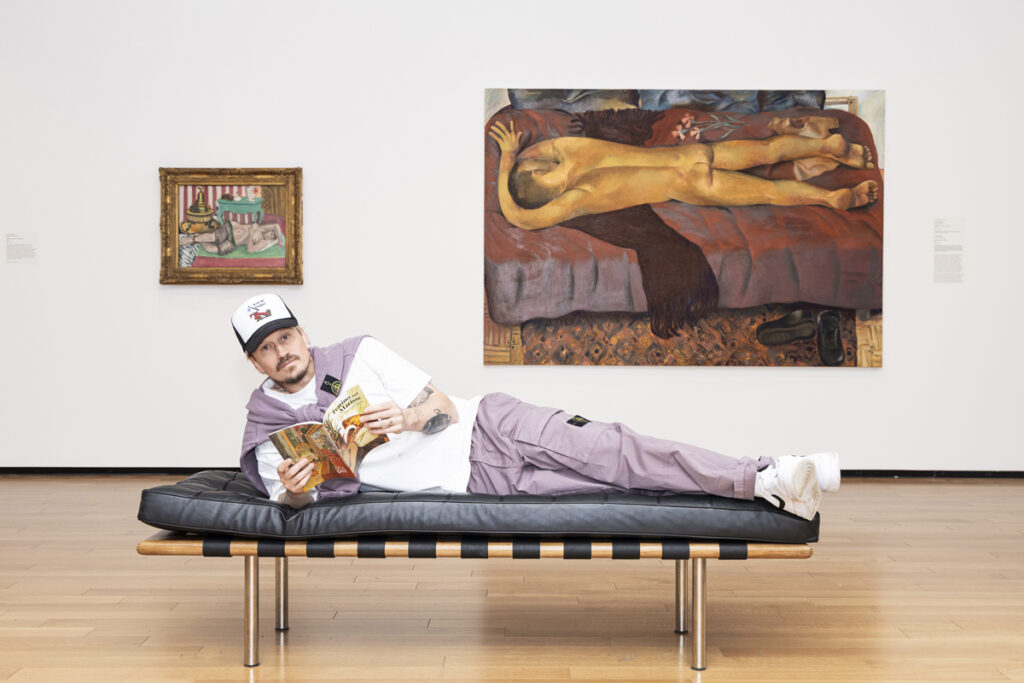
To stand in front of Simone Leigh’s Meredith in the Cone Wing is to feel two things at once—the familiar flood of joy her work always brings, and something quieter: the recognition that this sculpture, on loan from Michael Sherman and his wife Carrie Tivador, is in conversation with everything around it. A Degas to its left. A Matisse down the hall. Beside it, a Louis Fratino, intimate, figurative, tender. Works donated by Claribel and Etta Cone decades ago now hang beside the contemporary, the urgent, the now.
Most BMA visitors don’t realize that Leigh’s sculpture and Fratino’s The Red Nude are there because of Sherman. His generosity made that dialogue possible—channels between past and present, between what Baltimore’s collectors have always believed and what they’re still reaching toward: connections between artistic legacies and futures that form the basis of the city’s cultural identity.
Sherman was born in Louisville, Kentucky, but raised in Baltimore which he declares as his hometown. He moved here at eleven. He says his mother, Betsy Sherman, and his late father, George Sherman, encouraged him in “absolutely everything.” Their example of philanthropy shaped every part of his life, from his film career in Los Angeles to his deliberate support of living artists.
After co-founding Bow + Arrow Entertainment and producing over 40 independent films, like “Native Son” (2019) directed by the artist Rashid Johnson, as well as “A Photographic Memory” (2024) directed by Rachel Elizabeth Seed. He recently produced Tiona Nekkia McClodden’s film “Ruinous” which is currently on its way to the Venice Biennale, to be viewed in the Arsenale.
Now based in Los Angeles, his connection to Baltimore remains constant. He serves as Chair of the BMA Accessions Committee and as a trustee, moving between Baltimore, New York, and Los Angeles for work, family, and the museum. His brothers are creatives too—one owns Catalog Coffee in Hampden, the other a bespoke wallpaper business called Flavor Paper, based in NYC, and Matthew founded Jugo Fresh, still considered the greatest juice shop ever even though it closed its doors pre-pandemic.
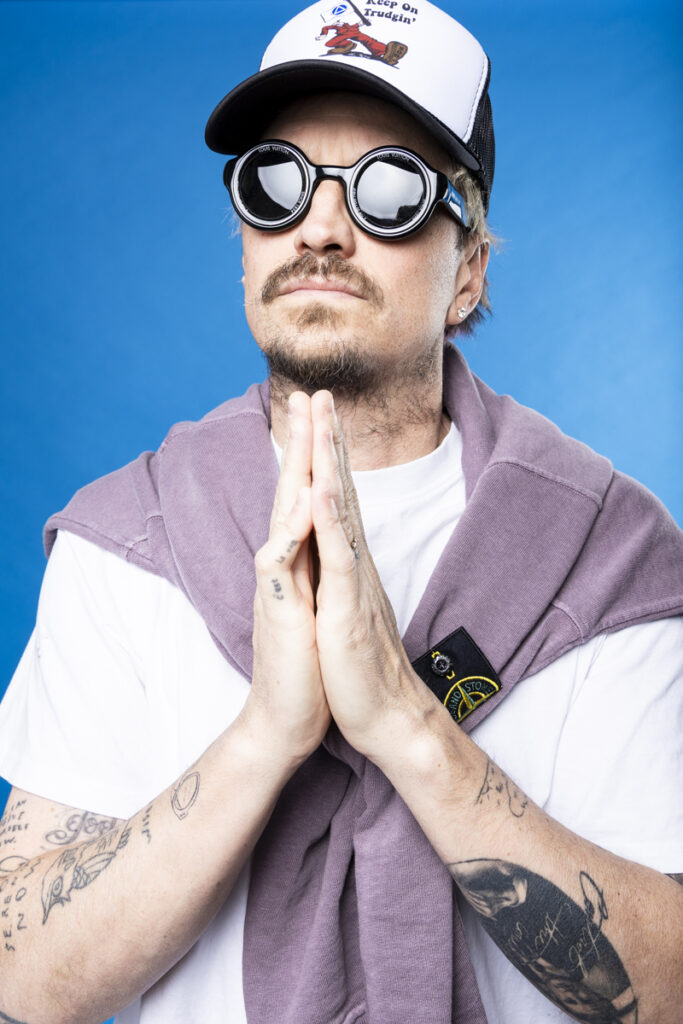
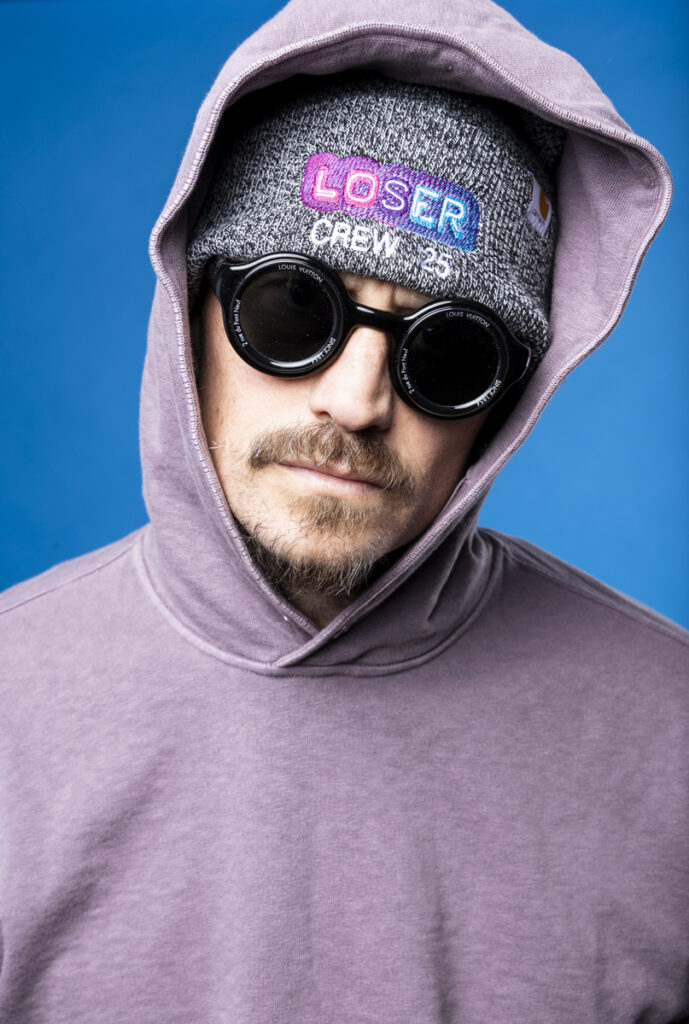
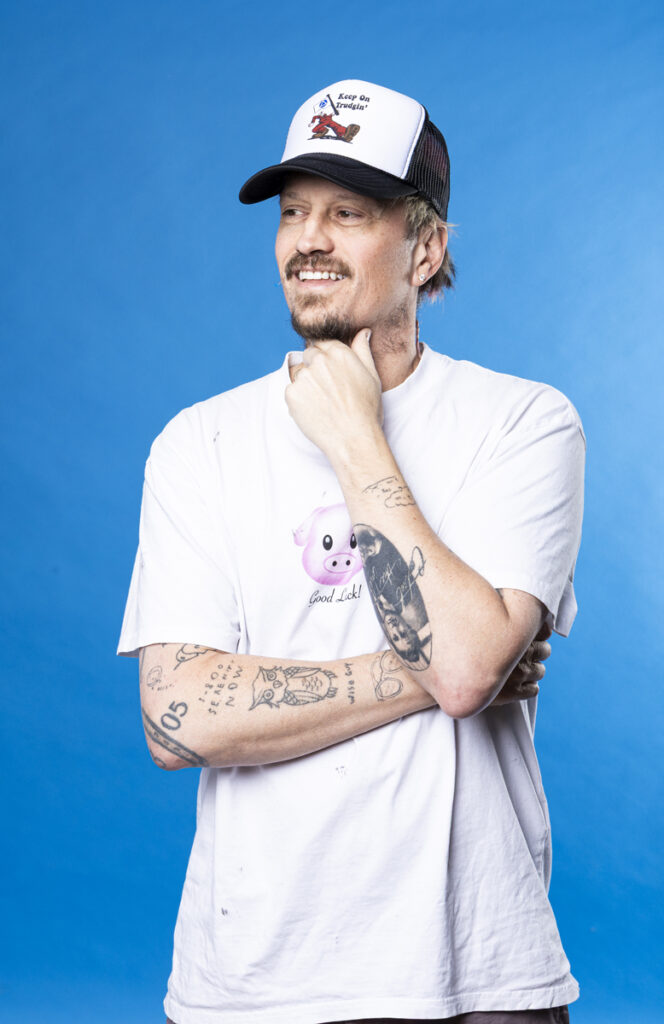
Sherman defies common assumptions about patrons of the arts, who tend to be perceived as stuffy and formal. Instead, his style is warm, loaded with hilarity, graciousness, and sharp wit. Known for his pink hair and streetwear style, he’s been called the “streetwear Larry David.” At 50, he’s shifting again—launching March 13th, a new film company, in order to slow down his frenetic schedule and spend more time with his daughter, Delilah.
Michael ShermanI’m only making things I want to make, and I’m only making things that are important to me.
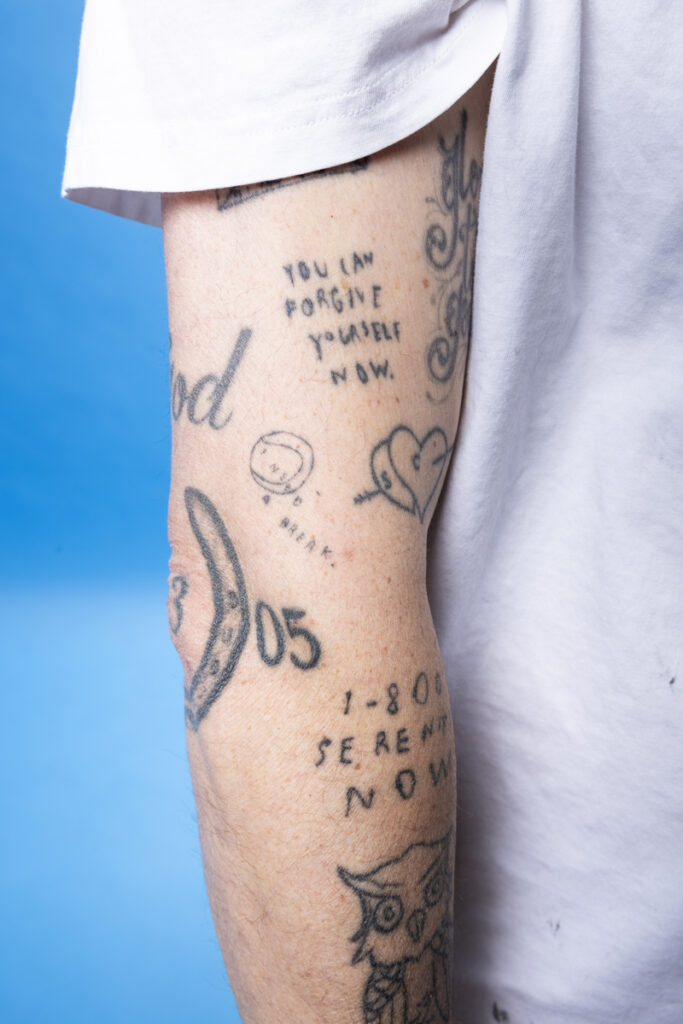
The company name is intentional; March 13th marks his sobriety date in 2005, referencing twenty-one years he just celebrated in Alcoholics Anonymous. “This is a new beginning for me,” he says. “I’m only making things I want to make, and I’m only making things that are important to me.” That same discipline guides his collecting: no art from people who aren’t kind, no projects that don’t make a values-driven impact. Sobriety and creative practice, for Sherman, are the same daily commitment.
He began collecting small, and his art collection grew alongside his career. He started out collecting where he could—prints, ceramics, then paintings. He learned by doing, trusting his eye, moving from group exhibitions to solo shows and into auction rooms. He cites a recent auction purchase of a Fritz Scholder painting, high on adrenaline, as the most exhilarating feeling ever.
Unlike other collectors who value objects over all else, Sherman uses his position to champion artists. His collection centers living artists, many of them artists of color, reflecting Baltimore’s identity. His relationships with artists—whether works remain in his collection or enter museums—build lasting legacies for both.
At the BMA, that legacy becomes public. Works he donates carry both his and his wife’s names, ensuring a valued permanence not just for the objects, but for the artists themselves.
Sherman moves through the world by gathering people—artists, curators, writers—creating spaces of connection. Tivador is central to that vision. “I love my wife,” he says, placing her name alongside his on every donation, embedding her into the future he’s building.
Even his collecting practices tend to be collaborative, social, and experimental. Case in point: Spaghetti Western, a contemporary art collection, co-owned with his friend, restaurateur Vinny Dotolo. After an ongoing friendship and conversation about art and artists, the two began combining certain works into the project, named because Dotolo is Italian and makes great pasta, and because Sherman is a filmmaker whose favorite genre is the western.
Despite his location in Los Angeles, Sherman is a hands-on, highly active trustee at the BMA. He shows up, texts artists, steers acquisitions. Since joining the board in 2020, he has gifted over fifty works, each one the result of years-long relationships. His presence has brought new urgency and vitality to the institution.
For artists, those gifts are transformative. To enter a museum collection is to be declared permanent, public, worth keeping—one of the most significant milestones in a career. For Sherman, the museum is where connections across time and genre become accessible; it’s where the very best art can be free, open, and shared.
It’s worth mentioning that his relationship with the BMA is also inherited. The Sherman Family Foundation, established by his parents in 1995, has long supported children, education, and the arts. In 2025, it was honored at the BMA Ball with the Changemaker Who Inspires Award. The evening raised over $1.1 million, and the foundation co-matched Amy Sherald’s gift to establish the Visionary Artist Award, ensuring ongoing support for artists in the region.
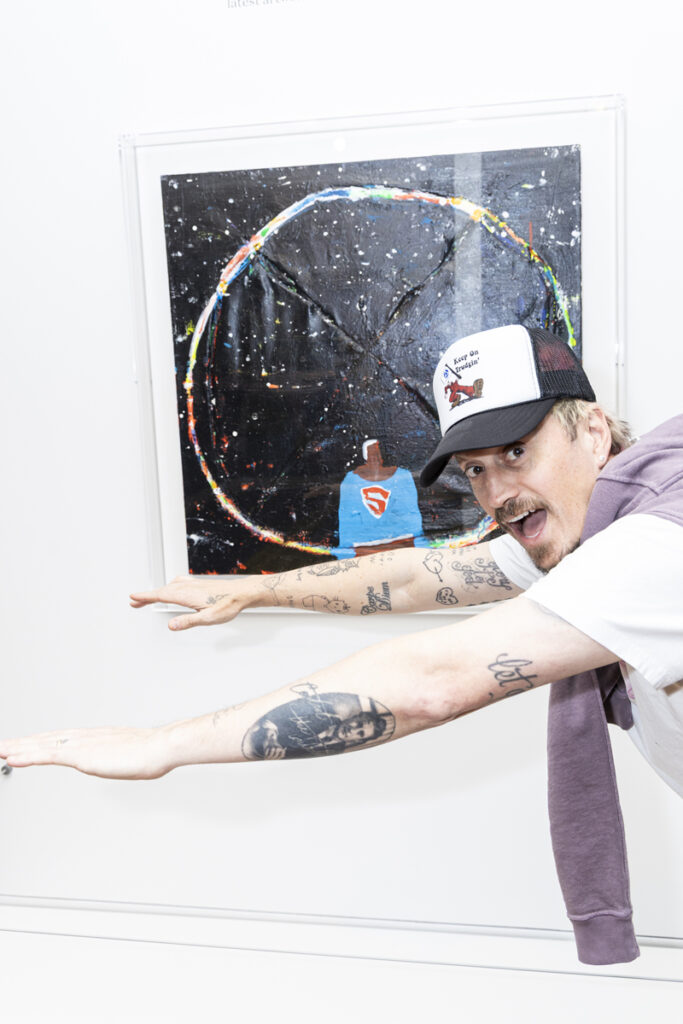
Currently on view at the BMA, Katherine Bradford’s Superman Big Circle of the Universe captures Sherman’s approach. He bought it in 2015; his mother kept it in her home. Years later, after forming a friendship with Bradford, he realized she wasn’t in the BMA collection. “I just thought it was crazy… So I said, ‘Kathy, I’m going to talk to my mom. We’re going to give that painting to the Baltimore Museum in honor of you…’ And so we did.”
“Sometimes I’ll reach out to the museum and recommend an artist. Most of the time these days it’s me steering the ship with people that I think belong in museums,” he says. Whether through gifts or long conversations, his approach is always personal.”I’m grateful to the BMA for their encouragement and support in what we do together.”
Baltimore, he says, is special—especially for young people. He points to artists like Taina H. Cruz, whom he supported early and who now shows internationally, including the 2026 Whitney Biennial. “One of my favorite things about filmmaking is discovery… The same way with art.” For Sherman, the museum makes discovery democratic. “Never forget where you came from,” he says. For him, it’s not nostalgia but strategy.
If there is a throughline to his work, it is this: relationships come first. Every artwork passes through a friendship before reaching a wall. Take Jerrell Gibbs, whose work Sherman has championed for years—collecting, lending, curating. Through his projects like the now closed exhibition space Easy Does It Curatorial, Sherman has supported exhibitions, writing, and visibility for artists he believes in. Gibbs is now preparing a new body of work for an upcoming BMA exhibition.
Michael ShermanLife is about sharing—sharing love, sharing hope, sharing dreams… When I had my kid, my entire life became focused on other people’s dreams coming true. That’s the most joy I can get out of my life at this point.
The Sherman Family Foundation Residency extends that vision to Maine, offering artists time, space, and resources. What began organically, with friendships and belief, has become a pipeline from residency to museum collection. Now in its fourth year, it provides funding, mentorship, and potential acquisition by the BMA. “I hope we get to do it for the next 25 to 30 years,” Sherman says.
Sherman insists that what we build must be shared. He makes films the way he collects art, not for the market, but because stories can reach inside a person and change something permanent.
“Life is about sharing—sharing love, sharing hope, sharing dreams,” he says. “When I had my kid, my entire life became focused on other people’s dreams coming true. That’s the most joy I can get out of my life at this point.” His daughter Delilah is watching: the flights back to Baltimore, the museum walls, the artists’ names spoken in rooms where decisions are made. He recently bought her a painting so she would grow up surrounded by art.
“I would love to leave a legacy in Baltimore,” he says.
And he already has: works on museum walls, artists propelled forward, a residency that will outlast him. The legacy is not future tense. It has begun. For him, the future is not something that happens. It is something you build, deliberately, one gift at a time, in the city that made you.