Kevin Brown can tell you all about Baltimore. Locally born-and-bred, he knows this city as the ever-evolving urban mosaic that it is. Like Baltimore, he wears many badges. Now he’s polishing them, proud to learn from every experience he’s endured.
And Baltimore knows “Downtown Kevin Brown”—a nickname earned nearly 25 years ago due to his vehement passion for the city. The owner of Nancy by SNAC (Station North Arts Café), a breakfast spot on the campus of Maryland Institute College of Art, Brown is the youngest in a family of 17 children born to George and Margaret Brown. Despite neither parent making it to high school, they instilled a voracious hunger for knowledge and achievement within their children. Raising 17 in a 3-bedroom house on West Baltimore Street, the Brown family grit demonstrated that hard, intentional work sowed rewards to be reaped.
Kevin BrownMy identity was shaped by my surroundings, family, freedom to express emotions, and strict discipline from loving parents. My father would say, “Be who you are, wherever you are.”
George and Margaret Brown encouraged their son’s passions, including reading, writing, and ballet—which he took despite being told he was too tall. By spending countless hours in the neighborhood library, he deepened his intellect reading works by James Baldwin and Sonia Sanchez that chronicled the Black experience and Black power movement. This led to exemplary scholastic achievements and earned him a senatorial scholarship to Villa Julie, now Stevenson University.
Brown’s first jobs at the Baltimore Sun, the Afro-American Newspaper, and City Hall gave him a clear view inside the city’s cultural, creative, and political climates. Though those years were fraught with career challenges, his journalistic integrity resonated with residents, and his honesty and care for Baltimore has only grown since. Brown calls it like he sees it.
Brown and his late husband William Maughlin opened Station North Arts Café (SNAC) in 1991. Its first iteration was a Tom’s Diner-like spot on Charles Street. The three-room café became a hub for artists, activists, and influencers to share ideas, draft plans, and voice their concerns to city hall. Notable people who have visited SNAC and have been part of Kevin’s circle include poet laureate Sonia Sanchez, renowned artist and MacArthur Fellow Joyce J. Scott, the legendary late Eartha Kitt, and fiber artist Paula Baldwin—his hero James Baldwin’s sister.
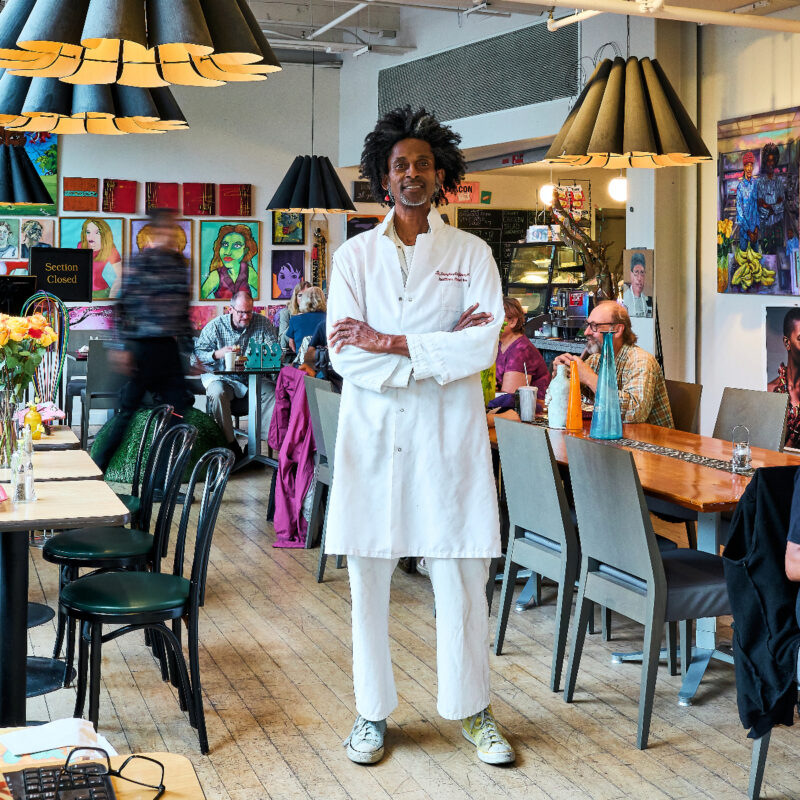
In 2005, The café moved to the ground floor of 131 W. North Ave, a four-story building of studios, exhibition spaces, and classrooms owned by MICA and now known as the Fred Lazarus IV Center.
After several attempts to contact Brown by phone and email, I understood the best place to catch up with Brown was at his café. I walked in as he was between serving customers and setting up to record a podcast. The smell of batter hitting a buttered skillet filled my nostrils and—topped off with coffee—almost made me plunk down my bag to indulge in a breakfast I usually don’t have time to enjoy. Brown greeted me with heightened enthusiasm as if I were a traveler he had been expecting to meet. He admitted that emails escape him. We agreed to follow up for an interview later that week.
Downtown Kevin Brown is, after all, a busy man. He aims to expand his presence in Baltimore. However, his next chapter will be written on a larger scale, and Kevin has a wealth of spicy stories to share. He believes that the right circumstances will help bring yet another vision into existence, further exemplifying his iconic claim as he remains undeterred.
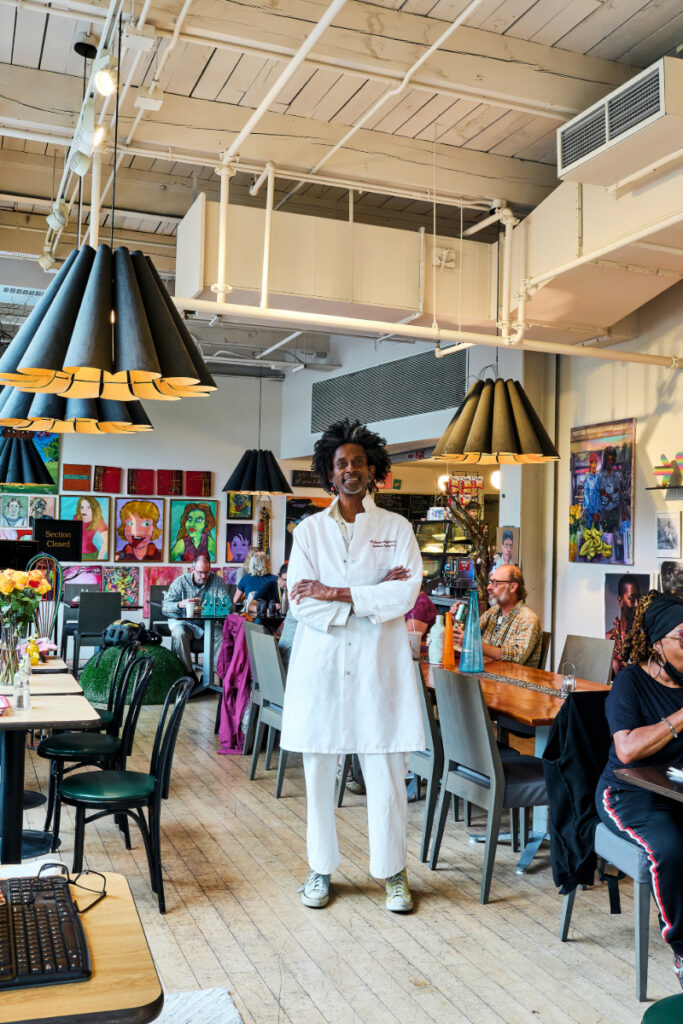
Camille Cruse-Marshall: You have a story few can tell. How did your parents manage a family of 17?
Kevin Brown: My parents loved us but were strict disciplinarians. They believed education was the great leveler. They fought for our education. My father, who hit that goddamn wind every morning, drove an 18-wheeler. My mother was a factory worker. Together, they put 15 of us through college.
Growing up with so many siblings, how did you get along?
Black sister love. I can talk all the smack I want, but those nine sisters of mine and my mother—they got my back. They supported me unconditionally. When people call Black women names, I don’t understand them. Including my mom, I grew up with 10 exemplary women.
My identity was shaped by my surroundings, family, freedom to express emotions, and strict discipline from loving parents. My father would say, “Be who you are, wherever you are.” My mother always wanted us to improve. If I came home with five As and an A-, my mother would say, “Kevin, what’s wrong? You can’t see the board? You have a problem with the teacher?” And she’d be up to school. And she didn’t like coming off the factory line to go to that school. She’d say, “you better sit up straight and act right.”
Where did you begin your career? Where did your path out of college take you?
I started at the Baltimore Sun in 1989, my first job. Then I got fired. After that, I worked at The Afro, becoming an editor for five years. I was fired from there. Then worked at City Hall as Director of Communications and Policy for the Department of Housing and Community Development. I wrote annual reports, feasibility studies, action plans, and speeches for Mayor Martin O’Malley—all that kind of tentacle stuff. I got bored and was fired, then walked out by eight police officers. I’ve been fired 15 times, each time for speaking my mind. I’m not proud of that. Because each time I got fired, it made me seem untrustworthy, like I wasn’t part of the team or playing by the rules. Get out of the sandbox.
Kevin BrownI’ve been fired 15 times, each time for speaking my mind.
Were you a rebel without a cause?
No, but each time I had to self-identify the situation, it was because someone was not showing couth, they were rude. As the old folks say, we’re being civil, and that’s my space. You don’t have to like me or agree with me, but you will be civil. That’s what we lost, not just in our culture, but in society. People don’t understand civility. I’ve been called crazy and worse, but I don’t care.
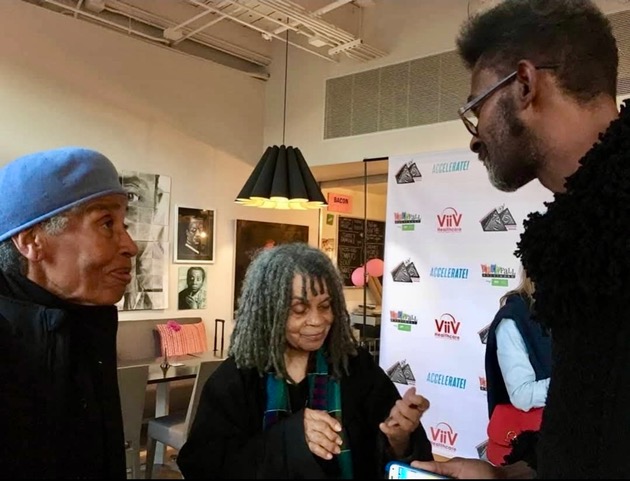
Please tell me more about your saying, “It can’t be about me if it’s without me.” What’s happening in the city that gets you stirred up about inclusion?
I’ve observed the community leadership and have always had this opinion. They call themselves an organized group, but I see people from outside the neighborhood running the neighborhood. There are three groups I consider to have a negative impact on the community. They support projects they want while ignoring people like me who came before them.
For example, they put up sculptures, murals, or painted sidewalks without consulting the community. They also opened a $250,000 art lot next to my restaurant without inviting me to the opening. I know why they do this, but I speak my truth and I’m polarizing. It’s not intentional. I’ve always been told to speak freely, and sometimes people don’t like what I say. But I say it with conviction and support it.
Considering SNAC’s impact on the community, what prompted you to move to MICA and rename the café Nancy by SNAC? How did your neighbors and supporters react to the move?
My friends didn’t like it much. They thought we were going uptown and that the vibe would change because I took an institutional lease. But we brought the energy with us. It was 2005, and we ran both cafés at the same time for almost four years.
Nancy Harrigan founded The Greater Baltimore Cultural Alliance, a nonprofit organization that funded arts programs across the city. She cared deeply about Black kids and arts education. After her death, her girlfriend donated a million dollars to MICA, including a 99-year lease for Kevin to open an eatery on campus that allowed for a gallery and community representation.
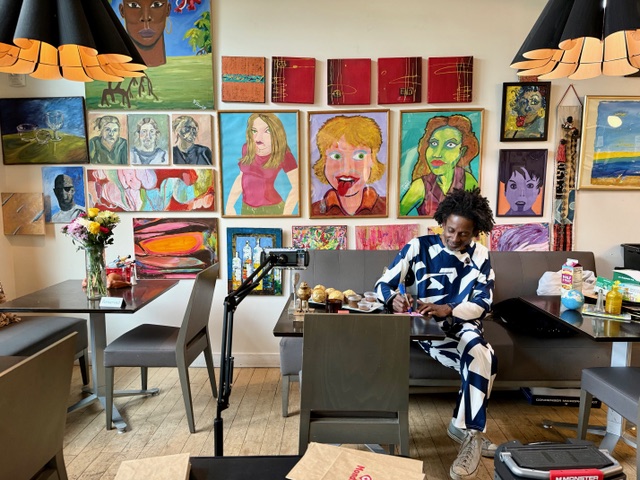
How does Nancy by SNAC invite people in?
Before opening, MICA needed to connect with the Black community. Nancy by SNAC helps them reach out. They realized their private art college, with diverse students, lacked a presence in the Black community. Black artists and creatives are vital to the city’s vibrancy. Bringing my business and brand there was a pivotal moment for them. I’m the only Black business on campus, but we benefit equally. People appreciate having a Black presence at an institutionalized place. MICA, the fifth-ranked art college in the nation, benefits from my community initiatives, local artist invitations, and fundraisers.
Parents express gratitude for feeding their kids for four years. Being on campus keeps me young and present. I believe we revitalized North Avenue. The last five mayors have visited, including Governor Wes Moore, a personal friend. Senators and other important people have also dined there.
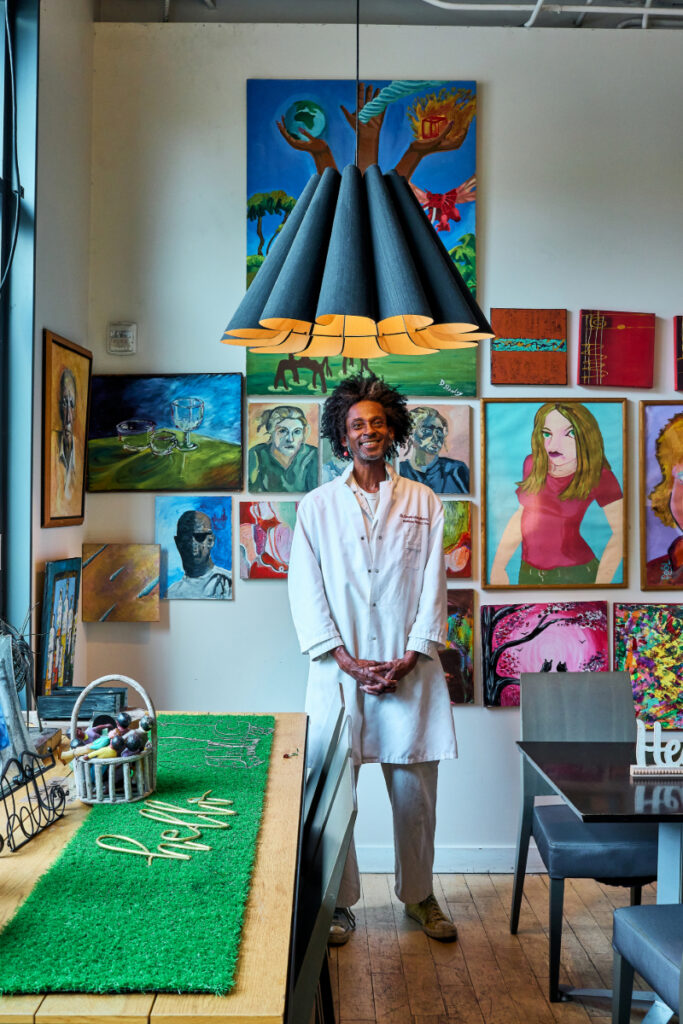
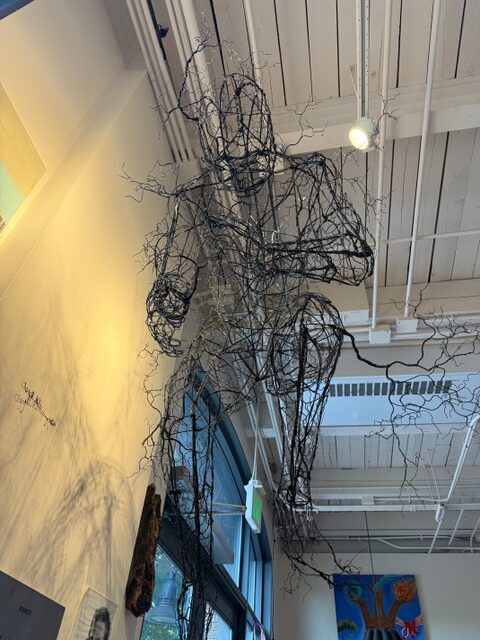
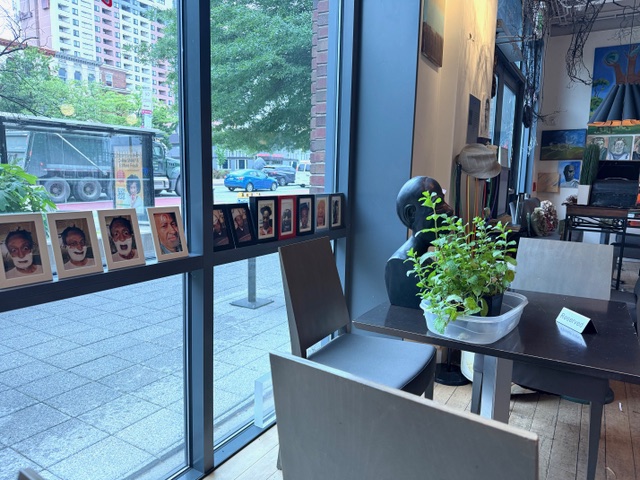
Your café doubles as a gallery. When I came to track you down, I took a moment to document the artwork… Photos line the window seats, a curious wire figure sculpture hangs from the ceiling… None of the artwork is tagged or advertised for purchase. Are the pieces by MICA students?
No, they’re by local artists. We had a gallery, café, and catering for 17 years, but it became too much. Now, it’s a gallery of artists in the district. We support them locally, and then they expand. We change the gallery occasionally, but it’s our own work we’ve purchased over the years.
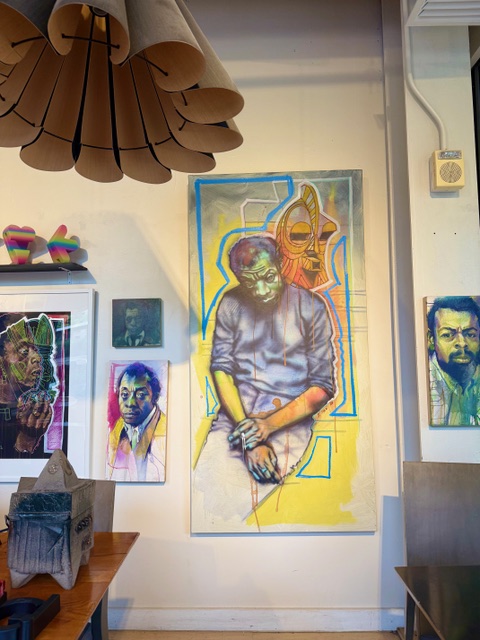
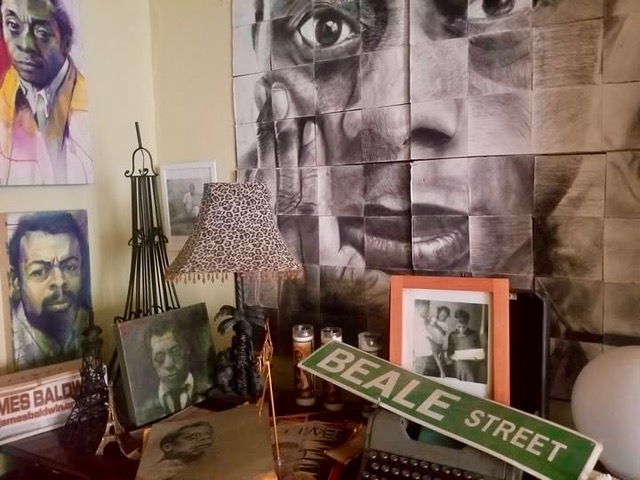
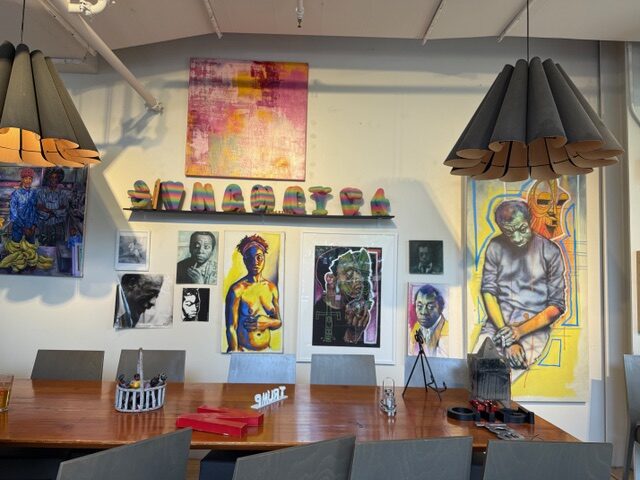
The dual experience is appealing. Who painted the James Baldwin portraits?
Ernest Shaw painted them. I’ve followed him since 2018. His paintings are now worth five digits. I used to buy stuff for $400. So, our community has grown. He has murals across North Avenue and commissions into the next year. He’s an awesome local artist.
What challenges continue to plague the city?
There are pockets of poverty and islands of excellence. They have a silo effect where everyone’s doing well in their own area but doesn’t share resources or energy. We need to break down these silos and share resources. About five or six years ago, I called a white woman a “colonist,” and she stormed into the restaurant, yelling, “Kevin, I heard you called me a colonist.” I confirmed, saying, “Everyone who works for you is a colonist.” She entered the neighborhood without considering the residents. I care about the legacy residents.
I live in Guildford, two miles from my restaurant, but I don’t ignore legacy residents. I oppose gentrification. If there’s money for new development, it should benefit everyone. If you incentivize new development, show support to the original residents. Don’t give somebody a relocation grant or expansion grant, but grandma’s screen door is raggedy and she’s been there for decades. That’s my issue with so-called neighborhood leadership.
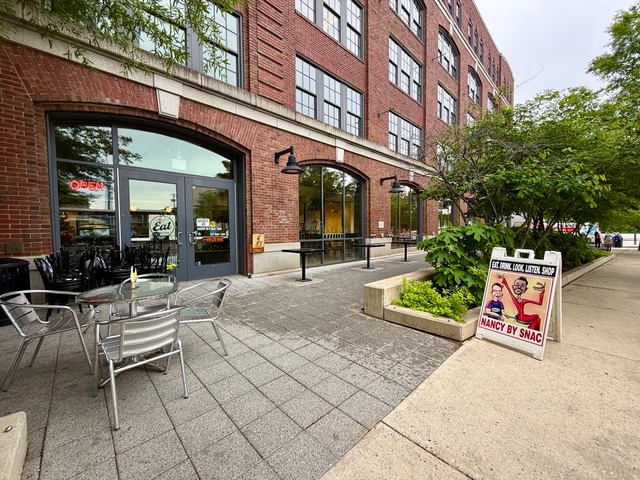
Other than that, I love the neighborhood; it’s the best community in Baltimore City. You can easily get in and out. There’s a train station, free buses from the Harbor to Hopkins, and a light rail that takes you to BWI.
I’m proud to be in two documentaries. One, “Relentless” by Sean Yoes, talks about our MacArthur Foundation scholar, Joyce Scott, a friend of the Station North Art Café. And recently, a film titled “Leslie King Hammond, I Am Art” about Dr. Leslie King Hammond, the first Black Vice President of MICA, and female vice president of MICA. Her son made the film, and in it, we discuss our friendship over the past 40 years.
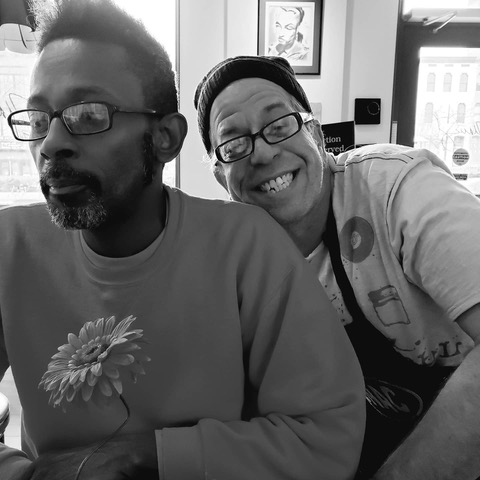
In 2023, your husband passed away and you considered closing Nancy By SNAC. What changed your mind?
I wasn’t going back to the cafe. My brother David said, “You must. The community depends on you. You built this cultural canopy, and people expect you to return.” After 34 years with someone, their sudden departure was difficult. I couldn’t have done it without my brother. Interestingly, growing up, we weren’t the favorites. I had seven other brothers, but David was never my choice, yet he stepped in.
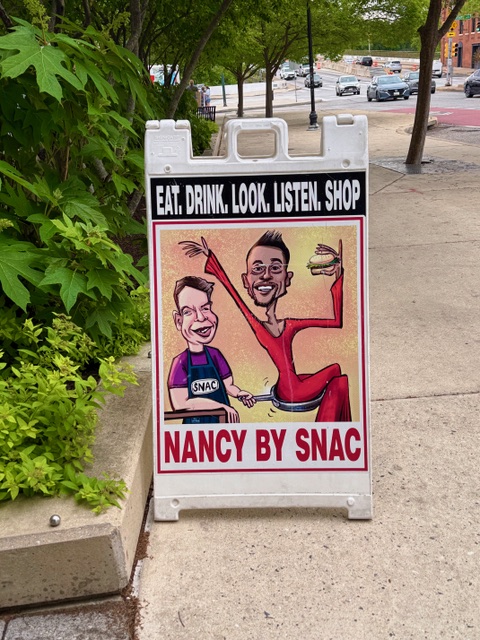
With this strengthened foothold, have you started planning more partnerships or initiatives with the college?
MICA bought the building next door about 10 years ago and plans to sell it. I’d like to expand my business and open an art bar. If they’re ready to sell and the price is right, it could be a partnership opportunity. I’d hate to see the building come down; it’s right next door. It’s one or two million, and we can do it with the right partners. Maryland has many millionaires.
Tell me about your podcast. What is it about?
Marsha and Me in the Morning is a podcast that discusses things affecting city taxpayers, like public money, tax incremental financing programs, and how cities spend it. I’m interested in these topics because I’ve always been a watchdog. If a city spends $116,000 on Tito’s and it’s taxpayer money, someone should know and share that it’s not okay.
You’re an icon in your community and Baltimore. Tell me about your influences and why they motivate you?
James Baldwin—my hero—was the second Black man I loved after my father. He was brilliant, gay, outspoken—and an incredible civil rights activist, libertarian, polemicist who changed my life at 21. I hosted him at my brother’s home.
Another strong Black gay man, Bayard Rustin, organized the March on Washington and was Dr. King’s confidant. These were my role models growing up in a large family. And my father, he was that person. He worked hard and there was no welfare or food stamps in our home. He demonstrated what love was. He loved my mother and believed in taking care of his children.
How did you come to have James Baldwin visit with you?
I was performing opening night in a production of Baldwin’s Amen Corner at Center Stage and invited him to my house for an after-party. My mother refused—feeling the house wasn’t company-ready—so I used my brother’s apartment. I was 23.
What awaits you in New York? My hometown!
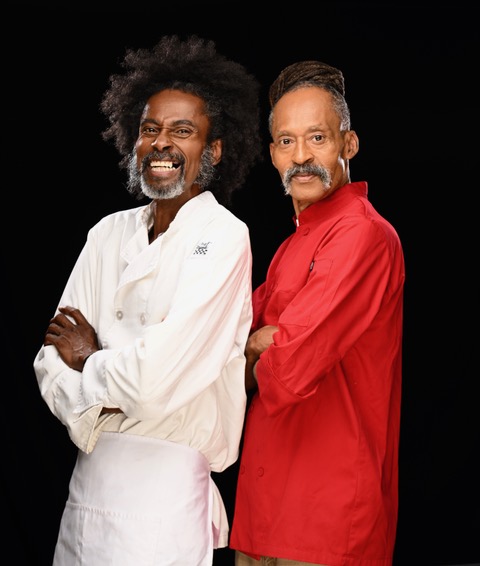
I love New York. My brother and I are creating a show about cooking and family. It’s called Sibling Suppers. We’ve been talking to food channels in NYC for 18 months to produce 17 episodes. Each episode will focus on one sibling and their favorite meal. We prepare the meal while discussing the sibling and showing childhood photos, report cards, and teacher notes. It starts with my oldest sisters who are in their nineties and works down to me. My sisters treat me like I’m 10. They still boss me around.