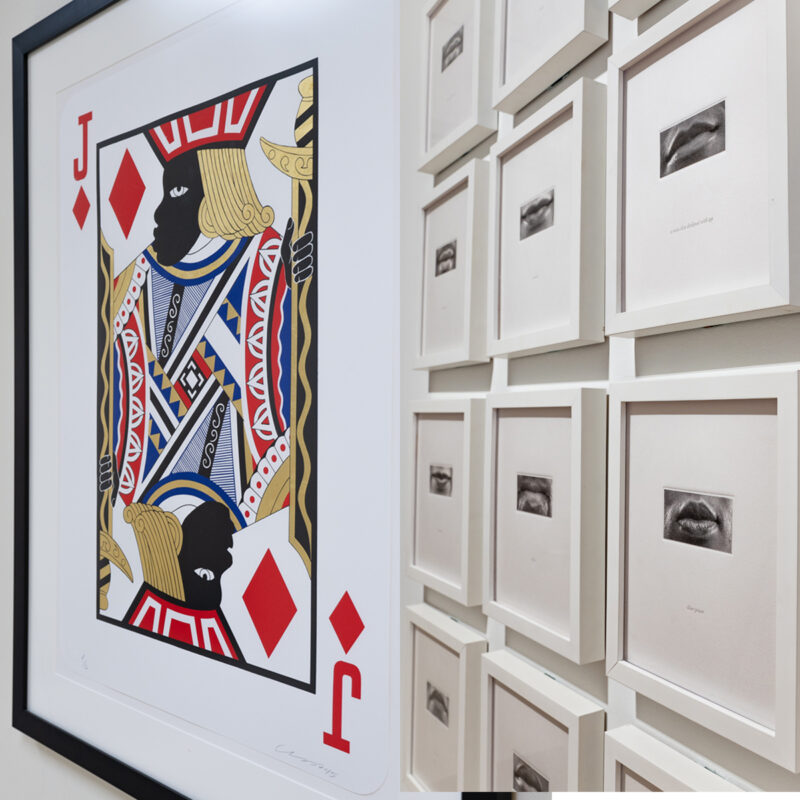
In the lobby of the Adele H. Stamp Student Union building at the University of Maryland in College Park hangs a quartet of gilded screen prints by Derrick Adams, an artist known globally for his vibrant images of Black life and locally as a committed Baltimorean. Nearly replicating the design of French-suited playing cards, “Game Changing” (2015) reimagines its King, Queen, Ace, and Jack as Black royalty. Although the cards’ mirrored composition and red, blue, black, and gold palette correspond to those of a standard deck, Adams’ subtle modifications invite closer inspection. Enlarged to emphasize their rich detail, the cards’ scale draws attention to the distinct character of each figure in profile and the intricacy of their ornamentation, which begins to resemble African textiles.
Stamp visitors who are familiar with the prints’ pedigree may be surprised by the artwork’s coappearance with the sticky aroma of Chick-fil-A wafting from the food court downstairs and the brisk foot traffic of students coming and going from the in-house bowling alley or movie theater. The regality and preciousness of these images almost seems at odds with their environment. After all, editions of the same series are preserved in the collections of the Metropolitan Museum of Art and the Whitney Museum.
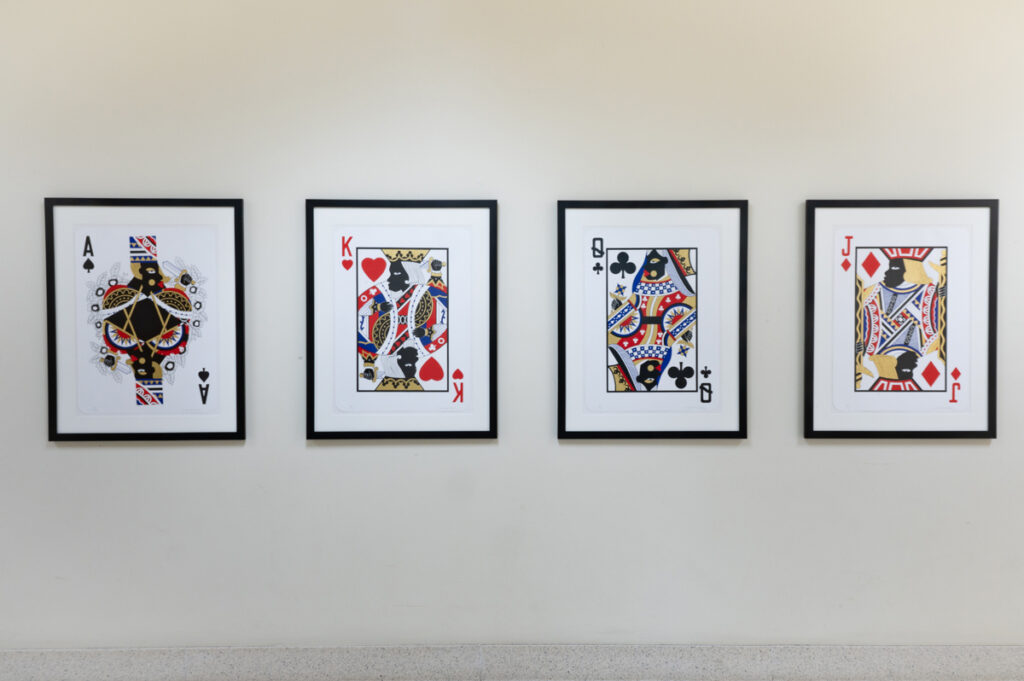
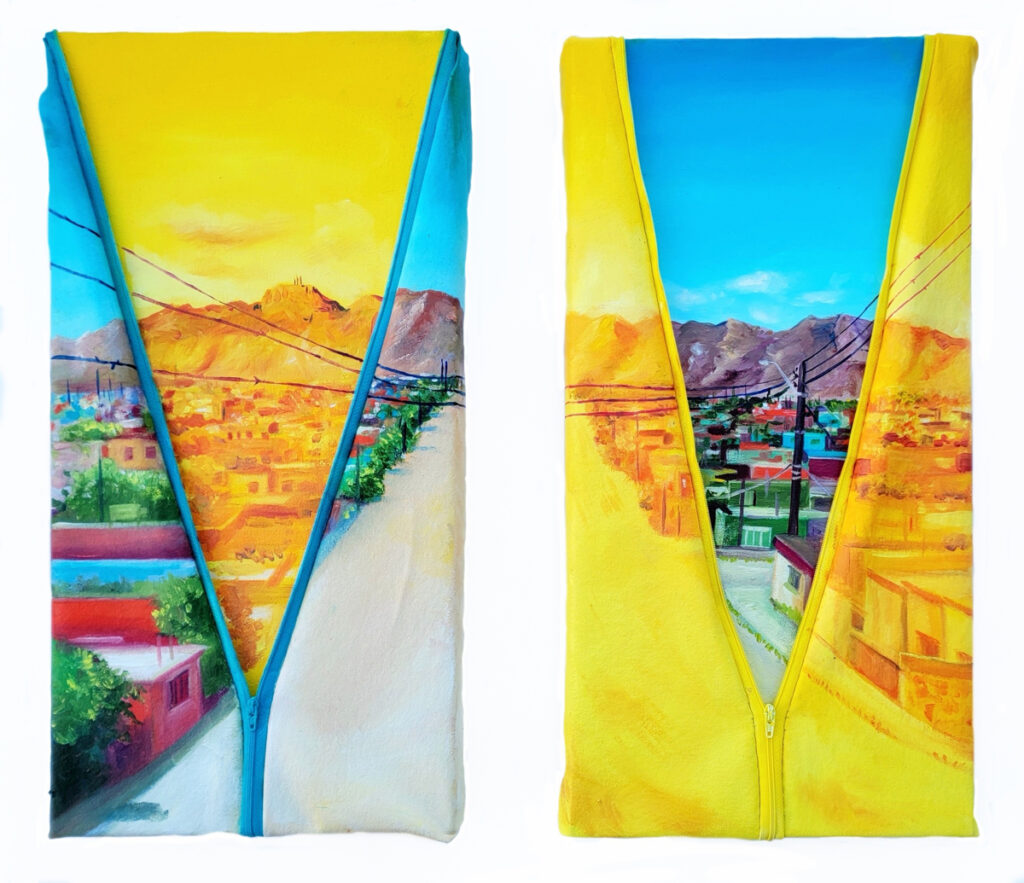
On the other hand, the work of an artist celebrated for his images of leisure seems well suited to a building designed for play and pause. And anyway, Adams’ “Game Changing” is only one part of an expansive art collection that shapes visitors’ experience of this space, each piece asserting itself between clusters of students gathering for social clubs or study breaks. As part of the Stamp’s Contemporary Art Purchasing Program collection, artworks serve as wayfinding landmarks, meeting spots, conversation starters, and tools for learning regularly incorporated by faculty into their teaching. It’s no coincidence that the art here found its home in a building dedicated to the lives of students—it was chosen by them.
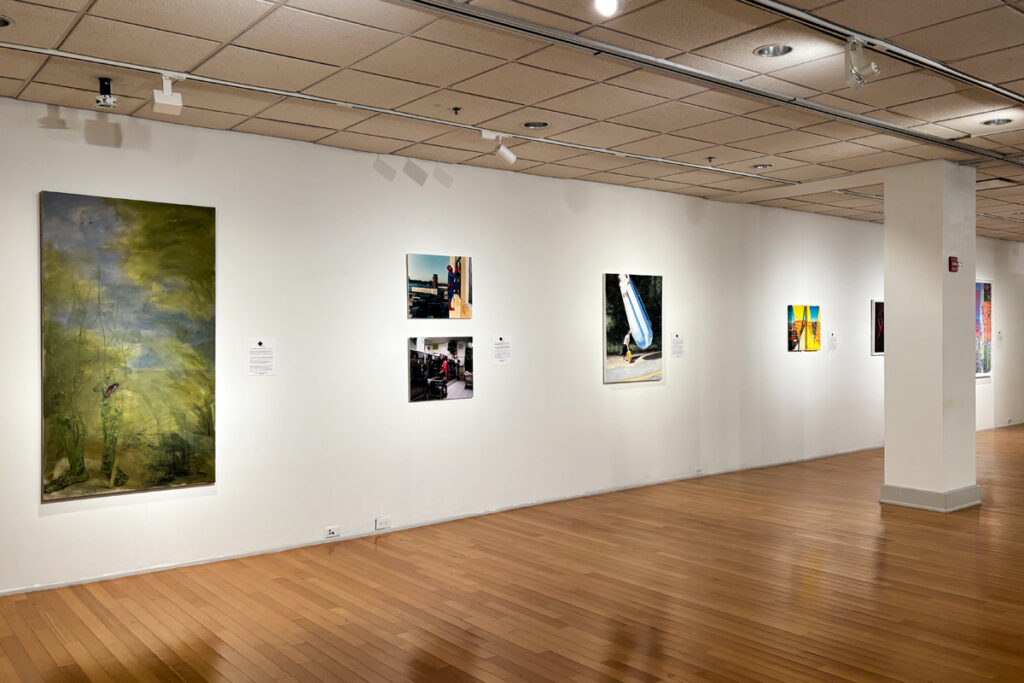
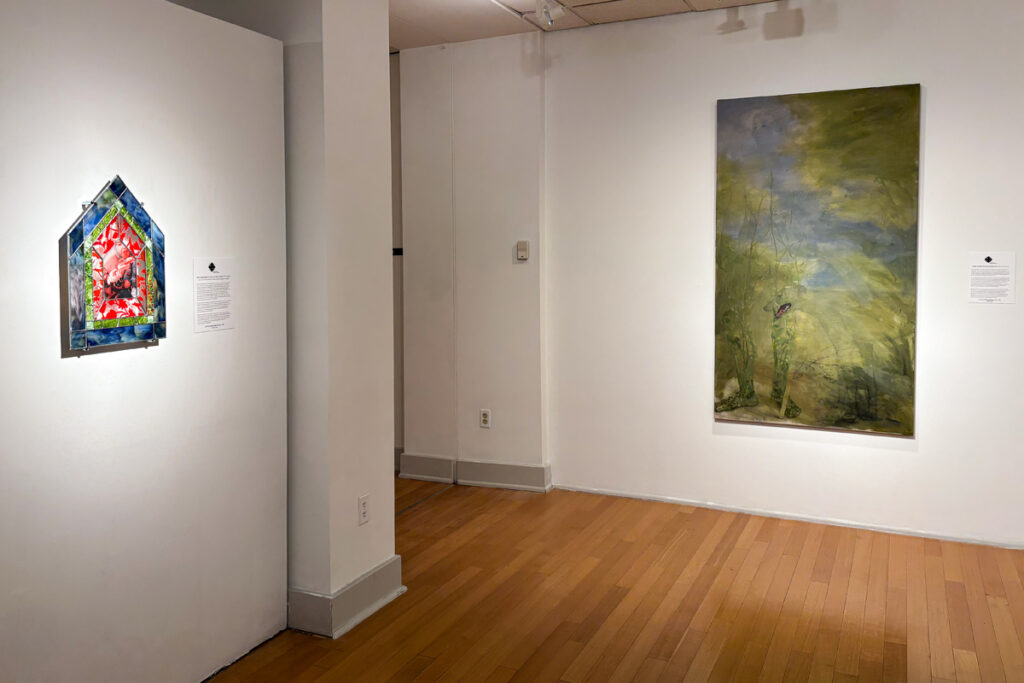
The Contemporary Art Purchasing Program is a collection directed by a committee of four to seven University of Maryland undergraduate students biannually since 2006. Today, the collection encompasses 87 works by 68 artists. The Stamp Gallery’s current exhibition Then, Now, and Tomorrow: CAPP New Acquisitions celebrates the collection’s twentieth anniversary by displaying the eight artworks selected by the 2024-2025 CAPP committee alongside older collection highlights. (Full disclosure: as a graduate student in the University’s Department of Art History and Archaeology, I have had a longstanding relationship with this collection, particularly when I served as the graduate assistant at the Stamp Gallery—which is responsible for the collection’s care—from 2022-2024.)
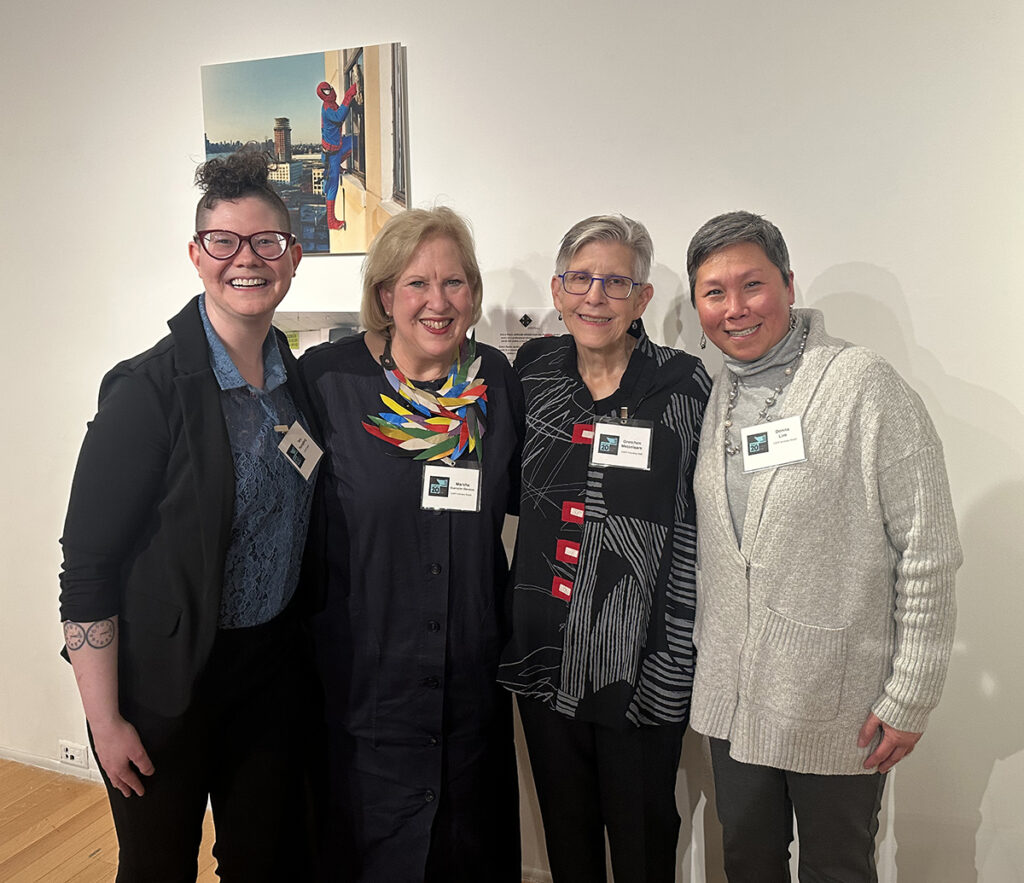
The first committee was assembled in 2006 after Gretchen Metzelaars returned to the freshly renovated but bare-walled student union as its new director. Metzelaars had arrived from The Ohio State University’s Wexner Center for the Arts, where she served as its director of administration and became acquainted with exhibited artists including Lorna Simpson. Having previously worked in multiple administrative roles at the Stamp, Metzelaars brought to her directorship a deep knowledge of the University of Maryland student population and hands-on experience with contemporary art. Imagining a student-driven collection that would reflect the diversity of UMD’s campus community, Metzelaars turned to Jeff Rhodes, then-coordinator of the Stamp Gallery, and Brian Sykes, then a graduate student in the Master of Fine Arts program and the gallery’s graduate assistant.
Sykes visited Wake Forest University in Winston-Salem to learn about its art collection, which has been guided by student committees for over six decades, and adapted their model as a blueprint for the CAPP program. The team received essential guidance from the late artist, art historian, and longtime UMD professor David C. Driskell, for whom the adjacent Driskell Center was named when it opened in 2001. It was Driskell who urged Metzelaars to ensure that the CAPP committee would take a class on contemporary art theory, markets, and collecting before embarking on their mission. The inaugural class was taught by Jeffry Cudlin, who would go on to co-direct the MFA in Curatorial Practice program at the Maryland Institute College of Art. Meanwhile, Sykes acted as the coordinator and primary advisor to the committee. Over subsequent cycles, Baltimore-based artist Jackie Milad, current director of the Julio Fine Arts Gallery at Loyola University Megan Rook-Koepsel, and current Department Head of Contemporary Art at the Baltimore Museum of Art Cecilia Wichmann have taken up this role, before artist and Stamp Gallery Manager Tara Youngborg became the current program coordinator in 2018.
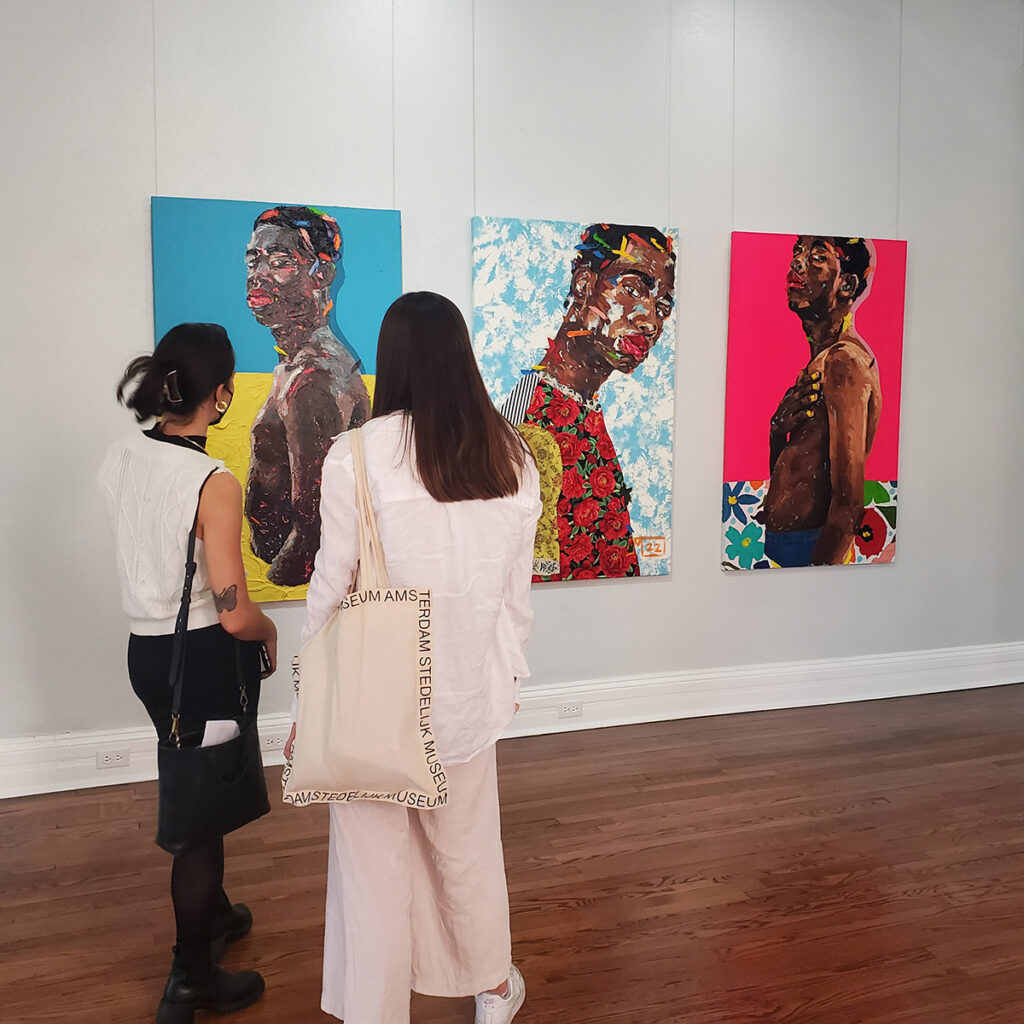
Though the students’ collecting decisions are informed by the course curriculum and advised by a board of art historians, curators, collectors, alumni, and student affairs staff, the students take full charge of the collection’s growth. With just a semester of study, the first student committee—and those that followed—showed art-world savvy coupled with an enduring concern for what would generate the most meaningful experiences for their peers on campus. They bring that sense of authority and curiosity on trips to New York City; Washington, DC; and Baltimore, where they tour artist studios and galleries.
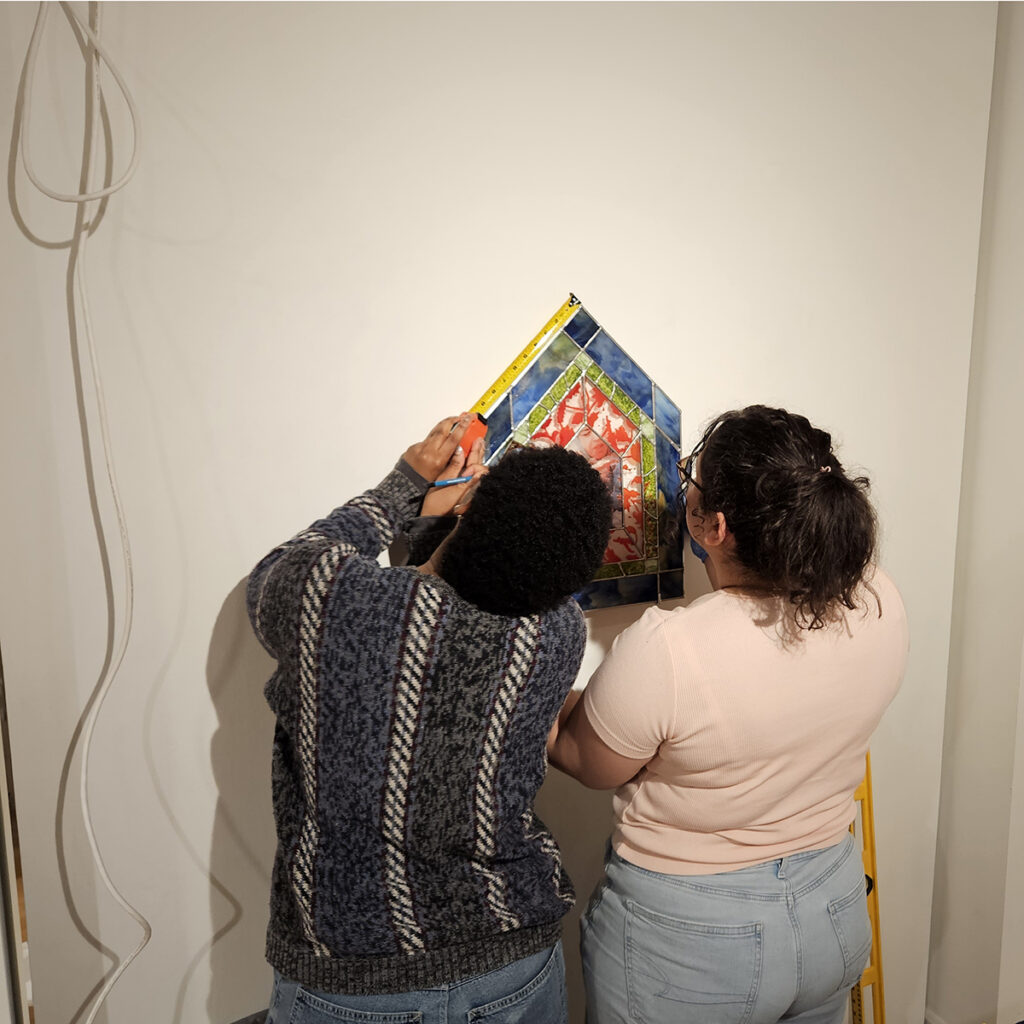
The students have encountered the occasional dismissive art dealer, but they ultimately leave with a greater mastery over the complex business of collecting and have impressed many art world professionals along the way. The students are responsible for nearly all aspects of the process, from presenting their collection decisions to the advisory board, to communicating their interest to the seller and negotiating an institutional discount. Past committees have chosen to dedicate a portion of the budget to conservation and collection care—an especially important concern given the unique and challenging environment the Stamp can present to vulnerable works of art.
Lindsay SmilowIt’s important to know how art circulates for artists, dealers, and collectors… I don’t think in any other context would I have had the experience to walk into a gallery and purchase something.
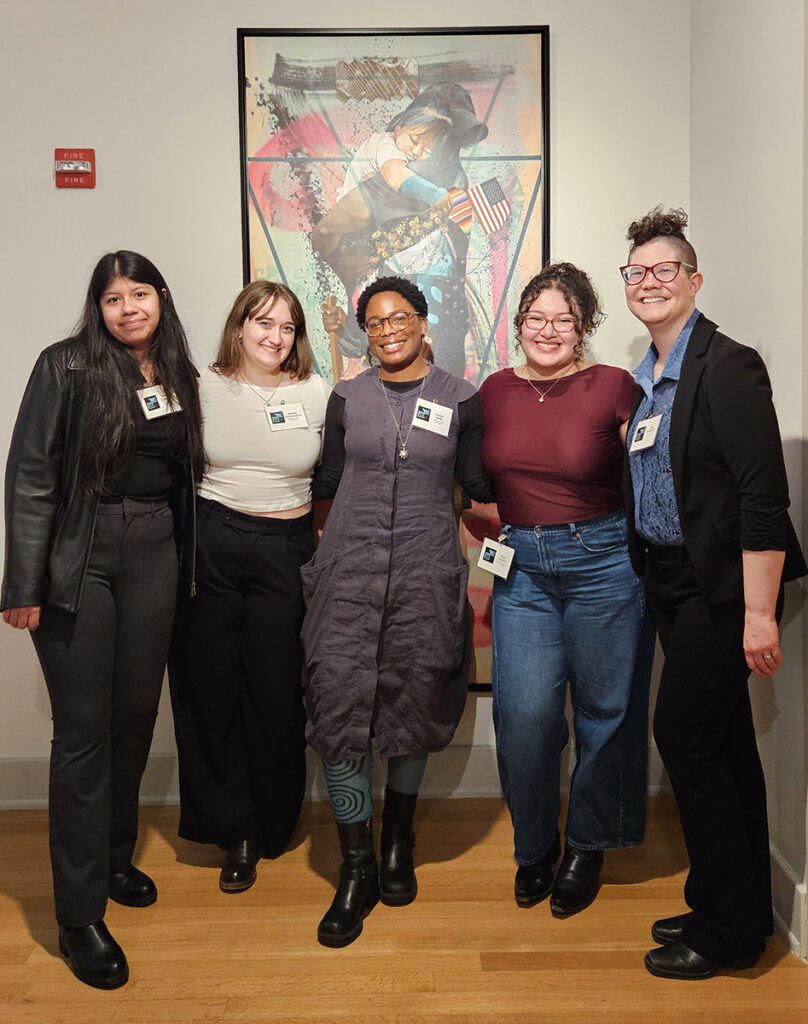
For many CAPP alumni, the program stands out as a crucial moment in their professional and personal development. Lindsay Smilow, who participated in the first committee in 2006-2007, still regards CAPP as the best thing she did in college. “It’s important to know how [art] circulates for artists, dealers, and collectors,” she says. “I don’t think in any other context would I have had the experience to walk into a gallery and purchase something.” After college, Smilow was hired by the Queens Museum and now serves as the Chief Advancement Officer at the Bard Graduate Center in New York City.
CAPP helped 2022-2023 committee member Rachel (Rae) Leonberger to recognize their pursuit of a career in the arts as a legitimate one. “This program was the first moment where I truly felt like there was something that I could push further, and that I wasn’t just chasing a hopeless dream,” Leonberger says. Not long after CAPP, Leonberger received their masters degree in art history from the prestigious Courtauld Institute of Art in London.
Although the program equips its alumni with many of the skills to support creative careers, the aim is not to turn college students into curators or collectors. CAPP administrators have always made an effort to select applicants who come from a variety of majors not limited to the arts and humanities. The point is to recruit a variety of student perspectives to create a cross section of the campus community, bringing into focus the cultural interests and concerns of the time. This was an important draw for Damon King, who joined the 2016-2017 committee as a business major. “You’ve got different folks from different colleges coming together with different perspectives,” King says. “I think what we really focused on that year was not just the artwork, but what that means in the context of our contemporary political, social environment. And then what does that mean for art that’s emerging at that time—like when you think about something that’s uniquely 2016-2017? It just felt like an intersection of all of that.”

Artists whose work hangs in the Stamp have often achieved significant career milestones after entering the collection. In 2015—the same year the CAPP committee purchased the Derrick Adams prints—the students also acquired works by Wafaa Bilal, Elle Pérez, and Titus Kaphar. Kaphar’s work has shaped the imagery of the Black Lives Matter movement—including a TIME magazine cover in the wake of the 2020 murder of George Floyd—and his 2015 drawing of Michael Brown, Eric Garner, and Sean Bell in the CAPP collection is no exception. In white chalk on black paper, Kaphar overlaid their faces, one on top of the other, forming both an individual and collective portrait.
Bilal recently received his first major museum survey at the Museum of Contemporary Art in Chicago and was named ARTnews’ Established Artist of the Year. Particularly resonant amid the United States’ ongoing military aggressions abroad, the three works in the collection confront war and cultural destruction. One, a photograph from Bilal’s Ashes Series (2003 – 2013), captures what appears to be the ghostly aftermath of an airstrike, but in reality depicts a miniature model of one of Saddam Hussein’s palaces destroyed during the United States’ 2003 invasion of Iraq. Before taking the photograph, Bilal dusted the model with human ashes, disrupting the scene’s carefully constructed and almost sublime beauty.
Pérez, a MICA alum recognized for their intimate photographs documenting LGBTQIA+ communities, has been exhibited and collected by the Museum of Modern Art, the Whitney Museum of American Art, and the Baltimore Museum of Art since joining the CAPP collection. The three photographs in the collection, all from Pérez’s Outliers series, capture in vivid color objects which support gender expression between or beyond the binary, such as a silicone breast and a pile of signs from a “pronoun workshop.”
Other selections similarly reflect the students’ keen anticipation of important directions in contemporary art. As Smilow observes, a pair of photographs from South Korean photographer Nikki S. Lee’s famed Projects series (1997-2001) signaled a growing interest in matters of identity as one of the collection’s first acquisitions. Throughout the series, the artist inserts herself into different cultural and social groups, questioning the degree to which identity is constructed and what it means to belong. In the two CAPP photographs, she masquerades as a tourist in New York City and a member of a working-class Ohio couple. Another early addition to the collection, a monumental image of a llama in a digitally fabricated landscape from 2005 by Norwegian artist Simen Johan, demonstrates the rise of digital art and remains a favorite among students.
Acquired in 2013, Nate Larson (a Baltimore-based artist) and Marni Shindelman’s collaborative Geolocation series (2009-2016) raises questions surrounding the duality of the real and the virtual that have only grown in relevance. The duo used publicly available geotagging metadata from the social media platform then known as Twitter to photograph mundane sites—for the works in the CAPP collection, in College Park—and pair the images with their corresponding tweets.
Recent acquisitions continue to spotlight local artists and issues. This year’s round of acquisitions include a commission by Baltimore-based artist Elena Volkova, who joins a roster of current or formerly Baltimore-based artists represented in the collection, including Larson, Zoë Charlton, Faith Couch, Megan Lewis, Edgar Reyes, Paul Rucker, Kei Ito, and Akea Brionne. As an artist who situates her photography less as commodity production and more as public practice, Volkova admired the students’ sense of responsibility to a larger ecosystem of creative labor. “This program supports an art economy,” she says. “I love that the students understood that the work that they do with CAPP facilitates support for artists.”

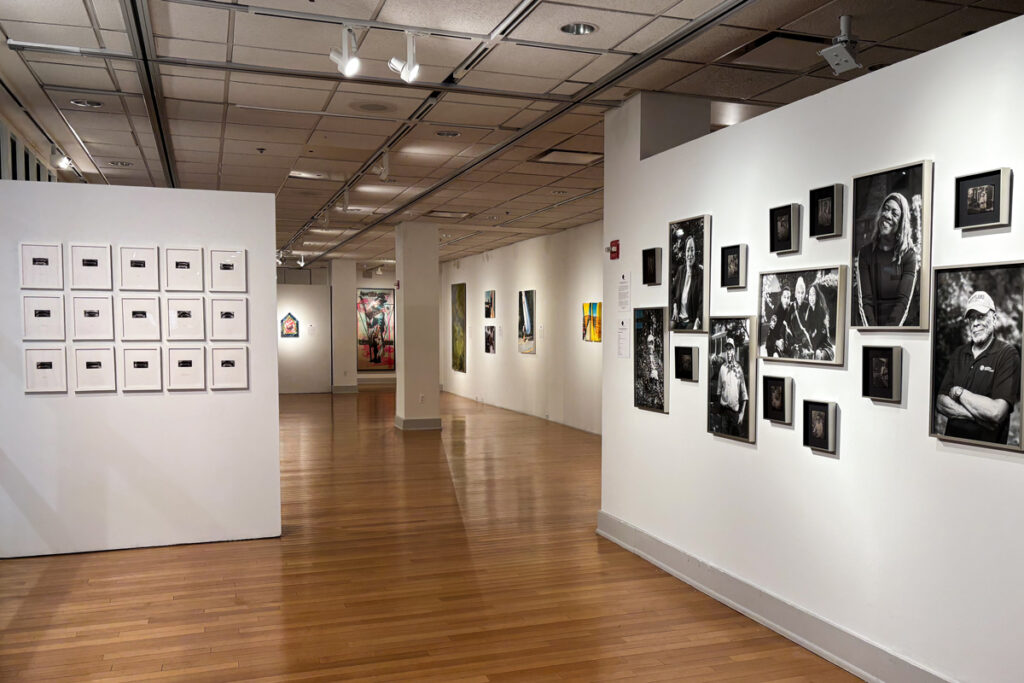
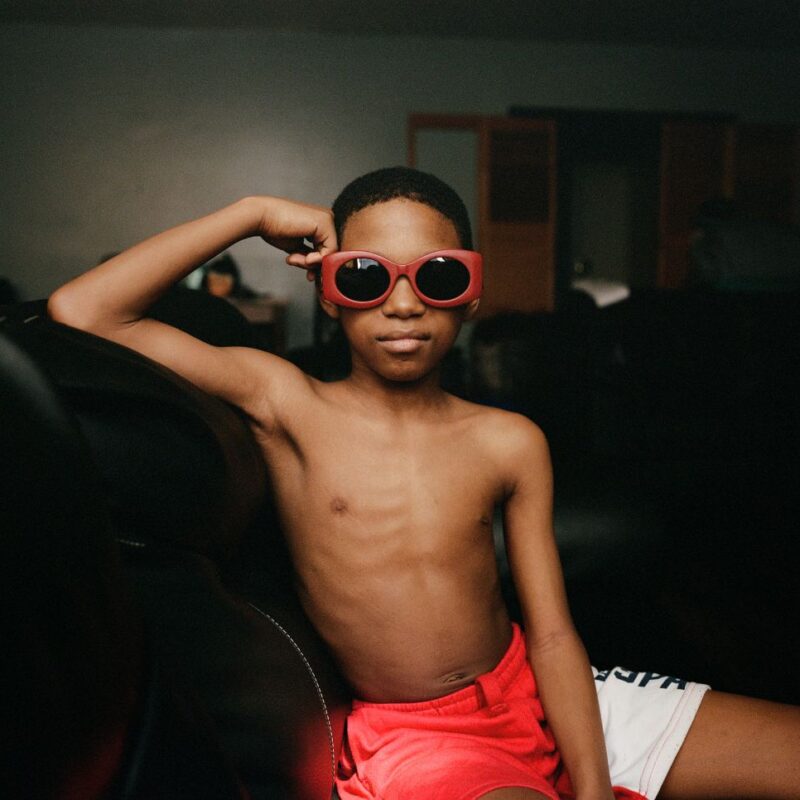
For the commission, Volkova produced a series of photographs of members of the historic African American community of Lakeland, which faced significant displacement from the 1960s through the mid-1980s as a result of the City of College Park’s urban renewal program. Volkova worked closely with the Lakeland Community Heritage Project, community leaders, and the CAPP committee to capture the resilience and individuality of Lakelanders in both tintype and digital prints. As part of her practice, Volkova invites her subjects to determine their own pose, dress, and expression, forming a collaborative model of portraiture.
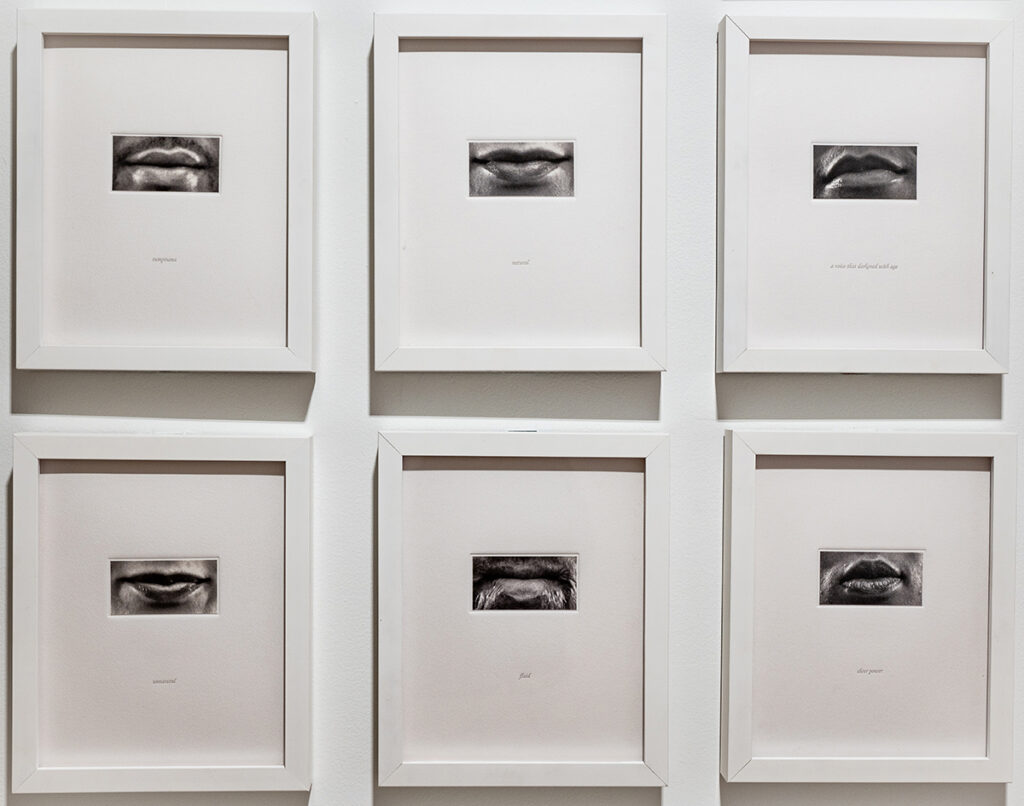
In Then, Now, and Tomorrow, Volkova’s portraits are displayed across from Lorna Simpson’s 15 Mouths (2002), a characteristically enigmatic group of prints by an artist known since the early nineties for conceptual photography that challenges fixed, absolute representations of Black identity. Below tightly cropped views of closed mouths, short texts—such as “sumptuous,” “meaty,” “uncontrollably loud,” “immeasurably deep”—resist clear correspondence, troubling the relationship between word and image, category and categorized. Simpson’s proximity to Volkova in the exhibition—representative of the first and most recent rounds of acquisitions, respectively—demonstrates the CAPP committees’ sustained commitment to art invested in issues that matter most to students: identity, community, and agency.
Many visitors to the Stamp do not arrive with the expectation or intention of spending time with works of art. But ultimately, works like Simpson’s and Volkova’s become integrated with the students’ lives for four or more years, during a period defined by self-discovery and the formation of new social bonds. Students, of course, understand this better than anyone, and nowhere is that clearer than in the art they choose to live with.
Then, Now, and Tomorrow: CAPP New Acquisitions is on view at the Stamp Gallery (Adele H. Stamp Student Union, 3972 Campus Drive, College Park, MD 20742) through April 3. Selections from the CAPP collection can be viewed year-round in various locations around the Adele H. Stamp Student Union.