Last month, I underwent emergency surgery for appendicitis. As I write this, I am still in recovery, fielding kind text messages from friends and family asking, “How are you feeling today? Can I bring you anything?” and assuring them that I am improving, little by little, each day. In my daily life, I am always in motion; I have tended to view illness as an inconvenience, a barrier to all of the deadlines and goals I have set for myself. Taking a week off to simply be sick and allow myself time to rest and heal? Unthinkable. I need to work. I need to respond to emails and messages. On one hand, it’s reassuring, knowing all these people who care about me are just a fingertip away, but it’s also exhausting, maintaining these relationships via digital channels, twenty-four hours a day.
In recovery, my body has given me no other choice. However, the idle time has got me thinking differently about the theme of our new issue: The Future. I feel like a walking case sample, where advances in science and technology exist in competition with the traditional values of healing, rest, and care. The availability of outpatient laparoscopic minimally invasive surgery is the epitome of living in a modern time where productivity can be maximized. Last Saturday, I showed up at the ER at 5 am, CAT scanned at 8, had surgery by 2, and was home by 5. Yet the most incredible thing that happened that day was the moment when three different medical professionals came together to tend to my body while prepping me for surgery.
And yes, I was on drugs at the time. However, I felt something magical in that moment when these different people were physically manipulating my body: gently, kindly, and with precision. One person laid warm blankets on me, another put pressure cuffs around my ankles, while a third arranged my arms and offered reassuring words. It struck me, in that moment: this feels RIGHT.
We are programmed for human touch; it imparts meaning to the brain and the body in a way that nothing else does. As I stared at the circular silver lights in the ER, I wondered: could art replicate the conditions for this sensation? Could artists design experiences for meaningful sensory connections between people without sacrificing safety and agency? Could it be physical, or is it enough to gather people together for unique experiences? I think this is the role of art in society today: to make us feel real and alive in a world that is becoming frictionless with technologies that serve us, but threaten to confine us.
Cara OberCould artists design experiences for meaningful sensory connections between people without sacrificing safety and agency?
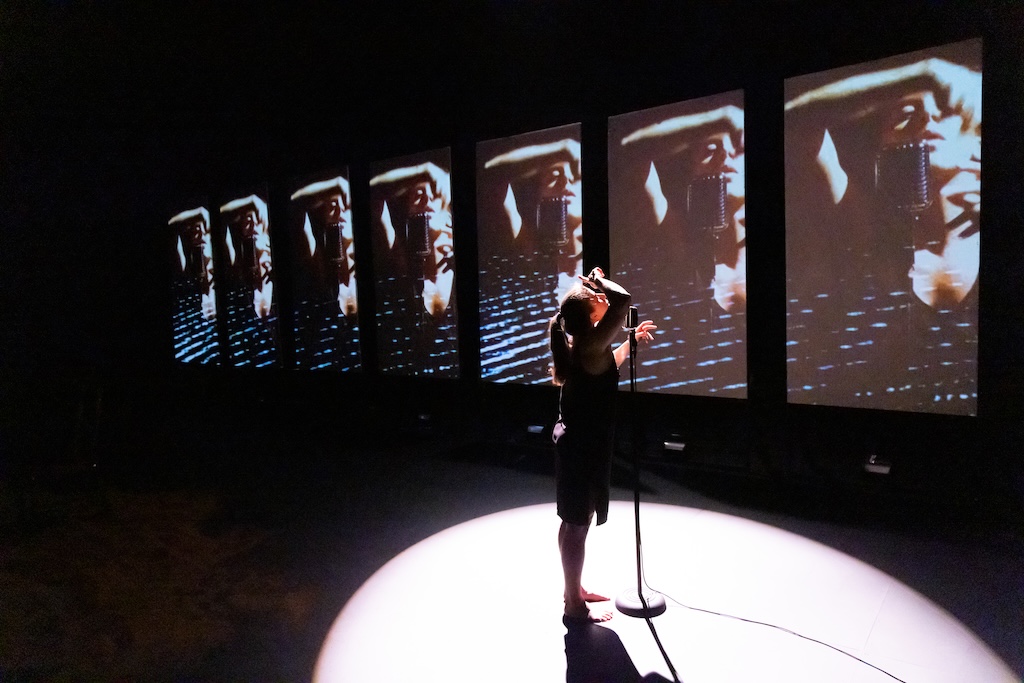
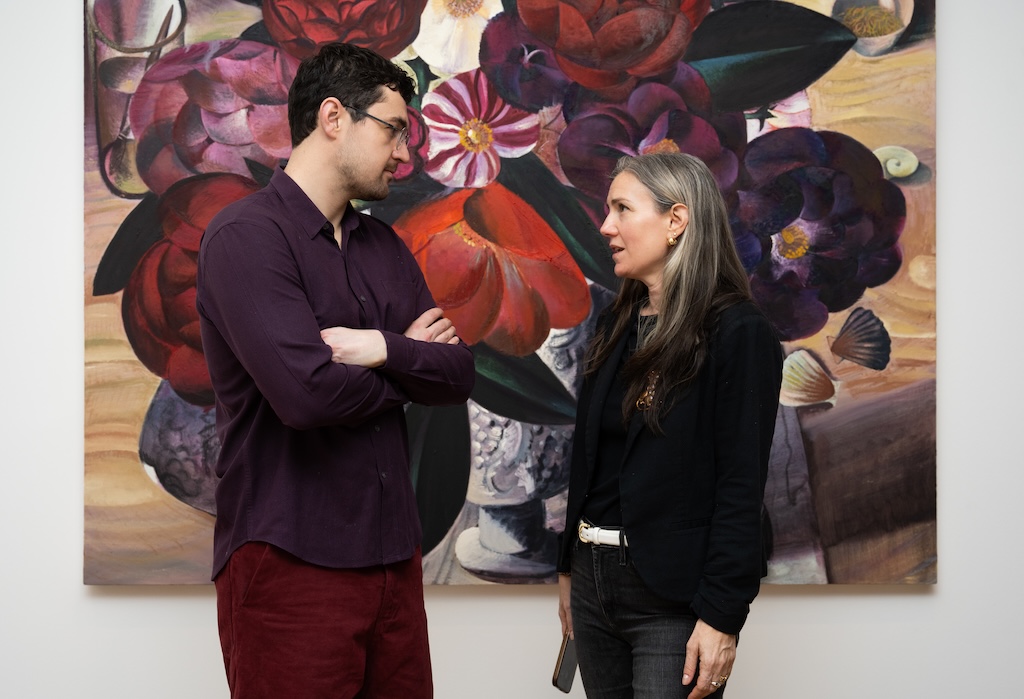
What was once necessary—ordinary physical contact—has been systematically eradicated in contemporary industrialized nations, where you can live productively for years and never brush skin with another person. In the USA, our cars, single-family homes, and smartphones keep us separate; perhaps this is a form of luxury and convenience, but it’s also dehumanizing.
While I appreciate advances in technology and science, I am unsatisfied with the power vacuum around them. It seems that the powerful people leading our global tech revolution are so focused on domination and profit that they are incapable of making decisions for the collective good. While technology can make us safer, healthier, and more efficient, it can also make us emotionally sick and profoundly lonely. (It also seems to be eating up our electricity and water at an unhealthy pace, but that’s another story.) As a civilization, we should feel more connected by all of the digital opportunites that abound, but we are more physically isolated and distracted than ever before, adrift and longing to feel a real connection to others.
This is where art and artists come in. Great art is never convenient or efficient. It is not easy to create, consume, or digest. Art wakes us up, flummoxes us, forces us to pay attention, adds friction into an increasingly airbrushed AI world. It is tied directly to the physical world and it requires space, time, material investment, labor, and community. Creatives are one of the few sectors able to distill our cacophonous modern experience into coherent and beautiful statements. Artists ask unapologetic questions to show us what our future might look like; they remind us that we have choices about the world we want to inhabit.
After my own epiphany on the operating table, I am thinking about art’s ability to draw people together into spaces where physical proximity is an asset—where we brush elbows in seats and breathe the same air. The artists featured in this issue are choreographers, jewelry designers, writers, and painters who envision human tenderness, innovation, and connection. It also includes non-traditional artists and artisans whose work unites communities through food, artist-owned housing, systems of care, and eco-friendly end-of-life services. They offer alternatives to prescribed pathways through life, illuminate buried ties between past and future, and illustrate the richness of congregation.
Cara OberThe future is always a mirage, floating just out of view, but artists bring it into focus, waking us up to our own agency.
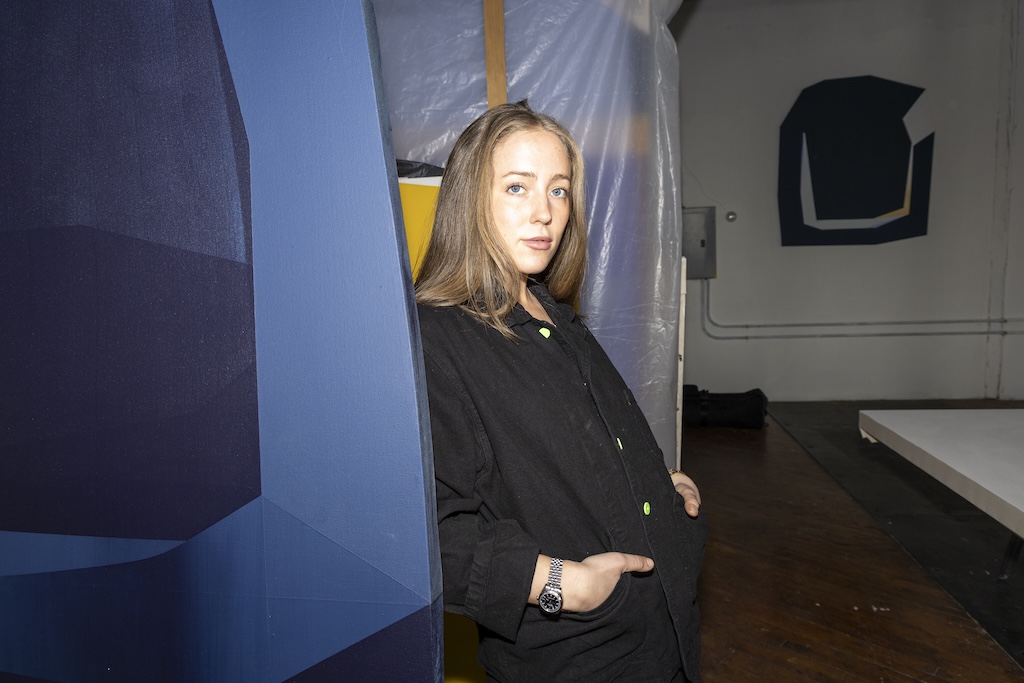
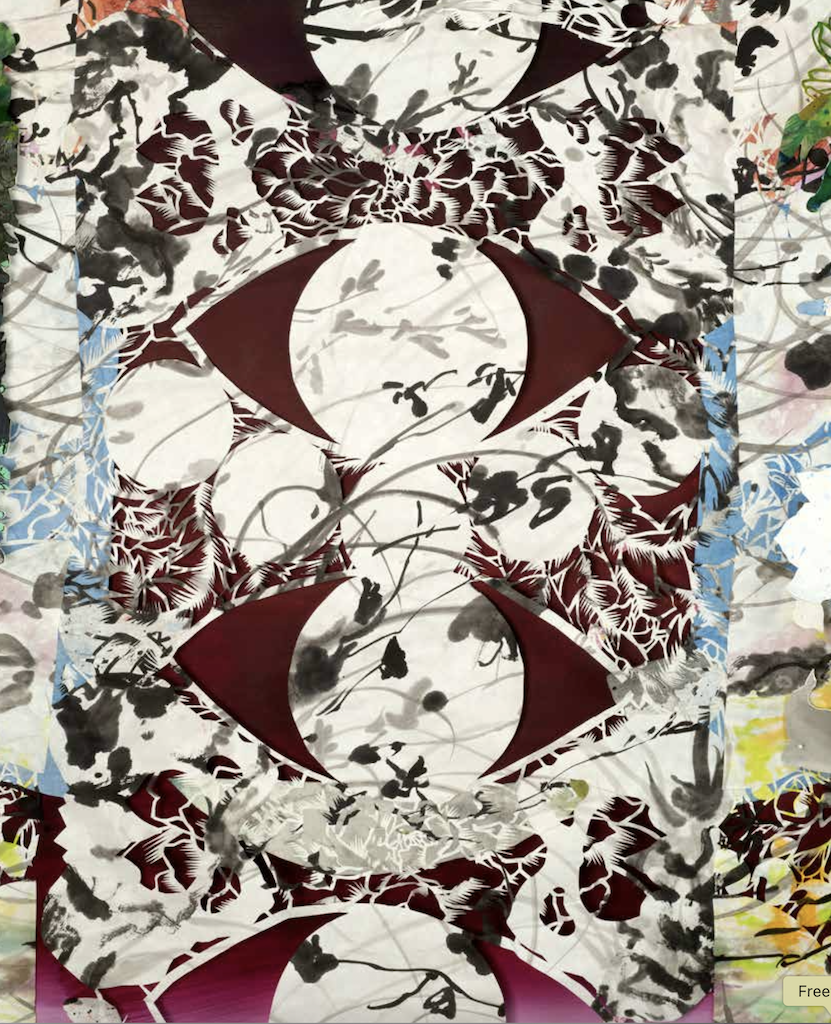
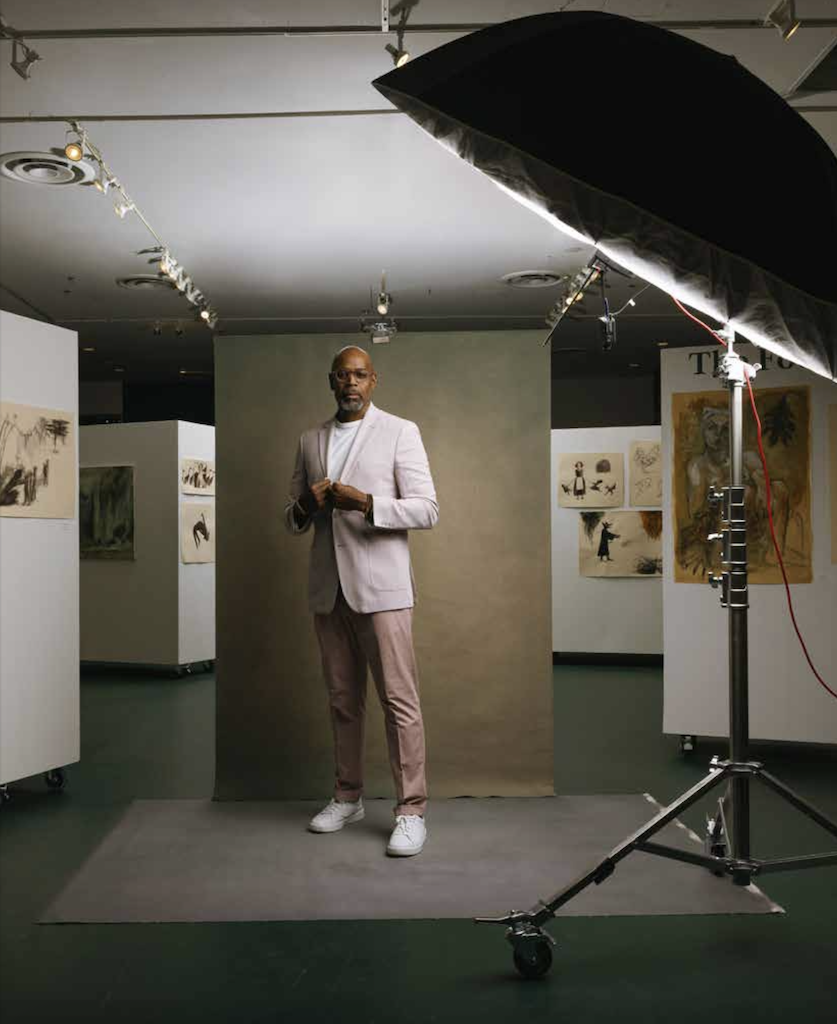
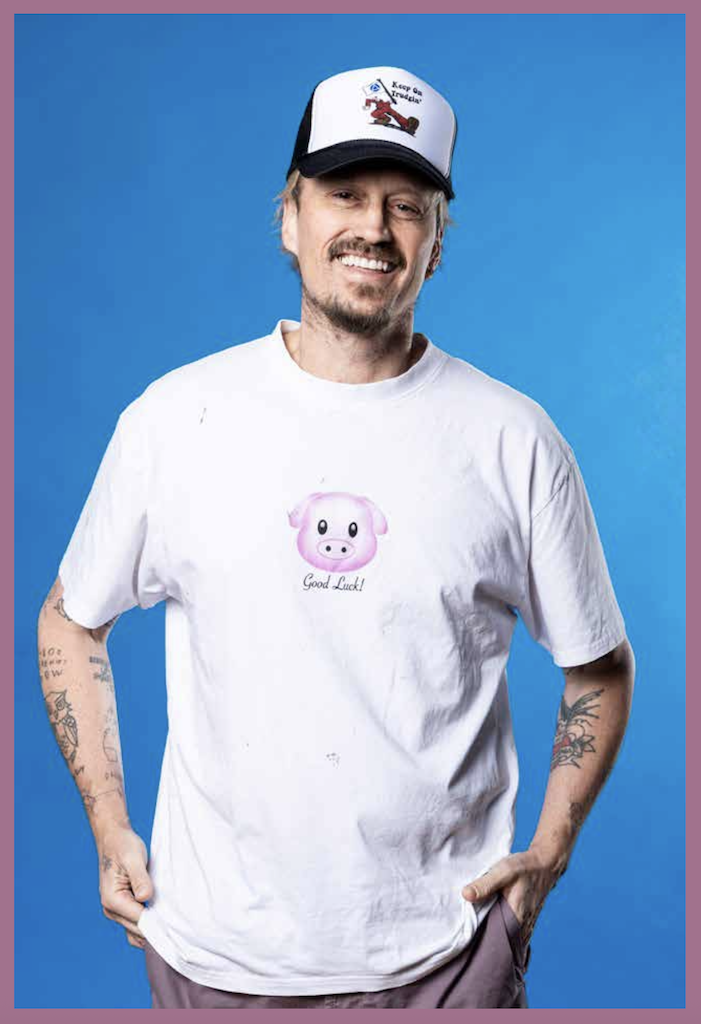
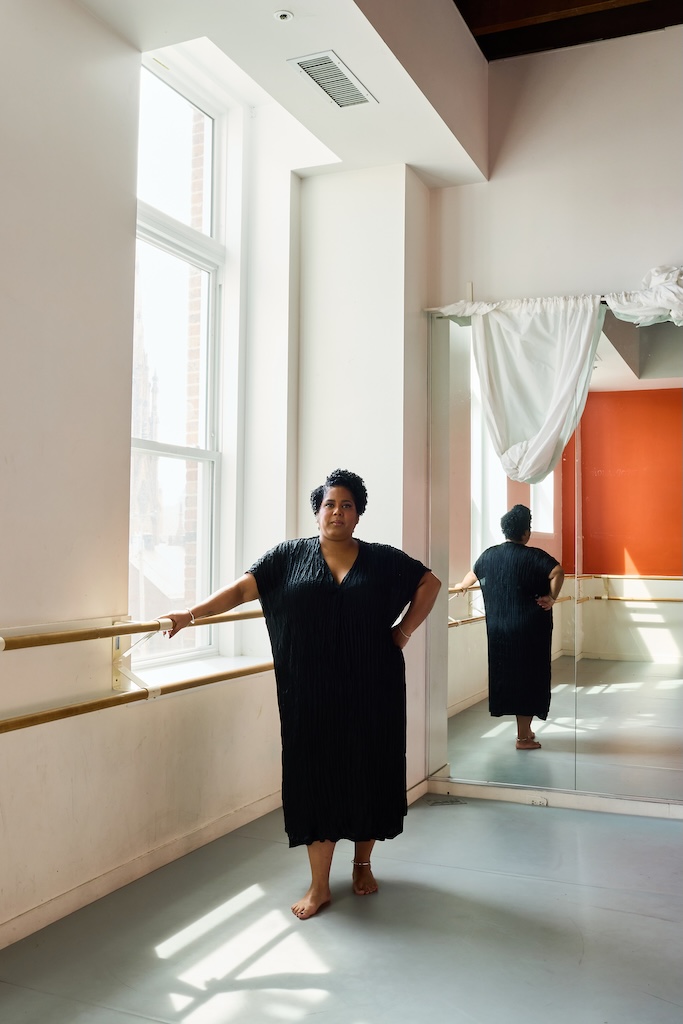
While our collective future will be shaped by scientific advancement, the artists in our midst push back, asking: how can technology be shaped by our physical and spiritual needs? How can it amplify our collective humanity rather than erase it? The future is always a mirage, floating just out of view, but artists bring it into focus, waking us up to our own agency.
I want a future that is human-centered in a way that allows us to be the best versions of ourselves, incorporating mind, body, and soul. I want a future that centers lovingly crafted physical objects, not mass-produced slop designed only for profit. I want a future where science and medicine improve life for everyone, not just a select few.
While the logic of algorithms repeats what appears to work, seamlessly and endlessly, and technology streamlines efficiency, the logic of art unleashes a necessary and beautiful chaos. In paying attention to that which requires time, surprise, and human touch, artists create new models for what is possible.
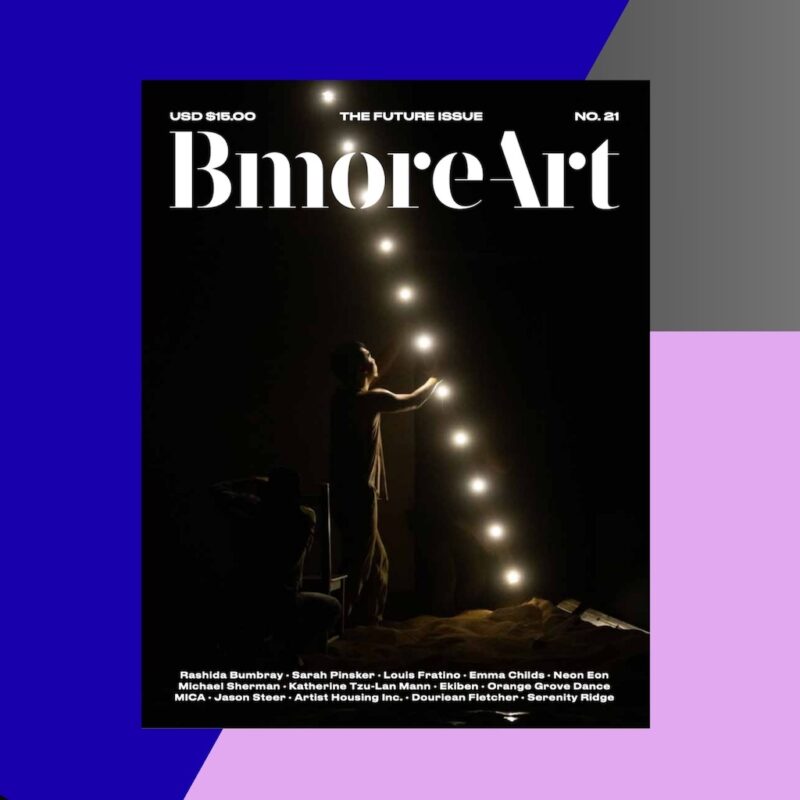
The future as we see it is Artist-Centered and analog. We need to be creative, nimble, and willing to change at a moment’s notice. As digital sources become less and less dependable, as the internet becomes more and more corrupted by large corporations who want to monetize our every movement, print media is making a comeback. It’s much slower to produce, it takes a LOT more money and intentionality—and this is why it’s valuable!
If you’re not a subscribing member at BmoreArt YET – and you appreciate what we do, consider becoming a member today. Your membership directly supports our continued existence and our commitment to Baltimore’s creative class.
Get your copy of Issue 21 HERE in our online shop. Or, head to area booksellers including the BMA Shop, Ivy and Bird in Hand, Greedy Reads, Atomic Books, good neighbor, the Walters, and Red Emma’s.
THANK YOU to our Media Partners and Sponsors!!! We would never be able to make a print journal without your support.
Explore BmoreArt Memberships
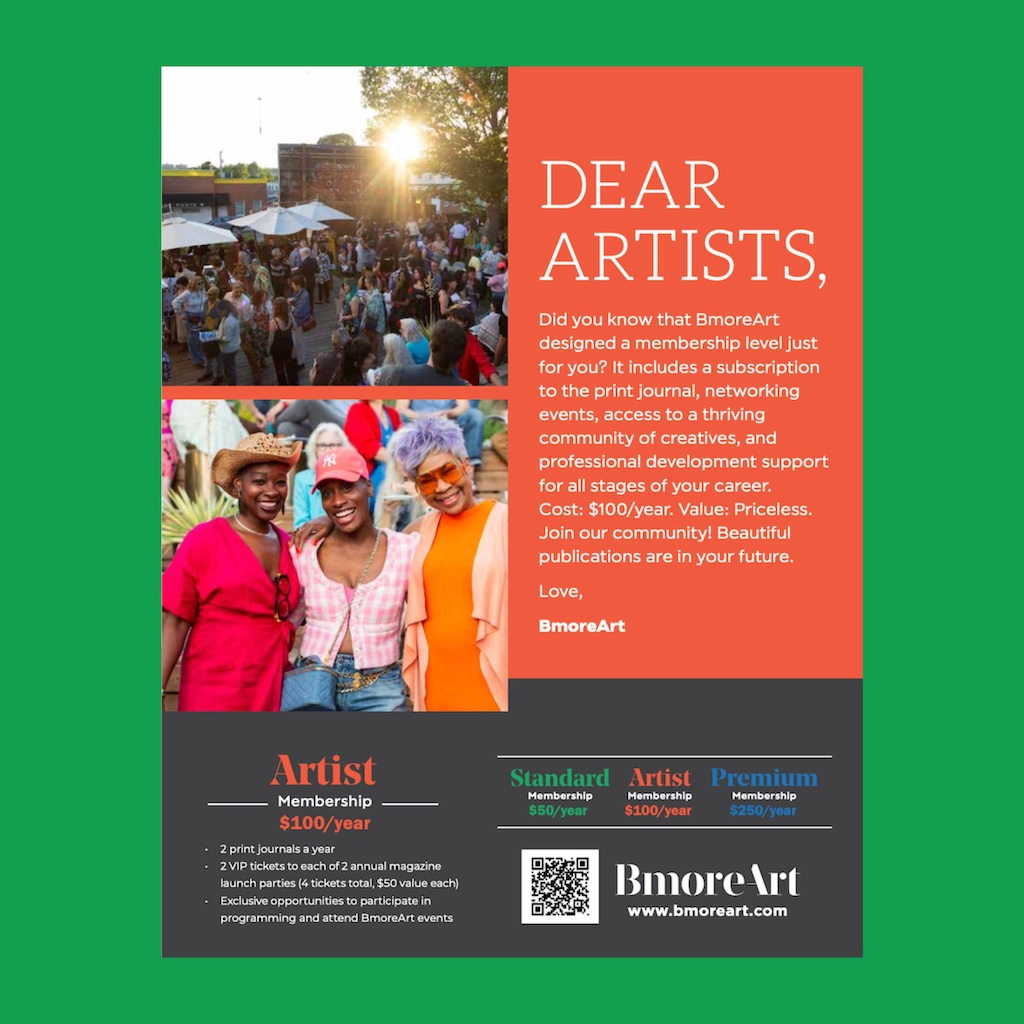
Whether you join BmoreArt with a Standard Plan (2 annual issues in the mail, newsletter) or as an Artist (2 tickets to each release party), or as a Premium or Patron Member, your support means everything!
Artist Membership, $100 Annually
*2 beautiful print journals a year *2 VIP tickets to each of 2 annual magazine launch parties (4 tickets total, $50 value each) *Invitations to 10 exclusive events per year in the BmoreArt Connect+Collect gallery in Baltimore
Standard Membership, $50 Annually
*2 beautiful print journals a year *Invitations to 3 BmoreArt Connect+Collect open house events per year *Member-only newsletter
Premium Membership, $250 Annually
*Recognition in the masthead *BmoreArt City of Artists T-shirt *2 beautiful print journals a year *2 VIP tickets for each launch party, a total of 4 tickets annually *Invitations to 10 exclusive events per year in the BmoreArt Connect+Collect gallery in Baltimore

Patron Sponsorship, $500 – $1000+
Includes all benefits of other membership PLUS – *Invitations to exclusive events, private dinners, & collector tours *A free gift subscription for a friend
Don’t just read – Belong!
Become a Subscribing Member at BmoreArt today!
Join our community and be a part of the momentum in building the future we want in Baltimore.
Membership Info