As D.C. prepares for the Nation’s birthday, there’s a lot of surreal discourse about paint and American identity around town. There is, of course, the absurd drama of what exactly constitutes “American Flag Blue” (and how it should be applied) that reads like a Pantone reel written by Eugène Ionesco. But there’s a much more nuanced dialog about paint, twentieth century patrimony, surrealism, its relationship to fascism, and what “American painting” can mean just 3 kilometers—er, I mean, 1.864 miles—due north of the now-militarized Reflecting Pool’s barricades.
Miró and the United States is on view at The Phillips Collection through July 5th, and I can’t think of a better way to spend one’s existential Independence Day hangover than catching an exhibition that will actually make you “reflect” (pun intended) on what this country, for all its flaws, used to represent to so much of the world. For the famed Catalan painter—who had survived Spain’s brutal civil war and was living somewhat stifled by the resulting dictatorship—the U.S. was a welcoming beacon of freedom, experimentation, and inspiring cosmopolitan exchange. The exhibition was produced in collaboration with the Fundació Joan Miró in Barcelona (where I have been mostly based as an American in something of a self-imposed exile myself) and I had a chance to see it there before it travelled across the Atlantic.
I can’t recall the last time I had been so viscerally excited by a museum show—let alone an art historical survey. I was practically skipping from one gallery to the next, eager to be surprised by unexpected relationships between canonical artists I had never considered, underknown artworks I had never seen, and curation that brought a sense of narrative theatricality to the experience while never overwhelming the artworks themselves. As a native Baltimorean, imagine my delight to learn that hometown icon Grace Hartigan was the only woman included in MoMA’s midcentury survey show The New American Painting—cited by art historians as a likely back-and-forth mutual influence on the most iconic artist of my adoptive city.
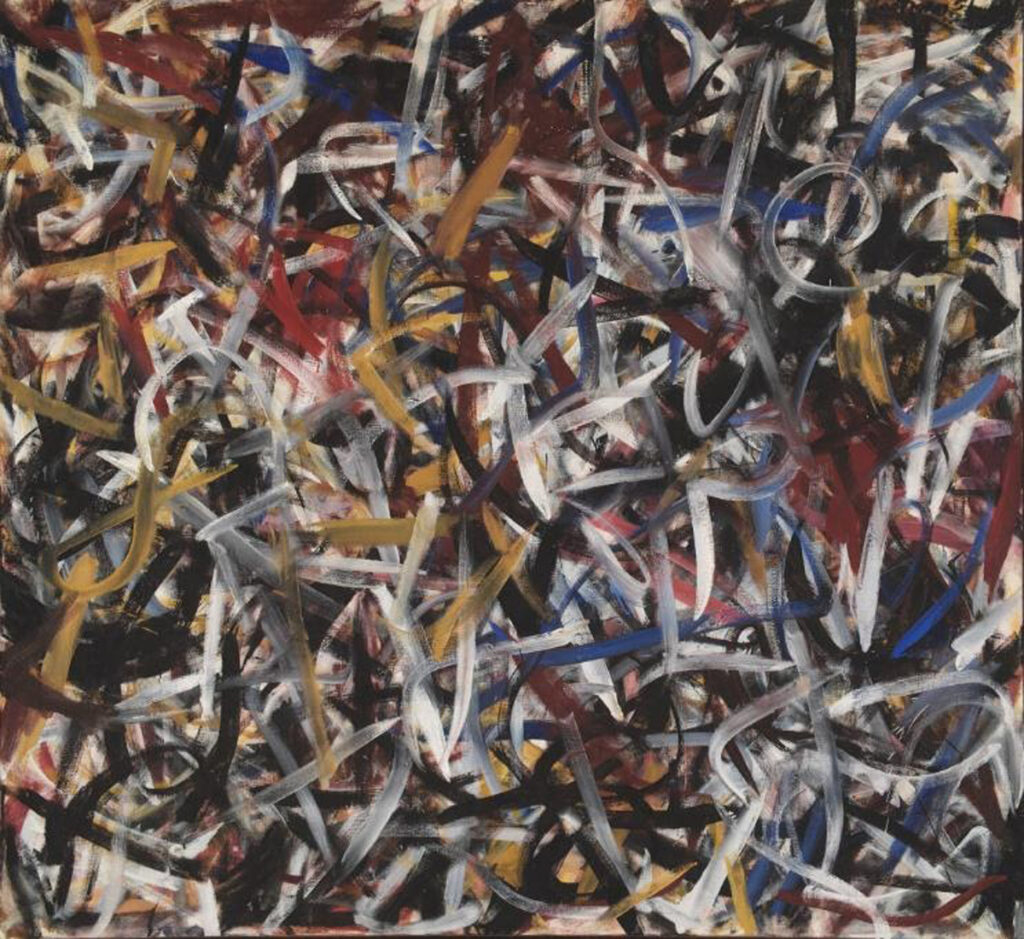
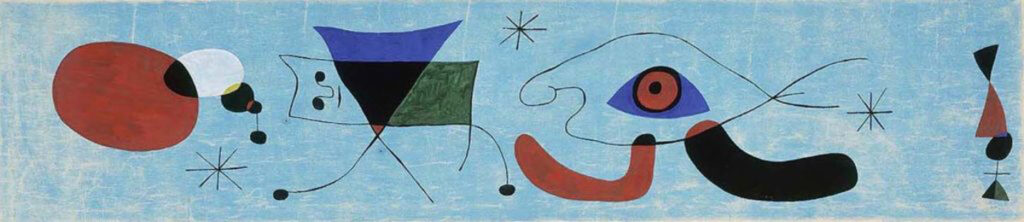
It’s honestly a struggle to single-out any particular highlights from Miró and the United States. This show features over 75 works by more than 30 artists and has no “filler”. There are pairings of paintings that almost moved me to tears. There’s archival material one could peruse for hours. I learned that Miró created a massive, 3-ton tapestry for the Twin Towers in 1973, lost in the September 11th attacks. I marvelled at Miró’s ability to make metal sculptures seem vulnerable and fiber-based artworks or modestly-scaled prints on paper feel monumental. I was inspired by his faith in the necessity of collaboration and desire to constantly experiment and expose himself to new ideas.
I lingered in the hillside Fundació until it closed, watching the spectacular sunset over the city below and Collserola mountains beyond, reflected in Alexander Calder’s magical “Mercury Fountain.” Calder was one of Miró’s closest friends, and created the piece for the Spanish Pavillion of the 1937 Paris Universal Exhibition—there displayed along with Miró’s “The Reaper (Catalan Peasants in Revolt),” Picasso’s famed “Guernica,” and other antifascist artworks. They were a condemnation of Franco’s brutal war crimes against civilian populations in various municipalities across the country during the then-ongoing Spanish Civil War. Calder’s was dedicated to the mercury mining town of Almadén, and comprises an ever-moving stream of the liquid metal agitating a mobile with the town’s name. The fountain unfortunately couldn’t be transported to The Phillips Collection due to the toxicity of its contents. Fortunately, the Fundació’s building—designed by Miró’s lifelong friend Josep Lluís Sert, one of the architects of the famed Paris pavilion—has special accommodations to keep it from poisoning viewers.
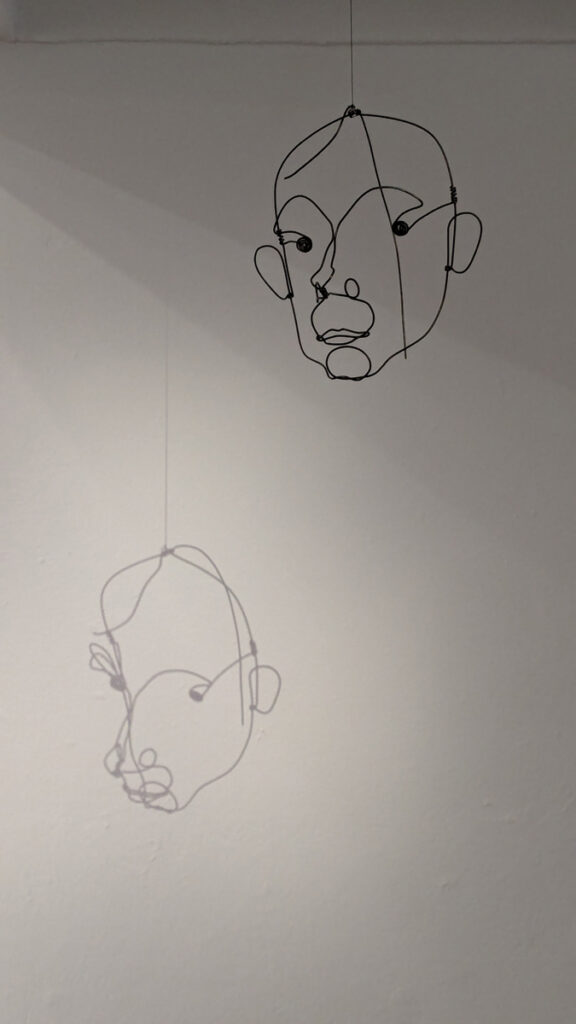
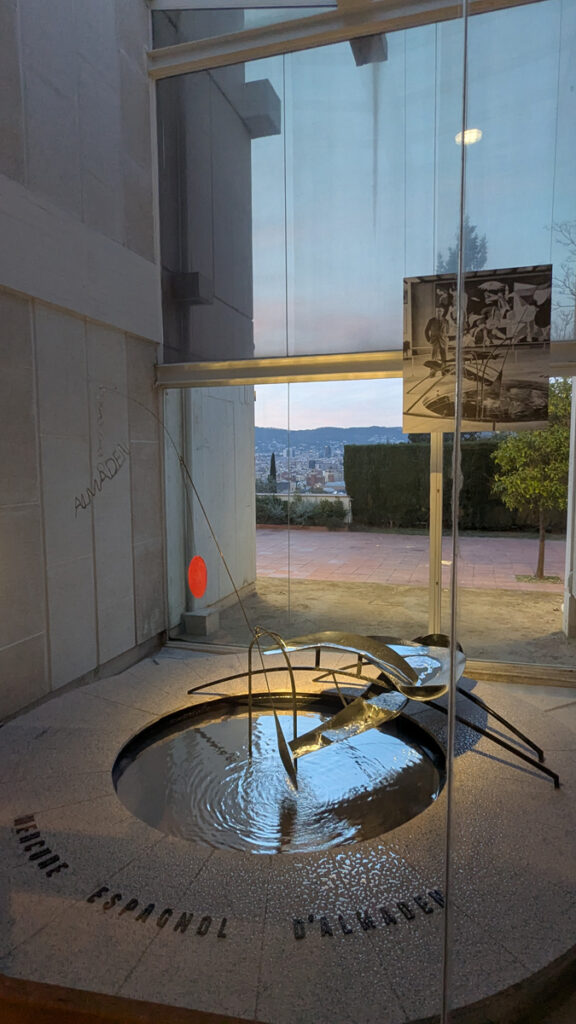
Months later, I find myself thinking about the tragic irony that D.C. can’t experience that toxic reflecting pool—one condemning state violence in an ever-moving, mutable mirror of silver blood—while theirs is behind bars, along with any suspected “antifa terrorist” citizens who dare to approach it.
When the final call came to exit the museum, I rushed to the gift shop and actually bought the catalog. This is as good a litmus test for the quality of an exhibition as any because—as an émigré art writer—leaving behind my collection of heavy, treasured books was one of the more traumatic aspects of moving abroad, and now I have commitment issues with objects. I bought my first new catalog (in Catalan, because I am one of the good immigrants making an effort!) and on my walk home stopped into a cafe to dig into Miró i els Estats Units.
On the first page, I was struck by a Miró quote from a 1970 interview with the American art critic and curator Margit Rowell: “It was really American painting that inspired me.”
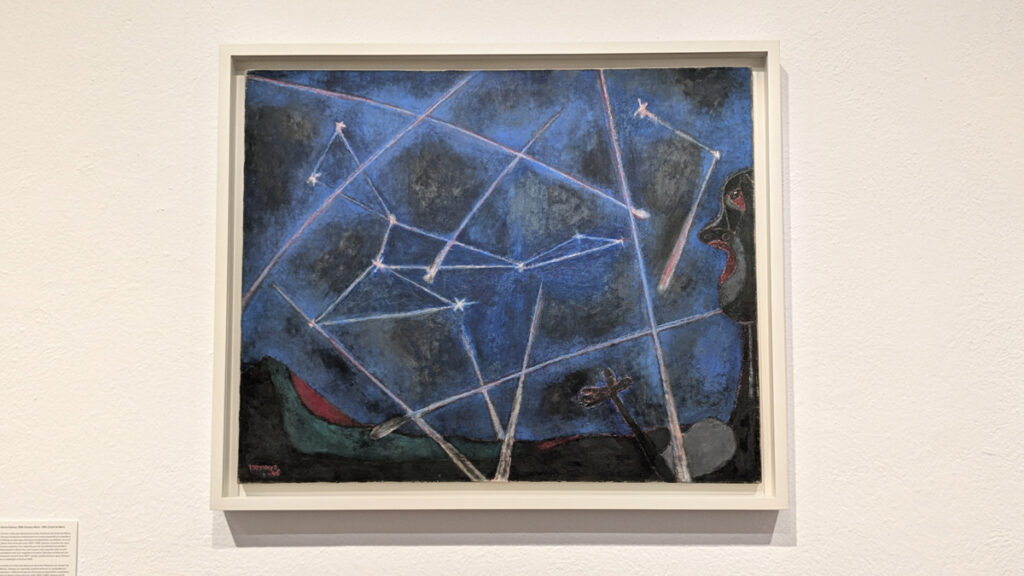
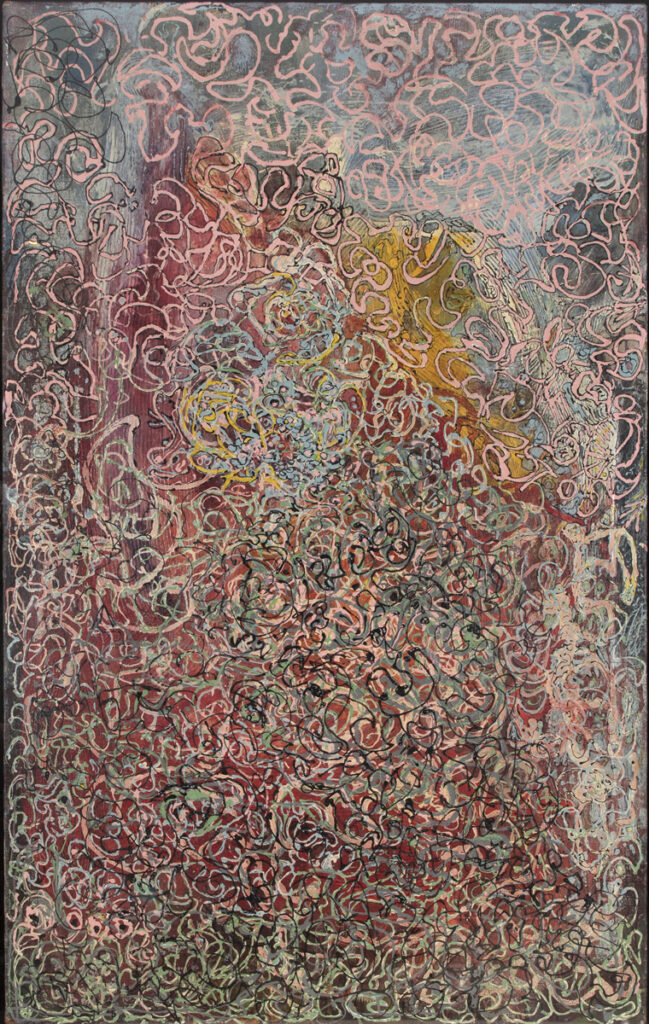
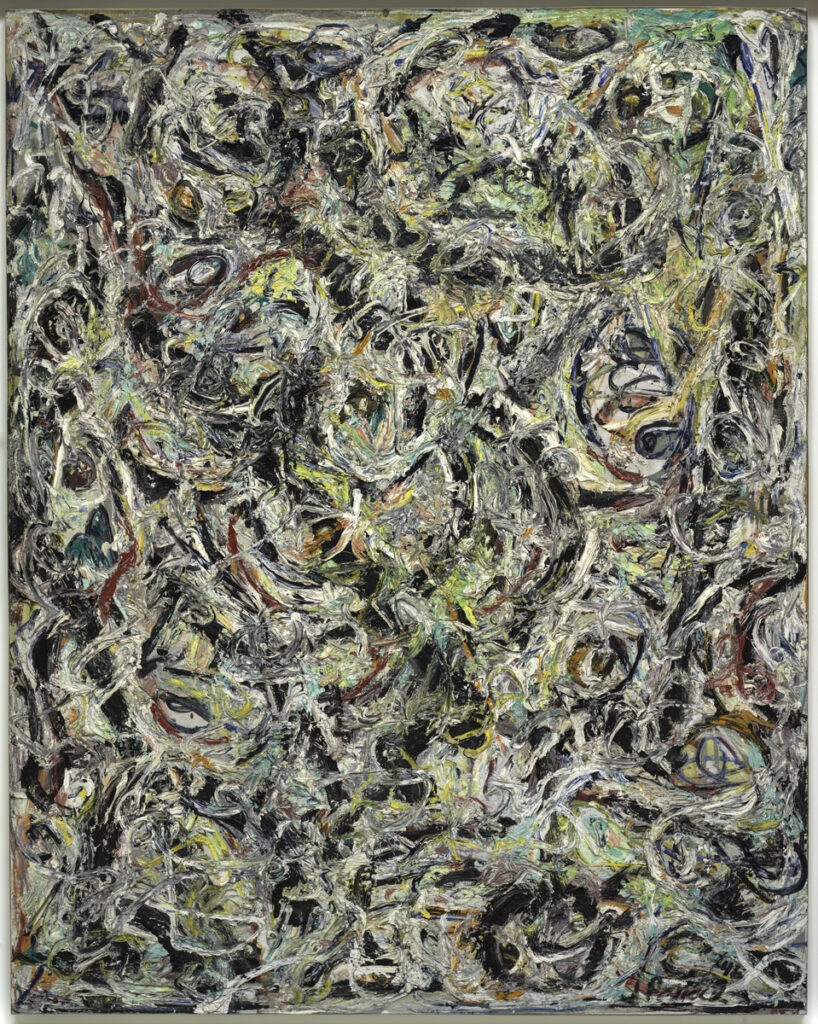
But what is “American Painting”? Is it Oaxacan artist Rufino Tamayo in New York, showing a canvas informed by Zapoteca cosmology and the night sky the same year as Miró’s famed, heartbreaking Constellations series? Or the innovations of Janet Sobel—who fled pogroms in her native Ukraine for Brooklyn, started painting at age 45, and whose experiments in paint handling inspired Jackson Pollock? Or perhaps the moody abstractions of Alfonso Ossorio, the wealthy Filipino who came to America to study at Harvard and RISD and ended up staying? All inspired by the same stars, sloshing about in seas of a thousand different shades of blue or glorious swampy green?
The above examples from Miró and the United States—along with Lithuanian-born Mark Rothko or Armenia-born Arshile Gorky or countless others in the show—illustrate something I often struggle to articulate. “America” is not a geographical entity with a fixed identity, but a fluctuating set of political and economic conditions that sometimes align to make it, for some people—such as it was for Miró—a fantastic, messy, inspiring place to come together as artists and do weird shit and exchange ideas. And many other times… not so much. To make America great again would be to open the gates back up and invite a new generation of outcasts and different-thinkers to mingle and provoke. Because societies, like so much standing water, stagnate when walled-off.
Curious about how this show would translate between two very different contexts—both political and architectural—I reached out to the curatorial team behind the exhibition to get their opinions and insights about the experience of putting together such a monumental show. Below is our very lightly edited email exchange:
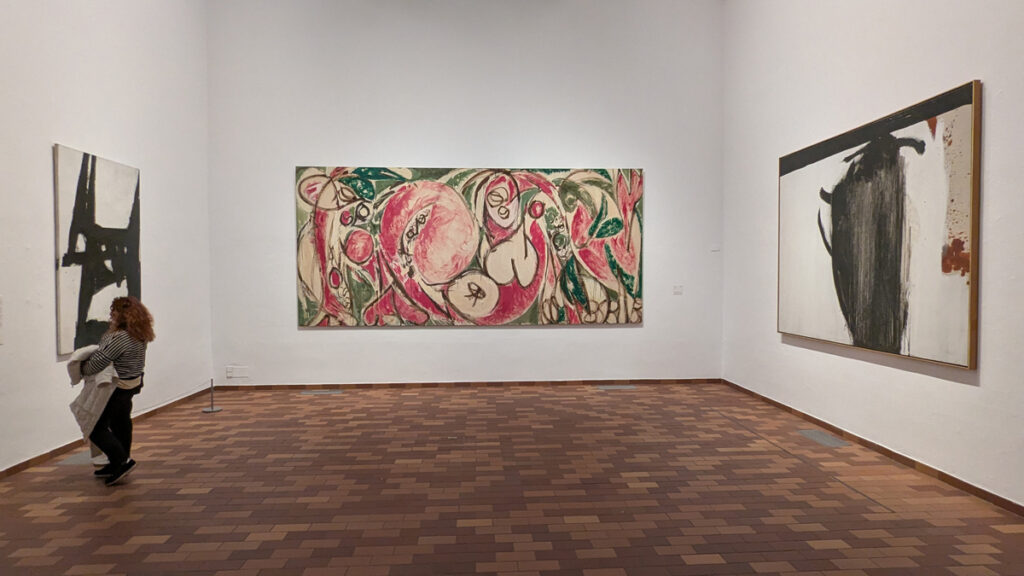
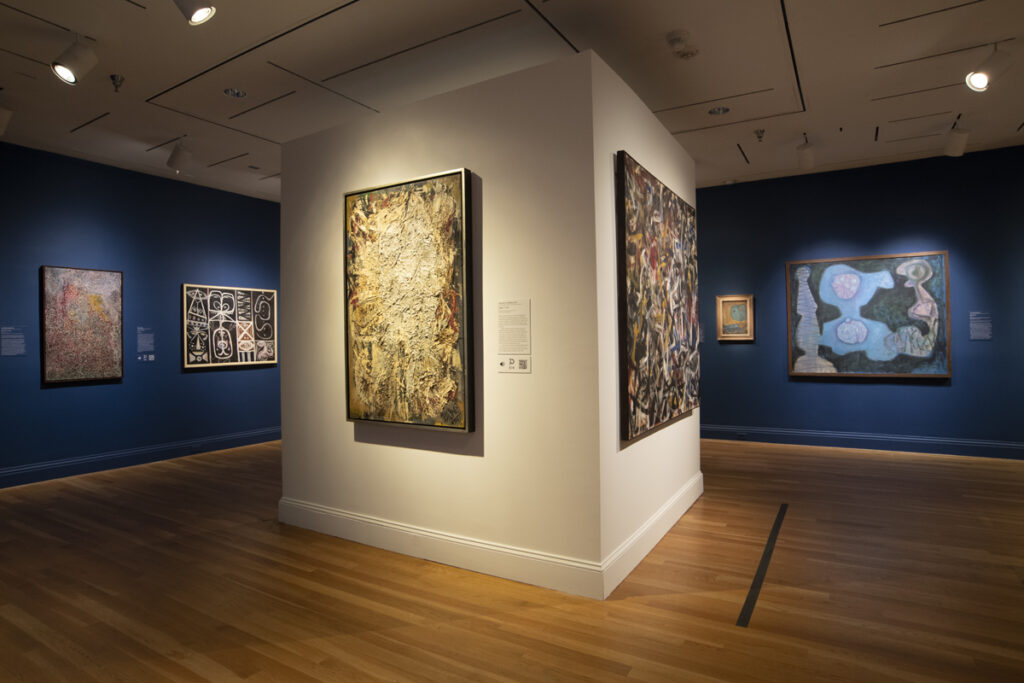
I felt like the unique architecture of the Fundació Joan Miró informed the flow of the exhibition immensely. The Fundació is such a beautiful, idiosyncratic space—with a procession of niches, galleries at different scales that open in these dramatic reveals—even the volta catalana ceilings added a sense of rhythm to the art-viewing experience… I am so curious to see how you’ve adapted a show that felt so very much site-specific to such a different architectural space! Could you talk about some of the challenges and opportunities unique to both contexts?
Elsa Smithgall, Chief Curator at The Phillips Collection: From the time we joined forces, we knew that The Phillips Collection had a smaller footprint than the Fundació Joan Miró and therefore always planned for our presentation to have a slightly smaller checklist without sacrificing the quality and integrity of the exhibition’s concept. Moreover, the exhibition’s theme of close relationships between Miró and his American counterparts lent itself well to choreographing the exchanges in our intimate, domestic galleries.
Matthew Gale, Independent Curator: In Barcelona, the variety of spaces that Josep Lluís Sert designed for the Fundació encouraged our curatorial response, so that chapels could encourage concentration and vistas could invite comparisons through space. In particular, the determination that Lee Krasner’s *”The Seasons” would be seen on the long vista through several galleries allowed us to articulate around that view a subliminal rebalancing towards women artists, by locating Louise Bourgeois’ sculptures and *Maya Deren’s film along that same sightline. (Note: works with an asterisk are not on view at the Phillips Collection iteration)
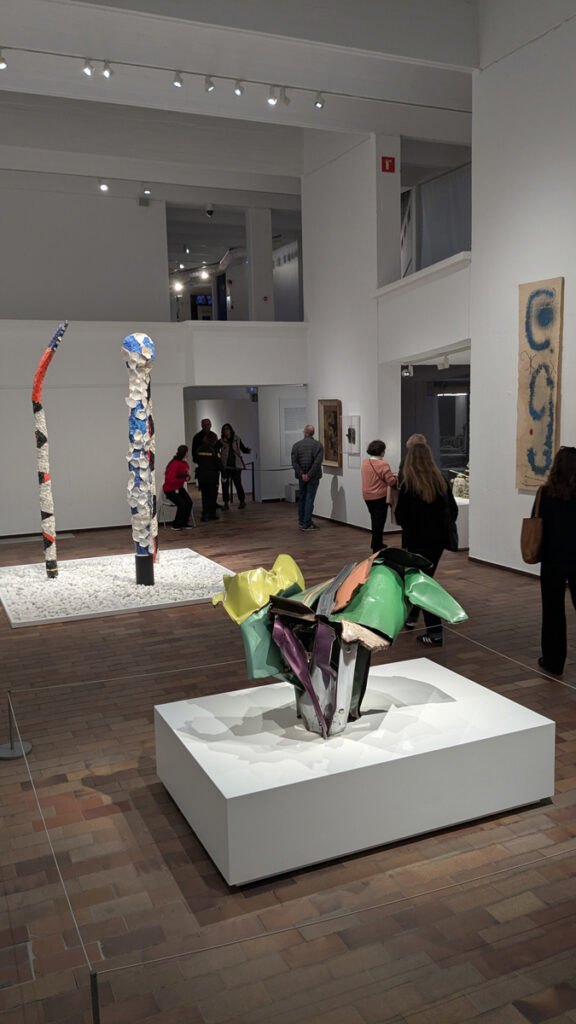
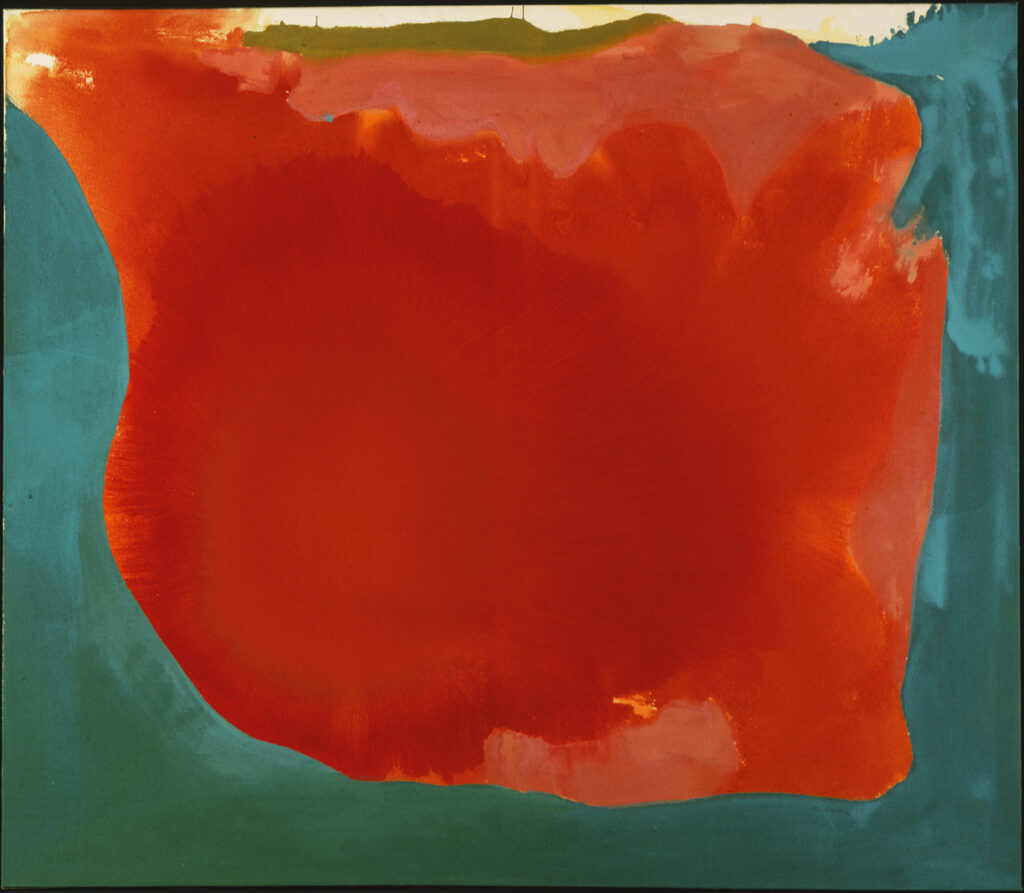
Dolors Rodríguez Roig, Exhibition Coordinator and Curator, Fundació Joan Miró: Sert’s architecture was a key element to establishing dialogues between artists through different galleries. For example, from gallery 9’s outside, where the colour field works by Helen Frankenthaler and Mark Rothko were placed in the frontal wall, the visitors were able to see Joan Miró’s work “Personage throwing a stone at a bird” in gallery 1, as a reminder of how Miró’s creative process on his artworks’ backgrounds used to be during the 1920s. Colour field was the departing point for the American Abstract Expressionist artists to develop the colour field paintings. Also, we should mention gallery 12, which is known as “The Sculpture’s Gallery,” because Miró and Sert planned a gallery in which the sculptures would have been able to be seen from all possible perspectives, is a gallery that has a ramp, and allows the public to go from down to up walking 360º, that means the public has not only the possibility to surround the sculptures, but to seeing them from above. There, were placed the magnificent three sculptures by Jeanne Reynal and *John Chamberlain.
Marko Daniel, Director, Fundació Joan Miró: Our collaboration with The Phillips Collection, the first museum of modern art in the country, proved an ideal partnership. While the spaces for exhibiting the works are each unique, the uniting factor was the shared perspectives on many of those artists—Willem de Kooning, Helen Frankenthaler, Joan Mitchell, Jackson Pollock—with whose work Miró engaged on his seven visits to the United States.
I also noticed about halfway through the exhibition that there’s a really remarkable proportion of art by artists who weren’t white dudes—which is all-too-rare for a survey of mostly mid-20th century art historical canon/canon-adjacent works. But it was also refreshing that none of those artists were treated as “exotic others” by the curatorial text—which is somewhat of a pet peeve of mine at so many “identity”-obsessed American institutions! I am curious about the conversations around those decisions and how you struck a balance of curating a diverse show without patronizing the viewer. Or can we just think of this as a testament to the fact that Miró had a lot of female friends and a diverse peer group?
Elsa Smithgall, Chief Curator at The Phillips Collection: During his visits to New York, Miró encountered a vibrant artistic climate that included many talented women artists, such as Lee Krasner, Grace Hartigan, and Helen Frankenthaler. To navigate the male-dominated art world, several assumed male pen names, including Michael Corrine West and Peter Miller.
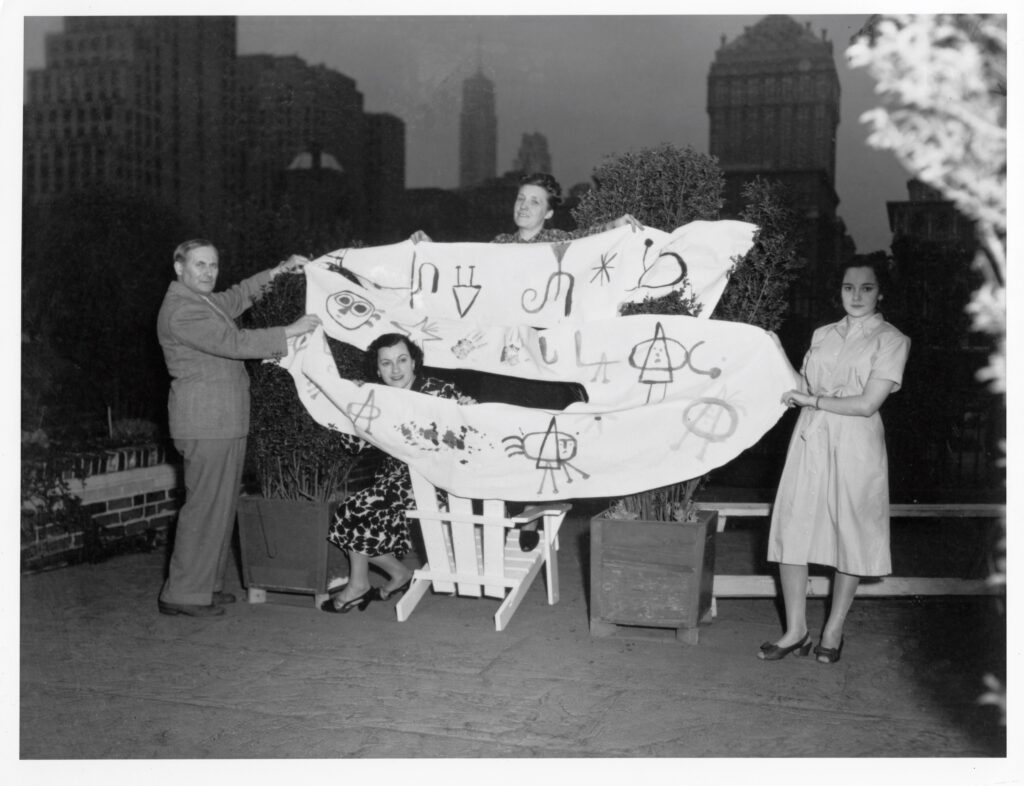
Dolors Rodríguez Roig, Exhibition Coordinator and Curator, Fundació Joan Miró: One of the curatorial elements that we reflected about along the exhibition preparation and decided to go for it, was to accompany the artworks and the common technical labels with a short biographical label of each artist. This resource allowed us to properly show the public the women behind male’s names, and where the artists came from—because many artists included in the show weren’t from the United States but decided to go there or move there taking exile, looking for new opportunities, or just to experience a period of time there and achieve new artistic perspectives. This resource allowed us to humanize the artists in a big group show.
What were some of the “pleasant surprise” highlights during your research for this exhibition? I imagine there was a lot of really juicy archival research… pouring over personal correspondence, notebooks…
Matthew Gale, Independent Curator: Learning that artists such as Hans Hofmann and Robert Motherwell purchased Miró prints in the 1940s was an affirmation of their admiration. Perhaps most exciting was discovering three hitherto unexhibited camera-less photographs of Miró taken in 1947 by the extraordinary filmmaker Len Lye. And detailed research and visual impact also came together in being able to include Grace Hartigan’s early painting “Six Square,” that she showed in the 9th Street Show in New York in 1951. The publication of her diaries revealed that she was explicitly thinking of Miró when making it.
Dolors Rodríguez Roig, Exhibition Coordinator and Curator, Fundació Joan Miró: Discovering through correspondence that Miró during his 1947 visit to NY was asked by the Art Supervisor Lillard McCloud (thanks to Thomas Bouchard) to be part of an advisory committee for a Neighborhood Art Project in Brooklyn, joint with Jacob Lawrence and Adolph Gottlieb, among others—and that Miró accepted—was such a great find. This is another example of his social commitment to children and young people as the project aimed to achieve a constructive art program for neighborhoods that were experiencing social difficulties.
Do each of you have a favorite artwork in the show?
Elsa Smithgall, Chief Curator at The Phillips Collection: There are so many favorites in the show. I will say that after we had hung all the Constellations prints that wrap a single gallery, being in that gallery immersed in their vital spirit is especially moving, particularly knowing that Miró found respite in them, bringing him “liberation” from the “suffering” he experienced during wartime.
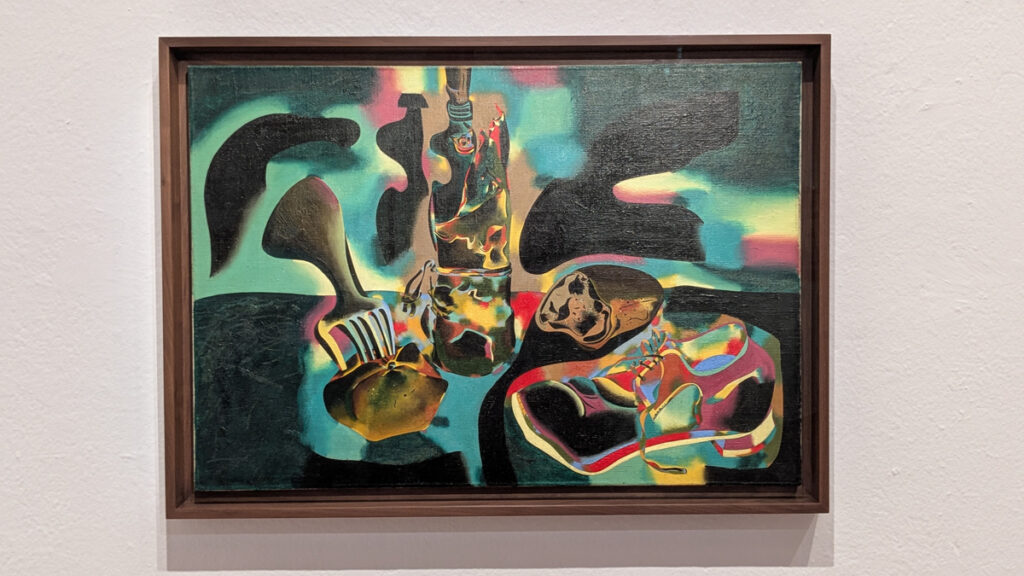
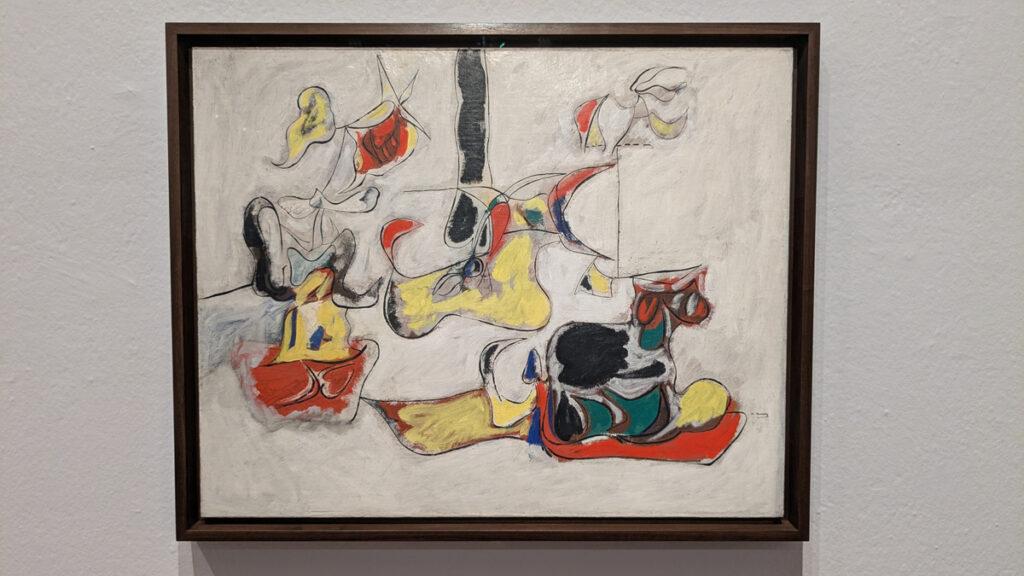
Matthew Gale, Independent Curator: As the exhibition reveals conversations, I keep returning to the way in which Arshile Gorky’s “Garden at Sochi” reinterpreted Miró’s “Still Life with Old Shoe.” And this pairing spirals out to other connections: “Still Life with Old Shoe” was owned by the artist Peter Miller, and we were able to include her painting “Ceremonial Objects” in the selection, while Jeanne Reynal (represented by later works) was among those at Gorky’s table when he held a dinner to welcome Miró to New York in 1947.
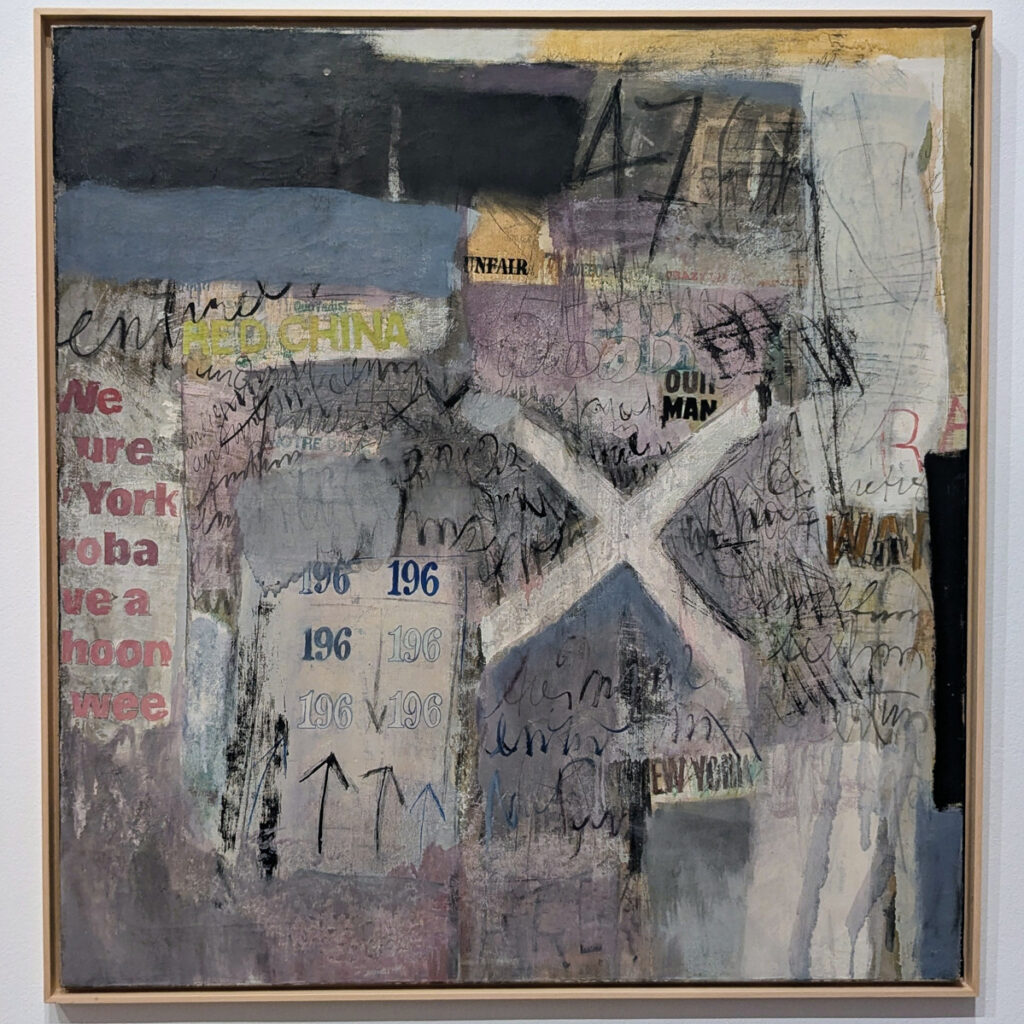
Dolors Rodríguez Roig, Exhibition Coordinator and Curator, Fundació Joan Miró: It is very difficult to choose just one, so I would go for a couple such as ”The Seasons” by Lee Krasner, which traveled for the first time from the USA to Europe; the overwhelming work exemplified a moment in which Krasner, even experiencing the grief for the recent loss of Jackson Pollock, raised up with all her energy and gesture painting in such a big format. Then, Sarah Grilo’s “Unfair,” which showed not only how the NY dynamism and vitality of the 1960s and graffiti could be transferred to a canvas, but as well her inconformity and complaint to Vietnam’s war as the encrypted messages included in the work reveal. And last, Miró’s “Mural March 20, 1961,” as an example of his close friendship with Sert, as the work was a gift to the architect in gratitude for the design of the atelier in Palma de Mallorca. Miró’s artistic procedure in this work was closely linked with Alexander Calder’s.
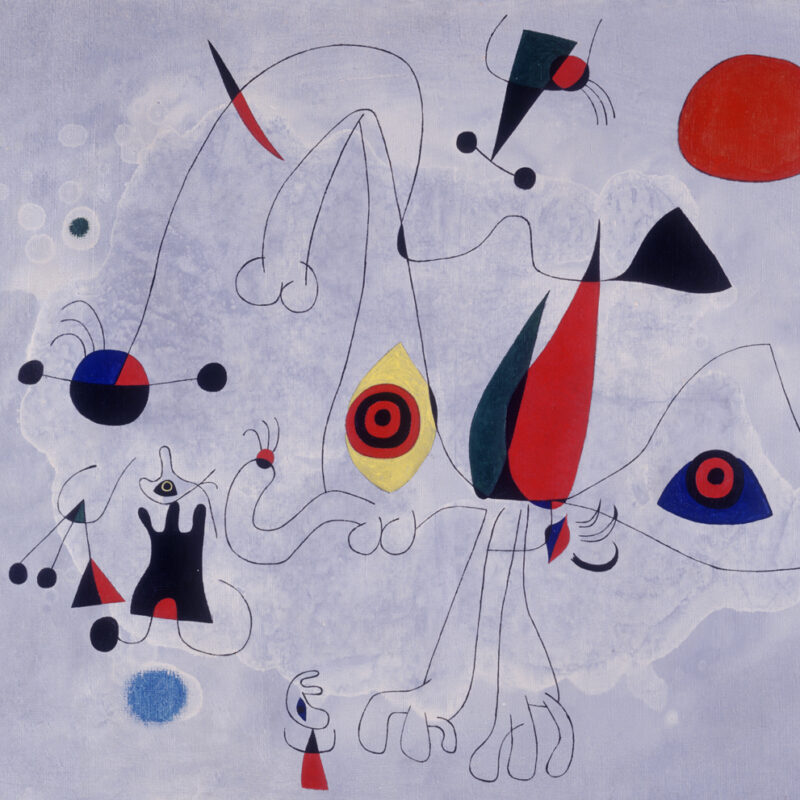
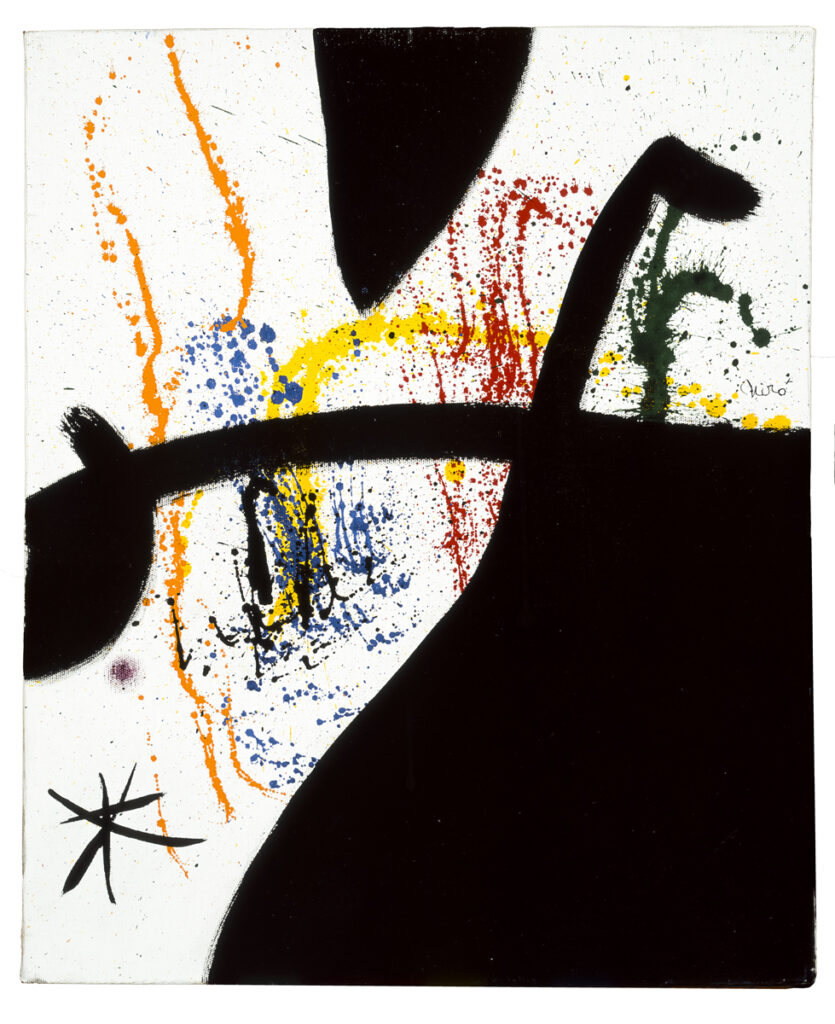
Marko Daniel, Director, Fundació Joan Miró: While the Fundació Joan Miró collection is rich in the artist’s work, it was the possibility of including his 1948 painting “The Red Sun” in the exhibition that initiated the partnership with The Phillips Collection. This canvas is, literally and conceptually, a pivotal work showing Miró’s response to his first experience of the United States. Painting with the canvas on an easel, Miró established the characteristic elements of his composition, but, importantly, he then laid it horizontally as to pour on the thick black tar-like paint that curls across the surface. Of a thickness comparable to his experiments on Masonite a decade earlier, this development also shows Miró responding to techniques associated with thick etching varnishes used in the print workshop Atelier 17, and an awareness of the poured and dripped works of Janet Sobel and Jackson Pollock.
Are there any pieces or artists you would’ve loved to have included, but couldn’t track down or secure a loan agreement?
Elsa Smithgall, Chief Curator at The Phillips Collection: The curators and I were especially sad we could not include a watercolor from the Lament for a Bullfighter series by Romare Bearden, who became close with Miró during his 1947 visit, regularly visiting him in Carl Holty’s studio. The work we desired was acquired by an anonymous private collector.
Matthew Gale, Independent Curator: One advantage of the exhibition having two venues is that Willem de Kooning’s “Asheville,” which is very fragile as he painted on card, could be included. He declared that “Miró cut the Gordian Knot” to liberate painting, so it is exciting to see the work included in Washington.
I found myself struck by a sort of odd nostalgia for an America that’s very much at risk of no longer existing—this idea of a cosmopolitan sanctuary where all these creative people fleeing wars or repressive political contexts could mingle and freely exchange ideas. I noticed that the exhibition text often makes reference to one of Miró’s peers being in exile, or having been displaced by a war, showing at the anti-fascist Spanish Pavilion, etc… without really delving too deeply into the politics of the time or the artists involved. Was that a conscientious decision by the team? Do you expect U.S. audiences are going to need a crash-course Spanish history lesson for some context?
Elsa Smithgall, Chief Curator at The Phillips Collection: The exhibition does directly address the dark hour of WWII when Miró fled Varengeville, France for Spain, finding in his work on the Constellations a refuge from the horrors of war. An exciting commission for the Terrace Plaza Hotel in Cincinnati finally ushers Miró to the US where he enjoys the creative freedom nurtured by a democratic society. The fertile exchanges that energized his art and that of his American cohorts manifest in the visual conversations throughout the exhibition. Looking at the way the exchanges unfold through these exciting juxtapositions is the heart of what the exhibition is about.
Marko Daniel, Director, Fundació Joan Miró: For Miró in the period immediately after the Second World War, the United States represented hope as a space of expanded artistic horizons and freedom of expression. The encouragement of innovation and experimentation lay in stark contrast to the repressive cultural atmosphere in Spain under the Francoist dictatorship to which he had returned in 1940 to maintain contact with his Catalan roots. The New York art scene he encountered through the support of his dealer Pierre Matisse and friends, such as Alexander Calder and James Johnson Sweeney, was international in nature and outlook. This encouraged Miró to share his own art and ideas, but also to listen to and absorb the new ideas and experimental practices of a wide variety of contemporaries. Over the years this impetus towards exchange increased rather than diminished and, after his 1959 visit, Miró fully engaged with the gestural freedom of Abstract Expressionism.
Speaking of which, I didn’t really know that much about Miró and his (necessarily guarded) political stance following the Civil War living under the dictatorship. Do you think he maybe got away with more than so many other Spanish intellectuals because he was somewhat secluded in Mallorca rather than the mainland?
Matthew Gale, Independent Curator: Miró regarded his period in Mallorca in the 1940s as an inner exile, during which he worked hard but in relative isolation (and the authorities opened his correspondence). The post-war acclaim for his work in the United States, cemented by his first extended stay in New York in 1947, and his re-established links in France all provided some of the reputational protection that accompanies international fame. It was this that allowed his greater liberty of action in painting on the windows of the Colegio Oficial de Arquitectos in 1969 (to which you refer to in the next question).
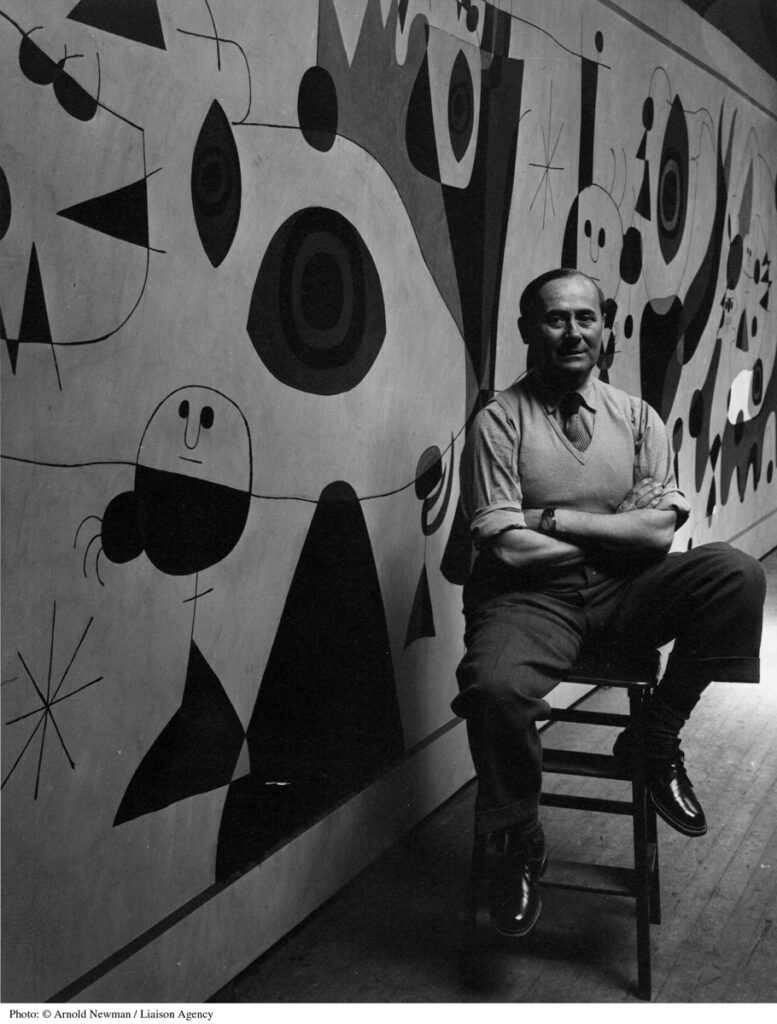
But I was really moved to exit your joyful show—a show really celebrating artists who transcended nationalism and turbulent eras and had these fantastic friendships and collaborative relationships—and read the text one gallery over in the permanent exhibition. It was an anecdote describing Miró—then well into his 70s—sneaking around the fascist authorities to collaborate with “subversive” architects and painting murals and feeling that he finally had his homecoming to Barcelona. It’s just such an optimistic image for the time we’re living through now. I know you started planning this exhibition years ago, but it feels so oddly timely given the insane political climate in the US and the (less dramatic, but still concerning) rise of right-wing parties such as VOX in Spain... Do you have any thoughts on that topic you’d like to share? (While we still can!)
Note: We’d collectively like to offer the following perspective from Jonathan P. Binstock, Vradenburg Director and CEO of The Phillips Collection, on the exhibition’s relevance in today’s political moment:
“Presenting this exhibition in Washington, DC, underscores art’s role in fostering cross-cultural exchange and affirms the Phillips as a space where global conversations in modern art unfold. At a moment when the geopolitics of culture are being reexamined, Miró’s transatlantic journey feels acutely relevant. His movement between Spain and the United States—from repression to optimism, from constraint to openness—speaks powerfully to the role of art as both a personal and political act. The Phillips Collection invites visitors to reflect on this history and to imagine broader horizons.”
On Friday, June 26, from noon to 1 PM join Phillips Curatorial Assistant Grace McCormick for a talk exploring the contributions and influence of women artists within the exhibition and the broader artistic networks surrounding Joan Miró. More information and reservations available here.
Miró and the United States is on view at The Phillips Collection through July 5th, and features work by William Baziotes, Louise Bourgeois, Alexander Calder, Elaine de Kooning, Willem de Kooning, Perle Fine, Sam Francis, Herbert Ferber, Helen Frankenthaler, Arshile Gorky, Adolph Gottlieb, Grace Hartigan, Franz Kline, Lee Krasner, Norman Lewis, Len Lye, Alice Trumbull Mason, Peter Miller, Joan Mitchell, Joan Miró, Robert Motherwell, Louise Nevelson, Barnett Newman, Isamu Noguchi, Alfonso Ossorio, Jackson Pollock, Jeanne Reynal, Mark Rothko, Rufino Tamayo, Sonja Sekula, Theodoros Stamos, Janet Sobel, and Michael Corinne West