A recently opened show at the Walters Art Museum offers a chance to see one of the most tantalizingly enigmatic objects in the museum’s collection—and to reflect on the contours and limits of our current moment.
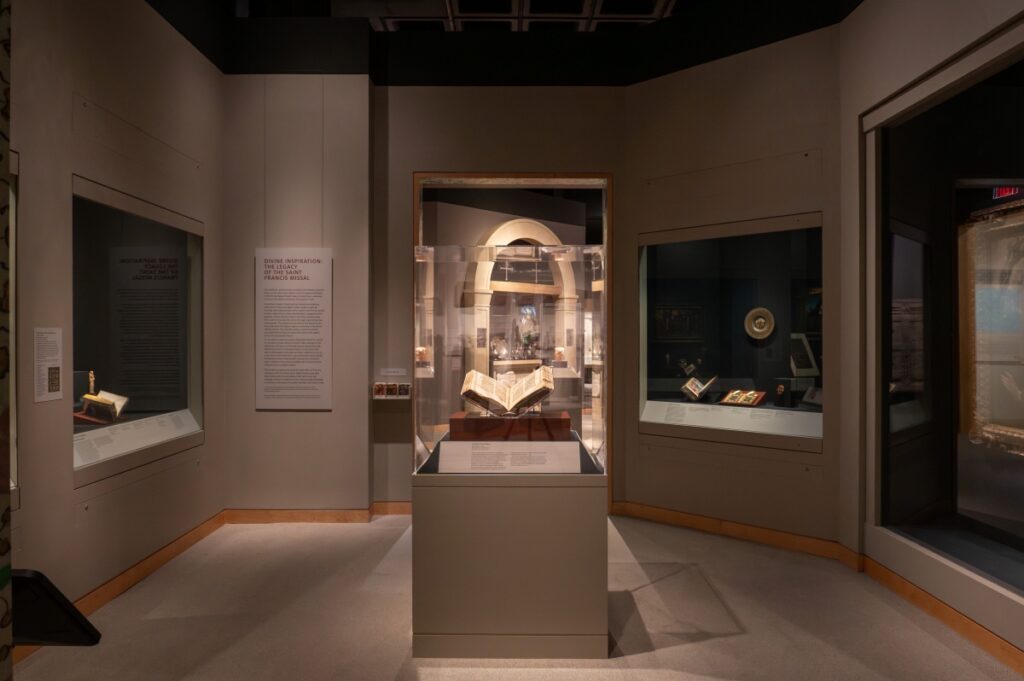
Broadly speaking, Divine Inspiration: The Legacy of the St. Francis Missal (through February 7, 2027) is a tribute to Saint Francis of Assisi, the immensely influential mendicant friar who died 800 years ago, on October 3, 1226. The eighteen objects on display, ranging from a medieval Venetian glass medallion to a Baroque Philippine ivory, variously celebrate the Catholic saint, depict two of his most famous followers (Saints Clare and Anthony), and hint at the sprawling monastic and secular orders that he inspired.
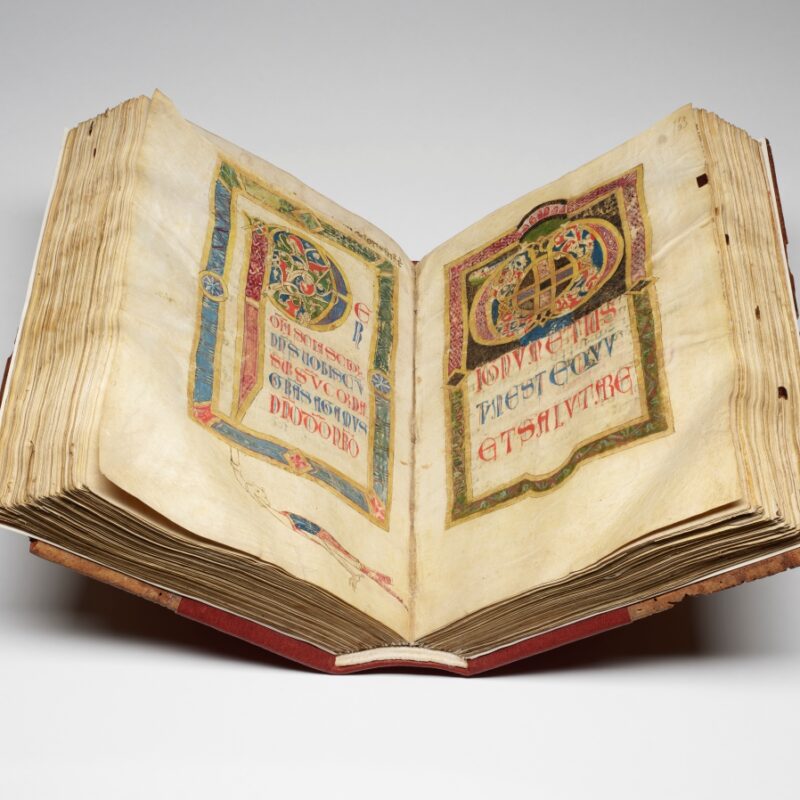
But the centerpiece of the show is the so-called St. Francis Missal, a sizable book of texts used in Latin masses that was likely produced in Umbria in around 1200, and that was the subject of an extensive conservation project in 2016-18. It was last exhibited in March of 2020, in a similar show that was shuttered prematurely by the pandemic (and that forms the basis for this slightly revised reboot). The missal’s claim to fame, though, is that it may be the very volume that inspired Francis, when he was seeking spiritual direction as a young man, to give away his possessions and pledge himself to a life of prayer.
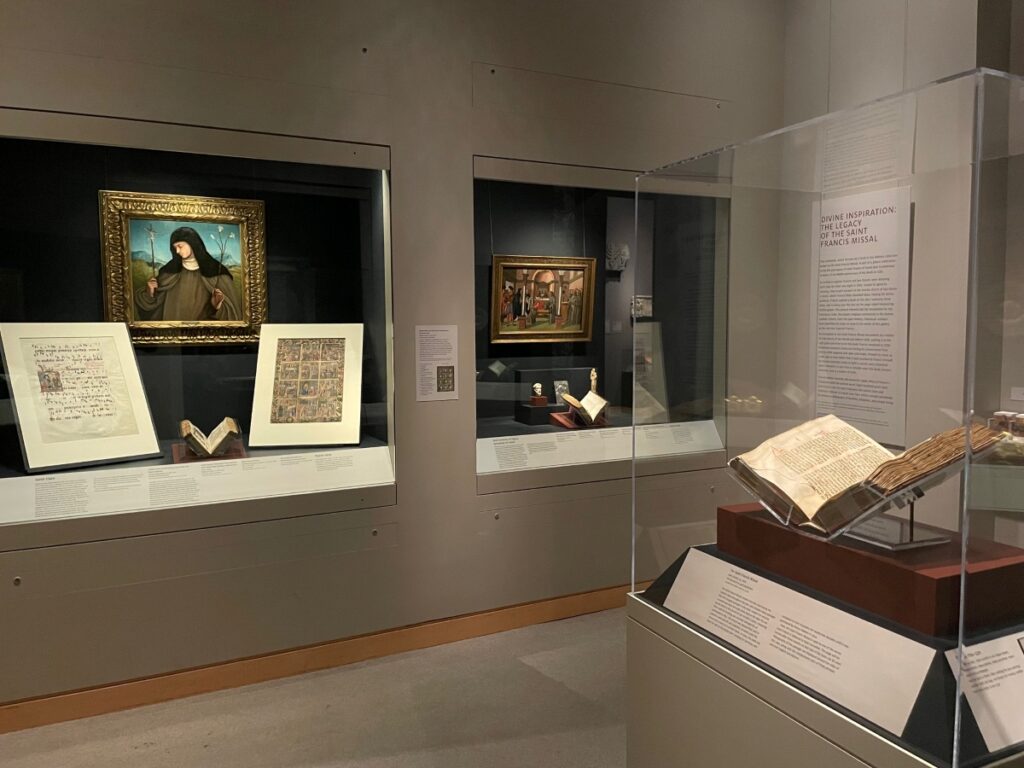
Maybe—for in fact there is considerable debate about whether this is the same book, or not. The Legend of the Three Companions, a thirteenth-century compilation of oral traditions and accounts, claims that Francis and two companions entered the church of San Nicolò in Assisi and opened “the book of the Gospels” three times, praying that God would offer guidance through the passages that were revealed. Allegedly, each of the three passages accented self-renunciation—prompting Francis to embrace a life of poverty and ascetic monasticism.
As Menachem Wecker noted in a sharply worded essay in National Catholic Reporter, however, the supposition that the Walters missal is the very book that Francis fingered is ultimately a matter of possibility and belief, rather than historical certainty. After all, the Walters manuscript is a missal, rather than a gospel book, and while it does include three Biblical passages that accent renunciation, one of them (Mark 10:21) is not quite the same as the verse (Matthew 19:21) cited in the Legend. Thus, as the Walters acknowledges in a wall text, “whether or not Francis actually used this book remains unknown; that is a matter of faith.”
Regardless, the manuscript is worth a close look. Probably produced in the late 1100s (and eventually purchased by Henry Walters in 1924), it’s a thick volume that consists of vellum pages featuring twin columns of carefully executed Latin. The generous negative space suggests a respect for the text, while occasional section headings in blue and red lend the book a tempered richness. Happily, too, the Walters offers translations of the three critical passages, each of which involves a potent imperative. Follow me, take nothing, go (sequatur me, nihil tuleristis, vade): the message is consistent, urgent, and radical.
The rest of the show, which was curated by Lynley Herbert, offers further rewards. Grouped in five vitrines, the remaining seventeen objects were made from a range of rare and purposeful materials, including silver, parchment, gold leaf, and oil on wood. There’s an irony here, of course, as Francis eschewed materialism and exhorted his brothers to live simply. Evidently, though, in the centuries after his death, the desire to celebrate and honor the saint could assume many forms.
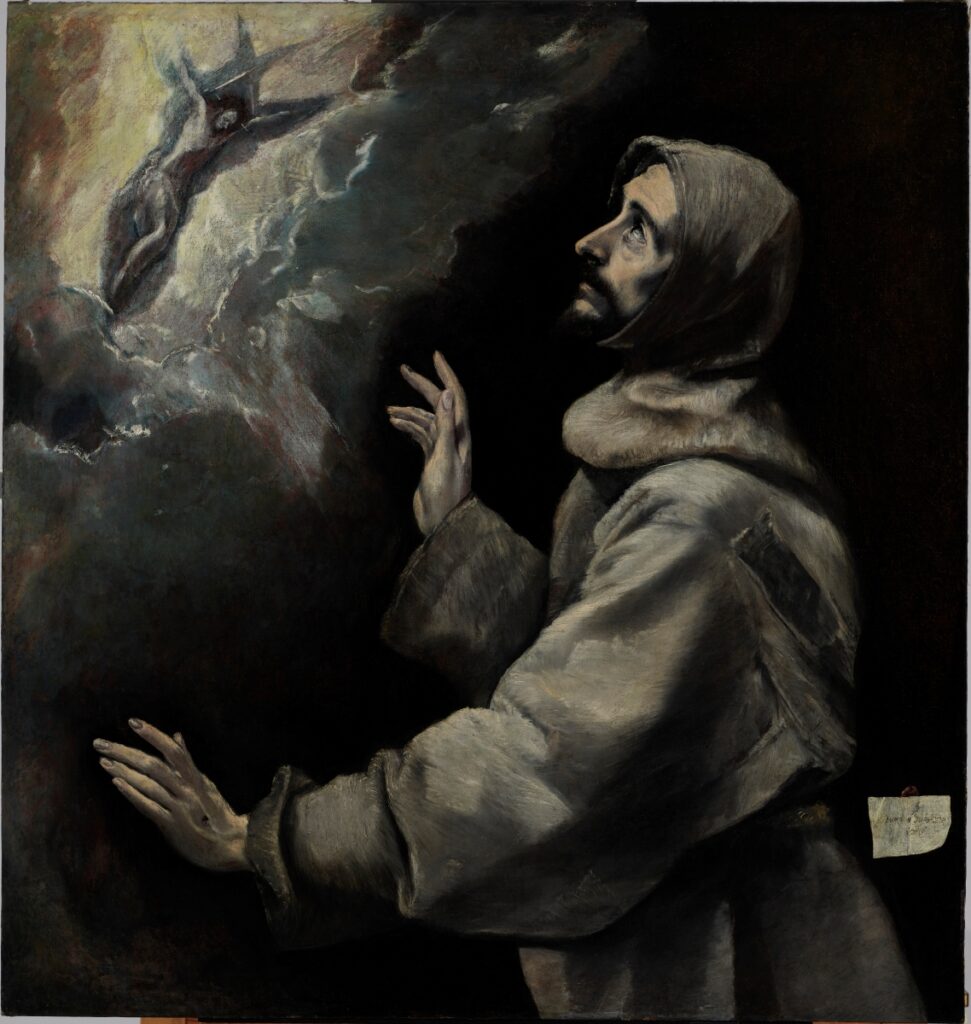
Indeed, one of the most enjoyable aspects of this show is its inclusion of two very different renderings of the Stigmatization—the moment in which the hands and feet of Francis were marked with the wounds of the Crucifixion. In an oil painting by the famous El Greco (who may have been a lay Franciscan), Francis’s eyes seem to water with emotion as he peers through parting clouds at a hovering image of the crucified Christ. The suspended vision is rendered in a wispy, tremulous way that hints at El Greco’s own delicate reverence for the subject.
Meanwhile, a few feet to the right, a small manuscript likely produced in Taranto in the mid-1400s offers a very different interpretation of the same scene. Here, Francis throws his arms wide in a gesture of pious receptivity as he looks across a field of tooled gold toward the dead Christ, whose own outstretched arms are framed by the wings of a seraph. The uppermost wings spill beyond the painting’s border, suggesting the supernatural aspect of the vision. Although it’s just four inches tall, this page resounds with the joyful power of a major chord played on an organ.
There are other highlights, as well. A remarkable fourteenth-century glass diptych (or two-winged panel) stands out for its intricate detailing and its dense compression of Catholic history. A reliquary, it purports to contain fragments of objects connected to numerous saints and holy figures, including pieces of the tunics of Francis and Clare. Paintings of the two saints, on glass, supplement these relics; it’s an object that moves easily between representation and purported historical material.
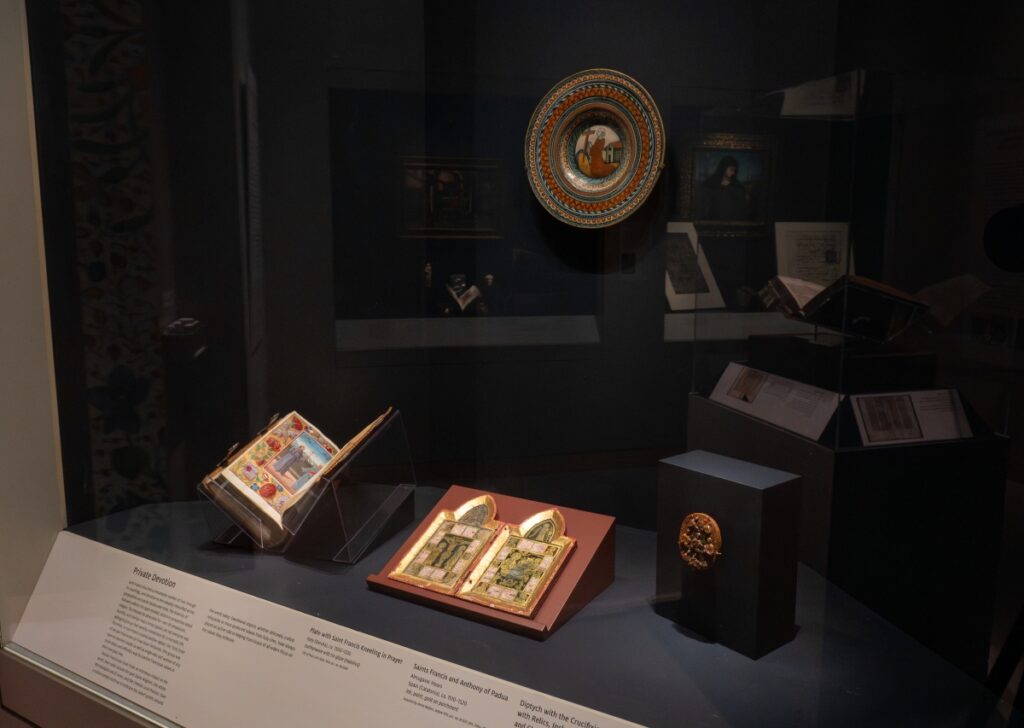
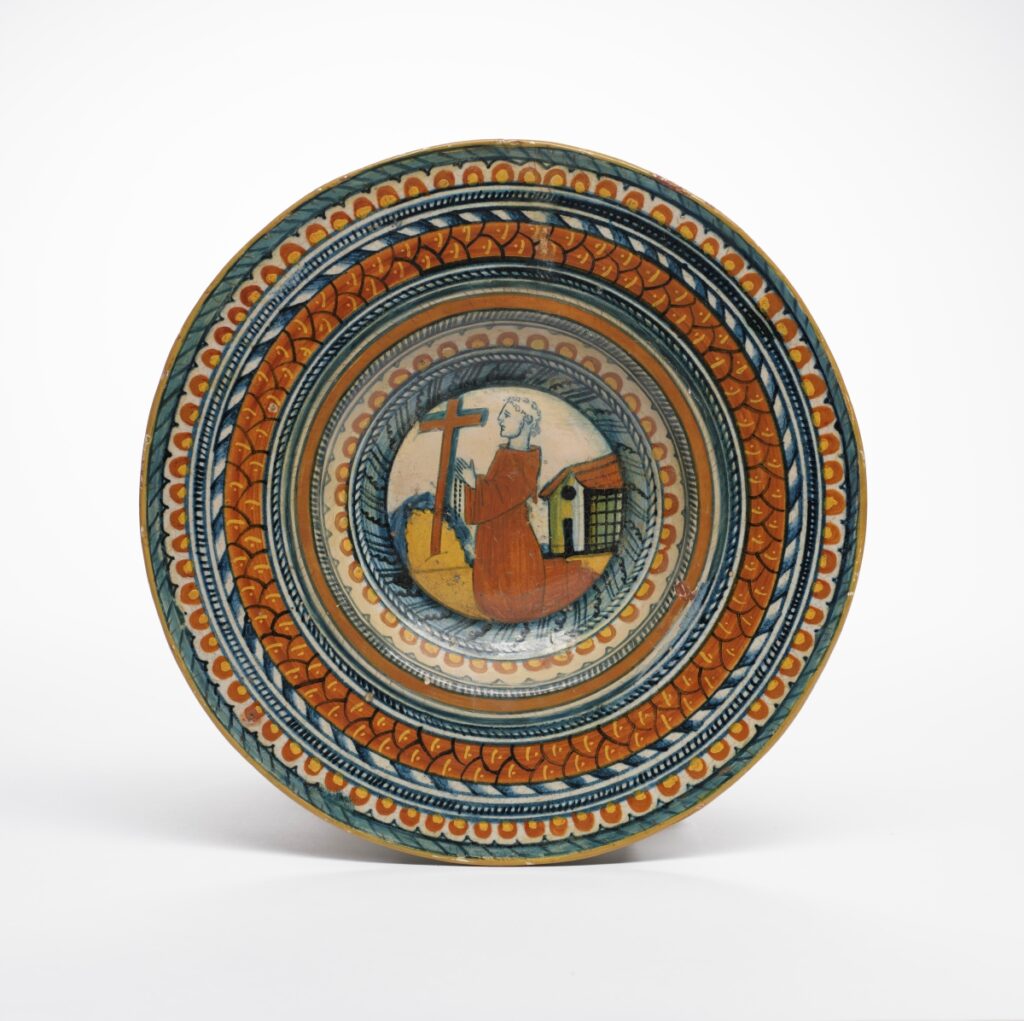
The show thus allows us, and even encourages us, to think about the materials from a range of perspectives. A digital display and a lengthy wall text describe the conservation effort, reminding us that the St. Francis Missal is a physical object that suffered real damage as a result of its popularity across the course of centuries. Also interesting, in this regard, is the recurring centrality of the cross and of represented architectural forms in many of the objects on display. Religious faith, I suppose, is often immaterial and even nebulous; these solid, concrete motifs presumably aided in structuring and supporting the abstract work of prayer.
In the process, too, this show gently proposes a particular sense of Francis. He was, we read in the accompanying texts, notably inclusive, aiding the poor and befriending female followers. He was also arguably anti-capitalist, rejecting the family business and relying on the generosity of others. And in 1979 the pope declared him the patron saint of ecology. It would be unfair and anachronistic to label Francis a woke medieval visionary—but he does seem to have embodied a number of values now often termed progressive.
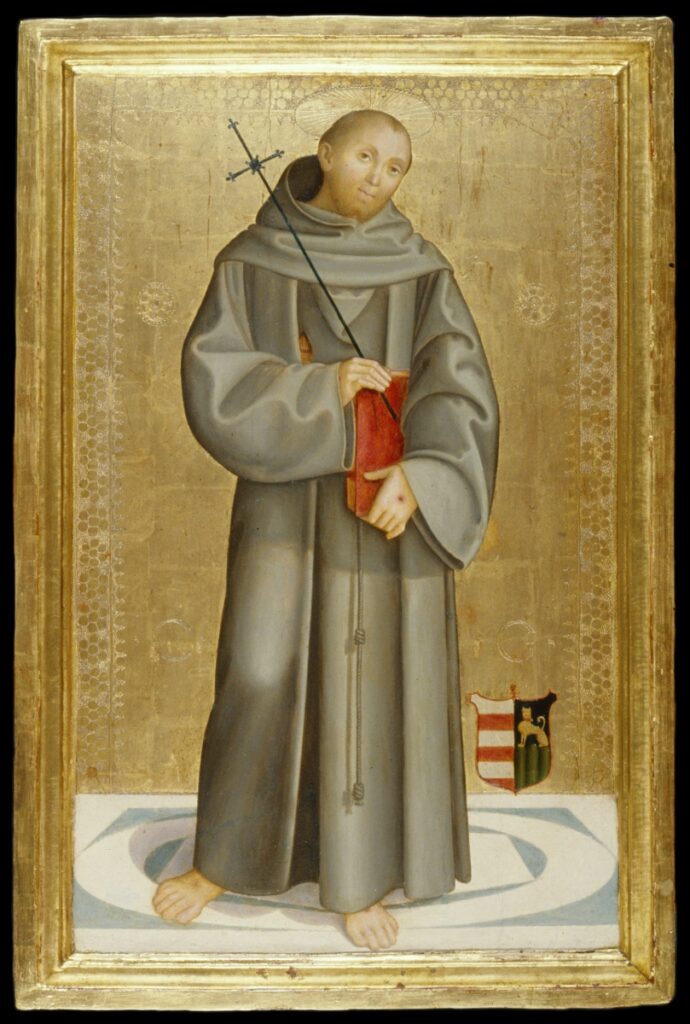
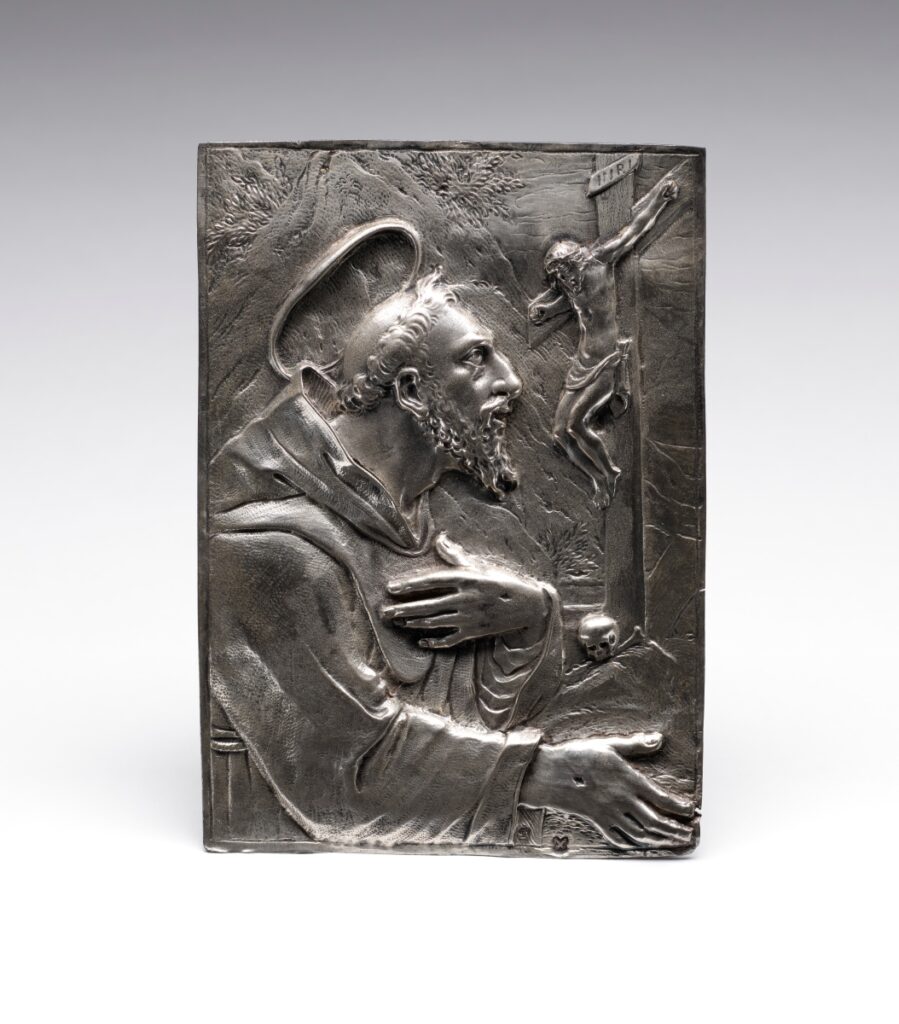
Meaningfully, too, two other themes apparent in this exhibition also resonate in our current moment. As you make your way from object to object, you’ll notice a frequent emphasis on rapt concentration. In a seventeenth-century plaque by the German silversmith Jeremiah Nathan, Francis stares intently at a crucifix; his wide eyes only centimeters from the features of his executed savior. And in a touching manuscript painting, a small huddle of Franciscan nuns maintain a focused state of prayer even as foreign soldiers attempt to scale the walls of their monastery. As we try to navigate an attention economy in which we are surrounded by distracting devices, such works offer an affecting reminder of the potency of focus.
And they can also remind us, in the process, of the value of community. The nuns pray as a group; clustered together, they are indomitable. Phones absorb us, earbuds insulate us, social capital has eroded, and reports of an epidemic of loneliness are now common. But some of the objects in this show suggest a possible remedy. Anthony enters a monastic order as a crowd looks on; Francis stands beside Clare; a nun is accepted by the residents of a convent. Sure, the forms of community on display here are historically specific, but they evoke the general importance of togetherness—and thus constitute an antidote in our fragmented era.
Frequent visitors to the Walters who are blessed with good memories, then, may remember the earlier iteration of this show. But so much has changed since early 2020. We’ve lived through a global pandemic, we’ve socially distanced, we’ve arguably slid further towards fascism, and we’ve witnessed the rise of A.I. and the construction of dozens of data centers. In this new and unstable moment, a show devoted largely to meditation, to care, and to the idea that touch still matters is a welcome one.
Divine Inspiration: The Legacy of the St. Francis Missal is on view at the Walters Art Museum through February 7, 2027.