Ed Berlin, riding in the passenger seat of my hatchback, waves his hand at a building near Baltimore’s Inner Harbor, signaling that I’m meant to notice the glass-and-steel edifice and dismiss it at the same time.
“We,” he says, meaning Baltimore, “have the capability of being an important metropolitan city of the 21st-century in America without becoming generic. Like, you can’t really tell, in this building, if you’re in Pittsburgh or in Portland or here.”
Generic aggravates Berlin, especially when he finds it in Baltimore. The city and its people, he believes, need always to cultivate their one-of-a-kind “Baltimore-ness.”
“We’d rather be a large Baltimore than a small New York,” he says. In my car (sadly, a generic Subaru), Berlin gestures behind us toward the art deco tower at 10 Light Street, which has invigorated the city’s skyline since it was opened as the Baltimore Trust Company Building in 1929. That building, he says, recognizable by its green and gold cap, projects Baltimore’s special something.
“Special what, exactly?” I ask.
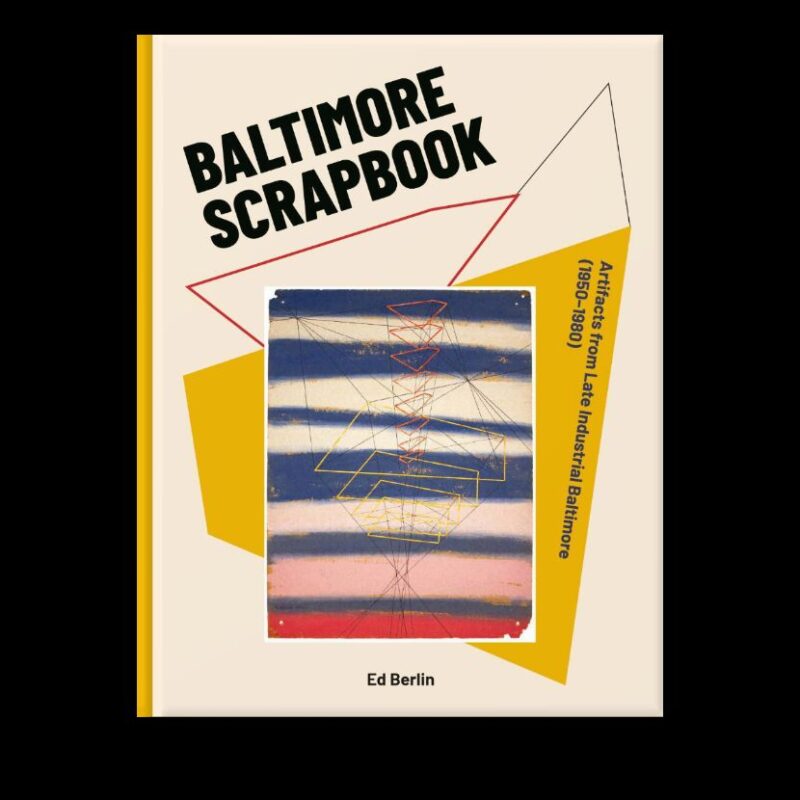
That’s hard to describe, even for Berlin, 77, a Charm City native and longtime resident who for eight years owned one of the city’s most visible and popular bookstores. Yet it’s possible that Berlin has captured the essence of that special something with his newest project: Baltimore Scrapbook: Artifacts from Late Industrial Baltimore (1950-1980).
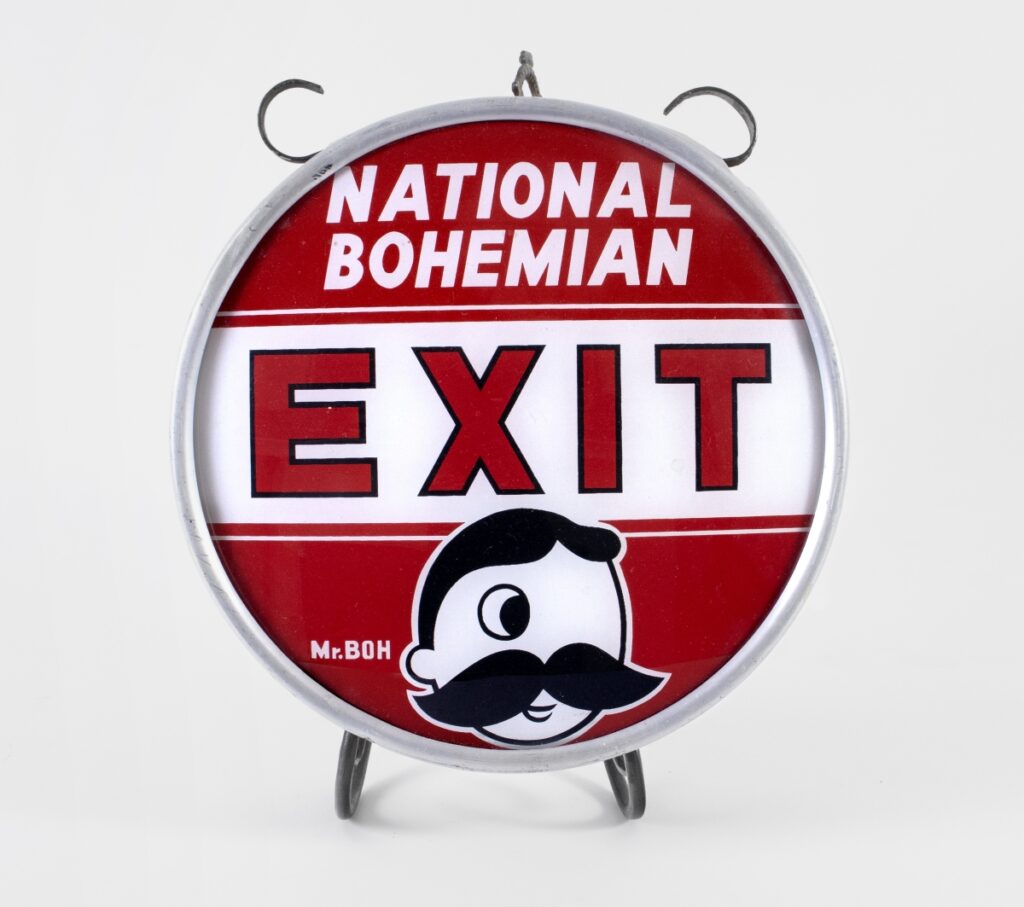
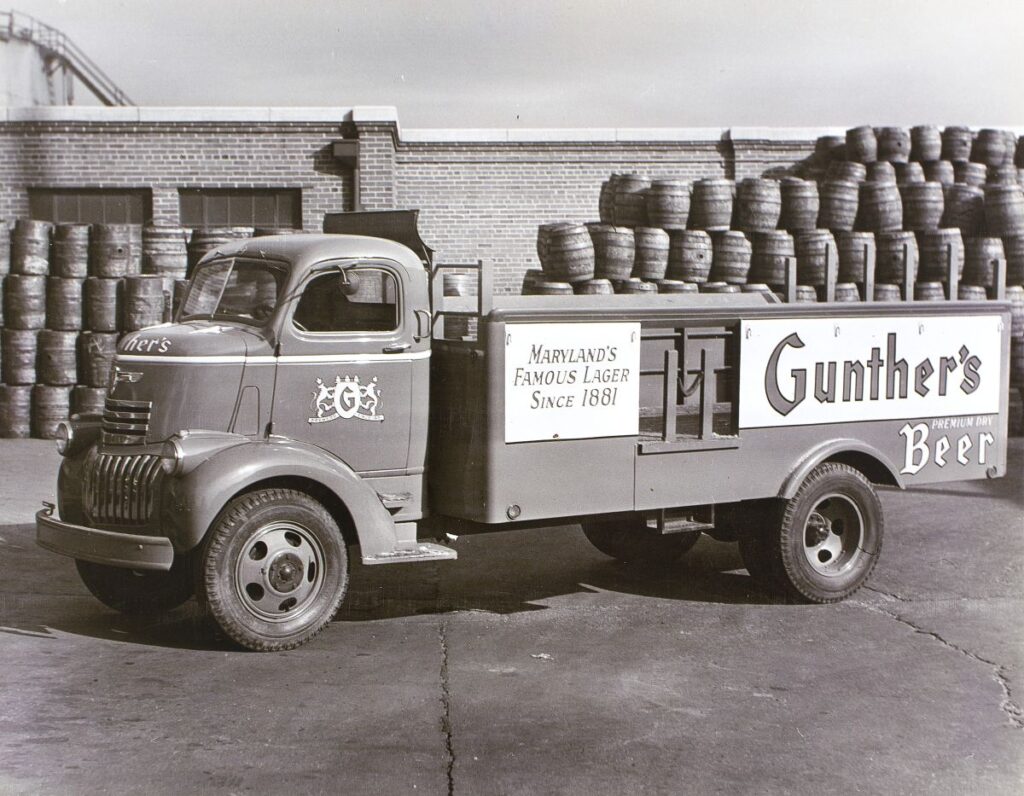
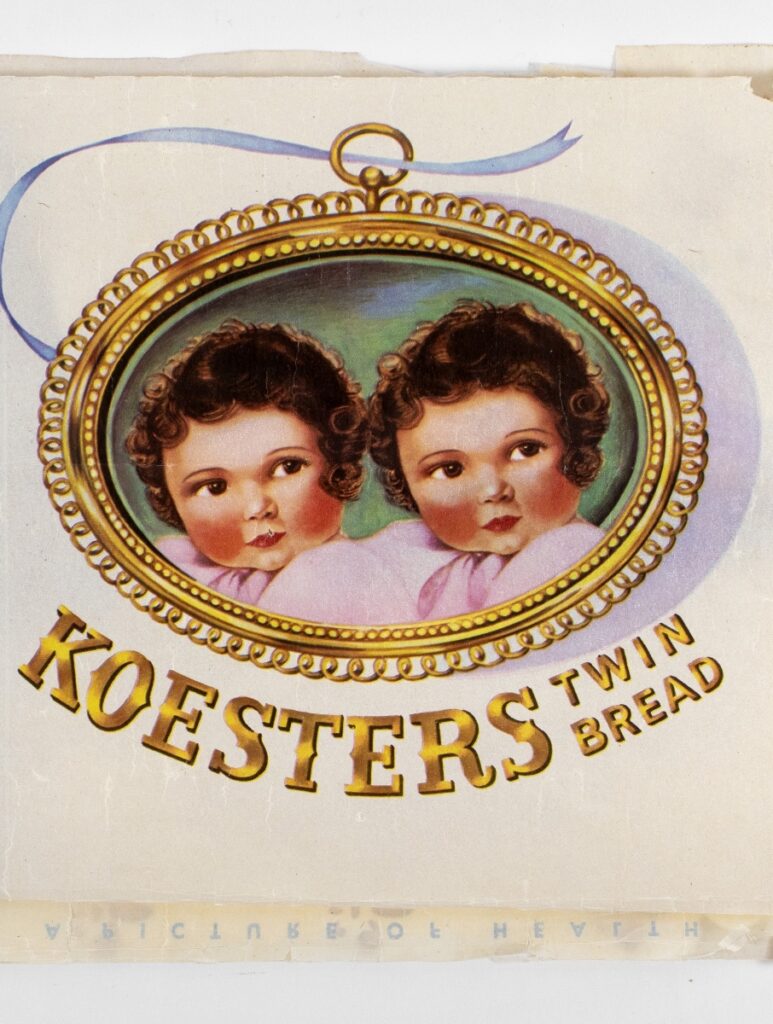
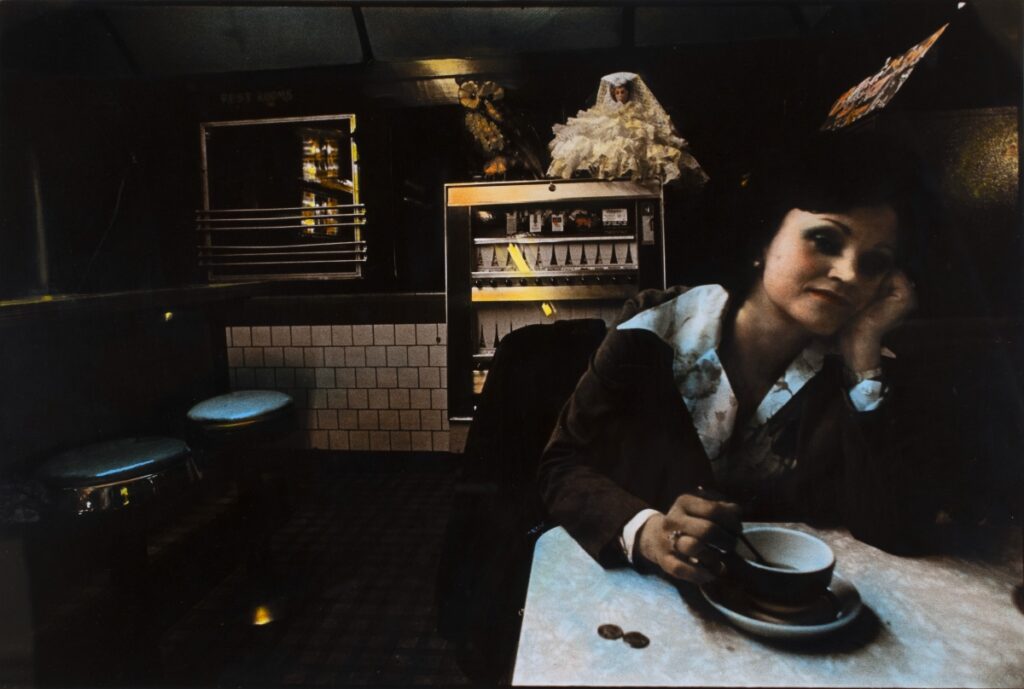
Berlin calls his Scrapbook, which arrived in select shops in September, “a kind of three-dimensional collage.” Over its 154 pages people will find dozens of artifacts—photographs, maps, paintings, advertisements, steel workers’ employee badges, and even a QR code that when scanned leads to a video of Baltimore poet Kondwani Fidel reading his verse.
“It’s a love letter to Baltimore,” says Emma Snyder, who bought the Ivy Bookshop from Berlin and his wife, Ann, and has built on their success. Understanding, Snyder tells me, is love, and “this is Ed Berlin’s understanding of his city.”
The artifacts—collected by Berlin over decades—chronicle more than thirty years, though he is quick to say that the book offers a limited and subjective vision: “I don’t have the bona fides to say, ‘This is a history of Baltimore during 1950 to 1980.’ It is surely not.”
But the book, if limited, is also expansive. Its subjects include everything from bread makers to baseball to music to storefront fortune tellers. Each artifact is visually compelling (“stuff I thought had curb appeal”), evidence of Berlin’s combined interests in work and art, what Snyder calls his “visual industrial aesthetic.” The Scrapbook manifests Berlin’s observation that something about Baltimore encourages originality and invention—whether that be the manufacture of linotype machines that revolutionized 20th-century publishing or today’s outdoor muralists. “What I want to tell people,” Berlin says, “is this is a special place, and not just because we tell ourselves that—but because we have the DNA.”
As if to prove his point, that day we continued our drive along the Key Highway, passing the American Visionary Art Museum (“I don’t think you find that anywhere else,” Berlin says) and on toward the Baltimore Museum of Industry, which showcases manufacturing businesses born in Charm City. (The museum also happens to be one of three places where Baltimore Scrapbook can be found for sale, along with the Ivy Bookshop and the offices of BmoreArt). On the way Berlin recalled a time from his youth, sounding nostalgic but in fact revealing something about him and his Scrapbook.
His father, Louis, took him to what is now the Inner Harbor. There, the Berlins bought hot roasted nuts from a shop called Barcelona Nuts (the company still exists, manufacturing its snacks on Fulton Street near Wilkens Avenue). “Right out of the roaster,” Berlin remembers. “Mmmm.”
Yet, more memorable to Berlin was what his father told him, that those nuts had probably come into Baltimore’s harbor that week—maybe even that day. Father and son then visited the piers where they watched men load and unload ships laden with all sorts of products. For the younger Berlin, the scene explained his hometown in a way he’d never forget: In Baltimore, people make things.
Ed BerlinWhat I want to tell people is this is a special place, and not just because we tell ourselves that—but because we have the DNA.
Thus began his lifelong interest in industrial work—from machines that spewed airplane parts to the diners where workers ate locally made Esskay hot dogs after their shifts. “Baltimore was about executing production,” he says of the era depicted in his Scrapbook. Lately, he says, Baltimore has become less about mass production and more about creating on a smaller, more inventive scale. But one thing remains consistent. “Baltimore makes things,” he says.
The evidence of that comes off the page in Baltimore Scrapbook.
Flip through and you’ll find a photograph of three women employees of Bethlehem Steel, their face shields lifted as they take a break from work. You’ll find men in silhouette atop the girders of what is likely the Franklin Street parking garage. Across two pages, a wildly imaginative embroidery celebrates Baltimore tool maker Black & Decker by depicting a cornucopia horn coming from the sky like an angel’s trumpet, out of which falls from its mouth a variety of portable power tools (saws, sanders, drills) descending toward smoke-spewing factory chimneys. The tools look to be those the company might have produced from the 1930s through the 1950s. Berlin doesn’t know the name of the artist, but he supposes it was a gift for a Black & Decker executive.
There’s nothing generic about that.
That image is Snyder’s favorite in the book. It’s also the favorite of Anita Kassof, executive director of the Baltimore Museum of Industry. She called the embroidery “bizarrely wonderful.” It might be that it’s also the image most representative of Berlin’s throughline in the Scrapbook in that it illustrates a relationship in which art is made out of a culture of manufacturing. Kassof said she loves that idea found in the Scrapbook of “a city that was defined by manufacturing moving to one in which creatives and artists can be important drivers in the city’s transition.”
When Ed and I park and go into the BMI, we first encounter contemporary art, exactly the sort of work Berlin values. He points out a sculpture by Chris Bathgate, who uses the tools and talent of a machinist to create his work. Then we pause in front of a large panel, one of eleven created by Roberto Márquez as a mural in memory of the workers killed when the Key Bridge collapsed on March 26, 2024. Then we study portraits of Baltimore laborers, past and present, from offices to farms to factories.
Kassof sees in Berlin’s Scrapbook a kind of storytelling that is similar to that people find in the Museum of Industry. “It’s kind of a clear-eyed affection,” she says. “He’s realistic about the city’s challenges without letting them define it. That’s not dissimilar from how we tell the story here. We embrace Baltimore and tell the story of the city with all its grit and quirkiness.”
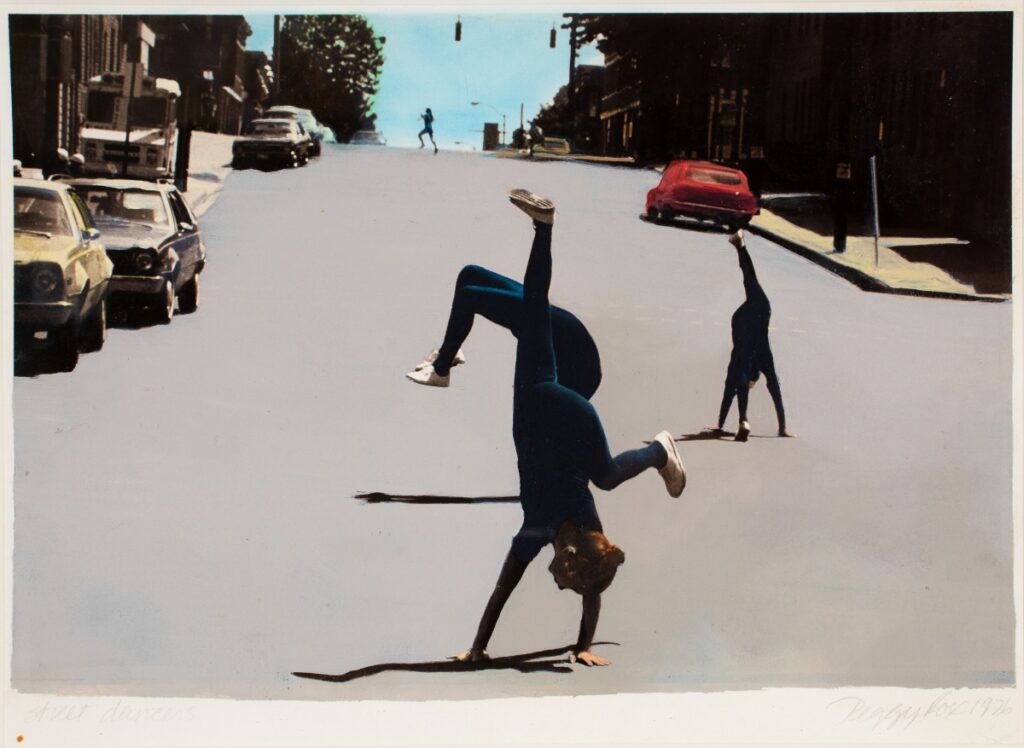
Like the BMI, Berlin’s Scrapbook includes photographs that document Baltimore’s working life, including by the Baltimore Sun’s Aubrey Bodine, the Afro-American’s I. Henry Phillips, and freelance photo artist Peggy Fox. Her “Somersault Girls,” chosen for the back cover, shows three girls in black leotards and white sneakers turning handstands or backbends on a vast city street, all with hands planted on the asphalt. The lines of their bodies and their shadows create angles and movement—energy and joy and artistry that is uniquely Baltimore. It’s a vision you might be as likely to see now as when Fox made the image sometime in the 1970s.
Ed BerlinArt in Baltimore is not captive to the elite… It’s on the walls of buildings, in galleries and bookstores, in cafes and restaurants. It’s embedded in people’s lives and imaginations.
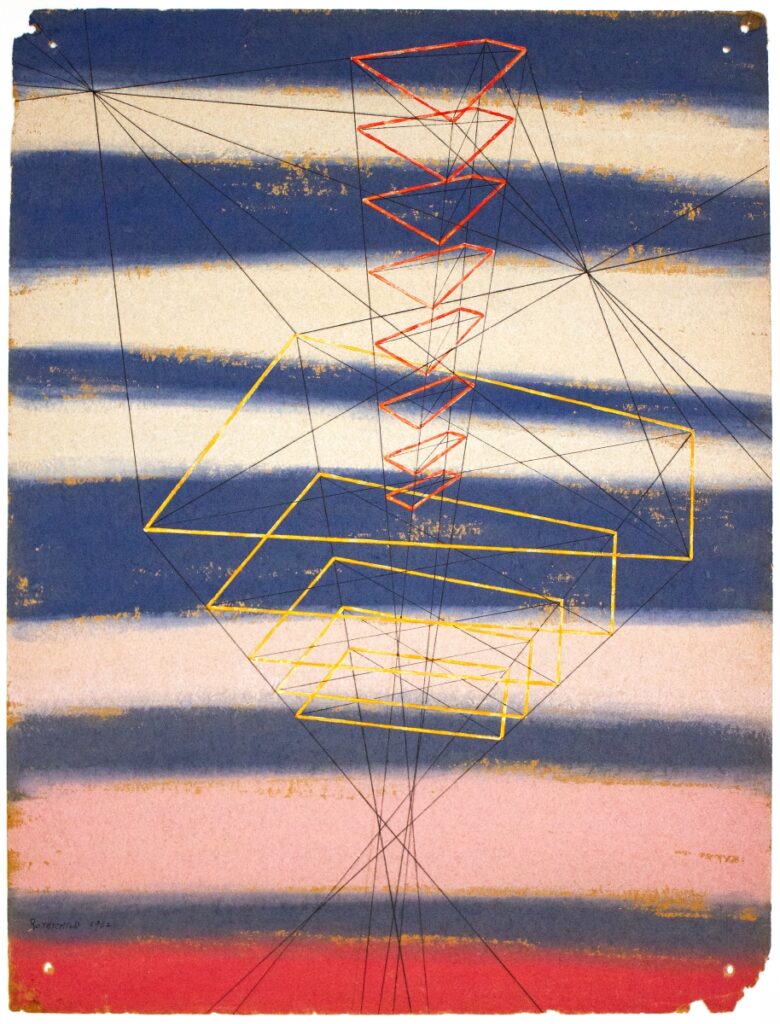
The angles of those somersault girls in turn echo the angles of the book’s cover art: “Last Fling” by Baltimorean Amalie Rothschild, a 1952 pastel, ink, and watercolor painting with geometrics that suggest antenna and powerlines crisscrossing a city sky.
“Art in Baltimore,” Berlin writes in his Scrapbook, “is not captive to the elite… It’s on the walls of buildings, in galleries and bookstores, in cafes and restaurants. It’s embedded in people’s lives and imaginations.”
It is also, above all, not generic.
In fact, it may be that Baltimore’s special something is a reaction against the pervasive encroachment of generic exemplars such as Starbucks or First Watch or Barnes and Noble. When he and Ann owned the Ivy Bookshop, they succeeded because they turned the Ivy into a regional destination: a Baltimore brand. They made the place unique, worth a drive for the experience of perusing the Ivy’s shelves or listening to authors read and chat about their books.
“Our characteristic unconventionality,” Berlin writes in the Scrapbook, “may in fact be a defensive response to a pervasive trend to conform, to prefer a national brand than a local favorite. In effect, shed local customs in favor of what everyone else is doing.”
“That is not our way. That is not how a city produces Eubie Blake, Philip Glass, and Tupak Shakur.”
While the first two on that list were born in Baltimore, Shakur only lived here for about four years, but that doesn’t matter in Berlin’s vision. Baltimoreans are people who were born here and people who choose to live here and people who pass through but improve the city or are improved by it. If a person identifies with Baltimore and contributes to the city, that’s enough. Everyone in his Scrapbook is by his definition a Baltimorean. “Let’s not make the fraternity so special no one can join,” he says.
In fact, better if everyone can join. “Baltimore’s successes have always been driven by a blending of native and newly arrived talent,” Berlin writes in the Scrapbook. “Progress starts with people.”
Ed Berlin will be in conversation with Baltimore writer D. Watkins about Baltimore Scrapbook at the Ivy Bookshop, Oct. 4, at 4 p.m.