Many of us are familiar with certain stock images of Baltimore that periodically resurface in the national media: strips of crime scene tape as backdrop in sensationalizing reports on Fox News, serene drone shots of the Inner Harbor on Sunday Night Football, B-roll shots of empty rowhouses in news magazine reports on urban decay. But what changes when local photographers turn their lenses on their own city? Or, put differently: is there a history of representing Baltimore on film that transcends such flattening caricatures?
Flashback: Two Centuries of Baltimore Photography, on view at the Baltimore Museum of Art through February 21st, 2027, offers a boisterous, buoyant answer to both questions. Curated by Leslie Cozzi and Antoinette Roberts, it’s a large, ambitious exhibition that features more than 200 objects drawn from the collections of numerous institutions, including the Met and the Smithsonian. It’s also a pioneering show—the first major museum exhibition devoted solely to Baltimore photography. And through an admixture of very old and very recent images, it makes a convincing case that Baltimore has always played an active role in shaping the history of a vital medium.
Above all, though, this show is a sustained love letter to Charm City. In the accompanying catalog, the curators note that they sought to include images that avoid negative stereotypes and that instead make room for “the celebratory, the tender, and the beautiful.” At the press preview, BMA director Asma Naeem echoed that sentiment, referring to the exhibition as “our beautiful, exciting, ‘I love Baltimore’ show.” Such wordings may imply an almost boosterish tone, but don’t be fooled. Intelligently curated, beautifully installed, visually diverse, and conceptually complex, this exhibition manages to satisfy on many levels.
Kerr HoustonThis show is a sustained love letter to Charm City.
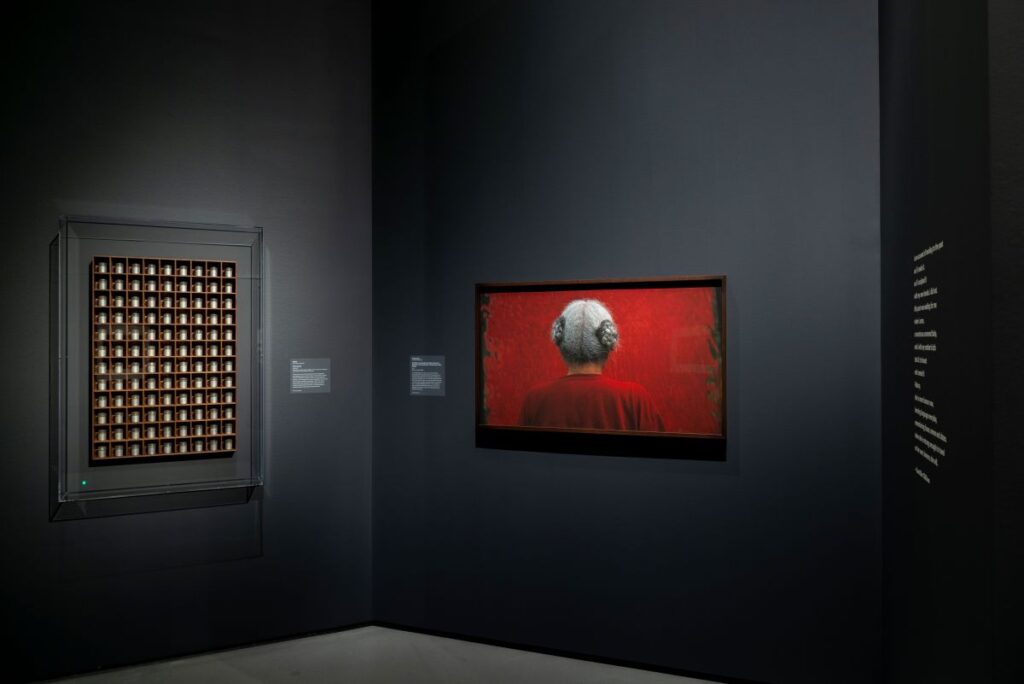
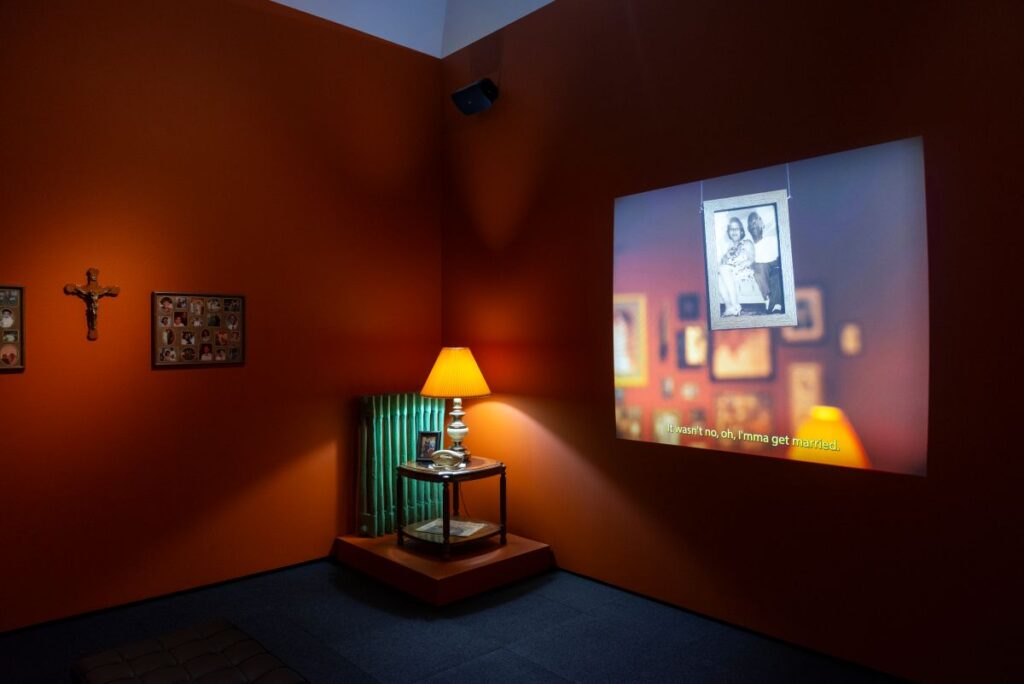
The first room quickly sets several themes into motion. Essentially a small antechamber, it’s typical of the show’s creative floorplan, in which a series of irregular galleries creates an intriguing rhythm while loosely dividing a number of overarching themes. Here, two recent photos by Kei Ito and Phylicia Ghee offer sophisticated meditations on family history—and open onto more general ruminations on the relationship between past and present, and on photography’s longstanding ability to trouble the line between documentation and fine art.
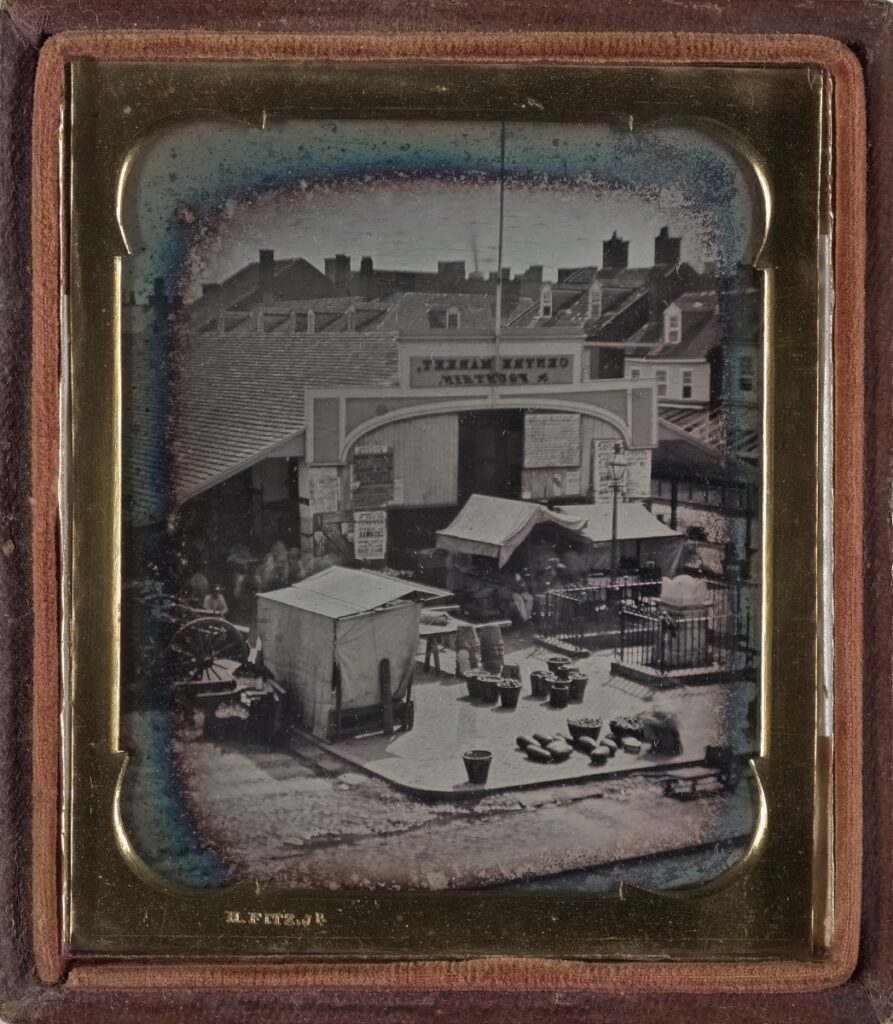
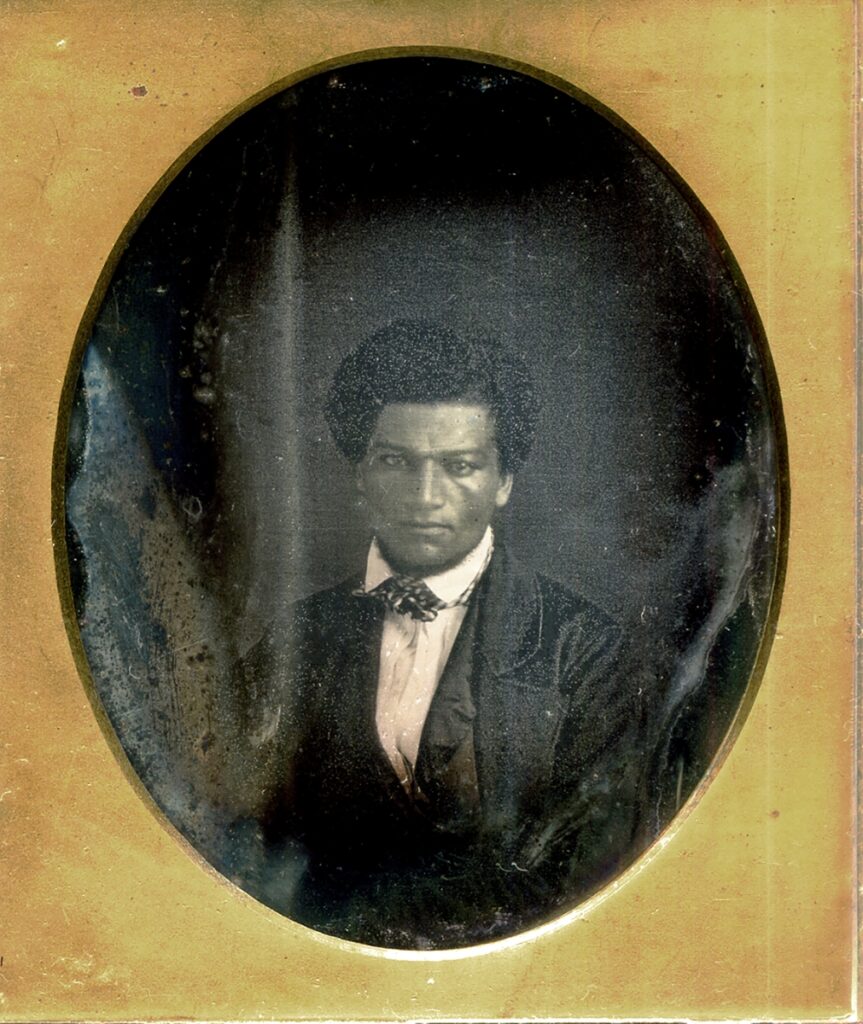
Just beyond, a large gallery features dozens of pictures that allude to the history and physical form of the city while also documenting the evolution of photography across two centuries. A small 1844 daguerreotype by Henry Fitz, Jr. grants a view of Centre Street Market; although it’s the earliest known photograph of Baltimore, it already shows its maker experimenting with point of view, depth focus, and contrast. Nearby, an early portrait of Frederick Douglass hints at his prescient alertness to the promotional potential of the new medium. And a fun interactive display involving a sampling of reproductions of stereoscope cards permits you to try out the once-revolutionary technology and to immerse yourself in compelling illusions of three-dimensionality.
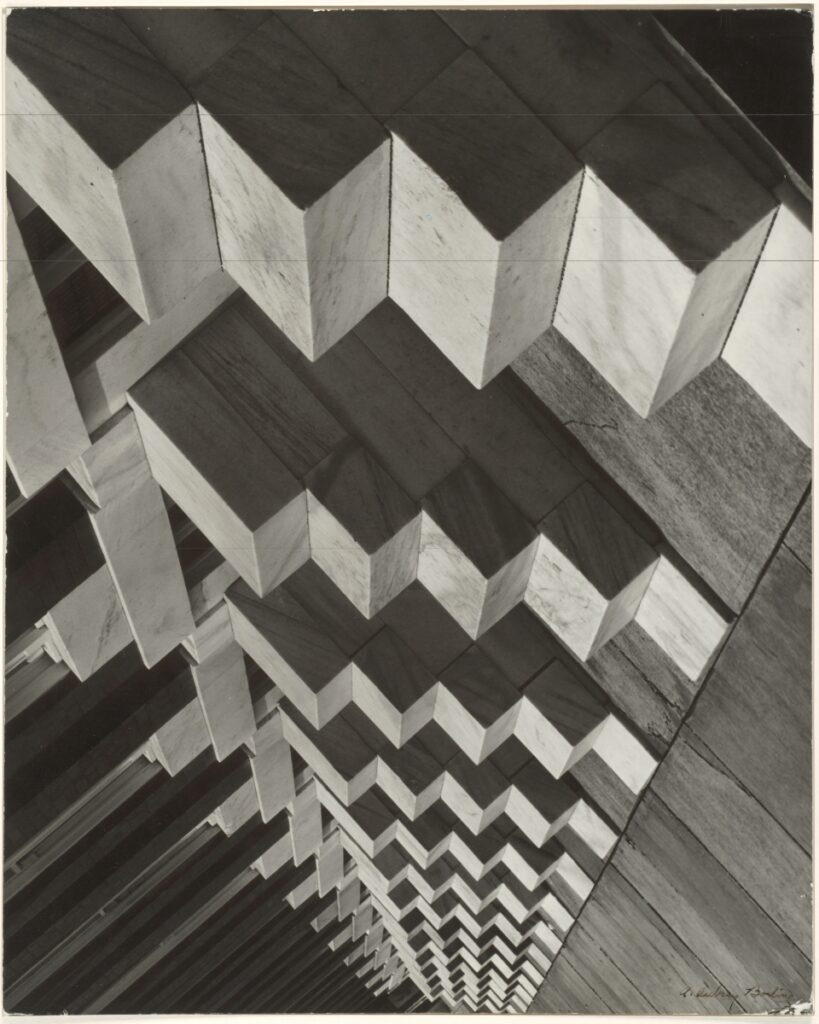
Across the room, a powerful line of photographs offers a sampling of modernist renderings of the city. Clean lines and bold forms predominate, and familiar urban details dissolve into abstract patterns. In a mind-bending photograph taken in around 1945 by A. Aubrey Bodine, a tidy row of marble stoop steps is rotated so that it recalls some of M.C. Escher’s paradoxical patterns.
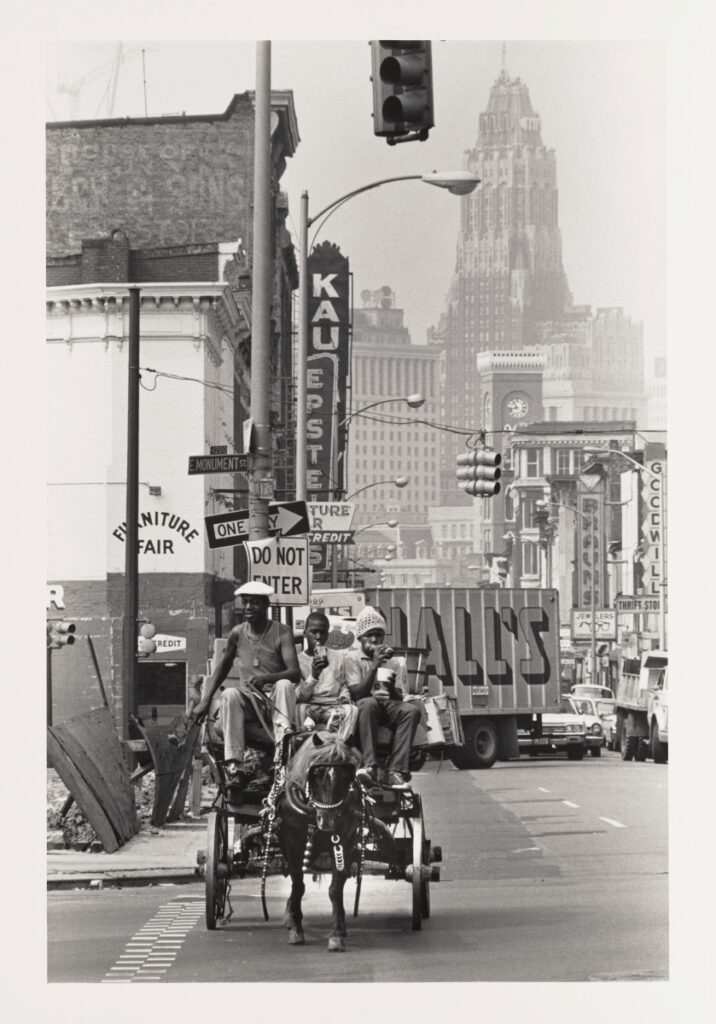
Also worth a close look is Ronald Freeman’s remarkable Arabbing, South Baltimore, taken in 1970. Three merchants ride a horse-drawn wagon against a dazzlingly complex urban backdrop in which canted signs, competing fonts, a large clock and multiple stoplights all clamor for attention. It feels like an unwieldy surfeit of information, until we notice that the composition is organized using the rule of thirds, subdividing the mayhem and imposing a subtle artistic order upon the unruly city.
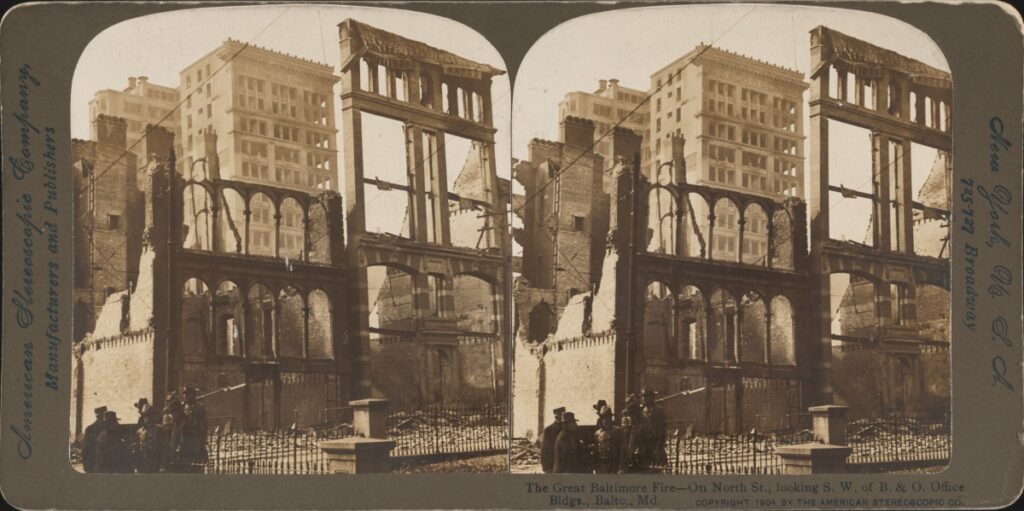
Two historic photographs of Baltimore taken before and after the Great Fire of 1904 line a corridor, evincing the shifting dynamic facets of the city. Keep moving, and you arrive at a gallery dedicated to the theme of community. My eye was drawn to Mahtab Hussain’s powerful, ennobling color portraits of Baltimore Muslims. But you can also follow their sightlines across the gallery to Bodine’s equally dignifying 1958 photograph of Louie Yu Oy, a Chinese-American woman who operated a Hollins Market laundry while raising her five children. In their confident conflations of posture, architecture, and gazes, these are all thoughtful, elevating images.
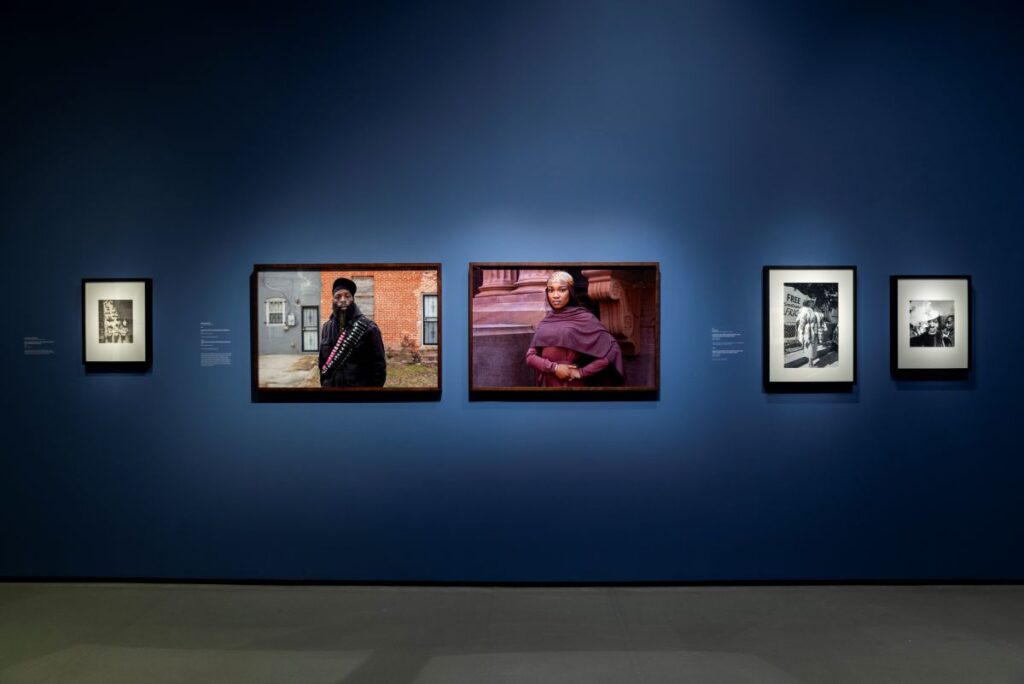
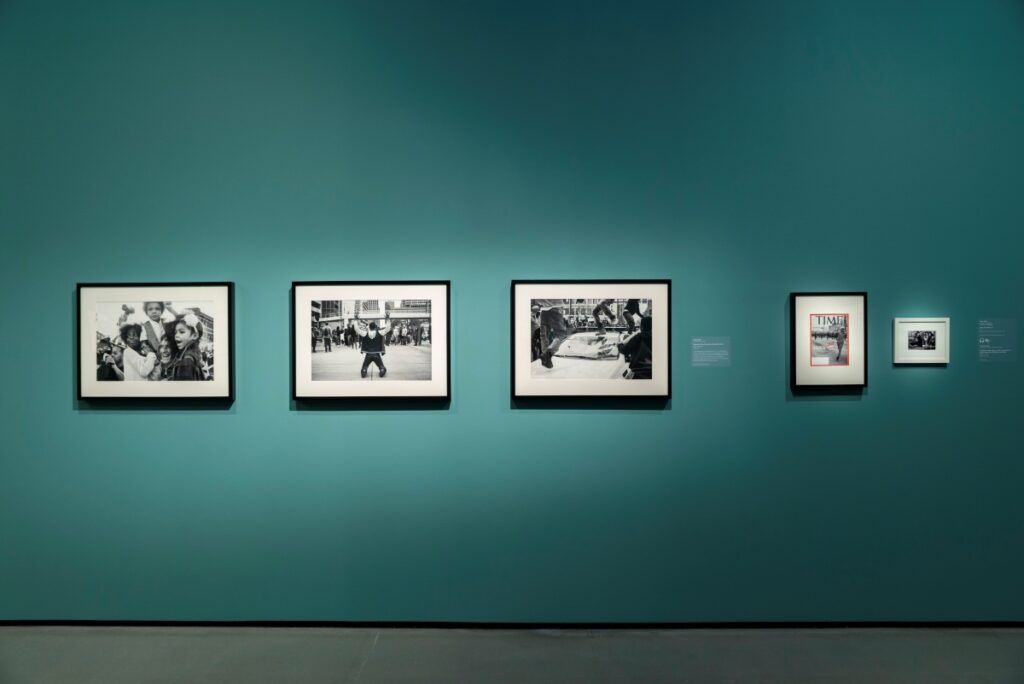
Just beyond, an ample gallery devoted to the theme of protest also aims at an uplifting tone. Two resonant objects—a color photograph of a blue light surveillance camera and an intriguing file of mugshots of shoplifters—hint at the lengthy (and contested) place of photography as a tool of the surveillance state. In turn, three groups of photographs of the protests that followed the 2015 murder of Freddie Gray offer distinct visions of that chaotic, volatile moment. Shawn Hubbard’s images concentrate on iconic, distilled motifs—a raised fist emerging from a car window—while a blurred color photograph by J.M. Giordano suggests a disorienting urgency and Devin Allen’s lovely figural compositions evoke the taut, potential energy that fueled the city in a combustible period.
It’s an important moment in the show, and worth considering in some detail. In giving three full walls to the Uprising, the curators assign it a unique centrality: no other single moment in the city’s history is given so much space. And while the catalog situates the images as acts of “care and self-definition,” the adjacent display of policing technologies simultaneously suggests that the 2015 protests were partly motivated by a simmering resentment of the abuse, or overuse, of photography.
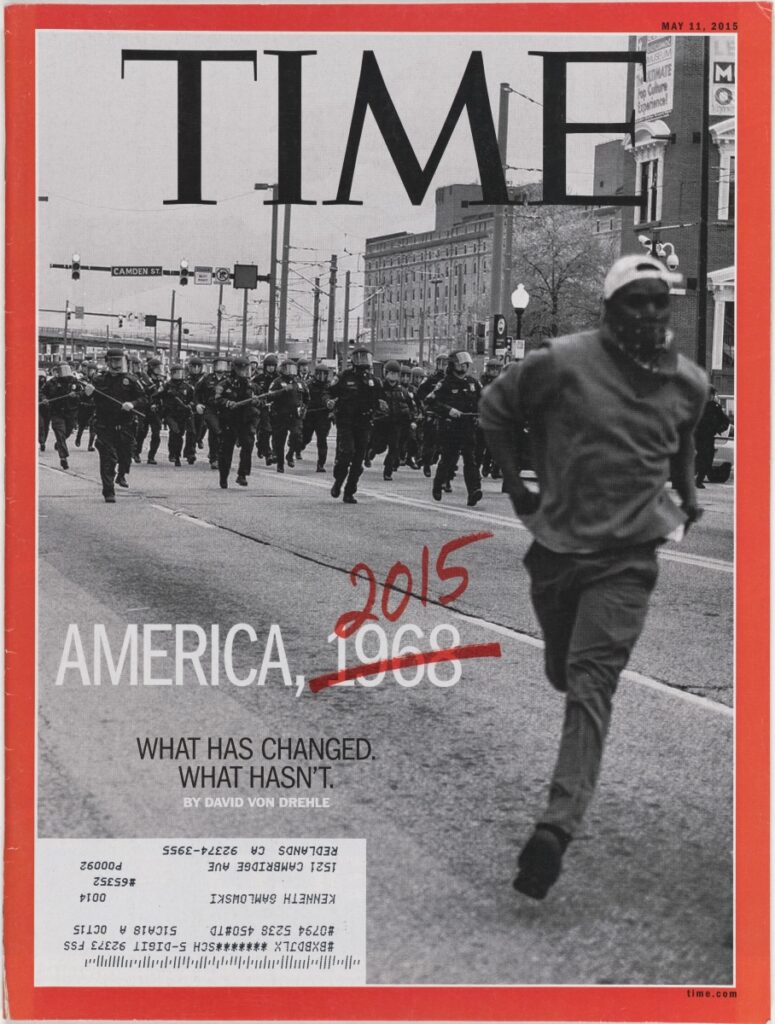
That may seem like a stretch—until you arrive at the pairing of Allen’s famous 2015 TIME Magazine cover photograph, in which a Black youth sprints ahead of a phalanx of armored officers, and a 1964 photograph of Martin Luther King, Jr., taken shortly after his nomination for a Nobel Peace Prize. Look closely, and you’ll notice a white cop staring towards MLK, and a thicket of security cameras above the running youth. The lengthy, looming history of the surveillance of the African-American body encompasses myriad forms, but its grim ubiquity is all too evident in this affecting installation.
An adjoining gallery lightens the mood. One corner is decorated like a lounge, with sofas and a bookshelf that carries several dozen books featuring the work of local photographers; a soundtrack (curated by BMA Composer in Residence Ultra Naté) includes several Baltimore bands. A yellow City Paper box that will likely kindle a warm nostalgia in many older visitors holds free copies of a newsprint flyer that explores the rich relationship between photography and Baltimore’s print media. And several photographs of athletic subjects on facing walls act as vivid reminders of the close ties between sport and film.
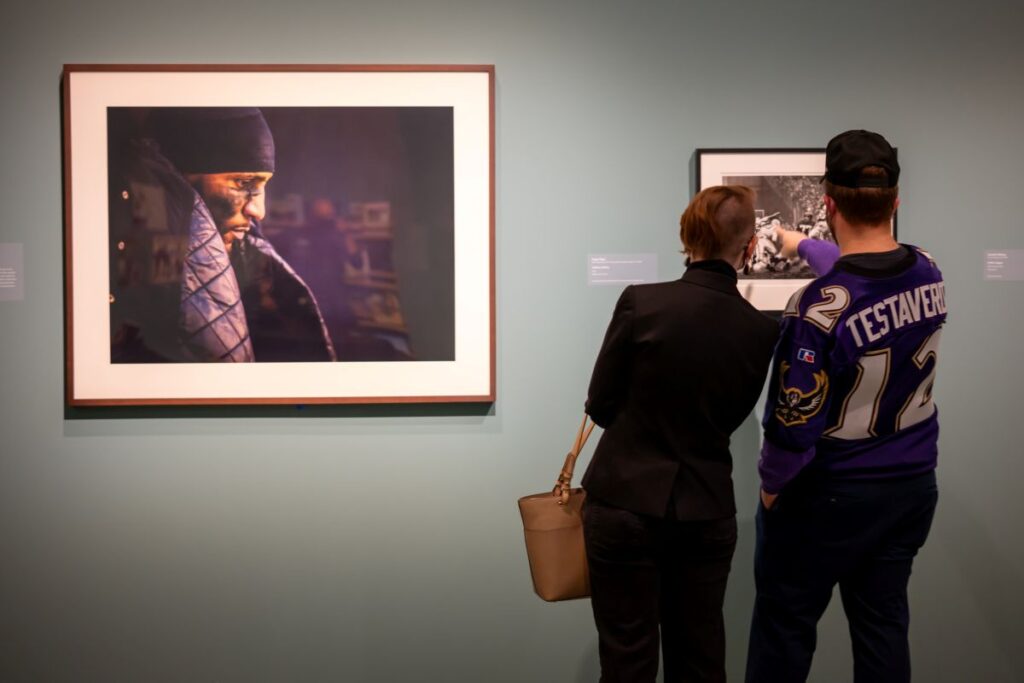
But what, you’re wondering, of Baltimore’s majestic queer scene and sexual subcultures? A further gallery, dedicated to performance, represents at least the beginning of an answer. Diane Arbus’ backstage photograph of a weary Blaze Starr, taken in 1964 and on loan from the Met, is especially compelling. Compare it to the iconic Shawn Hubbard photo of an intensely introspective Ray Lewis, and a number of intriguing similarities emerge. Although their arenas—stage; gridiron—were distinct, both performers seem to shoulder the heavy weight of their public reputations and to confront the inevitable limits of the flesh, even as they come across as eminently professional.
Or take a close look at Amos Badertscher’s raucous 1994 photograph of two aged lesbians at Rumors, a legendary Charm City bar. The two women peer confidently and provocatively at us, and one coyly flips us the bird. Campy, flirtatious, iconoclastic, and self-ironic all at once, it’s a disarming reflection of our city. And if you happen to hear a track by Turnstile playing in the next room while looking at Badertscher’s image, as I did, you may just feel as if you comprehend Baltimore in a novel way.
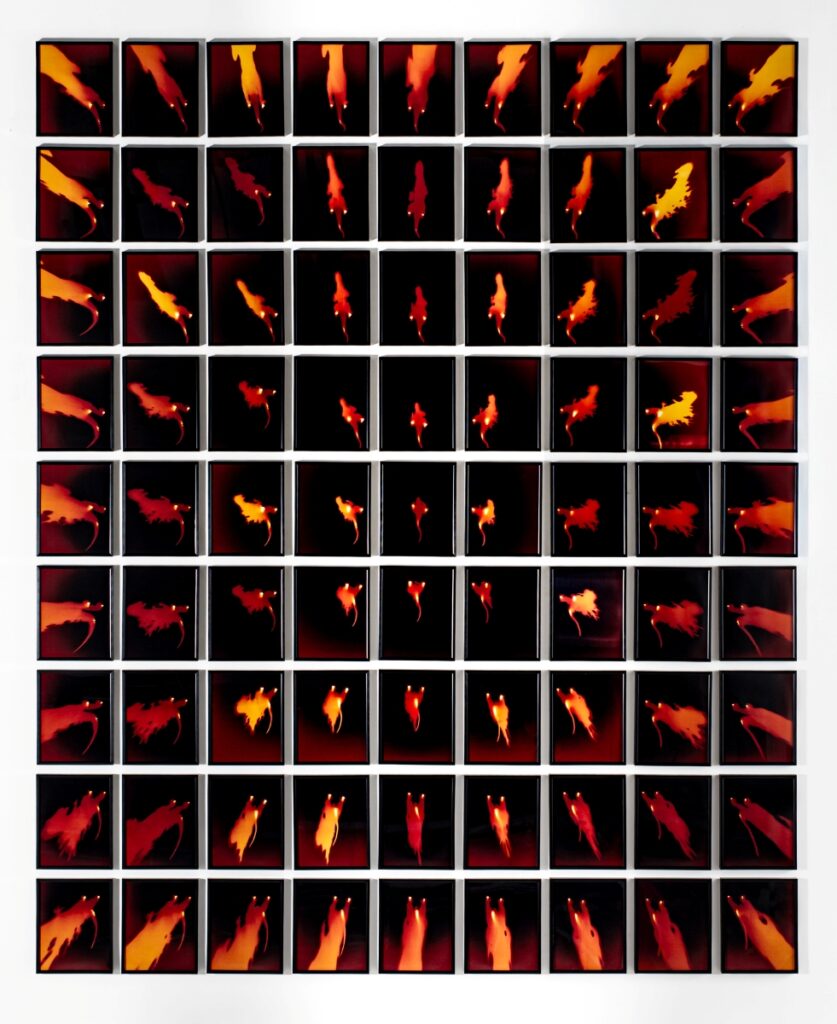
A neat juxtaposition of three photographs of hairstyles by three very different photographers testifies to the broadly expressive significance of hair culture, and leads towards a gallery dedicated to intimate photography. There, two works stood out to me. In a 2022 photo by Saskia Kahn, an interracial couple casually spoons, oozing the languorous sensuality of a Giorgione painting. And an ambitious installation by Kei Ito is built around 81 images of Godzilla on film that was exposed to sunlight for the length of the artist’s breath: a complex meditation on embodiment, art, and cultural stereotypes.
Kerr HoustonAlmost every visitor, I assume, will find an image with which they can closely relate, and many will find their sense of the city stretched or challenged.
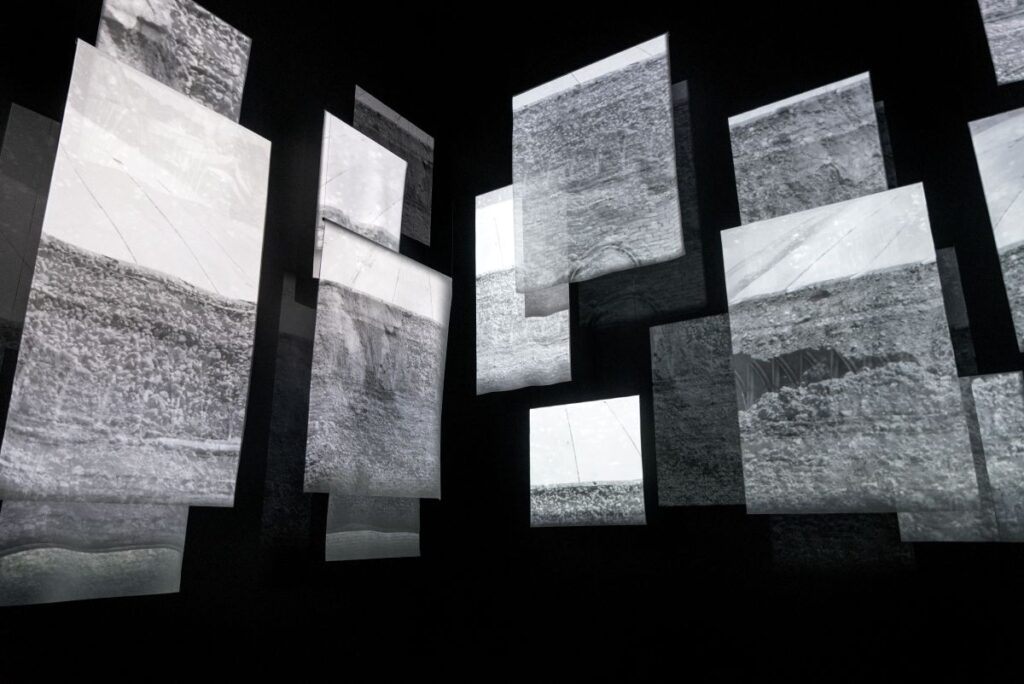
In the final room, a video screen offers a shifting roster of images by local photographers in response to a prompt question: What is your Baltimore? It’s a nice touch, as it allows the show to end on a participatory, inclusive note. And it subtly nudges us, as well, to think about how we might answer the question. The show itself constitutes, of course, the curators’ response. But here, instead of proposing a pat conclusion, they effectively throw open the doors, reminding us that our phones have made us all into potential photographers—and so into potential interpreters of our city.
Inevitably, any summary of this big, aspirational show will be merely partial, and this review is no exception. I’ve touched on some highlights, but there is much more on view. Edgar Allan Poe peers out at us, in a picture taken in the 1850s. A Canton bingo player dressed in a wild combination of patterns and flanked by a box of Marlboros calmly meets our gaze. And several recent conceptual works in the show’s last few galleries attest to a general interest in testing the theoretical and material limits and conventions of photography.
That said, you may also sense some omissions or lacunae. There are, for instance, almost no natural forms or elements in the photographs on display: it’s as if Baltimore included no parks or rivers, few animals, and a handful of trees. There are few images of school life, and there are almost no images of the suburbs: the idea of city, here, is very narrowly circumscribed. And inevitably some talented photographers simply didn’t make the cut. Personally, I missed the distressed surfaces and irregular textures of Max Araujo, and Debbra Cleveland’s expressive, surreal experiments with light and composition—but you may sense still other exclusions, in turn.
In general, though, this is a wonderful, pleasing show. Almost every visitor, I assume, will find an image with which they can closely relate, and many will find their sense of the city stretched or challenged. They may emerge, too, with a stronger sense of Baltimore’s role in the history of photography. On the show’s opening wall, the curators make the bold statement that “Baltimore’s history is photography’s history.” Happily, the show beyond that wall affirms that claim, in multiple senses.
Flashback: Two Centuries of Baltimore Photographers is on view at the Baltimore Museum of Art October 4, 2026 – February 21, 2027. Find more information and reserve your tickets here.