For more than three decades, Jane Brown has been one of the quiet engines of Baltimore’s cultural and civic life. As President & CEO of the Robert W. Deutsch Foundation, she has funded artists, independent media, and neighborhood organizations early, often before their ideas had proven themselves anywhere else.
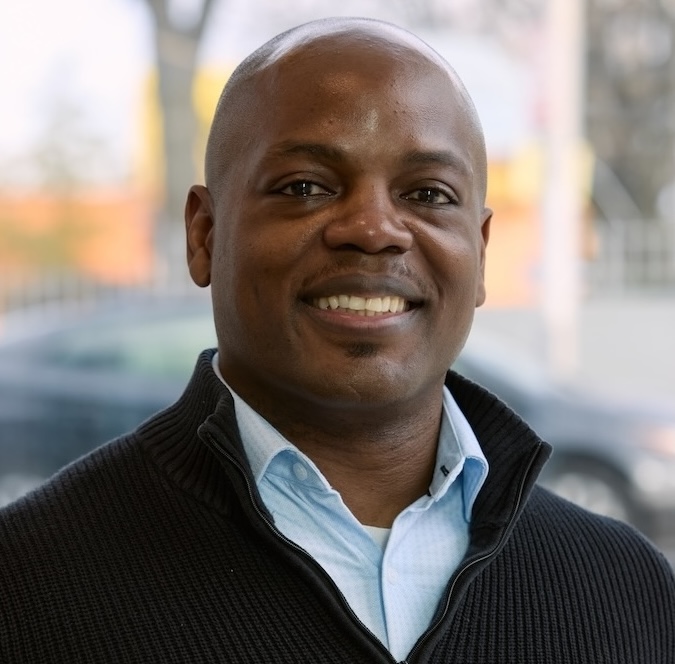
This week, the Foundation’s Board of Directors announced that George A. Hopkins, a current senior staff member, will succeed Brown as President & CEO in January 2027. Brown will become chair of the board, a move the Foundation describes as making way for a new generation of leadership. Hopkins was selected from 119 applicants in a search that launched in June and was managed by Pluck Consulting.
“I am humbled and appreciative of this opportunity to honor the Foundation’s legacy, while leading its long-term investments in the city and culture of Baltimore into the future,” Hopkins said.
I should say plainly that BmoreArt cannot report this story from a distance. The Deutsch Foundation has been an incredible partner and our cornerstone funder for the past decade. Its sustained support is a large part of why this publication exists, why it pays writers and artists, and why it has survived when so many independent arts outlets have not. Read what follows as both news and a note of gratitude.
Hopkins is a native of Baltimore’s Cherry Hill neighborhood and a graduate of Morgan State University, with eighteen years of experience as a community leader, organizer, and pastor. In 2014, he founded Sowebo Community Church in southwest Baltimore, aiming to build a multicultural congregation in an urban setting.
The murder of Freddie Gray the following year pushed him toward systemic reform. In 2016, he began volunteering with Baltimoreans United in Leadership Development (BUILD), and in 2020 he became its co-chair. During the pandemic, he worked with city leaders, local churches, and Johns Hopkins University to make sure Spanish-speaking Baltimoreans could get Covid-19 tests and vaccines.
Hopkins’ most visible work has focused on the city’s vacant housing crisis. In 2021, BUILD began working with Mayor Brandon Scott on the issue, pointing to ReBUILD Metro’s successful block-by-block revitalization of Greenmount West, and Johnston Square as a model.
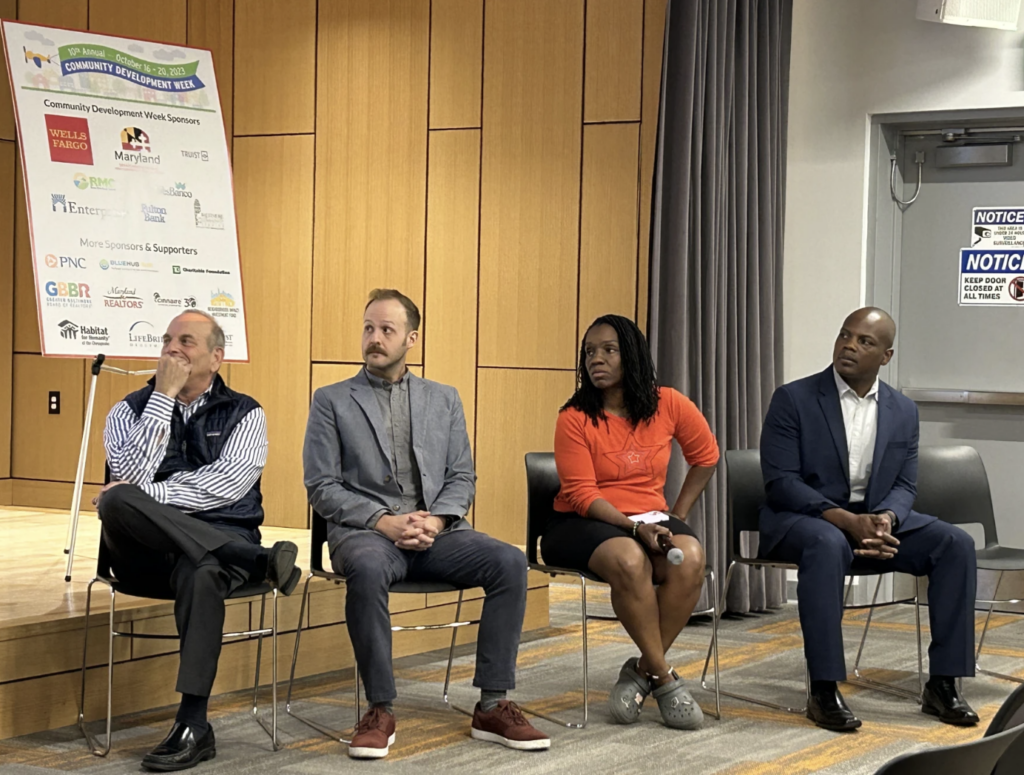
In March 2023, Hopkins and three fellow clergy leaders, Bishop Kevin Daniels, Rev. Cristina Paglinauan, and Rev. Andrew Connors, made the case in a Baltimore Banner op-ed. They traced the crisis to Baltimore’s long history of discriminatory housing policy, including redlining, and argued that past proposals from mayors and governors never matched the scale of the need. Roughly 70,000 properties were affected, they wrote, and fixing the problem would take an estimated $7.5 billion in public and private capital. Doing nothing, they noted, citing Johns Hopkins research, already costs taxpayers at least $200 million a year. Any new effort, they insisted, must be community-led and must not displace current residents.
The model already had results. In Oliver and Broadway East, where BUILD and ReBUILD Metro have worked longest, the vacancy rate fell from 48% to 7.8%, population grew 45%, and the homicide rate was cut in half, while the neighborhoods remained more than 90% Black. The authors called the investment a chance “to end the legacy of redlining in our city once and for all.”

At a West Baltimore rally convened by BUILD that spring, the coalition called on city and state leaders to create a special purpose entity by 2024 and commit $2.5 billion in public funding. “We will renew the ruined cities that have been devastated for generations,” Hopkins told the crowd. “BUILD, Mayor Scott, our governor, our state officials, businesses, and foundations: Now is the time.” He described a future where “there’s no longer a fight with governors over Baltimore — we’ll fight for Baltimore.”
By the end of 2023, Mayor Scott, BUILD, and the Greater Baltimore Committee announced a fifteen-year, $3 billion plan to redevelop at least 37,500 properties through the “whole blocks” approach, with ongoing investment from the Deutsch Foundation and other philanthropic partners.
Hopkins joined the Deutsch Foundation in January 2025 as Director of Community Innovations. He has led its housing and neighborhood renewal work, serves on the grantmaking committee, and supports its other priorities, including arts and culture, and digital equity.
“We can often accomplish so much more than what we initially imagine. The more you act, the more new possibilities come into focus,” he said at the time. “I appreciate that this Foundation is always thinking and moving forward to a brighter future for this city.”
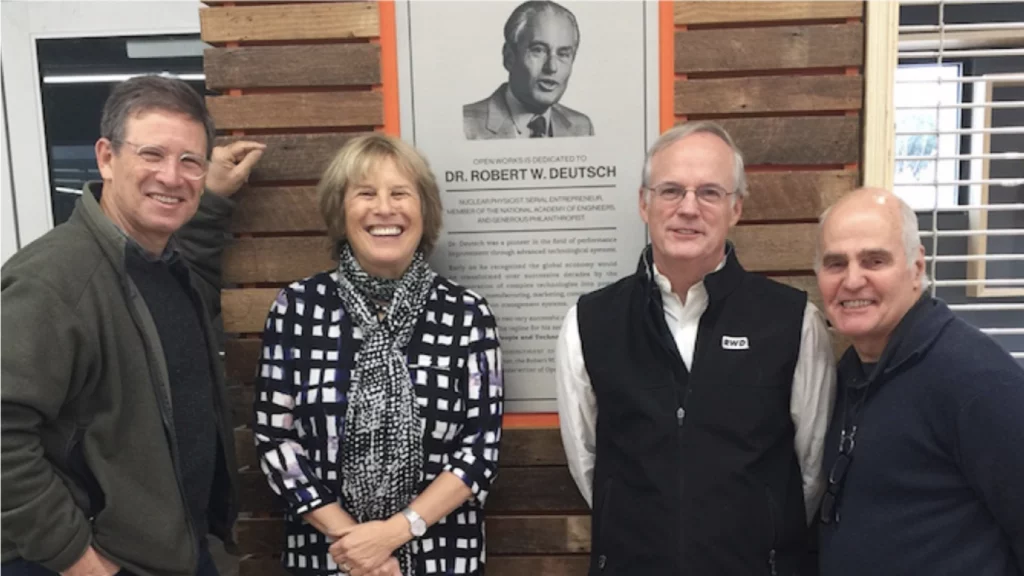
Dr. Robert W. Deutsch established the Foundation in 1991. Under his daughter, Jane Brown, it became something rare in American philanthropy: a hyper-local, early-stage investor willing to bet on Baltimore’s residents and neighborhoods before the rest of the funding world caught on. Last year alone, it awarded 98 grants totaling $4.8 million to local organizations and initiatives.
Unlike traditional philanthropic models, which can often be risk-averse, Brown’s approach has been nothing short of visionary. Her commitment to media accessibility is rooted in her own career in journalism. Before joining the Foundation, she was the first Managing Editor of the newly independent Baltimore Magazine, then an editor for The Baltimore Sun, experiences that strengthened her conviction that Baltimore needed an independent publication dedicated to the arts: one that could help build a healthy cultural ecosystem, including the accountability that only independent coverage can provide.
That conviction is how BmoreArt came to be. Brown’s willingness to take a chance on people and ideas is emblematic of who she is, and of the impact her vision has had on Baltimore. As board chair, she plans to continue supporting people and projects in Baltimore and nationally through her personal philanthropy.
She brings the same confidence to her successor. “He loves this city and its people, is full of energy and optimism, and is open to new ideas and ways to collaborate that get important things done,” Brown said of Hopkins. “I look forward to working alongside my fellow board members to wholeheartedly support George and our amazing, youthful staff in service to improving the quality of life in Baltimore.”
Hopkins enters the role with deep ties to the Foundation’s housing work and clear regard for the leader he follows. “I have a deep appreciation for the innovative, collaborative leadership Jane has exemplified for more than 30 years,” he said. “It will be an honor to continue working with her as board chair and alongside the incredible team she has cultivated.”
For Baltimore’s arts community, the most telling moment in his remarks may be where he names artistic expression alongside education and advocacy as ways people shape their community’s future. “In a moment where we see every day what we don’t want our reality to be, it is important that we creatively and collectively imagine the world we want to build and experience together,” he said.
That is, in many ways, what artists do. It is also what Jane Brown has spent 31 years building. The transition takes effect in January 2027, and BmoreArt looks forward to the next chapter.