For years, BmoreArt has chronicled the evolution of Baltimore-based artist Jackie Milad and her artworks built from fragment, collage, and a layered sense of heritage. Milad’s techniques are acts of authorial agency that reflect her experiences as an Egyptian-Honduran first-generation American, encouraging deeper understanding. As Milad describes in her new book, Shabtis Gather, “In my art practice, I collage elements from my cultures the way I wish some museums would—bridging past, present, and future onto a single surface.”
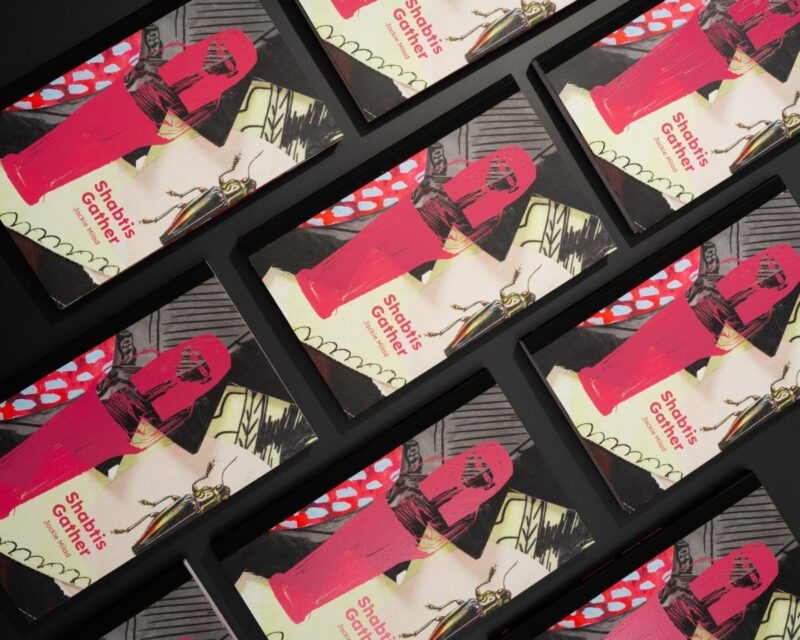
Published in partnership with BmoreArt and designed by Raquel Castedo with artwork photography by Vivian Doering, Shabtis Gather was released in September 2025. This 200-page full-color bilingual book showcases over 150 images of Jackie Milad’s richly layered artwork. It includes essays by egyptologists Dr. Alice Stevenson, Dr. Fatma Ismail, and Heba Abd el-Gawad in English and Arabic and marks the first publication to present Milad’s archive at this scale and depth. The publication, in both special and regular editions, offers an intimate look into her immersive practice as she reclaims fragmented heritage through bold materiality and symbolic layering.
At the heart of Shabtis Gather is Milad’s recent body of work inspired by shabtis, ancient Egyptian funerary dolls intended to serve the dead in the afterlife. Through research residencies and private study sessions at institutions such as the British Museum, the Petrie Museum, the University of Pennsylvania Museum, and The Walters Art Museum, Milad developed a deeply personal connection with historic artifacts, many of which remain hidden in storage. In response, she created sculptural stand-ins of her own: playful, intimate, and vibrantly adorned figures that reimagine cultural ownership.
“I imagine my small ‘shabti’ sculptures as stand-ins for the ones in museum collections,” Milad writes. “My work symbolically releases the actual artifact from their contemporary places and gathers them together—a convening of the shabtis.”


Milad’s visual language fuses Egyptian iconography, Honduran references, Arab Spring graffiti, multilingual texts, personal drawings, and symbolic patterns in compositions built from materials including acrylic, velvet, silk, beads, and found objects. Her collages are not only artworks but acts of cultural reclamation—a way to tell stories that museums often exclude.
With the release of Shabtis Gather, we invited Jackie Milad to share her personal reflections on her evolving creative process and the inspirations behind her book.
How did your research in museum collections influence the themes or materials in your studio practice?
In the fall of 2022, I made my first visit to the British Museum where I participated in their study room program in which artists, students, researchers can have access to objects in the British Museum’s collection. Of course, my focus was Egyptian antiquities.
It was the beginning of this journey for me. I selected only five objects for this visit. One of those pieces I got to spend time with was a funerary mask. The experience of drawing the mask, photographing it, just staring at the mask for hours did something to me. The look on the face reminded me of people in my family. The eyes, the obsidian that made up the eyes, had a very lifelike quality to them. It was moving. That time in the museum and drawing those objects changed some of the direction of the work that I made when I headed back to the studio.
I also became very interested in what else is in the British Museum or other museums that I could spend time with. I started learning about the funerary dolls, the shabtis. There are such a vast quantity of them, specialists of shabtis don’t exactly know how many exist in the world. It just blows my mind. That kind of immensity of objects that have been extracted out of Egypt and dispersed all over the globe, specifically the shabtis, these funerary dolls, because of their size and quantity, they quite literally are in every museum collection that has Egyptian objects in their collection.
What does this dispersal of shabtis mean to you personally? How do your own shabti sculptures relate to these dispersed artifacts?
The fact that the shabtis are found everywhere feels like a powerful representation of heritage, Egyptian heritage, my heritage, scattered across the world. This idea has stayed with me.
The shabti objects I make, the sort of stand-ins, as I call them, are supposed to be these objects that have walked right off of my paintings. With all of their color and textures, I envision them as these, as I said, stand-ins for the real thing.
If you could imagine all of these shabtis all over the world in museum collections, mostly in backroom storage, if they could walk out of the storerooms and gather together, sort of a community of shabtis in their place, my shabtis could go and stand in for them. This is sort of a playful idea.
This is my attempt at a symbolic repatriation of these objects, imagining what would happen if they were brought together and the kinds of stories they might share with one another. I am also thinking about their more modern history, not just their ancient history and original purposes, but the journey they took from Egypt to their current homes. I envision myself making so many of these. At this point, I have about 100, I’d say 120. My fantasy would be to fill a whole room with these shabtis. Even that would not be a fraction of what actually exists of the true shabtis, the ancient objects.


Jackie MiladWhen thinking about the medium of a book, it can be very intimate. One person, or a couple of people, can experience it at a time. You’re holding the book, turning the pages, feeling the materiality of it.
What inspired your desire to create a publication?
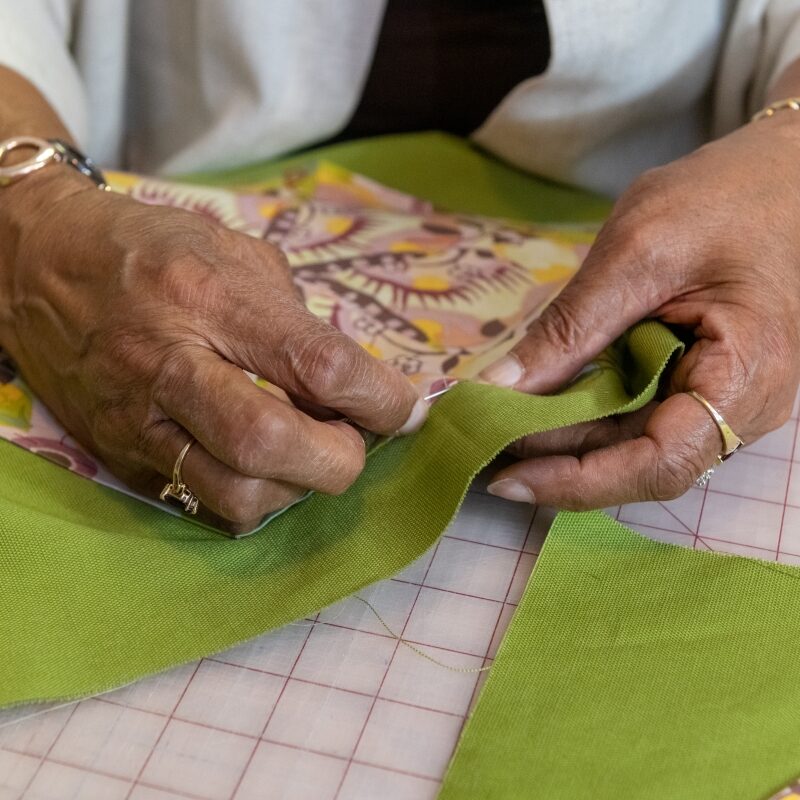
Before I even reached out to publication designer Raquel Castedo to talk about the possibility of working together on a book, I already knew I wanted people to be able to hold my work in their hands. I think a large part of that comes from how much I use my hands in the studio, holding paper, cutting materials into small pieces, layering them onto canvas, and repurposing them. There’s something about the tactile process of making, cutting, pasting, and assembling, that feels essential to my practice.
But then there’s another part of the process that comes from spending time in museum study rooms, where I was able to handle Egyptian antiquities, especially the shabtis. In some cases, I was even holding them with my bare hands. There’s something about that physical act of holding that stayed with me. I began thinking of it as a kind of translation, or maybe not exactly a translation, but a way of connecting through touch.
I was thinking a lot about how the act of holding something carries care, whether it’s an ancient object, someone’s hand, or making art. There’s a way that care is transmitted through the hands. I wanted people to experience that kind of intimacy, the way I felt with my artwork and with the shabtis.
When thinking about the medium of a book, it can be very intimate. One person, or a couple of people, can experience it at a time. You’re holding the book, turning the pages, feeling the materiality of it. The size of the book also matters, it feels approachable, not overwhelming. The physicality was really important to me, because I wanted people to have that kind of direct, tactile experience.
To me, the only way to achieve that, and to provide perhaps much wider access for more people, is through creating a book. That’s when I realized I needed to talk to someone who really knows about books. That’s where Raquel came in.
How did that collaboration shape the project?
From our first meeting, looking at the books Raquel was sharing from previous projects she designed and ones that had inspired her, I thought, “Yes, she gets what I’m talking about. This is going to be a really good partnership.” That connection planted the seed for the transformation of the project, both visually and conceptually. Talking to Raquel, it became much more of a possibility. It was really starting to make a lot of sense.
Another idea that was important to me was that, in some capacity, there would be materials that literally came out of my studio and into people’s hands. That’s where the special edition concept came from, where I made 40 collages on canvas, using some of the same materials and repetitive imagery from my studio. These were included in the package so that, as a collector of the book and special edition, you could have access to holding one of the materials.
I purposely didn’t put the collages in matted form or add the accoutrements of archival presentation because I really wanted people to feel the canvas and the artwork directly. This element was motivated by the idea of giving people access to that experience of care and holding with their bare hands.


How did you approach creating the artworks specifically to be featured in the book?
The work I was making specifically for the book, these very large-scale paintings and collages, was created at the same time as the stand-in shabtis, as I call them. The stand-in shabtis replicate the sizes of the ancient Egyptian shabtis, the funerary dolls.
All of the collage paintings and the shabtis were made not only in tandem but also with similar gesture, style, and color. I made about a hundred of the shabtis, and the large collage paintings were imagined as backdrops for them.
They were backdrops, but also the shabtis came from the collages, they walked right off the collages, so to speak. Visually it was really important that photographs show the stand-in shabtis on top of the collage works so there was a resonance or intensity of information, that you got the sense they were coming right off the paintings, almost camouflaged inside the work.
In terms of the process of making the work, I was doing it specifically for the book itself. While working with Raquel through some design ideas I envisioned, we were photographing the work and playing around with concepts of the Shabtis on top of the tapestries. I was physically producing this work at the same time.
It was a very busy time in the studio. As I was making, I would call Vivian Doering to come and photograph. We scheduled photoshoots over several weeks, since there was so much to cover.

How was collaborating on the book process different from your usual studio practice?
Usually in the studio, I’m alone, and my timeline isn’t strict unless there’s an exhibition. Having Raquel as the production manager and setting deadlines to make the book happen was unique.
Collaborating in the studio, not on making the art but on making the book, was new for me. Talking through the design concepts she put together was a highlight, and I was so pleased. I think I had never collaborated so easily with someone.
Raquel’s time spent with my work made a huge difference. Working with Vivian on the photographs was also very important. Vivian has known my work for over six years, photographing exhibitions and studio talks, which translated seamlessly to this project. I trust both Vivian and Raquel’s expertise completely. Working with such talent was a great experience.

How did you find the writing and editorial process?
Making a book is definitely different from making work in the studio. Some parts were familiar, like meeting deadlines and collaborating.
The writing part was new. Commissioning three writers for the book was important to me. I wanted the voices of Heba Abd el-Gawad, Alice, and Fatma featured. Their writings inspired the series of work leading to the book and my museum research. Listening to podcasts and reading their writing was crucial for developing my work. I wanted the book not to read like an academic text but to use accessible language so anyone could engage with it, especially families like mine reading both the English and Arabic translations.
Going back and forth with editors like Chelsea Lemon Fetzer, getting feedback on my writing, curating the flow, and working with Cara Ober on editing was intense but incredible. Writing doesn’t come easily to me, but I was inspired by the other writers and enjoyed observing their process.
What else about the book-making process was new for you?
Distribution was something I didn’t know much about. After pre-production and printing, questions like “what happens next?” emerged. The guidance from BmoreArt, Raquel, and Cara on logistics and reaching beyond Baltimore was eye-opening. From this, I learned how much work and resources go into making and distributing a book. Books aren’t about money but passion and love.
What moments during this project have been most rewarding for you?
Probably the most rewarding moment was getting the book in my hands, feeling the paper, flipping through the pages, the size, and everything exactly as I envisioned before even talking to Raquel. When she handed me an advanced copy, my heart jumped, it was like being handed a baby. The second rewarding part is how people have reacted to the book and their experiences with it, including the canvas collages and special editions. It’s a beautiful example of what collaboration looks like.
Is there anything else you’d like readers to know about Shabtis Gather?
A side note: I hadn’t mentioned the translation before. Seeing the book come together with English and Arabic mirrored designs was beautiful. Raquel, who isn’t an Arabic speaker, collaborated with my studio manager Samia Bzioui and translators to make it work, which was hard but very rewarding. It was important to me that the book was readable in both languages, and seeing it finished was wonderful.
Shabtis Gather is now available at BmoreArt.com/shop. Quantities are limited.