Last fall I travelled to London. I had the opportunity to see Kerry James Marshall: The Histories at The Royal Academy, Doh Ho Suh: Walk The House at the Tate Modern, and wander through The Photography Centre at The Victoria & Albert Museum. In all three cases, these exhibits were stunningly, refreshingly good. Each was impossible to ignore, flirting precariously with an overabundance of work that felt important and passionate rather than overhung.
Considerations for space, scale, and media offered dramatic surprises along the path of the exhibit, focusing my attention in a thoughtful way as I passed through them. In all three cases, impressive architectural space strengthened the message, the subject matter felt personal and universal, and the artwork itself was intriguing and relevant. These experiences were full of over-the-top ‘A-ha’ moments of discovery, and this “wow factor” should be what every exhibition aims to achieve. When museums present great art in an innovative way, combining inspired exhibition design within a space that elevates it, we feel a deep connection to the art and to each other. When exhibits feel lukewarm, economical, or didactic, the institution is failing its audience and getting in its own way.
In Baltimore, we boast a rich and diverse landscape of museums, but it’s safe to say that the Baltimore Museum of Art continues to dominate at a professional level and sets a high bar. This doesn’t mean our other museums are falling short, but rather, that they can seize new opportunities to expand their audiences, achieving record attendance in 2026 and beyond. In order to make this happen, they need to offer up exhibitions so shockingly good and awe-inspiring that they cannot be missed, serving up FOMO like a juicy steak and generating a buzz of energy.
My challenge to all Baltimore area museums in 2026 is this: give us exhibitions so compelling, so edgy, so over-the-top incredible that we cannot resist them. Give us the art we NEED to see right now and show it comprehensively and unapologetically. Use your unique physical space to create otherworldly experiences that highlight the power of art to tell relevant stories. Give us exhibits that make us feel, think, and reconsider who we want to be in the future. Museums, make it sexy. Make it beautiful. Grab national headlines and pull us away from the stupid drama of our current political hellscape.
The following list offers five standout museum exhibits in Baltimore that are currently up and available for a visit this winter.
Cara OberMy challenge to all Baltimore area museums in 2026 is this: give us exhibitions so compelling, so edgy, so over-the-top incredible that we cannot resist them. Give us the art we NEED to see right now and show it comprehensively and unapologetically.
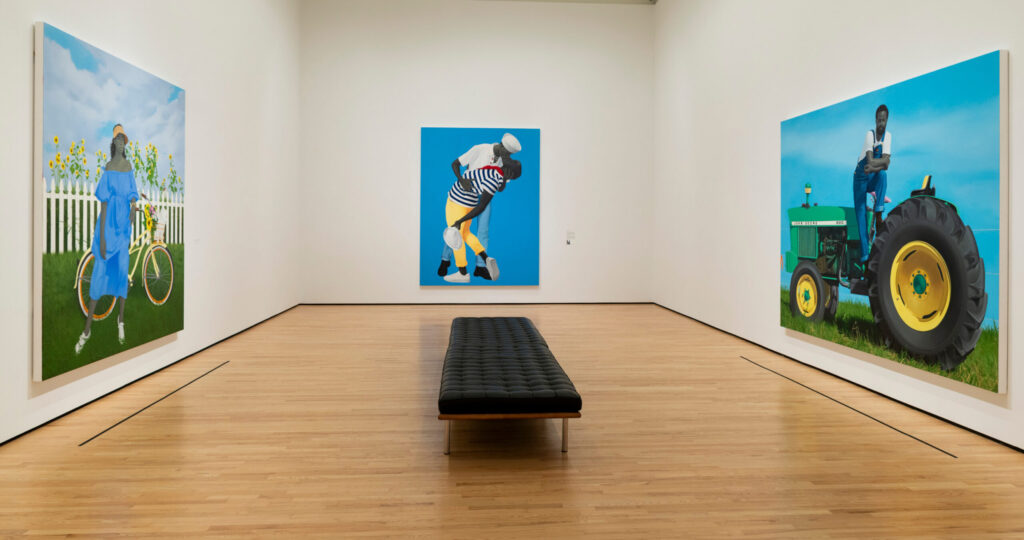
Amy Sherald: American Sublime at the BMA
Up through April 5, 2026
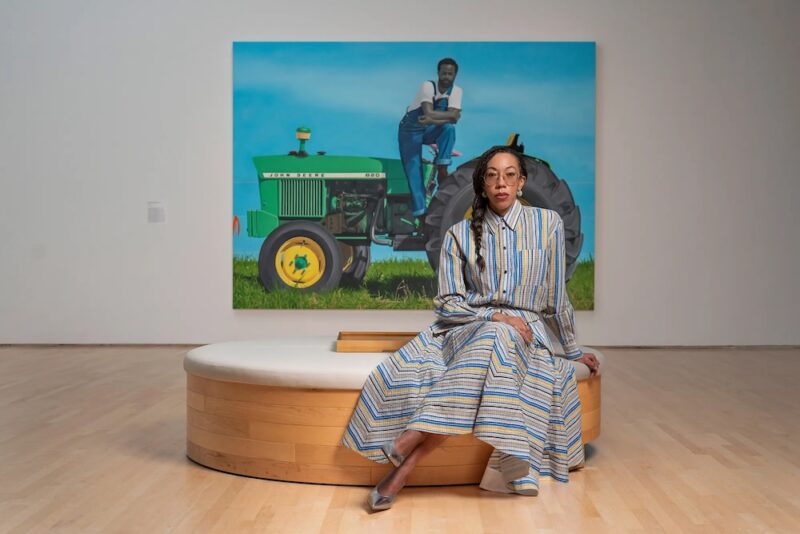
I ran into John Shields at a Christmas party and we chatted briefly about how Gertrude’s, the restaurant he has owned and run at the BMA for 25 years, is the busiest it’s ever been. Truly, museum attendance has been off the charts for this blockbuster show. Originally slated for the Smithsonian’s National Portrait Gallery in DC, American Sublime was abruptly cancelled by the artist after the threat of censorship of a painting of a trans American posed like the Statue of Liberty. Lucky for all of us, the BMA sprang into action and provided the perfect context for America’s favorite exhibition of 2025, including gallery text highlighting many of the portraits’ connection to Baltimore, created while Sherald lived in Baltimore for over a decade after finishing her MFA at MICA in 2004.
This exhibit is not just a win for the BMA because it fully embraces Sherald’s politics of equity and inclusion, as it should. It’s a win for Baltimore because, for thousands of Black children, it’s their first experience EVER seeing themselves reflected in grand portraiture on museum walls. It’s been so exciting for me to visit this gorgeous exhibition full of familiar faces, many from Baltimore, again and again. But also, it’s been so moving to see all manner of school groups in the galleries, from pre-school to post-graduate students basking in its glow.
You have to reserve and purchase tickets to attend this exhibition, so if you haven’t already – it’s in town through April 5, 2026. It’s free for museum members, a smart tactic for a museum looking to increase its brand loyalty, although they still need to reserve a time slot. Do not miss seeing this truly groundbreaking, beautiful, historic exhibit in Baltimore. American Sublime will be remembered as a touchpoint for the future, providing context around what it means for a museum to serve living artists and a city, and the FOMO is earned.
Latin American Art / Arte Latinoamericano at the Walters
Exhibition dates ongoing
This year, Walters exhibitions are all over the place. They currently have two exhibits about animals, one about cats in medieval manuscripts and the other, an exhibit on loan from the Brooklyn Museum featuring mummified animals. They also have two large installations by living artists Katherine Tzu-Lan Mann and Jackie Maria Milad, which appear untethered to any specific exhibition. Instead they are proximal to permanent exhibits based on geography and time period, an approach which many encyclopedic museums have abandoned in recent years.
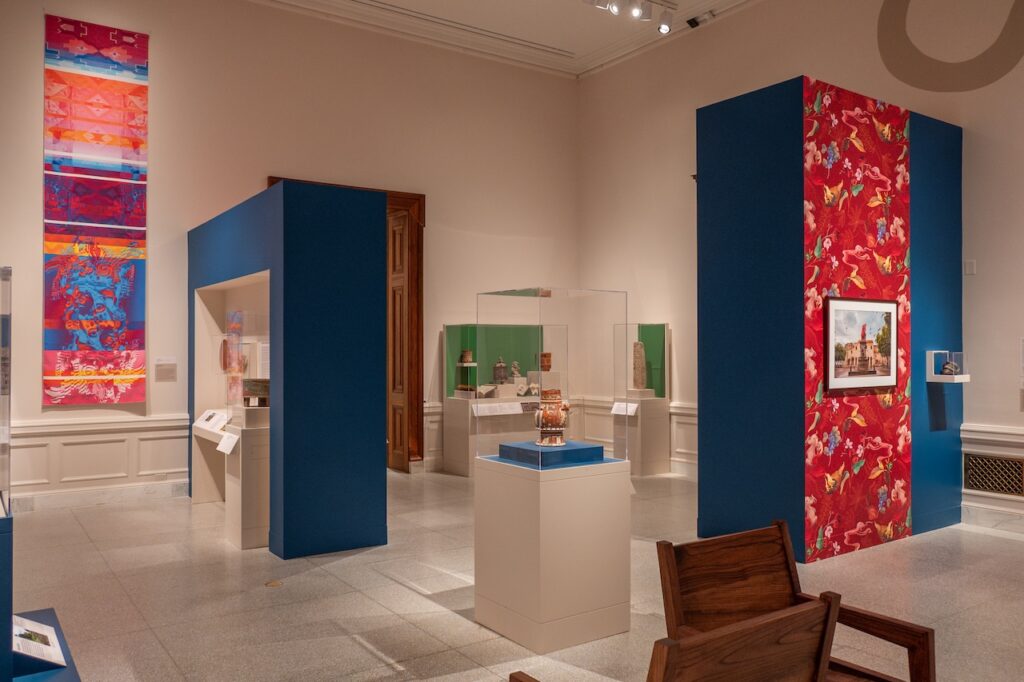
This year, one Walters exhibition was a star standout, and the good news is it will be on exhibit indefinitely, prominently placed in the North Court galleries, which were renovated for the first time in 40 years. Latin American Art / Arte Latinoamericano features an extensive, research-laden, and inclusive survey of over 200 works from the museum’s collection from South, Central, and North America and the Caribbean, seen altogether for the first time in the museum’s history.
It’s a three year effort, started under previous director, the late Julia Alexander, and completed under the leadership of current director Kate Burgin. It offers innovative exhibition design and an inspired curatorial approach from Ellen Hoobler, William B. Ziff, Jr., Curator of Art of the Americas, and Patricia Lagarde, Wieler-Mellon Postdoctoral Curatorial Fellow, Art of the Americas. It combines a breathtaking array of heavily researched objects with immersive color, pattern, scale, and pacing, which makes it easy for visitors to luxuriate in the complexity and sophistication of each artwork individually, but within a context that enriches it.
Punctuated intentionally with works by living artists including Jessy DeSantis, Melissa Foss, Eugenio Merino, Ana de Orbegoso, Edgar Reyes, Uriarte Talavera, Pierre Valls, Rene Trevino, and Kukuli Velarde, the exhibit explores key ideas such as migration, spirituality, identity, and legacy. The contemporary artists offer nuanced reactions, visual allusions, and inspired riffs based upon art from the ancient Americas, expanding ideas around traditional customs and materials, as well as cleverly acknowledging the role of counterfeits in museum collections.
Beyond its visual wow factor, scholarship, and depth, this exhibition is socially and culturally relevant. It offers a timely message about the cultural sophistication and historical contributions of civilizations located south of the USA, whose ancestors are now being targeted, harassed, and abused by Federal ICE Agents. It offers an embrace to Baltimore’s Latino population, a growing sector which our city desperately needs, and acknowledges their significant contribution to our shared global history.
Collecting Maryland at the Maryland Center for History and Culture
Ongoing Exhibit
Maryland is a completely underrated state, but we are truly “America in Miniature.” Our geographic landscape, from Atlantic beaches to mountain ranges, along with a diverse population and major historical events mirrors our entire nation, just at an intimate scale. Maryland’s divided status as a border state during the Civil War, its foundational establishment of religious tolerance in 1649, and its role in Key’s penning “The Star-Spangled Banner,” are just a tiny sampling of pivotal elements of a shared history where a vast array of opposing extremes and historical firsts continues to influence our actions today.
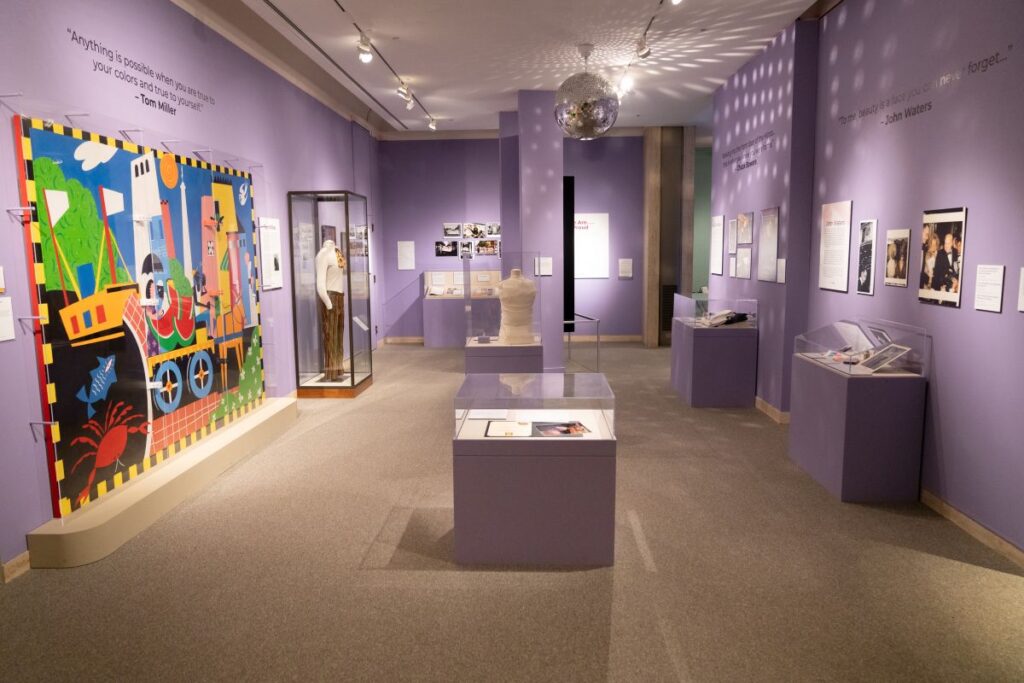
At the Maryland Center for History and Culture, Collecting Maryland is a broad and encompassing exhibit that attempts to present Maryland’s history honestly, with an eclectic mix of art and objects that span our earliest history to the present. The show presents familiar favorites, sometimes arrayed in a bewildering contrast to one another, in order to question our assumptions about history and place. For example, placing Maryland album quilts from the 1840s and a white carved wooden sculpture of the ancestors of Brantz Mayor (founder of the MD Historical Society which became MCHC in 2020), near a neon sign from Tattoo Charlie’s, an infamous shop from “The Block” in East Baltimore, which became the first licensed tattoo parlor in the country in 1962, presents a multifaceted view of our historical accomplishments.
The exhibition includes pastoral paintings of early landscapes where still-familiar landmarks are visible, portraits by the Peale family alongside those by enslaved (later freed) painter Joshua Johnson, as well as a room populated with Fred Wilson’s notes and elements from his seminal exhibit from 1992, Mining the Museum (credited for largely shaping modern museums approach to thematic curation), creating space to confront hidden biases and omissions. Collecting Maryland also includes a lavender room full of LGBTQ+ items, including photos of John Waters’ film star Divine, a large painting by Tom Miller, a glittering disco ball, and the neon sign from The Hippo, Baltimore’s iconic gay dance club for over four decades.
In so many ways, this exhibit quietly affirms who we are as a state and a people, encouraging us to champion our history of innovation, tolerance, and industry. It places our capacity to host divergent ideas joyfully, all in one space, as a superpower, which can hopefully continue to sustain us during the next few years.
Fantastic Realities: Truth Stranger Than Fiction at the American Visionary Art Museum
Runs through September 6, 2026
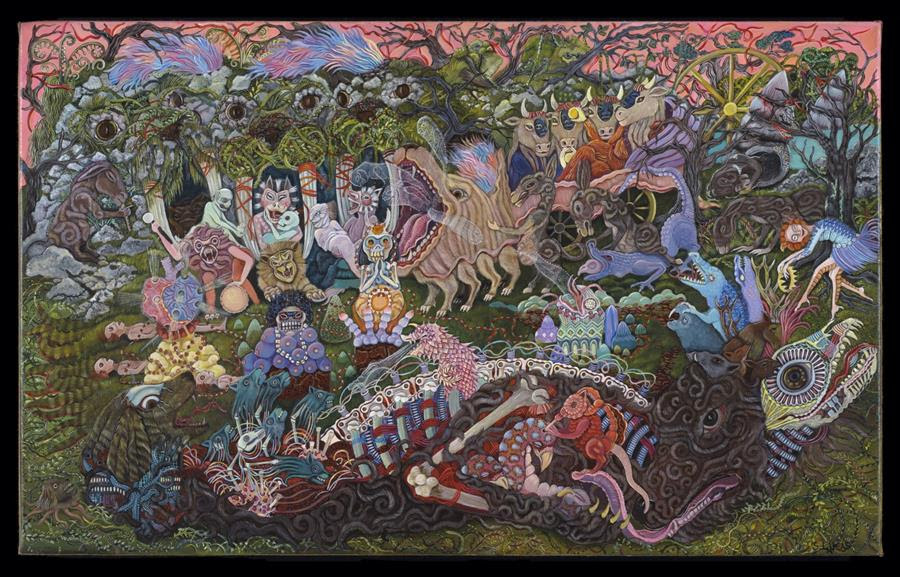
The American Visionary Art Museum (AVAM)’s 30th anniversary mega-exhibition, Fantastic Realities: Truth Stranger Than Fiction, promises everything we have come to expect from one of Baltimore’s favorite destinations: curious oddities, dreamy imaginations, quirky materials, religious fervor, and sci-fi visions of outer space. The exhibition explores elaborate, imagined worlds created by self-taught artists, scientists, and cultural futurists to reflect on contemporary truths. Visually, the show is indistinguishable from the past thirty years of exhibitions, a long and successful tradition on which the institution has been forged, that also suggests new possibilities for curatorial innovation and exhibition design in AVAM’s next thirty years.
As a milestone exhibition, it is curated to be sweeping, featuring over 130 works by 24 artists—a broad cross-section that includes both new commissions and pieces from the permanent collection, such as oil paintings, ceramic scenes, chainsaw-carved minotaurs, and hand-painted sci-fi galaxies. Large installations by Cuong “Mike” Tran, Promethea, fka Maura Holden, and Baltimore-based Junius Wilson are standout pieces, with works from AVAM’s permanent collection, including Antar Mikosz, Stephanie Lucas, Chris Mars, Romaine Samworth, and Mona Webb, providing a vast array of smaller statements.
While past exhibits often explored historical or spiritual themes, Fantastic Realities explicitly addresses the nature of “truth” in the modern age, specifically responding to contemporary concerns like misinformation and digital uncertainty. Given that we are currently living in a golden age of paranoia funnelled by predatory social media algorithms, conspiracy theories, and widespread mistrust in science, medicine, and traditional institutions, this show comes off as light and quirky, embracing escapism and fantasy but sidesteps the obvious elephant in the room. It could have skewed much darker and serious to properly address our current reality with a daily news cycle that is exponentially stranger than fiction, offering hope but acknowledging the urgency and unfettered paranoia of the moment.
At the center of it all is AVAM’s thirty-year-old definition of a “self-taught, intuitive” artist, which is due for an update to reflect major shifts in the art world and a market for Outsider Art. Since its inception, artists who have studied art in a formal setting or attended art school could not show at AVAM, no matter how self-taught or inventive their current art practice is. However, there are currently so many excellent living artists, some who have received some sort of formal training, but who embody the ethos of AVAM: innovative, self-directed, exempt from art world trends, and many of them locally based in Baltimore. Expanding AVAM’s curatorial mission to include these artists would chart a path that is truly visionary in its ability to shape a global conversation about what art is and does.
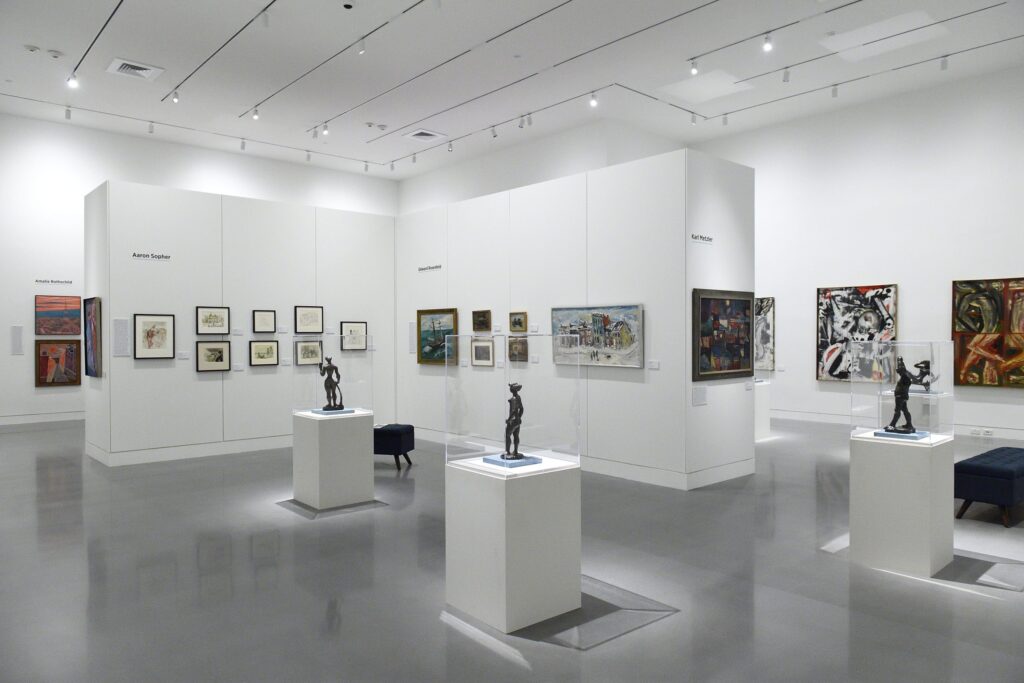
Modernisms at The Jewish Museum of Maryland in Baltimore
Up through March 15, 2026
If you’ve never visited the Jewish Museum of Maryland (JMM), it’s fitting that their first major exhibition since a transformative 18-month renovation centers around Modernism, whose central theme was “make it new.” The slogan was coined by Ezra Pound in 1920, and became a defining feature of the movement: a call for artistic renovation, revitalization, and innovation. Modernism was, and still is, a reaction to industrialization, urbanization, and science, and it served artists of all kinds throughout the early 20th century as a rejection of the past and a break from Victorian and Romantic conventions, where a personal vision, chaos, and psychology were all embraced as new possibilities for artistic expression.
At the JMM, Modernisms offers a survey of 13 Baltimore-based Jewish artists whose art engaged with European modernist movements over the past century. The show presents a compelling who’s who of recent art history through Baltimore’s creative lens, and examines how artists incorporated prevailing ideas into their own visual vocabularies. It also presents artists reflecting on their own Jewish identity within American society.
Curated by Susan J. Isaacs, the exhibit includes Post-Impressionism, Fauvism, German Expressionism, Cubism, Art Deco, Surrealism, and Bauhaus. The exhibit also highlights the significant role of the Maryland Institute College of Art (MICA) during that era, which, unlike many other institutions, accepted Jewish students.
Offering fresh expressions for a changing world, the exhibit includes Florence Austrian, Peter Scholleck, Amalie Rothschild, and Herman Maril among others, and is organized to appreciate a collective commitment to new approaches to art making. Post World War II, some of the artists in this exhibit moved to NYC and beyond while others stayed in the Baltimore area. Regardless, each embraced the progressive spirit of Modernism from a unique perspective, helping to define contemporary art as it evolved during a critical period of art history and presenting the Baltimore region as a hotbed of globally relevant creative innovation.