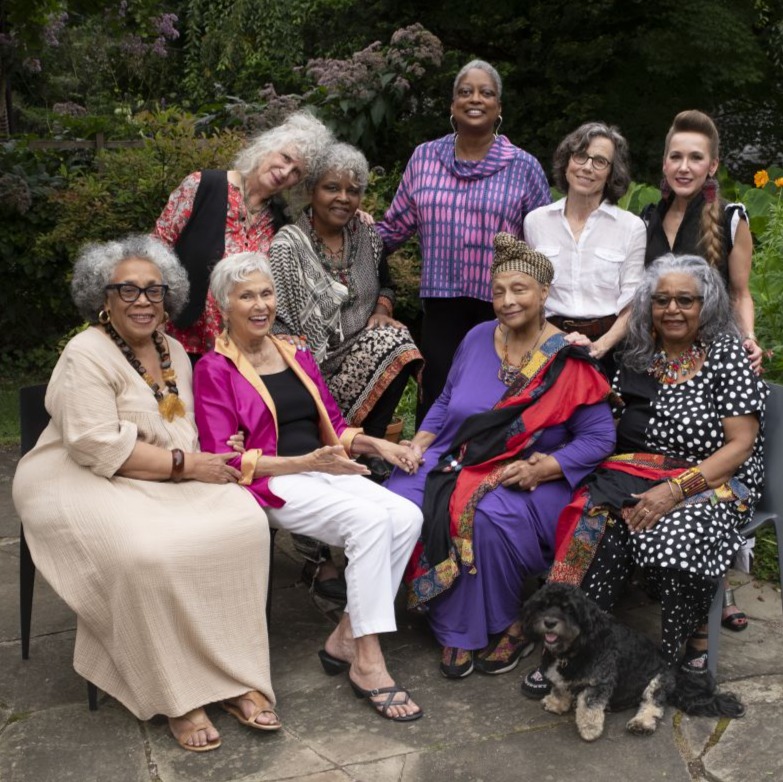
Ask the Gurlz of Baltimore how their collective started, and you will get nine different answers, each the long version. Linda DePalma might tell the story of her and Joyce J. Scott in the early 1970’s; both donning leopard print coats and facing the police with arms full of art supplies a friend assured them the store was giving out for free. For Leslie King Hammond and Lowery Stokes Sims, it arguably sprouted in a high school Girl Scouts troop where they first met. Patti Tronolone recalls King Hammond’s son was in the same middle school class as her own, though it must have been through her friendship with DePalma. For Oletha DeVane, it began in 1969, when a young Scott marched up to her in the cafeteria of Maryland Institute College of Art (MICA) demanding, “And who are you?”
“I consider myself the ‘found-ling’ member,” Ellen Burchenal adds. “Found and brought in by Linda DePalma. At that time the least experienced of the group, I had a lot to learn from these women. Still do.”
Scott invites me to spend an afternoon with the Gurlz in her home in West Baltimore, a rowhouse she bought with her mother, Elizabeth Talford Scott, in 1974. The long-time friends fill her living room. It’s a modest size—with turquoise and sunny yellow walls—yet they all fill the space exquisitely along with a playful miscellany of chairs, African art, beadworks in progress, and a zebra rug.
“We were born in the sweet spot, the forties, right after the Second World War,” Scott explains of the original members of the Gurlz. “People were trying to get things together, be better. Then came the civil rights movement; things were changing for African Americans. We were stepping up and stepping out. People were buying their own homes. I had the real opportunity to go to college.”
DePalma adds that in her Italian American family, she was the first to go to college too. With scholarships and other financial support newly opening to women and students of color, higher education and residencies had come within reach. Pursuing a path in the arts became more possible than it had been generations before.
King Hammond and Sims reconnected at Johns Hopkins University in the early 1970s as two of only four Black doctoral candidates in a department of about thirty enrolled to study in the Department of the History of Art. In correlation with her study at JHU, King Hammond began teaching at MICA as an adjunct in 1973—an art course called Africans in the New World. Scott, DeVane, DePalma, and Burchenal all studied at MICA. Some overlapped in their years there, some didn’t, still they found themselves in the same cultural circles. Tronolone went to art school in Philadelphia. In 1983, she met DePalma and Scott through her former partner who attended MICA.
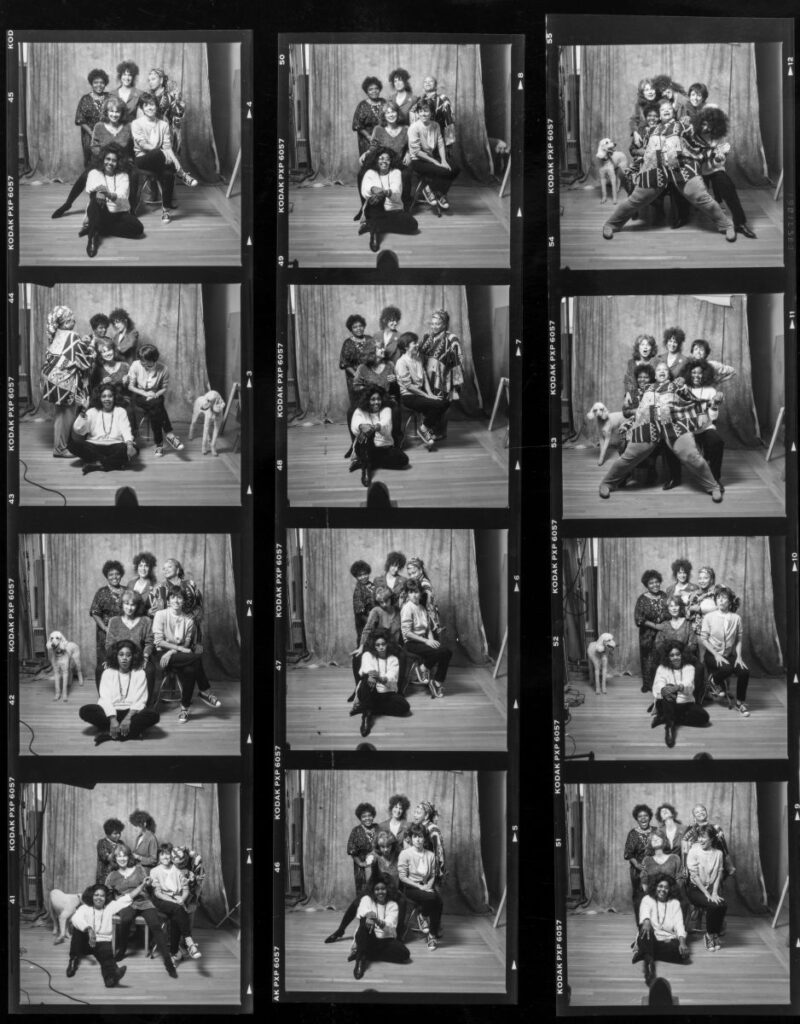
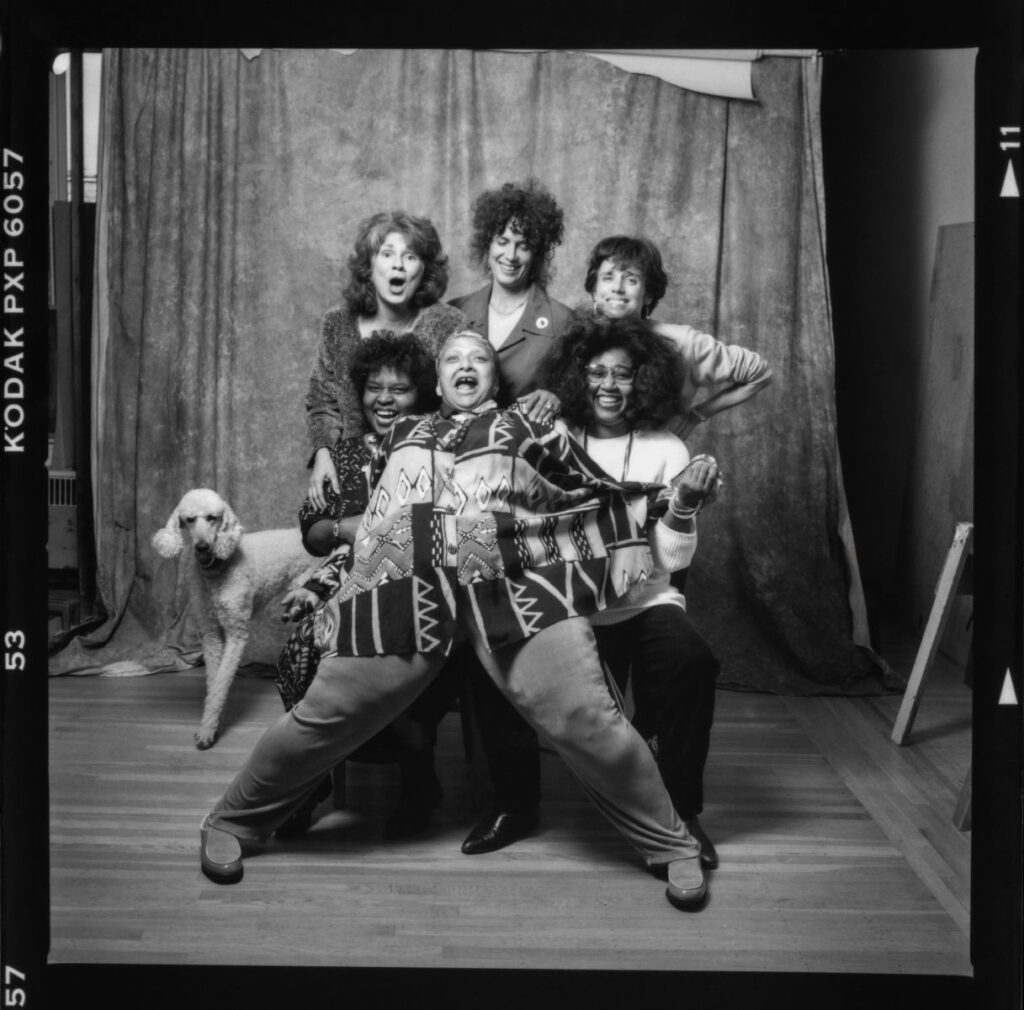
Oletha DeVaneWe all evolved from a 60s social milieu of racism, sexism, and discrimination against women… the diseases that continue to shape our world. There were no subjects off limits.
“Joyce is the connector of us all,” DeVane says. The original group of six (Scott, DeVane, DePalma, King Hammond, Tronolone, and Burchenal) started getting together for lunch. Three Black women and three white women—they were not a common sight in the highly segregated Baltimore of the time. “We all evolved from a 60s social milieu of racism, sexism, and discrimination against women… the diseases that continue to shape our world,” DeVane continues. “There were no subjects off limits.”
“And we have not always agreed,” Tronolone adds. “We’ve argued about issues like racism. Or what was at the core of certain things that were happening. Still, I cannot think of one thing that I would be afraid to say or ask or admit because I know no one in this group would judge me.” Tronolone says the Gurlz have been thrown out of restaurants for being too loud. But more often, to Scott’s memory, the servers would let them stay after closing time, so they could join in on their raucous conversations.
As years passed, the young artists nudged one another toward projects they might not have braved alone. They exchanged studio visits and connected each other with professional opportunities. They traveled to conferences and exhibited together. DePalma and Burchenal started an exhibition design and fabrication business called Cambio and found a studio space to share.
Together they grew up and grew into distinct practices. Joyce J. Scott elevated her skill to the heights of her imagination through beadwork, sculpture, and performance. Oletha DeVane explored intersections of paint and assemblage. Linda DePalma pursued the ways art meets the environment through mixed media works and visionary outdoor public sculpture. Patti Tronolone moved from woodworking and furniture making to charcoal and poetry. Ellen Burchenal drew and painted, using architecture and memory as muses. Leslie King Hammond became dean of MICA’s graduate school (in 1976), continuing to serve as a professor of art history while also recruiting for the program. She set her intentions on creating a way for more young artists to access the art school.
Enter photographer Linda Day Clark. In the early 90’s, Day Clark would become one of King Hammond’s undergraduate students at MICA. “If you have the opportunity to study with Leslie King Hammond, you take it,” Day Clark says. “She knows everything.”
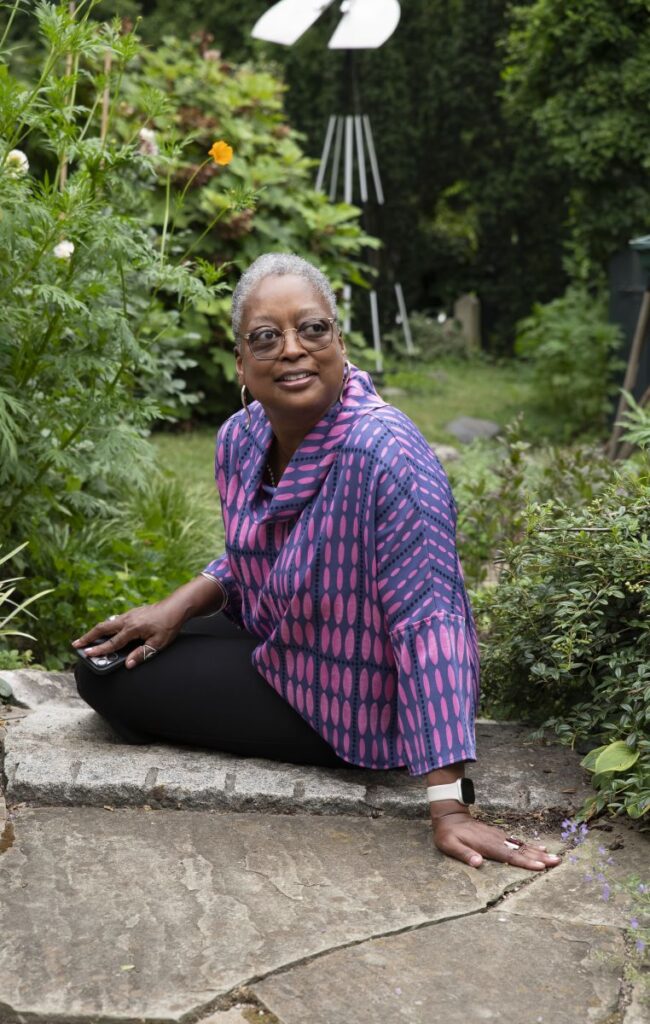
King Hammond was moved by Day Clark’s work as a scholar as well as a photographer, particularly in the ways her photos captured women and Black communities—including the one in which she lived along North Ave in Baltimore. Through their evolving friendship, Day Clark would come to spend more and more time with the Gurlz. “It wasn’t one big moment that brought us together,” she reflects. “It was just a synergy that grew.”
They were at a lunch, as some remember it, when Day Clark finally pronounced herself one of the Gurlz. Scott interrupts the story here, the playful gatekeeper, joking that she gave Day Clark a little smack for the presumption. But, according to Scott, Day Clark said, “I don’t give a fuck, I’m still a Gurl of Baltimore!”
In 2000, Amy Raehse made Baltimore her home. A curator with a focus on artists’ careers and legacy, she would come to manage Joyce J. Scott and represent her and Elizabeth Talford Scott’s works through her position as Partner and Executive Director of Goya Contemporary. Finally in 2019, King Hammond’s long-time friend—now scholar, curator, and author—Lowery Stokes Sims returned to Baltimore from New York after a monumental career which included serving 27 years as the first African American curator at the Metropolitan Museum of Art as well as the Executive Director and later, president, of the Studio Museum in Harlem.
Six Gurlz became nine.
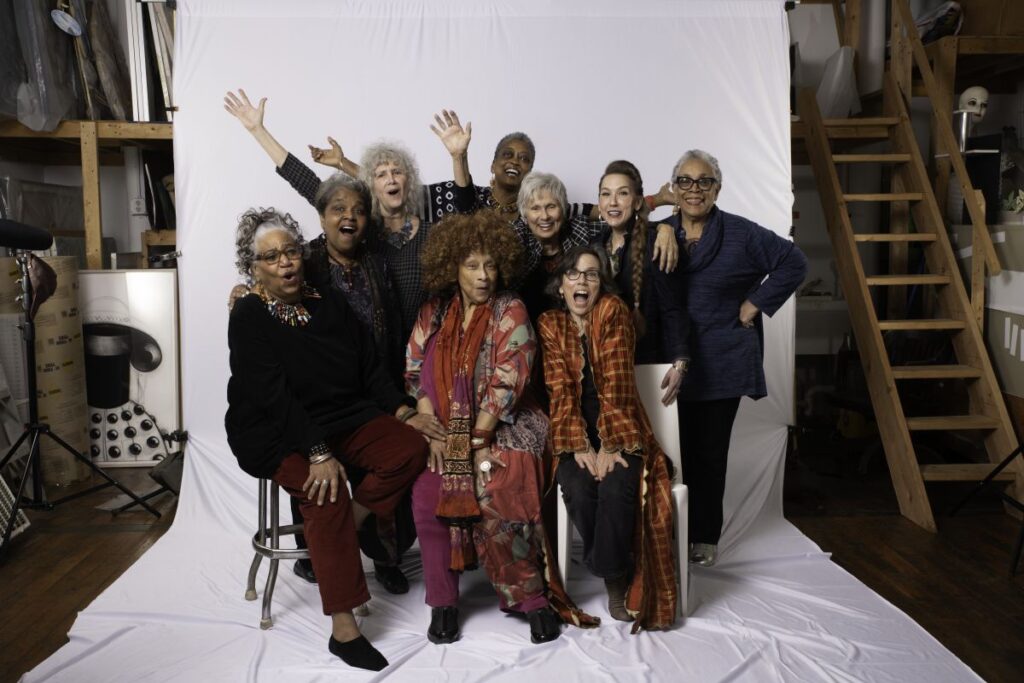
Linda Day ClarkIt wasn’t one big moment that brought us together. It was just a synergy that grew.
“What’s unique about the Gurlz of Baltimore,” Sims explains, “from my perspective as having been a curator in New York and used to everybody on my case about what I could do for them, is I don’t feel that kind of pressure affects our friendships. We’re not competing for men. We’re not competing for money. We’re not competing for shows. We’re supporting each other, helping each other fulfill our fullest potential.”
Now established and revered in their fields, The Gurlz come together to celebrate national and international commissions and exhibitions, major acquisitions, top positions at several of Baltimore’s leading art organizations and universities, lifetime achievement awards, even honorary doctorates. After her retirement in 2008, MICA awarded Dr. Leslie King Hammond the position of Professor Emerita. She has also been appointed to numerous museum boards, including that of the Peabody Essex Museum in Salem, Massachusetts. Joyce J. Scott won a MacArthur Foundation “Genius” Grant in 2016 and was honored with a sweeping retrospective exhibition, Walk a Mile in My Dreams, co-organized and exhibited by the Baltimore Museum of Art and the Seattle Art Museum in 2024.
The day I talk with them in Scott’s living room, The Gurlz are cheering Linda Day Clark’s recent retirement after serving twenty-seven years as a Professor of Fine Art at Coppin State University. Though their artists-for-hire business, Cambio may be well behind DePalma and Burchenal—exchanged for their own significant careers in art education at institutions including the Creative Alliance, the BMA, and MICA respectively—they still have that studio together. It’s been thirty years and counting.
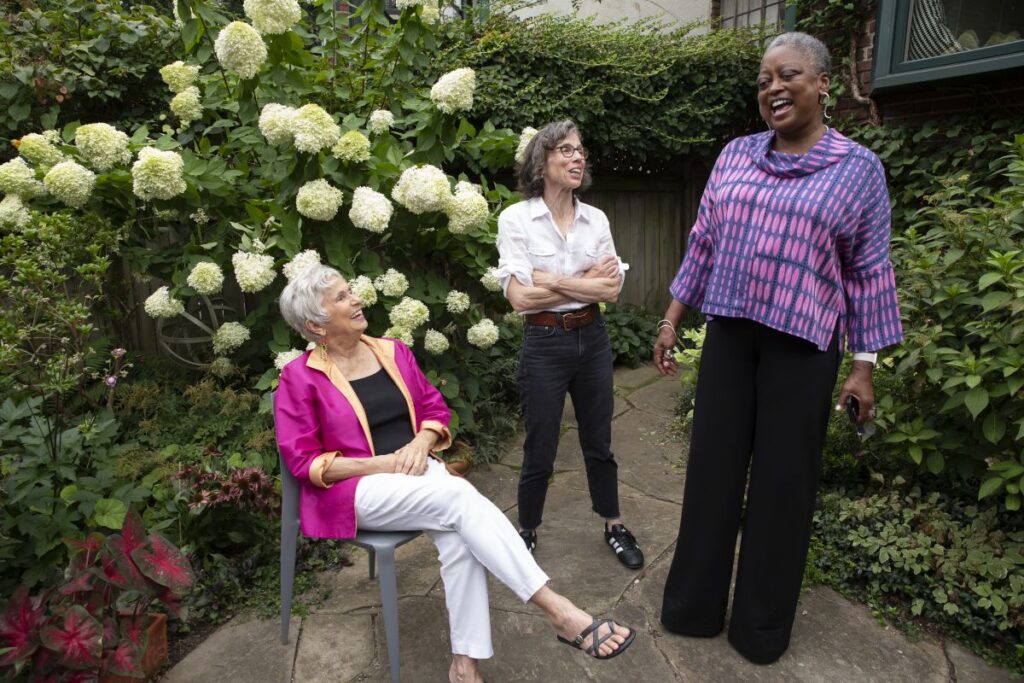
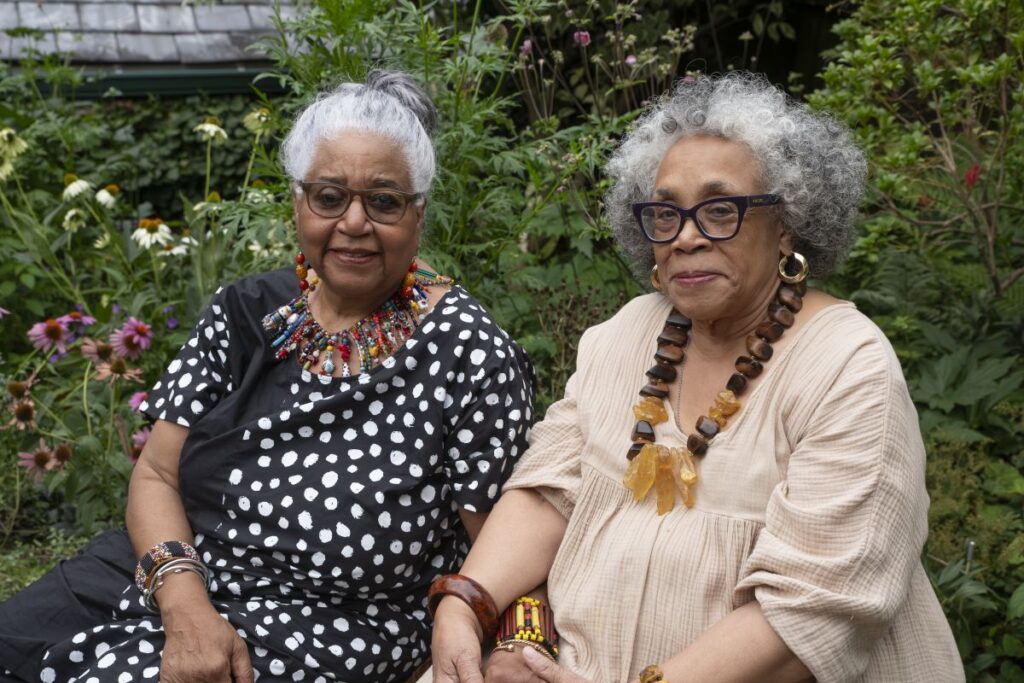
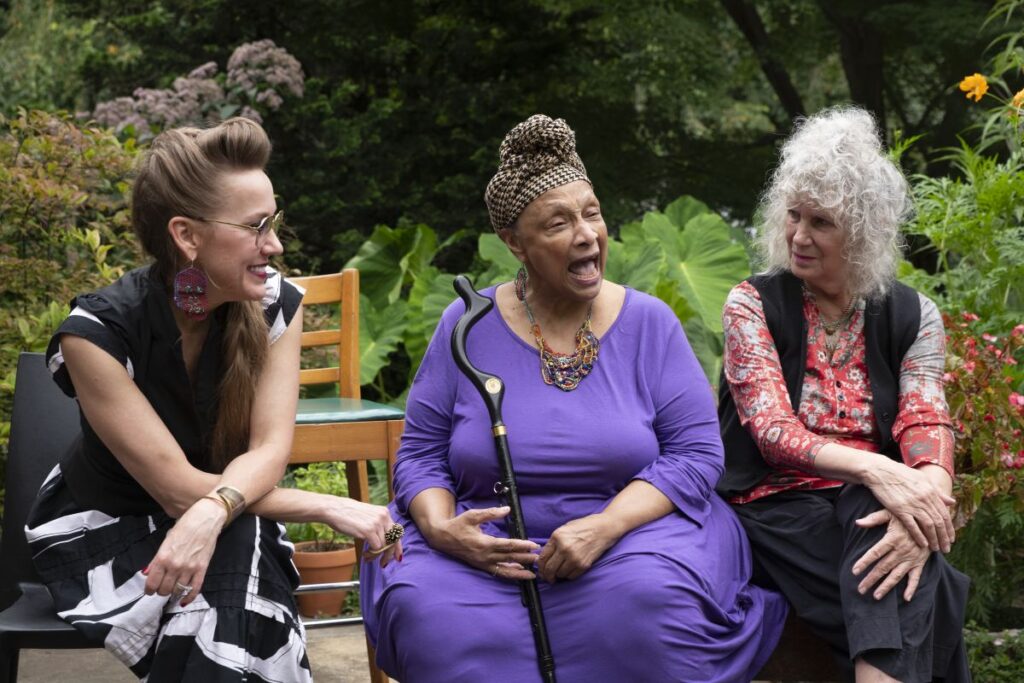
“I remain in awe of my ‘sisters’—my sisters in spirit, thought, and purpose,” Raehse says. “They are the voices in my mind. Their accomplishments are expansive, defying boundaries and, as the youngest among them, I find myself both inspired and deeply humbled by their companionship.”
The Gurlz are also intentional about extending their sphere of support into the broader Baltimore community. They organize the Body and Soul Holiday Art Fair at Motor House, connecting local artists and shoppers. At Christmas, they are the Santa Mamas, providing gifts for families in need. Still what truly anchors their collective lies mostly outside of the public eye. It’s that word, companionship, which defines them above any other accomplishment.
“Each person comes with their own weird set of differences and we are always changing,” says King Hammond. “We don’t have to forgive because we already know it’s going to be bizarre. We accept each other, carte blanche. And should the person need help, we don’t hesitate. We don’t question it. We’re there.”
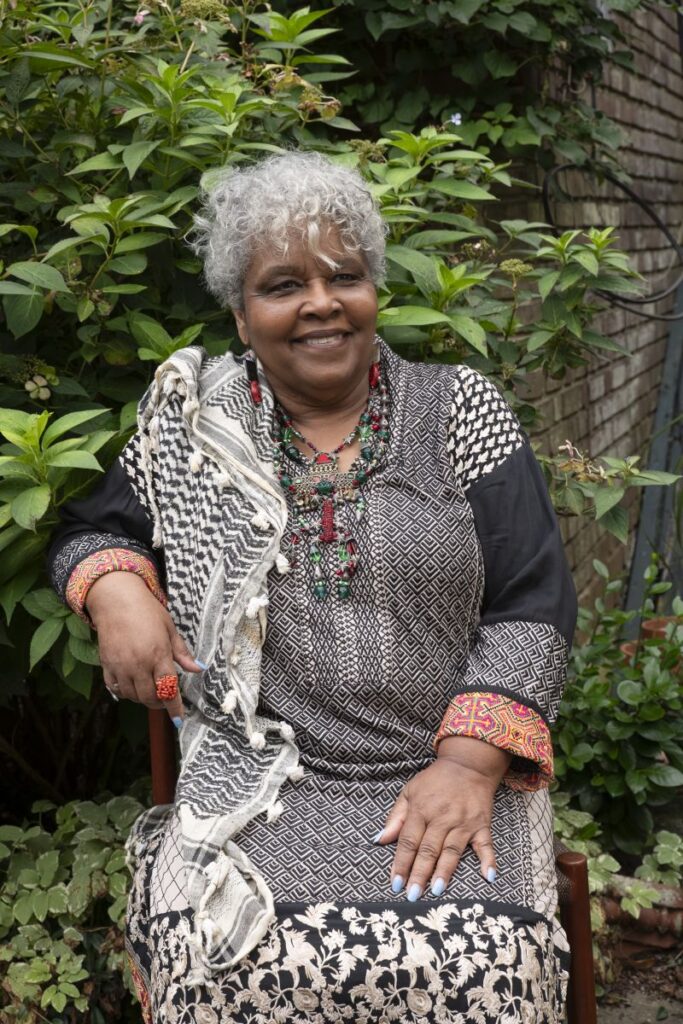
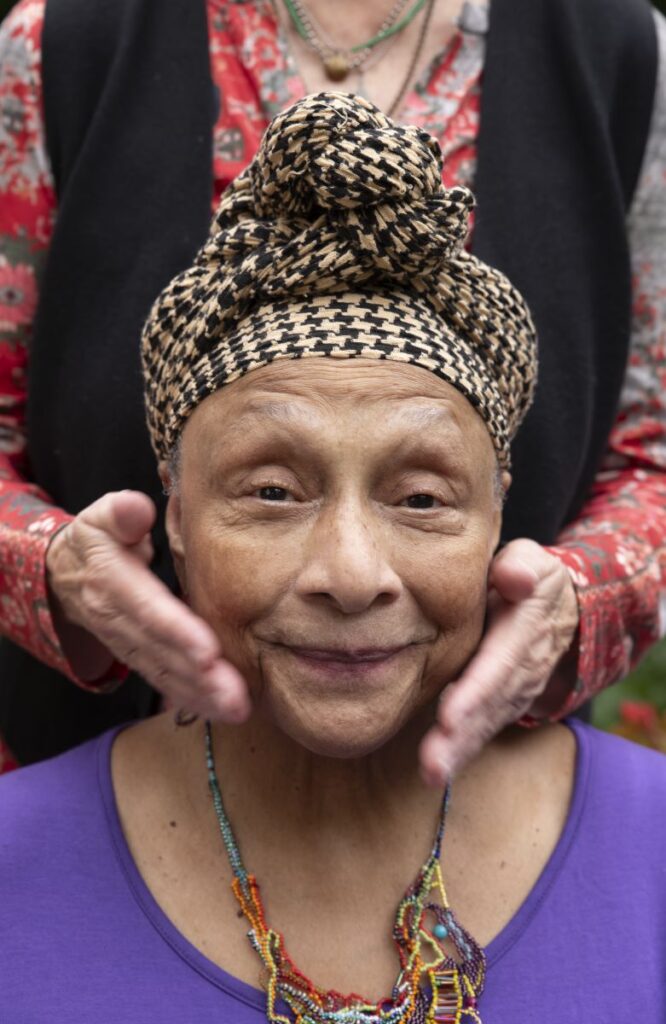
Leslie King HammondWe accept each other, carte blanche. And should the person need help, we don’t hesitate. We don’t question it. We’re there.
King Hammond refers to Scott’s late mother, Elizabeth Talford Scott, as “Mom.” Most of the Gurlz do. And when she died in 2011, they gathered with Scott at her funeral, speaking their memories as “a chorus” beside her. As the years brought the passing of more of their parents, then husbands, they showed up for each other without question, helping to sort through the emotional and logistical aftermath.
To the children of the Gurlz who are moms themselves, the collective is an extended family of aunties and Godmothers. They were the village when the kids were small and saw each other through the transitions and unexpected crises as those children grew into adults.
When DePalma found out she had breast cancer, she shared the news with the Gurlz one by one. “I was calling my troops,” she says. And scary as that time was, the women in Scott’s living room burst again with laughter remembering that DePalma sometimes wore an afro wig and sought out their head wrapping expertise when she was losing her hair from treatments, “See, they like to make fun of white women,” DePalma says. “They told me, ‘you mean, you don’t know how to wrap your head?’”
“The thing about our group is the sense of humor,” Tronolone says. “It saves us all. It really does.”
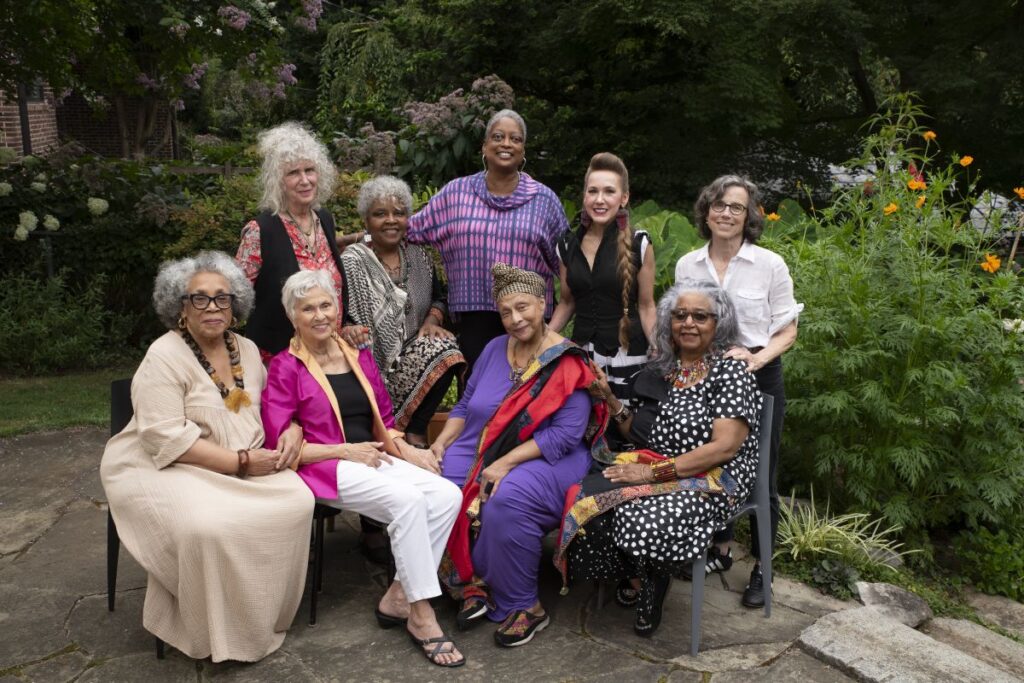
Scott’s living room windows are decorated with strung beads. All different colors and textures, coiled and spiraling, they catch the changing sunlight and refract it in so many directions. An apt metaphor for The Gurlz.
Their conversation drifts to what they’re going to order for dinner; oxtail. Soon Scott will kick me out so they can settle in alone together. But first, they allow me one last question: As they call themselves the Gurlz of Baltimore, I ask whether this city has been essential to their friendship. Scott nods, muses on the closeness of attached brick homes, how you can smell what your neighbor is cooking in Baltimore. Sims thinks so too. She suggests it’s JHU and MICA, that they have a kind of gravitational pull. So many artists who come through their programs stay or return to the city.
But DeVane takes a different view. “Women coming together… it’s about supporting each other regardless of what city or profession,” she says. “Friendships can happen anywhere, and they should happen everywhere.”