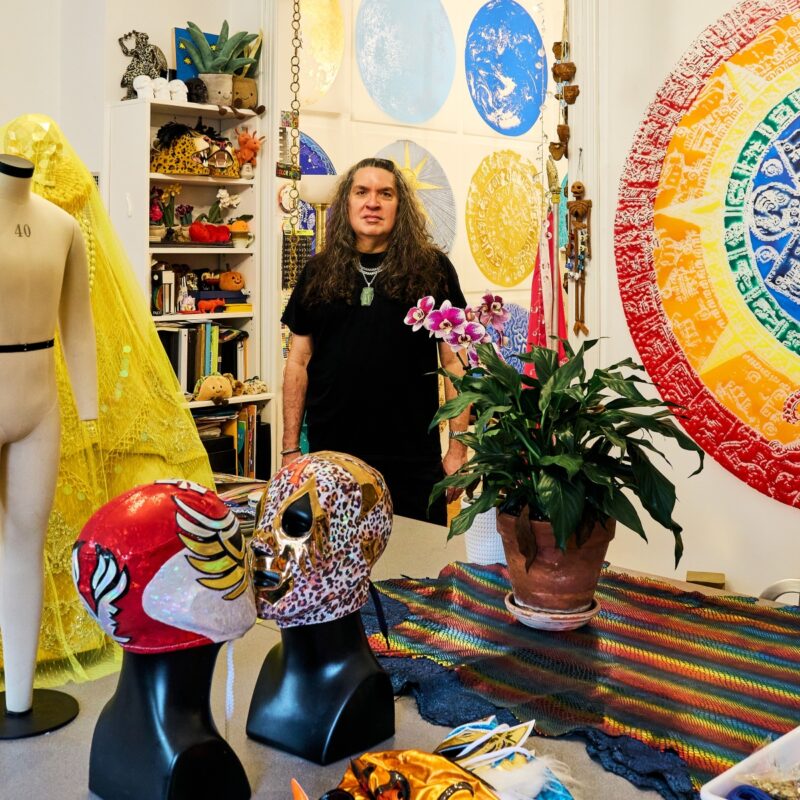
René Treviño grew up in a Mexican American family in Texas, a background that almost inevitably entails navigating layers of social, political, and cultural rupture. While it was the gorgeous glamour of Treviño’s work that first drew me in—the wildly queer costuming and regalia, the extravagant handiwork, the gender-bending theatrical identities—our conversation moved away from camp and spectacle and toward questions of craft, labor, and border politics. The interweaving of these elements in Treviño’s practice sits squarely in the sweet spot of the critic-curator in me.
In the Spanish-speaking border regions of a massive state—larger than France and far more diverse—traditional progressive identity politics often fail to account for the conflicting descriptors that structure daily life. This is something I would never have fully grasped had I not spent fourteen years working with artists in Houston.
During a Zoom studio visit with Treviño, as he was preparing for his next solo gallery exhibition in Dallas, our shared identity as former Texans kept resurfacing—particularly the question of what people living in New York, Los Angeles, or Chicago often fail to grasp about why Texas continues to vote for candidates who make life immediately and painfully worse for so many. Arts institutions can feel like small islands of sanity there, even as every director, curator, or fundraiser will tell you how complex survival can be. Treviño is now based in Baltimore, and I am in the Hudson Valley; looking back together at what we loved about Texas and Texas art—and what it feels good to have distance from—became a central thread of our conversation.
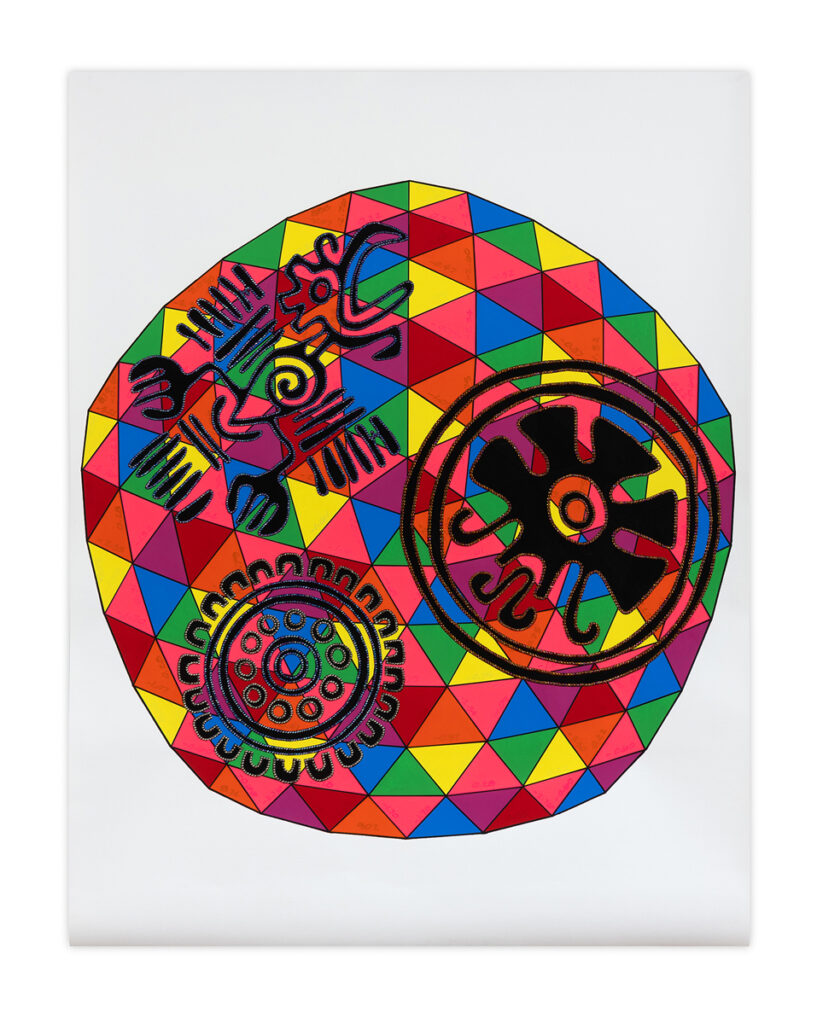
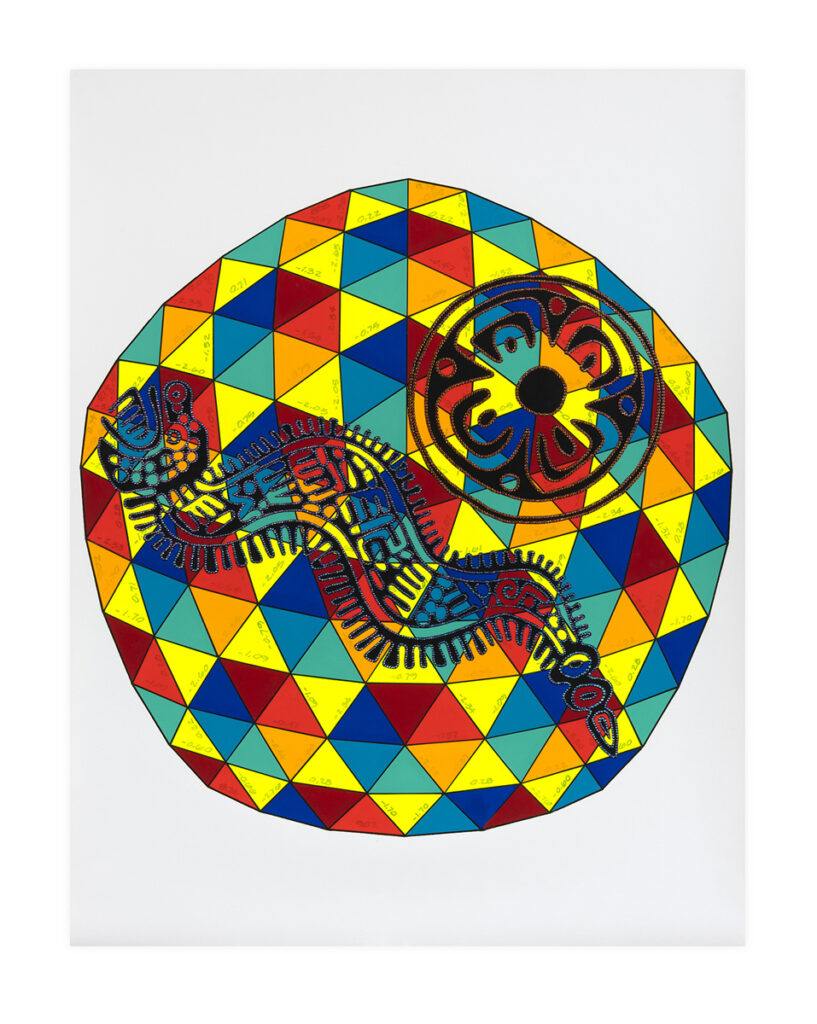
Bill Arning: Growing up in a Mexican American household in Texas, how present was the cultural memory of Mexico in your daily life? Was that history something actively taught and protected, or did it arrive more indirectly—through gesture, ritual, food, or silence?
René Treviño: It was present in everything. No one makes better enchiladas than my mother. My maternal grandmother made the best carne asada, and my dad’s mother made the best albóndigas. Both my grandmothers only spoke Spanish. A lot of my family has a distinctly South Texas Mexican accent. I love their half-English, half-Spanish way of speaking. That voice can feel like home.
With my grandmother in Laredo, we would cross the border into Nuevo Laredo all the time. I loved the color and the noise. I remember my uncles in their guayaberas with shiny hair. The cultural memory of Mexico is complex—what creates pride, what feels shameful as assimilation charts its inevitable course. What feels like birthright? What feels stolen? Those things change in seconds, based on context.
During my own years in Texas, the state often felt ideologically assimilationist. A friend once observed that Texas synagogues frequently resemble Protestant churches. Looking back, how visibly Mexican was the world you grew up in? Where did Mexican visual culture assert itself, and where did it recede or disguise itself?
We moved all over Texas. I was born in Kingsville, with family in the Corpus Christi area and in Laredo. My dad worked at JCPenney, moving every year or two for promotions. We lived in Alice, Victoria, and Temple. All those moves got exhausting, so he left that company and we settled in Lake Jackson, Texas. It’s about an hour outside of Houston, minutes from the Gulf of Mexico. It’s a 1940s Dow Chemical town—it all used to be swamp land—and it’s a mostly white suburb of Houston.
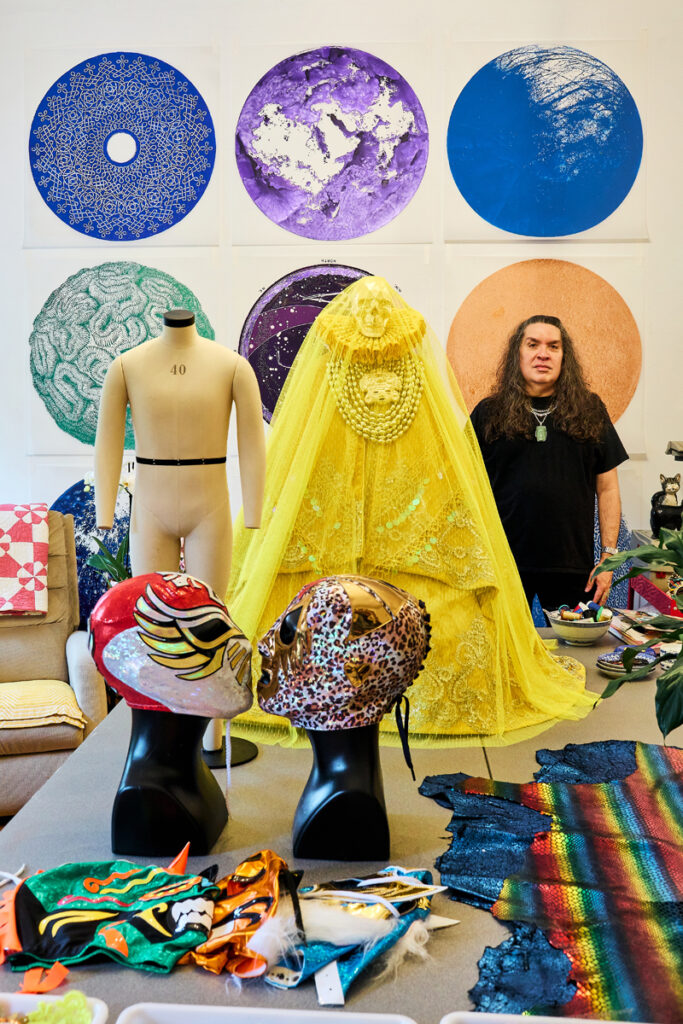
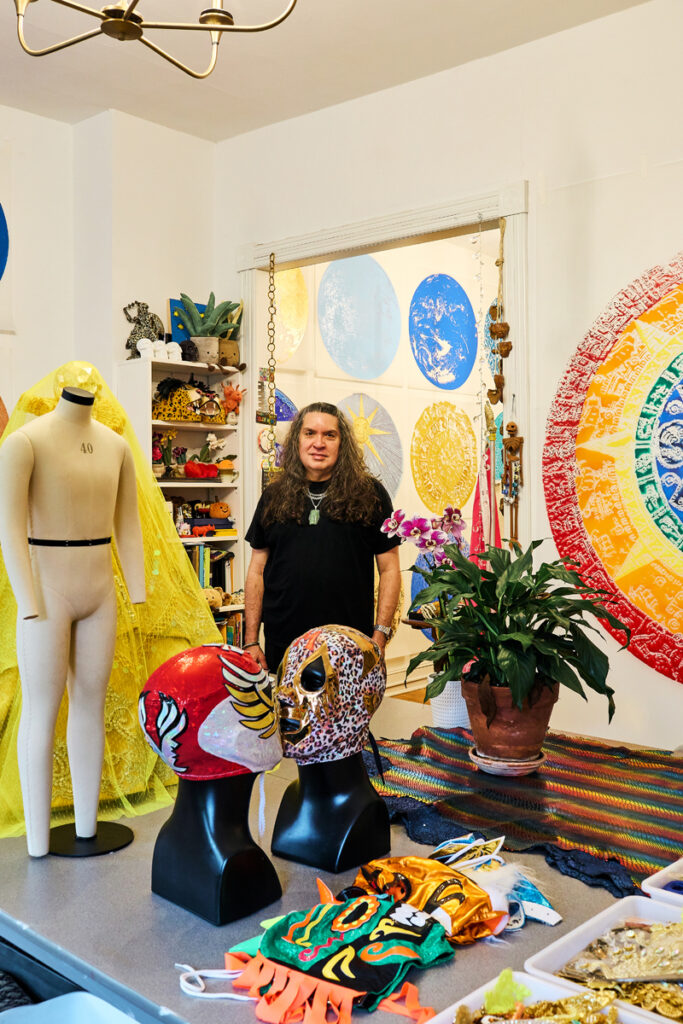
So my answer is that each place had a different relationship to Mexico. In South Texas I felt more connected to being Mexican; in Temple and Lake Jackson, less so. And then there was queerness, too. It was exhausting—still is. The ideological pressure to assimilate is palpable: to shrink down, not call attention, to make ourselves quieter. That pressure is profound. It calls on us to become more akin to whiteness, even as it ensures we will never actually be entitled to its privileges.
Your work insists on the presence of the hand. What does hand labor do to meaning in your practice? Where do you draw the line between what must be made by you alone and what you are willing to entrust to others—and why?
My parents grew up poor. My mother had to leave school to pick cotton. That money was important for the family. I understand how hard they worked so that I could have the life I have. You don’t accidentally become middle class—it was all labor.
I never had to pick cotton, but that impulse to work is embedded in me. So I paint. So I sew. It’s a different kind of labor—less backbreaking—but it is labor nonetheless, and it’s essential to the meaning of the work I make. That said, time is increasingly finite. I keep trying to figure out how to make things more quickly. None of my strategies have worked, and that seems okay for now.
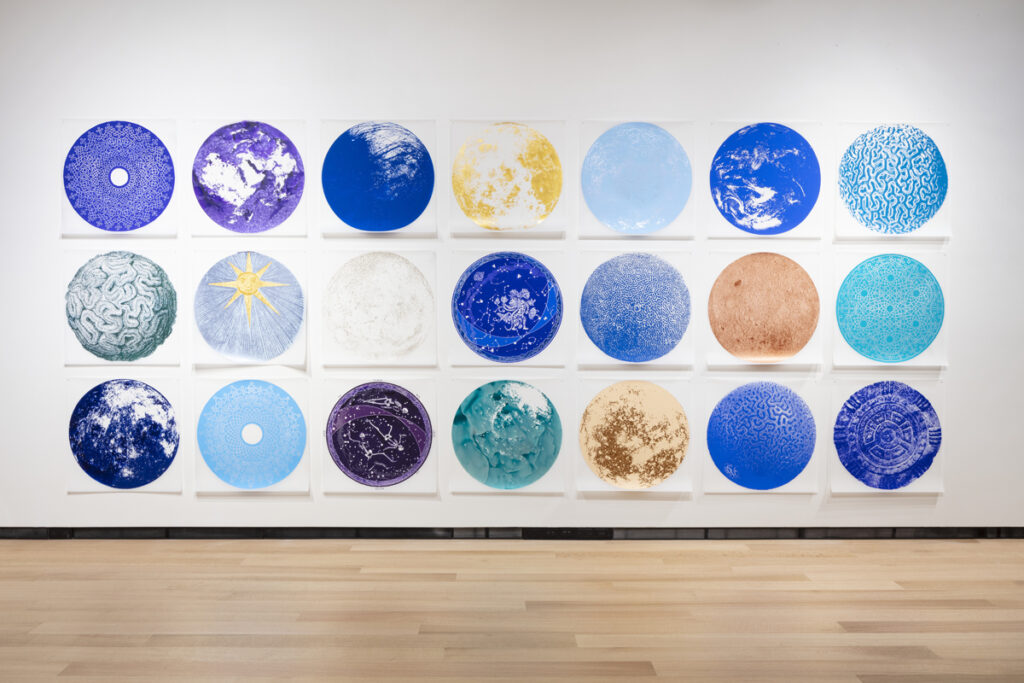
René TreviñoI never had to pick cotton, but that impulse to work is embedded in me. So I paint. So I sew. It’s a different kind of labor—less backbreaking—but it is labor nonetheless…
The Texas art ecosystem can be heavily advisor-driven, often rewarding polish and decorativeness. I’ve always thought of you as something of a chameleon—entering through beauty, then slowly revealing sharper, more dangerous content. How does beauty function in your studio practice: invitation, camouflage, seduction, or something else entirely?
I like a big studio practice. Sometimes I want to paint in stillness; other times I want to wrestle with ideas and materials. I do love beauty—I know how to make beautiful things. Life is beautiful, but it’s also chaotic and tragic and Sisyphean. The work should be all of those things too.
The work often feels charged with mysticism. Do you think of yourself as a magician, an alchemist, or more as a careful observer of belief systems and rituals? Where does faith end and analysis begin for you—if it does at all?
The studio is a place where I can make nothing into something—maybe everything. I do feel powerful as I will something into existence. I make these star-chart paintings using very wet paint, working flat. The stars are actually the white of the paper. If the brush is too loaded, it’s easy for a star to close up and disappear. As I contemplate the cosmos and other solar systems, it feels wild to watch a star vanish—and to know I caused it. It can feel heady. God-like. And then one of my cats jumps on the table and the creator is instantly humbled.
I grew up Catholic, and my family is still quite religious. As a kid in South Texas, I was starved for glamour—and Catholic mass is full of glamour and theater.
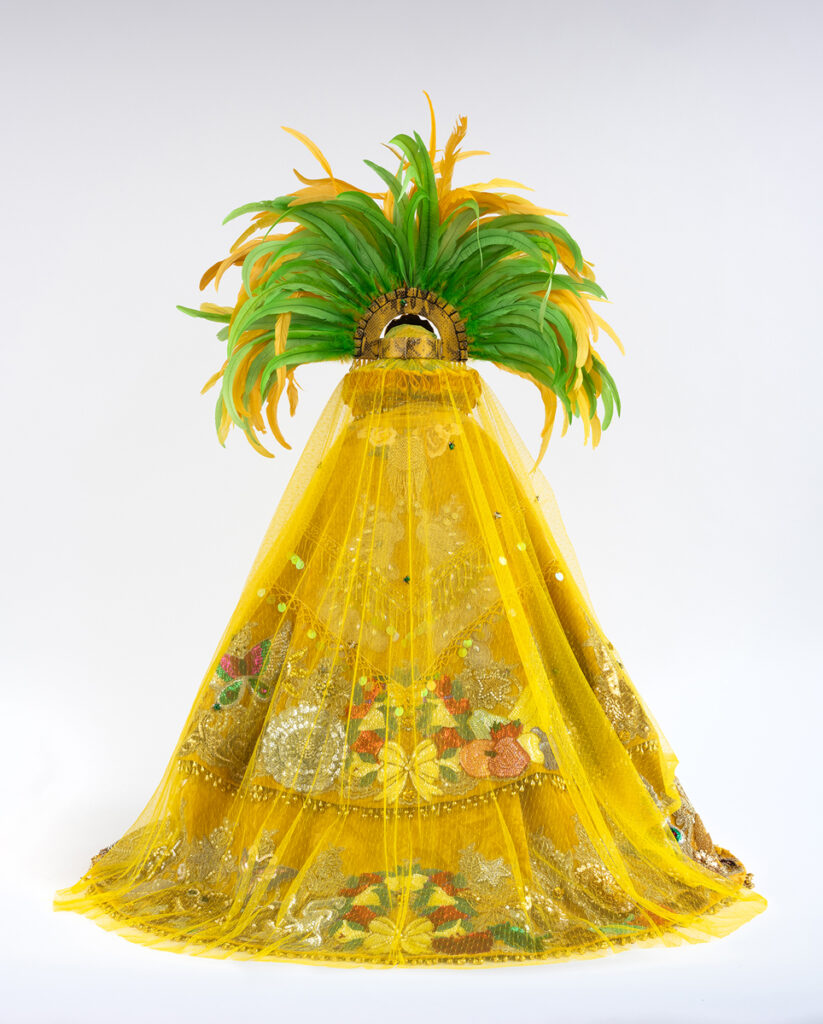
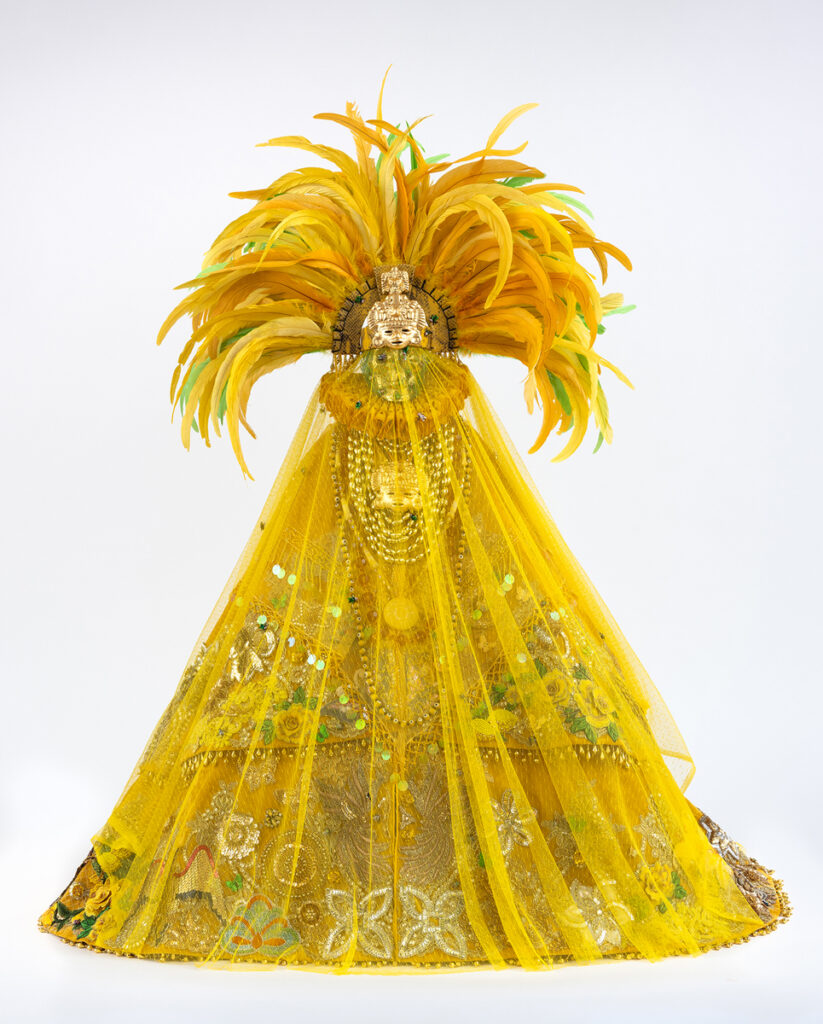
René TreviñoI grew up Catholic, and my family is still quite religious. As a kid in South Texas, I was starved for glamour—and Catholic mass is full of glamour and theater.
Costume and regalia belong to a deeply democratic visual language: people who may never enter a museum will still dress elaborately for a parade, procession, or ceremony. How do your regalia works tap into that populist energy, and what kind of collective memory or shared fantasy are they asking to activate?
I love a parade. I also deeply appreciate the Aztec performers in the Zócalo in Mexico City. You’re right—costume and regalia are democratic, but they also speak to wealth, divinity, and power structures.
I watched King Charles’s coronation in 2023—sped up at 2× on YouTube. I had never seen a coronation before, only images. I was surprised by how familiar it felt: a slightly more grandiose mass. Of course it was a mass—pure theater, architecture, and pomp. I’m not Catholic anymore, but that iconography is fully baked into my soul.
My regalia works fuse Aztec regalia with European coronation robes, remixed through queerness and my own lived experience. My father’s mother made a beautiful red satin vestment for a Santo Niño sculpture in her church in Laredo. I wish I had a photograph—it lives only in my head. She cut apart white and gold lace to make the appliqués, with the tiniest invisible stitches. I come by all of this honestly.
In terms of collective memory, I want to imagine an alternative to colonial history—one not rooted in pillage and annihilation. Could these moments of contact have been peaceful, celebratory, mutually beneficial? History says no—humanity is terrible—but I still wish we could grow past this violence into something that honors our shared humanity.
Now living in Baltimore—at a distance from the lived, messy realities of the Texas–Mexico border—how has that geographic shift sharpened or clarified your thinking?
I live far from the border now, but immigration is omnipresent. The politics around it are insane. I can’t believe where we are as a country—though at the same time, of course, I understand how we got here.
Baltimore has a wonderful Latino population, and I worry for everyone in this political climate. My experience as a Mexican American is more Norteño, Tex-Mex. The Mexican communities here demonstrate just how diverse Mexico is—different foods, different sensibilities—but there’s still deep connectivity.
My work speaks to shared humanity. We are far more similar than we are different.
Peace is harder to imagine, but we have to try. We have to try.
¡Resistir!
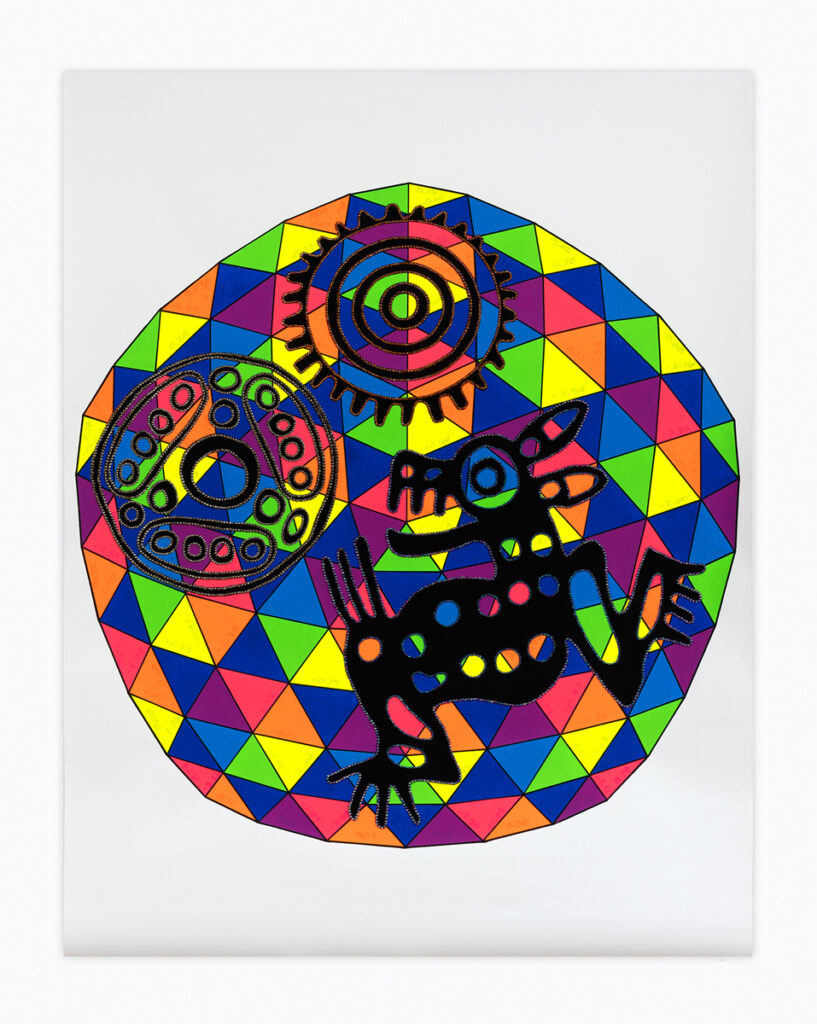
Star-Crossed: Recent Works by René Treviño opens at Erin Cluley Gallery in Dallas, Texas on February 21 with a reception from 5–7 pm
Exhibition Dates: February 21 – March 28, 2026
Justin Tsucalas photographed René Treviño for his ongoing Studio Visit series, featured in the Icons print issue of BmoreArt. Copies are available both online and at local booksellers.