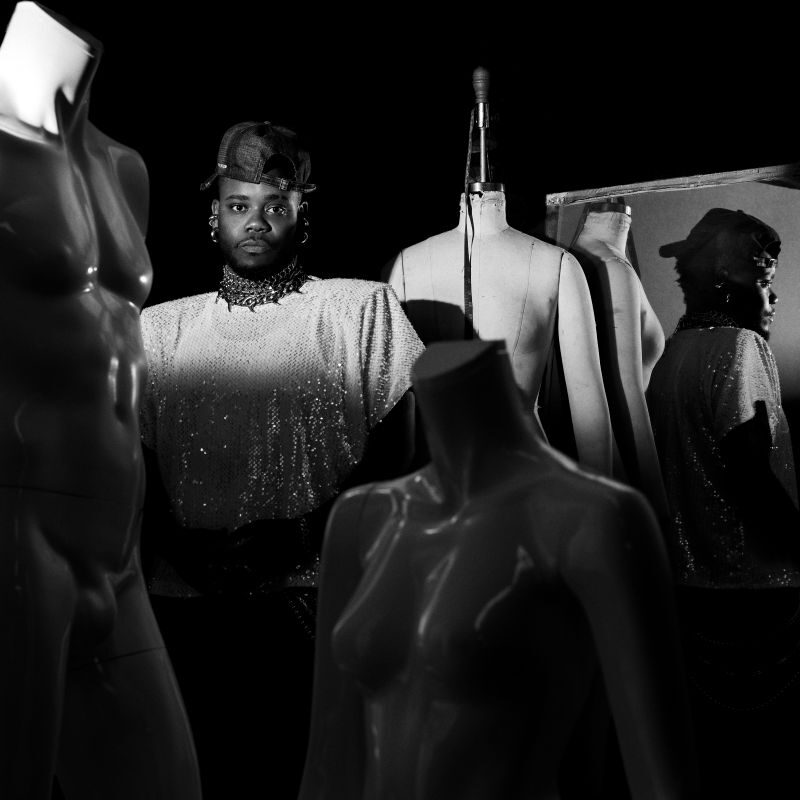
When does a garment transcend its function and become sculpture? At what point does fabric, manipulated by a designer’s hand, cease to be mere clothing and become a vessel for memory, a shield of resilience, an architecture of emotion? For East Baltimore-born designer Bishme Cromartie, these are not abstract questions; they are the very foundation of his practice. Over a career marked by relentless drive, profound loss, and a profound return to his roots, Cromartie has solidified his place as a Baltimore icon by treating fashion as a fine art, molding each creation into a powerful, wearable form—divine couture.
He defines his artistic lineage with startling clarity: “I’m the love child of Virgil Abloh and Alexander McQueen.” In his artful garments, one sees McQueen’s dedication to sculptural form and theatrical storytelling, fused with Abloh’s revolutionary spirit of reclamation and visual remixing across media. Yet first and foremost among Cromartie’s influences is home.
“Baltimore prepped me,” he says, his voice a mix of reverence and certainty. “I don’t know how to explain it, but Baltimore prepped the hell out of me.” That preparation started with his sister, Chimire Faye Didley, his earliest and most vital champion. She was the one who recognized a creative fire in her 13-year-old brother. She gifted him his first sewing machine and later took him to see the Alexander McQueen Savage Beauty exhibit at the Metropolitan Museum. By his sixteenth birthday, he’d show off his first fashion line, part of a show hosted at the Eubie Blake Cultural Center.
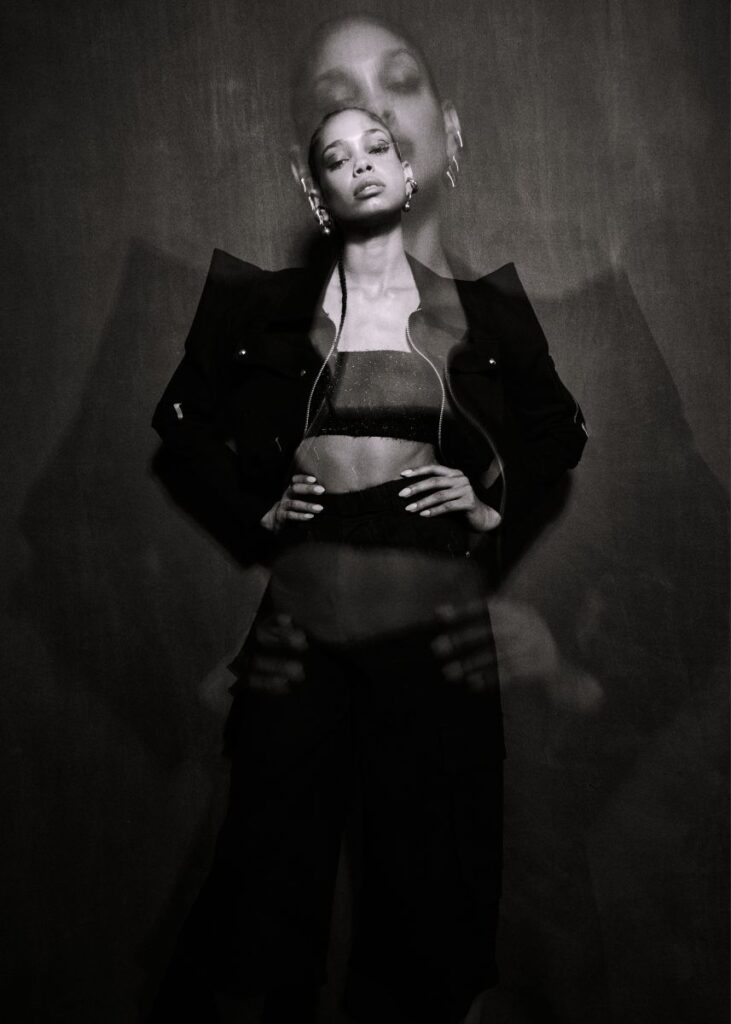
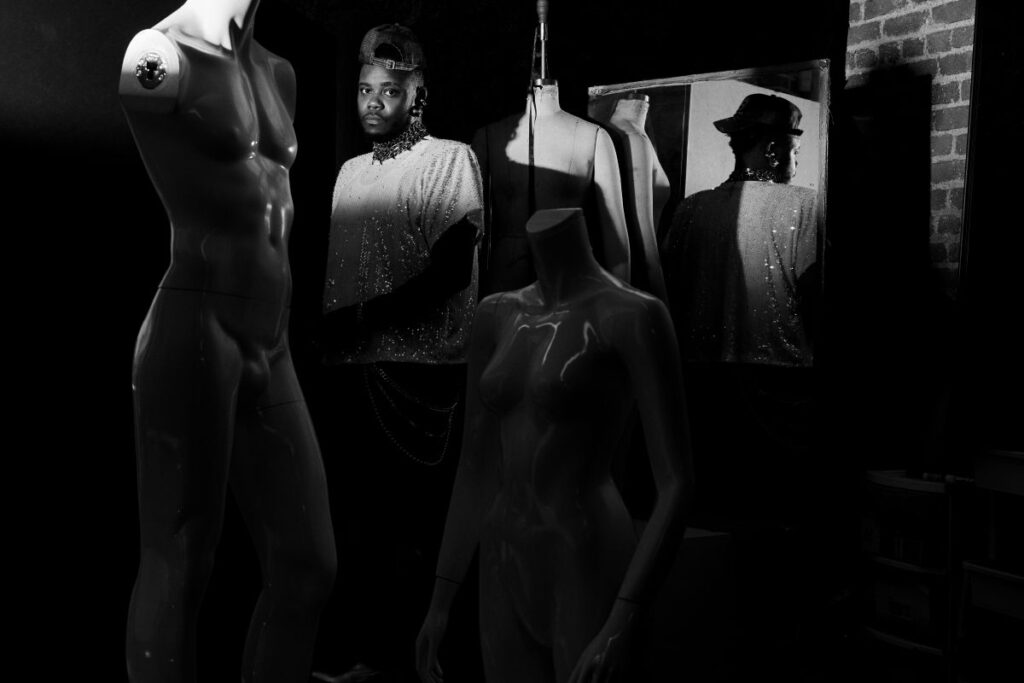
Teri HendersonBishme’s victory on Project Runway was not the creation of a star, more the revelation of one. He arrived on the show already fully formed, an underdog whose quiet kindness belied a fierce, emotionally charged design philosophy.
Cromartie continued to grow in his craft, and, in 2019, would find himself on one of the top reality TV series of its time: Bravo’s fashion design competition Project Runway, Season 17. He made it to the finals, offering up a creative array of avant-garde designs mixed with a touch of streetwear, finishing in fourth place. After this success and national visibility, he moved to Los Angeles to pursue his fashion career. In 2023 he was invited back for Project Runway All Stars, Season 20, where fan favorites from previous seasons compete for another chance to be crowned winner.
Tragically, the timing of his acceptance to Season 20 coincided with his sister’s final days. This grief and this incalculable loss would serve as incendiary for the artist; he used this energy, aligned with focus and intention and determination, to propel him to the finale, where he was crowned the winner. He admits the decision to go was agonizing, because he did not want to leave his sister. But it was her voice, faint but firm, that propelled him forward. “You should go,” she said, “because you’re going to win.”
Bishme’s victory on Project Runway was not the creation of a star, more the revelation of one. He arrived on the show already fully formed, an underdog whose quiet kindness belied a fierce, emotionally charged design philosophy. He found strength not in conforming, but in embracing his own story. Cromartie’s ability, honed in Baltimore, to hustle and improvise was foundational to his success. “Don’t be afraid to be vulnerable,” was a message that came to him during the competition, an affirmation of a process he had long understood. “I put all my emotion into my designs,” he states simply.
This ethos explains the powerful, sculptural quality of his work; the dramatic silhouettes and intricate forms are not arbitrary embellishments but the physical manifestations of his inner world. He creates what he calls “armor,” clothes that empower the wearer because they are imbued with the strength of their maker, gowns that elongate the body with structural forms that accentuate strength and protect softness.
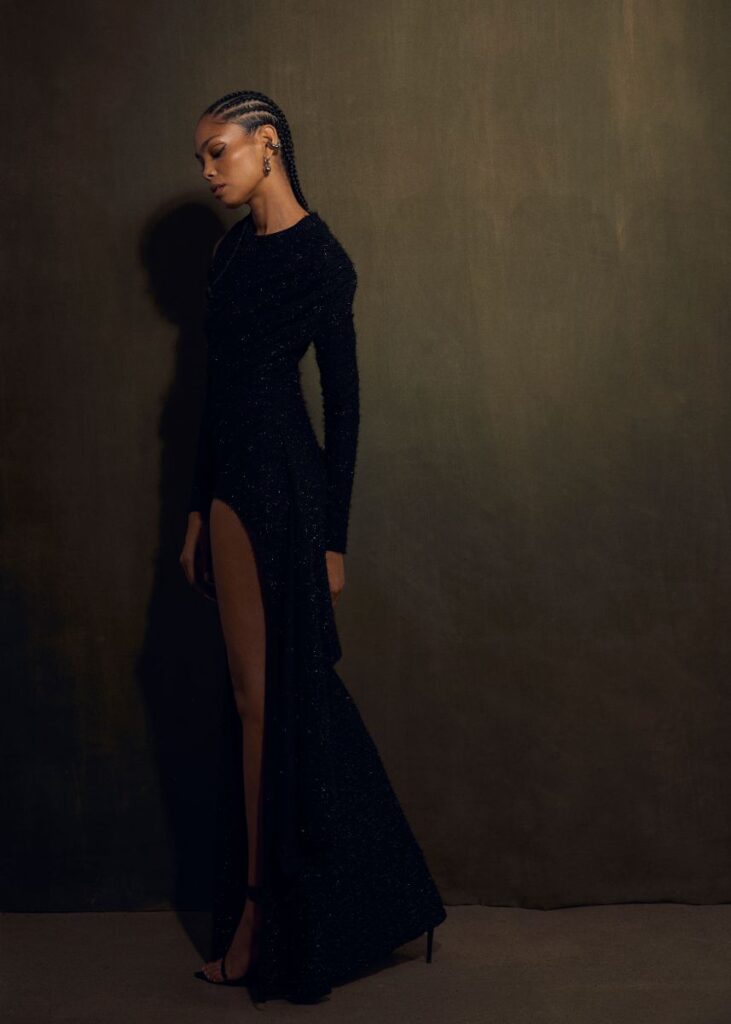
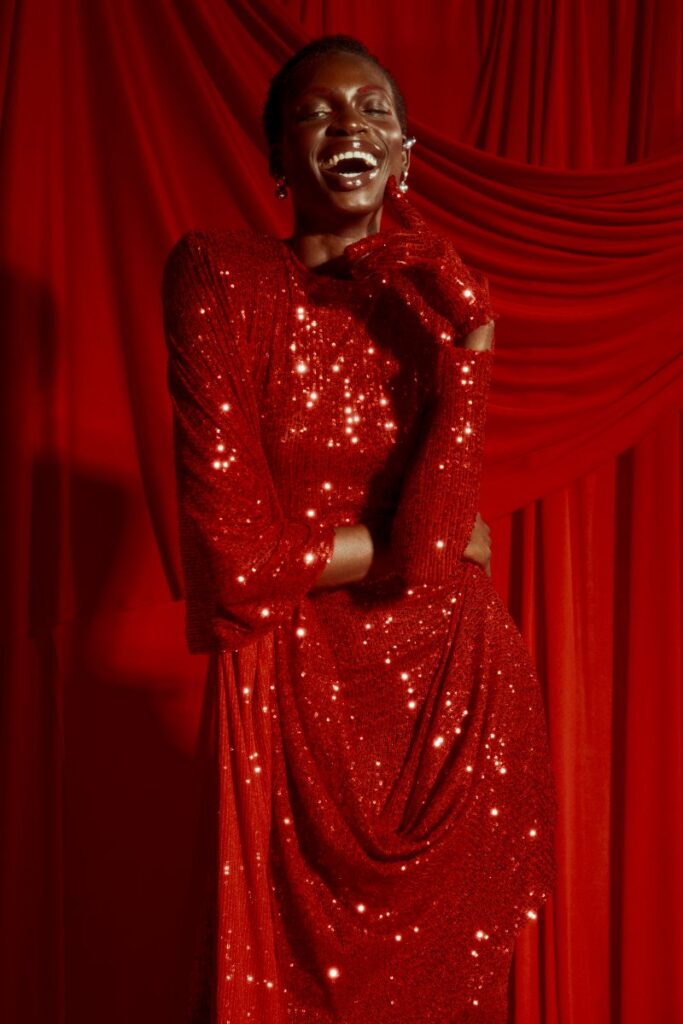
After Project Runway, Cromartie found himself in a position familiar to many artists: celebrated but still fighting for a foothold. He debuted a new fashion line for New York Fashion Week in 2023 to rave reviews, but building a brand takes time. Cromartie has been featured in Elle, Essence, Forbes, and Vogue, with a growing list of celebrity clients including Ciara, Lizzo, Victoria Monet, Chloe Bailey, Jennifer Hudson, Michelle Williams, Fantasia, and Tyra Banks. He was named a FGI Rising Star in 2024, and it feels like it’s only a matter of time until he becomes a household name, but sometimes there are bumps in the road disguised as opportunities.
Case in point: while designing looks for Mary J. Blige’s 2025 For My Fans tour, Cromartie got a call that would usher in another pivotal moment in his career, when he had to trust his gut for a quick turnaround. Supermodel and Project Runway Host Tyra Banks was appearing on an episode of the new season where the theme was avant garde. Cromartie had just a few hours to design and ship a custom outfit for Banks to NYC while working on his newest line.
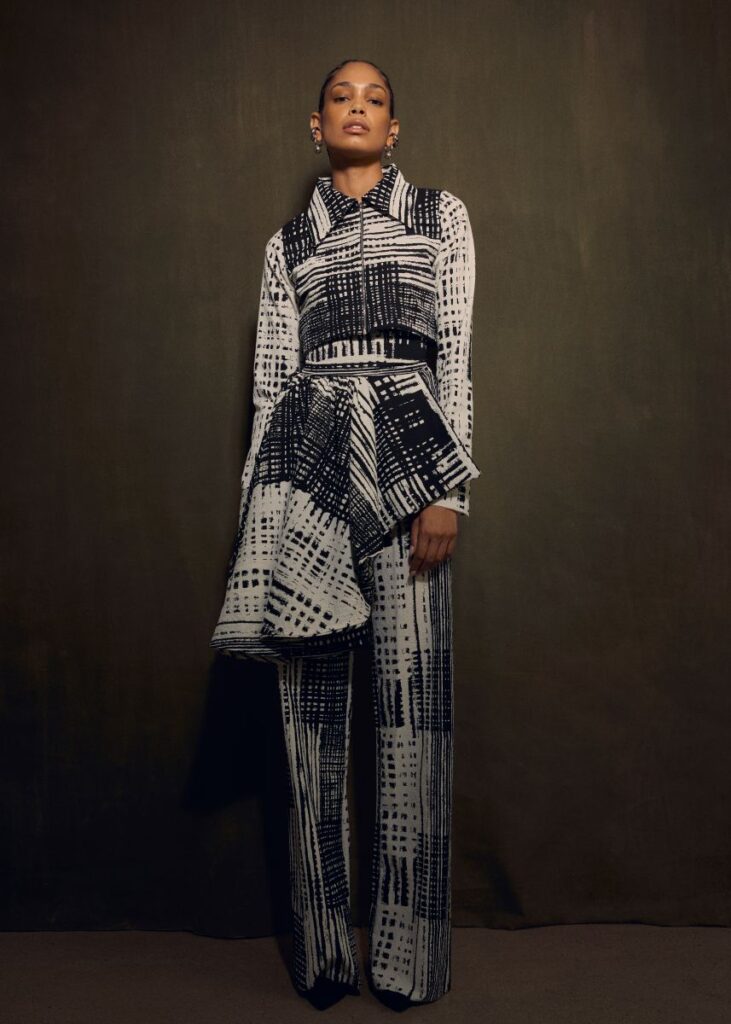
“I moved on instinct,” he says. “That urgency, that fire is all fueling what I am building now.” Now documented, Banks’ custom pants suit, in velvety black with a dark green drape and cape, is emblematic of his newest line titled Baroque Clairvoyance. Released in September 2025 during New York Fashion Week, Cromartie set the stage not in a sterile white box in Manhattan, but in Baltimore. The runway show took place at Area 405, the artist-founded Station North studio and gallery located in a warehouse that started out as the Albion Brewery in 1848. The decision to feature his new line in a creative industrial site in Baltimore was a homecoming, both literal and spiritual.
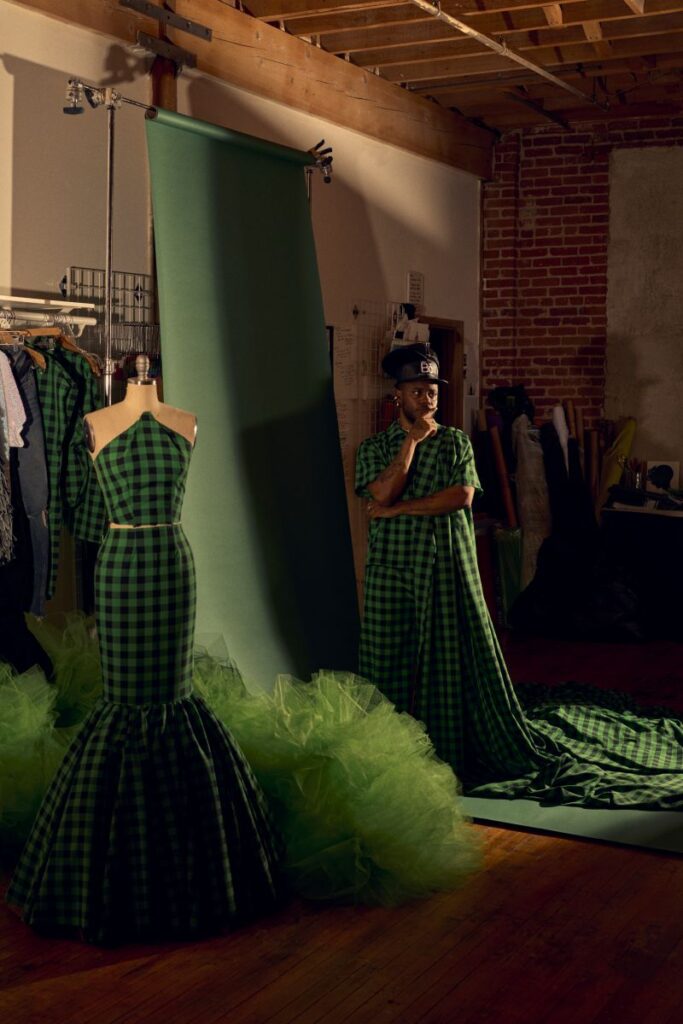
Baroque Clairvoyance marks a significant turning of the page, the first chapter in a powerful return to his Baltimore base. With this runway moment, held on a not too far off Greenmount Avenue, where he grew up, Cromartie succeeded in reclaiming a legacy that is rightfully his. In wraps and folds of emerald and ebony fabric, including a striking green and black checkered pattern, models of color walked the runway with distinct grace. The line features exaggerated shapes, bold patterns, and intuitively constructed shoulders, utilizing a striking green and black check in an array of gowns, pants suits, and layered ensembles.
This event wasn’t just a collection unveiling; it was a potent representation of his foresight and the clear vision with which he is manifesting a brilliant future, one that unfolds through time and space in the very city that raised him. The entire event felt profoundly like homecoming, a powerful witness to a Baltimore son’s return. The show itself was an immersion into Cromartie’s world.
“A lot of times in my studio,” he admits, “I find myself wanting to either paint, or draw, something that takes away from fashion.” His previous fashion line, INCAENDIUM, all reds and black glitter, was also inspired by a significant life event for the designer: the Los Angeles fires of 2024, which destroyed many of his plans and forced him to reconsider his opportunities, both on the West Coast and in Baltimore.
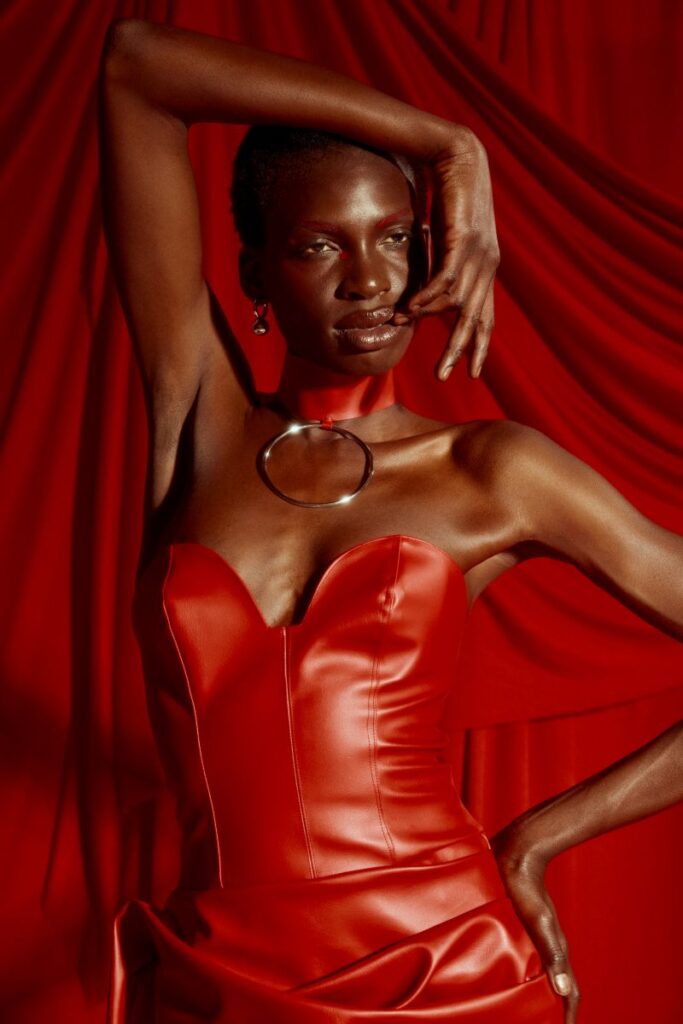
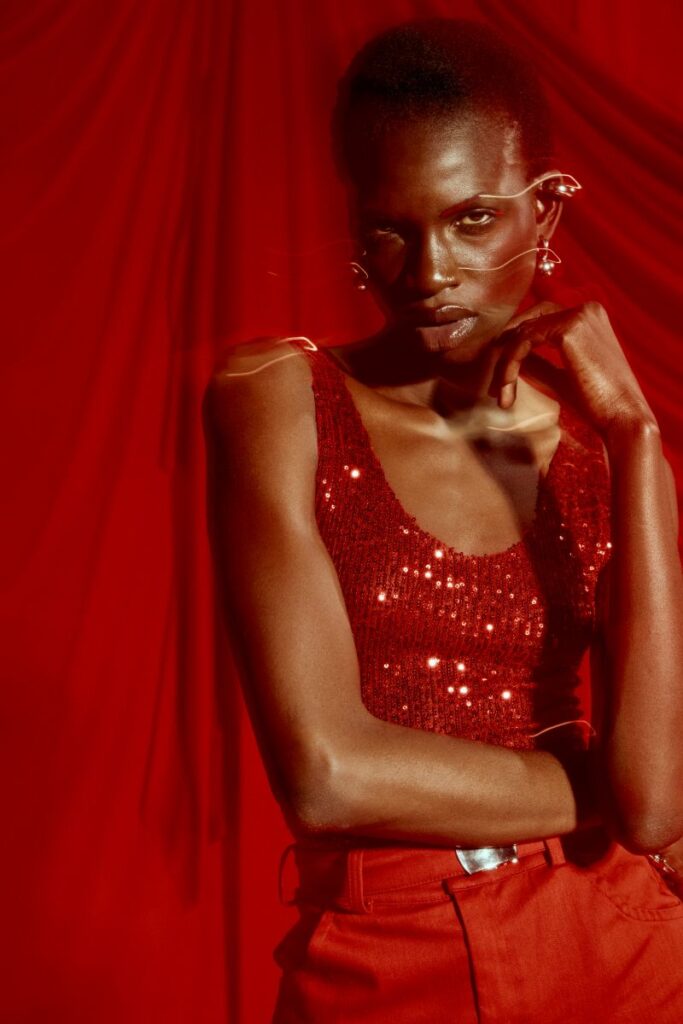
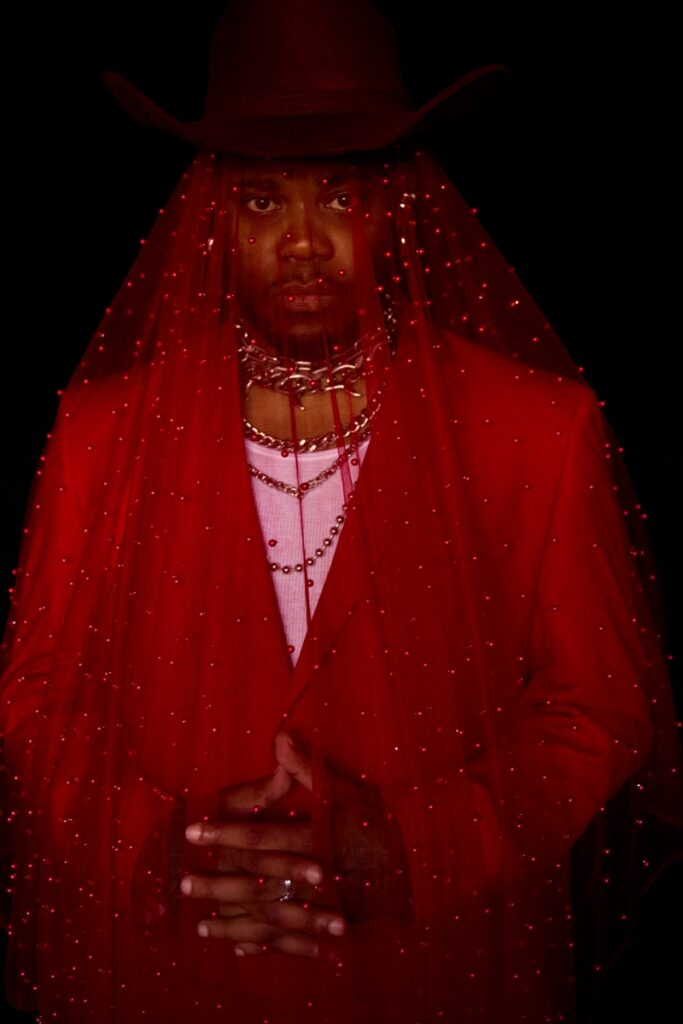
Teri HendersonThe newest collection is dedicated to Baltimore, an attempt to capture the raw, creative energy of a place where, he says, “we can create anything out of nothing.”
The newest collection is dedicated to Baltimore, an attempt to capture the raw, creative energy of a place where, he says, “we can create anything out of nothing.” Cromartie hopes to create a new blueprint for success, to show the next generation that “you can leave home and still come back and be supported.” He continues to maintain a strong relationship with Baltimore’s creative communities, including mentorship and numerous speaking engagements at the Baltimore Design School, where he is an alumni.
Whether designing for Baltimore or Los Angeles, the feeling his garments impart is paramount. “I want everyone to feel confident and empowered and powerful in my garments,” he explains. With bold colors, sumptuous textures, and rich colors that evoke decadence and splendor, a person dressed in Bishme Cromartie is a person to be not only seen but fortified.
It’s a sentiment that echoes his idol, Alexander McQueen, who famously said, “I want to empower women. I want people to be afraid of the women I dress.” For Cromartie, that power is also a conversation starter, an opportunity for the wearer to practice taking a compliment, to stand a little taller.
Cromartie understands that a garment can be both a masterpiece of construction and a symbol of community. He is an architect, building a legacy one powerful, emotional silhouette at a time, proving that the strongest structures are those built on a foundation of home.