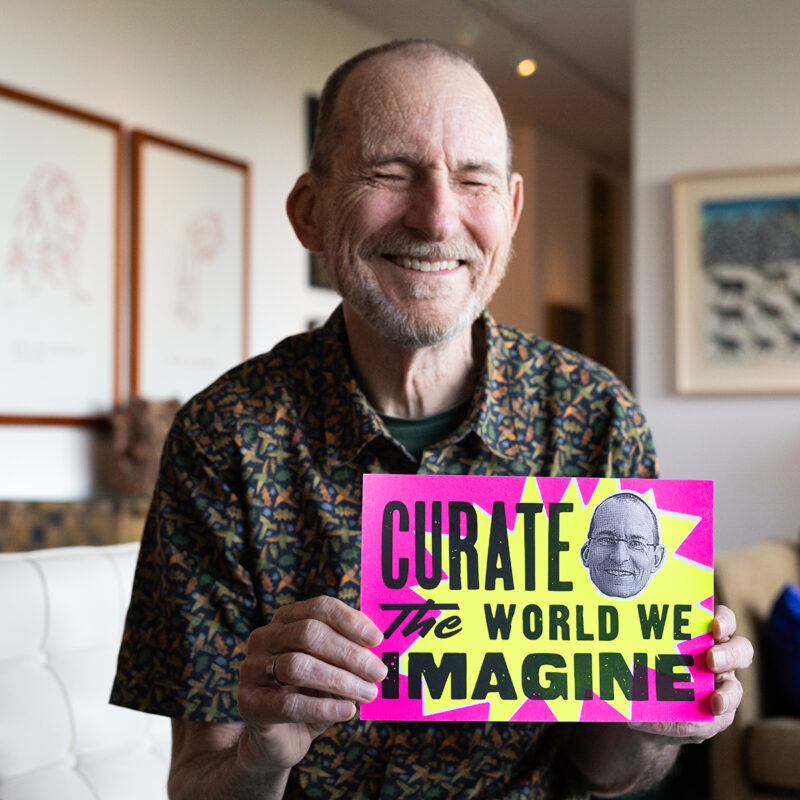
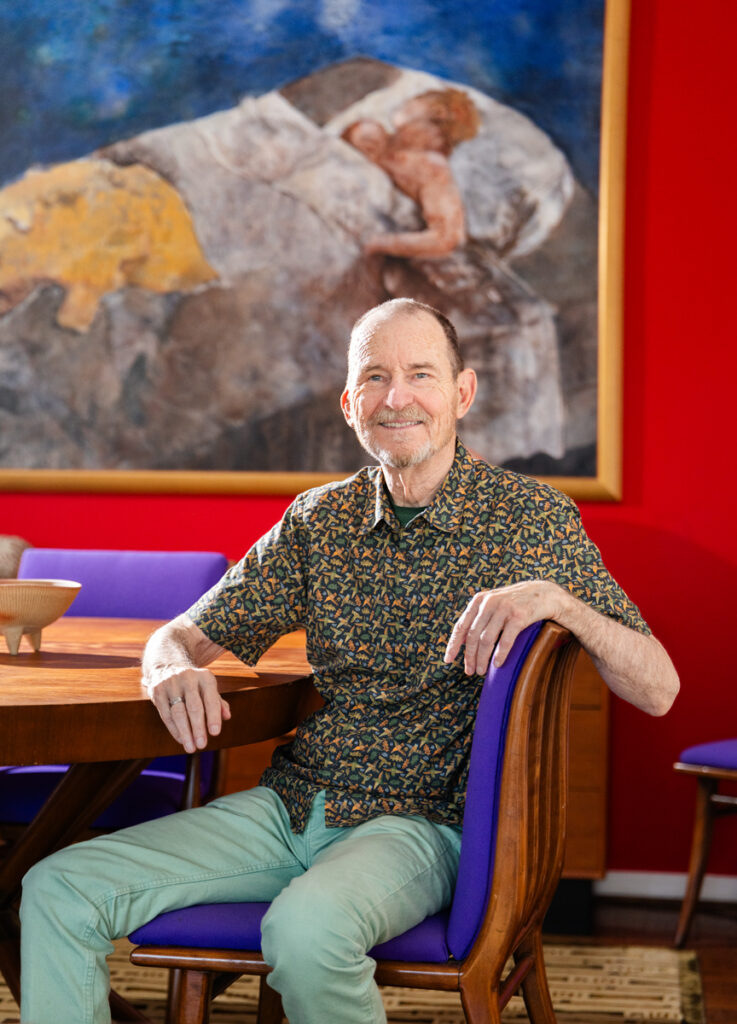
George Ciscle is visibly excited. Billowing storm clouds are brewing outside the windows of his tasteful Charles Street living room, and he is holding a toy truck in his hands. Tall and lanky, with an angled physique and the cropped hair of a Roman legionnaire, he sets the truck gently on a coffee table and moves about the room as he tells a story.
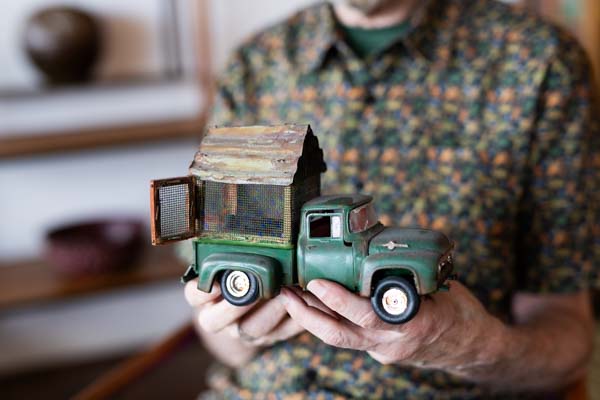
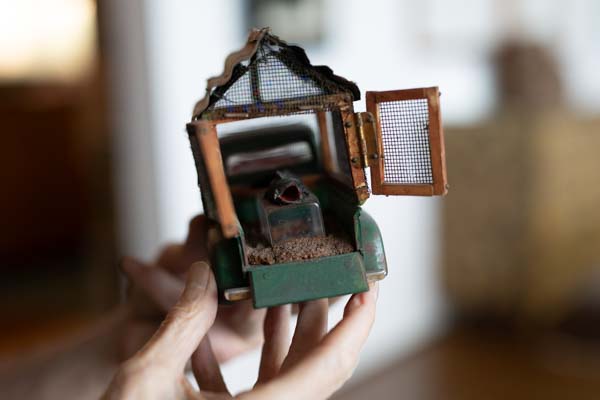
In 1993, Ciscle explains, he invited the artist Alison Saar to Baltimore and introduced her to the scholars and practitioners of two local traditions: screen painters and arabbers. Two months later, he says, “This came in a shoebox”—and he holds up the miniature pickup truck, its small bed covered by a painted tin shed and filled with a sculpted catfish. Eventually, the model turned into Catfish Dreamin’, an ambitious work of mobile art: an actual truck that wended through the city’s neighborhoods, preceded by an arabber crier and dispensing river stones painted with the word Dream. Ciscle’s initial invitation had thus grown into a celebrated piece of community-based art that delighted thousands of people.
George CiscleI didn’t want to be the center of things… I wanted to see what would happen creatively from this group of people that were not me. I wanted to be the facilitator.
Few, if any, people have been shaped and influenced this city’s art scene over the past half century as variously and as extensively as Ciscle. Born in 1947, he grew up in northeast Baltimore; expelled from a seminary and struggling at Loyola College, he found a tentative sense of belonging in the collective environment of his school’s theater. “It wasn’t,” he now remembers, “like being an artist, but it was being in the service of an artist.” In time, that idea, of working with artists to produce something meaningfully collaborative, would effectively become his life’s mission.
For several years, though, Ciscle wondered if he himself might be an artist. After graduating from college, he executed a number of works in stone and metal, and briefly studied with the well-known modernist sculptor Isamu Noguchi. The experience was both rewarding and eye-opening. “I understood very quickly,” Ciscle recalls, “that someone like Noguchi, they don’t have any other choices; this is their whole life. It’s instinctive, and they have something to say. I realized I didn’t have anything to say.”
Or, rather, he realized that he might be able to make a different sort of contribution. In the 1970s, he began to work as a high school teacher in Baltimore and Pennsylvania, and his highly interdisciplinary approach to education impressed other educators. Invited to Charlotte to take part in a series of experimental workshops, he studied the free school movement and the radical pedagogical philosophies of A.S. Neill and Paolo Freire.
Two other consequential realizations soon followed. In the classroom, Ciscle found himself increasingly interested in an educational model in which he ceded some of his authority in the hope of kindling an organic, participatory creative environment. “I didn’t want to be the center of things,” he now says. “I wanted to see what would happen creatively from this group of people that were not me. I wanted to be the facilitator.” And, at about the same time, Ciscle was engaged in the thorny process of coming out to himself and to his family. Happily married since 1969 and the father of a beloved son, he slowly but surely grew into his identity as a gay man.
As part of that process, he moved back to Baltimore, and beginning in 1975 he worked with local high schools in designing a program aimed at retaining at-risk students. The open-ended nature of the assignment allowed Ciscle to experiment, and he developed a progressive curriculum that involved placements in senior centers and hospitals: an antecedent of today’s community-based internships. But there were also real challenges, as he was forced to remain in the closet while at work. Eventually, Ciscle felt compelled to change roles once again—and soon did so, in a way that would change Baltimore’s artistic landscape.
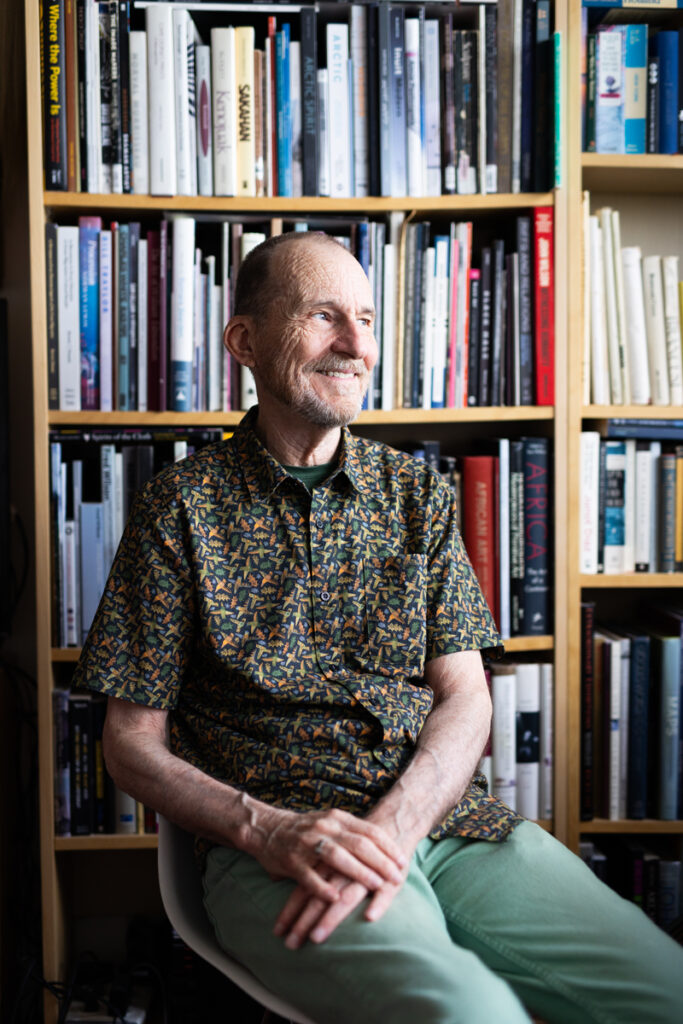
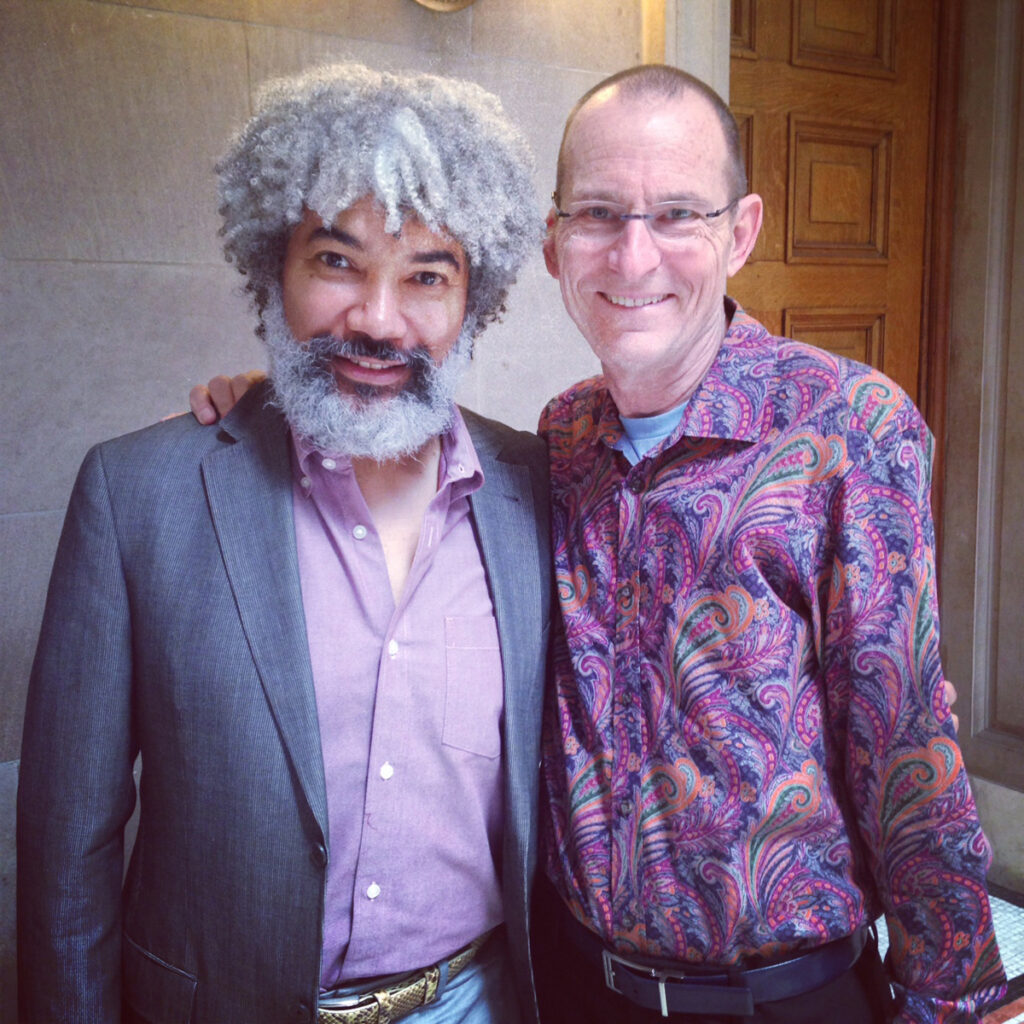
George Ciscle is pointing to a slide screen, in a classroom filled with young artists and designers. It’s 2004, and he’s working in an advisory role at the Maryland Institute College of Art (MICA), helping to determine the school’s future while also regularly sharing his experiences with groups of students. Today, he’s discussing Mining the Museum, a seminal 1992 exhibition by the artist Fred Wilson. Ciscle had played a pivotal role in bringing Wilson to Baltimore, where the conceptual artist designed an incendiary exhibition of salient bur rarely displayed objects—a set of slave shackles; a whipping post—in the permanent collection of the Maryland Historical Society, complicating that institution’s largely aristocratic (and white) account of the region’s history.
That show constituted, it’s fair to say, the culmination of years of work on Ciscle’s part. In 1985, seeking a new professional identity, he began to listen seriously to friends who were urging him to open an art gallery. For years, he had routinely visited artists’ colonies and studios, learning how to speak easily with artists about their work and forging close relationships in the process. He was also developing a discerning eye, and was attentive to recent developments in ceramics—which he began to collect. So, after interning at C. Grimaldis Gallery to master the business side of the art industry, he opened the George Ciscle Gallery in a former carriage house on Morton Street.
The gallery earned a reputation for its willingness to show diverse works by a range of artists. Ciscle hung photographs, illustrations and industrially designed objects, and foregrounded a number of Black and self-taught makers, such as Bill Traylor and Gerald Hawkes. He also organized several thematic group shows—a relatively uncommon curatorial tactic at the time—and sought out local relationships. In 1987, for instance, he partnered with Rebecca Hoffberger in organizing American Outsider Art, which then served as a launch for the beloved American Visionary Art Museum.
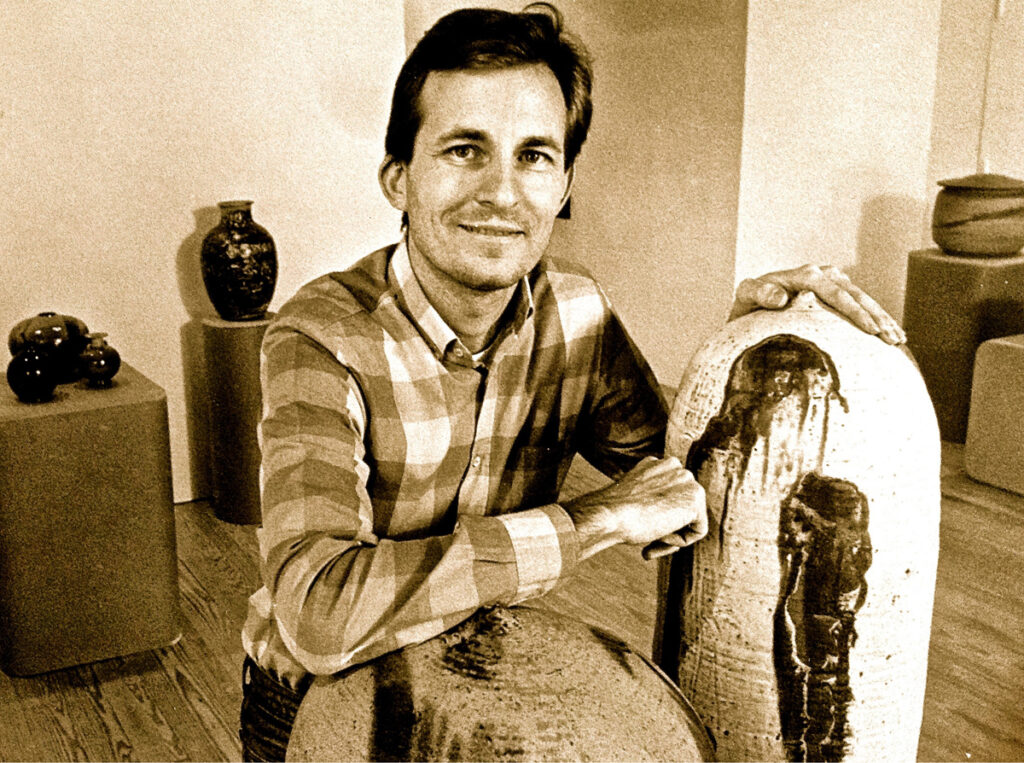
The gallery closed in 1989, and some of Ciscle’s friends spoke in elegiac terms. (In a letter to him, the painter Grace Hartigan wrote that “for a while, you fulfilled your dream, and on your own terms. Do you know how few human beings ever do that?”) But Ciscle was hardly stepping away from the art world. Instead, after a period of introspection, he slid into a new role as the founding director of The Contemporary, a site-less, nomadic institution that had no permanent art collection but aimed instead at incubating site-specific works.
Working closely with Lisa Corrin, who abandoned her Ph.D. studies at Johns Hopkins to become The Contemporary’s first curator, Ciscle built an institution that sought to speak to the city’s residents, even as it aimed at constant reinvention. The infancy of the so-called “un-museum” was hardly frictionless; some other local cultural institutions, nervous about competition for grants and audiences, opposed its formation, and the museum’s first show, which focused on the AIDS crisis, opened at the height of the Culture Wars. But its commitment to risky experimentation (one show was staged in an abandoned bus station) scored The Contemporary a place in the Baltimore arts ecosystem. As Corrin would later put it, “we created a model that complemented and, sometimes, mischievously, challenged the perspectives of other institutions.”
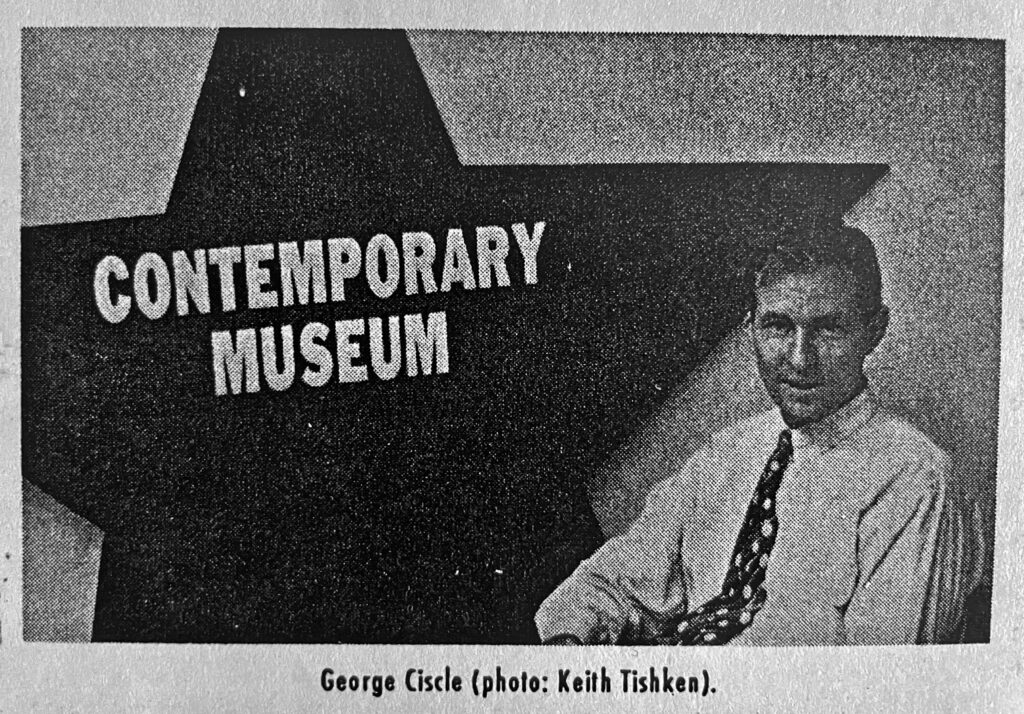
Lisa CorrinWe created a model that complemented and, sometimes, mischievously, challenged the perspectives of other institutions.
But nothing, of course, lasts forever. In 1996, seeking to return to the world of education, Ciscle stepped away from The Contemporary and onto the campus of MICA. There, as Curator-in-Residence, he assisted in the development of community-based and public programming, and built the innovative Exhibition Development Seminar (EDS). A legendarily intense course, it offered students the chance to work together in producing an actual exhibition of work. And, again, collaboration was a fundamental value; the students worked closely with the artists, and the resulting shows were staged at venues throughout the city.
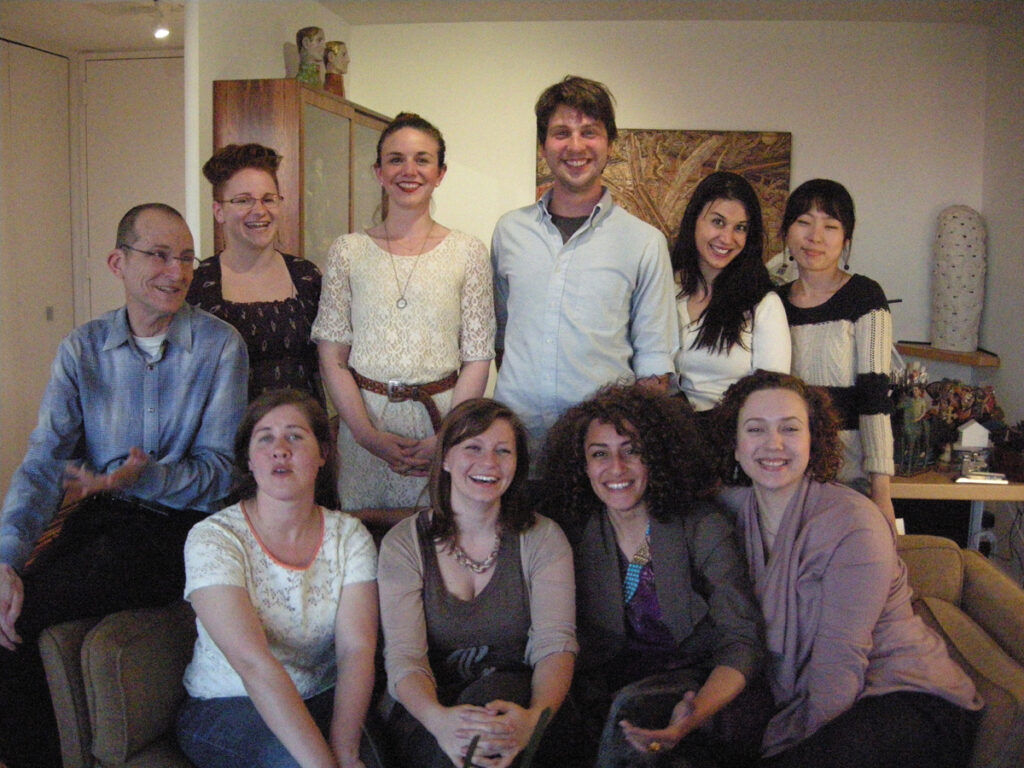
In time, the popularity of the seminar led Ciscle to propose and implement a Master of Fine Arts degree in curatorial practice. One of a few of its kind, the program trained young professionals, introducing them to Ciscle’s pronounced interest in community and audience. “I always said,” Ciscle notes, “that my Aunt Doris was my audience; if she doesn’t care, then who else should care?” Graduates of the program fanned out across the country, shaping the national arts landscape: members of his initial cohort went on to become a theater director in the Berkshires, a director at the Mellon Foundation, and a planner specializing in integrating contemporary art into life events.
But he also learned from his students. In the first year of the program, one of his students had a brother with a developmental disability, and she designed a thoughtfully accessible show of work by four disabled artists at the Evergreen House. Ciscle had once worked with children with Down’s Syndrome, but now found himself unacquainted with many of the issues involved. “How,” he now wonders, “was I not learning that myself? That got me really interested.” Over the course of several years, he began to study the subject. And then, after retiring from MICA in 2017, he decided to learn all that he could about accessible exhibition design—and to help others put those ideas into practice.
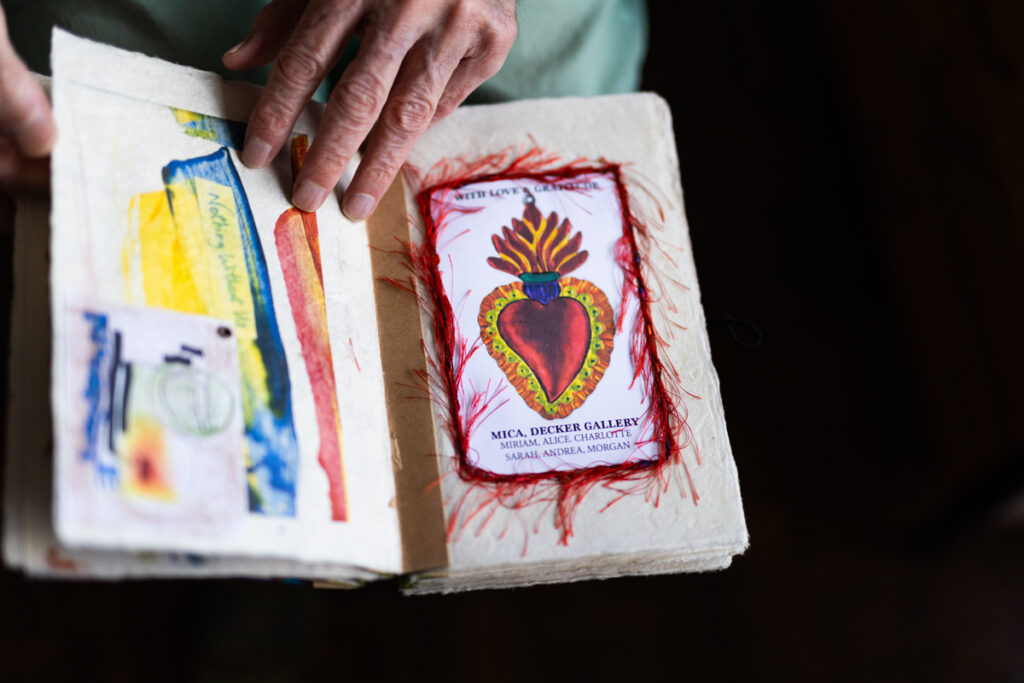
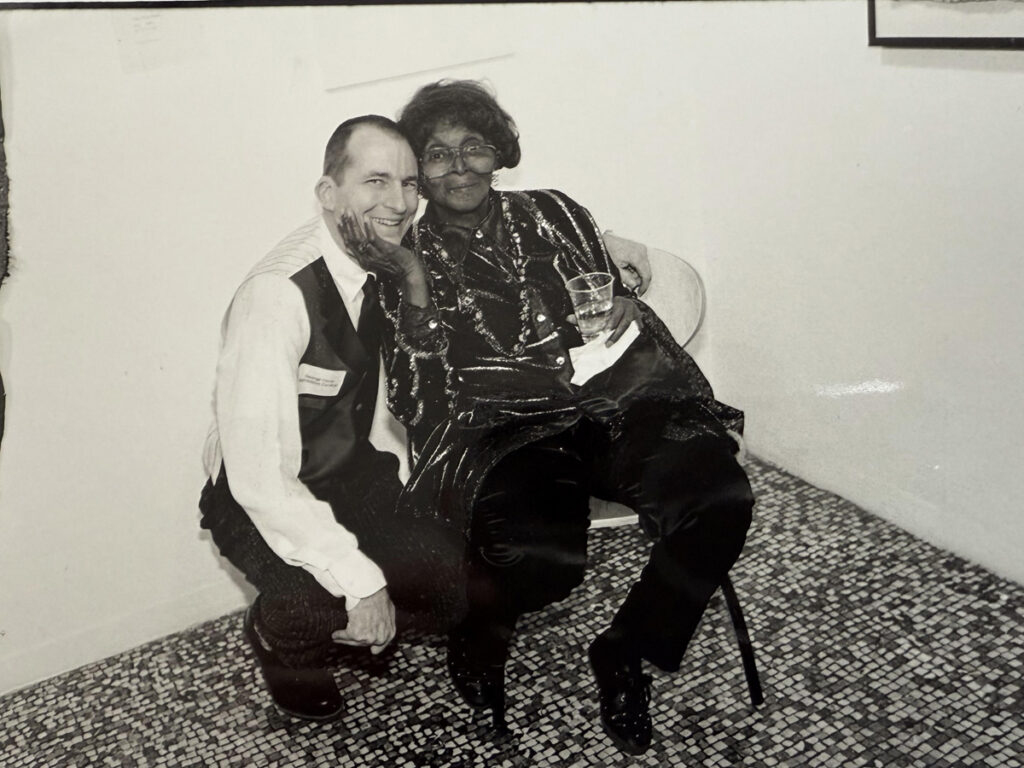
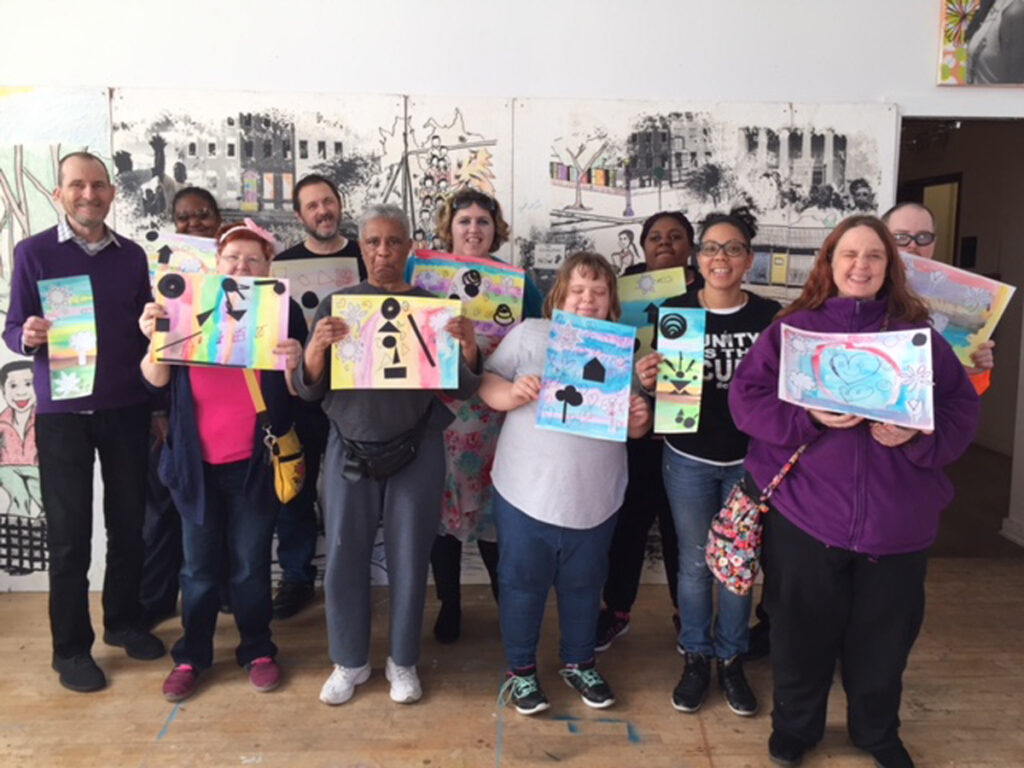
George Ciscle seems to be everywhere. It’s a warm morning in July of 2025, and the third floor of the Enoch Pratt Central Library is buzzing, as it’s about to host a series of presentations on the theme of accessible museum design. Advocates and consultants mingle, disabled artists chat with an inclusion strategist, and Ciscle moves easily between them, greeting friends and colleagues, making sure that all are comfortable. He’ll give a short presentation in the afternoon, but his main contribution lies in the event itself: titled BCAA (Baltimore: The City of Accessible Arts), it’s the climax of months of conversations and work.
After leaving MICA, Ciscle began to volunteer with The Arc Baltimore, a Baltimore-based agency that provides services and support to adults with developmental disabilities. Aware of his background in the arts, the staff asked Ciscle if he might facilitate occasional museum visits; Ciscle was intrigued, and began to speak seriously with several local institutions about meaningful accessibility.
In 2023, Ciscle joined the Baltimore Museum of Art as a guest curator, for a retrospective of Elizabeth Talford Scott. Simultaneously, Deyane Moses, one of his former students, was working with MICA EDS class in curating eight companion exhibits of Talford Scott’s works, throughout the city. Ciscle received a grant intended to support training in inclusive exhibition design, which helped in developing details such as multiple entrances, braille wall texts and touchable samples: features aimed at supporting a diverse audience’s various needs.
The show was galvanizing. When the DEAI committee from the Greater Baltimore Cultural Alliance saw it, they urged Ciscle to carry his work further; other local museum officials also expressed interest. That led to a monthly study group, in which many of the city’s leading arts advocates regularly came together to learn and discuss best practices in accessible museum design.
Of course, such work isn’t cheap. Braille designers and signers cost money, and Ciscle is committed to hiring disabled individuals as consultants, instead of relying on the voices of outsiders (he does not himself identify as disabled). Drawing on his network of contacts, Ciscle played an active role in raising funds for the event at the Pratt, and he now hopes to create an endowed fund that will support further work on the subject. Gesturing energetically, he pictures a future in which disabled artists and artists interested in access can apply for funds in implementing their visions.
That vision may seem, for now, a mere possibility. But in looking back over Ciscle’s career, it’s obvious that he has been working towards such a future for most of his life. “All of Ciscle’s choices,” the curator Jeffry Cudlin once observed, “create spaces for audiences to make meaning and learn together.” Committed to a democratic approach, stimulated by connection, and comfortable as a facilitator, Ciscle has always sought to bring people together in artistic environments. And in the process, he has effectively helped to build a Baltimore that embodies such a vision—whether it’s in the form of an itinerant pickup truck, a lively classroom conversation, a Braille placard, or a museum that feels more meaningful to all.