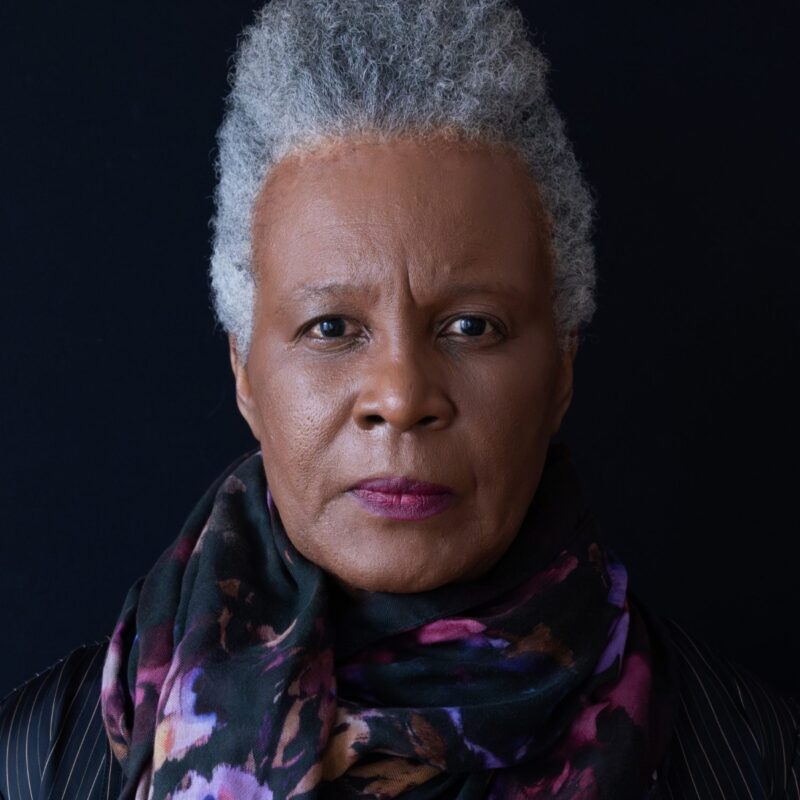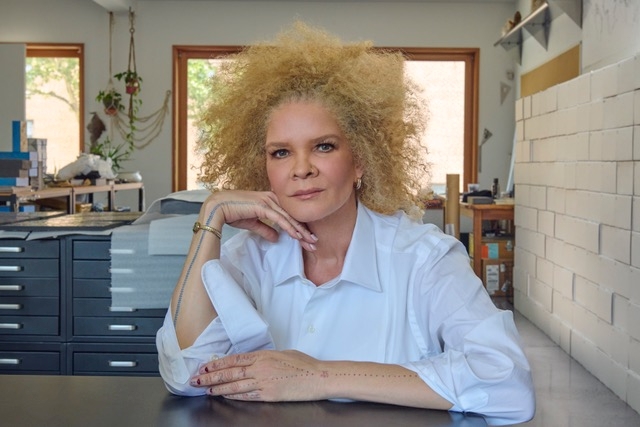
Michaela angela Davis has dressed and redressed the best, most controversial, most visible, and impactful cultural icons and cultural icons yet to be. Building an unparalleled career as a renowned fashion editor, writer, producer, image activist, and most recently—memoirist, Davis has a multi-faceted understanding of the power of storytelling.
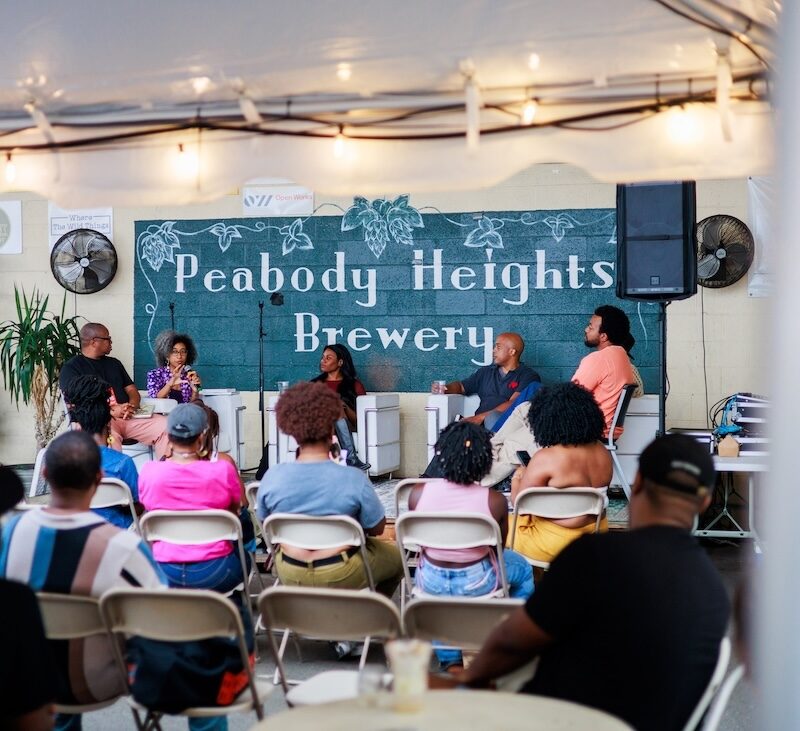
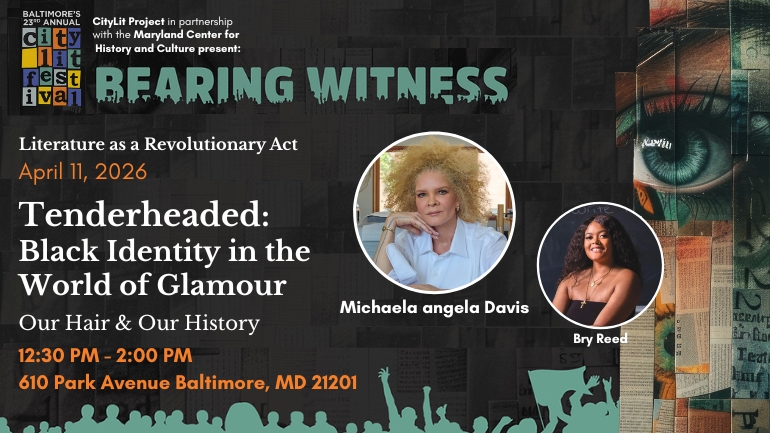
This weekend, she comes to Baltimore as one of the headliners of the 23rd CityLit Festival. Themed “Bearing Witness: Literature as a Revolutionary Act” the festival lands at the Maryland Center for History and Culture on Saturday April 11 and presents a free opportunity for writers and readers to take part in a full day of craft workshops, panels, readings, and other programming.
“Reading and writing—the preservation of them—require intention,” says Carla Du Pree, Executive Director of CityLit Project. “The festival is a day of human investment, a look at the past and the present, and how we might invest in a future that honors our experience, connecting anyone seeking fellowship through the literary experience.”
Davis’ path to the literary world may be unlike others. She first discovered her calling in the pages of Harper’s Bazaar and Vogue, where her aunt Joanne worked as a fashion editor. “Somehow, I thought this sophisticated, elegant, but edgy world is where I belong,” Davis says.
While attending college at New York University, Davis worked as a stylist at Vogue, until she met Susan Taylor, Editor-in-Chief of Essence Magazine who challenged her by asking, “What are you doing for your people?” The question stuck with Davis and has been her compass ever since.
Davis, bright-eyed and determined to succeed, joined Essence as an associate fashion editor where she ascended to the position of executive fashion, beauty, and culture editor. Then came the chatter of Vibe, a cutting-edge hip-hop fashion leaning magazine founded by Quincy Jones. Presented with the opportunity, Davis became the fashion director and then leaped to the helm of Honey Magazine as editor in chief. Davis created boldly-styled presentations of our favorite artists, entertainers, and trailblazers, celebrating Black cultural expression. Amongst her styling giants are Prince, Diana Ross, and Andre 3000.
Increasingly confronted with the misogyny and objectification of Black women, Davis looked to television. She provided commentary on CNN, served as a rebranding chief at BET’s Centric, helped pen her friend Mariah Carey’s memoir, co-executive produced the Hulu docu-series The Hair Tales, and adopted the moniker of being an “image activist.” Still, something was missing. She had been conveying the stories of so many since her first role at Essence but had yet to tell her own. She unplugged and retreated to South Carolina, where her late grandmother had lived, and began writing her memoir, tenderheaded. The book would be released in October 2025.
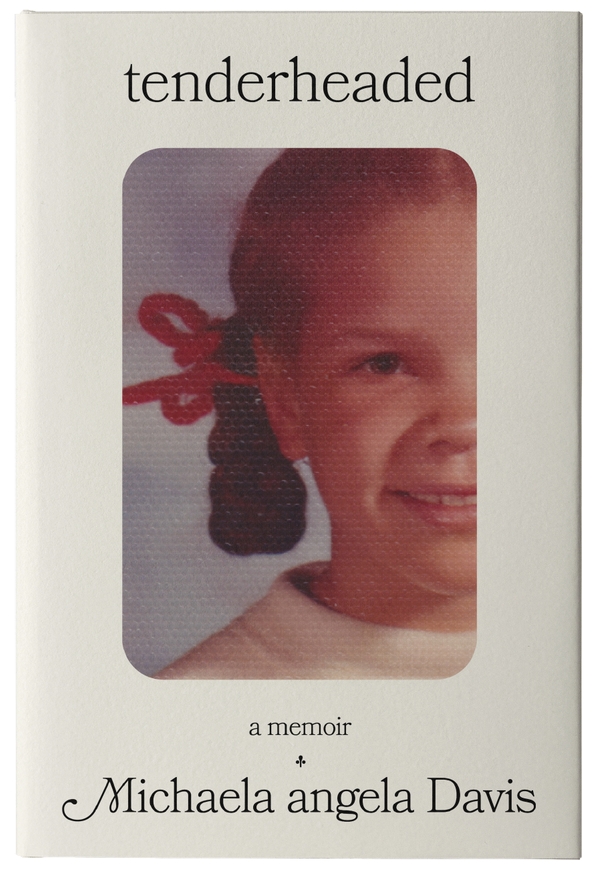
I looked forward to seeing Davis; it had been at least fifteen years since our paths crossed and crisscrossed through work and friends. But as I greeted her over Zoom, her camera was off. A static image of the book cover on the screen, she shared something stunning: “I’m keeping my camera off because I’m recovering from having a bi-lateral lung transplant.”
I gasped.
“I have the lungs of a 26-year-old man in my body,” Davis continued. “I’m doing really great… really. The recovery’s been phenomenal. It’s just a lot of resting and a lot of meds and med management.”
Even in recovery, Davis was locked in and ready to talk about her journey from fashion journalism to tenderheaded and beyond. We caught up and went deep. The following interview was edited for clarity.
Were you familiar with the CityLit Festival, before being invited to participate?
Michaela Angela Davis: No, but I was so grateful because that’s exactly what I wanted to do. And, you know, Baltimore and DC are close to my heart. It feels like coming home in a way. I also have fond memories of hanging out in Baltimore with friends as a kid—and, of course, there’s nothing like Baltimore crab cakes. I’m excited to be part of the festival.
What about the fashion industry inspired you?
My orientation was always around fashion. I’ve always remembered people’s outfits first. Moving from New Jersey to DC as a kid felt like stepping into a colorful bouquet; the style and flair were so alive. I believed that the way my mind worked—cataloging style and visual cues—was my path in the world. No one talked me out of it, so I kept talking myself into it.
Which projects have had the biggest impact on your storytelling?
My theater training at Duke Ellington School for the Arts gave me a foundation in language and story. Collaborating with photographer Ruven Afanador taught me how to turn fashion into narrative. For example, we created a sci-fi circus love story for Vibe with writer Greg Tate. Those collaborations showed me how stories could be told visually and conceptually.
Why did you pivot from fashion to creating the moniker “image activist”?
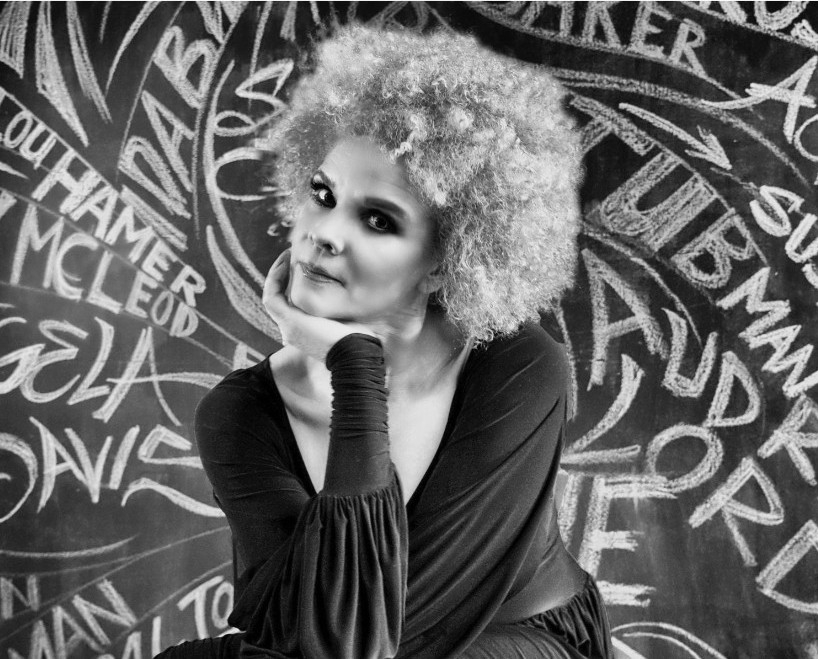
I was at Spelman College, and we were doing this panel where the scholars, young women, challenged the often misogynistic images of Black girls perpetuated by the media in the early 2000s. So many people, their only idea of what a Black American girl was like, was through a music video or a reality show. Women were reduced to objects. I realized Black women and girls had the most narrow visual spectrum. And this was where I felt like I could be of greater service.
If Lupita wins a thing, you pump it up, you elevate it, and you amplify, and you celebrate the images. In art, who’s to say, what is right? We need to give ourselves the permission to be anywhere we want to land on the visual spectrum.
Did that shift redefine your purpose?
Absolutely. My mentor Susan Taylor’s mantra at Essence was, “We are in service to Black women.” That’s still in my skin. I wanted to find my own way to be of service, to create spaces where Black women’s stories could be expansive and layered, not flattened.
The goddess, Toni Morrison, tried to open that door for us. More literature was moving toward that. In books I saw Black women and girls be centered, and also, extended and played with, and given a spectrum of feelings and layers. I wanted to do that visually.
I collaborated with Tracee Ellis Ross and Oprah on Hair Tales, a docuseries. I wrote the series to address the impact of stigmas around Black hair. The series looks at the outside influences as well as the inside scrutiny Black women have endured and inflicted on each other.
How did your memoir, tenderheaded, evolve into a story that demanded to be written?
Yeah, I was tangled in Hair Tales. I also started to hear my grandmother tapping at my consciousness. So that’s kind of the divine part that was happening at the same time. My grandmother was becoming very present with me. I felt like she was urging me to come home.
When The Hair Tales wrapped, she got louder, and I thought, okay, that’s crazy. I’m not going to Sumter, South Carolina. And then, I went on a couple of visits and I started meeting family. You know how when you charge your phone and the plug is hanging halfway out the wall a little bit and then you plug it in and you see that lightning bolt and hear the phone chime with electricity? That’s how I felt. That this is the place to write.
I rented a cottage in Sumter and unplugged. I got off social media. I had to shut it down and shut it out. Because of how self-centered I needed to be, I needed to center myself in order to become a writer.
I was an artist again. And I hadn’t felt like I was an artist since studying at Duke Ellington School of the Arts as a kid. I needed the courage of my ancestors to tell the truth because I was not interested in writing a memoir that was not going to be the truth. It took me 30 years to get here. To get six months, to get a year to write the book. Working in media all that time and being so public and social. But I just feel now I’m at a different starting point. It’s another chapter, another phase of storytelling.
I knew I needed to write this book because I had a grandchild coming. Something new happens in your brain when your daughters have a child; they are your descendants. But this was not just for my family, I wanted it to be a record. I wanted it to be a record of who was there, what happened, and this is on the identity piece and the media piece because we were at risk of people never knowing who was really behind Vibe or what really happened to Honey. Do you know what happened to Essence? Who was there? We were having these parallel industries where you might have seen as, you know, Vanity Fair and Vogue and Rolling Stone, but right next to it, we were there trying to forge a way. I wanted this to be a record from the media part about who was there before we forget what print media even was.
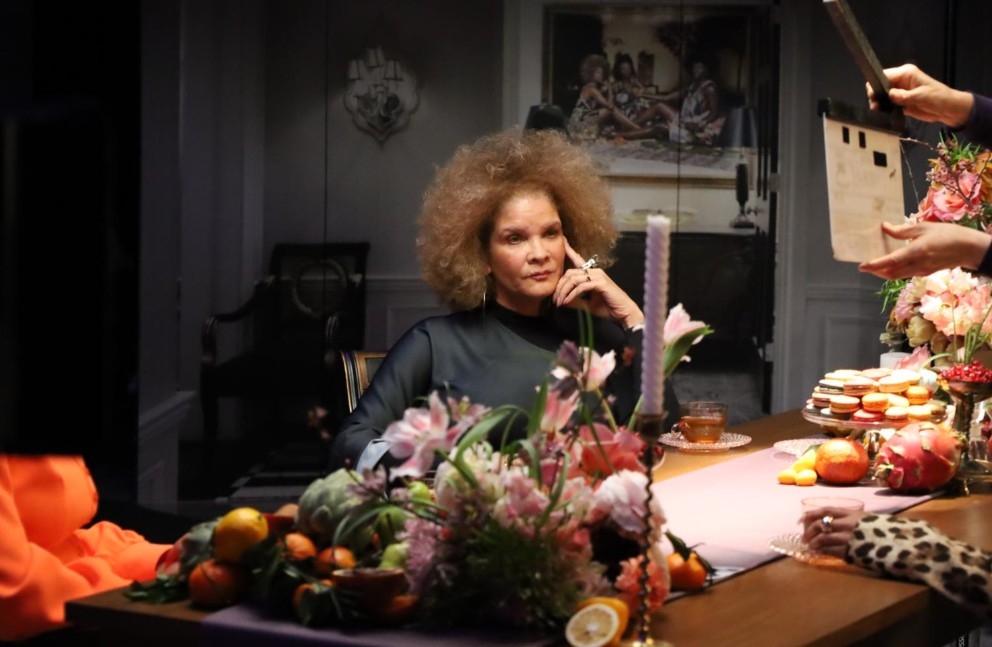
How did you decide on what stories to include in tenderheaded and how far back to go?
I included the stories that rose to the surface—seminal moments like getting my hair done, getting jumped at school, or working at Honey. Family stories only made it in if there was some resolution. The book is written in vignettes with a rhythm to it, like little moments rather than a linear “I was born, then I grew up” story. I wanted musicality in the writing, which reflects my theater roots and love of art.
How did writing the memoir change your view of your younger self?
It was the first time I really looked at myself as a child and really remembered how intense and deep my thoughts were. I was a zany little girl. I used to really think about stuff and I had very deep, intense feelings and a lot of young people do. I had tried to protect that little girl by separating her from the public-facing work, but now I see she’s the source of my creativity.
I like her better than I thought I did. She’s the artist. She’s the one. She’s the one with the good ideas and the courage to execute them. It doesn’t take fearlessness. Have fear. If you take away my fear, then I feel like it strips my humanity. So I very rarely use the word fearless. It’s just the bravery, the courage to do it anyway, even though you are afraid. Fear is natural.
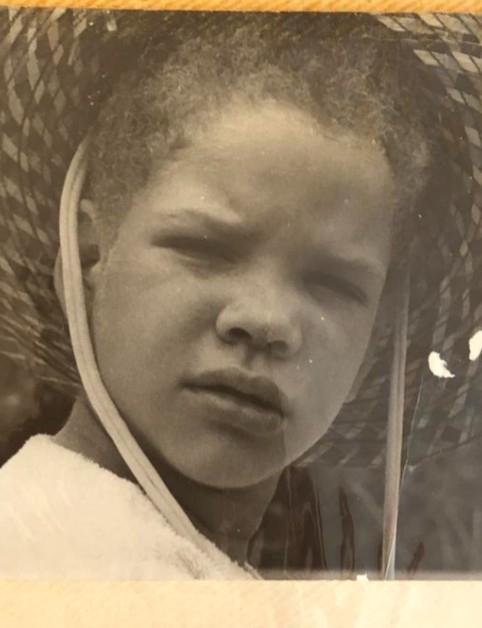
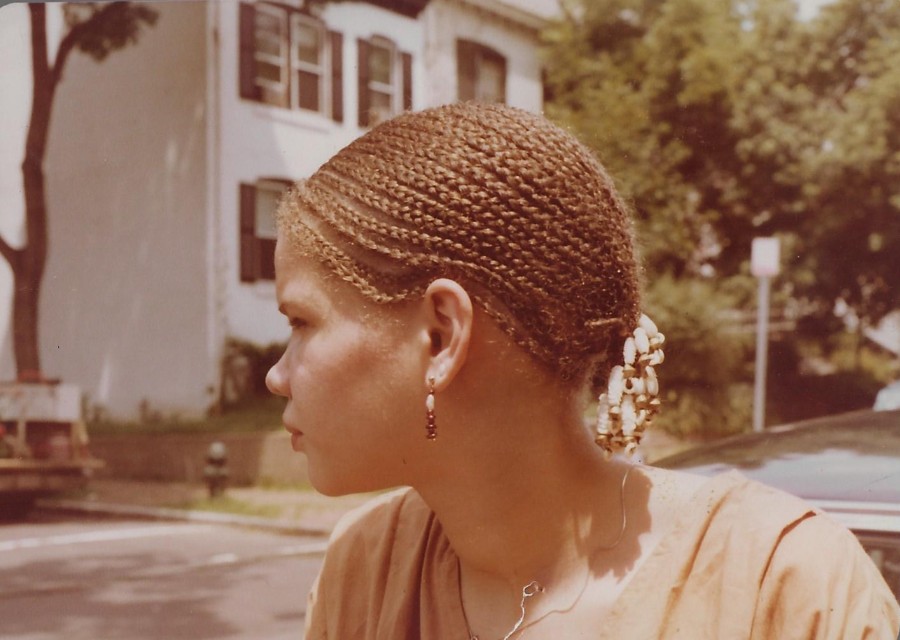
That’s really powerful. And something, you know, we need to tell all of our little girls. Before…
Walls start coming up. And we have to protect her. And not just protect her from predators, protect her from you, from your talking her out of it. And that’s what I hope our generation did less… Not try to tame our girls as much. And rather, let them, let their hair run wild. Allow them to explore, build confidence and have ownership of their destiny.
What do you hope readers take away from tenderheaded?
I would love people to feel their inner child wake up a little bit, feel her stir. I would hope that they would maybe think about their ancestors more. I think that the ancestors are very present these days because people are talking about their ancestors in a way that’s casual now, right?
On the socio-political side, I really wanted to start unpacking the color-caste system, and historic wounds in Black communities, especially with women. Who created the schisms that we have amongst each other? I want us to heal. And there’s still a lot of pain, and really complicated history. But as Black women heal, the Black community heals. And as the Black community heals, America heals.
For more of Michaela angela Davis’ story, visit with her at the CityLit Festival hosted by the Maryland Center for History and Culture on April 11. And if you see her with a small cooler, just know that she is stocking up on Baltimore crab cakes to bring home to New York.