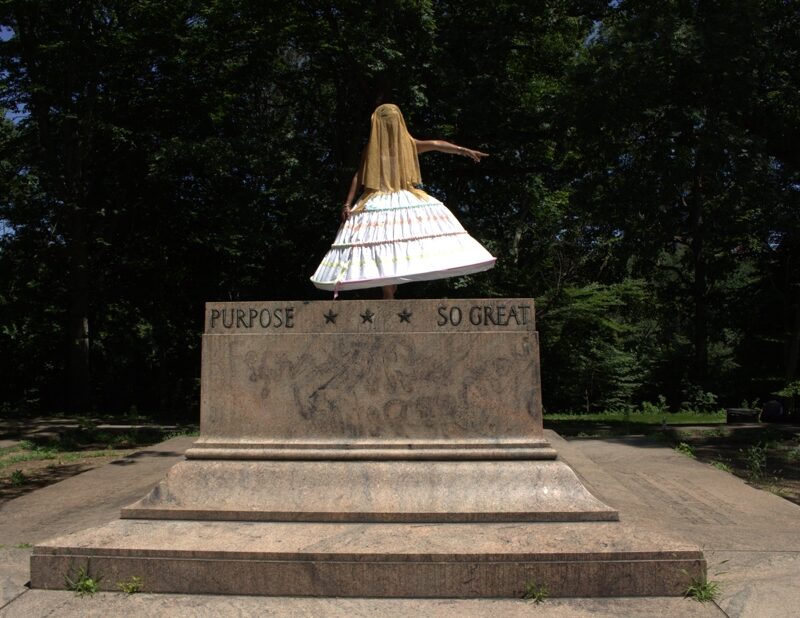
Ada Pinkston stands on a massive plinth that once held a Confederate monument. She wears a decorative hoop skirt, bangles on each wrist, and a mustard-colored veil that conceals her face and torso. She gently holds her skirt with one hand and points to the right of the picture frame with the other. Her finger aligns with the words affixed to the pedestal that read from left to right, “Purpose” and “So Great.”
Beneath these words are traces of graffiti used to desecrate the now toppled statue. Entitled “Pointing Toward Justice” (2018), she is both a testament to an unjust past and an imperative toward an equitable future. Except, unlike the cast object she replaced, she isn’t a name or a moment we can immediately attach a story to. We can’t walk past her on any given day and be reminded of the values we should hold dear. Still, she possesses an omnipresence, mirroring the ways Black women come in and out of focus across time.
Currently on view at the Banneker-Douglass-Tubman Museum in Annapolis, Maryland, She Speaks: Black Women Artists and the Power of Historical Memory is positioned to highlight untold and overlooked histories of Black women and their contributions to the nation over the last 250 years. However, this engagement with history equally considers the future. The artworks can be seen as actors on a continuum of time rather than a strict deliverance from obscurity. Some works address the past as it was or as it could have been, while others connect past and present, as either instruction or premonition. Selected works affirm legacy and lineage as a practice of perseverance and preservation while exuding a psychic energy that invokes the speculative and alludes to a curatorial undertone that is assuredly Afrofuturist. Although not in the ways most would think. She Speaks eschews spectacle without sacrificing imagination and offers the viewer something tangible and enduring.
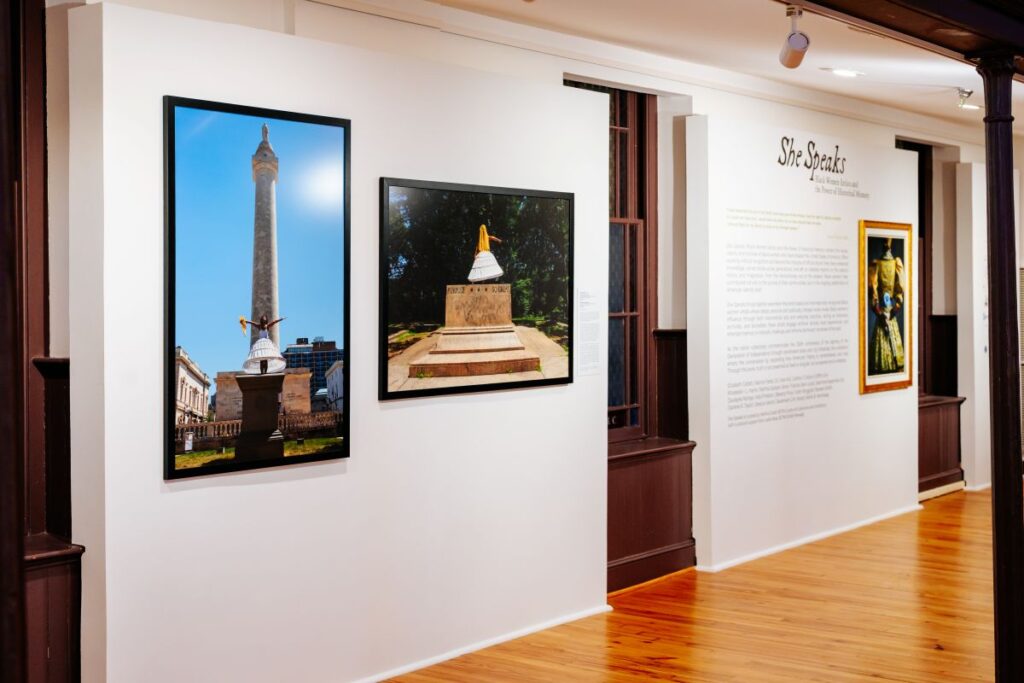
Lineage is exemplified through the prioritization of artists working in and around the state of Maryland; modes of making historically associated with women and marginalized communities; and contextual resonance to local sites and archives. These textiles, found objects, photographs, prints, mixed and time-based media works have the power to make us pensive, proud, and at times, uncomfortable. They remind us of the women in our families, their secrets, dreams, and sorrows.
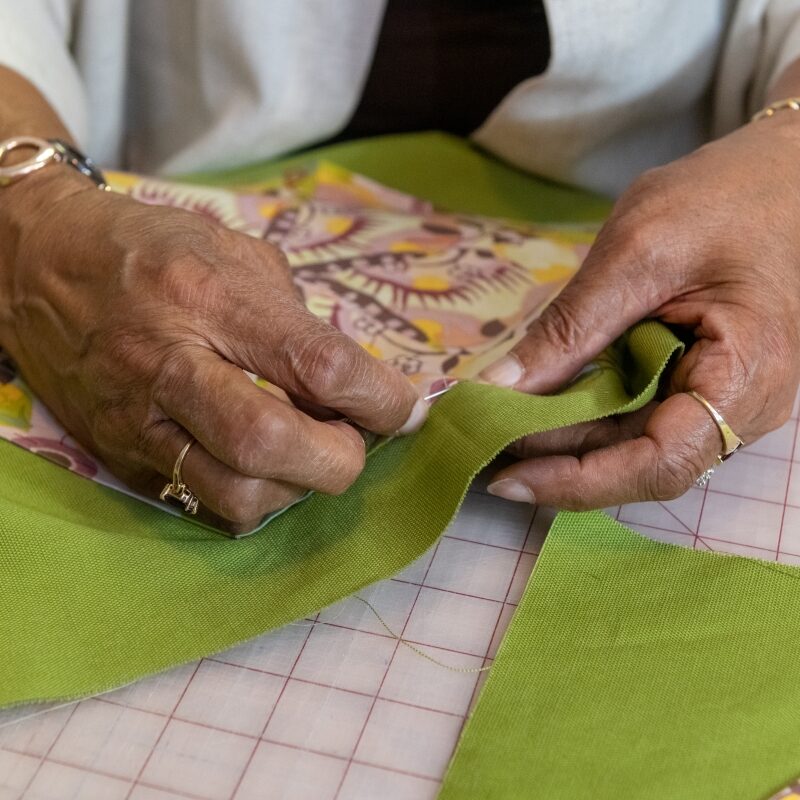
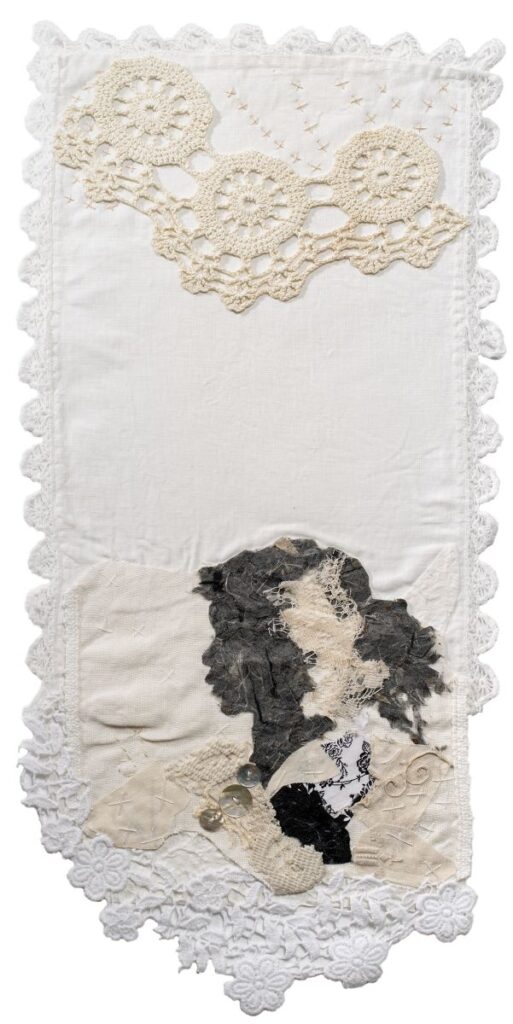
Darlene R. Taylor’s “Mother: Archive File 1” (2023) takes the archival photographs of unnamed Black women from the Talbot County Historical Society’s collection and turns them into hand sewn silhouettes. Stitched into fabrics passed down from the women in her family and created at the bedside of her ailing mother, Taylor transforms alienated sitters into distant relatives. Within this greater family narrative, she expands on the tradition of the chosen family, a practice that has sustained the Black community for centuries.
C.M. WattsThese textiles, found objects, photographs, prints, mixed and time-based media works have the power to make us pensive, proud, and at times, uncomfortable. They remind us of the women in our families, their secrets, dreams, and sorrows.
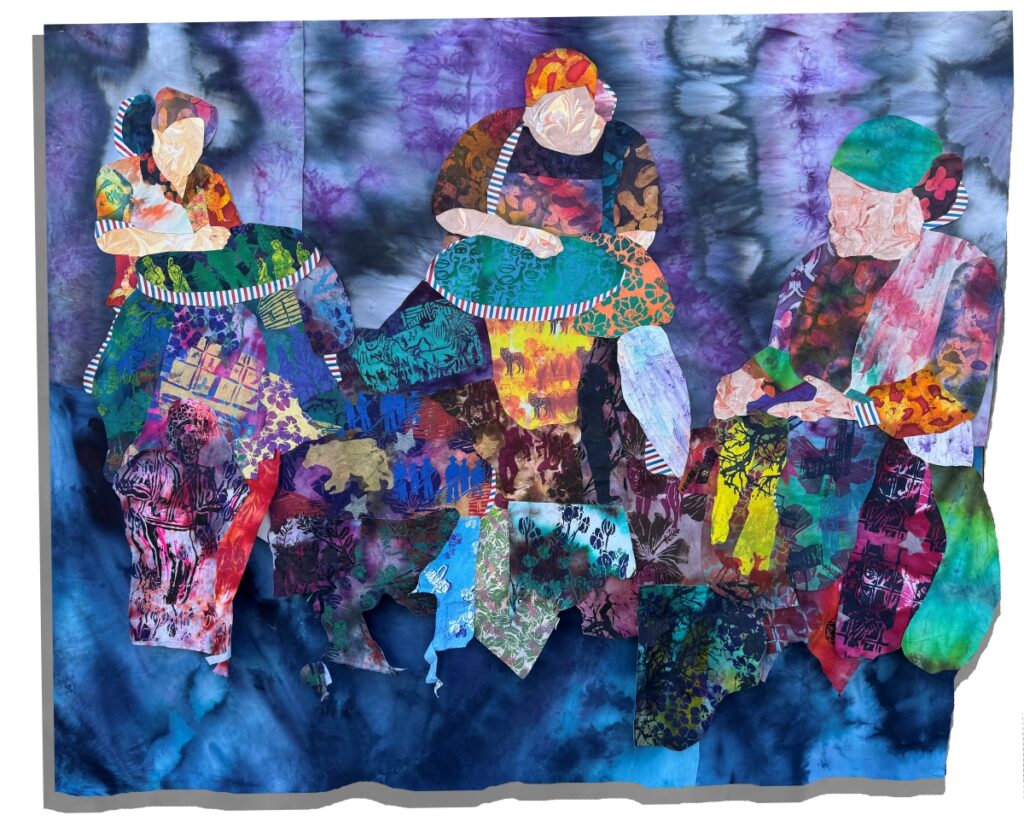
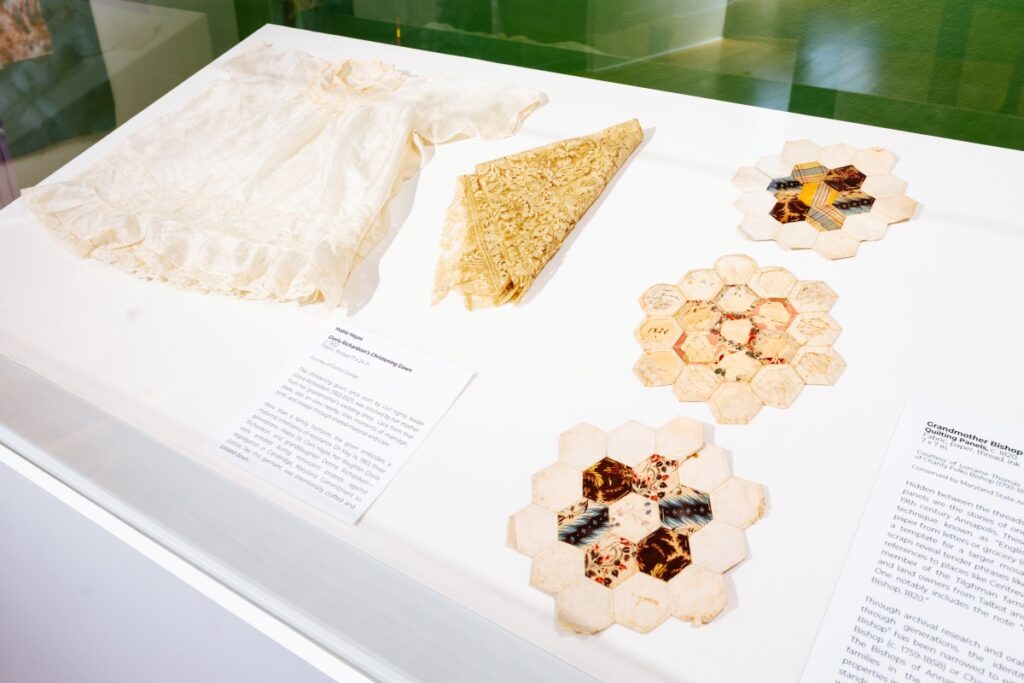
Taylor’s work is positioned between Zsudayka Nzinga’s “The Art of Storytelling” (2025) and Grandmother Bishop’s “Quilting Panels” (c. 1820). Nzinga’s mixed media batik composition depicts a quilting circle, as three women weave their fabrics, which consist of different images, stories, and experiences, into a single tapestry.
Bishop’s quilting panels employ the “English paper piecing” method, which uses letters or grocery lists as templates for a mosaic quilt pattern. The surviving scraps include phrases, references to people, places, and the inscription “Made by Grandmother Bishop, 1820,” a signature that alludes to a member of the Bishop Family, formerly enslaved, wealthy landowners in Annapolis, MD. Each of these works demonstrates how legacy is constructed through the quotidian. In retrospect, these simple acts allow us to forge new connections, remake the archive, and reassert ownership of our narratives.
“Mother Archive File 1” is also in conversation with the work of Moses Williams, a formerly enslaved man who grew up in the home of Charles Willson Peale, a well known portraitist and founder of the Philadelphia Museum in 1784. His son Rembrandt subsequently founded the Peale Museum in Baltimore.
Before photography, silhouettes were the accessible method of portraiture for the masses. Moses Williams was taught the craft and worked for the elder Peale, selling silhouettes at his museum. Notably, he made one of himself and inscribed it with the following: “Moses Williams Cutter of Profiles.”
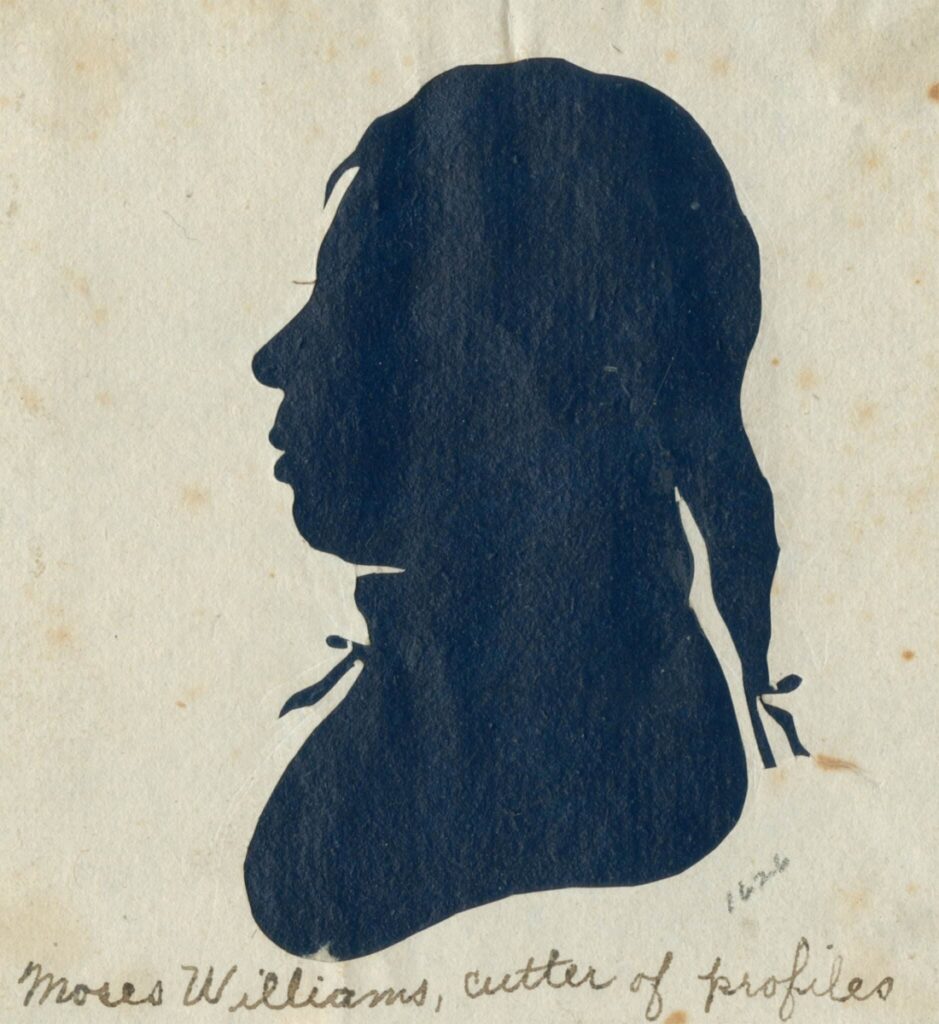
This act of agency serves as a beginning point for conversations of portraiture and self-fashioning in the study of African American art. In relation to Taylor’s work, she leverages the enigmatic nature of the silhouette to absorb these women and solidify a place in history for them as Williams did for himself.
Legacy can be felt throughout the exhibition space. The primary gallery was constructed by free African Americans in the 1870s as the Mount Moriah African Methodist Episcopal Church. The pulpit, Gothic Revival architecture, and stained glass windows are as they were over a century ago.
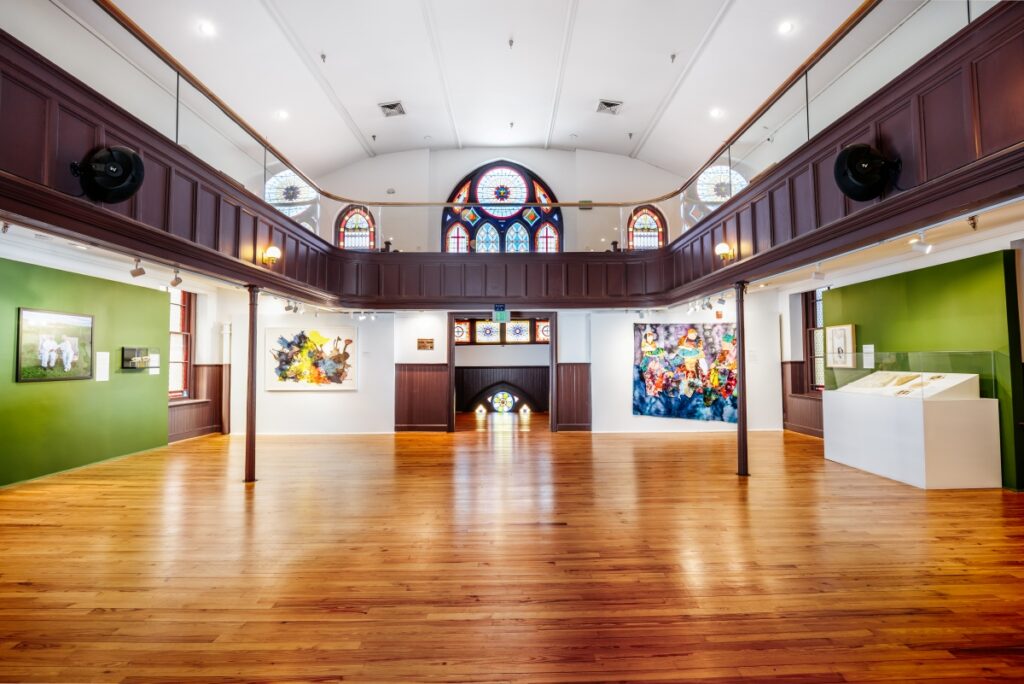
C.M. WattsThe gallery is a vortex where the veil between the living, deceased, and unborn lifts in the spirit of fellowship. The energy is palpable.
The land itself was once owned by the Bishop family. According to the exhibition’s curator, Martina Dodd, “the materiality of the building is part of the story we are telling. That becomes particularly meaningful with She Speaks. The artists are responding to histories of Black women, memory, resistance, spirituality, community, and self-determination—and they are doing so inside a space that already carries those histories.”
With those histories comes cosmic residue. Firmly rooted in hallowed ground, the gallery is a vortex where the veil between the living, deceased, and unborn lifts in the spirit of fellowship. The energy is palpable and amplifies the power of works like Charlyn Griffith-Oro’s “1-800-SANKOFONE Or DIAL-AN-ANCESTOR” (ongoing) and Alisha Wormsley’s “There Are Black People in The Future: Objects” (2013 – ongoing), conduits for divination.
“1-800-SANKOFONE” is a found Touch-Tone telephone, adorned with cowrie shells. Located in the upper level of the gallery, a sign reads “Career Shifting? Tryna be Lucky in Love? Looking for a family connection? Capitalism and Empire got you down? Try Sankofone!!!” After dialing 877-936-6436, you are prompted to specify which ancestor you would like to leave a message for and reminded that “we are always with you.” The work comes from Griffith-Oro’s A Provenance series, which adorns everyday objects with cowrie shells to create vessels for ancestral knowledge.
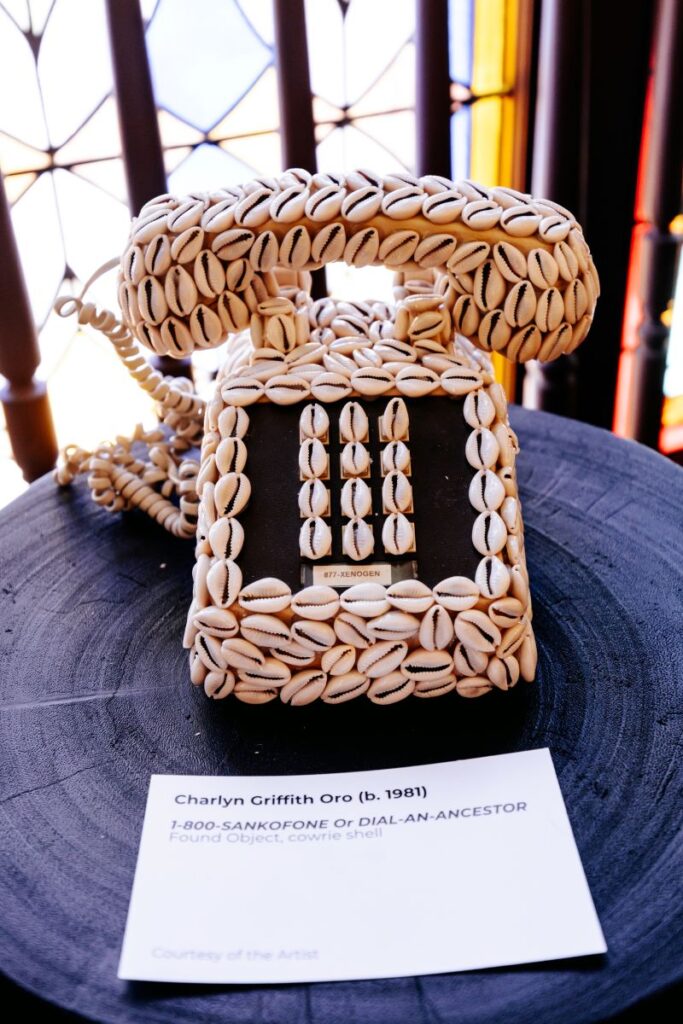
In the Yoruba religion, cowries are used to decorate the Ilé Ori (House of the Head), a sacred shrine to the ori-inu (inner head). Ori-inu is a personal spirit that guides an individual’s destiny. Cowries honor the spirit while their quantity and presentation communicate the owner’s prestige. Griffith-Oro’s telephone and “Shared Vision” (2022), a pair of sunglasses similarly embellished and included in the exhibition, remind us that the connection to our ancestors is as simple and readily accessible as we choose to make it. We need only to ask, wait, and listen.
Alisha Wormsley’s “There Are Black People in The Future: Objects” (2013 – ongoing), also engages with found objects, repurposing them as a refusal of Black disappearance. Collected from Homewood, a historically Black neighborhood in Pittsburgh, Pennsylvania, objects are obtained through relationships forged with elders, students, and other community members. Encased in resin, they are imprinted with the words “There are Black People in The Future.” The phrase has been widely circulated, appearing on billboards and in other conversations concerning Afrofuturism. Yet, these artifacts, including the exhibited watch, rusted pair of railroad spikes, and beaded hair accessory or piece of jewelry, build upon the affirmation.
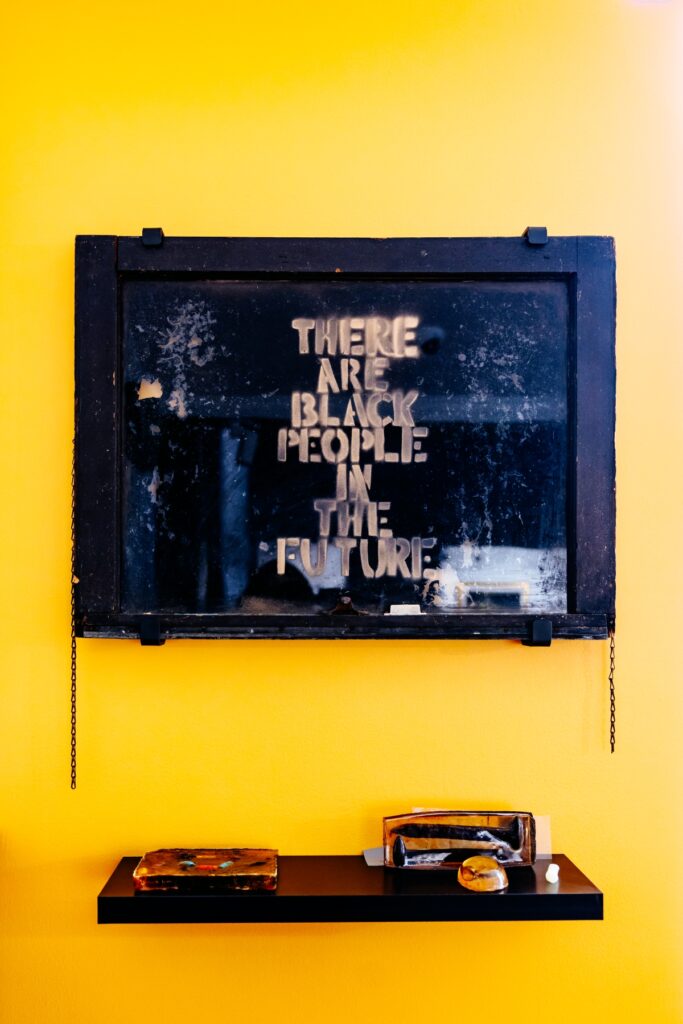
None of the items appear to be from the present. The watch is perhaps from the early twentieth century; the beaded accessory and railroad spikes seem much older. Their existence becomes circular, as our present is the future of their past lives and with every reinstallation or addition to the series, at some point in the future, Wormsley’s assertion is reinforced.
It is not the inclusion of works like Griffith-Oro and Wormsley’s that led me to consider She Speaks within the context of afrofuturism. Rather, it is the sum of the exhibition and its persistent whispers. She Speaks proves simple acts of imagination can be the most radical and impactful. Seemingly pragmatic decisions, such as rethinking our traditional familial relations to create new lineages, is the future. Building a church home for the community, stewarding the land over centuries, and evolving the space to sustain the community is the future. Our ability to understand how these actions and objects connect us to our ancestors while allowing them to point us forward will be the difference between survival and proliferation.
She Speaks: Black Women Artists and the Power of Historical Memory will be on view at the Banneker-Douglass-Tubman Museum until January 16, 2027.
Featured artists include Elizabeth Catlett, Alanna Fields, Dr. Joan M. E. Gaither, Charlyn Griffith-Oro, Khaleelah I. L. Harris, Martha Jackson Jarvis, Fabiola Jean-Louis, Jeannine Kayembe-Oro, Zsudayka Nzinga, Ada Pinkston, Beverly Price, Faith Ringgold, Noreen Smith, Darlene R. Taylor, Jessica Valoris, Savannah G. M. Wood, and Alisha B. Wormsley.