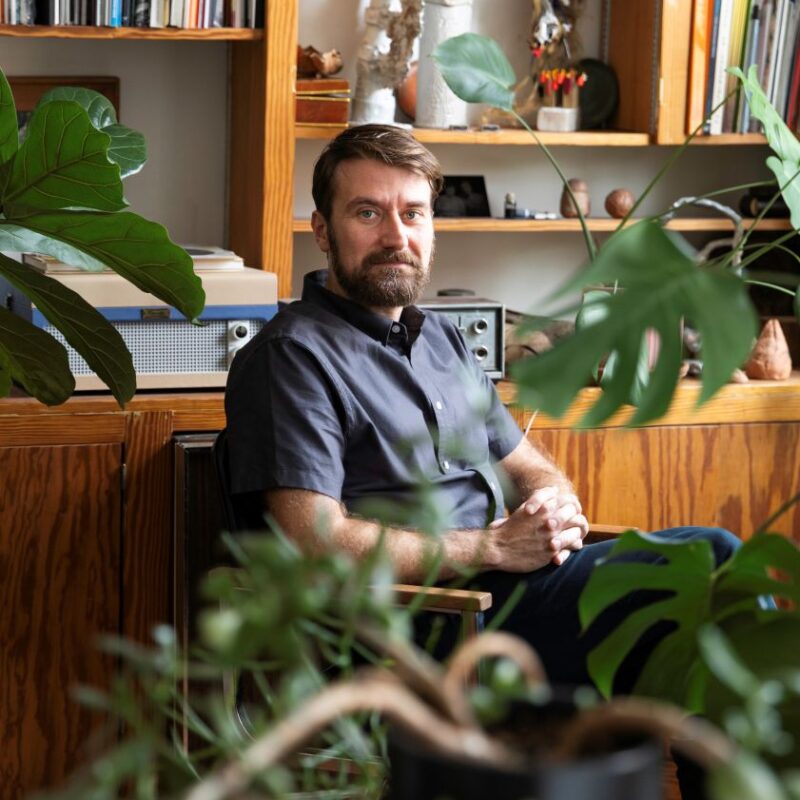
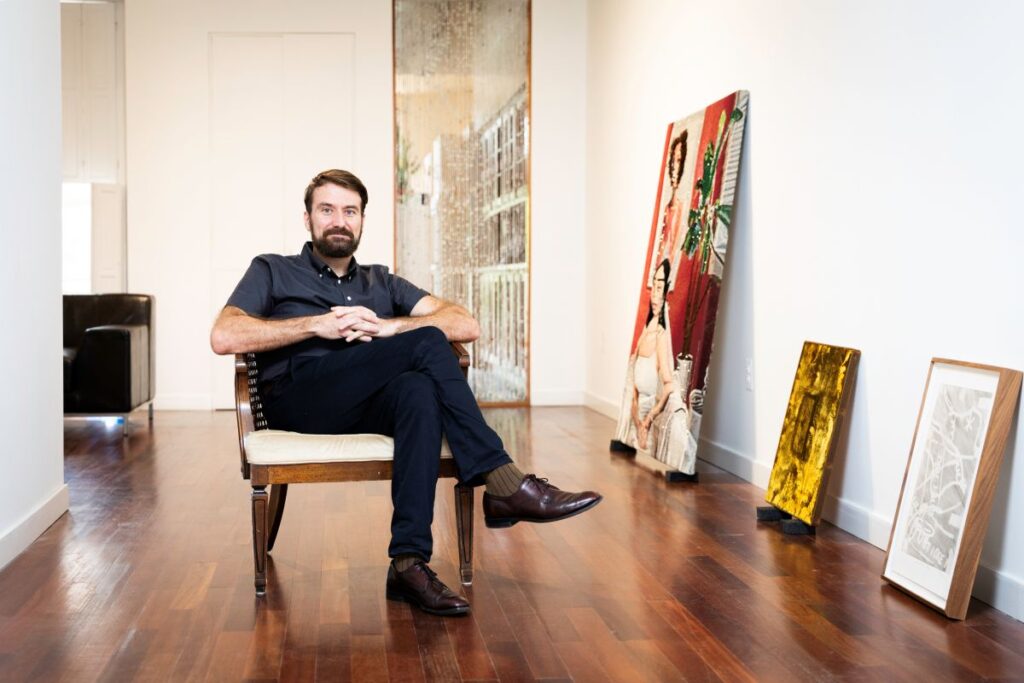
CPM Gallery, located inside a Bolton Hill townhouse, is a hybrid of the professional and the domestic. Though remote work culture has turned many of our living rooms into offices, the vast majority of us aren’t opening our houses to the general public. Owner and curator Vlad Smolkin has collapsed the first space, second space, and third space into one, inviting Baltimore to see the first floor of his home as a gallery and participate in a collective experience of cohabitating with art.
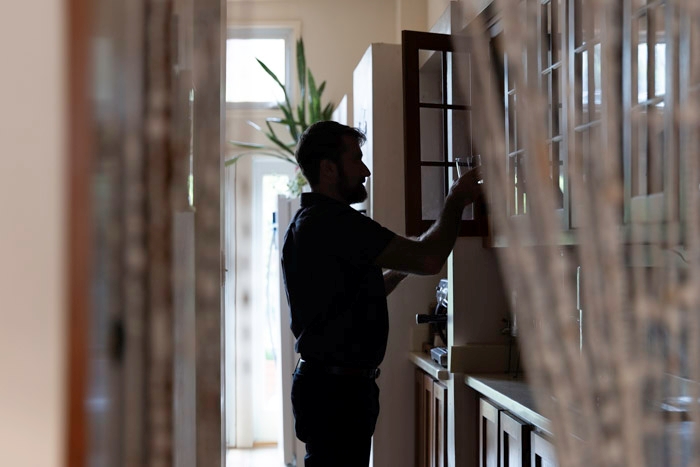
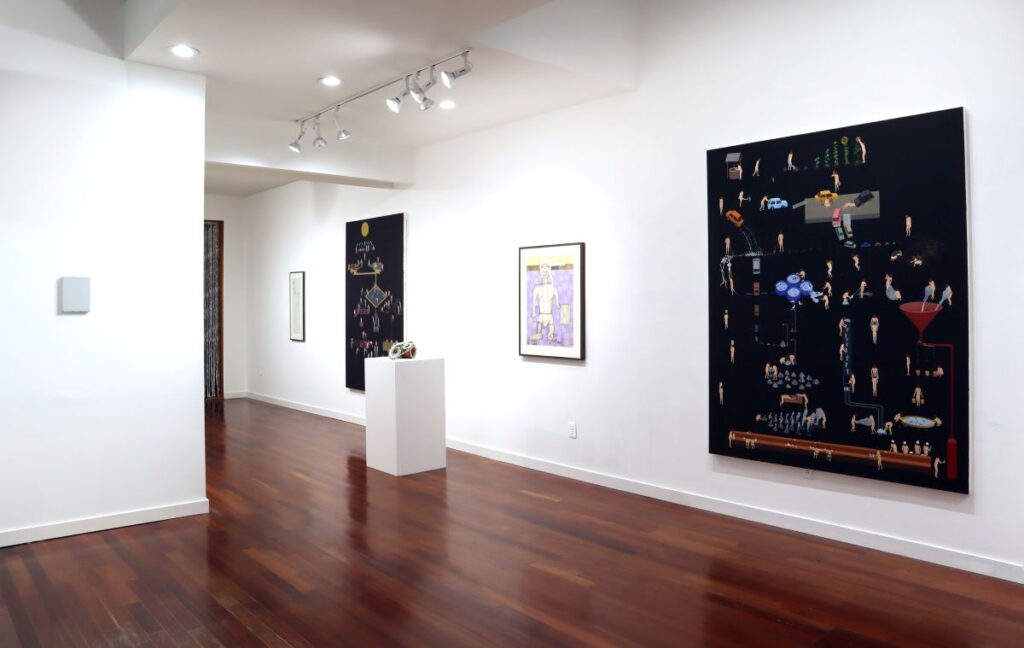
For five years and counting, CPM, which stands for Critical Path Method, has been welcoming guests up the steps of its stoop. Smolkin is the consummate host in more ways than one. Upon entering the renovated rowhome, you’re greeted by a tiled entry leading to the warm wooden floors of the gallery. Artworks are displayed among the fireplace mantel and a staircase that climbs through the open architecture to the upper rooms, with cutouts of the second story visible from below. Walk through the beaded curtain at the back of the gallery for a glass of wine and you’ll find yourself in Smolkin’s kitchen, where he cooks his dinners, boils water for his tea and puts vegetables in the fridge.
For Smolkin, hybrid space is nothing new. The current incarnation of CPM is a continuation of a project he began in 2018, in a studio apartment in Manhattan’s Chinatown. In that first iteration, Smolkin’s exhibitions engaged with the domestic context and underscored what it means to show and sell art in neighborhoods with shifting demographics.
Smolkin had spent the majority of his post-graduate career working within the commercial gallery system. From 2012 to 2019, he worked at Peter Blum Gallery, where he became director in 2015 and curated exhibitions with an international roster of artists. It was there that he learned the ins-and-outs of the industry, from the logistics of installation to the long relationships between dealers, artists, and collectors. That experience gives CPM a rigor that belies its domestic setting. Its intimacy is a deliberate choice by someone who knows the conventional model well.
During the COVID-19 pandemic, Smolkin returned to Baltimore—where he had first emigrated from Kyiv, Ukraine as a child—drawn back by the history, creative energy, and possibilities that Baltimore offered, as well as the chance to be closer to family. Here CPM could up the ante with a much larger space, opening up possibilities for artists’ work in scale and in concept. In the summer of 2022, for example, Luba Drozd’s The fields would slowly overtake you used Smolkin’s radiator, vaulted ceilings, and tier-on-tier shutters for a site-specific installation of sculpture, video animation, and immersive sound, effectively turning the gallery into a musical instrument.
CPM is designed, very intentionally, as a public space overlaid on a private one. That intention was overt from Smolkin’s first Baltimore exhibition in 2020, Skully, which featured Baltimore-born, New York-based artist Clifford Owens. The exhibition was named for a game Owens and other Druid Heights children played in the street, comprising drawings made with graphite-stuffed bottle caps—nods to the player pieces children would decorate and customize, marking individuals whose identities took on meaning only within the larger group. Owens’ work traces back to one of the oldest communal spaces—the street—while Smolkin’s curation recontextualized this playful, democratic impulse within a domestic space originally built for Baltimore’s nineteenth century elite. Like many of the artists featured in the gallery, Owens stayed in Smolkin’s home for the opening weekend, so the eating of breakfast, the hanging of art, the conversation with guests, and the late-night talks all became a part of the work.
According to Smolkin, that first exhibition was “a way to cleanse and clarify what my space is about, what I am about.” The building, which at one time would have been an imposing private residence, now regularly welcomes groups of local high school and college students, as well as the general public and art community during receptions, performances, and artist talks. Smolkin’s home is like a light he can switch on or off; some days the public are invited in, others they are not.
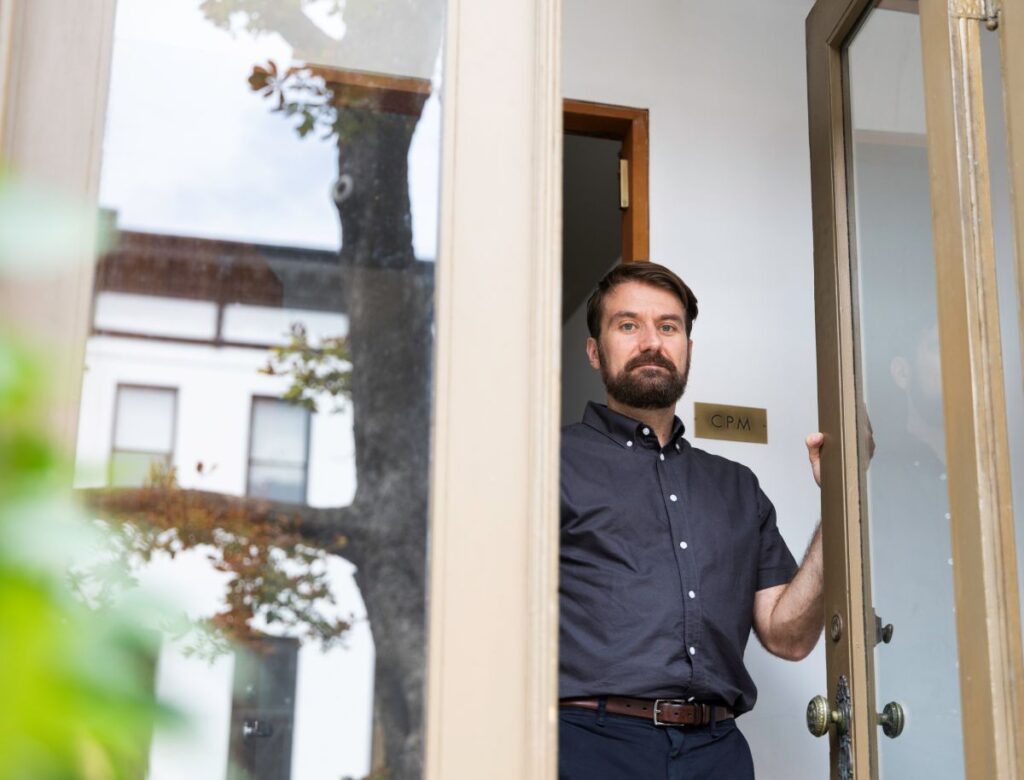
Aside from designated public events, CPM is by appointment only. Visits are about acts of intentionality, and that element was also by design. In such a small, intimate space, interaction is mandatory. Smolkin is usually the one opening the door, welcoming you with a smile and a greeting. The dialogue begins before your foot crosses the threshold.
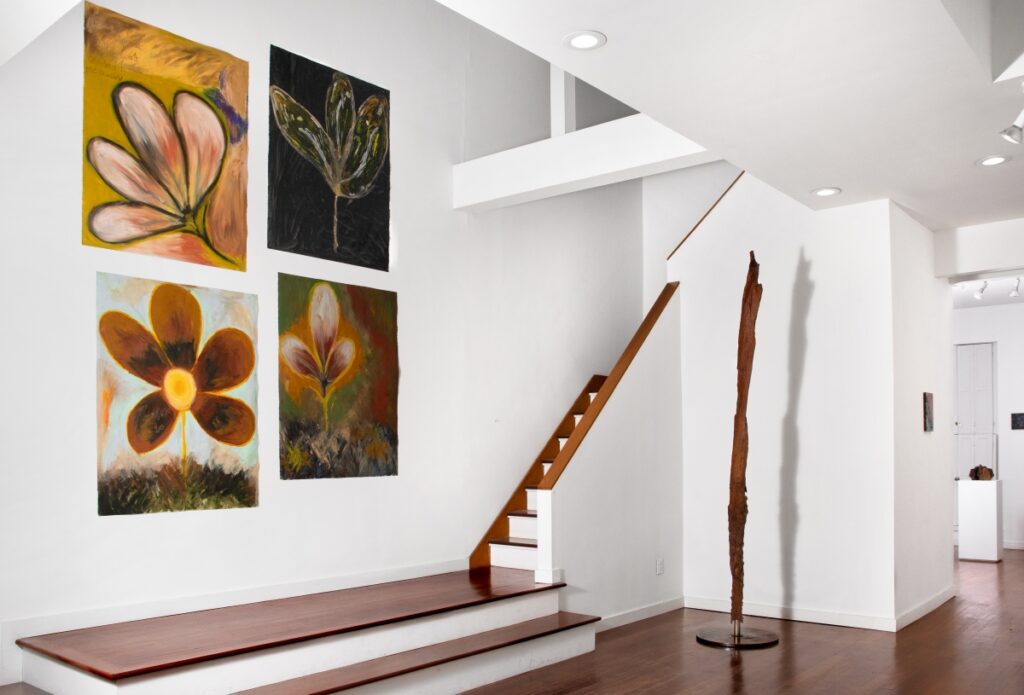
In such a small, intimate space, interaction is mandatory. Smolkin is usually the one opening the door, welcoming you with a smile and a greeting. The dialogue begins before your foot crosses the threshold.
But “hosting” and “entertaining” aren’t necessarily interchangeable terms. Smolkin at times deliberately programs artworks that can challenge social media-numbed attention spans. “Boredom used to be a space for discovery,” he explains. “I think of Emily Dickenson as enlightened boredom, working from a place of real idiosyncratic discovery. Boredom facilitates your discovery, what your own mind and experience bring up in your own ‘algorithm.’”
A communal space requires a commitment to others; you receive because you also contribute. The richness and the challenge, according to Smolkin, is that “one person’s discomfort doesn’t need to be privileged.” That’s the risk, particularly in an age when we can just sign off, shut down the browser, or exit the group chat. “You might hear something you don’t want to hear—and then you need to get past it. With my gallery, I intentionally create discomfort for this reason: things of value take time and discomfort. People want access instantly, but real-life access and integration always require effort. Not everyone makes sense in every space, even when everyone is welcome.”
The more people are removed from physical environments where they interact with people they do not know, there is a loss of social dexterity. Outside the home, Smolkin stays physically and socially fit with a weekly soccer game started in the late 70s by the post-soviet Jewish community in Pikesville. Anyone can show up and play. An “outsider” can learn to understand the language of that space—not just the game, but the community—and adapt. During that process, the community as a whole practices compassion, flexibility, and empathy. Over time, the outsider becomes one of the definers, which means that the space itself evolves.
The weekly game is now intergenerational, and includes people originating from Trinidad, Africa, Europe, and the Middle East, as well as the United States. “The space becomes more about what people have in common rather than what they don’t,” says Smolkin. “The outward markers that define the community also change and become more inclusive—and this potential for adaptive, broad inclusivity seems to be an increasingly rare phenomenon.”
This is where the plasticity of third spaces really gets expansive: if you make an intention to become a member of a space, if you practice showing up to that space and making yourself available to it, you can begin to define a space that initially was foreign.
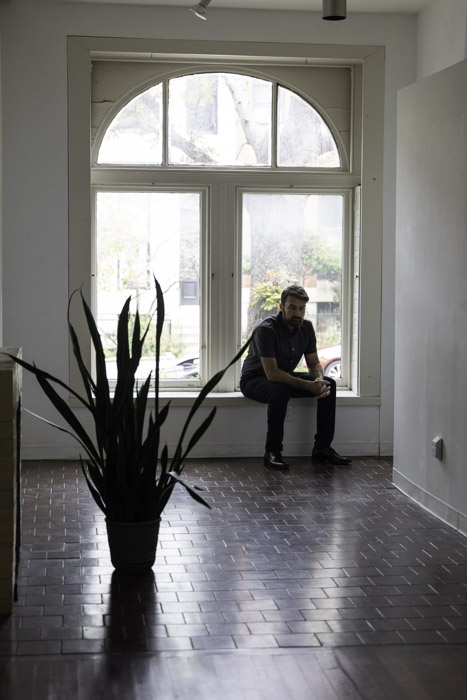
Smolkin’s interest in who gets to belong, and how, is personal. It is also the subject of Across Life-Worlds: A Family History of Soviet Jewish Emigration, now on view at the Jewish Museum of Maryland through March 2027. He co-curated the show with his sister, Victoria Smolkin, a historian of the Soviet Union at Wesleyan University. Drawing on the Smolkins’ own family and others who made the same journey, the exhibition gathers interviews, photographs, home videos, and the personal objects families carried with them, including the two suitcases emigrants were allowed to bring out of the USSR.
Alongside these are Soviet-era documents, among them issues of Pravda and KGB records, and the archives of the Maryland activists who campaigned for Soviet Jews’ right to leave. The aim, Smolkin says, was to fill a gap: “What it was missing was the story from the Soviet side and first-person experiences of the families that went through this movement.” The show traces how American and Soviet Jews, who began as strangers on opposite sides of the Cold War, came to see each other as family. CPM, in its quieter way, stages a similar familiarization.
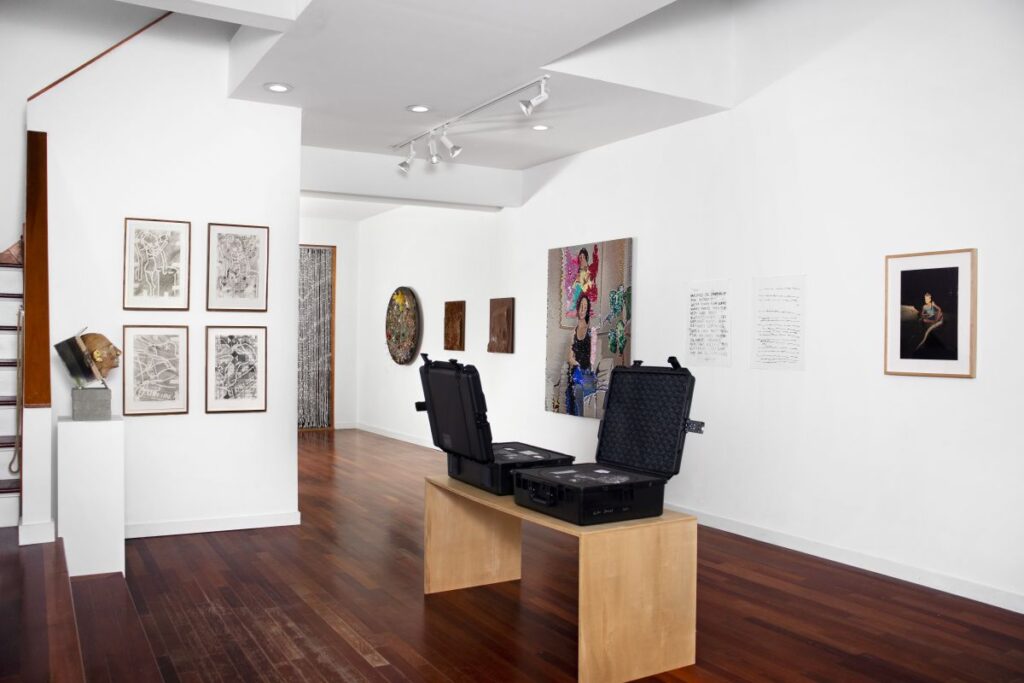
The exhibitions, the artists, the images, and the people who show up to the gallery time and time again become linked in subtle, small ways, season after season.
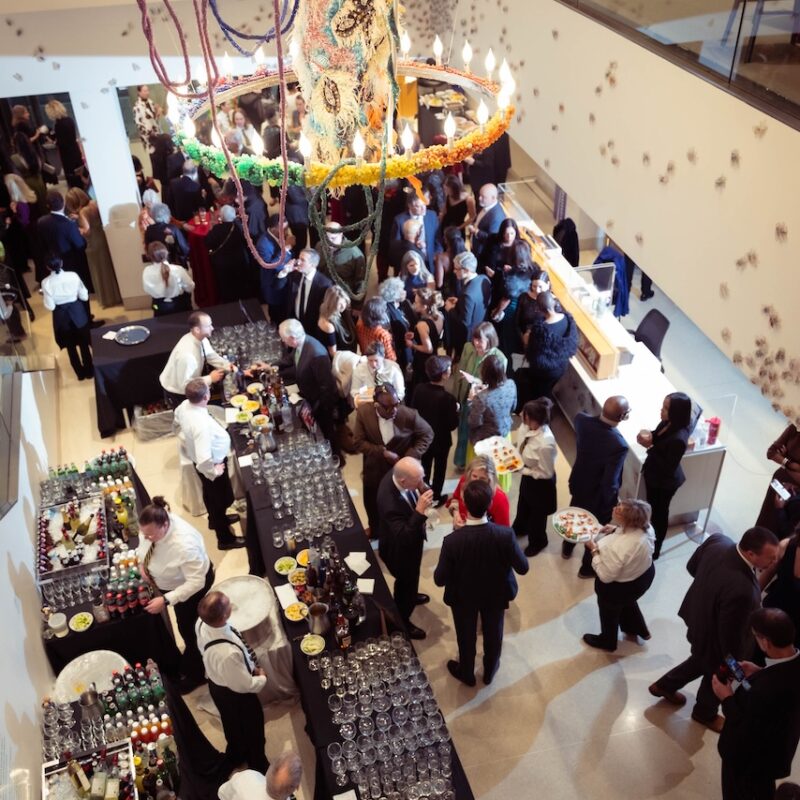
At CPM’s 5-year anniversary show, a retrospective of many of the artists Smolkin has shown since his return to Baltimore, like Devin N. Morris, Irina Rozovsky, Richard Ayodeji Ikhide, Esther Kläs, and Akea Brionne, it became evident how intimate a group of former strangers had become. If only by proximity and frequency, CPM is a more present body in the orbits of its visitors lives than some blood relatives.
The exhibitions, the artists, the images, and the people who show up to the gallery time and time again become linked in subtle, small ways, season after season. Gathered in a celebration of those first five years, those who have defined that space were illuminated, the web much more intricate than one might otherwise have imagined. An observation is shared, a conversation struck up, perspectives multiply—but only if one risks a contribution with which to begin.