If you like weird mashups, you’ve probably realized that you’re living in a remarkable moment. Suno users are kicking out Indian cowboy blues tunes and TikTok content creators are posting AI-rendered clips of Jerry Maguire acted by Predator xenomorphs. Upcyclers are adding motifs to vintage paintings to generate eerie contrasts, while Midjourney subscribers are prompt engineering seemingly infinite combinations of imagery. Ever wondered what a penguin playing a piano in the desert might look like? My friend, your time is here.
But much of the resulting content is little more than silly or facile: the forgettable product of goofy humor and a giddy excitement about new technologies. What might happen if we slowed down and explored hybridity and juxtaposition in a more patient and purposeful manner?
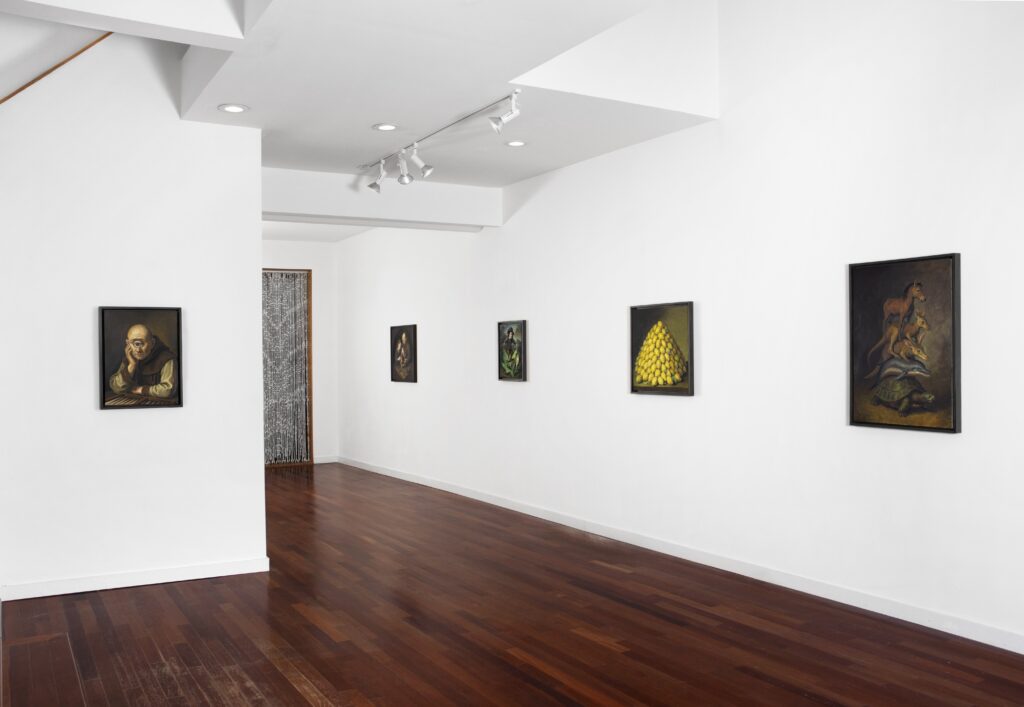
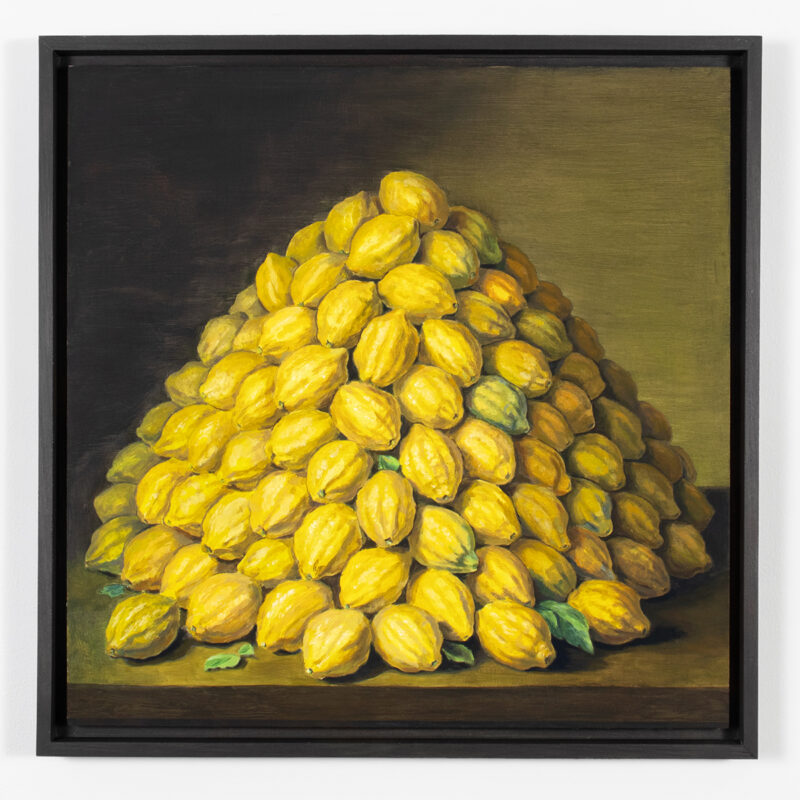
A recently opened show at CPM Gallery offers the beginnings of an answer to such a question. The ten small oil paintings in The Infinite Known, all by an anonymous artist who uses the emphatically capitalized pseudonym ALBER STEIN, largely share an interest in surreal juxtapositions and hybrid content. Interestingly, though, they also nod insistently towards Dutch and Spanish Baroque precedents, fostering a trans-art historical conversation that makes them more than mere novelties. If you’re willing to take them seriously (and you may or may not be), they can yield some intriguing reflections on the very art of painting.
Kerr HoustonWhat might happen if we slowed down and explored hybridity and juxtaposition in a more patient and purposeful manner?
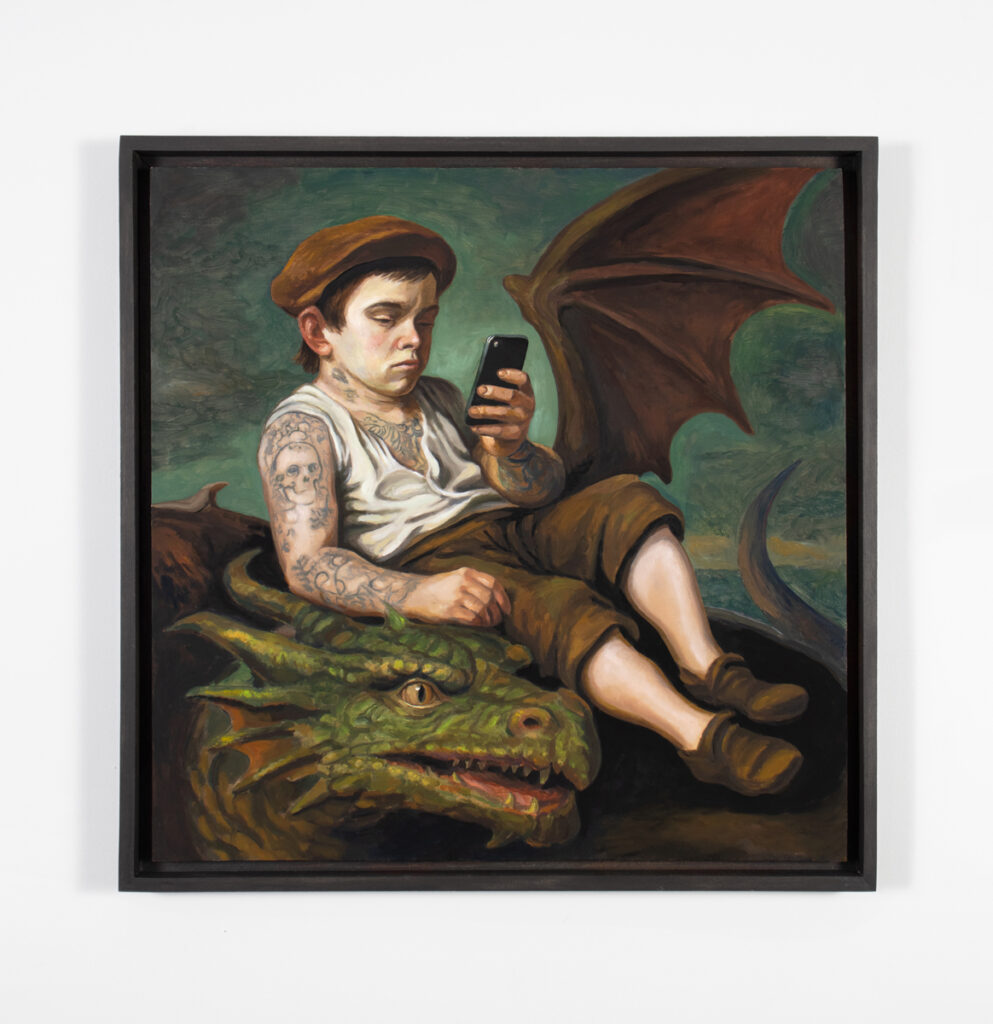
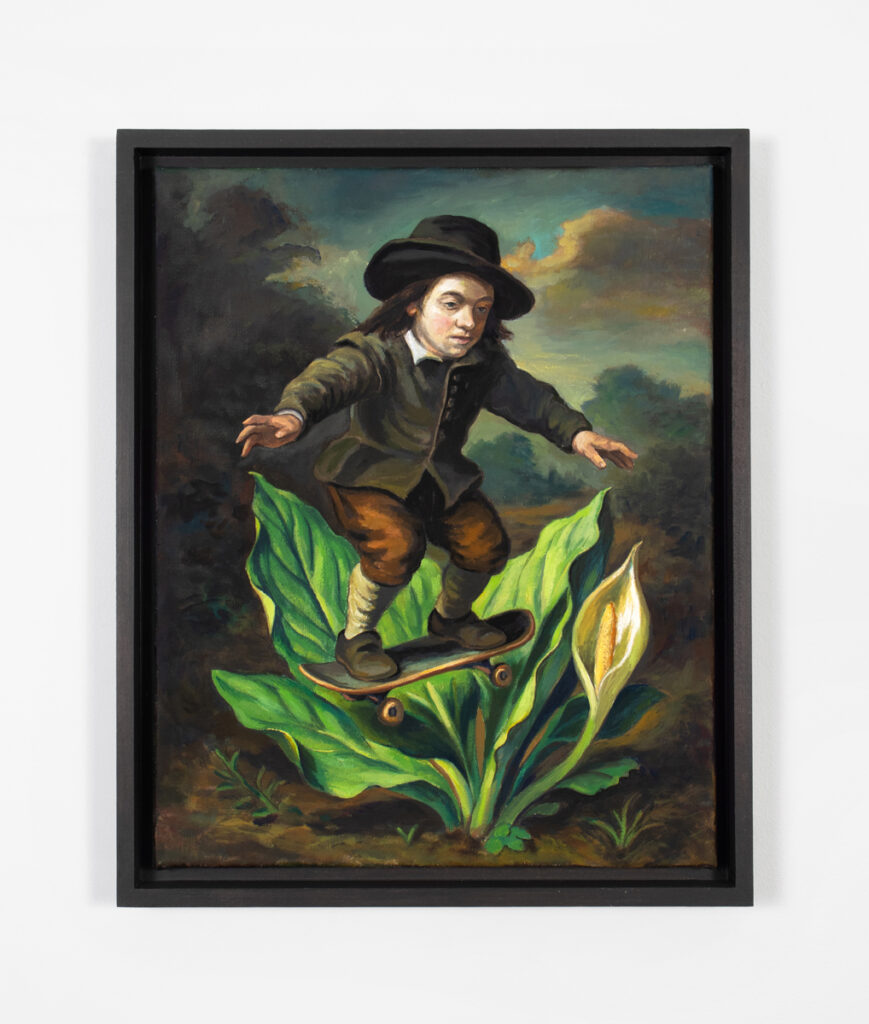
The subject matter is likely the first thing you’ll notice. In “Turkle and Sherry,” a heavily tattooed boy dressed in the garb of an early modern laborer checks out his cell phone as a dragon’s wing seems to emerge from his hip. “Thin Air,” meanwhile, features a young man in seventeenth-century clothing who deftly floats his skateboard over a peace lily.
A few works feature less exotic content, but an abiding interest in apposition and anachronism is clear, and loosely echoes the spirit of works by other active painters producing mashups, such as Dave Pollot and Joel Barnett.
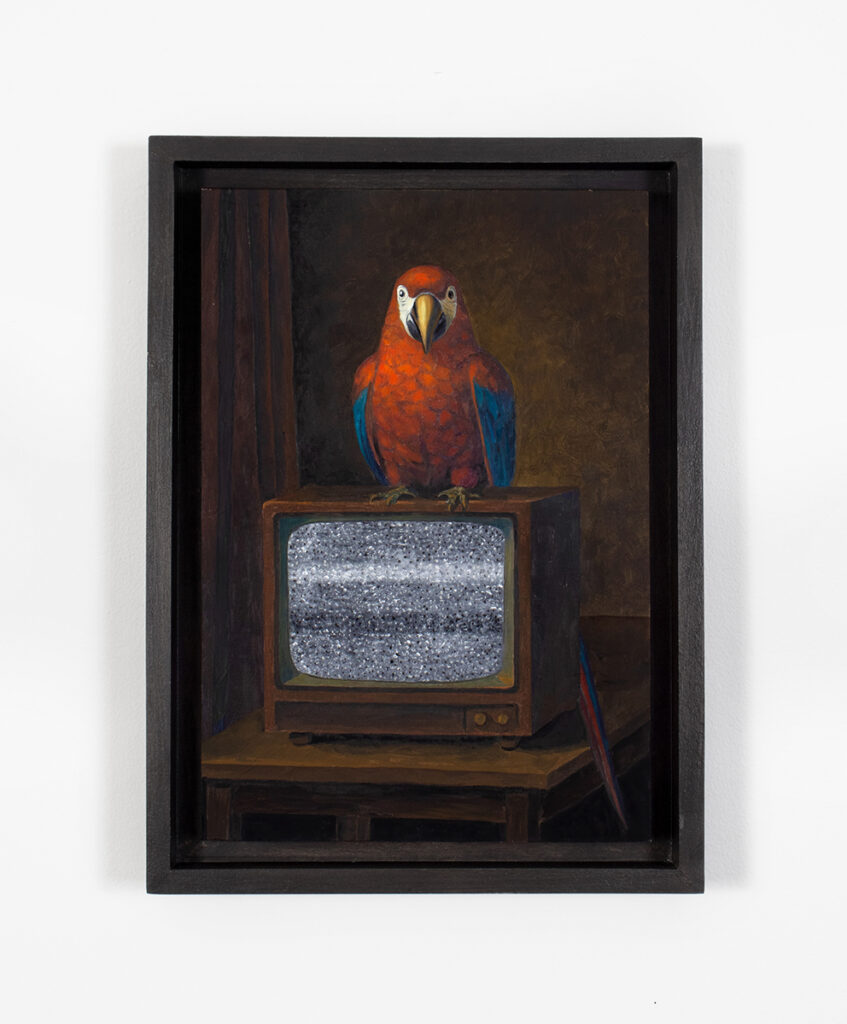
Notably, though, these are not merely random exercises in recombination. Rather, they look back again and again to canonical seventeenth-century European paintings. A parrot perched on a television is a close cousin of Fabritius’s goldfinch on a feeder, and a painted stack of citrons or etrogs reminded me of Zurbarán’s exquisite lemons. Similarly, the recurring palette—browns and blacks, with occasional local passages in blue and white—seems largely drawn from works by painters such as Ribera and Velázquez. STEIN, whoever they are, has looked closely at Baroque art.
But those Baroque precedents, of course, were often exercises in subtle moralizing: reminders of the fragility of life or the salvific role of suffering. What, by extension, might STEIN’s paintings mean? In a few cases, their titles hint at possible readings: “Turkle and Sherry,” for instance, likely refers to the work of Sherry Turkle, who has studied the social costs of digital connectivity. Other titles are more portentous and cryptic: drawn from writings by James Joyce, Thomas Merton, and John Donne, they read like riddles. Unpack them if you feel like it; they’re certainly open to interpretation.
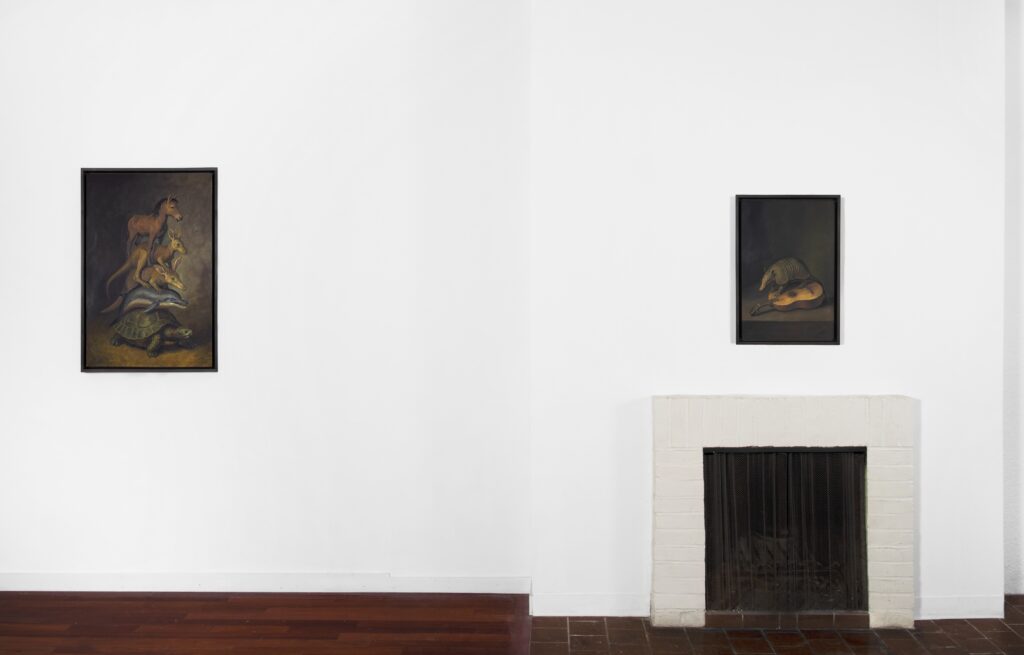
Kerr HoustonSTEIN, whoever they are, has looked closely at Baroque art.
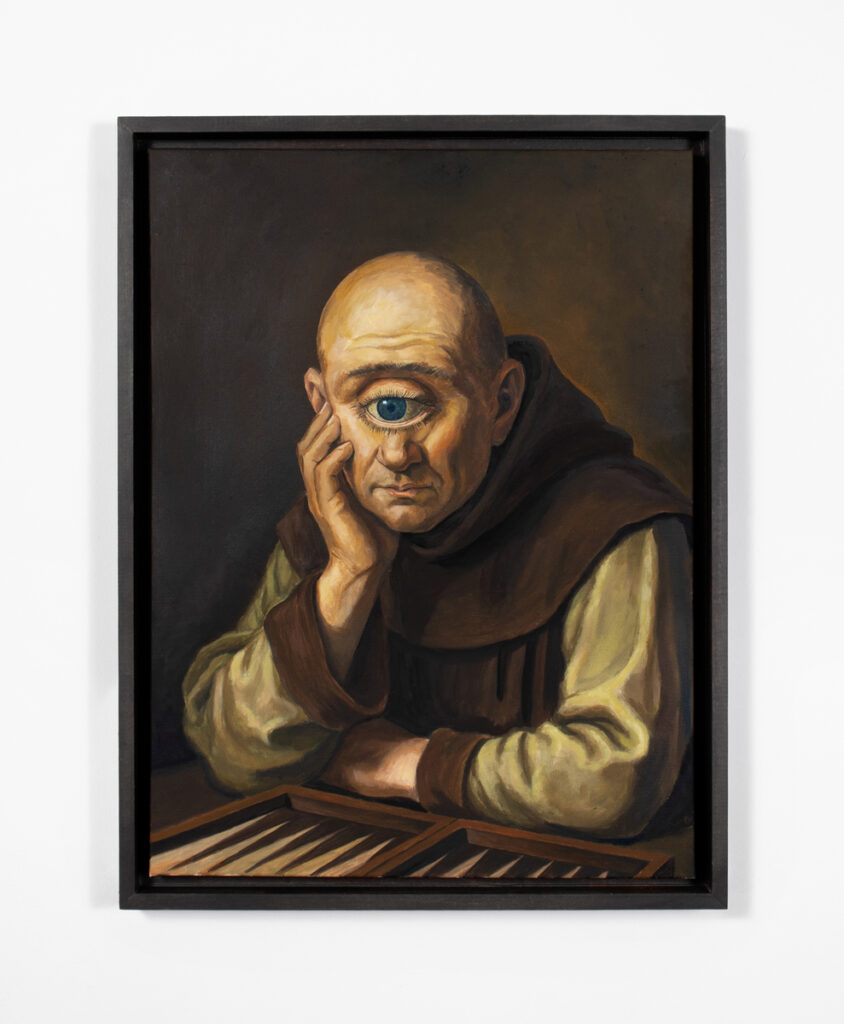
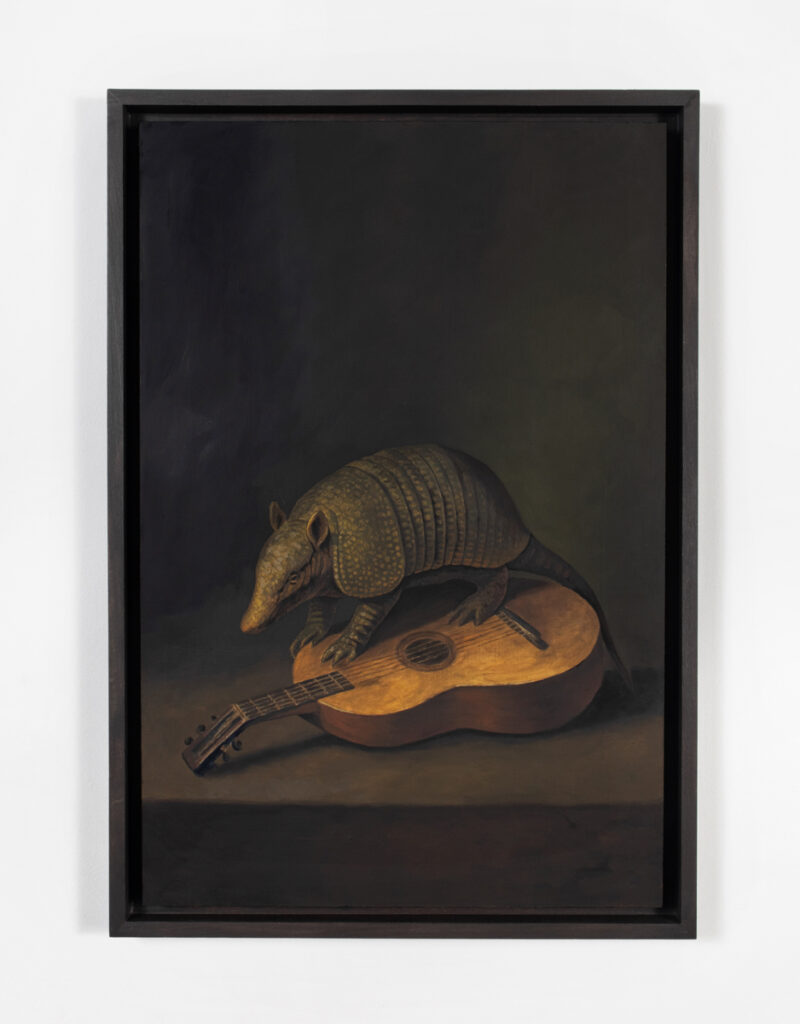
Or simply ignore them, and focus on the paintings themselves. When you do, you’ll notice certain patterns. For example, most of the works focus on single or paired figures (or animals); as a result, there’s a psychological intimacy to many of them. And yet, not much happens in them. Rather, there’s a recurring air of anticipation or a weighty sense of imminence. An unsettling one-eyed man in a monastic cloak hovers over an empty backgammon board, seemingly waiting for something to happen. The armadillo seems unsure of its next move. Time, repeatedly, feels frozen.
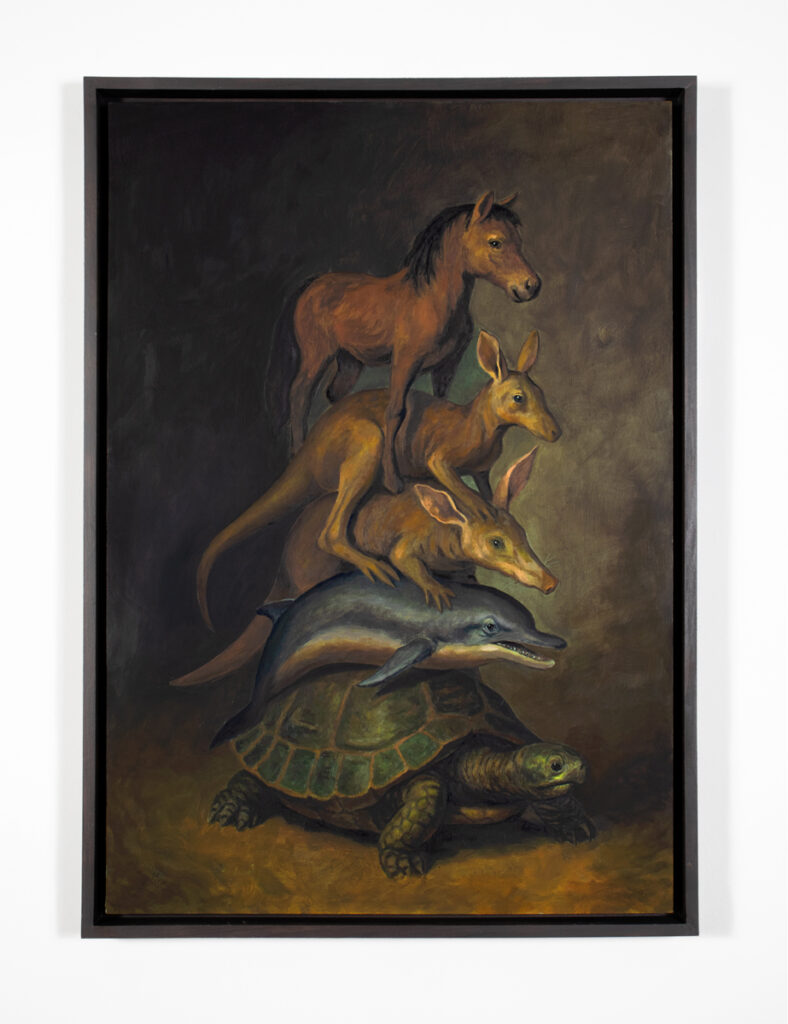
There’s also a sense that things have been arranged for us. Without exception, these are balanced compositions that convey a sense of stability. Moreover, they seem to anticipate or even solicit our gaze. In one painting, five animals (horse, dolphin, tortoise…) lie atop one another in an improbable but impeccable pile of bodies. Stoic and emotionless, the animals are wholly enigmatic. Should we see this odd behavior as instinctive? Or are they implicitly performing for us? They hold their pose, and we begin to suspect the latter.
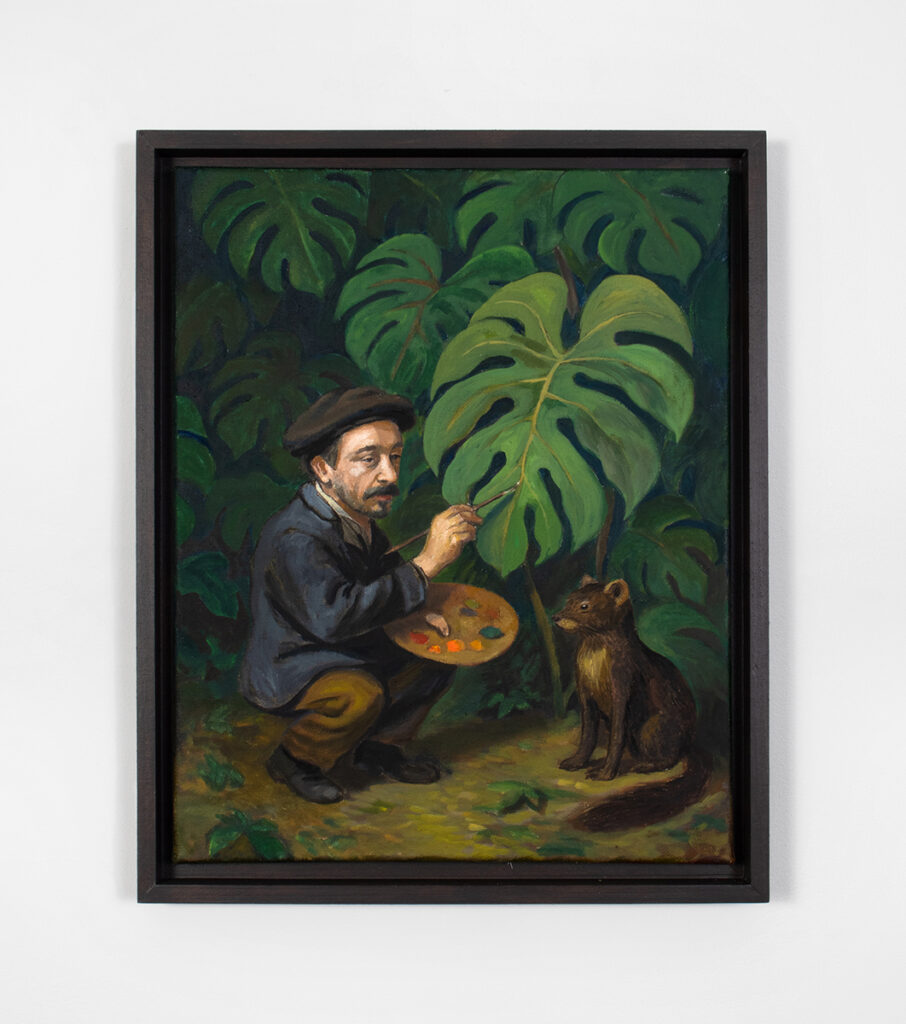
It’s also worth thinking, briefly, about how paint is used in these works. I don’t mean the application of paint—which is not especially interesting, as the oils are thinly applied, with limited variation in strokes and texture. Rather, it’s the semiotic dimension that’s fun: that is, the ways in which paint stands for various things. In two works, oil paint evokes tattooed linework; in another, it signifies the static on a television screen. And in “Silence, Exile, and Cunning,” we see an artist applying a dab of paint to a large leaf. A painted painter painting a painting: the conceit is coyly recursive, and rewarding.
So, again, what to make of all of this? Ultimately, gnomic paintings like this will read differently to each viewer. But as I looked at these works, I was repeatedly reminded of the work of Han Van Meegeren, a Dutch painter who executed and sold a number of Dutch Golden Age forgeries in the 1930s and 1940s. Like STEIN, Van Meegeren looked back to the Baroque era as a sourcebook, and while his paintings sometimes read as slightly clunky, they generated a compelling tone—sober, weighty—that was all their own.
Van Meegeren’s paintings can also be seen as early mashups, of a sort. Knowing that experts would subject his materials to scientific tests and that art historians would scrutinize his rendered forms, he worked in a combinatory way. Painting on a seventeenth-century canvas that he had purchased and closely modeling his subject matter on works by Vermeer and Caravaggio, he fooled both conservators and historians. Over the course of his career as a forger, Van Meegeren earned the equivalent of roughly $25 million.
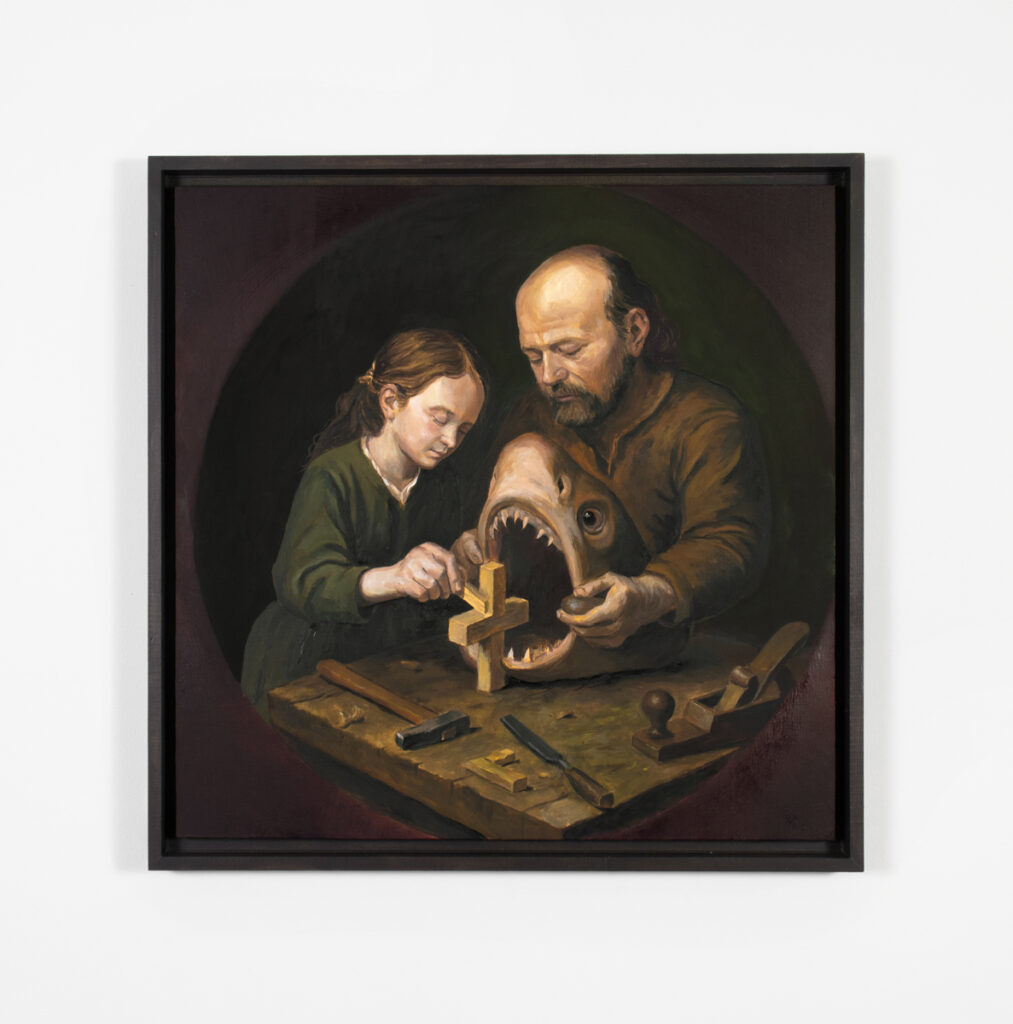
STEIN’s paintings are not forgeries, and they’re not selling for millions of dollars. But rather like Van Meegeren’s paintings, they embody the potent appeal of the mashup. If you’re familiar with Baroque painting, you’ll likely enjoy the winking references and allusions in these works. And even if you’re not, you may well enjoy the simple weirdness of the juxtapositions in play, or the liberating realization that much of the Western canon actually consists of equally odd pairings. Either way, these are works that make the past seem fresh and full of potential.
So, sure, feel free to experiment with those AI image combiners, or to shake your head at the sheer weirdness of a father and daughter who tenderly construct a cross-shaped structure before a yawning shark’s mouth. The mashup, for better or for worse, now seems to be everywhere. And while many of the resulting products can verge on the nonsensical, STEIN’s paintings evoke the possibility of meaningful continuity in a world of hybrid, recycled forms.
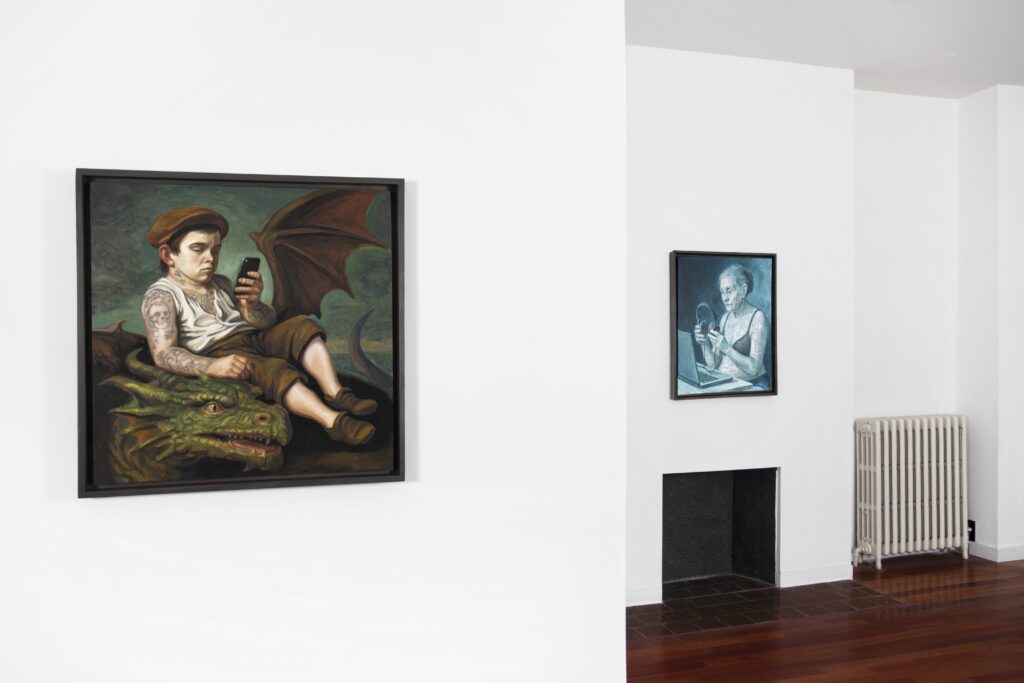
The Infinite Known is on view through May 2, 2026. CPM Gallery is open Tues.-Sat., 10am-6pm, by appointment only. Email [email protected].
Subscribe Today for BmoreArt’s Artist-Level Membership
For $100 a year ($8.30 a month) artists receive 2 print journals, 2 tickets to each release party, special invites, and free professional services.
Artist Membership at BmoreArt