I am not sure if it’s the swampy summer heat, or the sheer quantity of quality stuff to see, but time seems to be moving erratically in the art scene. The last week of May simultaneously feels like it was yesterday and a lifetime ago.
This time last month we were rushing from the vernissage of Artscape’s sophomore SCOUT Art Fair to an eye-wateringly powerful artist talk from Louis Fratino for his triumphant homecoming to the Baltimore Museum of Art. BmoreArt launched our 21st Issue (!!!) at my newly-bicentennial alma mater, MICA, yet somehow I managed to squeeze-in events, openings, or last-minute appointments at some of my favorite galleries despite spending several consecutive days in an art fair.
I still find myself thinking about four of those very different shows—partly because some of them mark the passing of time in one way or another—but mostly because they offer a range of perspectives about what being an artist or cultural worker from or working in Baltimore, USA, can mean at this chaotic moment in history.
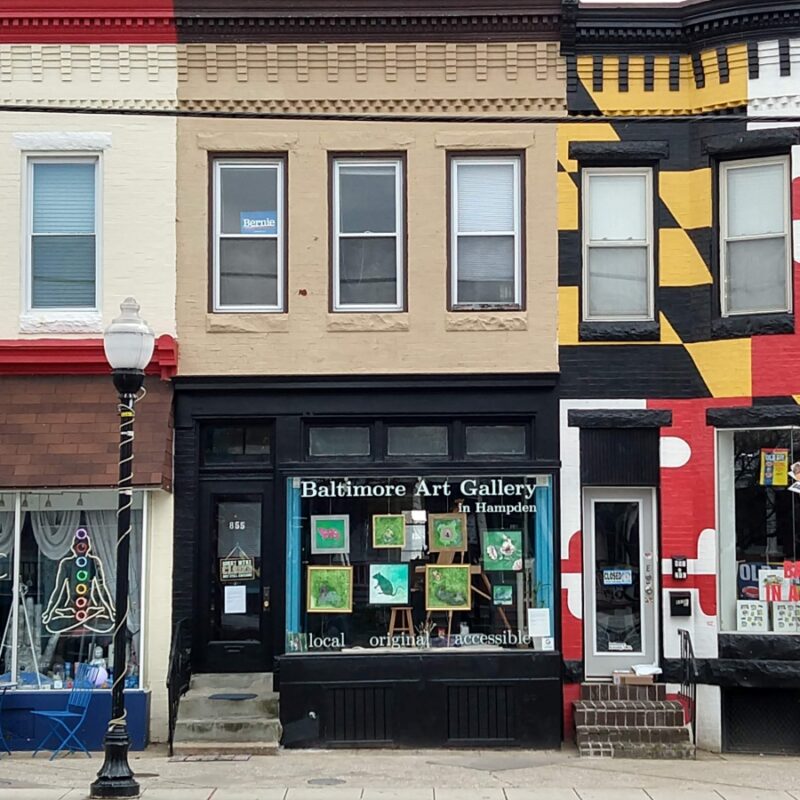
Commercial galleries (like so many brick-and-mortar retail spaces in general) are dropping like flies around the country. The standard art fair model is looking more and more unsustainable. Many American artists I know have likely spent more time online debating Josh Kline’s now-infamous essay about New York real estate than actually working in their studio—if they’re lucky enough to have one. But in Baltimore, the house gallery offers a glimmer of hope.
A decade after the city cracked-down on live/work warehouse spaces—often tucked-away from streetlife and public view—the rowhouse has proven to be a somewhat ideal alternative. With long expanses of wallspace, permeability to the sidewalk, built-in vertical separation of uses, and a more intimate/financially-low-risk relationship between gallerist and artwork than a dedicated commercial space; Baltimore’s ground-floor house galleries are almost so logical it’s a wonder everyone doesn’t start one.
And unlike so many of our favorite warehouse spaces that have come and gone, all of the galleries on this list are a hell of a lot easier to air condition.
Here & Now: 5 Years of CPM, Baltimore
CPM
Artists: Akea Brionne, Ōtsuki Chōzaburō, Luba Drozd, Richard Ayodeji Ikhide, Esther Kläs, Pooneh Maghazehe, Lior Modan, Devin N. Morris, Clifford Owens, Margaret Rorison, Irina Rozovsky, Alber Stein
On view through June 26 by appointment
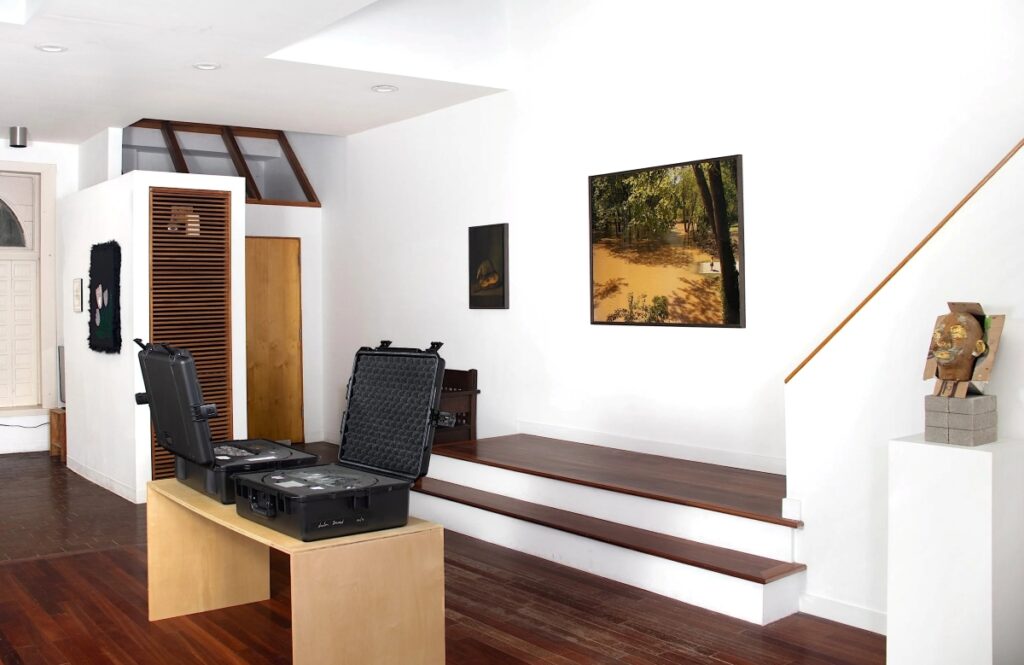
Gallerist Vlad Smolkin’s return to his hometown Baltimore is one of the precious few blessings to come out of the awful COVID pandemic. Five years ago, he left New York after a career as both Director of the prestigious Peter Blum Gallery and founder of his own gallery’s first iteration in a Chinatown tenement apartment. He upsized to a grand nineteenth century Bolton Hill townhouse with soaring ceilings and a vibe that blurs the lines between domestic and white-cube. In the years since, CPM has reinvigorated and recalibrated the oft-unbalanced flow of ideas and talent into and out of this city—exposing Baltimore audiences to international artists, hosting collaborations with out-of-town curators and critics, and situating local culture and its creators in genuine, sometimes unexpected exchanges with the larger art world beyond the beltway.
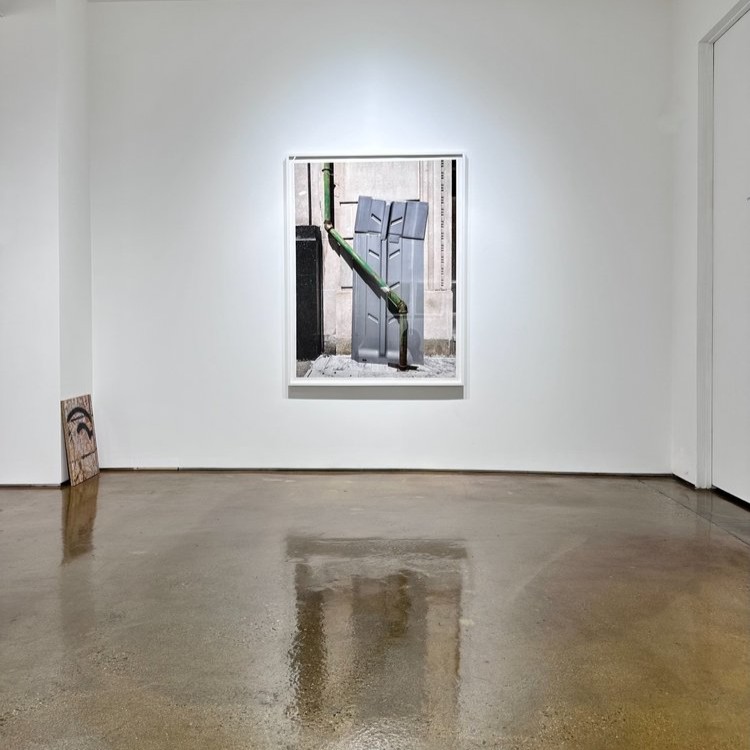
When I arrived at the opening of the intimate retrospective celebration of CPM’s five years on Bolton Street, I was struck by Smolkin’s success at wrangling such a cohesive show out of an aesthetically and conceptually varied half-decade of programming. Here are excerpts from Ukrainian-born conceptual artist Luba Drozd’s eerily sterile Franconia Notch Edition series (first exhibited at CPM in 2023) hanging out with Akea Brionne’s charmingly wonky digital jacquard tapestries (a body of work first exhibited at the gallery the same year).
The latter feel “crafty” without bearing much apparent evidence of the artist’s hand—a lovely counterpoint to anonymous painter ALBER STEIN’s real oil paintings inspired by AI compositions from a CPM solo show earlier this year. And then there’s the satisfying, unexpected kinship between the graphic works on paper by nineteenth century Japanese draftsman Ōtsuki Chōzaburō and the contemporary British-Nigerian painter Richard Ayodeji Ikhide, whose solo show here was a highlight of 2025. Smolkin discovered Chōzaburō’s long-forgotten, perfectionist work in an old shop in Kyoto while on a business trip years ago, and showed it at CPM in 2023.
I remarked to Smolkin how clever his selection and hang were—a limited color palette of monochromatic works with a few “highlight” pieces dominated by ochre or muted chartreuse ties what could’ve otherwise been an unruly show together and sets up inspired moments of dialogue. “I chose works with calming earth tones,” he explained.
It might not be what one would expect from a celebratory group show—but then again, Smolkin and his lucky houseguests do have to actually live with the art on the way to the kitchen.
Unfinished Republic: America at 250
Goya Contemporary
Artists: Sonya Clark, Kyle Hackett, Joyce J. Scott, Paul Rucker, Elizabeth Talford Scott, Louise Fishman, and Soledad Salamé
On view through July 8th
It might seem odd to include a Goya Contemporary show on a list otherwise dominated by alternative spaces in rowhomes. It is, after all, essentially one of the only “flagship” established commercial galleries left standing with a dedicated brick-and-mortar space in Baltimore, a regular program including participation in international fairs and exhibitions, and a roster of A-listers showing both at home and abroad.
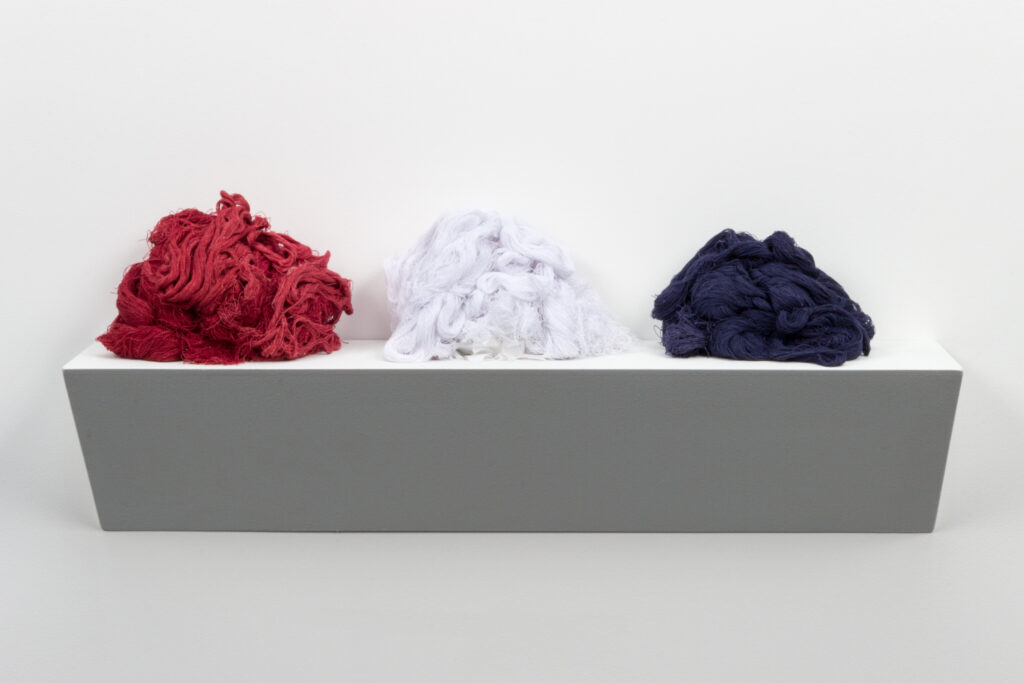
But walking into the opening of Unfinished Republic at first felt as convivial and familiar as a visit to an old friend’s living room. There are always-delightful quilts from Elizabeth Talford Scott, glass or seductively beaded sculptures from iconic daughter Joyce J. Scott, embroidery on digital prints from Soledad Salamé, et al.—a veritable “who’s who” of artists we know and love.
Linger just a bit, however, and Unfinished Republic quickly reveals itself to be a pretty dark, thought-provoking show once the serotonin from hugs and recognition wears-off. Director Amy Eva Raehse has mined both recent works and the deep archives of her artists to curate a show about how, nearing its 250th birthday, this country has very much not matured enough to deal with its baggage.
From gun violence, slavery, sexism, environmental devastation, racial inequality, a freakin’ Civil War, and abhorrent treatment of refugees—to cite just a few—the themes tackled by the works in this show read like a list of traumas and grievances Americans never fully worked out in family therapy with the motherland. Even the most psychedelic Talford Scott quilt is no substitute for the serious amount of ayahuasca the United States would need to unpack its psychic scars and finally get its shit together.
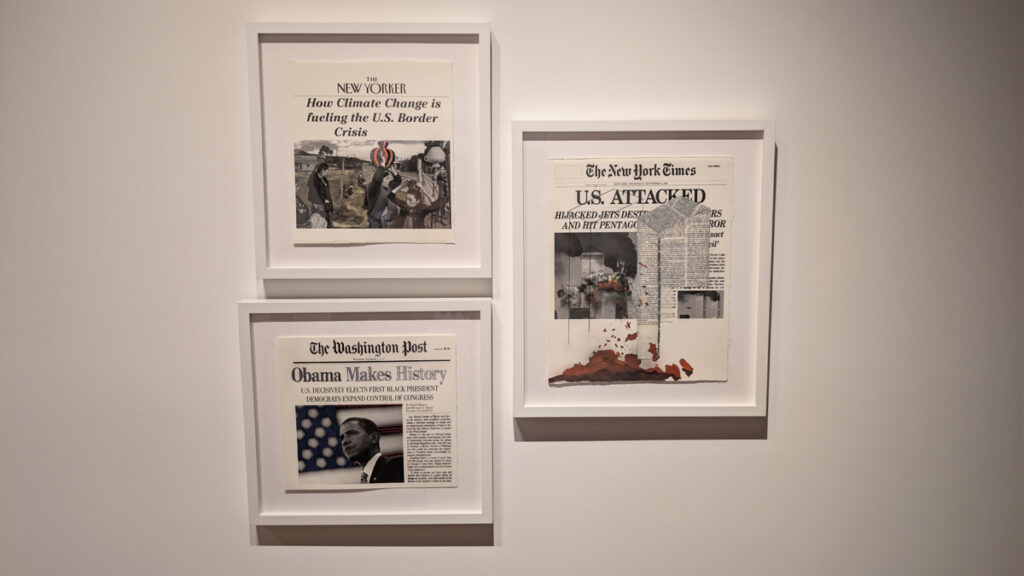
A central thesis of Raehse’s curatorial text is that the nation’s impulse to obfuscate or forget its own dark history (and present) is counterproductive. In the immortal words of Stevie Nicks, “A wound gets worse when it’s treated with regret.” So it feels like a double sting to see that so many of the artworks in this show are older than the current Trump presidency but feel as urgent as ever.
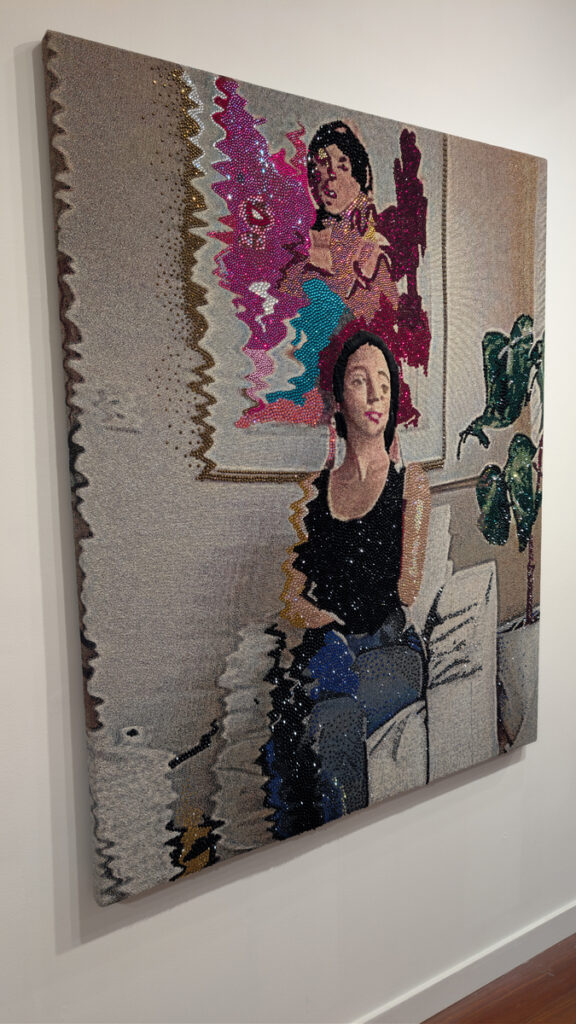
Salamé’s striking 2011 Gulf Distortion series of deliberately garbled silkscreen prints on mylar, for example, reflect the uncertainty following the Obama-era Deepwater Horizon petroleum disaster and its impacts. Fifteen years later, those once-apocalyptic scenes are largely forgotten—even as we’re likely experiencing the health and environmental consequences—yet eerily evocative of contemporary, shaky cell phone video of oil infrastructure presently on fire around the Persian Gulf. This dumb country refuses to wean itself off fossil fuels, even though we know the teat could literally explode at any minute.
But it’s perhaps most notable how many of the artists in this show—particularly women of color representing backgrounds who’ve suffered disproportionately from America’s policy failures—approach outrage-inducing injustices with labor-intensive processes that speak to acts of care or repair, mending, or ornamentation.
There are multiple reasons Goya is one of the last ones standing in the great commercial gallery extinction event, and this show is must-see evidence of why. Hell, at the rate things are going, there’s a good chance Goya Contemporary might just outlive the “Great Experiment” of the Republic itself.
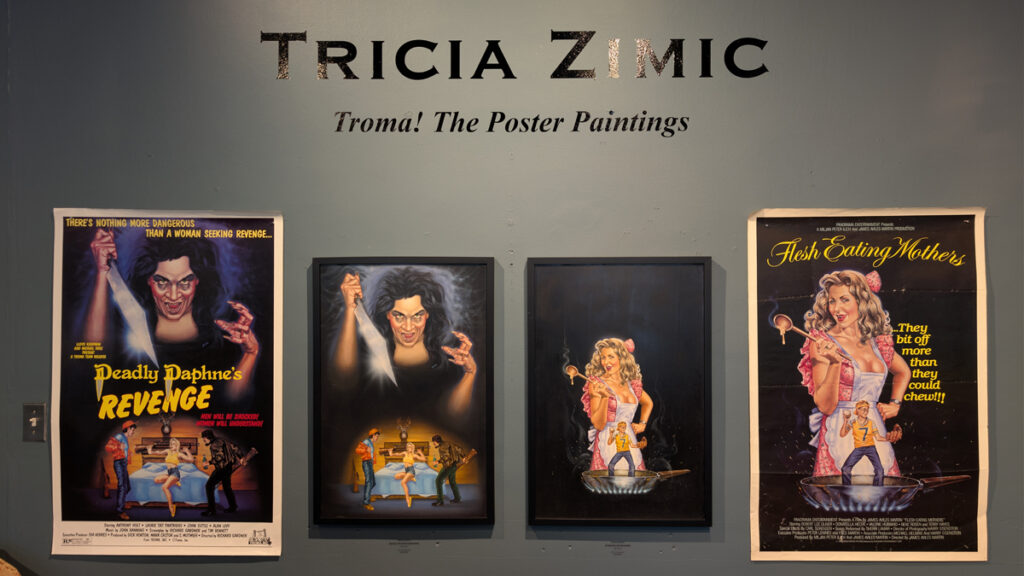
Tricia Zimic: TROMA! The Poster Paintings
Gallery Blue Door
On view by appointment through August 1st
Artist Talk July 11th 4:30pm
This is, quite possibly, my favorite exhibition I have seen in Baltimore in recent memory.
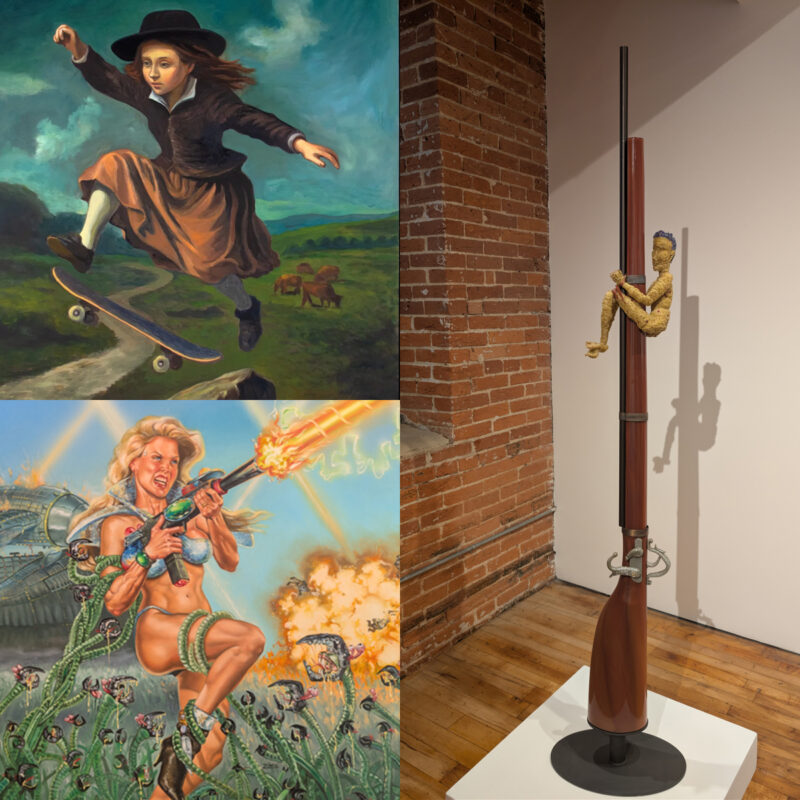
Starting in the late 1980s, artist Tricia Zimic was commissioned to make the oil painting illustrations for the low-budget “B-movie” producers Troma Entertainment’s posters. Sometimes, she used herself in wigs posing with props as a model for reference photos. Many of the original oil paintings for the 20 or so designs she authored are here, displayed alongside the finished print posters.
But stripped of text and context, the “bare” paintings themselves take on a life of their own—some as self portraits of sexualized female archetypes that bring to mind the artists of the “Pictures Generation” and their investigations of identity in pop culture and media.
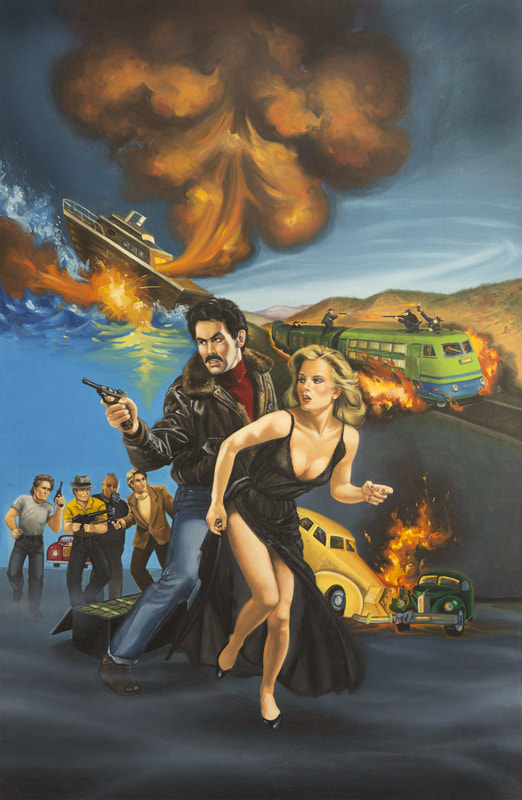
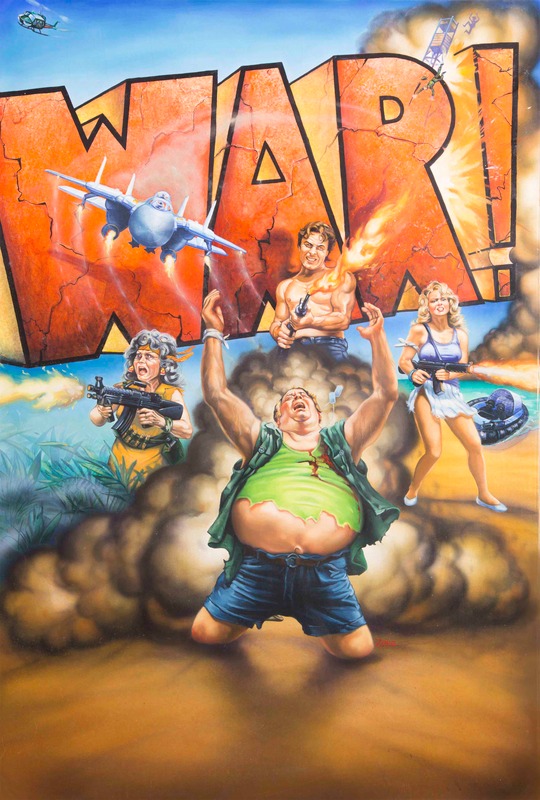
I also happened to see TROMA! The Poster Paintings the morning after Unfinished Republic and found myself thinking about how directly these curious, transgressive images from the seedy underbelly of the Reagan era actually reflect a lot of the same dystopian concerns haunting the American psyche. We’ve spent the better part of the last century a few hours away from a real or imagined nuclear armageddon or fiery car wreck or bullet, constantly on the lookout for “the other” in the form of a hoard of zombies or aliens or deadly virus.
Projecting a thrill of “extraordinary” violence—state, sexual, supernatural—is such a recurring theme in our collective subconscious because, maybe, America has always been a scarier civilization in reality than the depravities we could imagine? Surely it’s easier to imagine oneself fighting off monsters with a machete than systemic horrors less easy to grasp or visualize.
If Zimic’s painting style looks vaguely familiar, you might have seen her more widely-reproduced illustrations for Nancy Drew novels. So there’s something slightly uncanny about the glorious mismatch between the wild subject matter and some of her more controlled, nearly brush-stroke-less “wholesome” rendering—often more Norman Rockwell than pulp-y. But the paintings are most fun when they veer into full-blown camp territory, for titles such as “Ferocious Female Freedom Fighters” or “Demented Death Farm Massacre.”
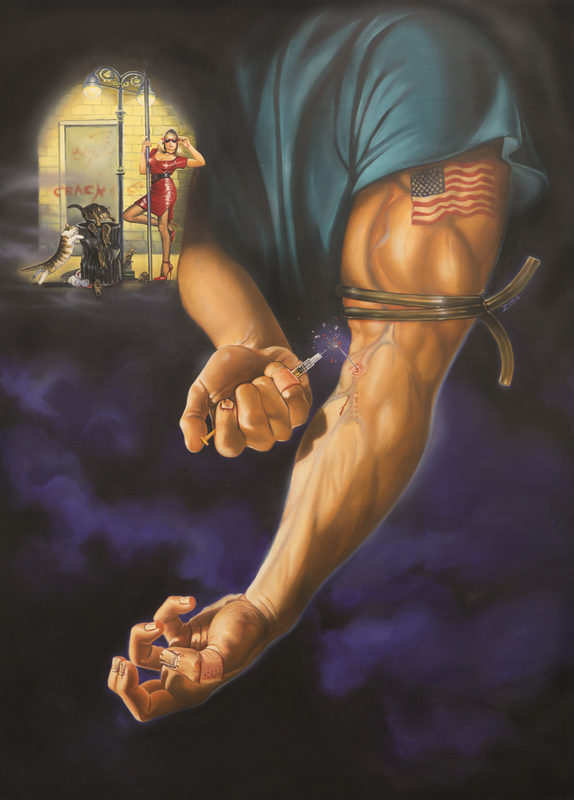
I am unlikely to sit through more than 10 minutes of most of the films they were painted to advertise, but I could spend hours with Zimic’s paintings. I keep thinking back to 1987’s “Story of a Junkie,” in which a tourniquetted, muscular arm with an American flag tattoo breaks a needle trying to shoot-up heroin. Without the promotional text for the film overlaid, the painting calls to mind the contemporary painter Jordan Sullivan, whose—albeit much cruder—acrylic paintings hold a slightly exaggerated dark mirror to the excesses, contradictions, and decadence of life in late capitalist dystopia.
A zombie apocalypse indeed.
AVANT-GARDEN: Malcolm Majer & Ruri Yi
Gentlemen Farmers
Open by appointment through July 25
Speaking of nimble house galleries with pleasant surprises, I love the latest iteration of Guest Spot at the Reinstitute. Like Blue Door or CPM, the space occupies the ground floor of a culture worker’s enviably-proportioned townhouse. Founder Rod Malin has at times hosted residencies, alternative educational programing, exhibitions, and more. Now, it resembles a bit more a retail space, but look closer and the design objects on display blur the line between furniture and sculpture.
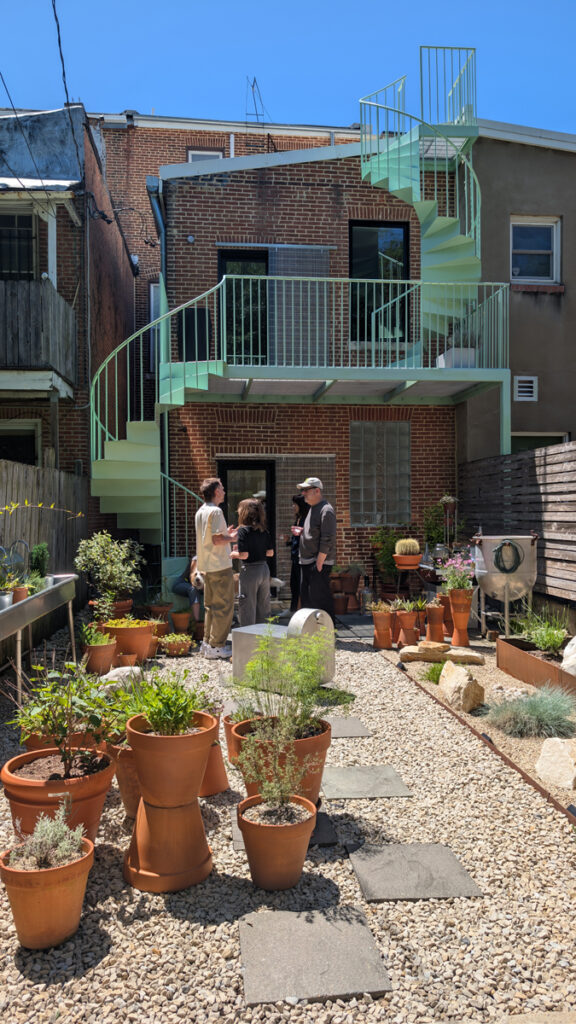
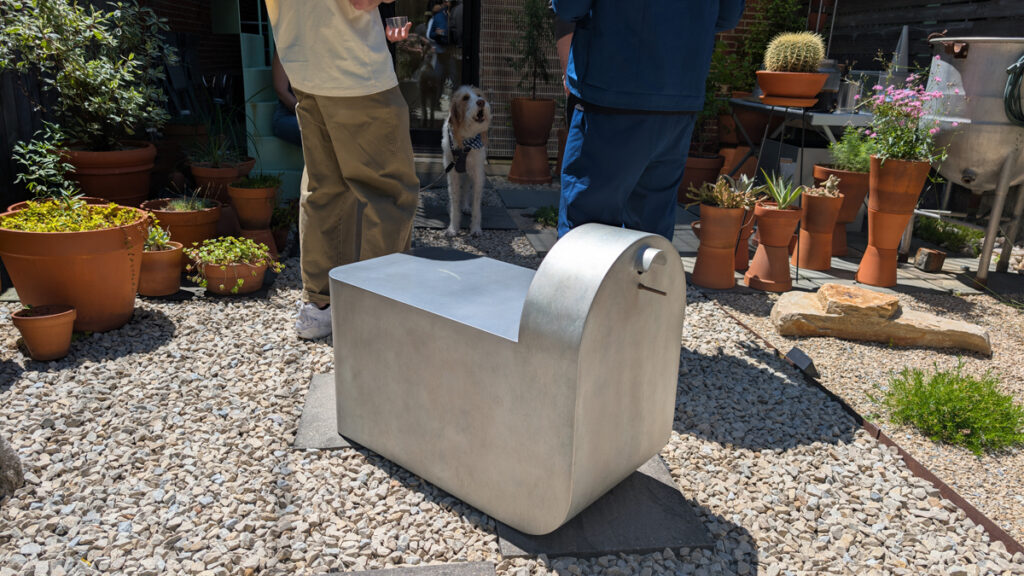
But the real magic happens in the backyard, which has been lovingly landscaped as entertaining/outdoor exhibition space. A Malcom Majer piece sits deliberately awkwardly in the center of the garden. From some angles it speaks the language of industrial design—somewhere between a mysterious tank and sleek chair—but has little to no ergonomic relation to most human bodies.
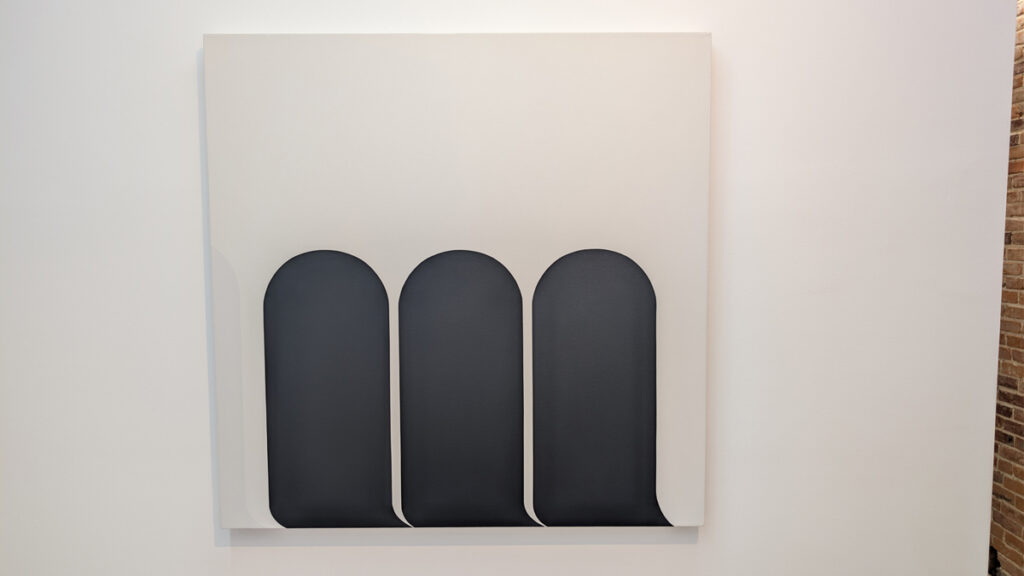
From some angles, the lump of metal looks as if it could have been extruded directly from one of the voids in Ruri Yi’s minimalist paintings hanging just inside the threshold of the building. There’s something strangely hypnotic about how so many of her repetitive super-flat abstract paintings offer the slightest hint of impressionistic space, like a stylized architectural rendering of some futuristic housing block from 1970s French suburbia.
Neither artwork looks like it “belongs” to the prewar alleys of Station North—where Yi also runs the live/work/exhibition space Monopractice—but they are very much at home.