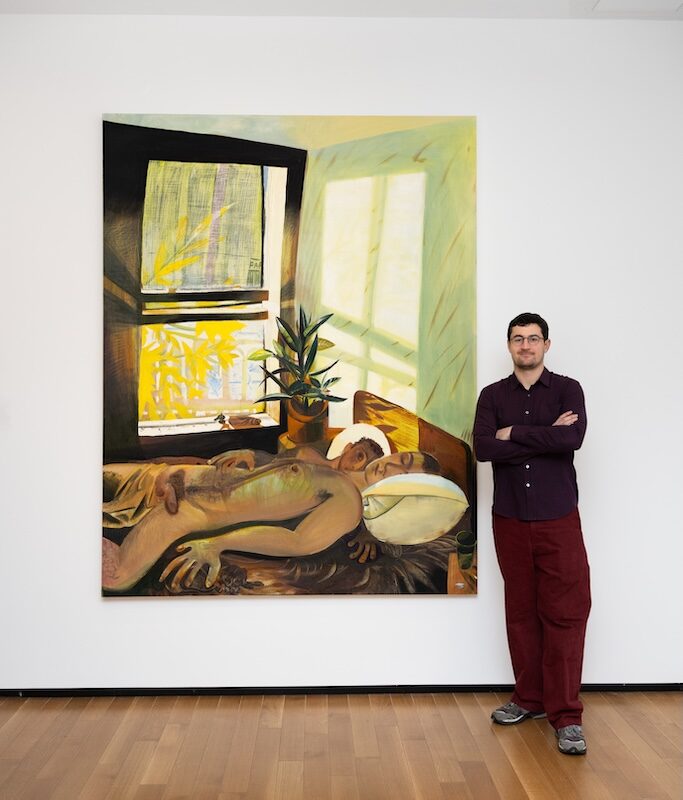
Peeking over Louis Fratino’s shoulders at the expansive Brooklyn studio behind him is a bit like perusing one of his detail-rich paintings of interiors. I want to touch the tubes of seductive oil paints, books, and other objects laid out on tables; get up close and search for little easter eggs in pictures-within-pictures; and trace layers of his making decisions and marks on any of the dozen-or-so oil works-in-progress scattered about the walls and floor among countless drawings.
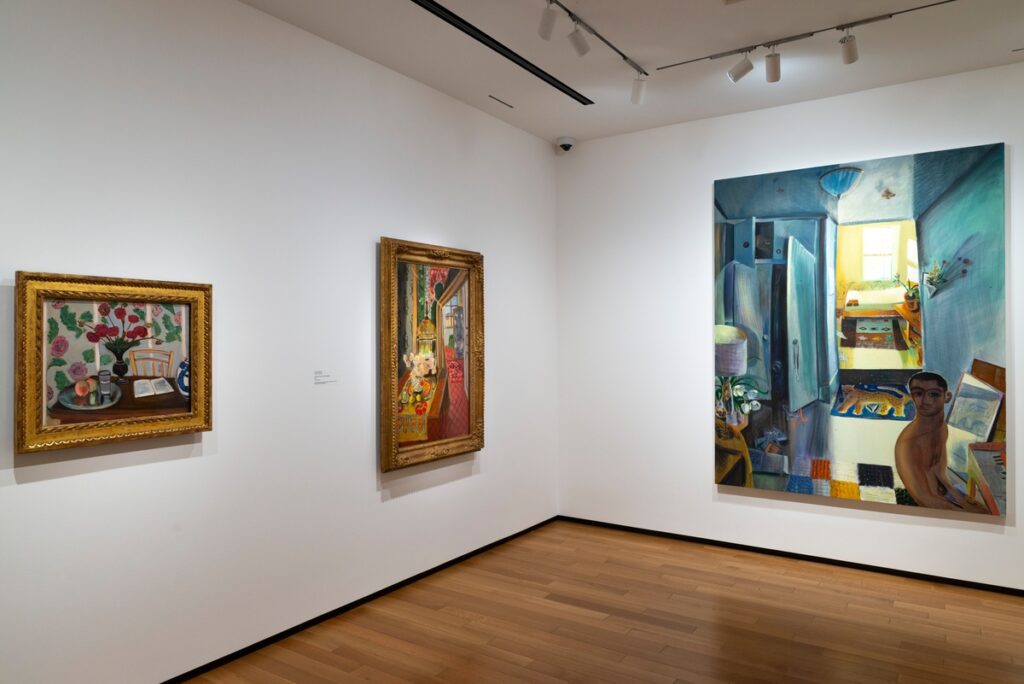
The thirty-two-year-old Maryland native is having a busy year. The prestigious David Zwirner Gallery announced his representation in February. In March he opened the exhibition Fratino and Matisse: To See This Light Again at the Baltimore Museum of Art. Zwirner has already brought his work to two art fairs, and is opening Fratino’s first London solo show at their brick-and-mortar on September 18, coinciding with Frieze London.
Yet Fratino is calm and generous with his blue-chip-valuable time. He speaks slowly and deliberately, with few fillers and little trace of that millennial inflection switch that makes statements sound like questions. It’s oddly reassuring to talk to someone younger than me who conveys confidence—but not arrogance—as he seems to weigh the best way to articulate an idea while forming a sentence. He’s probably a great writer, I think to myself, and I realize that impulse to prod around a concept and evaluate different ways to share it translates beautifully to his multi-faceted practice as a visual artist.
As we talk (often delightfully off-topic) I notice a slice of warm, directional morning sunlight flood across the white industrial space—“tainting” the ideal palette-mixing conditions the way an exaggerated streetlight, bulb, or window might bathe a scene in one of Fratino’s own dreamy mises-en-scène. It’s the kind of studio architectural quirk I silently note and imagine would drive a fussier painter mad. But Fratino strikes me as quite possibly the least “diva” art star I have encountered—and often doesn’t start painting until the afternoon anyway.
“I start the day with drawing or looking at books or just being here a little bit,” Fratino describes his typical studio routine. “And then it really isn’t until the afternoon that I’m sort of bored of being bored… and then I’m working on a lot of stuff at once.”
It’s hard to imagine the artist ever being bored. Fratino not only bounces between various canvases—often of wildly different colors, scales, compositions, and subject matters. He’s also a sculptor, ceramicist, printmaker, and prolific draftsman. He can make a life drawing of friends fucking seem un-scandalously matter-of-fact, but immortalize a sink full of dirty dishes as a monumentally scaled oil painting and have it prominently displayed in the 2024 Venice Biennale—one of several Fratino works selected by curator Adriano Pedrosa for the world’s most important exhibition.
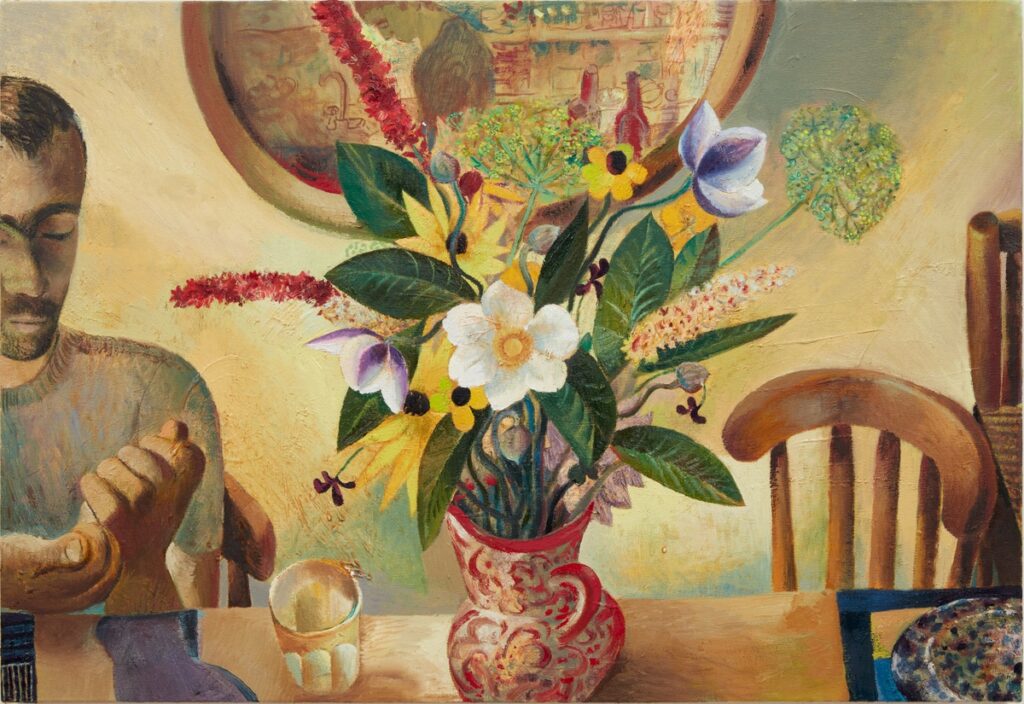
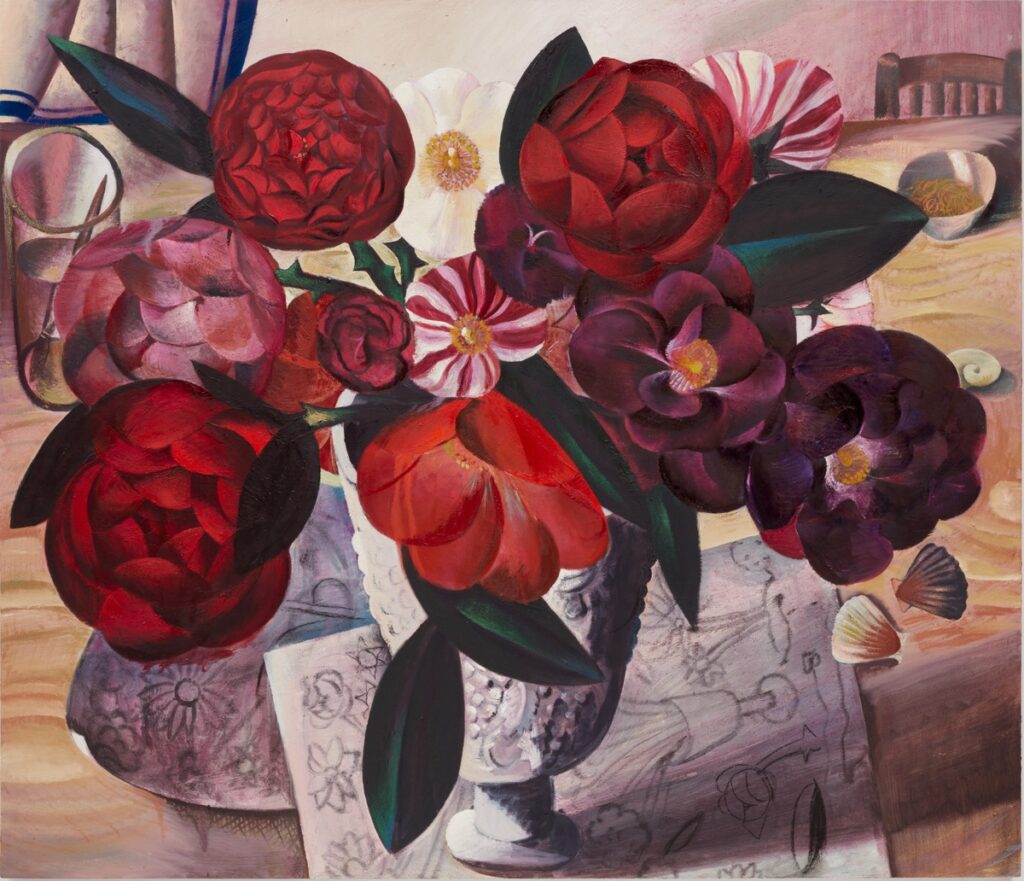
Louis FratinoI think this openness to material chances helps me tie my painting also to abstraction… I studied book illustration—I love rendering and drawing and pattern and all these things—but obviously painting has to function as abstraction to work.
Less than a decade earlier, in 2016, Fratino had his first solo show at fellow painter Lydia Pettit’s much-missed Platform Gallery on Mulberry Street. Fratino was one year out of undergrad and had just returned from a Fullbright in Berlin, where he was studying painting and printmaking. His homebuilder father constructed the stretchers for the canvases he brought back rolled-up in suitcases. His family still lives in Southern Anne Arundel County, a little over an hour from the BMA, but the young artist didn’t really know about the caliber of its prized Cone Collection until moving to the city to attend MICA after high school. By happy coincidence, he lived just a few blocks down Eutaw Place from the Cone Sisters’ storied apartment, which hosted both the living Matisse and one of the finest collections of his work during the sisters’ lives.
Fratino graduated in 2015 with a BFA in painting and a concentration in illustration, and several strategies of stylization recur throughout his interconnected bodies of work. He might approach a terra cotta sculpture or oil painting with the logic of an illustrator, or—in the case of a recent etching with greased aquatint, sugar lift, spit bite, and drypoint on Hahnemühle Copperplate paper shown at the IFPDA Fair in New York—create satisfyingly painterly multiples by combining printmaking techniques.
The more time I spend with Fratino’s diverse output, the more I get the impression that he likes to bend the rules of whatever medium he happens to be working in—using out-of-the-tube oil colors to “draw” in his paintings or inserting painterly flourishes into his drawings, sometimes executed on linen.
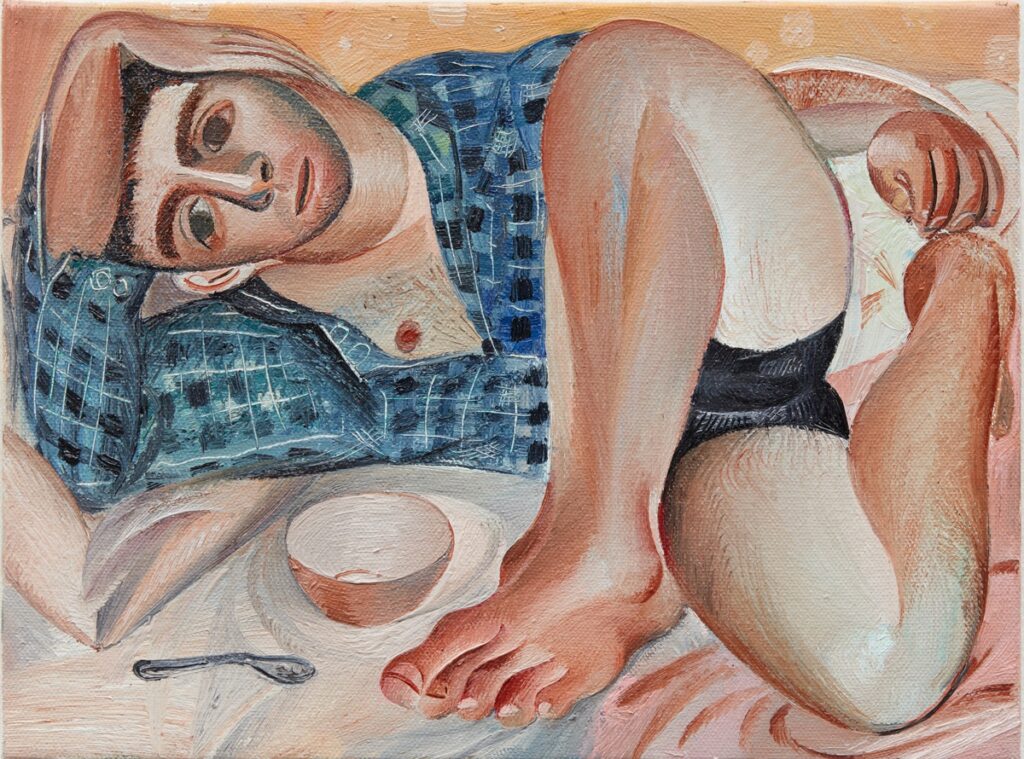
“I think this openness to material chances helps me tie my painting also to abstraction,” Fratino gestures to a painting of his nearby backyard garden—another enviable New York find. He had been struggling with the piece and decided to place it below another to catch drips, “creating new problems to solve as a way of reentering the painting. I studied book illustration—I love rendering and drawing and pattern and all these things—but obviously painting has to function as abstraction to work.”
Stylistically, he unabashedly pays homage not just to Matisse—undoubtedly his biggest influence—but to a whole pantheon of other 20th century heavyweights, weaving between their methods of representation or surface decoration with apparent glee. Curiously, Fratino’s trajectory from that first solo show on Mulberry Street to one at the apex of the London gallery scene transpired during a decade in which so many of the 19th and 20th century artists he cited as influences were under renewed scrutiny. That period—especially the first half at the height of #cancel culture—laser-focused art-historical discourse on the canonized modernist painters real or perceived misogyny, accusations of cultural appropriation, eurocentric privilege, or other #problematic transgressions. Who was this young artist, using their loaded vocabulary to write a different kind of narrative?
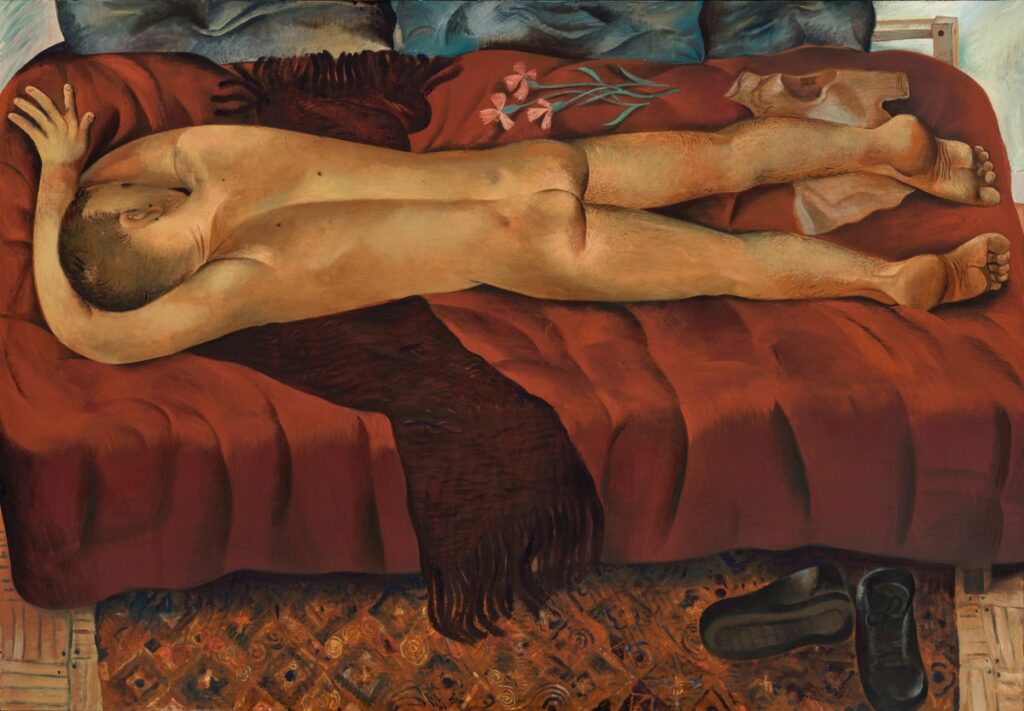
“Sometimes Matisse and Picasso and work from this period gets bogged down in conversations about their representations of women—those, I think, are all valid and one way to think about the context for that work being made,” Fratino explains with care. “But I’m hopeful that showing my work, which skirts that conversation—is a different perspective on that work entirely… I don’t feel like I relate to art history that way or police my references that way. And I also don’t think about my work as necessarily even autobiographical… there’s a way to use your life—your lived experience—to make a painting.”
Fratino is gay, and that’s a detail most critics and curators like to mention early-on in the first paragraph of any writing about his work. He’s often cited as a key figure in the recent “movement” of queer figuration—which I find a bit odd. The vast majority of Fratino’s pieces seem conceptually motivated by memory and emotion and how they can relate to art history and process rather than identity politics. (“Who is that work even for!? Monolithic ‘identities’ just don’t exist in this world,” as Fratino puts it.) He paints gay sex alongside dirty dishes, his friends, and flowers from his garden because those are the quotidian memories he possess and from which he can mine imagery or emotion. His partner, the Italian artist Alessandro Teoldi, features in many pieces.
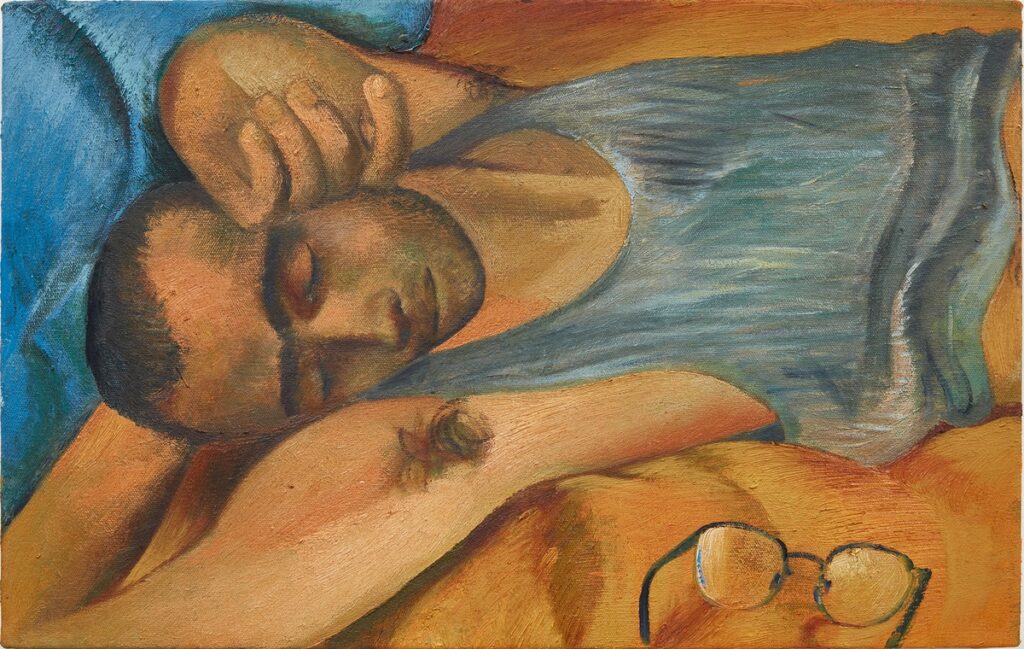
“It just feels natural to me to use my immediate surroundings as material,” Fratino says with a look that tells me he’s had to explain this a million times. “l’m interested in memory, and how the kind of specificity of memory is actually the way to talk to everybody.”
I have a sneaky suspicion that so much of the contemporary discourse surrounding “queer figuration” has less to do with some sudden, newfangled collective motivation on the part of the artists producing it and more to do with the artworld’s insatiable penchant for grafting identity politics onto salable, pretty paintings.
“It doesn’t enter the conversation too much,” Fratino says of his thoughts on the politics of depicting the more intimate details of his relationships. “These things are inevitabilities for me… These are the people that make sense to me as subjects—my partner or my friends or my family—not because I feel a sense of responsibility, but because I don’t have a choice!”
It’s refreshing to hear Fratino speak about his genuine love of making and art with optimism but no pretense. Could this be the artist to nudge the trajectory of figuration discourse out of the identity-obsessed feedback loop it’s thus far spent the 21st century repeating? Fratino relates the hyper-specificity of his work to the emotional impact he aims to convey to viewers—somewhat bypassing easy-but-circular group-identity-signalling.
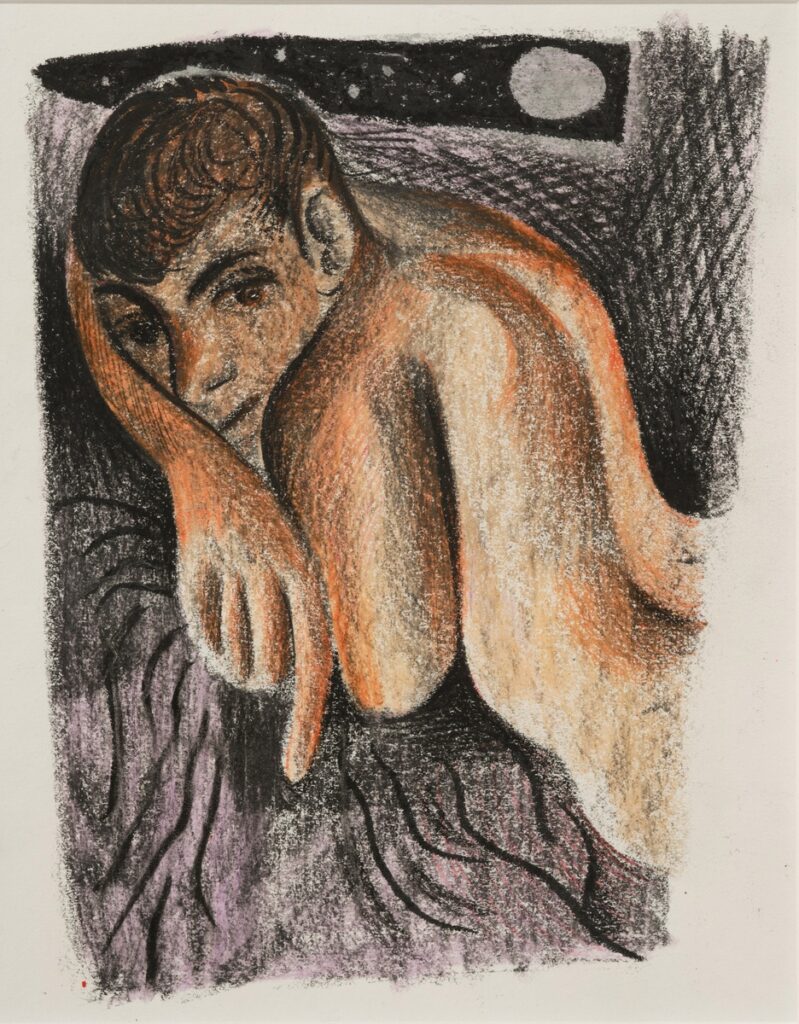
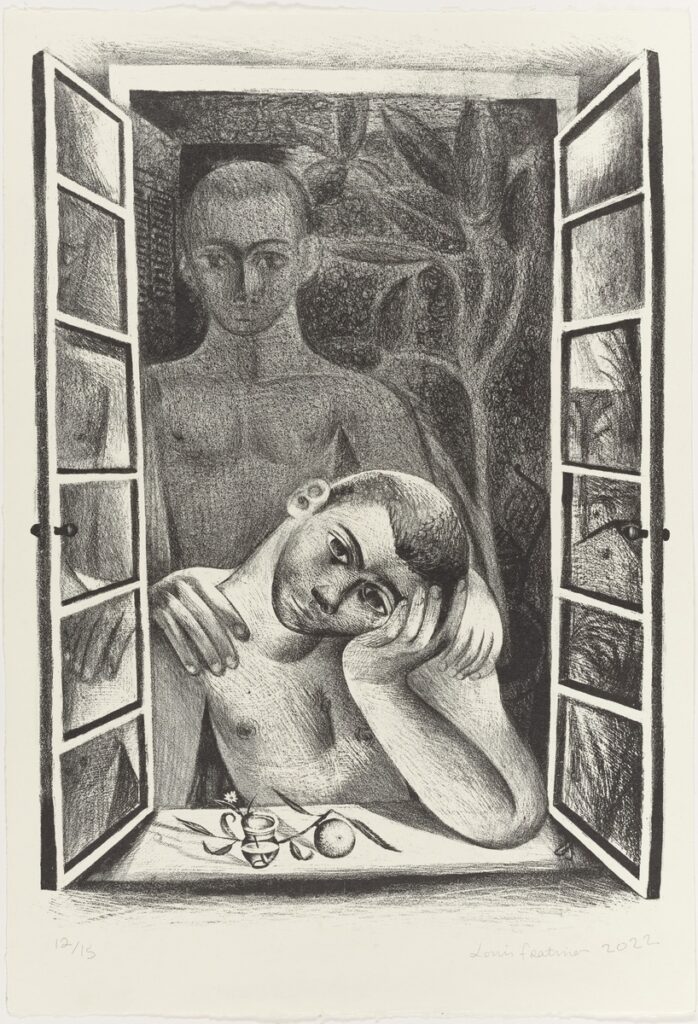
“The hope is that it becomes somehow bigger than me… if it functions well as painting, it will. And I think it’s the same for the Matisse works,” he says, explaining that many of the icon’s most beloved hits came from decisions to include intimate details such as textile patterns from the artist’s own clothes to form compositions “deeply personal, but also so committed to painting and painting history and what’s possible for the future of painting.” In Fratino’s cosmology, art history isn’t always a straight line. Sometimes it’s a queer little squiggle that ties a lover’s chest hair to century-old modernism.
Fratino and Matisse: To See This Light Again at the Baltimore Museum of Art closes September 6, 2026
Fratino: Prose opens at David Zwirner London September 18, 2026 and will be on view through October.
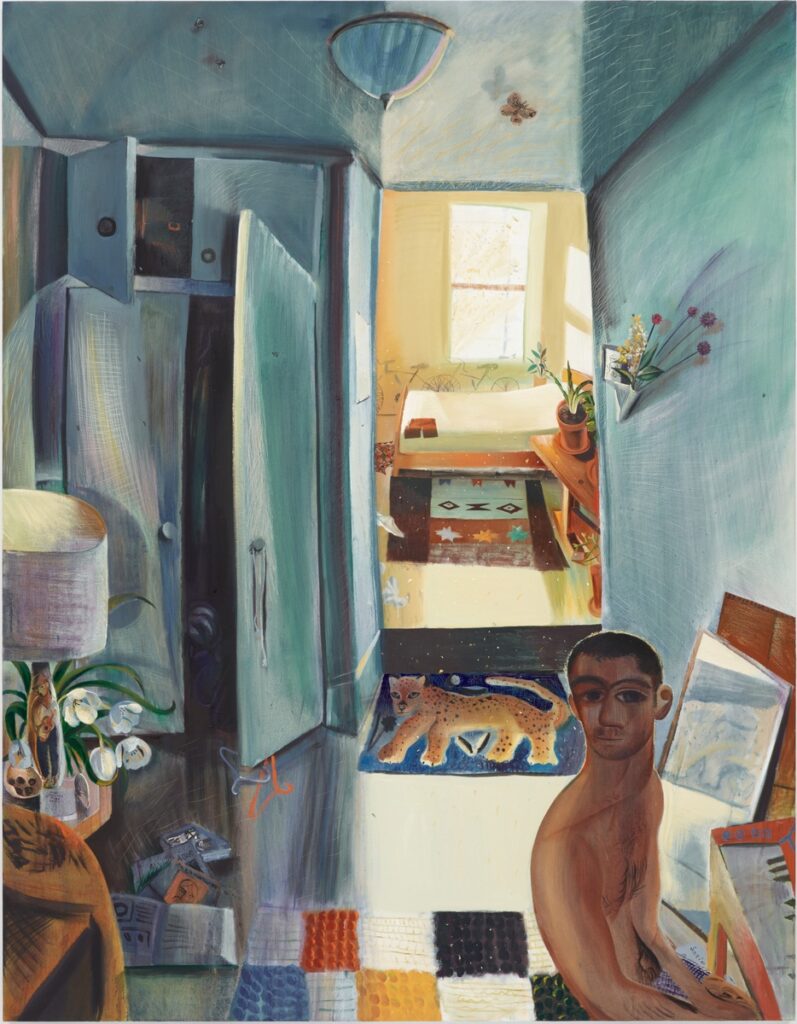
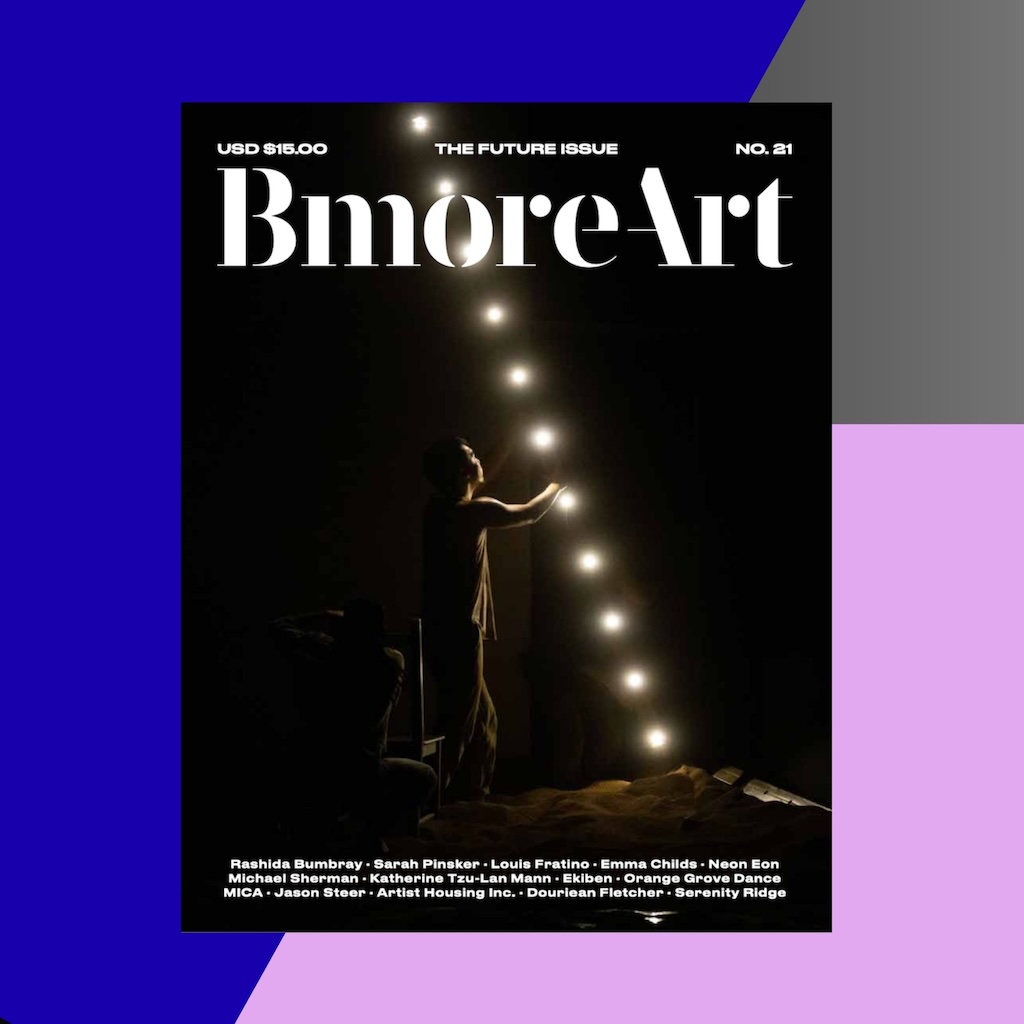
This Story First Appeared in Issue 21: The Future
Read it in Print
BmoreArt Print Journal 21: The Future